
Tokyo’s love hotels are one of those things you hear about long before you visit, and then spend half the trip working out how to actually try one. The process is easier than it sounds, the rooms are almost always bigger and better-equipped than a standard business hotel at the same price, and for a couple on their first Japan trip, a night in one makes for a story worth telling.
Table of Contents
Tokyo Love Hotels
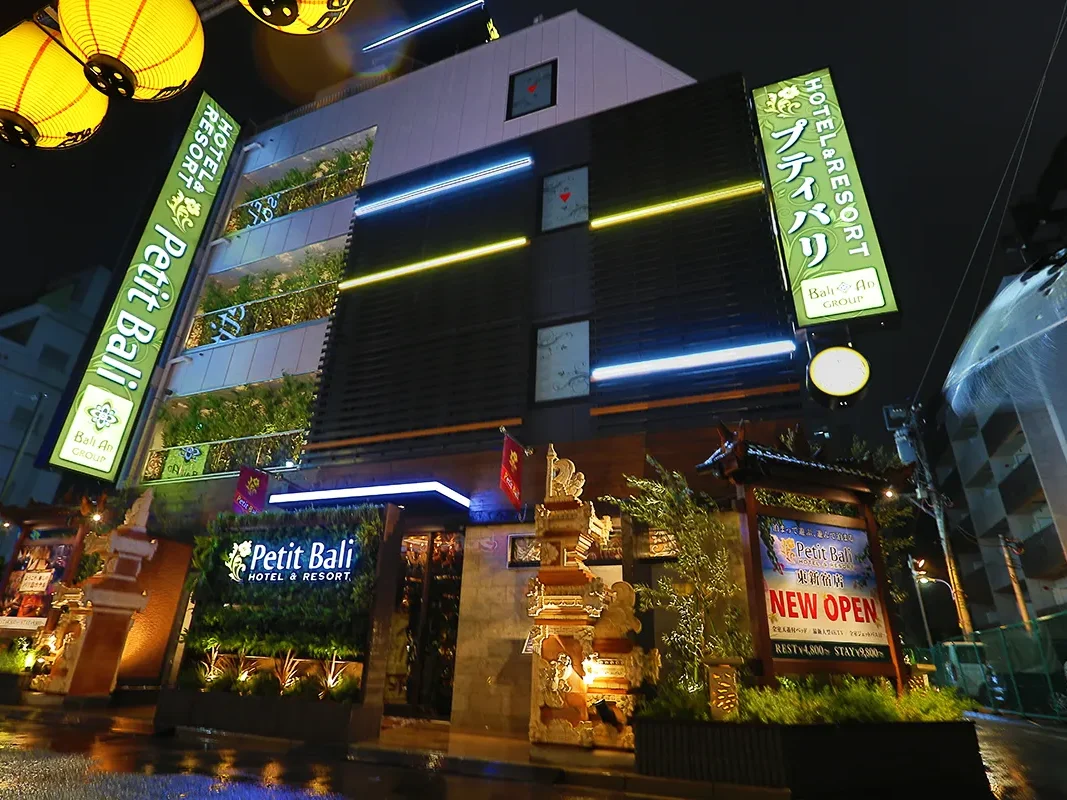
| 1. HOTEL PetitBali Higashi-Shinjuku Best for Couples Rating: ⭐⭐⭐ Location: 2-minute walk to Higashi-Shinjuku Station Guest Reviews: English-speaking staff, free drinks and snacks, open-air bath praised, soundproofed rooms Best Room: Deluxe Room with Open-Air Bath Price: From USD $115 – $160 per night |
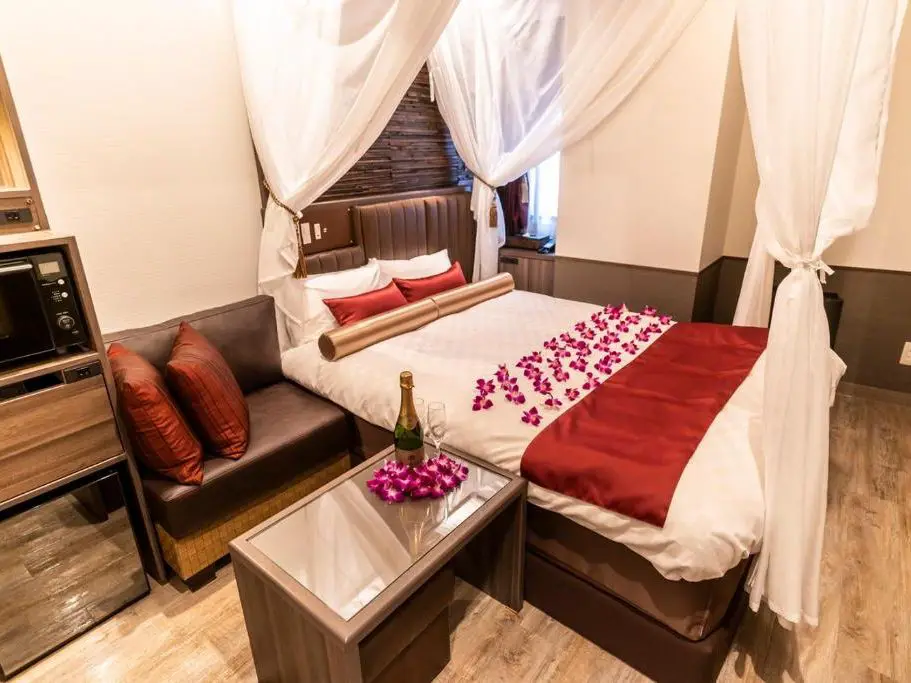
| 2. BaliAn Resort Forest Ikebukuro Best Value Rating: ⭐⭐⭐ Location: 9-minute walk to Ikebukuro Station (west exit) Guest Reviews: Free bar and lounge, private jacuzzi and massage chair, welcoming to non-Japanese speakers, luggage storage available Best Room: Superior Double Room Price: From USD $80 – $150 per night |
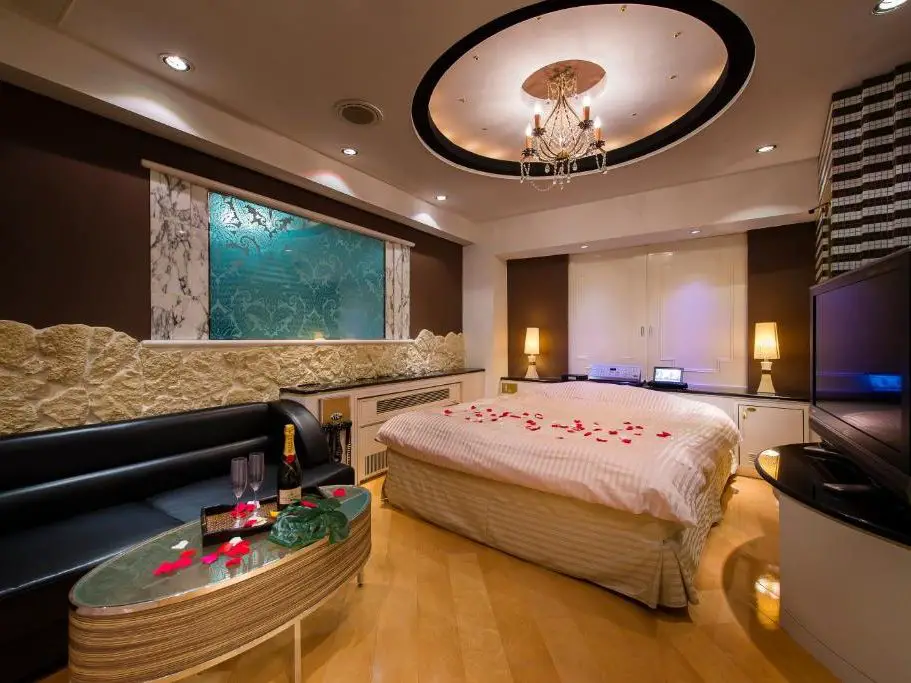
| 3. HOTEL PAL Otsuka Most Unique Stay Rating: ⭐⭐ Location: 4-minute walk to Otsuka Station (JR Yamanote Line) Guest Reviews: Jacuzzi, karaoke and massage chair in-room, spacious rooms, super discreet check-in, staff use Google Translate willingly Best Room: Double Room with Jacuzzi Price: From USD $90 – $140 per night |
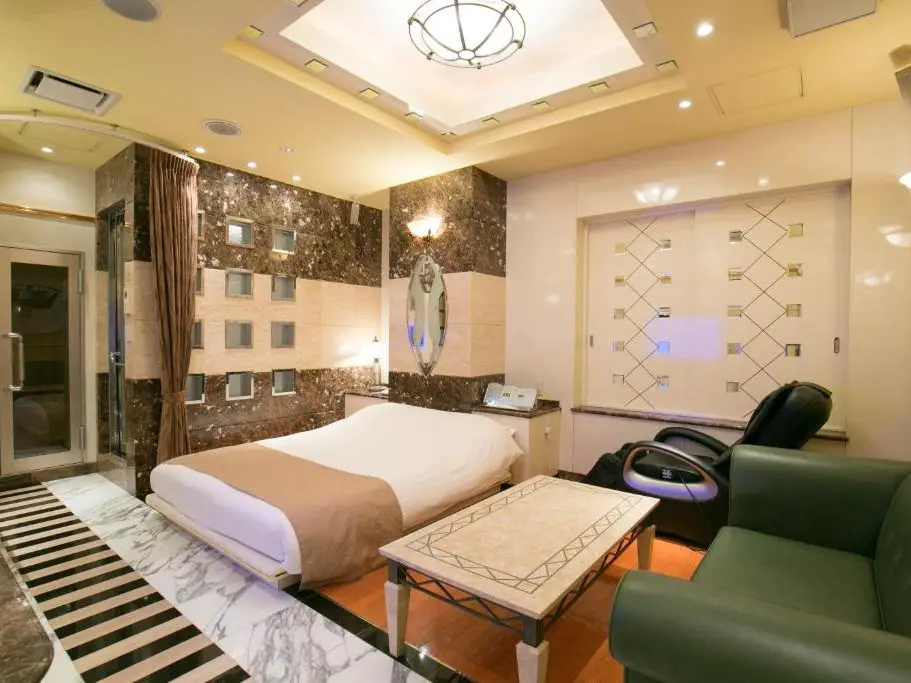
| 4. HOTEL D-Wave Shinjuku Best for Solo Travelers Rating: ⭐⭐⭐ Location: 5-minute walk to Higashi-Shinjuku Station Guest Reviews: Private in-room sauna and jacuzzi, daily room cleaning, discreet and secure check-in, luggage storage available Best Room: Deluxe Queen Room Price: From USD $160 – $210 per night |

| 5. Hotel Balian Resort Kinshicho Best Boutique Stay Rating: ⭐⭐⭐ Location: 10-minute walk to Kinshicho Station (JR Sobu Line) Guest Reviews: Friendly English-ready staff, free lobby snacks and beauty products, breakfast delivered to room, spa bath in every room Best Room: Suite with Private Sauna Price: From USD $95 – $150 per night |
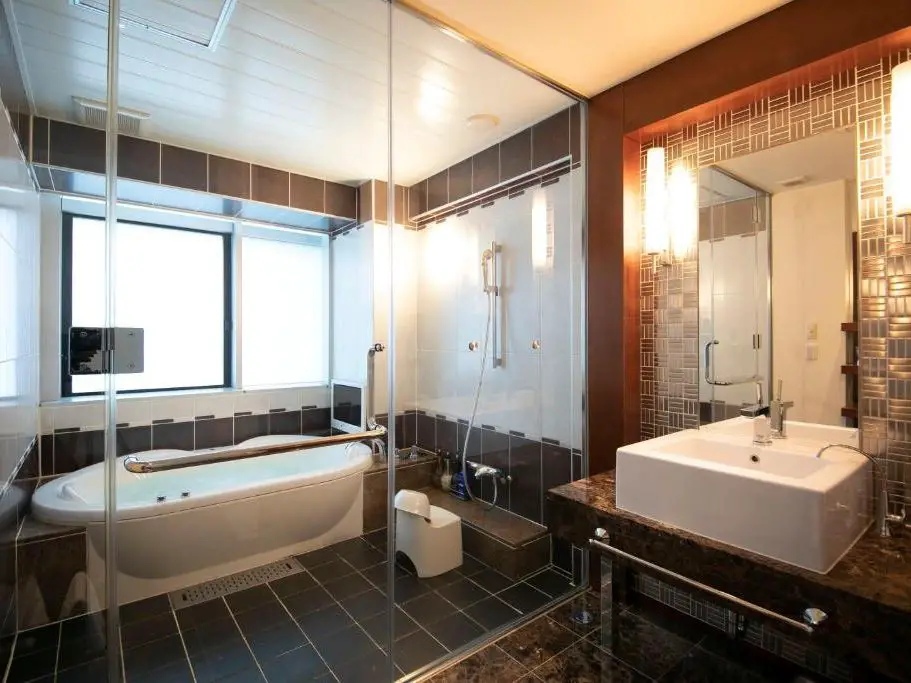
| 6. HOTEL Aperto Rating: ⭐⭐⭐ Location: 2-minute walk to Otsuka Station (JR Yamanote Line) Guest Reviews: Memory foam beds, jacuzzi with in-bath TV, huge room for Tokyo, friendly staff accommodating with luggage storage Best Room: Deluxe Double Room Price: From USD $70 – $155 per night |
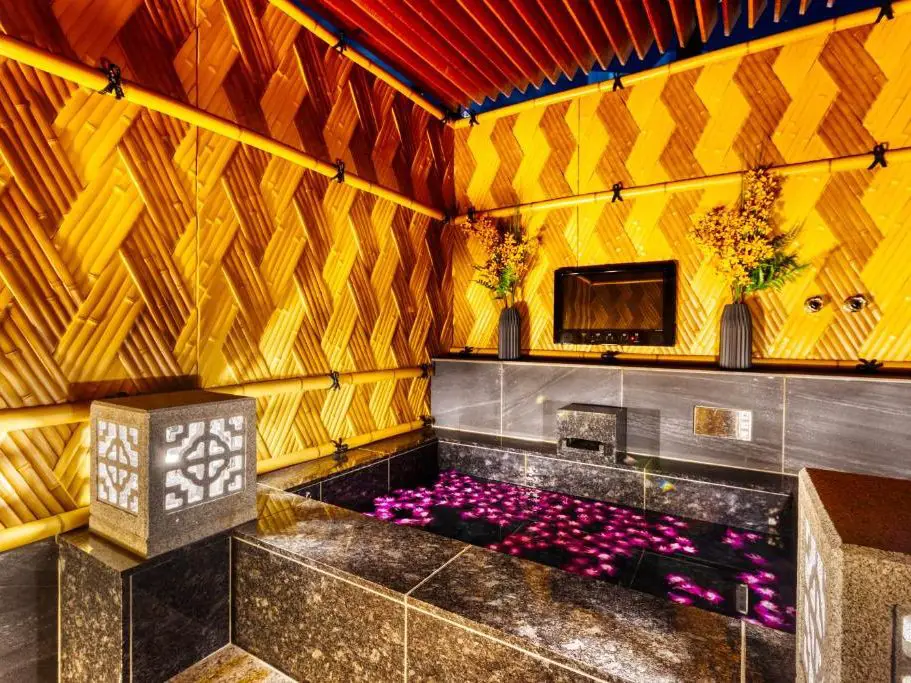
| 7. Hotel Lotus Shibuya Best Location Rating: ⭐⭐ Location: 7-minute walk to Shibuya Station, on Love Hotel Hill (Dogenzaka) Guest Reviews: Unbeatable Shibuya location, clean rooms, open-air bath on site, generous in-room amenities including pyjamas and facial masks Best Room: Deluxe Room Price: From USD $110 – $160 per night |
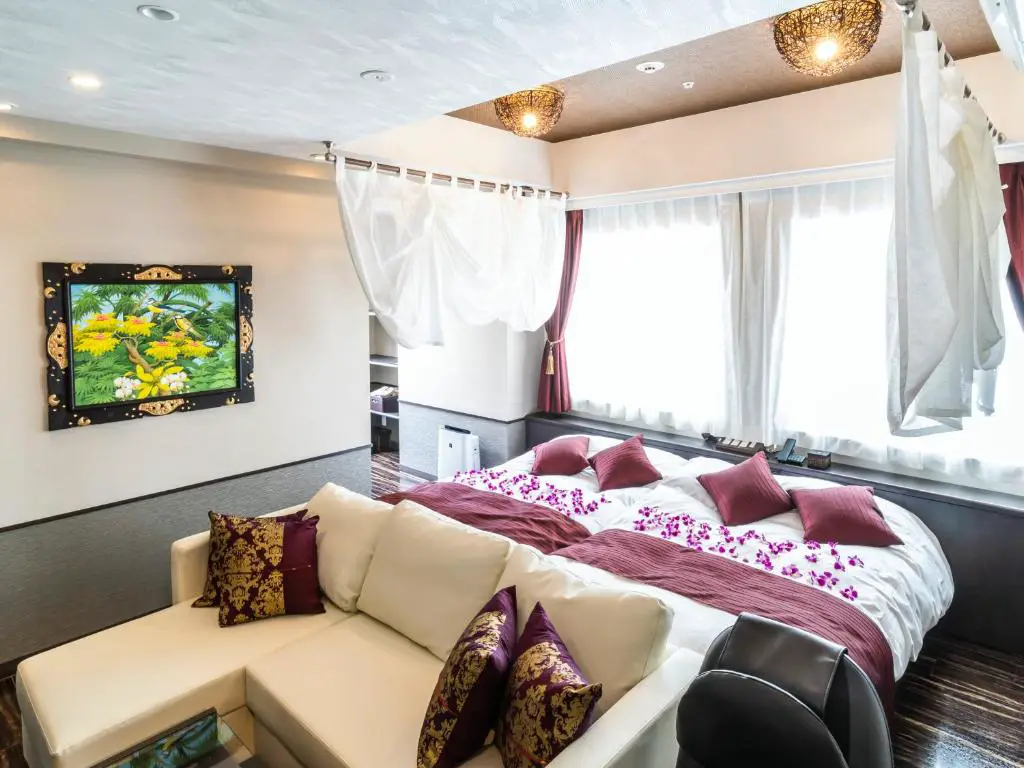
| 8. Hotel Petit Bali Garden Shin-Okubo Most Luxurious Rating: ⭐⭐⭐ Location: 3-minute walk to Shin-Okubo Station (JR Yamanote Line) Guest Reviews: Free open bar and snacks all night, rooftop open-air hot tub, free bikes, friendly staff with English assistance available Best Room: Garden Terrace Double Room Price: From USD $105 – $175 per night |
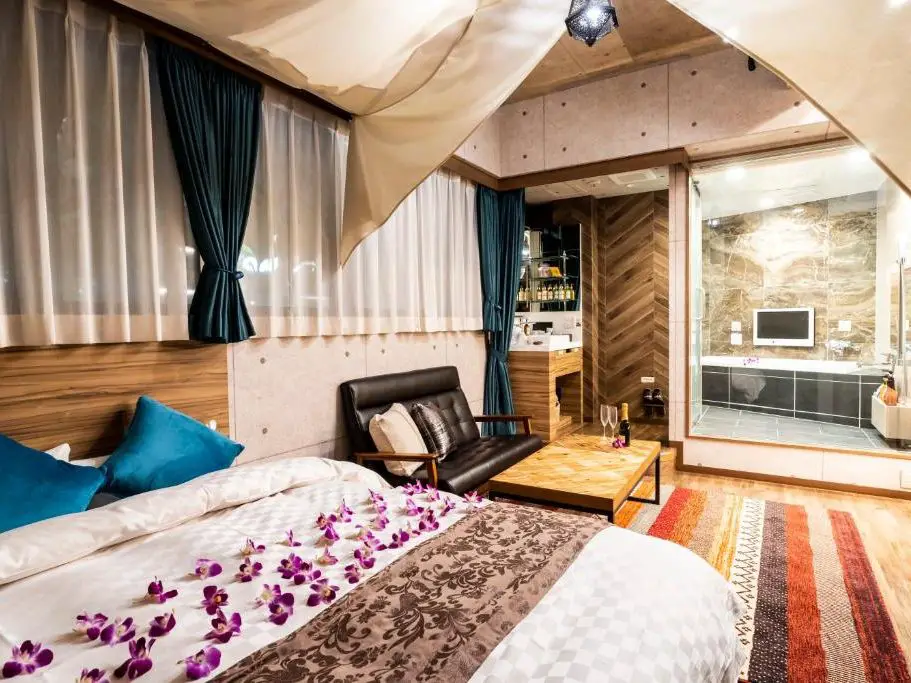
| 9. Hotel Bali An Resort Shinjuku Forest Rating: ⭐⭐⭐ Location: 4-minute walk to Higashi-Shinjuku Station Guest Reviews: Spacious rooms for central Tokyo, free lobby amenities, clean and quiet despite Kabukicho location, close to Golden Gai and Samurai Museum Best Room: Deluxe Twin Room Price: From USD $130 – $230 per night |
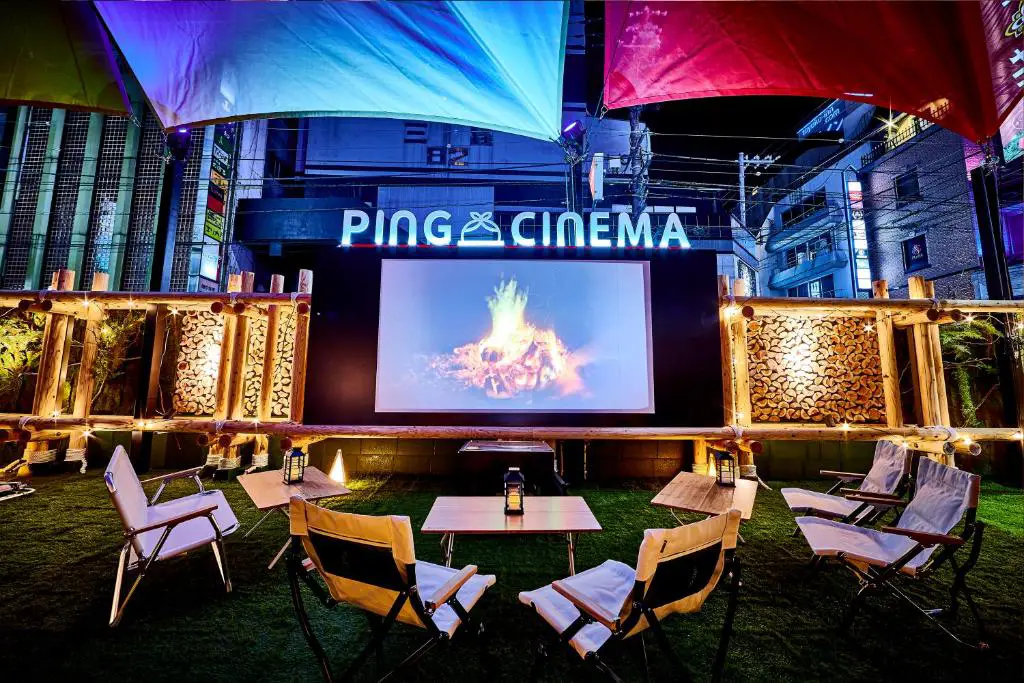
| 10. Hotel BaliAn Resort Shinjuku Glamping Rating: ⭐⭐⭐ Location: 12-minute walk to Higashi-Shinjuku Station, Kabukicho Guest Reviews: Multilingual staff, rooftop terrace with city views, free snacks and drinks in lobby, rooms bigger than typical Tokyo hotels Best Room: Panoramic Double Room with City View Price: From USD $155 – $275 per night |
What Makes a Love Hotel Different From a Regular Tokyo Hotel
Walk into a standard Tokyo business hotel and you get a room the size of a generous wardrobe, a capsule of shampoo, and a breakfast that costs extra. Walk into a love hotel and the room is often twice the size, the bathroom has a jacuzzi with a TV above it, there’s a massage chair in the corner, and someone has left you a face mask, pyjamas, and a small tub of bubble bath. The price is frequently lower. That gap exists because love hotels were never designed to compete with business hotels — they grew out of a social reality where people needed privacy, and the hotels that served them had to make the trip worth it.
The operating model differs from a standard hotel in a few key ways:
- Room size — Love hotel rooms average significantly larger than business hotel rooms at the same price. A Tokyo business hotel at ¥15,000 per night typically gives you 14–18m². A love hotel at the same rate often gives you 25–35m², plus a separate bathroom area with a deep soaking tub.
- Amenities — Where a business hotel provides the basics, love hotels stock rooms with toiletries, skincare products, massage chairs, in-bath TVs, karaoke systems, and often free drinks and snacks in the lobby. The better properties feel closer to a resort room than a city hotel.
- Check-in style — Most love hotels use automated or semi-automated check-in screens. This was designed for local discretion, but for foreign guests it doubles as a useful language workaround — a basic check-in rarely requires you to say much at all.
- Pricing structure — Love hotels offer two options: a short-stay “rest” of two to three hours, and an overnight “stay” running from around 10pm to 11am. Booking through Booking.com means you’ll always be reserving the overnight stay option. The rest pricing isn’t available in advance and is aimed at locals dropping in on impulse.
- Noise and privacy — Rooms are heavily soundproofed by design. Walls are thicker than in most business hotels, and the properties tend to sit on quieter side streets even when the surrounding neighbourhood is lively.
Can Foreigners Stay in Tokyo Love Hotels?
The short answer is yes, and in practice it’s rarely complicated. Foreign guests are increasingly common at Tokyo love hotels, and the properties that list on international booking platforms have adapted accordingly. Booking through Booking.com in advance removes most of the uncertainty — you have a confirmed reservation, a room number, and a check-in time before you arrive.
The anxiety most first-timers carry is whether they’ll be turned away at the door. This does occasionally happen at smaller, walk-in-only properties that haven’t updated their policies for international guests, but it’s essentially a non-issue at any hotel bookable through Booking.com. The act of listing on an international platform signals that the property accepts foreign bookings. Every hotel on this page has a documented track record of hosting foreign guests.
A few practical realities worth knowing before you go:
- Language — Staff at most love hotels speak Japanese only. The hotels on this page range from properties with confirmed English-speaking staff to those where Google Translate handles the gaps. The automated check-in system at many properties sidesteps the language issue entirely — you select a room on a screen, insert payment, and collect a key without needing a conversation.
- ID — Unlike standard hotels, many love hotels do not ask for identification at check-in. Some properties that accept Booking.com reservations may scan your passport as part of Japanese hospitality law, but this is not universal. If asked, it’s routine — have your passport accessible.
- Payment — Most love hotels on international booking platforms accept credit cards, though a handful remain cash-only. Check the property’s payment policy before arrival and carry yen regardless. Card charges often appear under a different business name on your statement, which is standard practice across the industry.
- Solo travelers — Love hotels are designed and priced for two people, and most rooms reflect that. Solo stays are permitted at the majority of properties, but you’ll pay the same rate as a couple. A small number of older establishments still discourage solo check-ins, so booking through Booking.com — where solo occupancy is stated at the time of reservation — removes any ambiguity.
- Same-sex couples — Japanese government guidelines issued in 2018 prohibit hotels from refusing entry on grounds of sexual orientation or gender identity. In practice, discrimination is less common at properties that have internationalised their operations. All hotels on this page accept bookings through Booking.com without restrictions on guest pairing.
- Groups — Love hotels are built for two. Three or more guests checking in together is not permitted at most properties, and the room configuration won’t comfortably support it regardless. If you’re travelling in a group, book separate rooms or look at standard hotel options nearby.
How to Book – and Why You Should Book in Advance
Booking a Tokyo love hotel through Booking.com works exactly like booking any other hotel. Search the property, select your dates, choose a room type, and confirm. You’ll receive a reservation confirmation with your check-in window, room details, and the property address. That’s the entire process.
The reason to book in advance rather than walk in is straightforward: the best properties on this page are small. Several have fewer than 10 rooms. During peak Tokyo travel periods, they fill up — and unlike a 200-room business hotel, there’s no overflow. Walk-in availability on a Friday night in cherry blossom season is not something to count on.
When to book early
Tokyo has several periods where hotel availability tightens city-wide and love hotels are no exception:
- Cherry blossom season (late March to mid-April) — The busiest period in the Tokyo travel calendar. Hotels across all categories sell out weeks in advance. Book at least 6–8 weeks ahead for this window, earlier if you have fixed dates.
- Golden Week (late April to early May) — Japan’s biggest domestic holiday cluster. Trains, hotels, and restaurants operate at capacity. If your trip overlaps with Golden Week, treat love hotel booking with the same urgency as flights.
- Autumn foliage (mid-November) — Increasingly popular with international visitors. Crowds are lighter than cherry blossom season but still significant enough to affect availability at smaller properties.
- Valentine’s Day (February 14) — The single busiest night of the year for love hotels specifically. If you’re visiting Tokyo around this date and want to stay at one of the properties on this page, book as soon as your travel dates are confirmed.
- Weekends year-round — Even outside peak seasons, Friday and Saturday nights at popular love hotels move faster than weekdays. If your stay falls on a weekend, don’t leave it to the last few days.
Rest vs Stay – Know the Difference
When browsing Booking.com listings for love hotels, you’ll sometimes see references to “rest” rates alongside standard room prices. A rest is a short-stay block of two to three hours, typically used by locals dropping in during the day. Rest periods cannot be booked in advance through Booking.com – only in person, on arrival. As a tourist booking online, you’ll always be reserving an overnight stay, which typically runs from around 10pm until 11am the following morning. Check-in windows vary by property, so confirm the earliest check-in time on your reservation before planning your evening around it.
A note on pricing – Rates on Booking.com for love hotels are sometimes higher than the walk-in rate displayed at the front desk. This is a known quirk of the category and a trade-off for the convenience and certainty of advance booking. If you’re flexible and the city is quiet, walking in gives you more room to negotiate or choose from available rooms on the spot. For a first visit, the certainty of a confirmed reservation is worth more than the saving.
What Happens at Check-In (and Check-Out)
Knowing the process in advance makes the whole thing considerably less awkward. Love hotel check-in is designed to be fast, private, and low-interaction — which works in your favour as a foreign visitor.
- Arriving at the hotel – The entrance to a love hotel is usually set back from the street, often behind a wall, a screen of plants, or a recessed doorway. This is intentional. Once inside, you’ll typically find one of two setups: an automated room selection screen in the lobby, or a front desk with staff behind a partial screen or frosted glass partition. Both are normal. If you’ve booked in advance, go directly to the front desk and show your reservation confirmation — either on your phone or printed. Staff will confirm your room and hand over a key or access card. At properties with automated systems, the desk staff will still handle pre-booked reservations manually rather than routing you through the machine.
- Your room key – At most love hotels, your key stays at the front desk when you leave the building rather than travelling with you. To re-enter your room, you pick it up from reception on the way back in. This can feel unusual if you’re used to carrying a keycard everywhere, but it’s standard practice and worth knowing so it doesn’t catch you off guard at midnight after a long day out. Some newer properties have shifted to a keycard system that works more like a standard hotel. Check your confirmation details or ask at check-in which system applies.
- Leaving and returning during your stay – You can come and go freely during your stay. Love hotels are not sealed environments — guests leave for dinner, sightseeing, and nightlife and return later without any issue. The only thing to be aware of is the key handover system described above. If your property uses the desk-key method, a quick stop at reception to collect your key is the routine every time you return. Luggage storage is available at most of the properties on this page. If you’re arriving in Tokyo before check-in time, many will hold bags for you at the front desk — useful if your flight lands in the morning and your room isn’t ready until the evening.
- In the room – The room will be clean, stocked, and ready. Toiletries, towels, bathrobes, and slippers are standard. The better properties also leave out skincare products, hair tools, and a selection of free drinks. Anything consumable in the minibar or snack area is typically charged separately — check the pricing sheet in the room before helping yourself, as rates vary. If you want to use the jacuzzi, run it before you’re ready to get in rather than after. Fill times are longer than you’d expect. Karaoke systems, where present, come with instructions that are usually in Japanese only. The song selection interface typically has a language filter to find English tracks — look for a flag icon or the word “English” on the remote or tablet.
- Check-out – Check-out at most love hotels is by 11am. The process is simple: leave the room, drop your key at the front desk, and settle any outstanding charges. At properties where you paid in full at check-in, you simply hand in the key and leave. At others, a final bill for minibar items or extended services will be presented at the desk. There’s no lengthy checkout procedure and no one inspects the room while you’re standing there. The whole thing takes two minutes.
What’s Actually In the Room
The amenity gap between a Tokyo love hotel and a standard business hotel at the same price point is one of the more surprising things about staying in one for the first time. Business hotels in Tokyo are clean and functional and not much else. Love hotels are stocked as if someone expected you to spend the entire stay inside.
What you’ll reliably find
- The bathroom — Deep soaking tub or jacuzzi, usually with a flat-screen TV mounted at eye level. Shower is separate. Toiletries go well beyond travel-size basics — expect full-size products, bath salts, bubble bath, and a selection of skincare items. Better properties add hair curlers, straighteners, and nail care sets as standard.
- The bed — Oversized by Tokyo standards. King or queen beds are common even at mid-range properties, with premium bedding and blackout curtains throughout. Useful if you’re jet-lagged and need to sleep past dawn.
- Entertainment — Large flat-screen TV with on-demand films is universal. Karaoke systems are common, either built into the room or available through reception. Some rooms have Blu-ray players, game consoles, or projection screens — check the room description when booking.
- Massage chair — Present in many rooms and in most lobby lounges. If yours is in the lobby rather than the room, it’s free to use at any hour. Don’t overlook it after a long day walking.
- Free lobby amenities — The Balian and PetitBali group properties operate a free lobby bar stocked with soft drinks, wine, snacks, desserts, and sometimes ramen or soup, available around the clock. A couple returning from a night out in Shinjuku can eat and drink well without paying restaurant prices. It’s one of the reasons the value proposition at these properties is stronger than it looks on paper.
What isn’t always there
- Daily housekeeping — Not guaranteed. Many properties clean the room once during a multi-night stay rather than daily, or offer it on request. Confirm the schedule at check-in if you’re staying more than one night.
- On-site restaurant — Most love hotels don’t have one. Room service exists at several properties on this page — the Balian group delivers food to your room — but it’s a limited menu rather than a full dining operation. Plan around the lobby snack bar or nearby restaurants.
- Wi-Fi — Free at almost all properties, but connection speeds in older buildings can be inconsistent. Check recent guest reviews if reliable internet is essential.
- Natural light — Love hotels were designed for privacy, not views. Many standard rooms face an interior wall or have sealed windows. If natural light matters, look specifically for rooms described as having a window, balcony, or city view when choosing your room type.
Which Area of Tokyo Makes Most Sense
Tokyo is large enough that where you base yourself genuinely affects your trip. Love hotels cluster around nightlife districts, so the choice of area shapes both what’s outside your door and how much you’ll pay for the room.
- Shinjuku and Kabukicho — The highest concentration of love hotels in the city and the most convenient base for first-timers who want to be close to nightlife, food, and transport. Shinjuku Station connects to nearly every major line — Shibuya, Harajuku, Akihabara, and Asakusa are all within 20–30 minutes. The streets around Kabukicho are lively until very late and can be noisy on weekends. Rooms at the better properties are soundproofed, but the streets outside are not.
- Ikebukuro — A few stops north on the Yamanote Line, with the same transport connectivity but a calmer atmosphere. Prices are a notch lower than Shinjuku for comparable rooms, and the west exit area has a solid range of restaurants and bars without the concentrated nightlife intensity of Kabukicho. A practical choice if you’re planning day trips across the city rather than spending evenings in the immediate neighbourhood.
- Shin-Okubo — Between Shinjuku and Ikebukuro on the Yamanote Line, this is Tokyo’s Korean neighbourhood — dense with barbecue restaurants, street food, and late-night spots. Three minutes from the station at the PetitBali Garden property. Active and interesting without being overwhelming, and close enough to Shinjuku to walk if you want to.
- Shibuya — Home to Love Hotel Hill, the famous cluster of properties on the Dogenzaka slope behind Shibuya 109. Location is exceptional for sightseeing and access to Harajuku and Omotesando. The trade-off is that Shibuya’s love hotels tend to be older buildings with smaller rooms, and the area is among the loudest in Tokyo on weekends. Good for one night as an experience; less ideal as a multi-night base.
- Otsuka and Kinshicho — The quieter end of the spectrum. Otsuka sits on the Yamanote Line with fast connections to the rest of the city, but the neighbourhood itself is residential — local restaurants, convenience stores, and none of the nightlife noise. Kinshicho is further east near Tokyo Skytree, a longer journey from the main sightseeing areas but noticeably calmer. Both suit visitors who want the love hotel experience without the surrounding bustle, or who are prioritising room quality and value over location intensity.
Getting the Most Out of Your Stay
A love hotel stay runs on a slightly different logic to a standard hotel night. A few things worth knowing before you arrive.
- Extending your stay is possible but ask early. If you want to stay past the standard 11am checkout, ask at the front desk the night before rather than the morning of. Late checkout is charged by the hour at most properties and availability depends on whether the room is booked for the following night. Leaving it until 10:50am rarely works in your favour.
- Luggage needs a plan. Love hotel rooms are not designed for large suitcases — the oversized bed and bathroom leave limited floor space. Most properties on this page offer luggage storage at reception. Confirm storage availability when you check in rather than discovering the room can only fit one open suitcase at a time.
- Tipping is not expected. Japan does not have a tipping culture and love hotels are no exception. Leaving money on the desk or handing cash to staff will cause confusion rather than gratitude.
- If something in the room isn’t working, call reception. The front desk is staffed around the clock at every property on this page. A non-functioning jacuzzi jet, a TV that won’t connect, a karaoke tablet with a dead battery — these are all fixable if you report them. Staff are used to these requests and translation apps handle the conversation well enough if language is a barrier.
- Fill the jacuzzi before you’re ready to get in. Large tubs take 20–30 minutes to fill properly. Run it as soon as you get back to the room rather than after you’ve wound down for the night.
FAQ
1. Can I stay at a Tokyo love hotel as a solo traveller?
Solo stays are permitted at most properties, but rooms and rates are designed for two people — you’ll pay the same price regardless. A small number of older establishments still discourage solo check-ins, so booking in advance through an international platform removes any ambiguity before you arrive.
2. What is the difference between a “rest” and a “stay”?
A rest is a short-stay block of two to three hours, available to walk-in guests only and priced lower than an overnight rate. A stay is an overnight booking, typically running from around 10pm to 11am the following morning. When booking in advance online, you will always be reserving a stay — rest pricing is not available through international booking platforms.
3. Do I need to speak Japanese to check in?
Not at the properties on this page. Several have confirmed English-speaking staff, and the remainder use translation tablets or apps at the front desk. The automated check-in systems at some properties sidestep the language issue entirely. Having Google Translate ready on your phone is useful but rarely essential.
4. Will the hotel name appear on my credit card statement?
Many love hotels process card charges under a different business name for discretion. This is standard industry practice in Japan and applies to both domestic and international cards. If you’re concerned, check with your property directly before check-in — staff are used to the question.
5. Can same-sex couples stay?
Japanese government guidelines prohibit hotels from refusing entry on grounds of sexual orientation or gender identity. All properties on this page accept bookings through international platforms without restrictions on guest pairing.
6. Is there a minimum age to check in?
Yes. Japanese law prohibits anyone under 18 from staying at a love hotel, and this is enforced consistently. All guests must be 18 or older regardless of whether they are accompanied by an adult.
7. Can I leave and come back during my stay?
Yes, freely. Love hotels are not sealed environments and guests come and go throughout their stay. The only thing to be aware of is the key system — many properties keep your room key at the front desk while you’re out, so collect it on the way back in rather than expecting to carry it with you.
8. How far in advance should I book?
For a standard weeknight outside peak season, a week or two ahead is usually sufficient. For weekends, Golden Week, cherry blossom season in late March and early April, and Valentine’s Day, book as early as your travel dates are confirmed. The smaller properties on this page — some with fewer than 10 rooms — sell out well before a comparable standard hotel nearby would.
9. Are love hotels safe for foreign visitors?
Yes. They are licensed, regulated hospitality businesses monitored under the same laws as standard hotels. The privacy-by-design features — controlled entrances, room locks, discreet staff — work in guests’ favour rather than against them. Foreign couples consistently report feeling safe and comfortable, including in the surrounding Kabukicho and Shibuya nightlife areas.