
Arima Onsen has been drawing visitors for over a thousand years, and the water is still the reason people come — iron-rich kinsen that turns rust-gold the moment it hits the air, and clear ginsen laced with radium and carbon dioxide. Soaking in a communal bath is the traditional way to experience it, but having that same water piped directly into your own room changes the pace of a stay entirely. You bathe when you want, as many times as you want, in a tub on your own balcony with the Rokko mountains in front of you. The ryokans below all offer rooms with a private onsen — ranging from intimate bamboo-grove baths to two-storey villa suites with both spring types on tap.
Quick answer: Book Arima Onsen Taketoritei Maruyama. All eight of its baths can be booked privately at no extra charge, with Kobe beef kaiseki for dinner.
Table of Contents
Arima Onsen Hotels
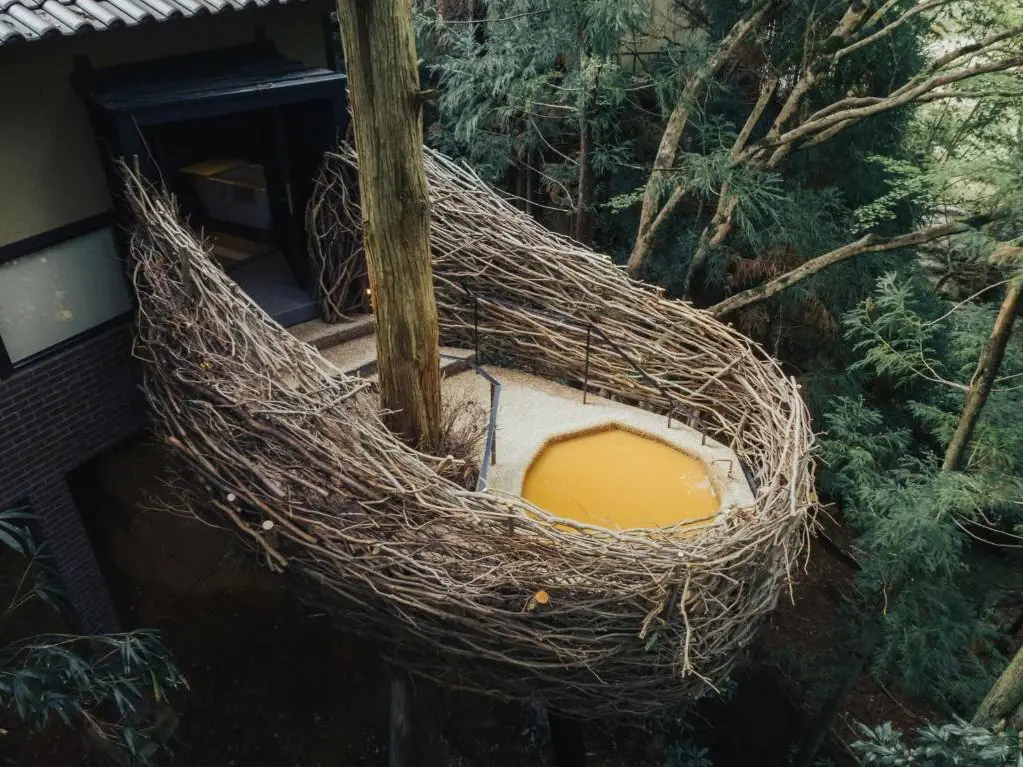
Most Unique Stay
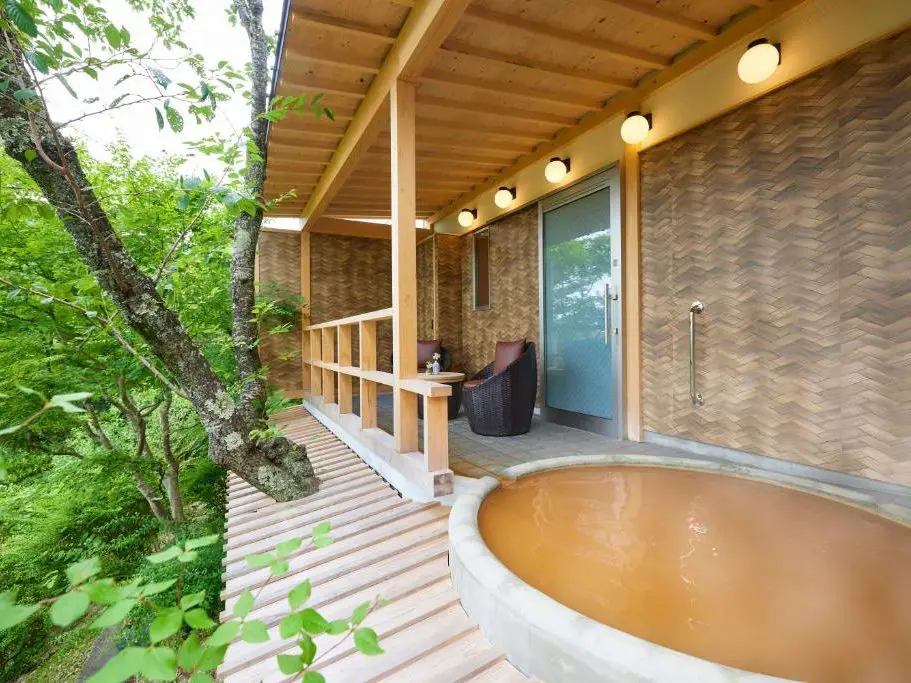
1. Arimasansoh Goshobessho
Rating: ⭐⭐⭐⭐⭐
Location: 8-min walk to Kin no Yu public bath
Guest Reviews: Treehouse onsen tub unlike anywhere else, in-room kinsen bath, private kaiseki dining, wooded villa seclusion
Best Room: Deluxe Villa
From USD $550 – $900 per night
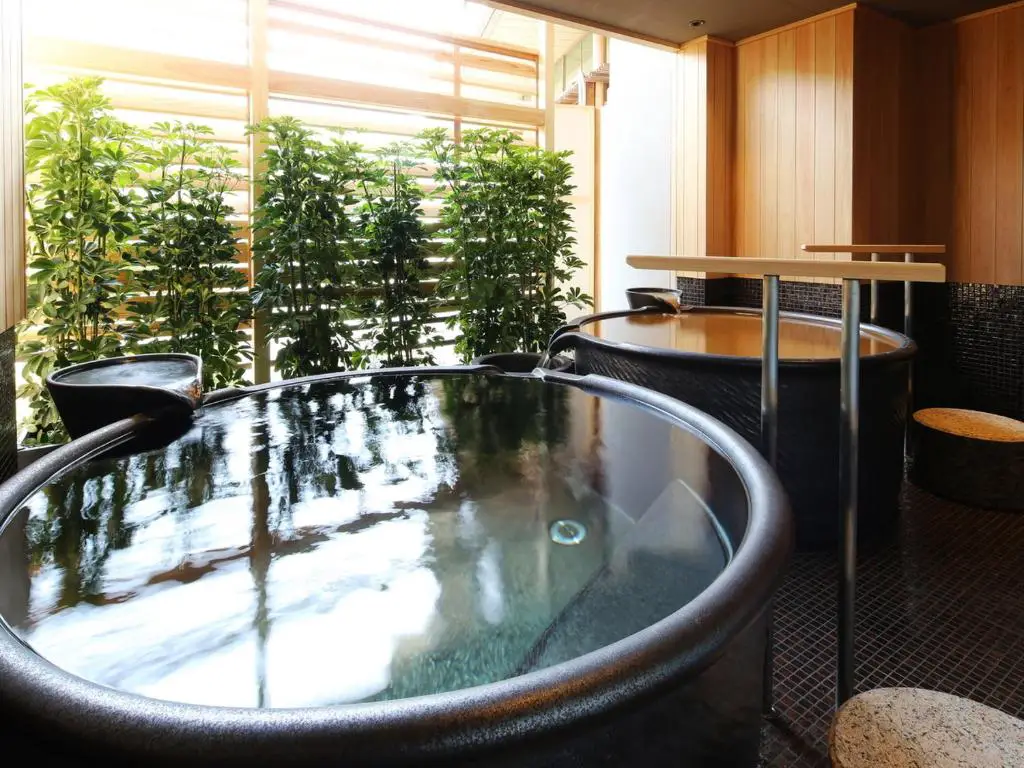
Best Boutique Stay
2. Nakanobo Zuien
Rating: ⭐⭐⭐⭐
Location: 2-min walk to Arima Onsen Station
Guest Reviews: Kinsen and ginsen both in-room, teppan counter dining, pond garden views, adults-only quiet
Best Room: Suite with Spa Bath
From USD $350 – $800 per night
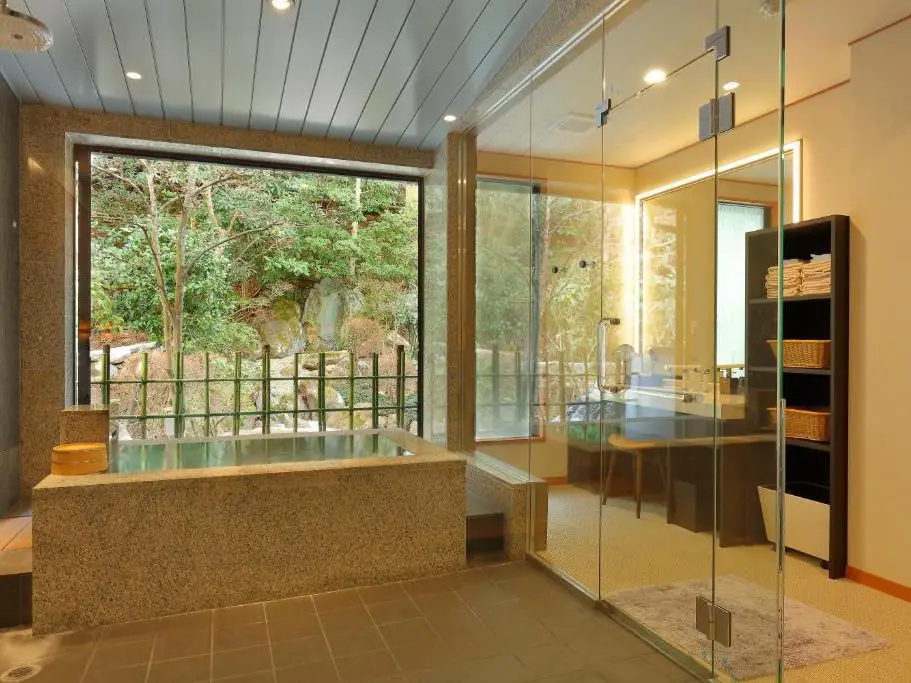
Best for Couples
3. Arima Onsen Taketoritei Maruyama
Rating: ⭐⭐⭐⭐
Location: 15-min walk to Arima Onsen Station (free shuttle available)
Guest Reviews: All 8 baths bookable at no extra charge, Kobe beef kaiseki, bamboo forest hillside setting, on-demand shuttle
Best Room: Presidential suite with indoor silver hot springs
From USD $450 – $800 per night
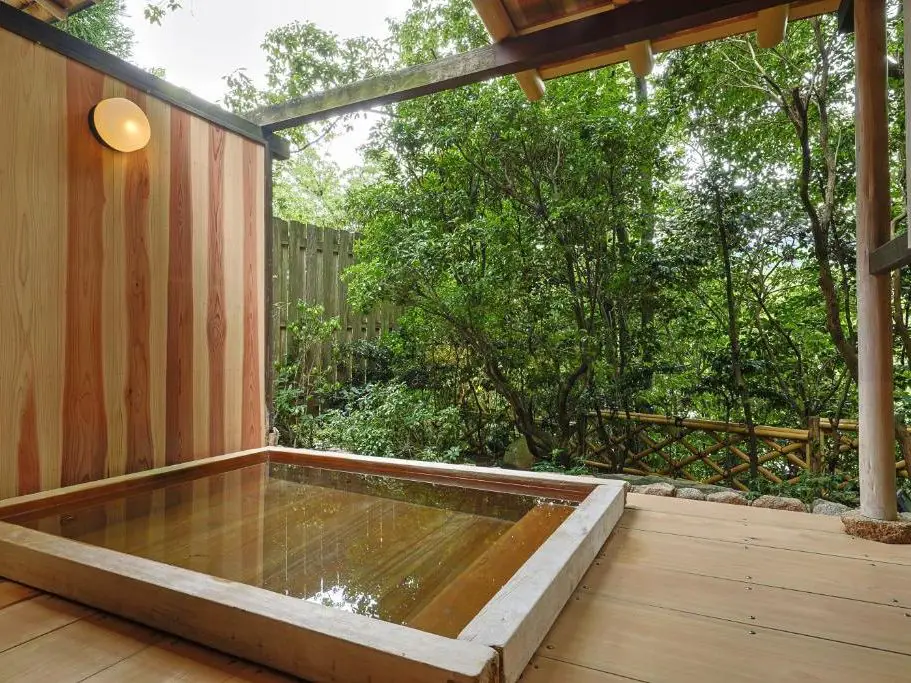
4. Ginsuiso Choraku
Rating: ⭐⭐⭐⭐
Location: 12-min walk to Arima Onsen Station (free shuttle available)
Guest Reviews: Both gold and silver springs in private bath, Akashi seafood kaiseki, panoramic Rokko mountain views, forest outdoor setting
Best Room: Japanese-Style Large Room with Open Air Bath
From USD $350 – $700 per night
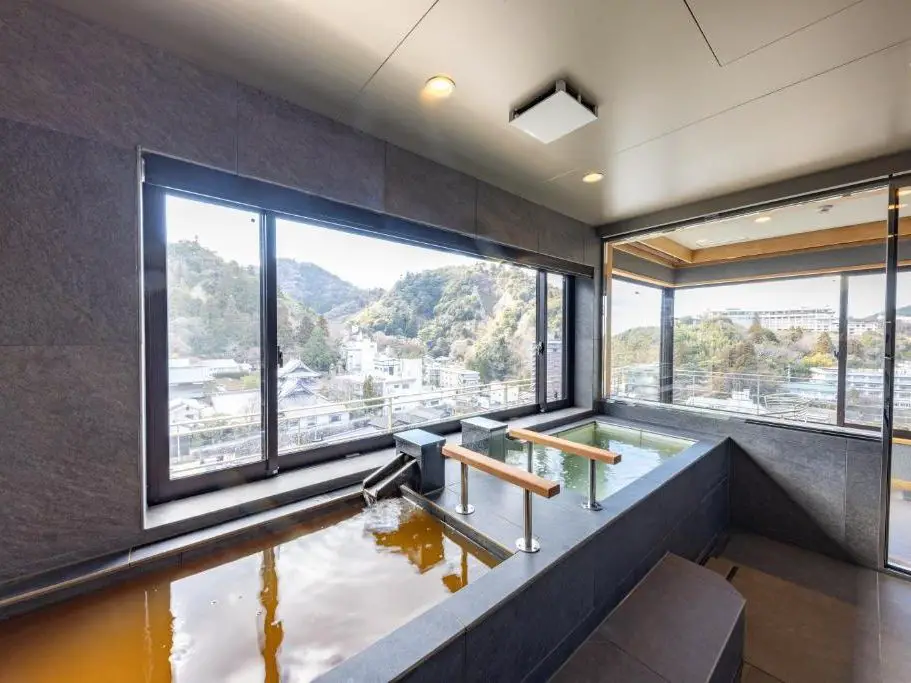
5. Arima Onsen Takayamaso Hanano
Rating: ⭐⭐⭐⭐
Location: 5-min walk to Kin no Yu public bath
Guest Reviews: Adults-only tranquility, suite private spa bath, rolling hills panorama, gold and silver springs both available
Best Room: Presidential Corner Suite
From USD $350 – $750 per night
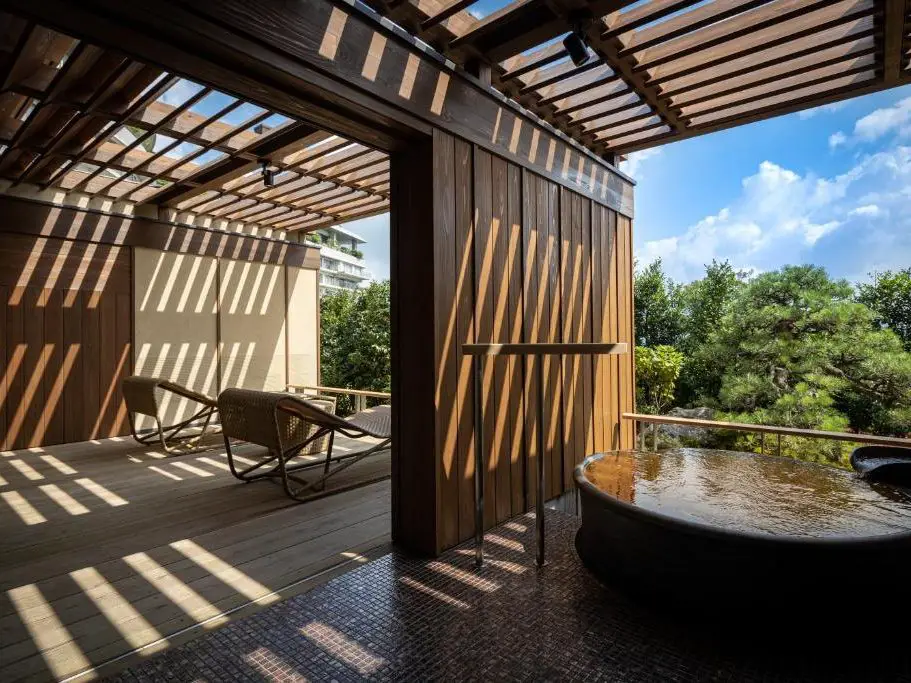
Best Views
6. Arima Grand Hotel
Rating: ⭐⭐⭐⭐
Location: 10-min walk to Arima Onsen Station (free shuttle available)
Guest Reviews: 9th-floor Sea of Clouds bath with Rokko mountain panorama, Kobe beef multi-course dining, 24 private onsen rooms, seasonal outdoor pool
Best Room: Bessho Yura Room with Open-Air Kinsen Bath
From USD $200 – $600 per night
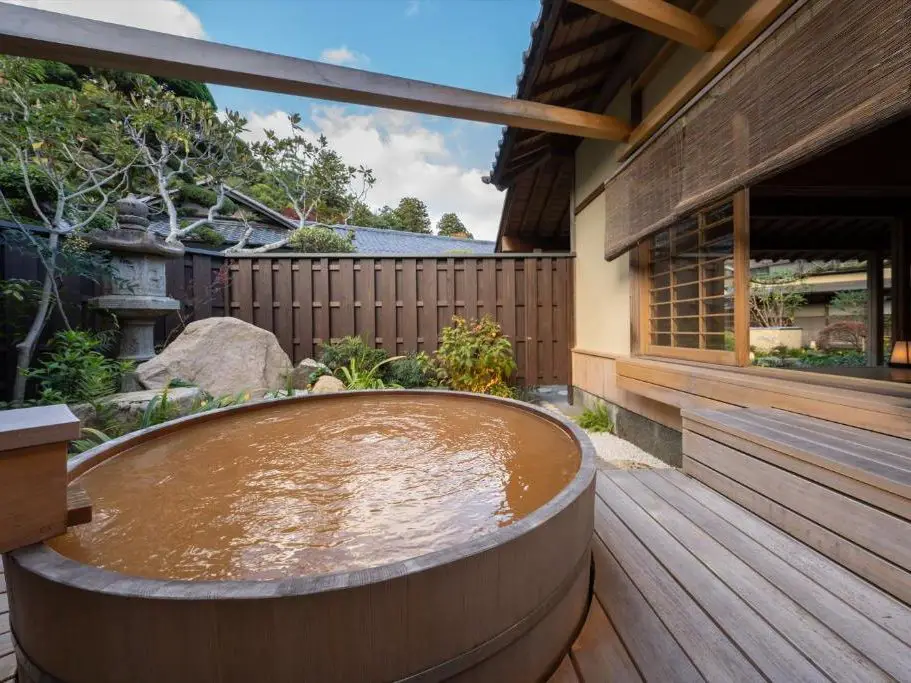
7. Arima Onsen Tocen Goshobo
Rating: ⭐⭐⭐⭐
Location: 5-min walk to Arima Onsen Station
Guest Reviews: Japan’s oldest ryokan, 12th-century architecture, Kinsen kinsen direct from source, Kobe beef and Akashiura port fish kaiseki
Best Room: Kouhankyo Premium Annex with Private Open-Air Bath
From USD $400 – $750 per night
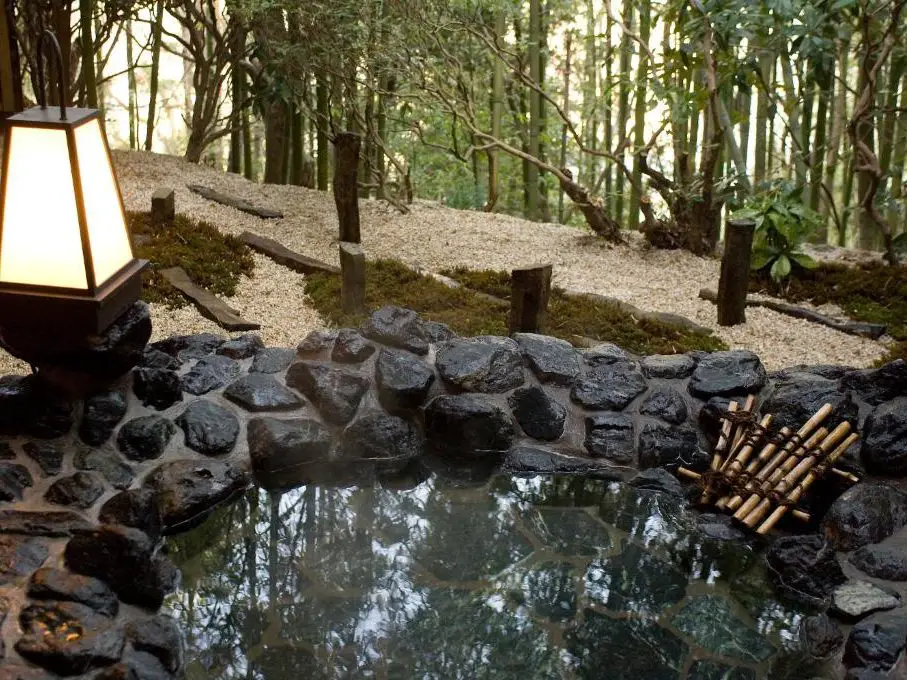
Best Location
8. Negiya Ryofukaku
Rating: ⭐⭐⭐⭐
Location: 3-min walk to Arima Onsen Station
Guest Reviews: 150-year-old timber building, bamboo grove views from private bath, monthly-changing kaiseki menu, library lounge with forest outlook
Best Room: Japanese Style Room with Semi-Open-Air Bath
From USD $250 – $450 per night
Best for Families
9. Arima Onsen Motoyu Ryuusenkaku
Rating: ⭐⭐⭐
Location: 10-min walk to Arima Onsen Station (free shuttle available)
Guest Reviews: Private spring source for golden onsen, children’s playroom and kids pool, all meals served in-room, sweeping Hokusetsu mountain views
Best Room: Sora Japanese Style Family Suite with Open-Air Golden Hot Springs
From USD $250 – $550 per night
10. Kinzan
Rating: ⭐⭐⭐⭐
Location: 8-min walk to Arima Onsen Station (free shuttle available)
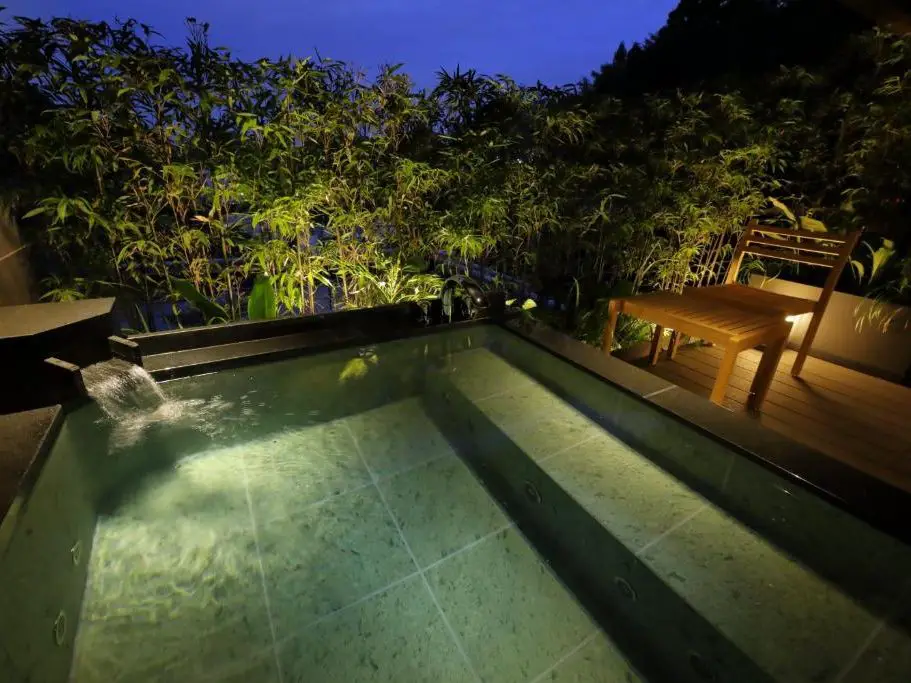
Guest Reviews: Renovated hinoki cypress in-room bath, HANAKIDO fine-dining kaiseki, piano bar, serene Japanese garden
Best Room: Presidential suite
From USD $450 – $700 per night
11. Okuno Hosomichi
Rating: ⭐⭐⭐⭐
Location: 6-min walk to Arima Onsen Station (free shuttle available)
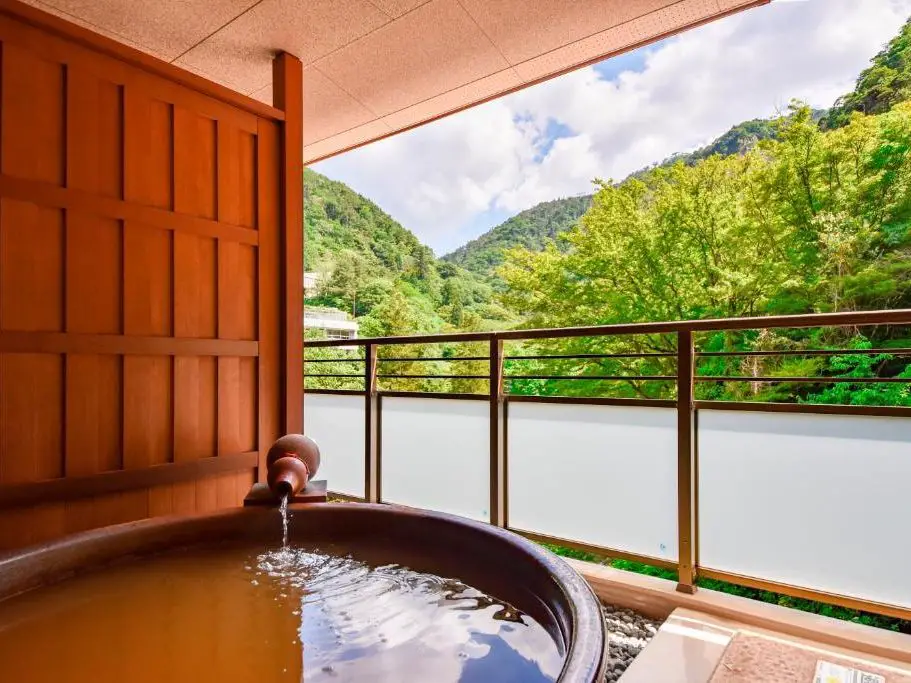
Guest Reviews: Award-winning chef Tadamichi Ota cooks tableside, private terrace open-air golden onsen, mountain views from every room, complimentary in-room drinks and snacks
Best Room: Deluxe Room with Open-Air Bath
From USD $350 – $600 per night
Kinsen vs Ginsen: What You’re Actually Soaking In
Arima Onsen has two completely different spring types, and they feel nothing alike. Most visitors encounter one or the other depending on which room they book — knowing the difference before you arrive helps you choose the right property and set the right expectations.
- Kinsen (gold spring) — the reddish-brown water Arima is famous for. The colour comes from iron oxidising on contact with air. It’s high in iron and salt, which creates genuine buoyancy similar to sea water. The feel is warming and heavy, the smell faintly metallic. It leaves a rust ring on the tub and can stain light fabric — keep your best yukata away from the water’s edge. Traditionally associated with muscle pain, joint stiffness, and poor circulation.
- Ginsen (silver spring) — clear, colourless, and gently carbonated. It produces small bubbles against the skin and has a light, refreshing quality that feels very different to kinsen. No staining, no smell, easier to appreciate for first-timers. Traditionally associated with fatigue recovery and immune support.
Here are a few more things to keep in mind:
- The brown colour of kinsen is not dirty water — it’s a natural chemical reaction and happens fresh every time.
- Most private onsen rooms at Arima pipe one spring type only. Ginsuiso Choraku and Nakanobo Zuien are the two properties on this list with both kinsen and ginsen available in select private rooms.
- There’s no rule requiring a rinse after soaking — many guests skip it deliberately to let the minerals absorb into the skin.
- If you’re visiting in summer and want something lighter and more refreshing, ginsen is the easier pick. Kinsen is the one most people picture when they think of Arima.
In-Room Bath vs Kashikiri: Know What You’re Booking
When a hotel listing says “private onsen,” it can mean two very different things. Booking the wrong type is one of the most common disappointments at Arima — guests expecting a bath outside their door discover it requires a reservation and a walk down the corridor.
- In-room bath — a hot spring tub built directly into your room or on your private balcony. No reservation needed, no time limit. You can soak at midnight, before breakfast, or three times in an afternoon. This is the gold standard of private onsen travel and the setup this page is built around.
- Kashikiri (reservable private bath) — a separate bath facility you book for a fixed time slot, typically 40–50 minutes, at an additional fee of around ¥3,000–5,500 per session. You have the bath entirely to yourself during that window, but you’re working around a schedule. Several hotels offer kashikiri alongside communal baths as an alternative to upgrading your room.
The practical difference comes down to one thing: with an in-room bath, the tub is yours for the entire stay. With kashikiri, you’re renting it by the hour.
Room names are the key to knowing which you’re getting. Look for “open-air bath,” “private bath,” or “rotenburo” in the room title itself — not just in the property description. “Private onsen available at this property” usually means kashikiri, not an in-room tub. At several properties on this list, including Tocen Goshobo and Negiya Ryofukaku, only certain room categories have an attached bath. Standard rooms use shared facilities. Always check at the room level, not the property level.
How to Confirm Which Spring Type Your Room Actually Gets
This is the question almost no one thinks to ask until they’re already at the ryokan. A room listed as “private open-air bath” tells you you’ll have privacy — it doesn’t tell you whether the water is kinsen, ginsen, or in some cases plain municipal water that isn’t spring-fed at all. At Arima’s prices, it’s worth checking before you book.
Read the full room description carefully. Kinsen appears as “golden spring,” “iron spring,” or “chloride spring.” Ginsen appears as “silver spring,” “carbonated spring,” or “radium spring.” Any of these phrases confirm the water is genuine hot spring water. If the description mentions only “open-air bath” or “private bath” with no spring type named, contact the property directly. A simple email asking which spring type feeds the in-room bath is a completely normal question and any ryokan used to international guests will answer it promptly.
Booking platform room names often truncate the full details. The property’s own website will always have more information than a short listing title — worth a quick check before committing.
Here’s what the hotels on this list pipe into their private rooms:
- Kinsen (gold spring): Arimasansoh Goshobessho, Arima Onsen Taketoritei Maruyama (also has ginsen across its 8 private baths), Arima Grand Hotel Bessho Yura rooms, Okuno Hosomichi, Arima Onsen Motoyu Ryuusenkaku, Negiya Ryofukaku, Arima Onsen Tocen Goshobo
- Ginsen (silver spring): Kinzan West Wing VIP rooms
- Both springs available in private rooms: Nakanobo Zuien VIP suites, Ginsuiso Choraku select rooms, Arima Onsen Takayamaso Hanano
One thing worth knowing: some rooms at Arima ryokans have a private bath with genuine soaking tubs and mountain views, but the water is not spring-fed — it’s regular water, sometimes heated. The giveaway is the absence of any spring type language anywhere in the room description. If it doesn’t say kinsen, ginsen, golden, silver, or iron spring, ask before booking.
Getting Here from Osaka, Kobe, and Kyoto
Arima Onsen sits in the Rokko mountains behind Kobe — close enough to all three cities that it works as either a day trip or an overnight stay, but just remote enough that getting the route right saves time. Every ryokan on this list offers a free shuttle from Arima Onsen Station or the main bus stop, so the final stretch is taken care of once you arrive.
From Kobe (Sannomiya)
- By train: Kobe Municipal Subway from Sannomiya to Tanigami, then Kobe Electric Railway to Arima Onsen Station. Around 30–40 minutes total, approximately ¥720. Trains run frequently throughout the day.
- By bus: Shinki Bus direct from Sannomiya to Arima Onsen. Around 25–30 minutes, approximately ¥600. Runs roughly once per hour — less frequent on weekends.
- The train is more reliable for timing; the bus is slightly cheaper and drops you at the main bus terminal in the heart of town.
From Osaka (Umeda)
- By bus: Hankyu Expressway Bus direct from Hankyu Sanbangai (east of Osaka/Umeda Station) to Arima Onsen. Around 60 minutes, approximately ¥1,400. Advance reservation recommended, especially on weekends and public holidays.
- By train: JR or Hankyu to Sannomiya, then subway and Kobe Electric Railway as above. Around 75–90 minutes total. No reservation needed and more flexible on departure times.
- The direct bus is the simplest option if timing works. The train gives more flexibility if you’re combining with time in Kobe.
From Kyoto
- By bus: Hankyu Expressway Bus direct from Kyoto Station to Arima Onsen. Around 75 minutes, approximately ¥1,650. Only two buses per day in each direction — check the timetable carefully before planning your arrival.
- By train: Shinkansen or JR Special Rapid to Sannomiya (around 50 minutes), then subway and Kobe Electric Railway to Arima Onsen. Around 90 minutes total, more flexible on timing.
- Given the limited bus frequency from Kyoto, most visitors combining Arima with a Kyoto trip find the train more practical.
A few things worth knowing regardless of which city you’re coming from: many shops and restaurants in Arima close on Tuesdays or Wednesdays, so weekday visits outside those days are quieter and better for exploring the town between soaks. Arima is walkable once you’re there — the entire hot spring district is compact enough to cover on foot in under 20 minutes.
When to Book and What Each Season Actually Delivers
Arima works in every season, but what you get from a stay changes significantly depending on when you go. The private onsen angle makes this more relevant than usual — you’re paying premium rates, and the atmosphere outside your tub is part of what you’re paying for.
- Autumn (mid-November) — the strongest choice for most visitors. The Rokko mountains surrounding Arima turn deep red and amber, the air is cool enough that sliding into a hot kinsen bath feels genuinely earned, and the town looks its best. Zuihoji Park is particularly striking at peak colour. The tradeoff is availability — autumn weekends at the top ryokans book out 3–6 months ahead, and rates are at their highest. If you want autumn, book early and consider a weekday stay, which is often ¥5,000–10,000 per person cheaper than a weekend.
- Spring (late March to early April) — the second-best window. Cherry blossoms along Arima River and the surrounding hillsides, mild temperatures, and lighter crowds than autumn. Works especially well if you’re building a wider Kansai itinerary combining Arima with Kobe and Kyoto. Lead time for booking is shorter than autumn but popular rooms still fill quickly around the peak blossom period.
- Winter (December to February) — cold, quiet, and atmospheric. Steam rising from the outdoor baths against cold mountain air is one of Arima’s most memorable sights, and the town feels genuinely peaceful with fewer day-trippers. Rates drop noticeably from autumn peaks. The main consideration is that some outdoor facilities close or reduce hours in deep winter — worth confirming with your ryokan.
- Summer (July to August) — the weakest window for a private onsen stay. Arima’s humidity is high and the mountain heat makes soaking less appealing. Room rates are at their lowest and availability is easiest, which suits budget-conscious travellers, but the experience of a hot bath in 35-degree heat is a different proposition. If you’re coming in summer, lean toward properties with both kinsen and ginsen — the lighter, carbonated ginsen is noticeably more refreshing in warm weather.
One practical note on booking lead times: for Arimasansoh Goshobessho, Nakanobo Zuien, Kinzan, and Arima Onsen Taketoritei Maruyama — the four most sought-after properties on this list — weekends in autumn and around Golden Week (late April to early May) and New Year can disappear within hours of the booking window opening. Six months out is not too early for those dates. For the remaining properties, two to three months ahead is generally sufficient outside peak periods.
Tattoos and Private Onsen: What the Rules Actually Mean Here
Arima Onsen has a reputation for strict tattoo policies, and that reputation is broadly accurate for communal baths. The good news for tattooed travellers is straightforward: a room with an in-room onsen bath removes the question entirely. If the tub is attached to your room and accessible only to you, there are no restrictions, no staff to check, and no policy to navigate. Every hotel on this page offers private bathing options that work for tattooed guests.
The distinction matters most at properties where private rooms are only some of what’s available. At Arima Grand Hotel, Tocen Goshobo, and Negiya Ryofukaku, communal baths exist alongside the private options — and communal baths at all three follow traditional restrictions. If you have tattoos and are staying at any of these properties, book a room with an in-room bath specifically, and use that rather than the shared facilities.
A few properties on this list have no communal baths at all:
- Arima Onsen Taketoritei Maruyama — all 8 baths are private-use only. No communal bathing exists at the property, so there is nothing to navigate.
- Arimasansoh Goshobessho — every suite has its own private onsen. Same situation.
For kashikiri rental baths, policies vary. Most properties allow tattooed guests to use reservable private baths since they’re locked and accessed by one party at a time. Confirm directly with the ryokan if you’re relying on kashikiri rather than an in-room tub — policies are updated periodically and the most recent information is always with the property itself.
What a Private Onsen Ryokan Stay Actually Looks Like
First-time visitors to a Japanese ryokan often arrive unsure of what’s expected of them. The sequence of a stay is fairly consistent across all the properties on this list, and knowing it in advance makes the experience feel less like navigating etiquette and more like settling in.
- Arrival — most ryokans ask you to call ahead from the station or bus stop. Your shuttle will be waiting, or will arrive within a few minutes. Luggage is handled at the entrance. You’ll be shown to a reception area rather than a standard hotel front desk — expect tea and a small welcome sweet while paperwork is completed.
- Getting to your room — a staff member will walk you to your room, explain the facilities, show you how the in-room bath works, and set out your yukata (the lightweight cotton robe worn throughout your stay). Take note of the bath temperature controls and the water valve — kinsen in particular runs hot and usually needs adjusting before you step in.
- Before dinner — the first bath of the stay. Most guests soak for 20–30 minutes before the evening meal. This is the rhythm the ryokan is built around — arrive, change into yukata, bathe, eat.
- Dinner — kaiseki is a multi-course meal that arrives in sequence over 60–90 minutes, either in your room or a private dining room depending on the property. Check-in by 18:00–19:00 is standard to receive dinner; if you’re arriving late, notify the ryokan in advance. Dietary requirements need to be flagged at least 3 days before arrival.
- Evening bath — after dinner is the most popular time to soak. With an in-room tub there’s no competition for a slot — fill it whenever you’re ready and stay as long as you like.
- Morning — a bath before breakfast is one of the pleasures of a ryokan stay and the quietest time of day. Breakfast is typically served between 7:30 and 9:00, either in your room or a dining area, and ranges from full Japanese kaiseki to simpler set meals depending on the property.
- Checkout — usually between 10:00 and 12:00. Luggage can be stored at the front desk if you want to explore the town before heading to your next destination. The shuttle back to the station runs on request.
One thing worth knowing: the yukata is worn throughout the property, not just in your room. Walking the corridors, visiting common areas, and in some cases exploring the immediate streets outside in yukata is entirely normal and expected. It signals you’re a guest, and the town is used to it.
FAQs
1. Do all the rooms at these ryokans have a private onsen, or just some of them?
It varies by property. Arimasansoh Goshobessho and Arima Onsen Taketoritei Maruyama are the two where every room has a private bath — at both properties there are no communal baths at all. At the others, private onsen rooms are a specific category you need to select at booking. Standard rooms at Negiya Ryofukaku, Tocen Goshobo, Arima Grand Hotel, and Ginsuiso Choraku use shared facilities.
2. How far in advance do I need to book?
For autumn (November) and spring cherry blossom weekends, six months ahead is realistic for the top properties — Arimasansoh Goshobessho, Nakanobo Zuien, Kinzan, and Taketoritei Maruyama regularly fill that far out. For weekday stays outside peak periods, two to three months is generally enough. Summer has the most availability and shortest lead times.
3. Can I visit Arima Onsen as a day trip and still use a private bath?
Some ryokans offer day-use plans that include access to onsen facilities, but in-room private baths are almost exclusively reserved for overnight guests. Kashikiri rental baths are the most likely day-use option — confirm directly with the property, as availability and pricing vary and not all ryokans accept day visitors.
4. Is meals included in the room rate?
At most ryokans on this list, the standard booking includes both dinner and breakfast — this is the traditional ryokan model. Room-only plans exist at some properties but are less common and usually need to be requested specifically. Meals are a significant part of what makes these stays worth the price, and opting out is generally not recommended for a first ryokan experience.
5. What should I do if I have dietary restrictions?
Notify the ryokan at least three days before arrival — most require this lead time to adjust the kaiseki menu. Vegetarian and allergen requests are handled regularly at all properties on this list, though the degree of flexibility varies. Severe allergies should be communicated clearly and confirmed in writing. Vegan requests are less straightforward at traditional kaiseki ryokans and worth discussing directly before booking.
6. Is there anything I shouldn’t do in the private onsen bath?
Shower before entering the tub — this is standard onsen etiquette regardless of whether the bath is private or communal, and your room will have a shower area specifically for this. Don’t submerge your towel in the water. If the bath has kinsen water, be aware the iron content will stain light fabric. Otherwise, private baths are relaxed — the point is that you have the space to yourself entirely.
7. How long should I stay?
One night is the minimum to experience the rhythm of a ryokan stay — arrive, bathe, eat, sleep, bathe, eat, leave. Two nights is noticeably better. It removes the pressure of fitting everything into a single evening and morning, lets you soak more freely, and gives you time to explore the town between sessions. Most guests who stay two nights say they wish they had booked three.
8. Do the ryokans speak English?
All properties on this list have varying degrees of English capability. Taketoritei Maruyama, Arimasansoh Goshobessho, Nakanobo Zuien, and Okuno Hosomichi are consistently noted by guests as having strong English communication. At others, English is functional rather than fluent — staff can handle check-in, meal preferences, and basic requests without difficulty. Written communication via email before arrival is reliably handled in English at all properties.