
Sapporo sits at the edge of one of Japan’s richest hot spring regions, which means you don’t have to travel far to find a ryokan where the onsen is yours alone. Jozankei, about an hour from the city centre, is where most of the best private-bath properties are clustered, tucked into forested river valleys with water that flows straight from the ground into your room. The difference between a shared public bath and a private one is hard to overstate — you set the pace, you stay as long as you like, and you can go at two in the morning in the snow if the mood takes you. Here are the Jozankei properties worth booking for exactly that experience.
Table of Contents
Hotels
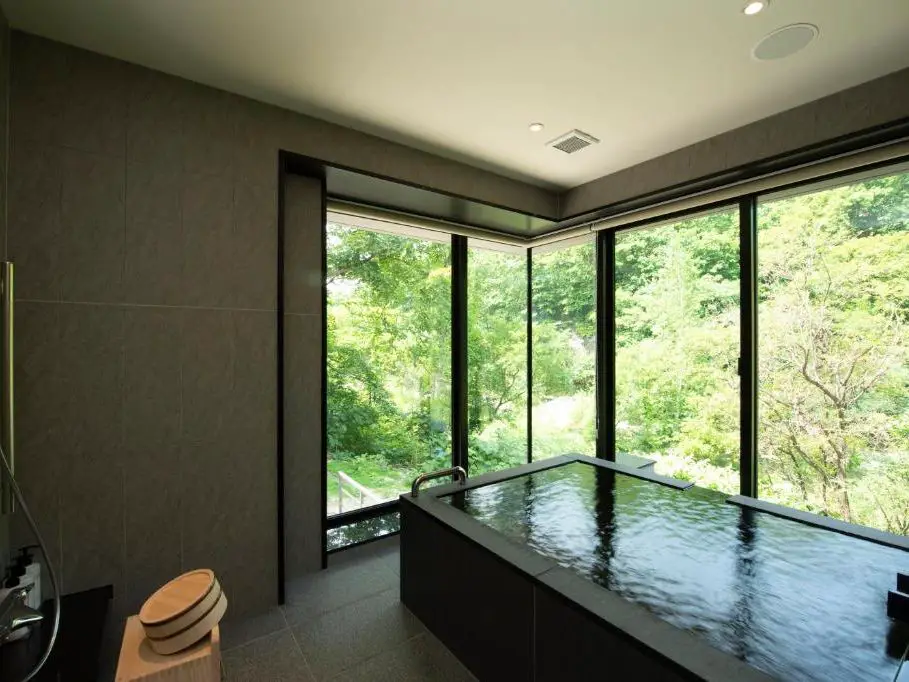
| 1. Chalet Ivy Jozankei Most Luxurious Rating: ⭐⭐⭐⭐⭐ Location: 5-minute walk to Jozankei Hot Spring Guest Reviews: River views from private onsen, exceptional kaiseki dinner, multilingual staff, spacious suites Best Room: Deluxe Corner Suite Price: From USD $850 – $1,200 per night |
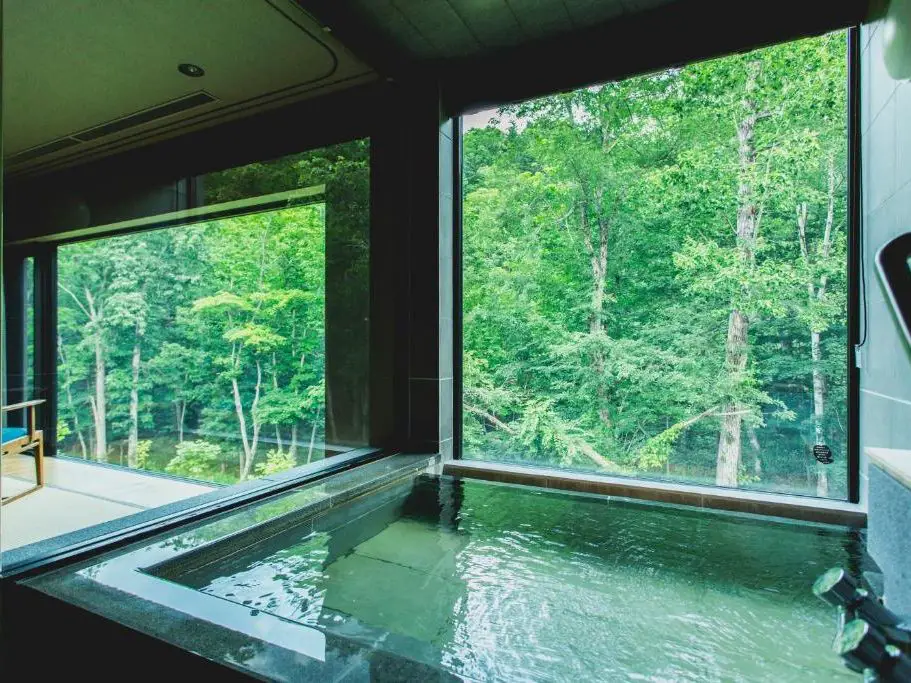
| 2. Okujozankei Onsen Kasho Gyoen Best for Couples Rating: ⭐⭐⭐⭐⭐ Location: 5-minute drive to Jozankei Hot Spring; 35-minute drive from central Sapporo Guest Reviews: Forest panorama bath in every room, Italian-kaiseki fusion dinner, serene adults-only atmosphere Best Room: Japanese Suite Room with Private Hot Spring [Kurenai] Price: From USD $400 – $600 per night |
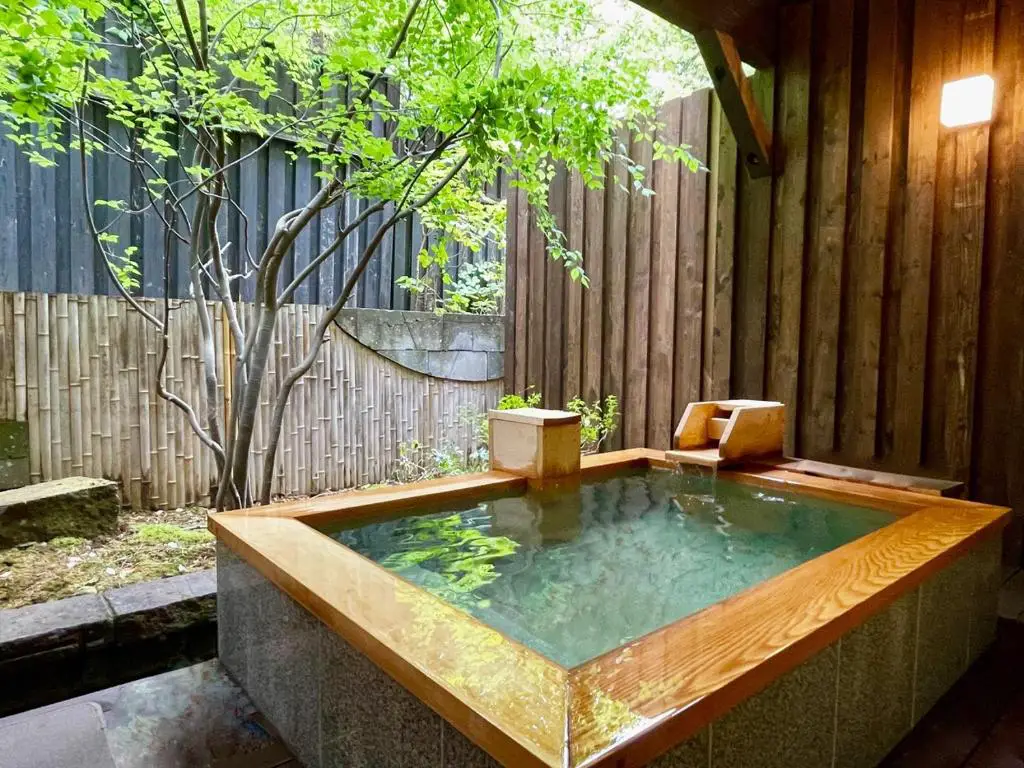
| 3. Suizantei Club Jozankei Rating: ⭐⭐⭐⭐ Location: 20-minute walk to Futami Suspension Bridge; 3-minute walk to Shiraito no Taki waterfall Guest Reviews: Cypress and marble in-room baths, flat-iron grill dining, free lounge drinks, English-speaking staff Best Room: Suite with Marble Bath Price: From USD $250 – $600 per night |
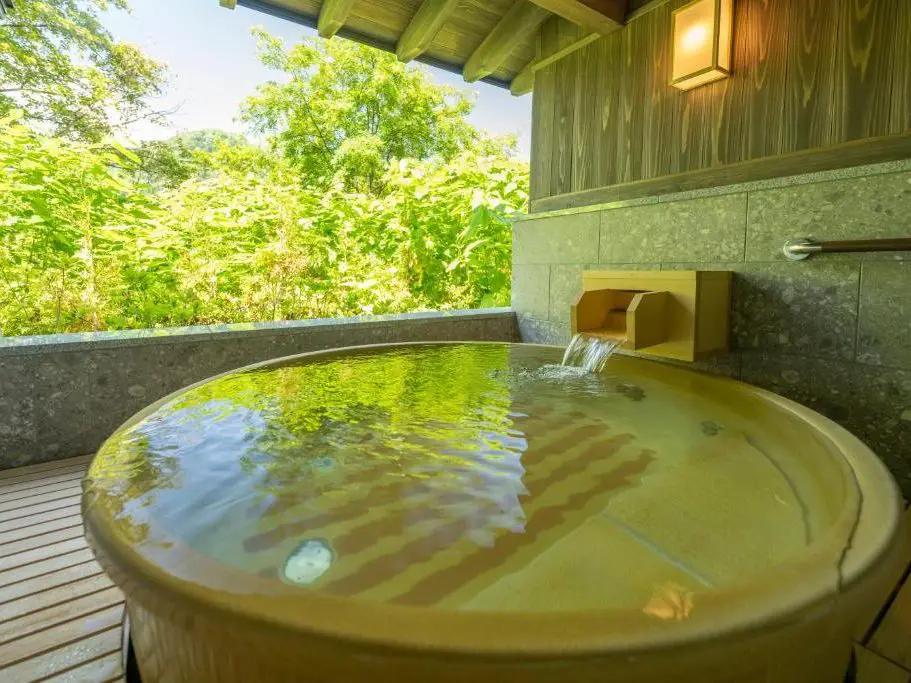
| 4. Jozankei Onsen Yurakusoan Best for Solo Travelers Rating: ⭐⭐⭐⭐ Location: Steps from Jozankei Hot Spring; 18-minute walk to Futami Suspension Bridge Guest Reviews: Private in-room onsen in every room, four reservable kashikiri baths, late-night ramen, kaiseki dinner Best Room: Twin Room with Onsen View Bath Price: From USD $225 – $500 per night |
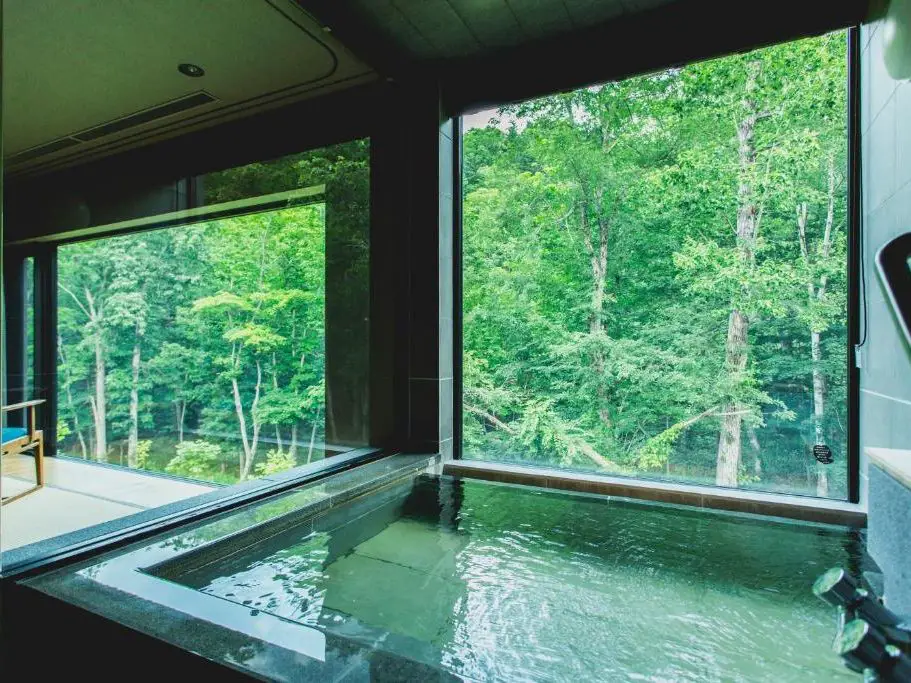
| 5. Grand Blissen Hotel Jozankei Best Value Rating: ⭐⭐⭐⭐ Location: 15-minute walk to Jozankei Hot Spring; 6-minute walk to Jozan Gensen Park Guest Reviews: Valley-view private onsen, signature roast beef dinner, snowfall outdoor bath, panoramic hilltop windows Best Room: View Floor Luxury Room with Private Hot Spring Price: From USD $215 – $450 per night |
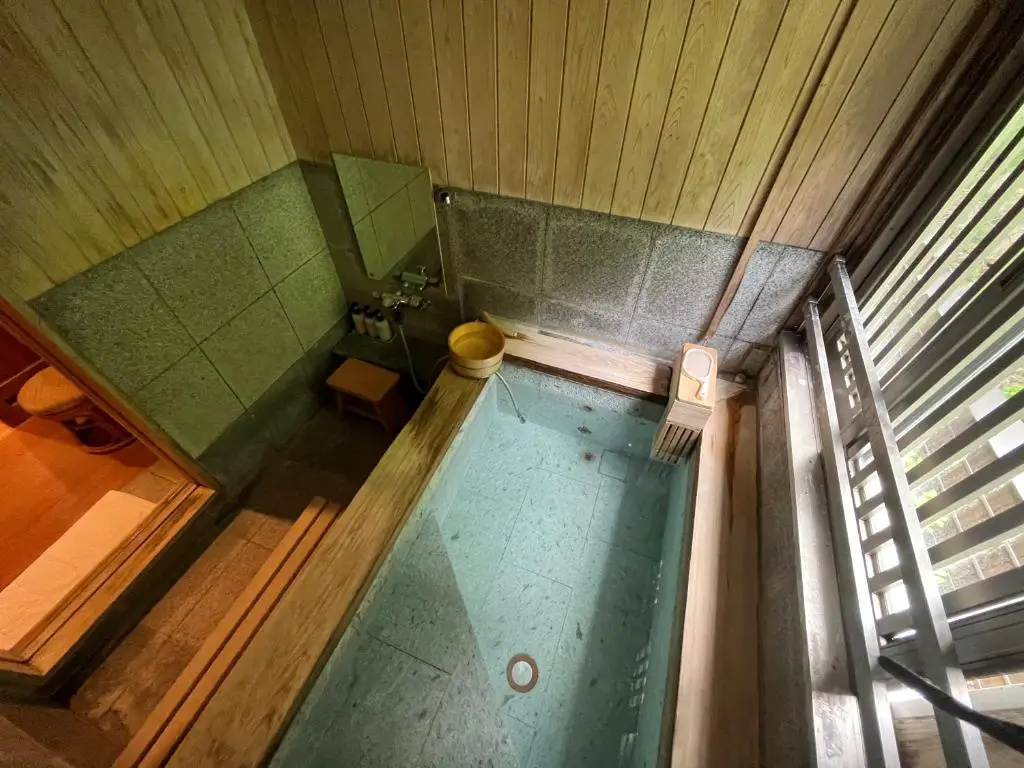
| 6. Jozankei Daiichi Hotel Suizantei Best Boutique Stay Rating: ⭐⭐⭐⭐⭐ Location: 5-minute walk to Daiichi Hotel Mae bus stop; 14-minute walk to Futami Suspension Bridge Guest Reviews: Private open-air bath with forest views, Michelin-starred kaiseki restaurant, all-you-can-drink lounge, cypress-wood baths Best Room: Seikaiha Room with Private Open-Air Bath and Sauna Price: From USD $390 – $950 per night |
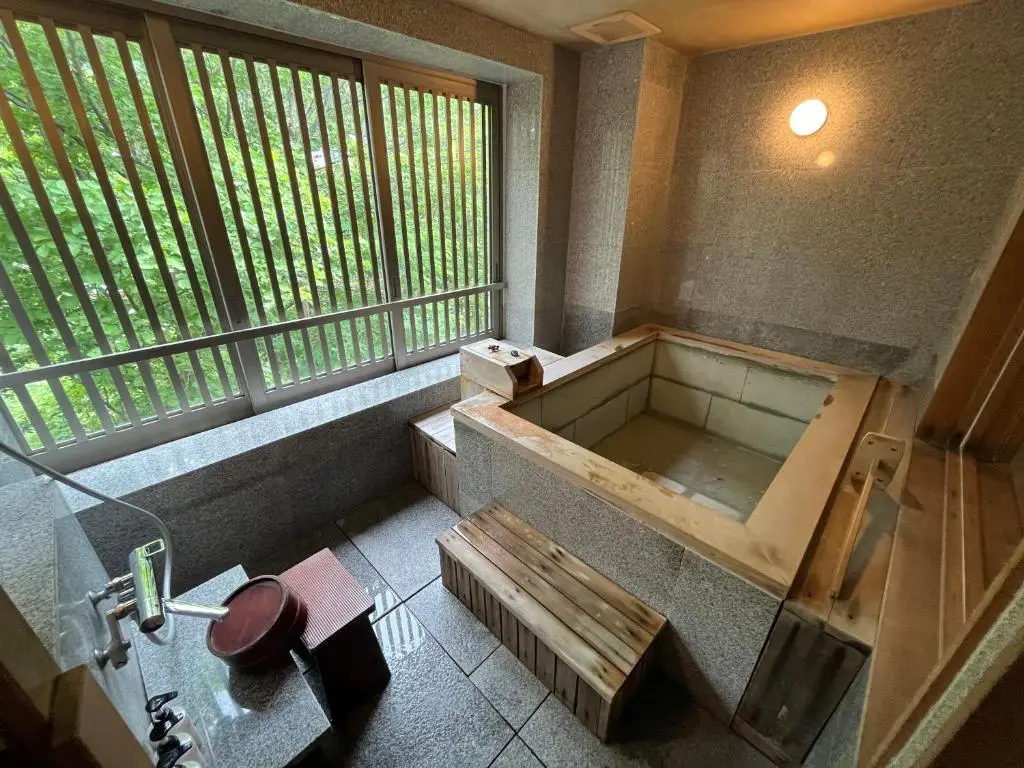
| 7. Kuriya Suizan Rating: ⭐⭐⭐⭐⭐ Location: 5-minute walk to Jozankei Hot Spring; 5-minute walk to Futami Park Guest Reviews: Open-kitchen live-cooking dinner, private sauna in suite, seamless dietary allergy accommodation, well-stocked free lounge Best Room: Suite with Private Open-Air Hot Spring Bath Price: From USD $365 – $550 per night |

| 8. Hanamomiji Best for Families Rating: ⭐⭐⭐⭐ Location: 4-minute walk to Jozankei Futami Park; 11-minute walk to Jozankei Hot Spring Guest Reviews: Free-flowing top-floor private onsen, kaiseki dinner with Hokkaido seasonal ingredients, complimentary sake and whisky lounge, spacious tatami rooms Best Room: Premier Floor Room with Private Hot Spring Price: From USD $170 – $650 per night |
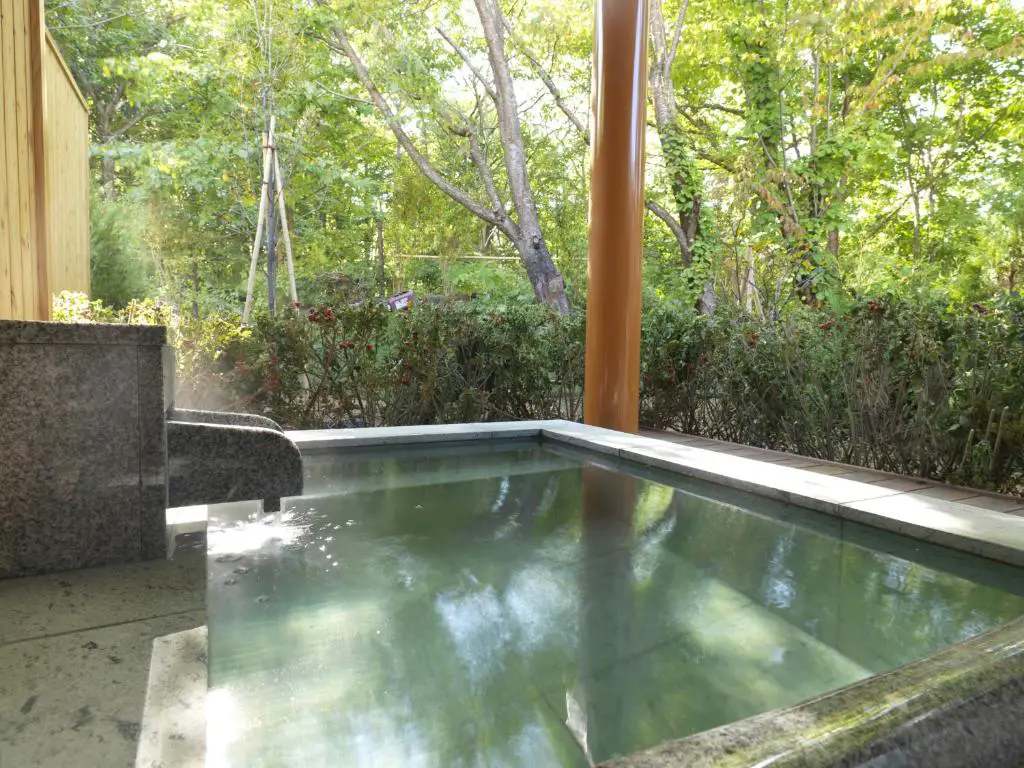
| 9. Jozankei Tsuruga Resort Spa Mori no Uta Best Location Rating: ⭐⭐⭐⭐ Location: 3-minute walk to Jozankei Hot Spring; 12-minute walk to Futami Park Guest Reviews: Forest-enclosed outdoor onsen, evening harp concert, open-kitchen buffet with Hokkaido produce, fireplace lounge with marshmallow roasting Best Room: Cottage with Private Open-Air Hot Spring Price: From USD $225 – $600 per night |
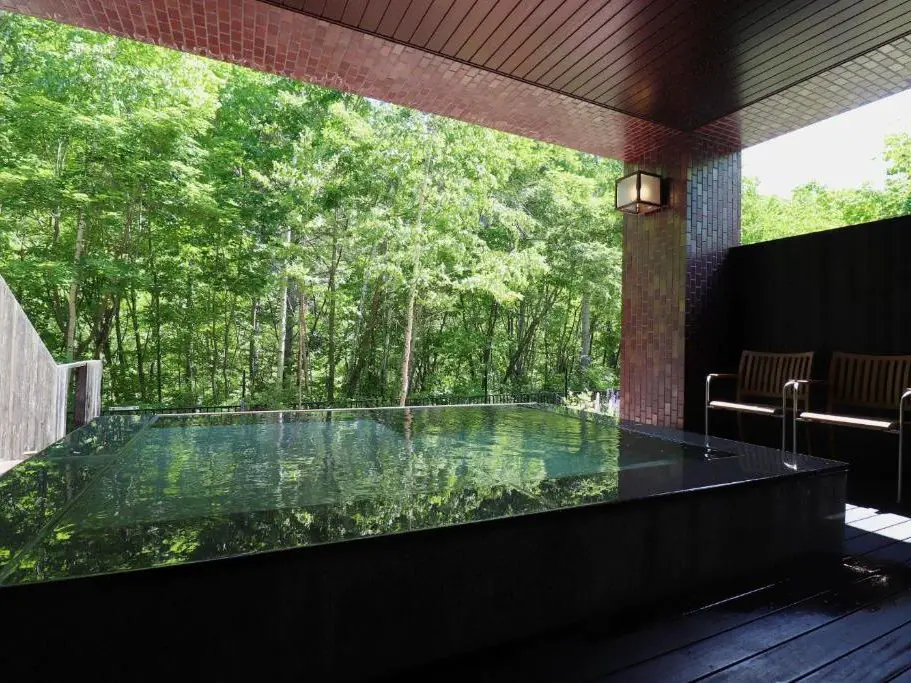
| 10. Suigan Most Unique Stay Rating: ⭐⭐⭐⭐ Location: 5-minute drive to Jozankei Hot Spring; 10-minute walk to Futami Suspension Bridge Guest Reviews: Private open-air onsen with snow views, in-room shabu-shabu dinner, complimentary beer and snack bar, some rooms with private sauna and theater Best Room: Luxury Suite 101 with Private Open-Air Bath and Sauna Price: From USD $450 – $900 per night |
Why Jozankei Is Sapporo’s Private Onsen Capital
Sapporo is one of the few major Japanese cities where you can step off a city bus and be soaking in a natural mountain hot spring within the hour. Jozankei sits 26 kilometres south of central Sapporo in a narrow river valley inside Shikotsu-Toya National Park, and while it’s technically within Sapporo’s city limits, it feels nothing like the city — it’s forested gorge country, with the Toyohira River running through the middle and volcanic spring water rising naturally from the ground.
That geography is why every hotel on this page is in Jozankei rather than the city centre. Private onsen require naturally occurring hot spring water, and Jozankei has two independent spring sources that have been flowing since the area was first developed in the 1860s. Hotels in central Sapporo that market themselves as onsen properties typically pipe water in from elsewhere — most commonly Noboribetsu, a two-hour drive away. The Jozankei hotels here draw directly from local sources, which means the water is fresher, hotter, and higher in the mineral compounds — primarily sodium chloride and sodium bicarbonate — that give it the skin-softening quality traditional onsen are known for.
The concentration of genuinely excellent private onsen ryokan here is unusual even by Japanese standards. Most hot spring towns have one or two standout properties surrounded by mediocre options. Jozankei has more than a dozen credible choices, which is why it earned the nickname Sapporo no oku-zashiki — Sapporo’s inner parlour — a term that captures both the proximity and the sense that this is where the city goes to properly unwind.
In-Room Bath vs. Kashikiri vs. Rentable Private Bath: What the Terms Mean
Before booking, it’s worth understanding exactly what kind of private onsen you’re paying for. The phrase “private onsen” covers three distinct arrangements, and the experience differs significantly depending on which one your room or hotel offers.
- In-room onsen is the arrangement most people have in mind when they search for a private onsen hotel. The bath is physically inside or directly attached to your room — usually on a private terrace or in a dedicated bathroom area — and the spring water flows directly into it from the building’s hot spring source. You can use it at two in the morning, stay in for an hour, or dip in three times before breakfast. No booking required, no time limit, no other guests. This is what every room at Chalet Ivy Jozankei, Okujozankei Onsen Kasho Gyoen, Suizantei Club Jozankei, and Jozankei Onsen Yurakusoan provides as standard.
- Kashikiri (貸し切り, meaning “reserved exclusively”) are private baths located outside your room that you reserve for a set time slot — typically 45 to 60 minutes. They’re physically separate from both the public baths and your room, usually reached via a corridor or garden path. Several properties on this list offer kashikiri baths in addition to the public facilities: Jozankei Onsen Yurakusoan has four, each built from a different material — hiba wood, cedar, stone, and ceramic. Some are free to guests and bookable on arrival; others carry a small fee, typically ¥1,000–¥2,000 per use. They’re a good option at hotels where not every room type includes a private bath, and they’re also the most reliable choice for guests with tattoos who can’t use the shared public areas.
- Rentable private baths are similar to kashikiri but more often operate on a walk-in or same-day reservation basis rather than being pre-bookable. Jozankei Daiichi Hotel Suizantei and Kuriya Suizan both maintain rentable baths outside the guest rooms for this purpose. At some properties they must be reserved months in advance — one Trip.com reviewer flagged that Jozankei Daiichi’s rentable baths require booking 2–3 months ahead — so if a kashikiri is part of your plan, contact the hotel before arrival rather than assuming you can arrange it at check-in.
One practical note: the phrase “private bathroom” in a standard hotel listing means something completely different. It simply refers to an en suite toilet and shower — not a hot spring bath of any kind. When reviewing room listings on Booking.com, look specifically for “spring water tub,” “open-air bath,” “private onsen,” or “hot spring bath” in the room highlights, not just “private bathroom.”
Which Hotel Suits You
The ten properties on this page cover a wide range of styles, sizes, and price points. Here’s how to narrow it down.
- For the most complete private onsen experience, book Chalet Ivy Jozankei, Okujozankei Onsen Kasho Gyoen, Suizantei Club Jozankei, or Jozankei Onsen Yurakusoan. All four have private in-room hot spring baths in every room without exception, so there’s no risk of booking the wrong room type. Chalet Ivy and Kasho Gyoen sit at the top of the luxury range; Yurakusoan offers the best value among the four, with the added bonus of four free kashikiri baths outside the room.
- For couples after seclusion, Suigan is the clear answer. Only seven rooms, no shared public bath, meals delivered to your private door — you can go an entire stay without encountering another guest. Kasho Gyoen runs a close second: adults-only, 23 rooms set deeper into the valley than most, and Italian-Japanese fusion dinners that set it apart from every other property on the list.
- For families, Hanamomiji is the strongest choice by some distance. It accepts children of all ages, has the largest room inventory with the most flexible configurations, runs a seasonal outdoor pool, and sits steps from Futami Park — a genuine destination in its own right. The Premier Floor rooms have in-room private baths; families who want more space can book the larger tatami rooms and use the three private baths bookable within the property.
- For first-time ryokan guests, Grand Blissen Hotel Jozankei and Jozankei Tsuruga Resort Spa Mori no Uta are the gentler entry points. Both have English-speaking staff, buffet dining rather than the more formal kaiseki service, and a warmer, resort-hotel atmosphere that doesn’t require much knowledge of ryokan customs to navigate. Mori no Uta’s evening harp concert and lobby marshmallow roasting are specifically cited by guests as unexpected highlights.
- For food-first travellers, Jozankei Daiichi Hotel Suizantei and Kuriya Suizan are in a different league. Daiichi has a Michelin-starred restaurant on site — Shokudo Ichi, helmed by a chef who trained under Michel Bras — and a free all-you-can-drink lounge that guests consistently describe as one of the stay’s highlights. Kuriya Suizan is run by the same kitchen team, but in a more intimate 14-room auberge format with open-kitchen live-cooking dinners as the centrepiece.
- On budget, Hanamomiji‘s standard rooms start from around $170 per night off-peak, making it the most accessible entry point on the list. Grand Blissen follows at around $215. Every other property sits at $225 and above, with Chalet Ivy and Suigan pushing toward $900 in peak winter season.
Getting to Jozankei from Sapporo
Jozankei sits about 26 kilometres southwest of central Sapporo, and the journey takes between 40 minutes by car and 75 minutes by public bus depending on your route and the time of year.
- By hotel shuttle is the most comfortable option and the one most guests use. Almost every property on this page runs a free shuttle from somewhere near Sapporo Station or Odori — though timetables vary significantly. Most run once or twice daily and require advance reservation, often by the day before. A handful, including Jozankei Daiichi Hotel Suizantei and Okujozankei Onsen Kasho Gyoen, pick up from a shared stop near Odori Park rather than Sapporo Station itself. Confirm the exact pickup location and reservation deadline when you book, and arrange it as early as possible — shuttles fill up, particularly on weekends and during winter.
- By direct bus is the most flexible public transport option. The Kappa Liner express departs from Sapporo Station’s south exit bus terminal (Bus Stop 27, near the Hokuren Building) and runs 13 times daily, taking around 75 minutes. The Jotetsu Bus routes 7 and 8 also serve Jozankei from the same terminal and stop at more points along the way. Both drop passengers within walking distance of most hotels in central Jozankei. A one-way fare is around ¥1,100. Check the Jotetsu Bus website for current timetables before your trip, as schedules change seasonally.
- From Makomanai Subway Station, several properties — including Jozankei Tsuruga Resort Spa Mori no Uta — run free shuttle buses as an alternative to the main Sapporo Station route. Take the Namboku Line from Sapporo Station (about 20 minutes) then connect to the hotel shuttle. This works well if you’re already in the southern part of the city, but adds a transfer that the direct Kappa Liner avoids.
- By car takes around 40–50 minutes from central Sapporo via Route 230, the main road south through Minami Ward. It’s a straightforward drive except during heavy snow, when the mountain approach into the valley requires winter tyres and extra care. Free parking is available at all ten hotels. Car rental is worth considering if you’re combining Jozankei with other Hokkaido destinations, but unnecessary for a simple Sapporo-Jozankei round trip.
- From New Chitose Airport, the journey takes around 90 minutes by car. The most practical route is to take the JR Rapid Airport train to Sapporo Station (38 minutes), then connect to the Kappa Liner or your hotel’s shuttle. A direct fixed-rate taxi from the airport to Jozankei exists but must be pre-booked and costs significantly more.
What to Expect on a Private Onsen Ryokan Stay
For travellers who haven’t stayed in a Japanese ryokan before, the format can feel unfamiliar — not because it’s complicated, but because it operates on a different rhythm to a standard hotel. Understanding the structure in advance makes the stay considerably more relaxing.
- Check-in at most Jozankei properties runs from 2pm or 3pm, with dinner served between 6pm and 8pm depending on the property. Check-in time matters more here than at a regular hotel: several properties require you to arrive by 7pm to receive dinner, and some — including Suizantei Club Jozankei — ask guests to confirm their arrival time at least three days in advance. If you’re travelling by shuttle, the timing is usually built in by design. If you’re arriving independently, book the earlier bus or leave Sapporo by mid-afternoon.
- Yukata — a lightweight cotton kimono — will be waiting in your room. You wear it throughout the property, to dinner, to the baths, and around the grounds. It’s not ceremonial; it’s genuinely comfortable and part of why a ryokan stay feels different from a hotel. Most properties offer multiple sizes, and some, like Hanamomiji, have a selection of coloured yukata you can choose between. Wear it with the left side over the right — the reverse is associated with funerals and will be gently corrected by staff.
- Dinner at the properties on this list is almost always included in the room rate and served at a set time, either in a communal dining room, a private dining booth, or — at Suigan and several rooms at Jozankei Daiichi — delivered to your room door. Most serve kaiseki, a multi-course Japanese meal built around seasonal Hokkaido ingredients. The sequence typically moves from small appetisers through sashimi, a grilled course, a simmered course, rice, miso soup, and dessert. Courses arrive over 60–90 minutes; there’s no rush. If you have dietary restrictions, contact the hotel at least a week before arrival rather than mentioning it at check-in — most kitchens can accommodate, but they need notice to source alternatives.
- The private onsen itself requires no particular ritual. Shower thoroughly before entering the bath — there will be a shower or washing area either in the bathroom or adjacent to it. The bath is for soaking, not cleaning. Water temperature is typically set between 40°C and 43°C, which is hotter than most Western baths. If your room’s bath feels too hot, let it run for a few minutes with cold water added, or ask the front desk — staff at properties like Kuriya Suizan and Chalet Ivy are accustomed to helping guests adjust temperatures. Most in-room baths automatically refill with fresh spring water, so there’s no need to conserve.
- Morning at a Jozankei ryokan tends to be the quietest and most atmospheric time to use the private bath, particularly in winter when snow is still falling outside. Breakfast is usually served between 7am and 9am — at properties like Jozankei Onsen Yurakusoan, the kaiseki-style breakfast rivals the dinner in scale. Check-out is typically 10am or 11am, though some properties offer late check-out for a fee.
- A few small practical notes: remove your shoes at the entrance and exchange them for slippers; slippers don’t go into tatami rooms, where you walk in socked or bare feet; and the shared lounge areas at properties like Jozankei Daiichi and Grand Blissen typically have complimentary drinks and snacks available throughout the evening — take full advantage.
Tattoo Policy at Jozankei’s Private Onsen Hotels
Tattoo restrictions at Japanese onsen are a genuine practical concern, not just a formality. The traditional ban stems from historical associations between tattoos and organised crime, and while attitudes are slowly shifting, most shared public baths in Japan still enforce a no-tattoo rule. Jozankei is no exception — but the private onsen format changes the situation considerably.
At every property on this page, guests with tattoos can use their in-room private bath without restriction. The bath belongs to your room; no other guests share it, and staff do not enter unless invited. This is the main reason private onsen rooms are specifically recommended for tattooed travellers visiting Japan, and it applies across all ten hotels here.
The distinction matters when a property also has shared public baths alongside the private rooms. Several hotels on this list — including Hanamomiji, Jozankei Tsuruga Resort Spa Mori no Uta, Grand Blissen Hotel Jozankei, and Jozankei Daiichi Hotel Suizantei — maintain traditional tattoo restrictions in their public bath areas. Guests with visible tattoos will not be permitted to use those shared facilities, even if they are staying in a private onsen room. The private bath in the room, however, remains fully accessible.
Suigan is the only property on this page with no public bath at all — every room is its own private suite with its own onsen. There is simply no shared bathing space where the question arises.
For kashikiri and rentable private baths outside the room, policies vary. Jozankei Onsen Yurakusoan explicitly welcomes tattooed guests in all four of its kashikiri baths, and notes this as a feature on its own listing. At other properties, it’s worth confirming directly before booking whether the hotel’s rentable private baths carry the same restriction as the public areas.
One practical note: some properties ask guests with tattoos to cover them with waterproof bandages in communal areas such as lounges, corridors, and dining rooms, even outside the baths. This isn’t universal, but if discretion matters to you, confirm the property’s full policy when you book rather than on arrival.
Best Time to Visit Jozankei
Jozankei works in every season, but each one offers a genuinely different experience — and the honest answer is that the best time depends entirely on what you’re after.
- Winter (December to March) is the peak private onsen season for good reason. Soaking in an outdoor bath while snow falls into the water around you is one of those experiences that’s genuinely as good as it sounds, and Jozankei gets reliable snowfall from late November through to March. Room rates are at their highest during this period, particularly over the Sapporo Snow Festival in early February, when Jozankei fills up with visitors combining the city event with a mountain retreat. Book the Snow Festival period three to four months in advance — properties like Chalet Ivy Jozankei and Okujozankei Onsen Kasho Gyoen sell out well ahead of that window.
- Autumn (mid-October to early November) is the second busiest season and arguably the most photogenic. The Toyohira River valley turns brilliant red and gold from around 10–15 October, peaking about two weeks earlier than autumn colour in central Hokkaido. The Jozankei Illumination event, which runs through autumn and into winter, lights up the bridges and riverside paths after dark and draws significant crowds on weekends. Rates are high and availability tight — treat this period the same as winter when planning.
- Spring (April to May) is the season most frequently overlooked and one of the best for value. Snow clears from the valley by mid-April, cherry blossoms arrive in early May, and rates drop noticeably compared to peak periods. The onsen experience is unchanged — spring water temperature stays constant year-round regardless of weather — and the quieter atmosphere means less competition for shuttle seats, kashikiri reservations, and dinner time slots.
- Summer (June to September) is the most relaxed season to visit. Rates are at their lowest, the valley is deep green, and several properties — including Hanamomiji — open their seasonal outdoor pools. The contrast between the cool mountain air and the hot spring water is less dramatic than in winter, but the private baths are every bit as appealing. Summer is also the most comfortable time for walking around Jozankei between sessions, and the surrounding national park trails are fully accessible. One reviewer who stayed at Suigan in May specifically noted the discounted rates as a significant factor in making the stay feel worthwhile.
Regardless of season, weekdays are consistently quieter and cheaper than weekends across all ten properties. If your schedule allows flexibility, a Tuesday or Wednesday check-in will typically save 15–30% over the same room on a Friday or Saturday night, and the property will feel noticeably less busy.
FAQ
1. Do all the hotels on this page have private onsen in every room?
Not all of them. Four properties — Chalet Ivy Jozankei, Okujozankei Onsen Kasho Gyoen, Suizantei Club Jozankei, and Jozankei Onsen Yurakusoan — have private in-room hot spring baths as a standard feature across all room types. At the other six properties, the private onsen is available in specific room categories only — typically the premium or upper-floor rooms. Always check the room listing carefully before booking and look for the words “spring water tub,” “private open-air bath,” or “hot spring bath” in the room highlights.
2. Is Jozankei easy to reach from Sapporo without a car?
Yes. The Kappa Liner express bus runs 13 times daily from Sapporo Station’s south exit, takes around 75 minutes, and costs approximately ¥1,100 each way. Most hotels also offer free shuttle buses from Sapporo Station or Odori, though these require advance reservation — often by the day before arrival. If you’re relying on the hotel shuttle, book it at the same time as your room.
3. Are meals included in the room rate?
At most properties on this page, yes — room rates typically include both dinner and breakfast. This is standard practice at traditional ryokan and is reflected in the nightly prices listed. A few properties, including Suigan, offer a self-service meal format where prepared ingredients are delivered to your room door rather than served at a restaurant. Always confirm the meal arrangement when booking, as some room types on Booking.com are listed without meals at a lower rate.
4. Can I visit Jozankei as a day trip rather than staying overnight?
Several hotels in Jozankei offer day-use onsen access for a fee, and Jozankei Tsuruga Resort Spa Mori no Uta runs a dedicated lunch and onsen day-trip package that includes the buffet and bath access. However, the private in-room onsen experience at the properties on this page is reserved exclusively for overnight guests. A day trip is a reasonable way to experience Jozankei’s public baths, but it won’t give you access to the private facilities these hotels are listed for.
5. How far in advance should I book?
For peak winter (December to March) and autumn colour season (mid-October to early November), book two to three months ahead minimum for most properties, and three to four months ahead for the smaller boutique hotels. Suigan, Okujozankei Onsen Kasho Gyoen, and Chalet Ivy Jozankei each have seven to 26 rooms and fill up well before the busy periods. For spring and summer, a few weeks’ notice is usually sufficient for mid-week stays, though weekends book quickly year-round.
6. What’s the difference between the hot spring water at Jozankei and other onsen in Japan?
Jozankei’s springs are sodium chloride and sodium bicarbonate springs — a combination traditionally associated with warming the body from the core, improving circulation, and leaving skin noticeably softer after bathing. Unlike sulphur-heavy springs such as those at Noboribetsu, the water has no strong smell, which makes it more accessible for first-time onsen visitors. The springs here are also naturally gushing — the water rises to the surface without mechanical pumping — which is relatively rare and means the mineral concentration stays consistently high.
7. Do any of these hotels accept young children?
Several do, with varying age thresholds. Hanamomiji and Jozankei Tsuruga Resort Spa Mori no Uta are the most family-friendly, accepting children of all ages. Jozankei Onsen Yurakusoan charges adult rates for children aged three and above. Suizantei Club Jozankei, Okujozankei Onsen Kasho Gyoen, and Kuriya Suizan do not accept children under 12 or 13. Suigan accepts children aged seven and above. Always check the specific age policy for your chosen property before booking, as policies vary and some properties will decline reservations that don’t meet their requirements at check-in.
8. Is it possible to book just the private onsen room without the dinner plan?
At some properties, yes. Booking.com often lists room-only rates alongside half-board plans for the same room type, which can reduce the nightly price significantly. That said, dining options in Jozankei outside the hotels are limited — the town has a handful of small restaurants but nothing comparable to the kaiseki meals served in-house. Most guests who arrive without a meal plan end up eating at the hotel anyway, often at higher walk-in prices. The half-board rate is generally the better value unless you have specific dietary needs that the kitchen can’t accommodate.
9. What should I pack for a private onsen stay?
Less than you think. Yukata, slippers, toiletries, and towels are provided at every property on this page. Bring a swimsuit only if you plan to use Hanamomiji‘s seasonal outdoor pool — it’s not needed anywhere else. The one thing most guests wish they’d brought is a small waterproof bag or pouch to carry a phone or book to the bath without worrying about the steam.