
Kyoto has about a thousand temples, and most visitors spend their days ticking them off — but the city’s ryokans with private onsen are worth building your whole itinerary around. A private outdoor bath, a kaiseki dinner served in your room, tatami floors and a yukata robe: it’s the kind of slow evening that makes everything else feel like a warm-up. The options in the city itself range from lantern-lit townhouse conversions steps from Gion to riverside retreats in Arashiyama, so there’s no reason to venture far out of the city to get the full experience. Here are the best options, from mid-range to seriously splashy.
Table of Contents
Hotels
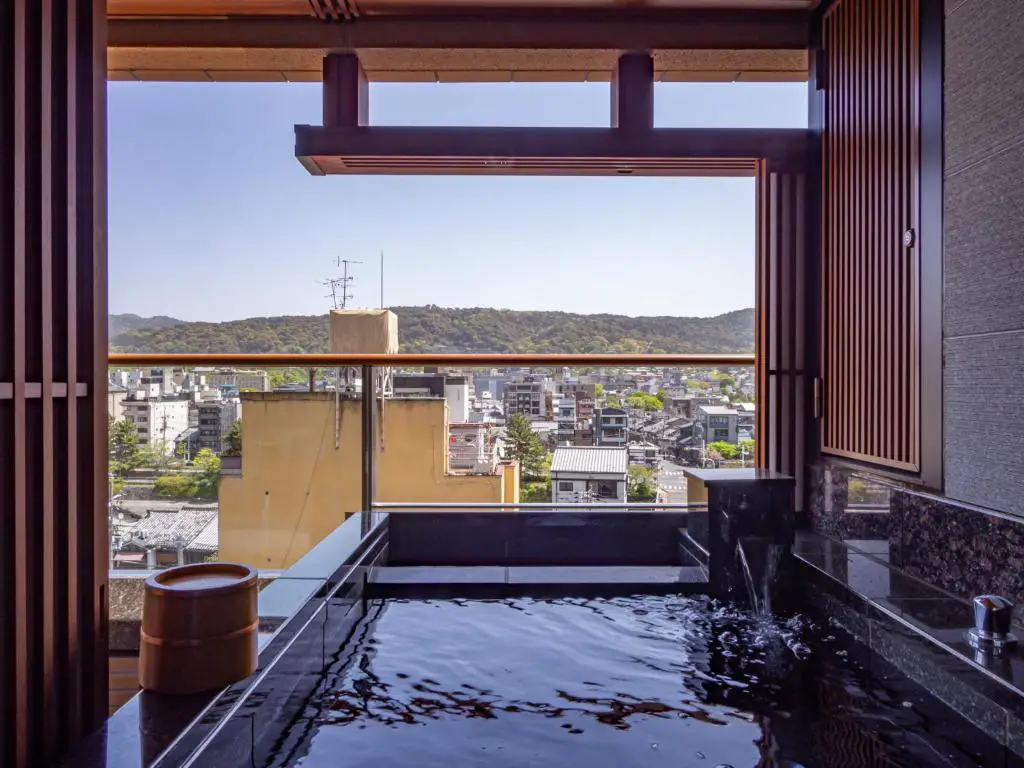
| 1. Sora Niwa Terrace Kyoto Bettei Best for Couples Rating: ⭐⭐⭐⭐⭐ Location: 3-min walk to Gion Shijo Station Guest Reviews: Natural hot spring water in every room, rooftop foot soak with Higashiyama panorama, kaiseki breakfast draws repeat guests Best Room: Kamogawa Premium Corner Twin Price: From USD $420 – $800 per night |
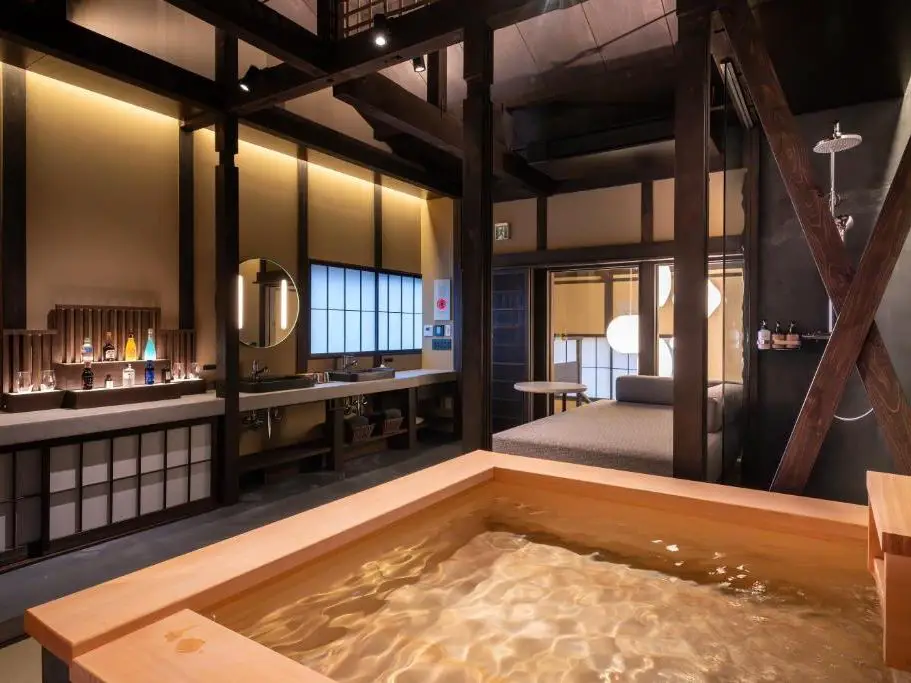
| 2. Nazuna Kyoto Higashi Honganji Most Unique Stay Rating: ⭐⭐⭐⭐ Location: 10-min walk to Kyoto Tower Guest Reviews: Cypress and stone private baths in every room, charcoal-grill breakfast cooked tableside, locally sourced timber throughout Best Room: Tsuka — outdoor stone bath Price: From USD $580 – $860 per night |
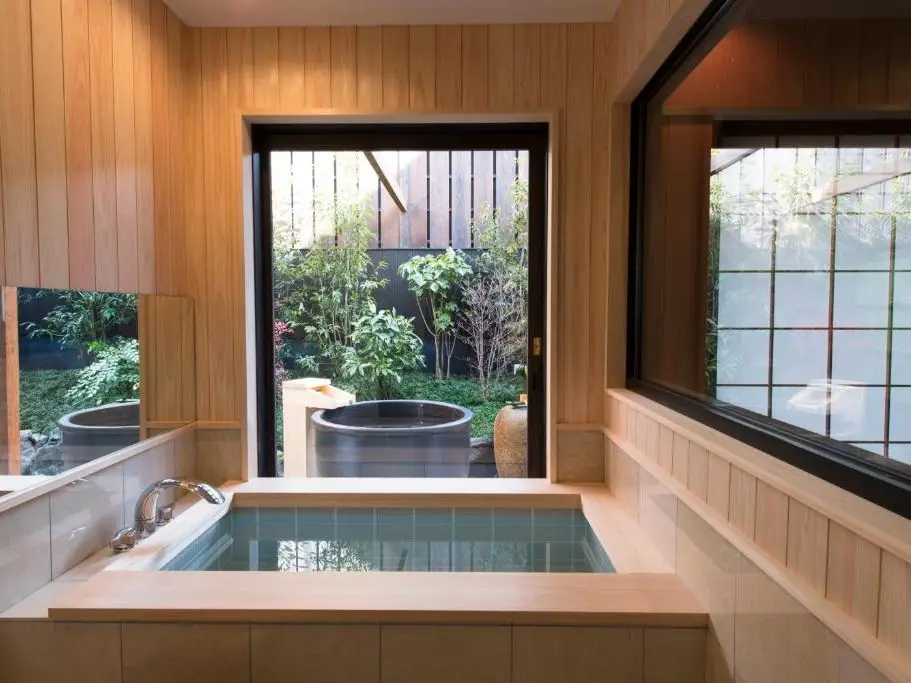
| 3. Kamishichiken Oku Best Value Rating: ⭐⭐⭐ Location: 3-min walk to Kitano Tenmangu Shrine Guest Reviews: Ground-floor garden rooms with ceramic pot outdoor bath, fireplace in every room, complimentary minibar with sake and beer Best Room: Koubai — private garden with outdoor tsuboburo bath Price: From USD $190 – $530 per night |
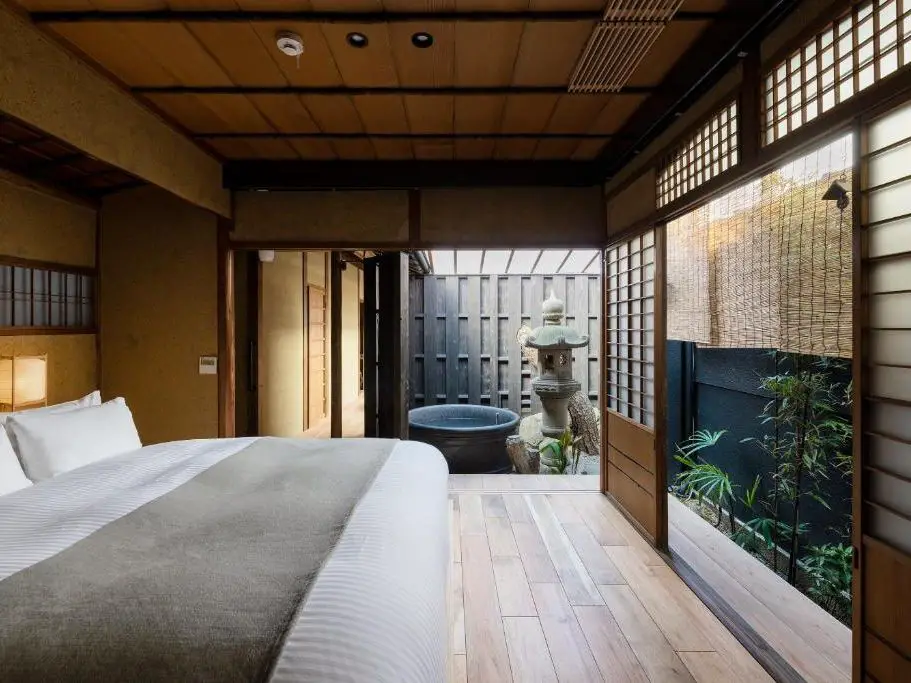
| 4. Nazuna Kyoto Gosho Rating: ⭐⭐⭐ Location: 5-min walk to Marutamachi Station Guest Reviews: Irori-style obanzai dinner cooked tableside, open-air bath in every room, converted wood-storage machiya with snug garden courtyard Best Room: Kashiwa Mochi — open-air bath with garden view Price: From USD $205 – $650 per night |
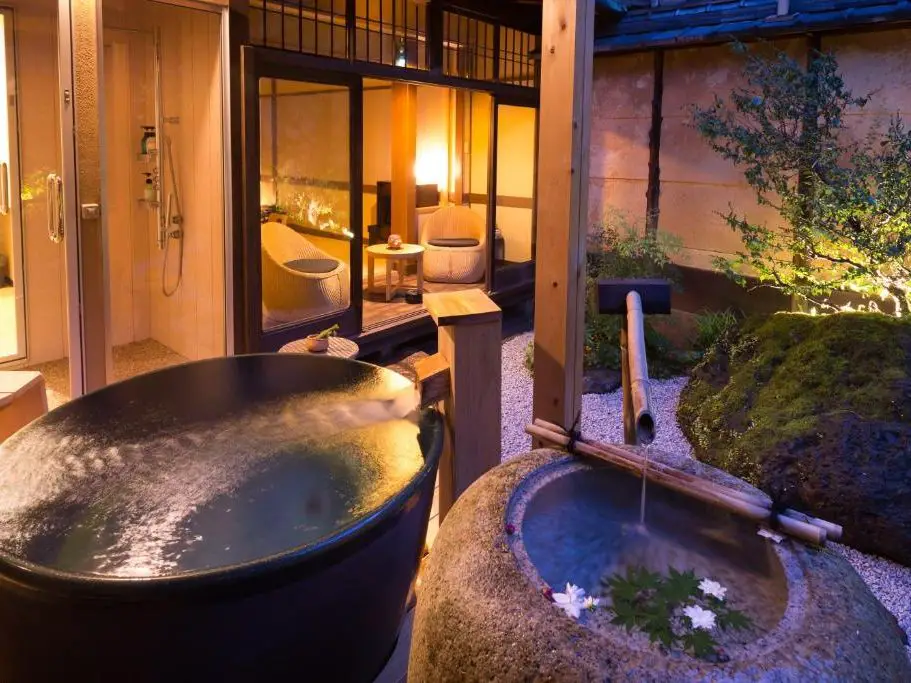
| 5. Nazuna Kyoto Nijo-jo Rating: ⭐⭐⭐⭐ Location: 9-min walk to Nijo Castle Guest Reviews: Tea-themed rooms with private garden attached, complimentary sake and matcha snacks, irori-style dinner cooked over sunken hearth Best Room: Luxury Suite with open-air bath A — garden view, 60sqm, ground floor Price: From USD $300 – $700 per night |
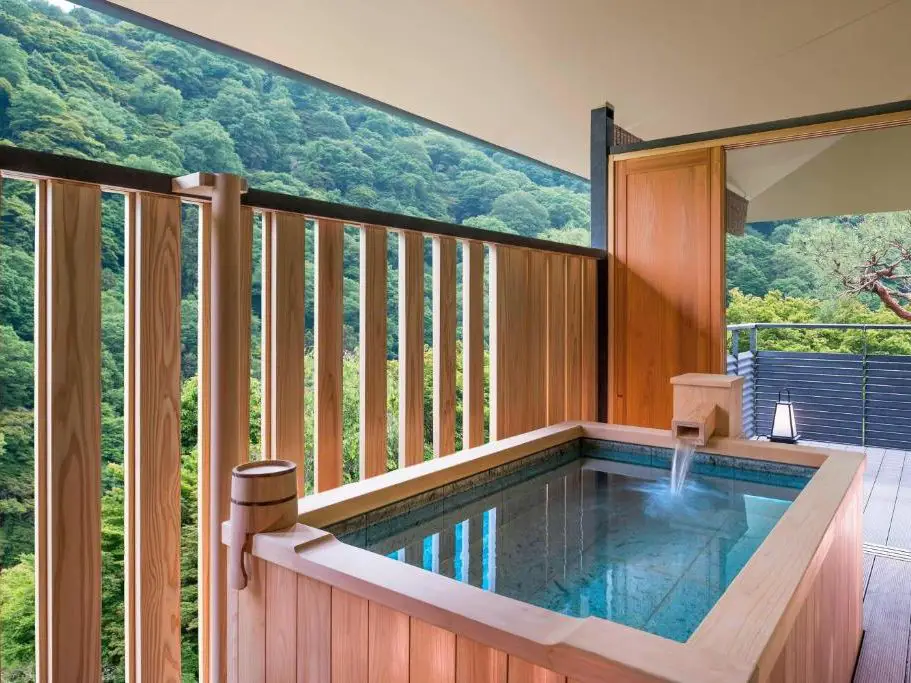
| 6. Suiran, a Luxury Collection Hotel, Kyoto Most Luxurious Rating: ⭐⭐⭐⭐⭐ Location: 3-min walk to Tenryu-ji Temple Guest Reviews: Natural Arashiyama spring water in private onsen, washoku-French kaiseki at KyoSuiran restaurant, complimentary rickshaw through bamboo grove Best Room: Yuzunoha — ground floor, garden view, private open-air onsen Price: From USD $750 – $1,500 per night |
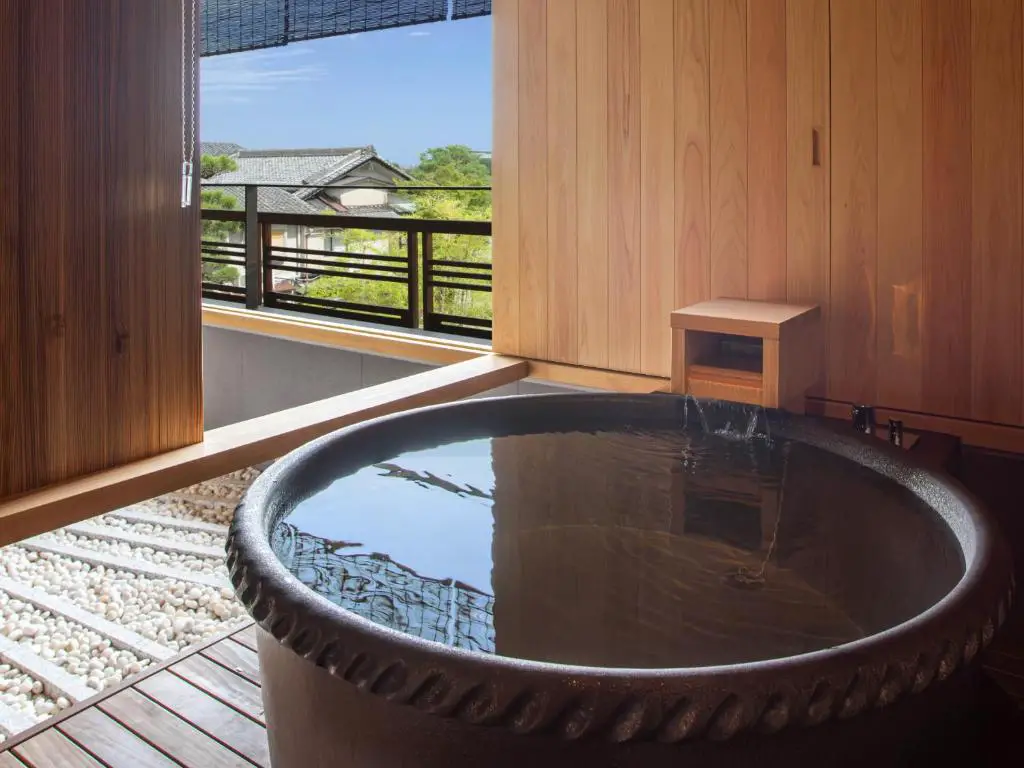
| 7. Rangetsu Rating: ⭐⭐⭐⭐ Location: 5-min walk to Togetsukyo Bridge Guest Reviews: Kaiseki dinner served in private garden-view dining room, recently renovated open-air onsen using Arashiyama mineral water, Simmons mattresses in every room Best Room: Japanese Style Room with Open-Air Bath — annex building, river and mountain views Price: From USD $390 – $800 per night |
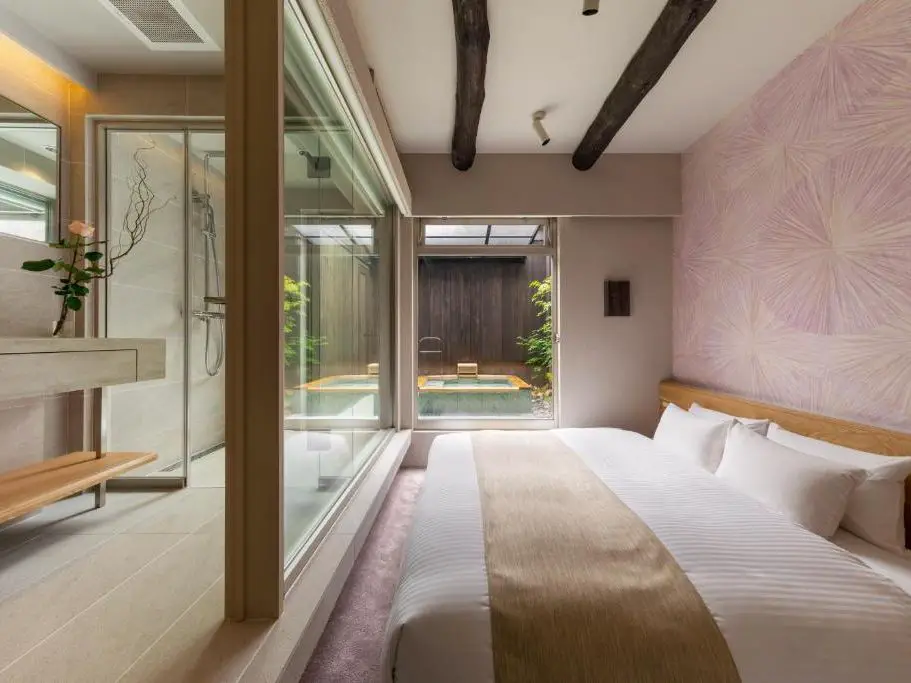
| 8. Nazuna Kyoto Tsubaki St. Best Boutique Option Rating: ⭐⭐⭐⭐ Location: 10-min walk to Shijo Omiya Station Guest Reviews: Each townhouse is a two-story private suite, automatic temperature-controlled onsen, Oita Wagyu grilled tableside at dinner Best Room: Luxury Room — two-story townhouse with semi-open-air bath Price: From USD $400 – $750 per night |
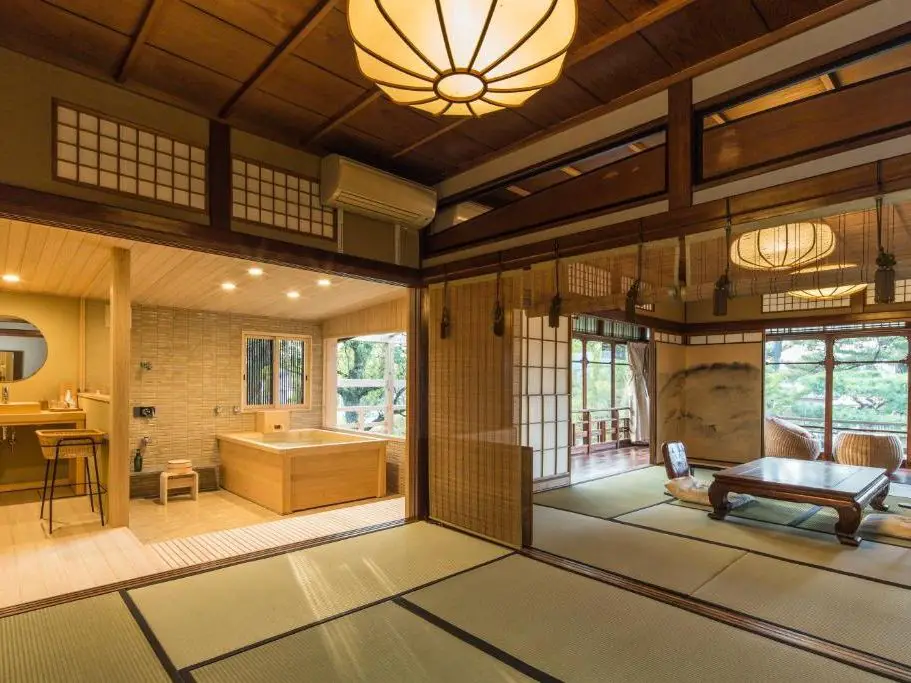
| 9. Kyoto Nanzenji Ryokan Yachiyo Best Location Rating: ⭐⭐⭐ Location: 3-min walk to Nanzenji Temple Guest Reviews: Hinoki cypress private onsen overlooking garden designed by Meiji-era master Jihei Ogawa, 12-course kaiseki with handmade dashi, rooms freshly renewed with karakami washi paper in 2026 Best Room: Family Suite with private garden onsen Price: From USD $700 – $1,100 per night |
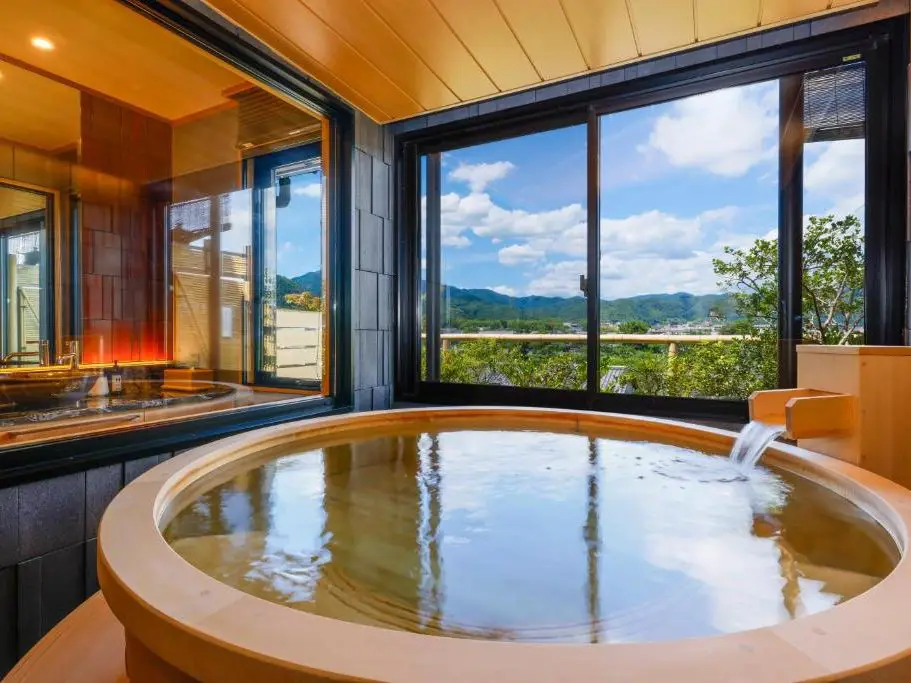
| 10. Kyoto Arashiyama Onsen Ryokan Togetsutei Best for Points Travelers Rating: ⭐⭐⭐⭐ Location: 5-min walk to Togetsukyo Bridge Guest Reviews: Hinoki open-air baths fed by Arashiyama natural springs, kaiseki breakfast with tofu from Arashiyama’s Morika shop, tatami woven by the Imperial Palace’s official supplier Price: From USD $600 – $900 per night Best Room: Seiryu no Ma — top-tier suite with private open-air hinoki cypress bath |
What “Private Onsen” Actually Means at These Ryokans
The term “private onsen” covers at least three different arrangements, and knowing which one you’re booking changes the experience considerably.
- In-room bath (rotenburo) — A hot spring bath inside or directly attached to your room. No booking, no time limit, no other guests ever using it. This is what most people picture, and it’s what the majority of properties on this list offer. You step through your own door and into the water.
- Kashikiri bath (貸切風呂) — A separate bath facility reserved exclusively for your use during a fixed slot, typically 45–50 minutes. You have complete privacy, but there’s a time limit and sometimes a small extra charge (usually 2,000–4,400 yen). Some ryokans offer kashikiri as a supplement to an in-room bath; a handful offer it as the primary private option.
- Communal bath (大浴場) — Shared between all guests, gender-segregated, and not private. Some properties on this list have these as an additional facility alongside private options. Properties with communal baths only have been excluded here — but always double-check your specific room before confirming.
The practical upshot: when comparing prices, make sure you’re comparing like for like. A room with an in-room rotenburo at $400 per night is a materially different product from a room where “private onsen” means a 50-minute kashikiri reservation.
Central Kyoto vs Arashiyama: How Location Changes the Stay
The properties on this list split between two distinct areas, and the choice between them is worth thinking through before you book — not because one is better, but because they suit different trips.
- Central Kyoto (Gion, Higashiyama, Nakagyo, Nishijin) — Properties like Sora Niwa Terrace Kyoto Bettei, the Nazuna properties, Kamishichiken Oku, and Kyoto Nanzenji Ryokan Yachiyo sit within the city’s temple-and-market core. You can walk to Gion, Nishiki Market, Nanzenji, and Nijo Castle without getting on a train. After a full day of sightseeing, you’re back at your ryokan in minutes. The trade-off is that the hot spring water at most central properties is either piped in or heated mineral water — genuine geothermal springs don’t run under the city centre.
- Arashiyama (Ukyo Ward) — Suiran, Rangetsu, and Togetsutei sit in Arashiyama, which is still within Kyoto city boundaries but a 30-minute train or taxi ride from central Kyoto. The bamboo grove, Tenryu-ji Temple, and Togetsukyo Bridge are on your doorstep. More importantly, Arashiyama has its own recognised onsen — the natural hot spring water here is geothermal, and several properties draw directly from it. The bath itself is a different experience: slightly alkaline, skin-softening water with a faint mineral quality you won’t get from heated tap water. The cost is convenience — day trips into central Kyoto require planning, and evenings out in Gion mean a late-night journey back.
- A practical split for longer stays — If you have three or more nights in Kyoto, consider splitting: one or two nights in Arashiyama for the natural onsen and riverside calm, and the rest centrally for temple access. The JR Sagano Line connects Arashiyama to Kyoto Station in about 15 minutes, so the areas aren’t as disconnected as the 30-minute figure suggests once you’re oriented.
Does the Water Actually Come from a Natural Hot Spring?
This is the most common question in Japan travel forums about Kyoto onsen ryokans, and the answer varies more than most listings let on. Not all “onsen” water is the same, and the difference is worth understanding before you book.
Japan’s onsen law defines genuine hot spring water precisely: it must meet specific temperature or mineral content thresholds at the source. Water that qualifies is certified and the ryokan is legally permitted to call it onsen. Water that doesn’t — heated tap water, heated mineral water, or water that loses its qualifying properties in transit — cannot be marketed as onsen under the same rules, though some properties are loose with the terminology in English-language listings.
Here’s how the properties on this list break down:
- Confirmed natural geothermal source — Suiran, Rangetsu, and Togetsutei all draw from the Arashiyama Onsen, a certified geothermal spring. The water is slightly alkaline and sodium-bicarbonate rich, which gives it the characteristic skin-softening quality. Sora Niwa Terrace Kyoto Bettei draws from its own certified natural spring beneath the building — one of the few central Kyoto properties with a verified in-house source.
- Certified onsen water, source less publicised — Kamishichiken Oku, Nazuna Kyoto Higashi Honganji, and Hanaikada (when available) list certified onsen water but are less specific about the source. Their listings confirm the water meets Japan’s legal onsen standard.
- Heated water or unspecified — Some of the Nazuna properties and Kyoto Nanzenji Ryokan Yachiyo offer in-room baths described as onsen-style or hinoki soaking baths. The experience is genuinely relaxing and the rooms are exceptional, but the water source isn’t always confirmed as natural geothermal. If this distinction matters to you, contact the property directly before booking.
The short version: if soaking in certified natural spring water is the priority, the Arashiyama properties and Sora Niwa Terrace Kyoto Bettei are the safest choices. If the private bath experience and the ryokan atmosphere matter more than the water’s mineral provenance, the central Kyoto properties hold their own comfortably.
When to Book and What to Expect on Arrival
Kyoto’s ryokans with private onsen are among the most in-demand accommodation in Japan, and availability is genuinely tight — especially for the smaller properties where a single sold-out room means a sold-out night. Here are the booking windows
- Peak season (March to May, October to November) — Book 3 to 6 months out. Cherry blossom season (late March to mid-April) and autumn foliage (mid-November) are the hardest periods to secure. Properties like Nazuna Kyoto Higashi Honganji (7 rooms) and Kamishichiken Oku (6 rooms) can sell out within hours of availability opening for peak dates.
- Summer and winter (June to September, December to February) — 4 to 8 weeks is usually sufficient, though Sora Niwa Terrace Kyoto Bettei and Suiran attract year-round demand and reward earlier booking.
- Last-minute — Cancellations do happen, and smaller ryokans sometimes release rooms close to the date if a plan change opens a slot. Worth checking, but don’t rely on it for peak travel.
Meal plans
Most properties offer room-only, breakfast-only, and breakfast-and-dinner plans. The dinner plan typically means kaiseki served in your room or a private dining room — a multi-course meal that can take two hours and is a significant part of the ryokan experience. It’s worth booking at the time of reservation rather than adding later, as kitchen capacity is limited and late additions aren’t always possible.
What happens at check-in
Check-in at Japanese ryokans typically runs from 3:00–4:00 PM, with checkout by 10:00–11:00 AM. On arrival, you’ll be shown to your room by a dedicated attendant, offered green tea and a seasonal sweet, and walked through the room’s facilities including the onsen. Yukata robes and towels are provided — you’ll wear the yukata to dinner, to any communal areas, and around the property. Luggage storage before check-in is standard at all properties on this list, so you can drop bags and sightsee without waiting for your room.
What’s typically included
Private onsen access, yukata, toiletries, and green tea are standard across all properties here. Wi-Fi is available at all of them. Dinner and breakfast are either included in the rate or available as an add-on plan — check the specific booking conditions, as some properties include breakfast by default while others price it separately.
You’re right — the mini-headers are doing the same structural job badly. Here’s the rewritten version:
How to Choose the Right Ryokan for Your Trip
The honest answer is that no single property on this list is wrong — they’re all genuinely good. The differences come down to what kind of trip you’re building around the stay.
- First-time ryokan guests — Nazuna Kyoto Nijo-jo, Nazuna Kyoto Gosho, and Sora Niwa Terrace Kyoto Bettei are the easiest entry points. The Nazuna properties have a modern-traditional balance that doesn’t require prior knowledge of ryokan customs, and staff are experienced with first-timers. Sora Niwa Terrace Kyoto Bettei leans more contemporary and suits guests who want the private onsen experience without committing to tatami sleeping and futon bedding.
- The bath as the main event — Prioritise the Arashiyama properties. Suiran, Rangetsu, and Togetsutei all draw from the natural Arashiyama geothermal spring, and the water quality is noticeably different from heated mineral baths. Sora Niwa Terrace Kyoto Bettei is the only central Kyoto property with a verified natural spring source, making it the strongest option if you want city convenience and genuine onsen water.
- Special occasions and honeymoons — Suiran and Nazuna Kyoto Higashi Honganji are the strongest choices. Suiran has the grounds, the river views, and the Luxury Collection service level. Nazuna Kyoto Higashi Honganji has the intimacy — seven rooms, charcoal-grill breakfast cooked tableside, and the kind of unhurried attention that only comes from a very small property.
- Heavy sightseers using the ryokan as a base — Central location matters more than bath quality. Kamishichiken Oku sits three minutes from Kitano Tenmangu and is the most affordable entry point on the list, leaving budget for day trips. Kyoto Nanzenji Ryokan Yachiyo puts you within walking distance of Nanzenji, the Philosopher’s Path, and Heian Shrine — some of the most rewarding temple walking in the city.
- The most traditional experience — Togetsutei, founded in 1897, is the oldest property on the list and the one that feels most unchanged by modernity. Tatami mats supplied by the Imperial Palace’s official craftsman, kaiseki featuring locally sourced Arashiyama tofu, and a riverside location that looks much as it did a century ago. Kyoto Nanzenji Ryokan Yachiyo, established in 1890 and renovated with karakami washi paper in 2026, runs it close.
Getting the Most from Your Private Onsen
A private bath removes most of the social complexity of traditional onsen bathing, but a few habits make the experience noticeably better — especially on a first visit.
- Wash before you soak — This is the one non-negotiable of Japanese onsen culture, private or otherwise. Use the shower or washing station in your bathroom to scrub and rinse thoroughly before stepping into the tub. The onsen water is for soaking, not washing. Most ryokans provide a small stool and wooden bucket (oke) for this purpose — use them.
- Time it right — Evening soaks after dinner are the classic ryokan rhythm, and for good reason: your body temperature is already elevated, the property is quiet, and there’s nothing left to do but sleep. Morning baths are underrated — the water is fresh, the light is different, and starting the day in a hot spring before breakfast recalibrates everything. With a private bath you can do both, so don’t feel limited to one.
- Watch the temperature — Arashiyama spring water runs hot, typically 41–43°C. If you’re not accustomed to high-temperature bathing, limit your first soak to 10–15 minutes and get out slowly. Dizziness on standing is common and passes quickly — sit on the edge of the tub for a moment before getting up. Drink water before and after, particularly in summer.
- Tattoo policies — Private baths sidestep the tattoo restrictions that apply to communal facilities, which is one of the practical advantages of booking a room with an in-room onsen. All properties on this list offer at least some rooms with private in-room baths accessible without passing through shared facilities. If you have visible tattoos and are considering a kashikiri reservation rather than an in-room bath, confirm the property’s policy before booking.
- What to bring into the bath — The yukata and towels provided are for the bath. The small tenugui towel is for washing; the larger towel is for drying. Neither goes into the water. Long hair should be tied up or clipped — it’s courteous practice even in a private setting, and keeps the water cleaner for your next soak. Most properties refresh the bath water between uses on request.
- Outdoor baths in cold weather — Rotenburo in winter is one of the better experiences Kyoto offers: steam rising off the water, cold air on your face, total quiet. The Arashiyama properties are particularly good for this given the riverside and mountain backdrop. Wrap in your yukata and move quickly between the warm interior and the outdoor tub — your body adjusts within seconds.
Good. Enough signal to write a tight, topic-specific FAQ. Here it is.
FAQs
1. Do all rooms at these ryokans have a private onsen, or just some?
At most properties on this list, only certain room categories include a private in-room bath — typically the deluxe, suite, or premium tiers. Standard rooms often have private bathrooms without onsen access, or access to communal baths only. Always confirm your specific room type includes a private onsen before completing the booking.
2. Is dinner always included in the room rate?
Not automatically. Most properties offer a choice of plans: room only, bed and breakfast, or half board (breakfast and dinner). The kaiseki dinner is a significant part of the ryokan experience and worth booking in advance — kitchen capacity is limited and adding dinner on arrival isn’t always possible, particularly at smaller properties.
3. Can solo travellers book a room at these ryokans?
Most can accommodate solo travellers, but pricing at Japanese ryokans is typically per person rather than per room, so solo rates are not always half the couple rate. A handful of smaller properties — including Hanaikada — require a minimum of two guests. Check the booking conditions for each property before searching for solo availability.
4. How different is Arashiyama onsen water from the baths at central Kyoto properties?
The Arashiyama spring is a certified geothermal source with a slightly alkaline, sodium-bicarbonate composition. The water feels noticeably softer on skin than heated tap or mineral water, and leaves a subtle warmth that lingers after you get out. It’s a real difference, not a marketing distinction — though the central Kyoto properties with verified natural sources, particularly Sora Niwa Terrace Kyoto Bettei, come close.
5. What is the accommodation tax in Kyoto and how much is it?
Kyoto City charges an accommodation tax per person per night, revised from March 2026. The rate is tiered by room price: lower-rate rooms pay a few hundred yen per person, while rooms above approximately 50,000 yen per night pay up to 10,000 yen per person. This is collected at the property on checkout and is not included in online booking rates. Budget for it separately, particularly at the higher-end properties on this list.
6. Can children use the private onsen?
Private in-room baths are generally usable by children, though some properties set age restrictions or require adult supervision. A handful of properties on this list are adults-only or have policies that restrict children in certain room types. Hanaikada does not accept children. Check the specific property’s child policy before booking a family stay.
7. How far in advance should dietary requirements for kaiseki dinner be communicated?
At the time of booking, not on arrival. Kaiseki is prepared around a fixed seasonal menu sourced that day — substitutions made at the last minute are difficult and sometimes impossible. Vegetarian, vegan, and allergy requirements can usually be accommodated with adequate notice (typically 48–72 hours minimum), but the further in advance you flag them, the better the result.
8. Is it acceptable to visit Kyoto’s temples and shrines in a yukata from the ryokan?
Wearing a yukata outside the ryokan is common in traditional onsen towns like Kinosaki, but less standard in central Kyoto. Most guests change into regular clothes for sightseeing and return to the yukata in the evening. At Arashiyama properties, a short stroll to Togetsukyo Bridge in yukata is perfectly normal and a quiet pleasure early in the morning before the crowds arrive.
9. What happens if I arrive before check-in time?
All properties on this list offer luggage storage for early arrivals. You can drop your bags and head straight out to sightsee, then return for check-in from the standard time (usually 3:00–4:00 PM). Early check-in into the actual room is subject to availability and worth requesting at the time of booking rather than on the day.