
Hakone has been a hot spring destination for centuries, and the reason is simple: soak in the right bath at the right moment and Mt. Fuji fills the horizon from base to summit. The ryokans here sit across three areas — Hakone itself, Kawaguchiko, and Fujiyoshida — each with its own angle on the mountain and its own character. Some are grand lakeside properties with communal baths the size of swimming pools, others are quiet hillside retreats where dinner arrives at your door in lacquerware. What they share is onsen water, tatami floors, and one of the world’s great views waiting outside.
Table of Contents
Hakone Ryokans
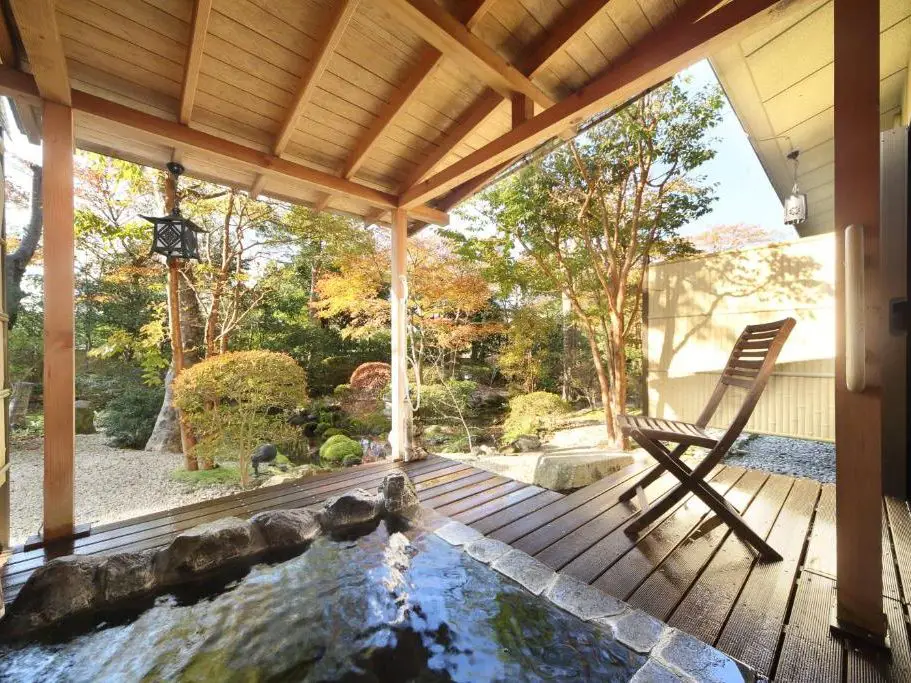
| 1. Yoshimatsu Highly Rated by Guests Rating: ⭐⭐⭐⭐ Location: 5-minute walk from Lake Ashinoko Cruise Station Guest Reviews: Kyoto-style kaiseki dinner, stone outdoor onsen, bamboo garden setting, tatami rooms Best Room: Luxury Suite with Mt. Fuji view Price: From USD $480 – $900 per night |
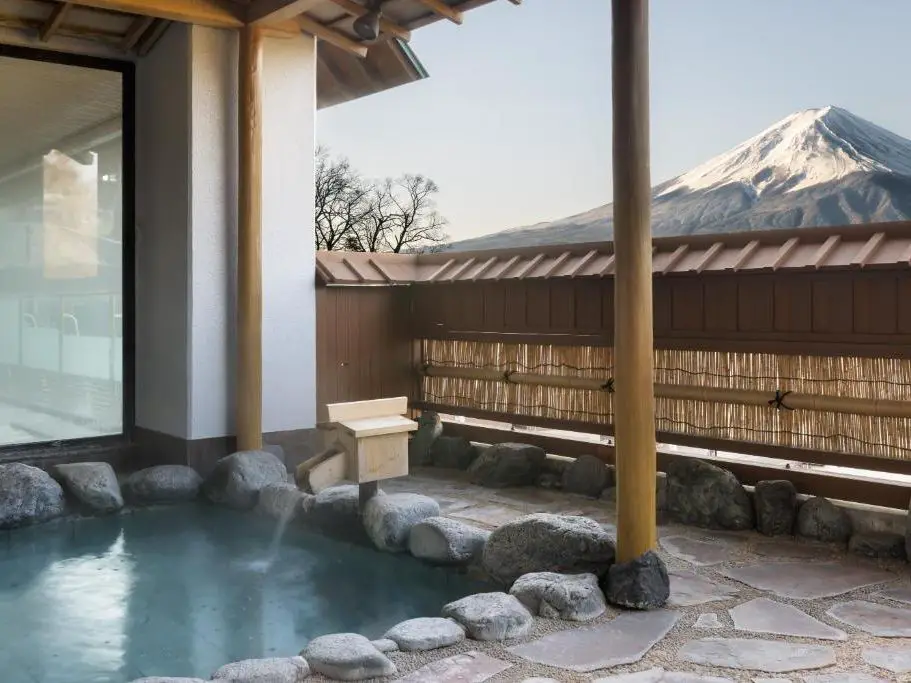
| 2. Fujikawaguchiko Onsen Konanso Best for Families Rating: ⭐⭐⭐⭐⭐ Location: 2-minute walk from Kawaguchiko Ferry Stop Guest Reviews: In-room kaiseki dinner service, private open-air onsen with Mt. Fuji view, rooftop foot bath Best Room: Japanese Western Style Deluxe Room with Open Air Bath, Mountain View Price: From USD $465 – $1,100 per night |
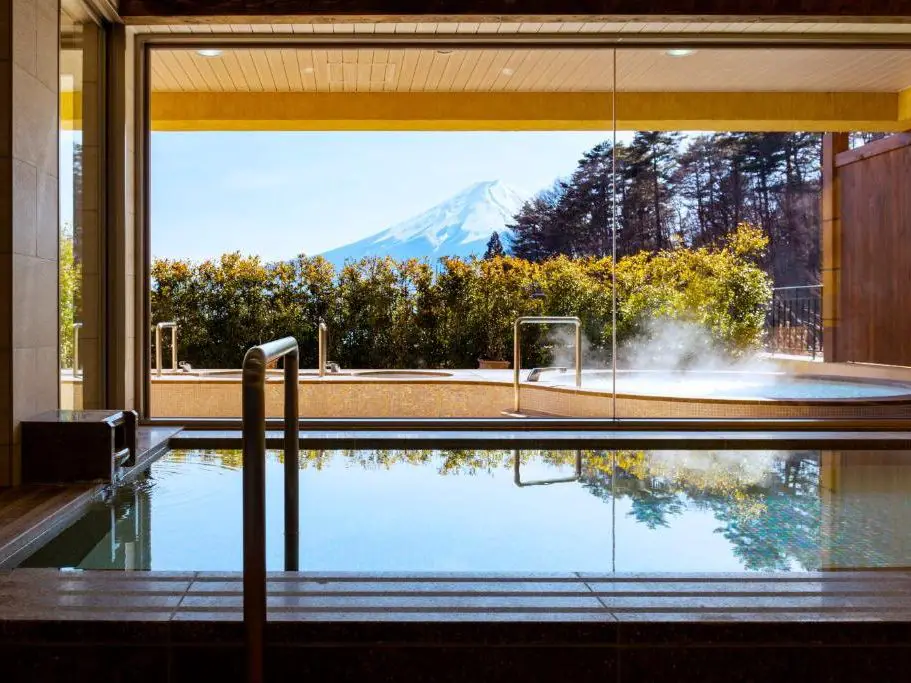
| 3. La Vista Fujikawaguchiko Rating: ⭐⭐⭐⭐ Location: 10-minute drive from Kawaguchiko Station, free shuttle available Guest Reviews: Private onsen baths available for tattoo-friendly use, Mt. Fuji balcony views, large breakfast buffet Best Room: La Vista Rooms with Private Bath and Mt. Fuji View Price: From USD $335 – $750 per night |
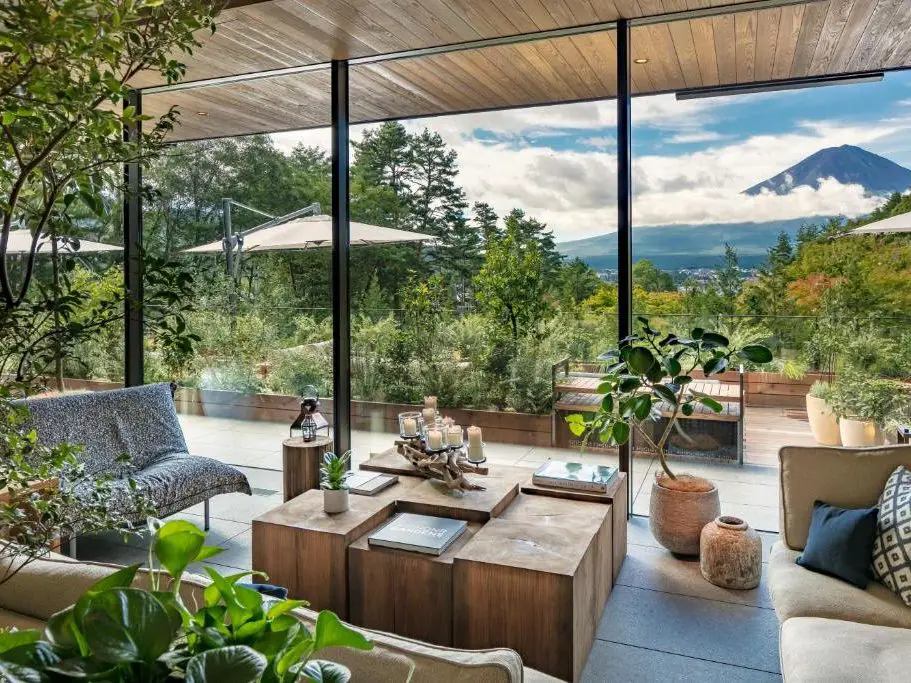
| 4. Fufu Kawaguchiko Best Nature Retreat Rating: ⭐⭐⭐⭐ Location: 15-minute taxi from Kawaguchiko Station, 5-minute drive from Lake Kawaguchi Guest Reviews: Volcanic stone private onsen in every room, seasonal kaiseki and teppanyaki dinner, forest setting with Mt. Fuji panorama Best Room: Premium Suites Price: From USD $800 – $1,800 per night |
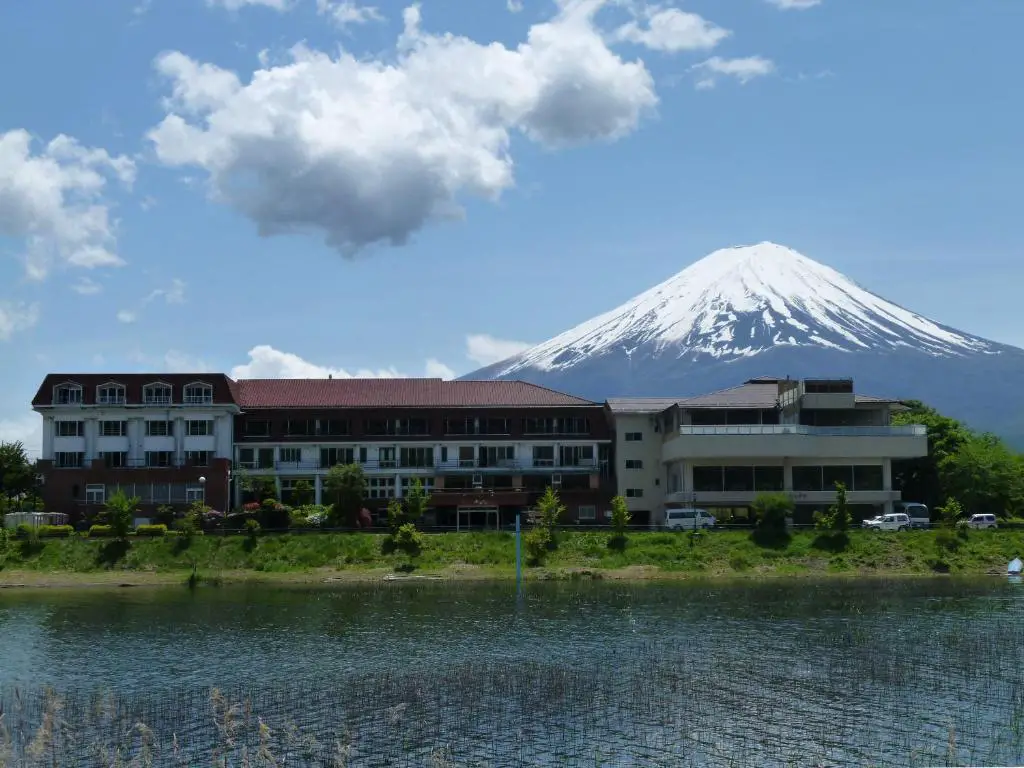
| 5. Lakeland Hotel Mizunosato Rating: ⭐⭐⭐ Location: 10-minute walk from Lake Kawaguchi, free shuttle from Kawaguchiko Station Guest Reviews: Rooftop observatory with Mt. Fuji views, kaiseki dinner served at Hanamizuki restaurant, spacious tatami rooms Best Room: Superior Japanese-Style Room with Open-Air Bath and Mt.Fuji View Price: From USD $235 – $550 per night |
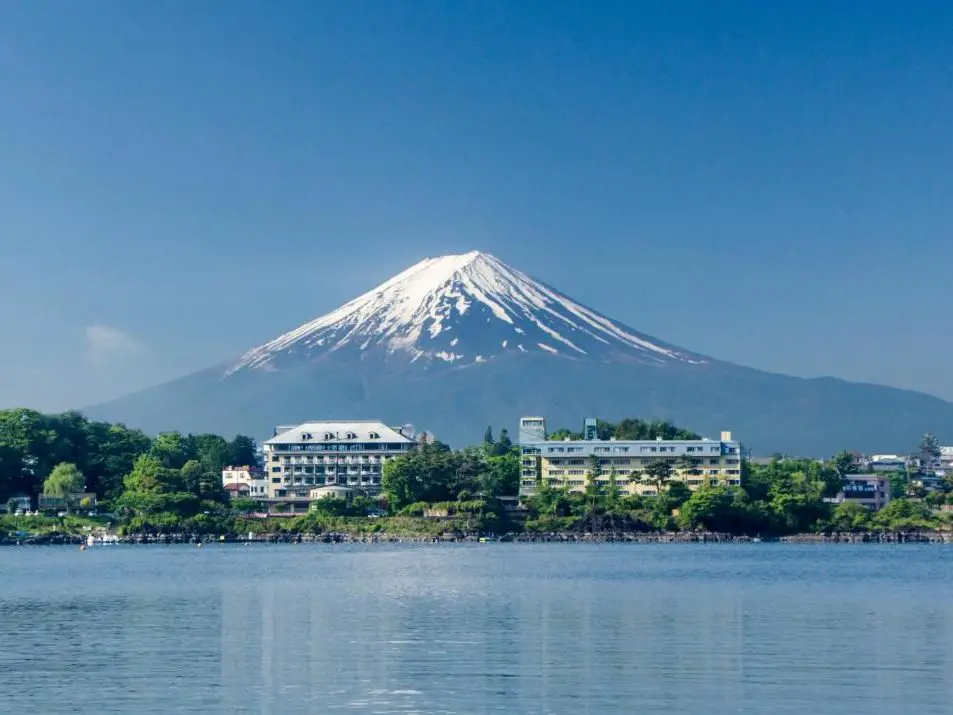
| 6. Fuji Lake Hotel Most Historic Stay Rating: ⭐⭐⭐⭐ Location: 12-minute walk from Kawaguchiko Station, free shuttle available Guest Reviews: Hot spring water sourced from 1,500m beneath Mt. Fuji, lakeside location, Japanese and Western buffet dinner Best Room: Japanese Western Room with Open Air Bath, Mt. Fuji View Price: From USD $200 – $600 per night |
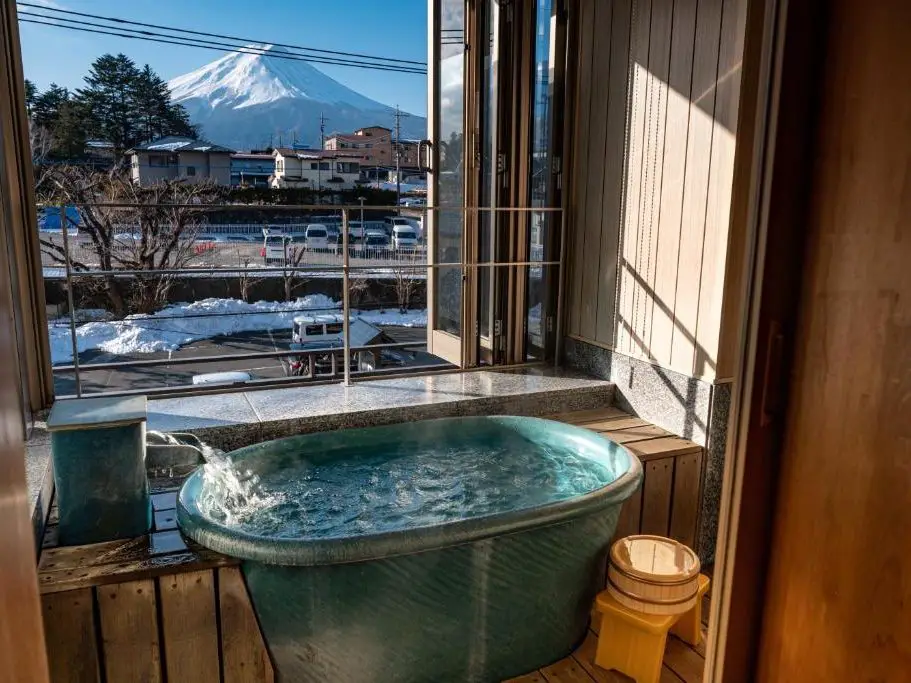
| 7. Oike Hotel Best Value Mt. Fuji View Rating: ⭐⭐⭐⭐ Location: 7-minute walk from Lake Kawaguchi, free pick-up from Kawaguchiko Station Guest Reviews: Fifth-floor panoramic bath facing Mt. Fuji, spacious annex rooms, fully tattoo-friendly across all baths Best Room: Annex Room with Mt. Fuji View Open-Air Bath Price: From USD $115 – $450 per night |
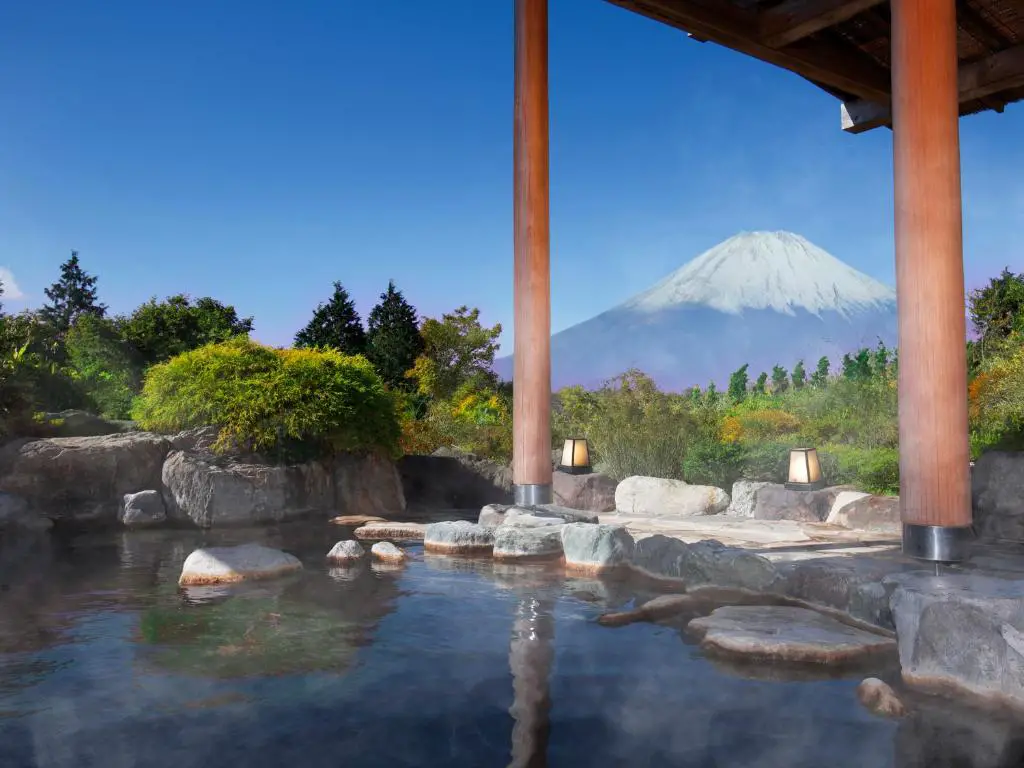
| 8. Hotel Green Plaza Hakone Rating: ⭐⭐⭐⭐ Location: 3-minute walk from Ubako Station on the Hakone Ropeway Guest Reviews: Panoramic outdoor onsen facing Mt. Fuji, large Japanese and Western dinner buffet, Sengokuhara hot spring water Best Room: Japanese Western Style Room with Mt. Fuji View Price: From USD $210 – $550 per night |
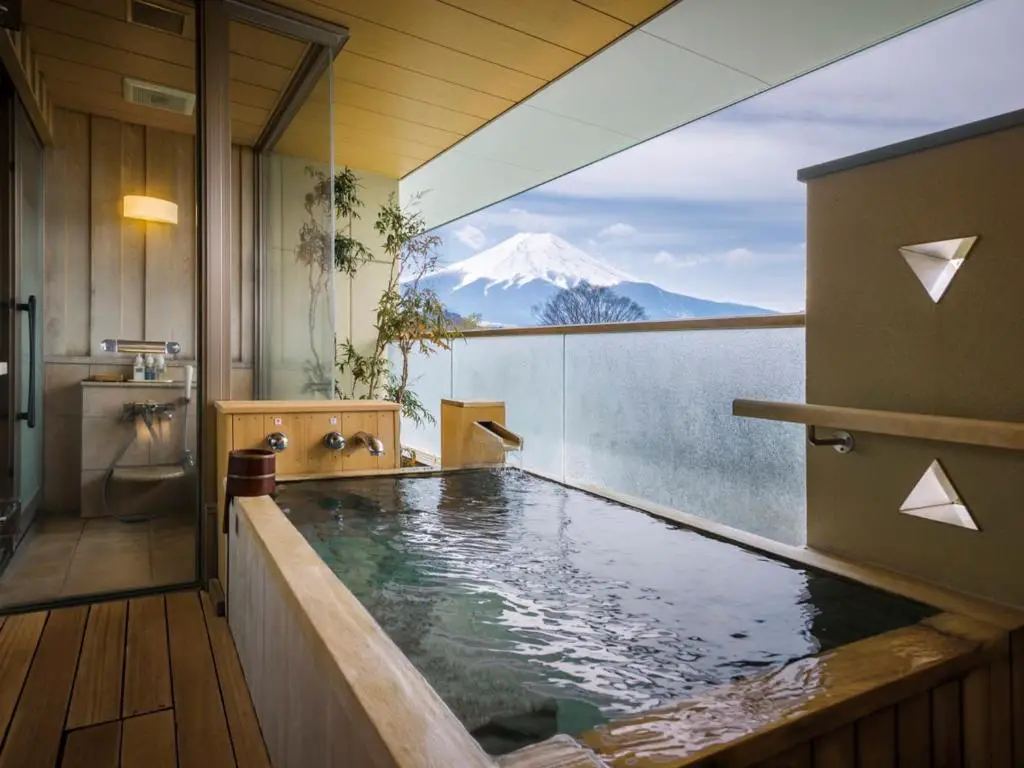
| 9. Kaneyamaen Rating: ⭐⭐⭐⭐ Location: Free shuttle from Fujiyoshida Station, 5.6 miles from Lake Kawaguchi Guest Reviews: Rooftop onsen with full Mt. Fuji panorama, nightly taiko drum show, 9-course kaiseki dinner, Yamanashi wine lounge Best Room: Sanri Japanese Western Room with Open Air Bath, Mt. Fuji View Price: From USD $380 – $1,000 per night |
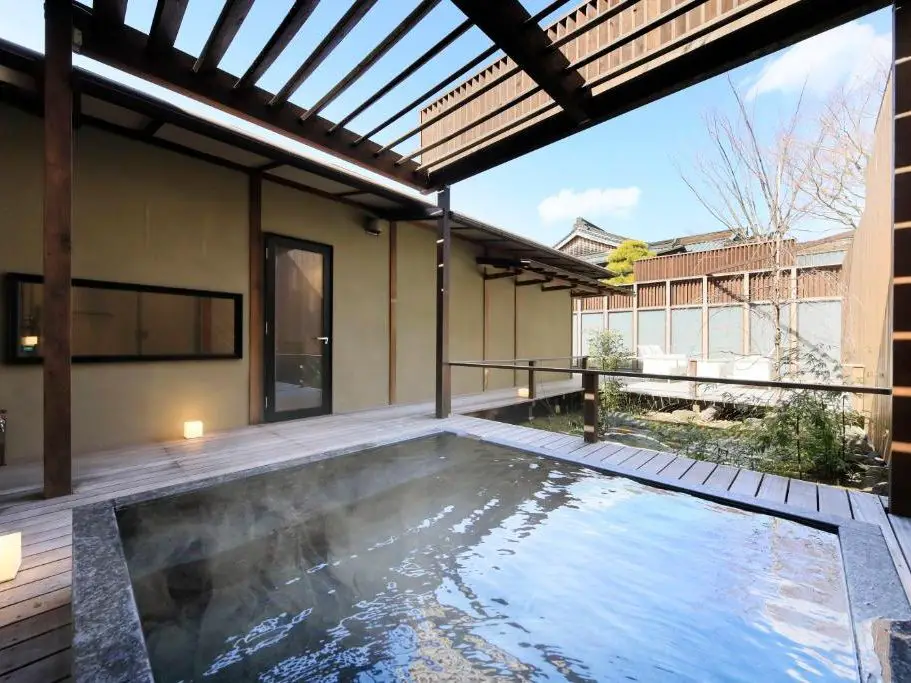
| 10. Fuji Onsenji Yumedono Most Intimate Ryokan Rating: ⭐⭐⭐⭐⭐ Location: 5-minute drive from Kawaguchiko Station, 500m from Lake Kawaguchi Guest Reviews: Only 6 suites, all with private open-air onsen, multi-course kaiseki dinner with local Yamanashi produce, Japanese garden setting Best Room: Villa Suite with Open-Air Bath Price: From USD $430 – $1,600 per night |
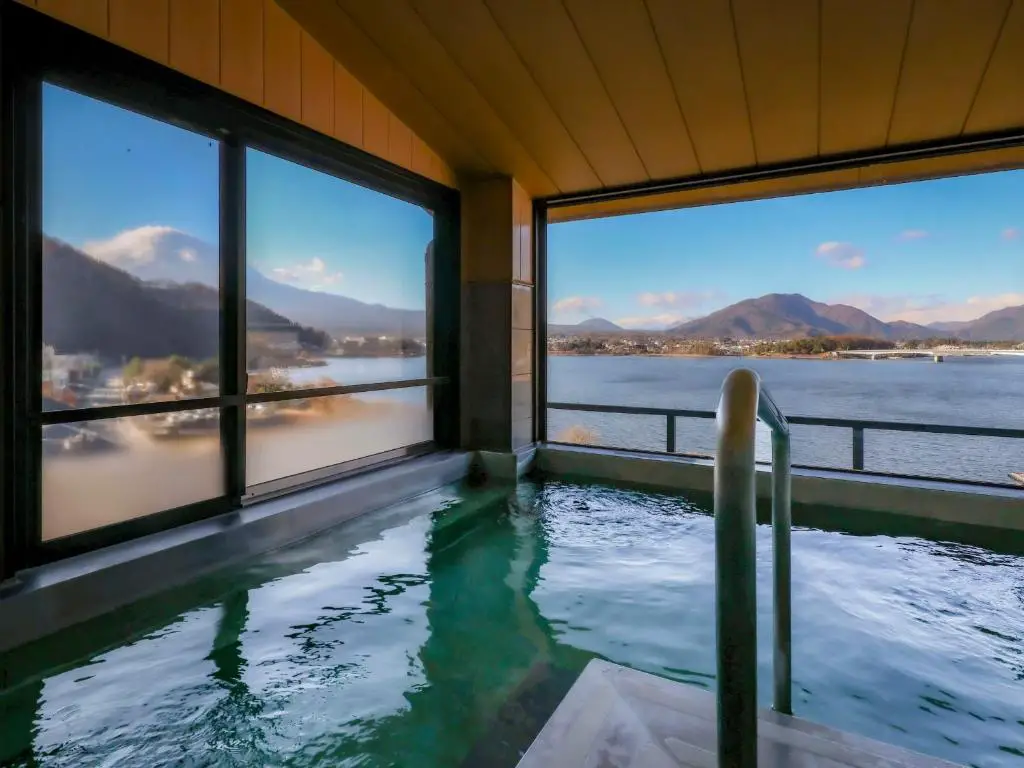
| 11. Fujikawaguchiko Onsen Hotel Asafuji Rating: ⭐⭐⭐ Location: On Lake Kawaguchi shore, free shuttle from Kawaguchiko Station Guest Reviews: Fourth-floor onsen with unobstructed Mt. Fuji and lake views, multilingual staff, kaiseki dinner and breakfast with seasonal local dishes Best Room: Japanese Style Room with Mt. Fuji and Lake View Price: From USD $215 – $450 per night |
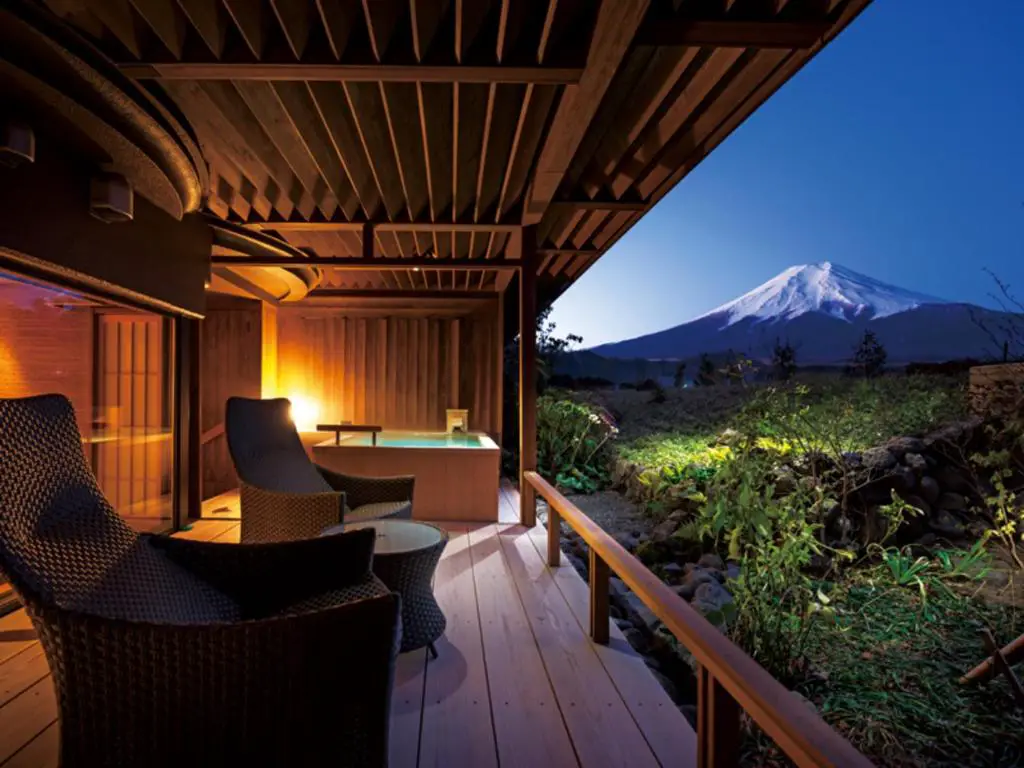
| 12. Bessho Sasa Best Private Onsen with Fuji View Rating: ⭐⭐⭐⭐ Location: Free shuttle from Fujiyoshida Station, 5.6 miles from Lake Kawaguchi Guest Reviews: Private balcony onsen with unobstructed Mt. Fuji view in every room, in-room kaiseki dinner, Yamanashi wine lounge included Best Room: Fukuchi Japanese Western Room with Open Air Bath, Mt. Fuji View Price: From USD $840 – $1,700 per night |
Hakone vs. Kawaguchiko: Which Side Gives You the Better View
The two main bases for a ryokan stay near Mt. Fuji sit on opposite sides of the mountain and offer very different experiences. Here’s how they compare before you book.
- Kawaguchiko — sits just 25km from Mt. Fuji on the north side, looking directly at the full cone from base to summit with nothing blocking the sightline. The lake reflection doubles the view on calm mornings. Most ryokans on this page with direct Fuji views from a room or onsen are based here. The town itself is quieter and more focused — lake walks, cycling, and the ryokan experience are the main draws.
- Hakone — sits further away on the southwest side of the mountain, with views partially blocked by the caldera rim. From most of Hakone town, including the popular Gora and Yumoto areas, you can’t see Fuji at all. The viewpoints that work are specific: Lake Ashi on a clear day, the ropeway between Owakudani and Togendai, and the Sengokuhara pampas fields. Where Hakone pulls ahead is onsen variety — 17 designated hot spring areas with different mineral compositions — and sheer things to do: the Open-Air Museum, Hakone Shrine, the Lake Ashi cruise, and the sulfur vents at Owakudani.
If seeing Mt. Fuji from your onsen or room window is the main event, base yourself at Kawaguchiko. If you want more to explore and are happy catching Fuji from a dedicated viewpoint rather than your bath, Hakone has more variety and the onsen culture runs deeper.
When Mt. Fuji Actually Shows Up
Mt. Fuji is visible roughly 60–70% of winter mornings from Kawaguchiko and only 20–30% of summer mornings. Knowing when to go — and what time of day to look — makes the difference between a transformative stay and a wall of cloud.
- December and January — the best months by far. Cold, dry air from Siberia clears the atmosphere and the snow-capped peak stands sharp against blue sky. December clears around 86% of mornings. Prices are lower than spring and autumn peak periods, making this the sweet spot for value and visibility combined.
- November and February — still excellent. Humidity is low, cloud cover is minimal, and the snow cap is fully established by late October. November also brings autumn foliage around the lake, which frames the mountain in red and gold on clear days.
- March and April — visibility drops slightly as humidity builds, but cherry blossom season (late March to early April) offers the iconic Fuji-and-sakura combination. Book 4–6 months ahead if you want this window — it fills faster than any other period.
- May and October — moderate odds. Pleasant temperatures and occasional crisp clear days, but cloud cover is less predictable. A good compromise if December–February dates don’t work.
- June to September — the least reliable window. The rainy season runs June to mid-July, and summer humidity can hide the mountain for days at a stretch. July visibility from Kawaguchiko drops to around 14% of mornings. Avoid this period if the Fuji view is the main reason for your trip.
Time of day matters as much as season. Early morning — before 9am — is consistently the best window regardless of month. Clouds build from late morning onward, and afternoon views are poor even on otherwise clear days. The morning after a rainstorm is often the clearest of all, as the rain washes the atmosphere clean overnight. Several hotels on this page, including Fujikawaguchiko Onsen Hotel Asafuji and Fujikawaguchiko Onsen Konanso, face the lake directly and face east — position yourself at the window or onsen at sunrise for the best chance.
What a Ryokan Stay Actually Looks Like
First-time ryokan guests often delay booking because they don’t know what to expect. The rhythm is straightforward once you know it — and understanding it in advance lets you relax into the experience rather than second-guess every step.
- Check-in (3pm–6pm) — arrive within the window, as dinner is served at a fixed time and the kitchen prepares around it. Staff will greet you, show you to your room, and walk you through the basics: bath hours, dinner time, yukata instructions. A welcome tea and seasonal sweet are usually waiting in the room.
- Yukata — the cotton robe provided in your room is your outfit for the entire stay. Wear it to the onsen, to dinner, and around the property. One rule matters: always wrap the left side over the right. The reverse is used for dressing the deceased and is considered deeply inauspicious.
- Onsen — bath hours are typically split between afternoon and early morning, with a changeover period overnight. Go before dinner to unwind, and again at sunrise for the best Mt. Fuji light. Communal baths are gender-separated. Private baths, where available, can usually be reserved at the front desk on arrival.
- Dinner (6pm–7pm) — served at a fixed time you confirm during check-in. At most ryokans on this page, dinner is kaiseki: a multi-course Japanese meal built around seasonal, local ingredients, presented in lacquerware and served course by course. At properties like Kaneyamaen and Bessho Sasa, it’s served in your room by a dedicated attendant. At larger properties like Fujikawaguchiko Onsen Konanso and Fuji Lake Hotel, you dine in a restaurant. Be punctual — the kitchen times each course to your arrival.
- Futon turndown — while you are at dinner, staff enter your room and lay out your futon on the tatami floor. You don’t need to do anything. The futon is thicker and more comfortable than most visitors expect.
- Breakfast (7am–9am) — typically a Japanese set: rice, miso soup, grilled fish, pickles, tamagoyaki, and small seasonal sides. Some properties on this page also offer a Western option on request. Book the morning onsen before breakfast for the best Fuji light, then eat before checkout.
- Checkout (10am–11am) — earlier than most Western hotels. If you want one last soak, set an alarm. Luggage can usually be stored at the front desk if you plan to sightsee before your train.
Tipping is not part of Japanese culture and is not expected anywhere. The rate you pay covers everything — service, meals, baths, and atmosphere. If the stay was exceptional, a quiet thank-you to staff as you leave is the appropriate acknowledgement.
Onsen Rules You Need to Know Before You Arrive
Communal onsen have a clear set of customs built up over centuries. Breaking them — even accidentally — disrupts other bathers. These are the non-negotiables.
- Wash before you soak — every onsen has a washing area (araiba) with shower stations, stools, soap, shampoo, and buckets. Sit down, wash your entire body thoroughly, and rinse completely before entering the bath. This is the most important rule and the one most first-timers miss. The bath is for soaking, not cleaning.
- No towels in the water — you’ll be given a small modesty towel. Use it to walk between the changing area and the bath. Once at the water’s edge, fold it and set it aside on the rim or balance it on your head. Putting it in the bath is considered unhygienic.
- Bathing is done nude — no swimsuits in communal baths. This is non-negotiable at traditional onsen. If nudity in a shared space is a concern, prioritise properties on this page with private in-room onsens — Fufu Kawaguchiko, Bessho Sasa, and Fuji Onsenji Yumedono all have private baths in every room.
- No phones or cameras — never in the bathing area. Leave your phone in your room or the locker in the changing area.
- Enter quietly — the onsen is a place of rest. Keep voices low, avoid splashing, and don’t stare at other bathers. Gawking is deeply taboo.
- Tie back long hair — hair must be kept out of the water. Most ryokans provide hair ties in the changing area if you don’t have one.
- Check the bath schedule — at many ryokans the men’s and women’s sections swap overnight so both sides experience each bath. The schedule is posted in the changing area and often explained at check-in. Pay attention, as the swap is easy to miss.
- Rinse lightly before leaving — not always required but good practice, particularly if the water contains high mineral content like the alkaline spring at Bessho Sasa (pH 10.3).
One thing worth knowing: the mineral content of onsen water varies significantly across this list. The Sengokuhara spring at Hotel Green Plaza Hakone contains sulfate and bicarbonate ions. The Kawaguchiko Onsen water used at Fuji Lake Hotel is drawn from 1,500m beneath the mountain. Bessho Sasa uses highly alkaline water said to leave skin noticeably softer after a single soak. These aren’t marketing claims — they reflect genuinely different geological sources, and part of the pleasure of staying at more than one property is comparing the water itself.
Tattoos and Onsen: What the Policy Actually Is
Tattoo policies vary significantly across this list — and the difference between “allowed in private baths only” and “fully welcome everywhere” matters when you’re choosing a room. Here’s the breakdown by property.
- Oike Hotel — fully tattoo-friendly across all communal baths including the fifth-floor panoramic bath and the garden open-air bath. Verified March 2026. The most permissive policy on this list for communal bathing.
- Fufu Kawaguchiko — every room has a private onsen, so the tattoo question doesn’t arise. No communal bathing required at any point during your stay.
- Bessho Sasa — same as Fufu Kawaguchiko. Every room includes a private balcony onsen, so communal baths are optional rather than the main event.
- Fuji Onsenji Yumedono — all six suites have private outdoor onsen. Communal bathing is available but not necessary, making this a comfortable choice for tattooed guests.
- Fujikawaguchiko Onsen Konanso — tattoos are not permitted in the public onsen during standard hours, but tattooed guests can use the communal baths after 10pm. Private rentable baths are available during the day.
- La Vista Fujikawaguchiko — four private onsen rooms available to book separately. Tattooed guests are directed to these rather than the communal baths.
- Lakeland Hotel Mizunosato — publicly noted as tolerant of tattoos in the communal baths, with several guests confirming this in recent reviews. Worth calling ahead to confirm before arrival.
- Yoshimatsu, Fujikawaguchiko Onsen Hotel Asafuji, Hotel Green Plaza Hakone, Kaneyamaen, Fuji Lake Hotel — standard Japanese onsen policy applies, meaning tattoos are generally not permitted in communal baths. Tattooed guests at these properties should request a private or rentable bath at check-in where available.
Two practical notes. First, policies can and do change — always confirm directly with the property before arrival rather than relying on third-party information. Second, small tattoos that can be covered with a waterproof patch or bandage are handled at the discretion of individual staff at most properties. If you’re unsure, a quick email to the ryokan before booking will get you a clear answer and saves an awkward conversation at check-in.
How Far in Advance to Book – and Which Rooms Sell Out First
These ryokans are not difficult to find — they’re difficult to book into at the right time, in the right room. The gap between “available” and “available with a Mt. Fuji view from your onsen” is significant, and it closes fast.
- Bessho Sasa — only 17 rooms, all with private Fuji-view onsen. Books out 3–6 months ahead for cherry blossom (late March to early April) and autumn foliage (mid-October to mid-November) seasons. Winter weekends fill almost as fast despite lower demand.
- Fuji Onsenji Yumedono — six suites total. Availability is extremely limited year-round. If you have a specific date in mind, check availability the moment you know your travel window — waiting even a week can close your options entirely.
- Fufu Kawaguchiko — all 26 rooms have private onsen and Fuji views. Popular with couples and honeymooners, which means weekend availability disappears 2–4 months out during peak season. Weekday stays are easier to secure.
- Fujikawaguchiko Onsen Konanso — larger property with 51 rooms, but the specific rooms with private open-air onsen and Mt. Fuji views (the Japanese Western Style Deluxe rooms) are a small subset of the total. Book those room types directly rather than leaving it to standard availability.
- Yoshimatsu — the Luxury Suite with Mt. Fuji view is a single room. It is frequently the first room to sell at this property. If that specific room is your goal, book 3–4 months ahead regardless of season.
- Shuhokaku Kogetsu and Fujikawaguchiko Onsen Hotel Asafuji — both smaller properties where the best-view rooms are limited. Fujikawaguchiko Onsen Hotel Asafuji has only 13 rooms total, all facing Fuji and the lake, so availability is tighter than the price point suggests.
By season, here’s when to book:
- Cherry blossom (late March–early April): 4–6 months ahead
- Autumn foliage (mid-October–mid-November): 3–5 months ahead
- Winter (December–February): 2–3 months ahead for weekdays, 3–4 for weekends
- Summer (June–September): easier to book but lowest Fuji visibility
One practical tip: if your preferred property is sold out, check again around the 30-day mark before your stay. Cancellations — particularly on expensive ryokans — are common as travel plans shift, and rooms do come back into availability closer to the date.
How to Get There from Tokyo
Both Hakone and Kawaguchiko are under two hours from central Tokyo, but the transport networks are completely different. Getting to the right destination matters — and choosing the wrong one adds unnecessary complexity to your trip.
- Hakone (for Yoshimatsu and Hotel Green Plaza Hakone) — the Odakyu Romancecar is the smoothest option, running direct from Shinjuku Station to Hakone-Yumoto in around 85 minutes with reserved seating and luggage space. The Hakone Free Pass covers the Romancecar fare (add-on required), plus unlimited use of the Hakone Ropeway, the Lake Ashi cruise, local buses, and the Hakone Tozan Railway for 2–3 days. For Hotel Green Plaza Hakone specifically, take the ropeway to Ubako Station — the hotel is a 3-minute walk. For Yoshimatsu, alight at Hakone-Yumoto and take the free hotel shuttle from Hakone Machi bus stop between 2:30pm and 5pm.
- Kawaguchiko (for all other properties on this page) — the most popular option is the highway bus from Shinjuku Expressway Bus Terminal (Busta Shinjuku), which runs direct to Kawaguchiko Station in around 1 hour 45 minutes. No transfers, luggage-friendly, and cheaper than the train. Booking in advance online is recommended, particularly for weekend and holiday travel. The alternative is the JR Chuo Line from Shinjuku to Otsuki, then the Fujikyuko Line to Kawaguchiko Station — around 2 hours 15 minutes total and slightly more expensive than the bus without a JR Pass. Once at Kawaguchiko Station, most properties offer a free shuttle: confirm pickup times with your ryokan at least 24 hours before arrival as schedules are fixed.
- Fujiyoshida (for Kaneyamaen and Bessho Sasa) — take the highway bus to Fujisan Station rather than Kawaguchiko Station, or the Fujikyuko Line to Fujisan Station from Otsuki. Both Kaneyamaen and Bessho Sasa run shuttle buses from the station — contact the property before travel to arrange pickup as these run to a fixed schedule.
- By car — driving gives you full flexibility and is worth considering if you plan to visit multiple areas or carry significant luggage. From central Tokyo, take the Chuo Expressway to Kawaguchiko IC — around 1.5 to 2 hours depending on traffic. Free parking is available at all properties on this page. Note that the Chuo Expressway can experience significant congestion on Friday evenings and Sunday afternoons during peak season — factor an extra hour if travelling at those times.
The morning after a long flight is not the ideal time to navigate Japan’s transport system for the first time. If you’re arriving from overseas, consider spending your first night in Tokyo and travelling to your ryokan the following morning when you’re rested and the journey feels manageable rather than stressful.
FAQs
1. Do all the ryokans include meals?
Most do, but the structure varies. The majority include dinner and breakfast in the room rate as a standard package — this is the traditional ryokan model. A small number, including Fujikawaguchiko Onsen Hotel Asafuji, charge for meals separately or offer them as an add-on at booking. Always check the specific plan when reserving, as a room-only rate at a ryokan can look deceptively affordable before meals are factored in.
2. Can I see Mt. Fuji from every room at these properties?
No, and this is the most common source of disappointment for first-time visitors. At most properties, only specific room types face the mountain — the standard rooms often face the lake, garden, or a different direction entirely. Always book the room type that explicitly states “Mt. Fuji view” in the name. At Fufu Kawaguchiko and Bessho Sasa, every room faces Fuji. At Fujikawaguchiko Onsen Hotel Asafuji, all 13 rooms face both Fuji and the lake. At all other properties on this list, request a Fuji-view room specifically.
3. What happens if it’s cloudy and I can’t see Mt. Fuji?
It’s a real risk and worth accepting before you book. Mt. Fuji is visible roughly 60–70% of winter mornings from Kawaguchiko and only 20–30% of summer mornings. Staying two nights significantly improves your odds over a single night. Check the SeeMtFuji app or isfujivisible.com the evening before for a next-morning forecast. The morning after a rainstorm is often the clearest of all.
4. Is Mt. Fuji visible at night?
On clear nights with a full or near-full moon, the silhouette of the mountain is visible against the sky and can be striking from a rooftop onsen. Don’t expect a dramatic view — it’s more of a dark shape than a defined cone. The dawn window, roughly 30 minutes before and after sunrise, is the most rewarding time at any season.
5. How long should I stay at a ryokan?
One night gives you the full experience: check-in, onsen, kaiseki dinner, futon sleep, morning bath, and breakfast. Two nights is noticeably better — the first night you’re learning the rhythm, the second you actually settle into it. For properties like Fufu Kawaguchiko and Bessho Sasa where the kaiseki menu changes daily, two nights also means two completely different dinners.
6. Do these ryokans cater to dietary restrictions?
Most do, but advance notice is essential — usually 48 to 72 hours before arrival. Vegetarian, vegan, and allergen requests are accommodated at the majority of properties on this page, though the kaiseki format is built around seafood and meat and substitutions can sometimes feel limited. Kaneyamaen has been specifically noted in reviews for handling fish allergies well, including preparing an entirely different kaiseki course on request.
7. Are children welcome at these ryokans?
It varies. Fujikawaguchiko Onsen Konanso, Lakeland Hotel Mizunosato, Fuji Lake Hotel, and Fujikawaguchiko Onsen Hotel Asafuji are openly family-friendly with kids’ meal options and spacious tatami rooms. Fufu Kawaguchiko does not accept children. Fuji Onsenji Yumedono and Bessho Sasa are better suited to adults given the intimate scale and premium price point. If travelling with children, confirm the property’s policy before booking.
8. Is there a dress code for dinner?
Not formally, but the expectation at every property on this page is that you wear the yukata provided in your room. This is normal, comfortable, and part of the experience — you’ll see all other guests dressed the same way. Some higher-end properties like Bessho Sasa and Fuji Onsenji Yumedono lean toward a more refined atmosphere at dinner, but the yukata is always acceptable.
9. What is the difference between a public onsen and a private onsen at a ryokan?
A public onsen (konyoku or gender-separated) is a shared communal bath open to all guests during designated hours — usually the largest and most scenic bath at the property. A private onsen is either in your room (as at Fufu Kawaguchiko, Bessho Sasa, and Fuji Onsenji Yumedono) or a separate rentable bath bookable by the hour for exclusive use. At properties like Oike Hotel and Fujikawaguchiko Onsen Konanso, private rental baths can be reserved at the front desk, typically for a small additional fee.
10. Do I need to speak Japanese?
No. All properties on this page have at least some English-speaking staff, and several — including Fujikawaguchiko Onsen Hotel Asafuji and Kaneyamaen — are specifically praised in reviews for multilingual service. Written communications before arrival (dietary requests, arrival times, shuttle bookings) are all handled smoothly by email in English. The ryokan experience is built around anticipating needs rather than asking guests to navigate complexity.