
Soaking in a deep, full-length tub while Tokyo’s skyline stretches out in front of you is one of those experiences that’s hard to replicate anywhere else in the world. The city’s best luxury hotels have made this a genuine feature, pairing long soaking tubs with floor-to-ceiling windows that frame everything from the Imperial Palace gardens to Tokyo Tower glowing orange at dusk. A few hotels do this well; most only offer the view from the bed. This guide cuts straight to the ones where the tub is the view.
Table of Contents
Tokyo Hotels
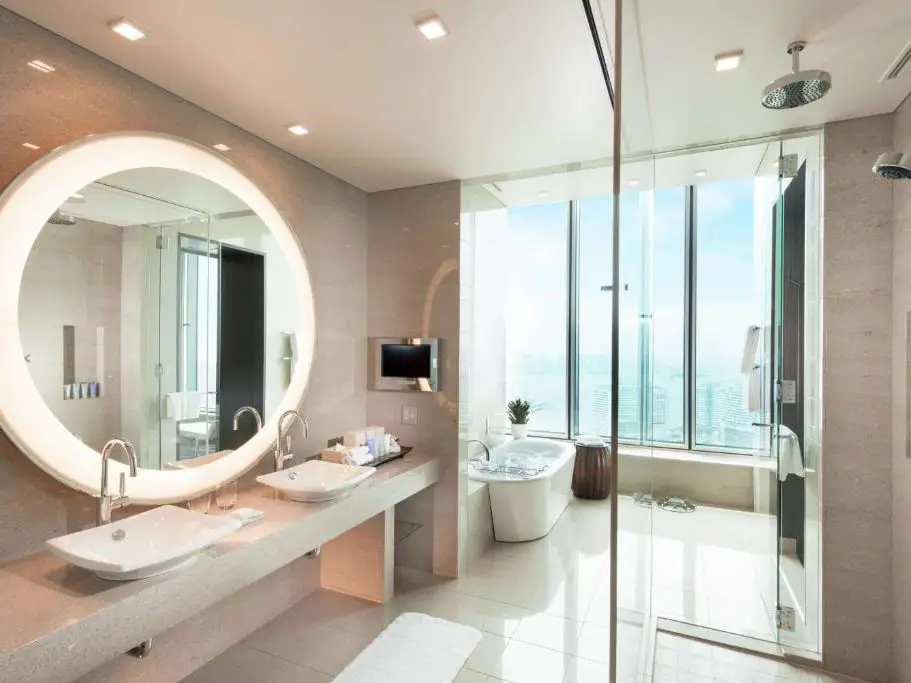
| 1. Conrad Tokyo Best for Couples Rating: ⭐⭐⭐⭐⭐ Location: 5-minute walk to Shiodome Station Guest Reviews: Soaking tub with bay views praised, spacious rooms, outstanding breakfast buffet, Ginza walking distance Best Room: King Room with Bay View Price: From USD $350 – $750 per night |
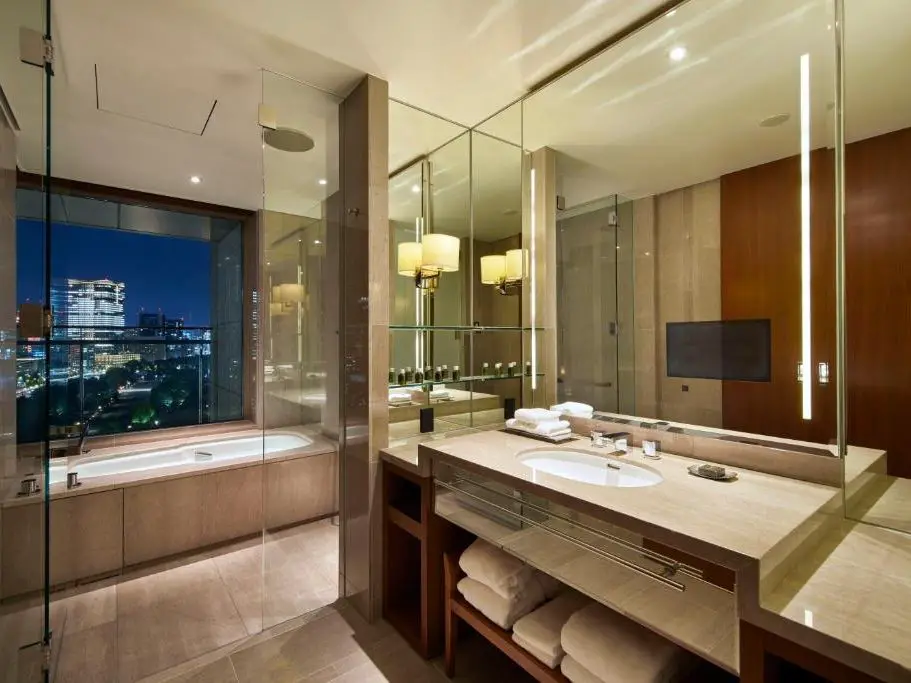
| 2. Palace Hotel Tokyo Rating: ⭐⭐⭐⭐⭐ Location: 2-minute walk to Otemachi Station Guest Reviews: Soaking tub positioned at window facing Imperial Palace gardens, balcony rooms praised, concierge service outstanding, breakfast among Tokyo’s best Best Room: Grand Deluxe King Room with Balcony Price: From USD $450 – $800 per night |
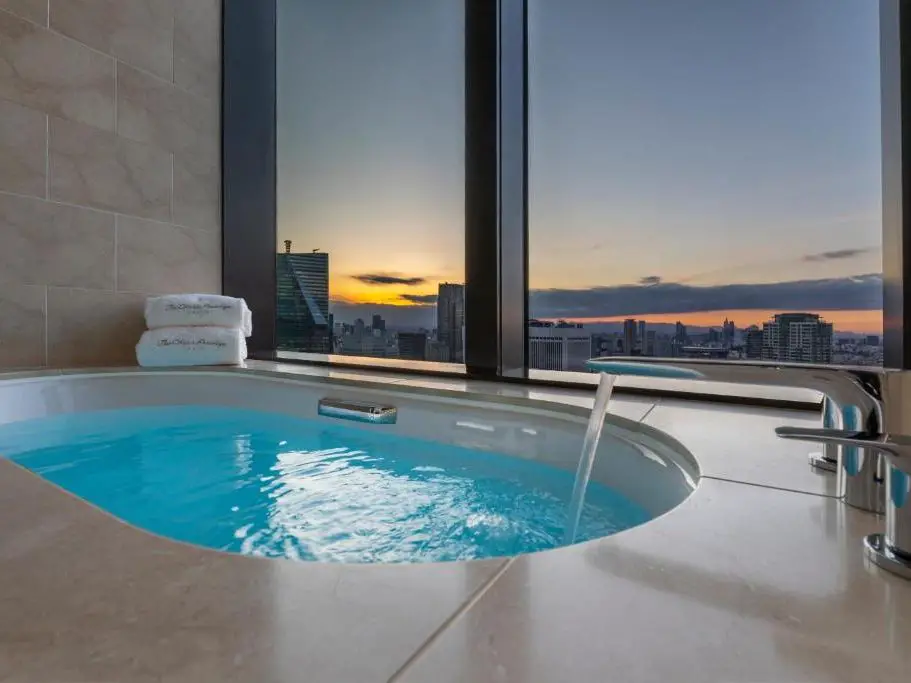
| 3. The Okura Tokyo Most Luxurious Rating: ⭐⭐⭐⭐⭐ Location: 6-minute walk to Kamiyacho Station Guest Reviews: Dedicated view-bath rooms, Tokyo Tower visible from tub, Bamford toiletries, Michelin-starred Japanese breakfast at Yamazato Best Room: Prestige Corner Room with View Bath Price: From USD $570 – $900 per night |

| 4. Mandarin Oriental, Tokyo Best View Rating: ⭐⭐⭐⭐⭐ Location: Direct connection to Mitsukoshimae Station Guest Reviews: Two walls of windows in corner rooms, tub-side city views praised, Sushi Shin by Miyakawa on-site, Bottega Veneta bath amenities Best Room: Deluxe Corner King Room Price: From USD $420 – $850 per night |

| 5. The Prince Gallery Tokyo Kioicho Most Unique Stay Rating: ⭐⭐⭐⭐⭐ Location: 2-minute walk to Akasaka-Mitsuke Station Guest Reviews: Soaking tub with panoramic Tokyo skyline views, Designer Suite mist sauna, Swiss Perfection Spa Kioi, extensive breakfast buffet Best Room: Designer Suite Price: From USD $380 – $700 per night |

| 6. The Ritz-Carlton, Tokyo Rating: ⭐⭐⭐⭐⭐ Location: Direct connection to Roppongi Station, Tokyo Midtown complex Guest Reviews: Skyline views admired from soaking tub, all-marble bathrooms, Michelin-starred Heritage by Kei Kobayashi, Frette linen and Asprey amenities Best Room: One Bedroom Premier Executive Suite Price: From USD $590 – $950 per night |
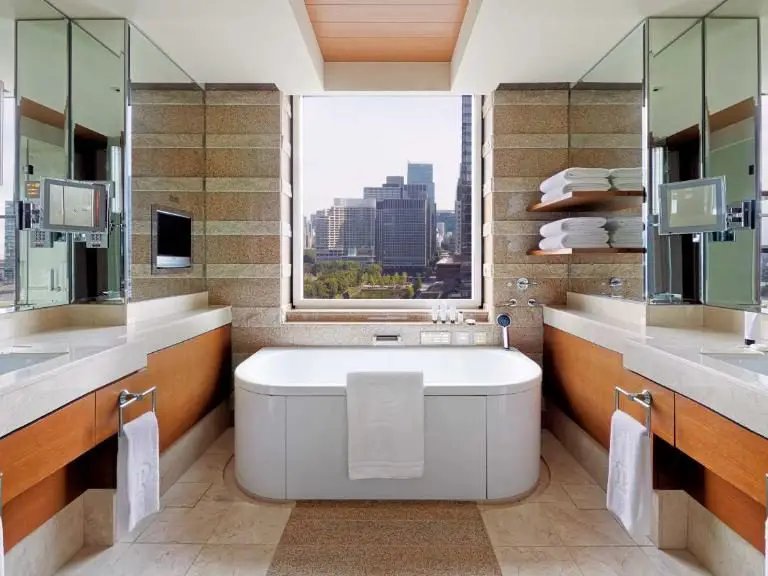
| 7. The Peninsula Tokyo Best Location Rating: ⭐⭐⭐⭐⭐ Location: Direct connection to Hibiya Station, 3-minute walk to Ginza Guest Reviews: Soaking tub with city view window, Forbes Five-Star spa, 24th-floor Peter: The Bar praised, attentive concierge and Keys to the City program Best Room: Premier Corner Room Price: From USD $500 – $850 per night |

| 8. Hyatt Regency Tokyo Best Value Rating: ⭐⭐⭐⭐ Location: Direct connection to Tochomae Station, next to Shinjuku Central Park Guest Reviews: Corner rooms with tub beside glass wall and city panorama, newly renovated 2025, spacious rooms by Tokyo standards, Regency Club lounge praised Best Room: Corner King Studio Price: From USD $240 – $500 per night |

| 9. 1 Hotel Tokyo Rating: ⭐⭐⭐⭐⭐ Location: 2-minute walk to Akasaka Station Guest Reviews: Soaking tub with Tokyo Tower panorama, moss walls and chiseled stone bathrooms, Zen garden spa, sustainably designed throughout Best Room: Panoramic Tower Views 1 Bedroom Suite Price: From USD $720 – $1,100 per night |

| 10. The Strings by InterContinental, Tokyo Best for Points Travelers Rating: ⭐⭐⭐⭐⭐ Location: 6-minute walk to Shinagawa Station, direct Shinkansen access Guest Reviews: View bath facing Tokyo Bay praised, panoramic skyline from tub, Club InterContinental lounge highly rated, lavish breakfast buffet Best Room: Club InterContinental Peak Suite Price: From USD $230 – $700 per night |
Why the View From the Tub Is Harder to Get Than You Think
Tokyo’s luxury hotels are excellent at marketing two things separately: rooms with city views, and rooms with soaking tubs. What they rarely advertise clearly is whether those two things exist in the same line of sight. In a significant number of five-star properties, the bathroom is interior-facing — the tub sits in a marble enclosure with no exterior window, while the floor-to-ceiling views are in the bedroom. You soak in comfort, but the skyline is on the other side of the wall.
The hotels on this list were selected precisely because the tub is physically positioned at or beside an exterior window. But even within a single hotel, not every room delivers this. At Mandarin Oriental, Tokyo, the view-facing tub is in the Deluxe Corner King — a standard Deluxe King room has an interior bathroom. At The Okura Tokyo, the Prestige Tower has a dedicated “View Bath” room category; book a standard Prestige room and you may not get the same setup. At The Ritz-Carlton, Tokyo, all rooms have deep soaking tubs and large windows, but the tub’s direct sightline to the city varies by floor and orientation.
The practical implication: the room type matters as much as the hotel. Booking the right property is step one. Booking the right room within that property is step two — and it’s the step most guests skip.
How to Request the Right Room and Actually Get It
Japanese hotels at the luxury level take special requests seriously — more so than almost anywhere else in the world. The probability of having a request fulfilled is significantly higher with advance notice than with a vague ask at check-in. Here’s how to approach it.
- Book the correct room category first. Don’t book a standard room and hope for an upgrade to a view-bath configuration. The specific room types to target are listed in each hotel tile above. If that room isn’t available, contact the hotel directly before assuming you need to move on.
- Put your request in writing at booking. Use the special requests field to specify: high floor, tub facing the window, and your preferred view orientation — city skyline, Tokyo Bay, Imperial Palace gardens, or Tokyo Tower. Be specific. “Nice view” is too vague to act on; “high floor corner room with bathtub facing the window, city or bay view preferred” gives the reservations team something to work with.
- Follow up directly with the concierge 48–72 hours before arrival. Email works better than phone for international guests. Reference your booking number, restate the request, and ask for confirmation. Most Tokyo luxury concierge teams will respond within 24 hours and will flag your preference in the system.
- Request the highest available floor. Elevation matters more than orientation at most of these properties. A tub on the 50th floor looking toward Shinjuku beats a tub on the 30th floor with technically the same view category. At The Ritz-Carlton, Tokyo and The Prince Gallery Tokyo Kioicho, the upper floors sit well above surrounding buildings — the difference between a mid-floor and top-floor room is visible.
- Ask about corner rooms explicitly. Corner rooms at Mandarin Oriental, Tokyo, The Strings by InterContinental, Tokyo, and Hyatt Regency Tokyo have two walls of windows, giving the bathroom a wider sightline. They’re not always listed separately on booking platforms but can often be requested.
- Arrive with your preferences confirmed, not assumed. If the hotel hasn’t replied to your pre-arrival email, call the day before. A confirmed request is far more likely to be honoured than one raised for the first time at the front desk.
What to Know About Spa and Pool Access at These Hotels
Most hotels on this list have communal spa or pool facilities in addition to the in-room soaking tub. What’s less clearly advertised is that several restrict access to those shared areas based on tattoo policy — a practical concern for a significant share of international visitors.
Tattoo policy varies by hotel and facility type. The in-room soaking tub is always private and has no restrictions. Communal areas — pools, saunas, shared baths — are where policies apply. Current restrictions at hotels on this list:
- The Prince Gallery Tokyo Kioicho — Spa Kioi communal baths and pool restrict guests with visible tattoos. The Designer Suite’s private tub is unaffected.
- Mandarin Oriental, Tokyo — Public bathing areas restrict tattooed guests. In-room tubs have no restrictions.
- The Peninsula Tokyo — Spa and pool facilities may restrict guests with visible tattoos. Confirm directly before arrival.
- The Ritz-Carlton, Tokyo — Spa and pool access may be restricted for guests with tattoos. The in-room tub is private and unrestricted.
- Conrad Tokyo — Mizuki Spa communal areas have tattoo restrictions. The in-room bay-view tub is unaffected.
The Okura Tokyo, Palace Hotel Tokyo, 1 Hotel Tokyo, Hyatt Regency Tokyo, and The Strings by InterContinental, Tokyo have more relaxed or publicly unspecified policies — confirm with each property directly before arrival if this is a concern.
What’s included vs charged extra also varies more than guests expect:
- Pool and fitness access is complimentary for all guests at Conrad Tokyo and 1 Hotel Tokyo.
- At The Prince Gallery Tokyo Kioicho, spa facility access (lockers, bath, sauna) costs an additional fee unless you’re staying in a Club, Grand Deluxe, or Suite room.
- At The Okura Tokyo, the spa and pool require a separate fee for Heritage Wing guests not on a Club plan.
- Club lounge access — which typically includes breakfast and evening cocktails — is included for suite guests at The Strings by InterContinental, Tokyo and available as an upgrade at Hyatt Regency Tokyo.
If the communal spa experience matters to your stay, factor this into your room selection, not just your hotel choice.
Best Areas to Stay for Different Views
The view from your tub depends entirely on where in Tokyo your hotel sits and which direction it faces. These aren’t interchangeable — a bay view and a palace view are genuinely different experiences, and it’s worth knowing what you’re choosing before you book.
- Imperial Palace gardens — Chiyoda and Otemachi The most serene view in central Tokyo. The palace grounds are a rare pocket of green in a dense city, and the moat catches light in a way that feels removed from the urban noise around it. By night, the absence of towers in that direction makes it quietly dramatic. Palace Hotel Tokyo is the closest property to the East Gardens, with the tub looking directly across the grounds. Mandarin Oriental, Tokyo offers skyline views toward the palace from Nihonbashi, a few minutes east.
- Tokyo Bay and Rainbow Bridge — Shiodome and Shinagawa Water at night is hard to beat. The bay view combines the arc of Rainbow Bridge, the lights of Odaiba across the water, and on clear evenings a sense of open space that central Tokyo rarely offers. Conrad Tokyo overlooks Hamarikyu Gardens and the bay from Shiodome, with the tub facing that direction in Bay View rooms. The Strings by InterContinental, Tokyo delivers a similar bay-facing view from Shinagawa, higher up and further south.
- Tokyo Tower and the Minato skyline — Toranomon and Roppongi Tokyo Tower is more photogenic than Tokyo Skytree precisely because it’s older, warmer in colour, and surrounded by a mid-rise skyline rather than towering glass. 1 Hotel Tokyo‘s Panoramic Tower Views suite frames it directly from the bathroom. The Ritz-Carlton, Tokyo sits in Tokyo Midtown and looks toward the tower and beyond to the Shinjuku cluster on the opposite horizon.
- 360-degree city panorama — high-rise Shinjuku and Kioicho For guests who want the full spread of the Tokyo skyline without committing to a single landmark, high-floor corner rooms at The Prince Gallery Tokyo Kioicho and Hyatt Regency Tokyo offer multi-directional views that shift across the city depending on which wall of windows you’re near. On a clear winter morning, Mount Fuji is visible to the southwest from both properties.
- Mount Fuji views — a note on clarity Fuji visibility from a Tokyo hotel tub is real but unreliable. It appears most consistently between November and February, on mornings after rain has cleared the air. Summer humidity makes it rare. If a Fuji view is a priority, request a southwest-facing room on the highest available floor, and aim for a winter or early spring stay.
When to Book and When to Visit
The view from your tub changes more than you might expect across Tokyo’s four seasons, and the price you’ll pay for the same room can swing by 50–80% depending on when you travel. Both are worth factoring in before you book.
The best views come in winter. Tokyo’s air is clearest between December and February, after cold fronts sweep out the humidity that blurs the skyline for much of the year. Mount Fuji appears on the horizon on crisp mornings. The city lights at night are sharper. Hotel rates are at their lowest — often 30–40% below spring peak — and rooms are easier to secure. For the pure experience of soaking in a tub with a clear Tokyo panorama stretched in front of you, winter is the strongest choice.
Spring is the most popular — and the most expensive. Cherry blossom season runs late March through early April, with peak bloom typically lasting seven to ten days. The city is at its most visually dramatic during this window, and the view from a high-floor tub during blossom season is genuinely special. The trade-off is significant:
- Hotel rates spike 50–80% above baseline
- Rooms sell out three to four months in advance at properties like Palace Hotel Tokyo and Conrad Tokyo
- Golden Week (late April to early May) adds another sharp price surge driven by domestic travel
Book spring stays as early as possible — ideally in January for late March or April dates.
Autumn is the quieter alternative to spring. October and November bring comfortable temperatures, lower humidity, and autumn foliage that colours Tokyo’s parks and gardens from mid-November. Crowds are moderate, hotel rates sit 20–30% below spring pricing, and the evening light from a high-floor tub during koyo season has its own quality. November is increasingly popular but nowhere near the saturation of cherry blossom season.
Summer is the least recommended for this type of stay. June and July bring Tokyo’s rainy season, with persistent cloud cover that limits views. August is hot and humid, with domestic travel during Obon (mid-August) pushing hotel prices up despite the conditions. The skyline haze in summer is real — a tub-with-a-view loses much of its point when visibility is poor.
A practical booking timeline:
- Cherry blossom (late March–early April): book 3–4 months ahead
- Golden Week (late April–early May): book 3–4 months ahead
- Autumn foliage (mid–late November): book 4–6 weeks ahead
- Winter (December–February): flexible, 2–4 weeks generally sufficient
- Summer (June–August): flexible, lowest demand outside Obon week
Soaking Tub vs Onsen – What’s the Difference in a Tokyo Hotel
If you’re visiting Japan for the first time, the distinction matters and is worth understanding before you arrive. The two experiences are related in spirit but different in practice, and several hotels on this list offer both — though they’re not the same thing.
A soaking tub in a hotel room is a deep, full-length bath filled with regular heated water. The depth is the defining feature — Japanese-style soaking tubs are designed for immersive bathing, sitting upright with water at shoulder height, rather than lying flat in a shallow Western bath. The water has no mineral content, the tub is private, and there are no rules governing how you use it beyond the usual. This is what every hotel on this list provides in-room, with the tub positioned to face the city view.
An onsen is categorically different. The word refers specifically to natural hot spring water — geothermally heated, mineral-rich, and sourced from underground. True onsen water has a specific chemical composition that varies by location and is associated with particular health benefits depending on its mineral content. In Tokyo, genuine onsen are rare because the city sits far from volcanic activity, though a handful of hotels do pump certified hot spring water from deep underground or transport it from sources in Hakone or Izu. Where onsen facilities exist at hotels on this list, they are communal — separate baths for men and women, or reservable private baths — and operate under bathing etiquette that differs from using a private in-room tub.
The practical difference for your stay comes down to three things. Privacy — the in-room soaking tub is entirely yours; communal onsen facilities are shared. Mineral content — a hotel soaking tub uses standard water; a genuine onsen delivers the therapeutic mineral experience Japan is known for. And rules — onsen facilities carry etiquette expectations (shower before entering, no swimwear in traditional settings, tattoo policies as covered in the previous section) that simply don’t apply to a private in-room tub.
Of the hotels on this list, The Okura Tokyo comes closest to bridging the two — the Heritage Wing’s spa facilities use hot spring-style bathing culture in a communal setting alongside the private in-room view bath. The Prince Gallery Tokyo Kioicho‘s Spa Kioi has communal soaking baths with city views. Conrad Tokyo‘s Mizuki Spa includes communal wet facilities. None of these is a true onsen in the geological sense, but they offer a communal bathing experience that complements the private in-room tub if that dimension of Japanese bath culture interests you.
For a genuine onsen experience paired with a Tokyo stay, the most practical option is a day trip to Hakone — 90 minutes by train — where natural hot spring ryokan offer the full mineral bathing experience in a mountain setting.
FAQ
1. Do all rooms at these hotels have a soaking tub with a city view, or only specific room types?
Only specific room types — this is the most important thing to understand before booking. At most hotels on this list, the tub-facing-window configuration is limited to corner rooms, higher-floor categories, or dedicated suite tiers. The hotel tiles above specify which room to book at each property. Booking the correct room type is as important as choosing the right hotel.
2. How far in advance should I book a view-bath room in Tokyo?
For cherry blossom season (late March to early April) and Golden Week (late April to early May), book three to four months ahead — rooms in the specific categories that offer tub-with-a-view sell out well before standard rooms do. For autumn and winter travel, four to six weeks is generally sufficient at most properties, though Palace Hotel Tokyo and Conrad Tokyo fill quickly year-round given their reputations.
3. Can I request a high floor or specific view orientation when booking?
Yes, and you should. Use the special requests field at booking to specify floor preference, view orientation, and tub placement. Follow up with the concierge by email 48–72 hours before arrival. Japanese luxury hotels take written requests seriously and will flag preferences in your reservation — a confirmed request made in advance is significantly more likely to be honoured than one raised at check-in.
4. Are there any restrictions on using the in-room soaking tub if I have tattoos?
No. The in-room soaking tub is private and has no restrictions regardless of tattoos. Restrictions apply only to communal facilities — pools, shared baths, and spa wet areas — at certain properties. The Prince Gallery Tokyo Kioicho, Mandarin Oriental, Tokyo, The Peninsula Tokyo, The Ritz-Carlton, Tokyo, and Conrad Tokyo all have tattoo policies for communal areas. Always confirm directly with the property before arrival if communal spa access matters to your stay.
5. What’s the best time of year to visit for the clearest view from the tub?
Winter — December through February — delivers the sharpest, most consistent views. Cold fronts clear Tokyo’s air and Mount Fuji becomes visible on the horizon from southwest-facing high-floor rooms. It’s also the cheapest period for rooms. Spring cherry blossom season offers a romantic setting but comes with significantly higher prices and reduced availability.
6. Is the soaking tub in these hotels filled with onsen mineral water?
No. In-room soaking tubs at these hotels use regular heated water, not natural hot spring mineral water. A true onsen experience requires visiting a dedicated onsen facility or ryokan, most accessibly in Hakone — about 90 minutes from Tokyo by train. Some hotels on this list have communal spa baths that approximate the bathing culture of an onsen, but none draws from a natural hot spring source.
7. Can two people comfortably use the soaking tub together?
It depends on the room tier. Standard soaking tubs at these properties are designed for one person — deep rather than wide, in keeping with Japanese bathing tradition. Suite-level tubs at Conrad Tokyo, The Prince Gallery Tokyo Kioicho, and The Ritz-Carlton, Tokyo are larger and can comfortably accommodate two. If this is a priority, check the room dimensions and tub specifications with the hotel before booking.
8. Do these hotels charge extra for using the in-room soaking tub?
No — the in-room tub is included in the room rate at all hotels on this list. Additional charges apply only to communal spa facilities, treatment rooms, and pools at certain properties. At The Prince Gallery Tokyo Kioicho, spa facility access costs an additional fee unless you’re staying in a Club, Grand Deluxe, or Suite room, where it’s included.
9. Which hotel on this list offers the best value for a tub-with-a-view experience?
Hyatt Regency Tokyo offers the lowest entry price on the list and the Corner King Studio delivers a genuine tub-beside-window experience with Shinjuku skyline views — all in a recently renovated property. The Strings by InterContinental, Tokyo is the next step up, with Tokyo Bay views and strong Club lounge access for points travellers. Both sit noticeably below the ultra-luxury tier while delivering the core experience this page is built around.