
Staying at one of the hotels that directly face Tokyo’s Imperial Palace grounds is one of those experiences that genuinely changes how you see the city. The palace moat, the pine trees, the wide open sky in the middle of one of the world’s densest metropolises — it’s a rare thing to have that view from your pillow. Some of these hotels put you close enough to watch the morning joggers circle the palace perimeter from your balcony over coffee. What follows is a list of the hotels that actually deliver on that promise.
Table of Contents
Tokyo Hotels
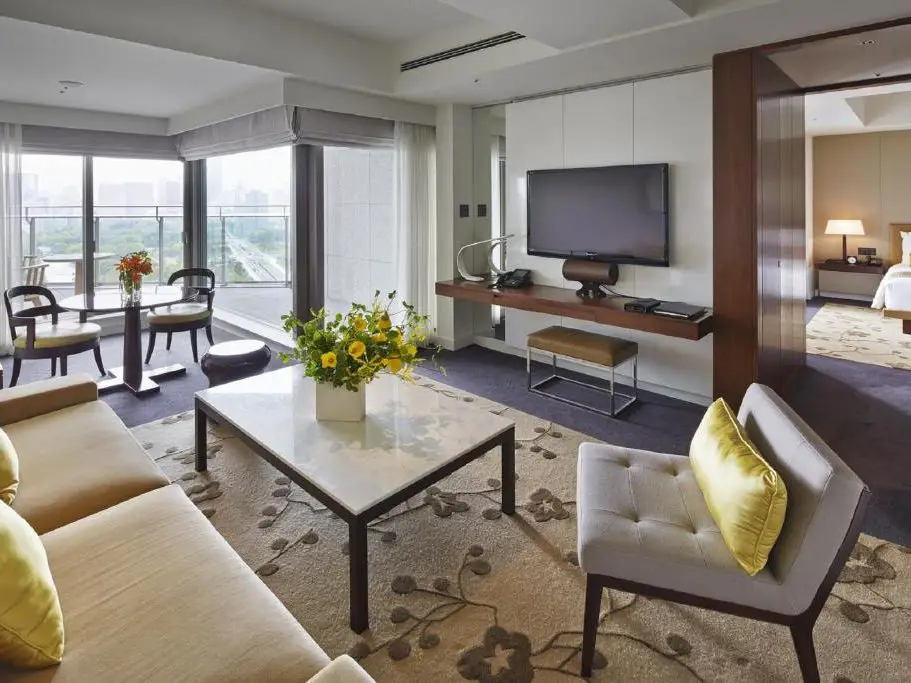
| 1. Palace Hotel Tokyo Best Private Balcony with Palace Moat View Rating: ⭐⭐⭐⭐⭐ Location: 3-minute walk to Imperial Palace East Gardens; 8-minute walk to Tokyo Station Guest Reviews: Private balcony over the palace moat, underground access to Otemachi Station, Japanese breakfast widely praised, Evian Spa standout Best Room: Deluxe King Room with Balcony Price: From USD $630 – $900 per night |
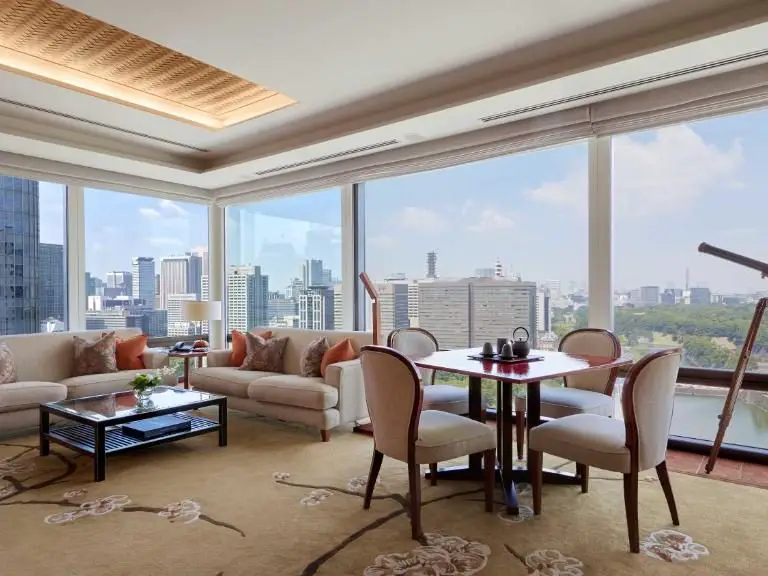
| 2. The Peninsula Tokyo Rating: ⭐⭐⭐⭐⭐ Location: 9-minute walk to Tokyo Imperial Palace; direct subway access via Hibiya Station in the basement Guest Reviews: Hibiya Park and palace views from upper floors, pool deck overlooking Imperial Palace Gardens, Rolls-Royce airport transfer, breakfast at Peter on the 24th floor praised Best Room: Grand Room, 1 King Bed (Premier Park Room) Price: From USD $680 – $950 per night |
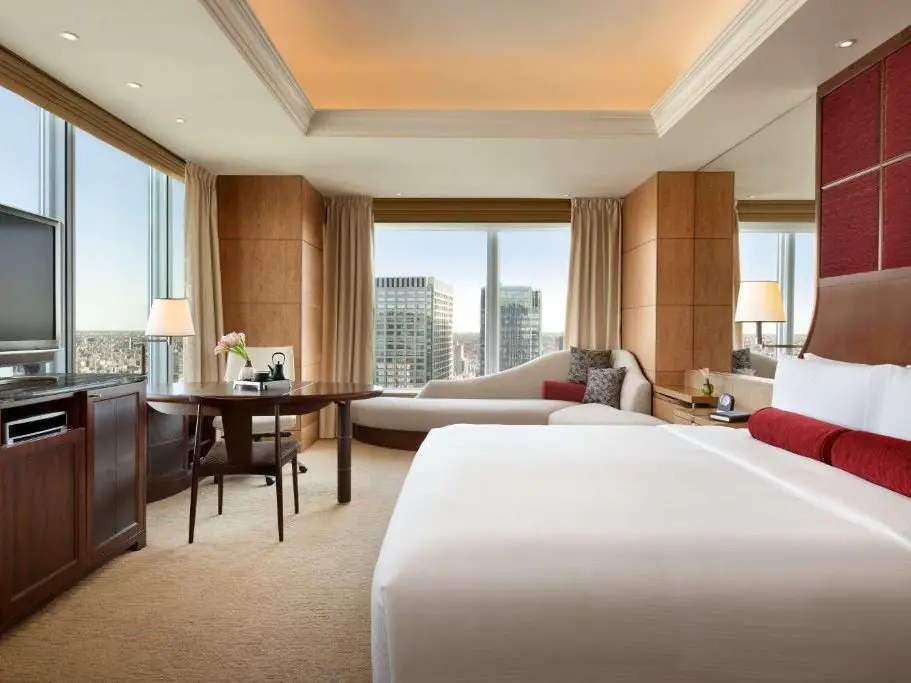
| 3. Shangri-La Tokyo Best High-Floor Palace View Rating: ⭐⭐⭐⭐⭐ Location: 1-minute walk to Tokyo Station; 10-minute walk to Imperial Palace Guest Reviews: Floor-to-ceiling Imperial Palace and Tokyo Bay views, marble bathrooms with Bose sound systems, CHI Spa standout, Horizon Club lounge with palace outlook Best Room: Deluxe Imperial Garden View King Room Price: From USD $630 – $900 per night |
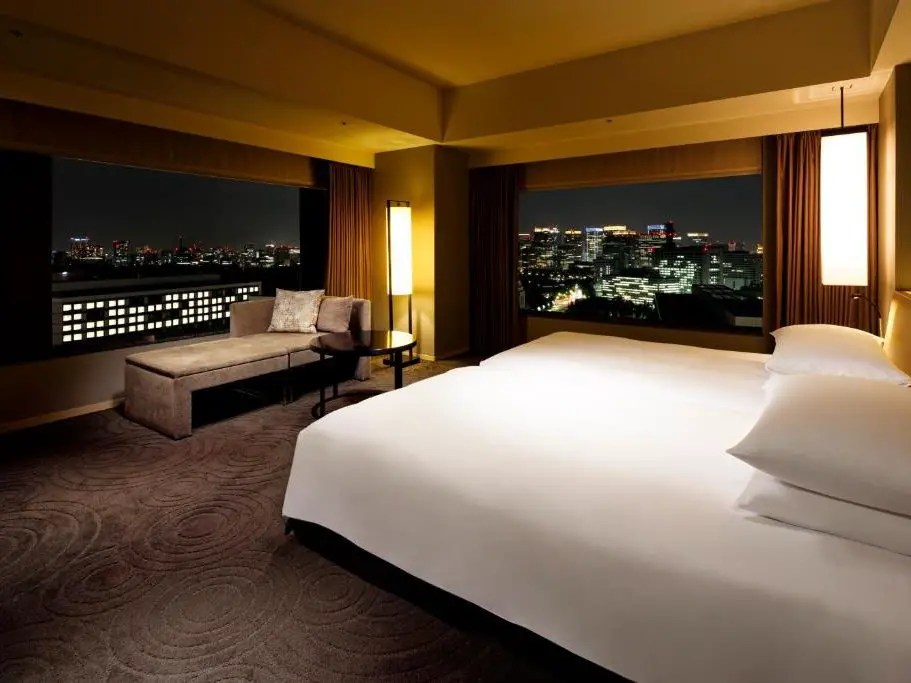
| 4. The Capitol Hotel Tokyu Rating: ⭐⭐⭐⭐⭐ Location: 12-minute walk to Tokyo Imperial Palace; direct underground access to Tameike-sanno and Kokkai-gijido-mae stations Guest Reviews: Kengo Kuma-designed lobby with seasonal ikebana, pool and whirlpool overlooking palace grounds, Hie Shrine garden views, spacious rooms by Tokyo standards Best Room: Premier Corner Twin, Non Smoking Price: From USD $480 – $750 per night |
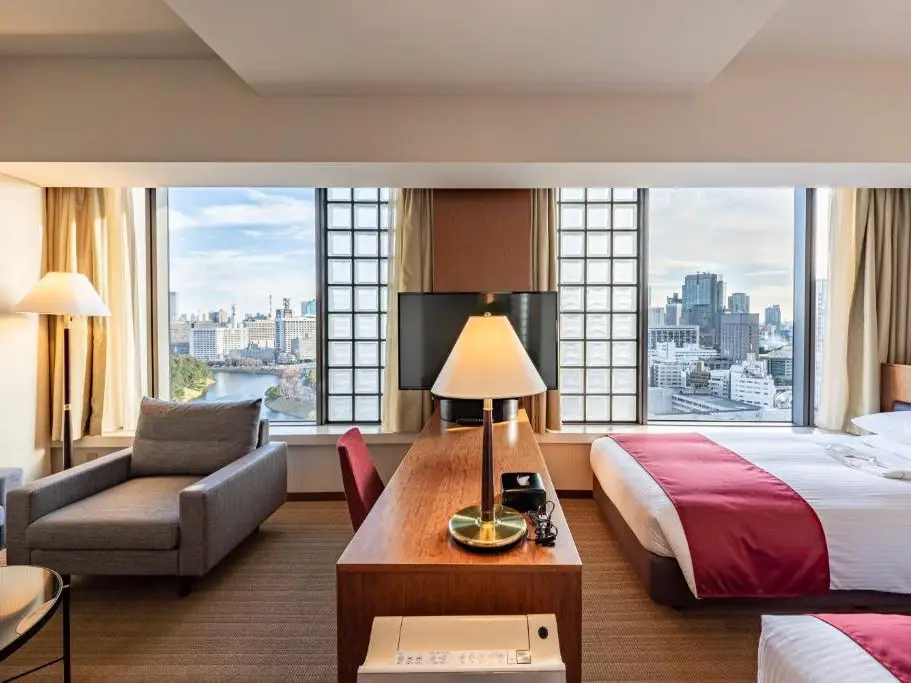
| 5. Hotel Grand Arc Hanzomon Best Value Palace View Rating: ⭐⭐⭐⭐ Location: 5-minute walk to Tokyo Imperial Palace; 3-minute walk to Hanzomon Station Guest Reviews: Almost all rooms face the Imperial Palace moat directly, spacious rooms by Tokyo standards, Japanese set breakfast praised, quiet location next to National Theatre Best Room: Deluxe Twin Room, Non Smoking (Top Floor / Palace Side) Price: From USD $140 – $280 per night |
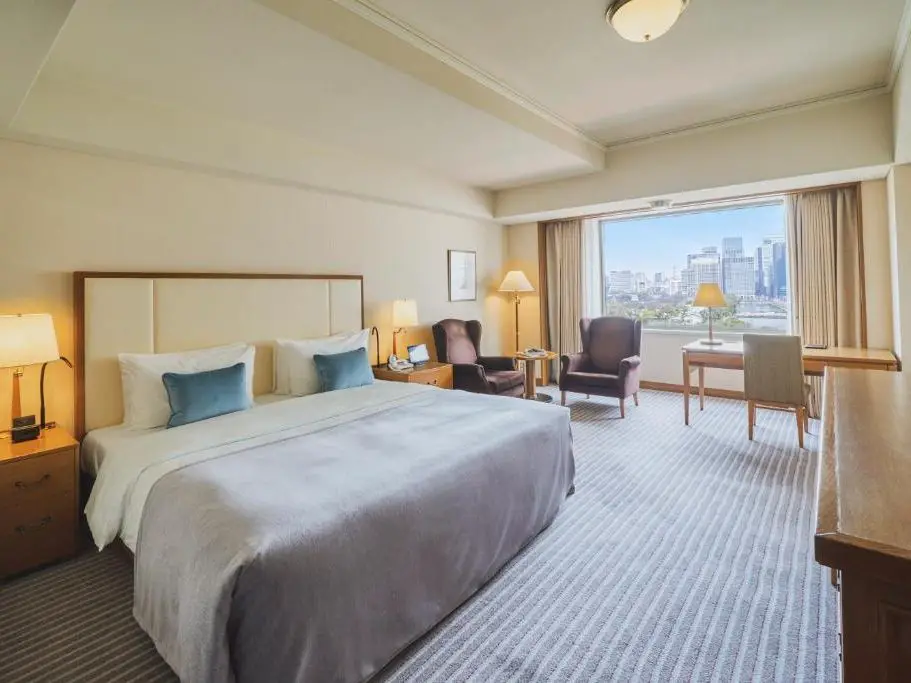
| 6. Imperial Hotel Tokyo Most Historic Palace-Adjacent Hotel Rating: ⭐⭐⭐⭐⭐ Location: 1-minute walk to Hibiya Park; 9-minute walk to Tokyo Imperial Palace Guest Reviews: Over 130 years of history, daily fresh pajamas and tea ceremony service on Imperial Floors, Michelin-starred restaurant Les Saisons, Old Imperial Bar a guest favourite Best Room: Main Building Regular Floor Deluxe Park-View Twin Room Non Smoking Price: From USD $380 – $550 per night |
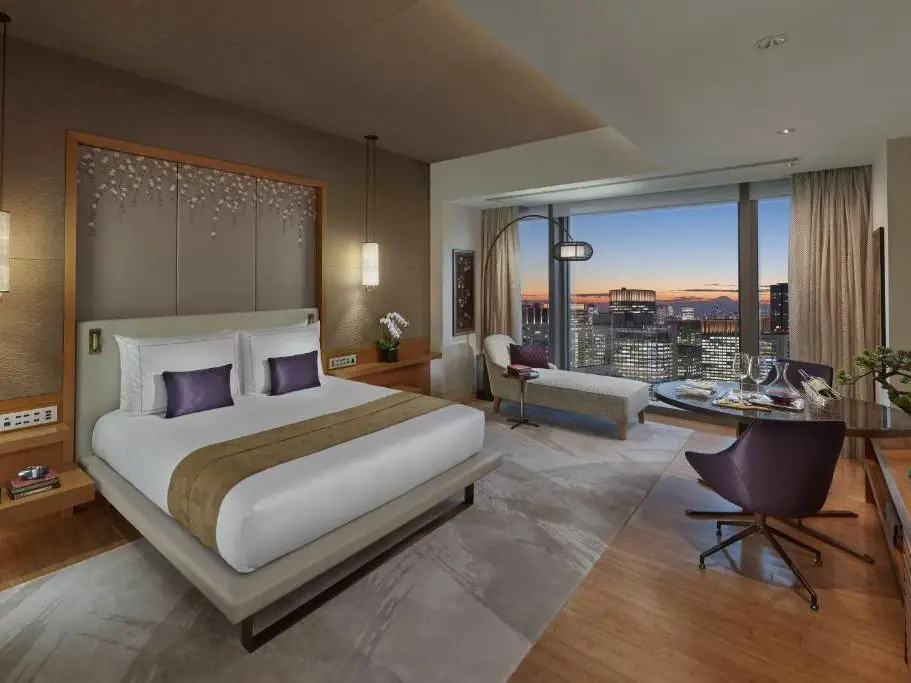
| 7. Mandarin Oriental Tokyo Best Spa with Palace Outlook Rating: ⭐⭐⭐⭐⭐ Location: 8-minute walk to Tokyo Station; direct access to Mitsukoshimae subway station; Imperial Palace a 3-minute subway ride away Guest Reviews: West-facing Grand Rooms with Imperial Palace and Shinjuku skyline views, largest entry-level rooms in Tokyo at 60sqm, award-winning Sense spa on the 37th floor, Michelin-starred dining Best Room: Mandarin Grand Room Price: From USD $700 – $1,000 per night |
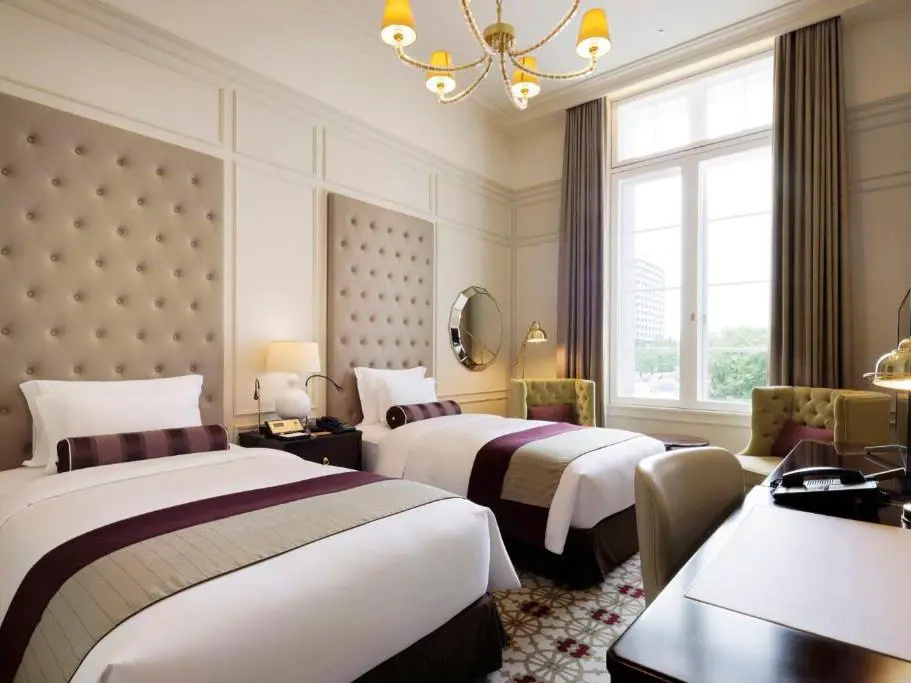
| 8. The Tokyo Station Hotel Most Unique Building Rating: ⭐⭐⭐⭐ Location: Inside Tokyo Station Marunouchi Building; 18-minute walk to Tokyo Imperial Palace; direct Shinkansen access Guest Reviews: Palace-side rooms face toward the Imperial Palace across the promenade, housed inside a 1915 registered Important Cultural Property, carbonated hot spring spa, 100-item breakfast buffet widely praised Best Room: Palace View Premium Twin, Non Smoking Price: From USD $400 – $650 per night |
What “Imperial Palace View” Actually Means — and Why It Varies
Not every hotel advertising an Imperial Palace view is showing you the same thing. The view falls into three distinct types, and knowing which one you’re booking saves real disappointment at $400–$1,000 a night.
- Direct moat-facing rooms — A window or balcony where the palace stone walls, pine trees, and water of the outer moat fill your outlook with nothing in between. Palace Hotel Tokyo and Hotel Grand Arc Hanzomon are the clearest examples. At Palace Hotel Tokyo, south-facing balcony rooms look directly onto Wadakura Fountain Park and the Imperial Palace Plaza, with the moat visible beyond. At Hotel Grand Arc Hanzomon, almost every twin and semi-double room faces the moat from across the street — it is quite literally what you see when you look out the window.
- Elevated high-floor views toward the palace — Rooms on the 27th floor and above where the palace gardens are visible in the middle distance, framed by the surrounding financial district. Shangri-La Tokyo (floors 31–37, west-facing rooms), Mandarin Oriental Tokyo (floors 30–36, west-facing Grand Rooms), and The Peninsula Tokyo (upper-floor park-facing rooms) fall here. The view is real and often dramatic — the green canopy of the palace forest against the skyline — but you are looking across several city blocks rather than down at the moat.
- Palace-adjacent park and cityscape views — Rooms that face the green space surrounding the palace rather than the palace itself. Imperial Hotel Tokyo park-view rooms look onto Hibiya Park, with the palace grounds visible further beyond. The Tokyo Station Hotel palace-side rooms face the Marunouchi promenade toward the palace. The Capitol Hotel Tokyu pool and lounge overlook the palace grounds from Nagatacho, though guest rooms face primarily toward Hie Shrine and the Diet Building skyline.
None of these is a false promise — all deliver a genuine connection to the palace precinct. But the distinction between a moat-facing room at Hotel Grand Arc Hanzomon and a west-facing Grand Room at the Mandarin Oriental is worth understanding before you book.
Which Part of the Palace District Suits You
The Imperial Palace sits at the centre of three distinct neighbourhoods, and the one you choose shapes your experience of Tokyo as much as the hotel itself.
- Otemachi and Marunouchi — This is Tokyo’s financial and business core, directly east of the palace. It is quiet, polished, and exceptionally well-connected; Otemachi Station alone serves five subway lines, and Tokyo Station is a short walk. Palace Hotel Tokyo, Four Seasons Hotel Tokyo at Otemachi (when bookable), and Mandarin Oriental Tokyo (in adjacent Nihonbashi) are anchored here. The neighbourhood goes from suit-and-briefcase energy on weekdays to genuinely peaceful on weekends, when the wide avenues around the palace are taken over by joggers and cyclists. Dining options are concentrated in the office tower complexes and hotel restaurants; neighbourhood izakayas are thin on the ground. The trade-off for that quiet is a slightly sterile atmosphere after dark.
- Hanzomon — Directly west of the palace, this is the quietest and most residential of the three zones. Hotel Grand Arc Hanzomon sits here, a three-minute walk from Hanzomon subway station and directly across from the moat. The National Theatre is next door. There are a handful of neighbourhood restaurants, a 24-hour convenience store, and very little tourist traffic — which is exactly the point. If the palace view is the reason you’re coming to Tokyo and everything else is secondary, this is the area.
- Hibiya, Yurakucho, and Nagatacho — South and southeast of the palace, these neighbourhoods offer the best access to Ginza (a 10-minute walk from The Peninsula Tokyo and Imperial Hotel Tokyo), the liveliest after-dark options, and the most varied dining. The palace is a short walk north. The Capitol Hotel Tokyu is anchored in Nagatacho, Tokyo’s political district, adjacent to the Diet Building and the Prime Minister’s residence. The Tokyo Station Hotel sits inside Tokyo Station itself, making it the single most convenient property on this list for rail travel anywhere in Japan.
The Imperial Palace Jogging Circuit — and How These Hotels Use It
The 5km loop around the outer moat of the Imperial Palace is one of the most famous running routes in Asia. Early morning, it fills with office workers, tourists, and serious runners doing laps before the city wakes up. Several hotels on this list have quietly built the circuit into their guest experience in ways that no OTA listing bothers to mention.
- Palace Hotel Tokyo — The route passes directly in front of the hotel. Guests can step out of the lobby and be on the circuit within 90 seconds. The hotel provides running maps and can arrange a bento breakfast for post-run recovery.
- Hotel Grand Arc Hanzomon — The Hanzomon Gate entrance to the palace running course is a two-minute walk from the hotel. This is the western starting point of the loop and tends to be less crowded than the Marunouchi side.
- Four Seasons Hotel Tokyo at Otemachi — The hotel has a dedicated running concierge service and provides guests with curated route maps. The Imperial Palace East Gardens entrance is a three-minute walk.
- The Capitol Hotel Tokyu — Less direct access, but the hotel is a starting point for a slightly longer route that takes in the palace moat and Hie Shrine in a single loop — worth asking the concierge about.
The circuit is flat, mostly paved, and shaded in sections by the palace pines. The best time to run it is between 6am and 7:30am on weekdays, before the tourist coaches arrive. On weekend mornings in cherry blossom season, expect company.
When to Book — and What the Seasons Do to the View
The view from a palace-facing room is a different experience depending on when you visit, and the calendar affects not just what you see but how much you pay and how far in advance you need to plan.
- Late March to early April (cherry blossom season) — This is when palace-view rooms earn their reputation. The Chidorigafuchi Moat, directly northwest of the palace, is lined with over 260 cherry trees that form a pink canopy directly above the water. From a high-floor west-facing room at the Shangri-La or Mandarin Oriental, or from the balconies at Palace Hotel Tokyo, the gardens and moat are genuinely spectacular during peak bloom. The trade-off: prices at every hotel on this list spike significantly, rooms sell out weeks or months in advance, and moat-facing rooms at Hotel Grand Arc Hanzomon can pick up noise from the crowds below on peak weekends. Book two to three months ahead for cherry blossom season.
- Mid-November (autumn foliage) — The ginkgo trees lining the Marunouchi approach to the palace turn gold, the maple and cherry trees inside the East Gardens shift through orange and red, and the crowds are a fraction of what they are in spring. This is arguably the most photogenic season and the most underrated time to stay in a palace-view room. Prices are lower than spring but higher than summer. Book four to six weeks ahead.
- May to September — The palace gardens are lush and deeply green, which makes for a calm, textured view, but without the drama of blossom or foliage. Summer heat and humidity can be intense. Hotel prices are generally at their softest in August. If the palace view matters to you but your travel dates are flexible, late May or early June offers pleasant weather, full green gardens, and better room availability.
- January and February — The quietest and most affordable period. The gardens are stripped back, which actually clarifies the view — the stone walls and moat read more starkly, particularly on crisp winter mornings. Worth considering if budget is a factor.
How to Actually Visit the Imperial Palace
Staying in a palace-view room and visiting the palace itself are two separate things, and the access options are not as obvious as they look from the outside.
- The East Gardens (Higashi Gyoen) — Open to the public free of charge Tuesday through Sunday, generally 9am to 4:30pm (hours vary by season, check the Imperial Household Agency website at kunaicho.go.jp before visiting). Entry is through Ote-mon, Hirakawa-mon, or Kitahanebashi-mon gates. A roughly 20-minute walk from Palace Hotel Tokyo or Hotel Grand Arc Hanzomon, and a 15-minute walk from the Otemachi hotels. These are the most accessible gardens and the best for a self-guided visit.
- The free guided palace tour — This is the only way to see the inner palace grounds beyond the East Gardens. Tours run Tuesday through Saturday at 10am and 1:30pm, last approximately 75 minutes, and cover a 2.2km loop. Booking is done online at kunaicho.go.jp and is free. Places fill quickly — book at least a month ahead during cherry blossom season and at least two weeks ahead at other times. The tour is conducted in Japanese, with an audio guide available in multiple languages.
- January 2 and February 23 — The only two days per year when the inner palace balcony is open for the public Imperial New Year’s Greeting and the Emperor’s Birthday celebration. These are significant occasions with large crowds; arrive early.
- The Nijubashi Bridge viewpoint — The most photographed spot associated with the palace is freely accessible at any time. It is a short walk south from Nijubashimae subway station and directly visible from the outer gardens. No booking required.
Walking times from each hotel vary: approximately 5 minutes from Hotel Grand Arc Hanzomon to the Hanzomon Gate, 8 minutes from Palace Hotel Tokyo to the East Gardens entrance at Ote-mon, 10 minutes from The Peninsula Tokyo and Imperial Hotel Tokyo, 15 minutes from The Tokyo Station Hotel via the Marunouchi promenade, and 12 minutes from The Capitol Hotel Tokyu via Hanzomon Station.
How to Choose the Right Hotel
- Closest direct view of the palace moat — Hotel Grand Arc Hanzomon is the answer. It sits directly across the street from the moat, almost every room faces the palace side, and the price is a fraction of the luxury alternatives. The rooms are not the most polished on this list, but no hotel gets you closer to the water.
- Best balcony with palace view — Palace Hotel Tokyo is the only hotel on this list where you can step outside onto a private balcony and look directly at the Imperial Palace Plaza and moat. In a city where private outdoor space is extraordinarily rare, this is a genuine differentiator.
- Best high-floor elevated view — Shangri-La Tokyo and Mandarin Oriental Tokyo both sit on floors 30 and above, west-facing, with clear sightlines toward the palace forest. The Mandarin’s Grand Room is the stronger room; the Shangri-La’s upper Horizon Club floors add lounge access.
- Best access to Ginza and the wider city — The Peninsula Tokyo or Imperial Hotel Tokyo. Both are a short walk from Ginza, close to multiple subway lines, and well-positioned for guests who want the palace view as part of a wider Tokyo trip rather than the sole focus.
- Most historic building — The Tokyo Station Hotel, without question. No other hotel on this list occupies a 1915 building of genuine architectural significance. The palace-side rooms are a different experience — quieter, heavier, more atmospheric — than anything in a glass tower.
- Best for a special occasion or honeymoon — Palace Hotel Tokyo for the balcony and Evian Spa, or Shangri-La Tokyo for the room scale and Horizon Club privacy.
- Best for business travel with palace access — The Tokyo Station Hotel for Shinkansen convenience, or the Otemachi-area hotels for subway access across Tokyo’s business districts.
FAQs
1. Do all rooms face the Imperial Palace at these hotels?
At most hotels, only specific room types and orientations face the palace. At Hotel Grand Arc Hanzomon, twin and semi-double rooms on the palace side face the moat directly, while single rooms face the building side. At Palace Hotel Tokyo, balcony rooms are south-facing and look onto the palace plaza; not all rooms have this view. At Shangri-La Tokyo and Mandarin Oriental Tokyo, palace-facing rooms are on the west side of the building. Always specify a palace-view or palace-side room when booking, and confirm in writing before arrival.
2. Can you see Mount Fuji from these hotels?
On clear days — most reliably in winter between December and February — Mount Fuji is visible on the western horizon from high-floor rooms at Shangri-La Tokyo, Mandarin Oriental Tokyo, and Palace Hotel Tokyo. It appears as a faint triangular outline above the Shinjuku skyline. Clear-day sightings are not guaranteed and vary significantly with weather and season.
3. Is the palace area quiet at night?
The Otemachi and Marunouchi districts become very quiet after business hours, particularly on weekends. Hotel Grand Arc Hanzomon and the Hanzomon area are quieter still — closer to a residential rhythm. The exception is cherry blossom season, when crowds along the Chidorigafuchi Moat and the palace jogging route generate more noise than usual late into the evening.
4. How far in advance should I book a palace-view room during cherry blossom season?
At least two to three months in advance for the hotels on this list. Balcony and palace-facing categories at Palace Hotel Tokyo and Hotel Grand Arc Hanzomon sell out earliest. The precise timing of peak bloom varies year to year, which makes flexible cancellation policies worth paying for during this period.
5. Is the 5km palace jogging circuit suitable for all fitness levels?
The route is flat, well-paved, and clearly marked — it runs along the outer moat road and is accessible to walkers as well as runners. The full circuit takes most people between 30 and 50 minutes to run at a moderate pace, or around 60 to 75 minutes to walk. There are no hills and almost no traffic crossings once you are on the moat road.
6. Can you visit the Imperial Palace East Gardens without a reservation?
The East Gardens are free and require no advance booking. They are open Tuesday through Sunday with entry cut-off around 3pm to 4pm depending on the season, and are closed on Mondays, Fridays, and during imperial events. The inner palace tour, which covers the main grounds beyond the East Gardens, does require advance booking through the Imperial Household Agency website.
7. Which hotel is best for first-time visitors to Tokyo who want a palace view?
Palace Hotel Tokyo for those with a generous budget — the balcony rooms, direct moat access, and proximity to both the palace and Tokyo Station make it the most complete option for a first visit. Hotel Grand Arc Hanzomon for those who want the closest possible view of the moat at a significantly lower price point and are happy with a simpler hotel experience.
8. Are the palace-view rooms noisier than other rooms at these hotels?
At Hotel Grand Arc Hanzomon, palace-side rooms face a road that carries light traffic; noise is generally minimal outside cherry blossom season. At Palace Hotel Tokyo, some guests have noted traffic noise from the avenue between the hotel and the moat, particularly in lower-floor balcony rooms. High-floor rooms at Shangri-La Tokyo and Mandarin Oriental Tokyo are well above street noise. The Tokyo Station Hotel palace-side rooms face the Marunouchi promenade, which is generally quiet after 9pm.
9. Is there a best time of day to appreciate the palace view from a hotel room?
Early morning is the strongest. Before 8am, the mist over the moat, the absence of tourist crowds, and the low light on the palace pines produce a quality of view that midday or afternoon cannot match. Sunset from west-facing high-floor rooms at Shangri-La Tokyo and Mandarin Oriental Tokyo is the second best moment — the light catches the palace forest and the Shinjuku towers simultaneously.