
First trip to Tokyo? Book Shinjuku. It’s on the Yamanote loop, so Shibuya, Harajuku and Ueno are all one straight ride away. Flying into Narita? Sleep east instead: the Skyliner runs from Keisei-Ueno to the airport with no transfers. Neighbourhood beats hotel here. Two people on the same budget, one in Shinjuku and one in Asakusa, get two different trips. Here’s how each area compares.
Quick answer: Pick by the trip you’re planning:
- First visit: Shinjuku Hotels with City Views
- Couples: Shibuya Hotels for Couples
- Families: Family Hotels in Tokyo
- Bullet train days: Best Hotels near Tokyo Station
- Narita flights: Hotels near Ueno Station
Table of Contents
Where to Stay in Tokyo by Neighbourhood
Tokyo’s major neighbourhoods sit on or just off the Yamanote Line, the loop that connects the city’s main districts. That’s the good news: wherever you base yourself, nothing is more than 30 to 40 minutes away. Access isn’t the issue. It’s about what’s outside your door when you’re not on a train, and what the city feels like at the end of a long day when you’re walking back to your hotel.
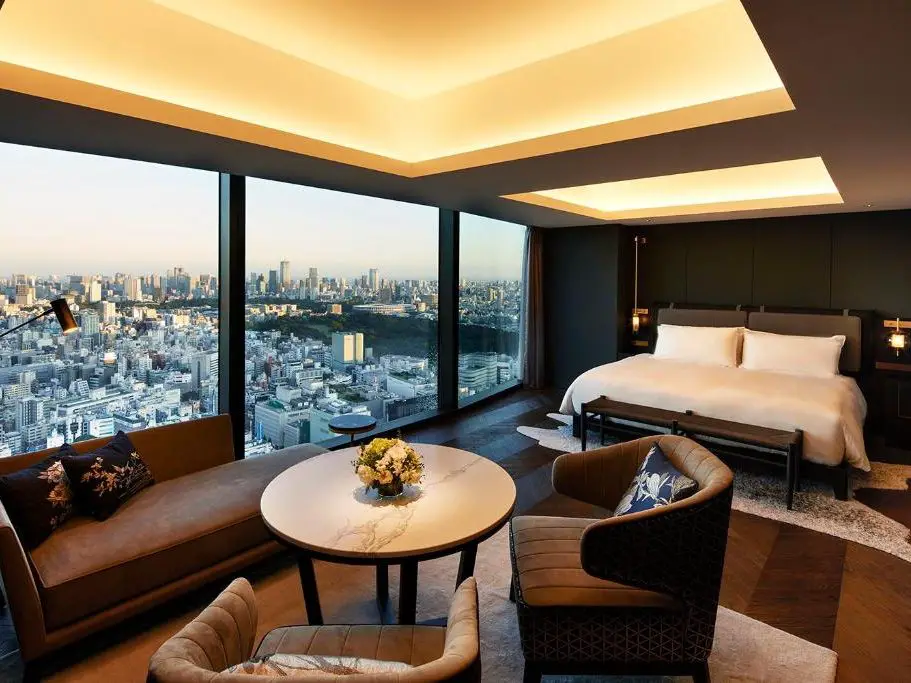
Shinjuku
Shinjuku’s west side is a skyscraper district, which means the gap between a room on the 8th floor and a room on the 38th floor is the difference between staring at a concrete wall and watching the entire city light up below you. If you’re going to stay in Shinjuku, make the altitude work for you.
Pictured: BELLUSTAR TOKYO, A Pan Pacific Hotel in Shinjuku
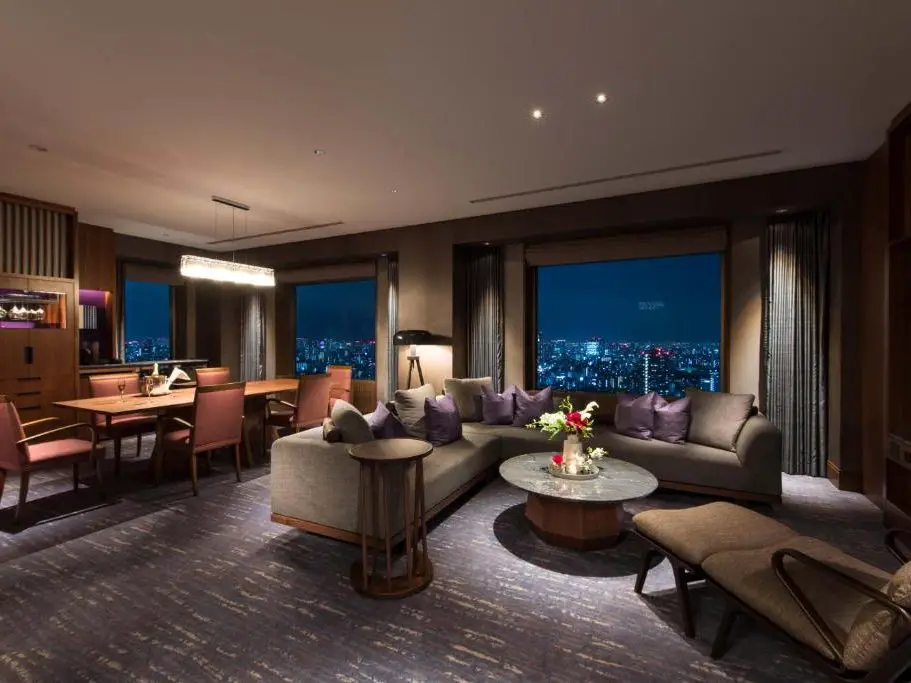
Shibuya
Shibuya is where Tokyo’s energy is most visible: the crossing, the neon, the density of people moving in every direction at once. At street level it’s relentless. From a hotel room above it, particularly at night, it’s one of the great urban views. Shibuya’s tower hotels suit couples who want to be in the middle of it.
Pictured: Cerulean Tower Tokyu Hotel in Shibuya
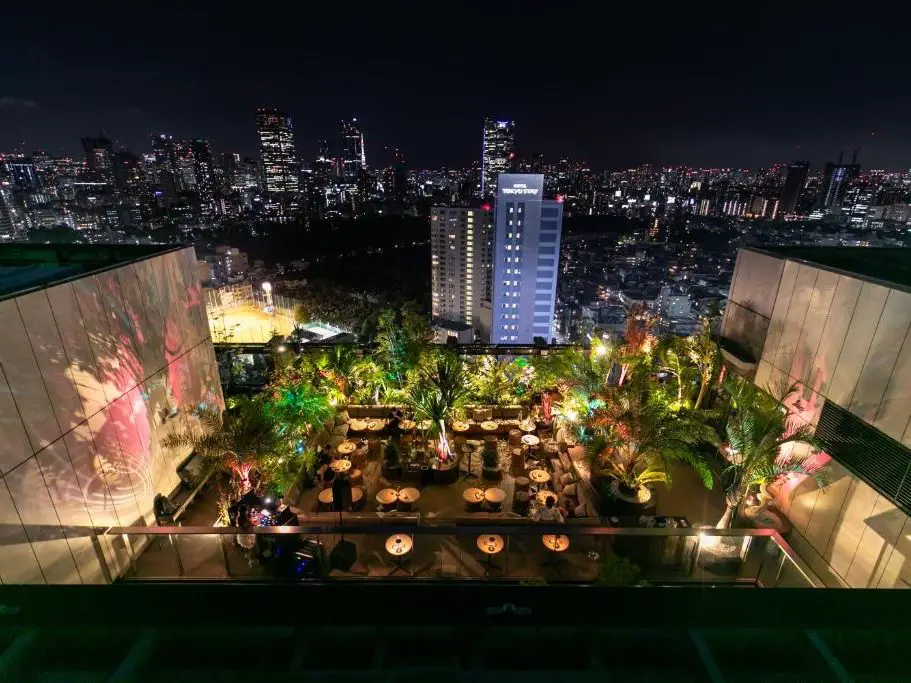
Harajuku and Omotesando
Two streets, two completely different versions of Tokyo within five minutes of each other. Harajuku is youth culture, street fashion, and Takeshita Street’s particular brand of controlled chaos. Omotesando is the quieter, tree-lined counterpart: flagship architecture, serious coffee, and a slower pace. A hotel between the two puts you with Yoyogi Park on one side and Shibuya on the other.
Pictured: The Aoyama Grand Hotel in Aoyama
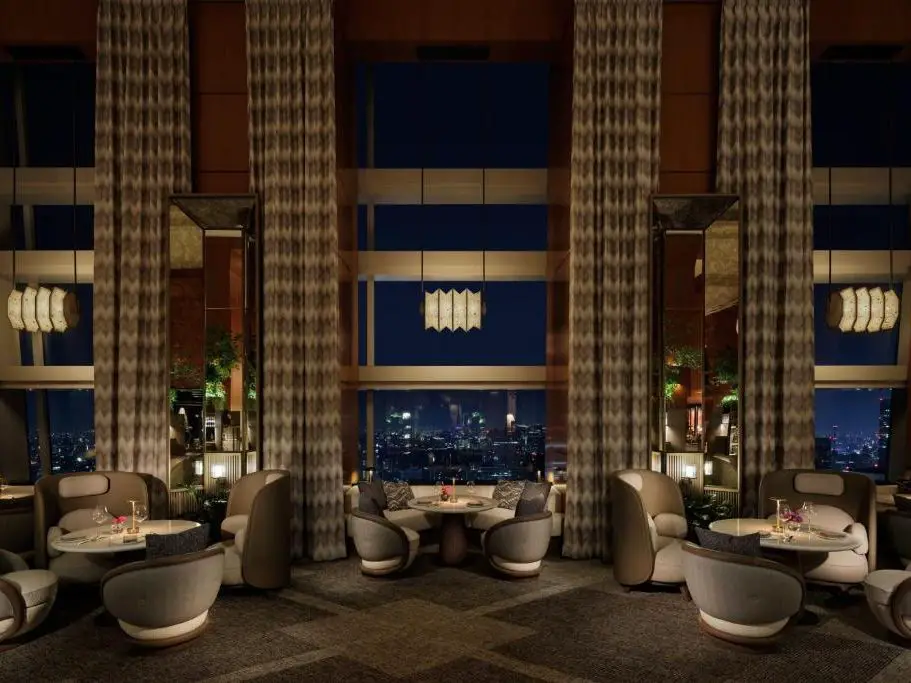
Roppongi
Tokyo Midtown and the Mori Art Museum anchor today’s Roppongi, along with plenty of international dining, with The Ritz-Carlton, Tokyo and Grand Hyatt Tokyo at one end and sharp budget hotels a minute from the station at the other. It’s off the Yamanote Line, but the Hibiya and Oedo subway lines both stop here.
Pictured: The Ritz-Carlton, Tokyo in Roppongi
Ginza
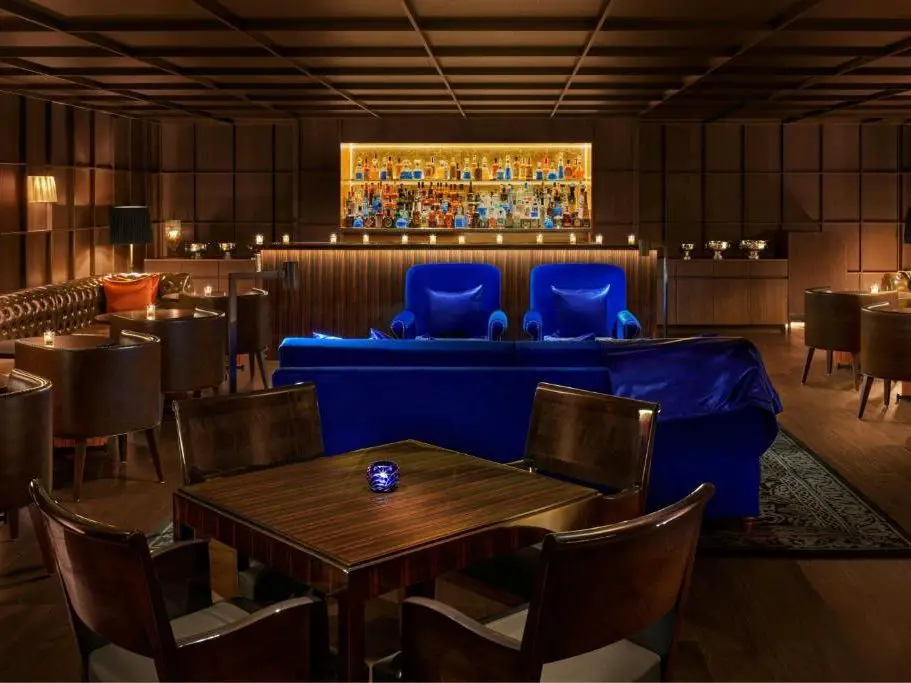
Ginza’s luxury-shopping image hides how practical it is as a base. Ginza Station alone has three subway lines, ten minutes on foot from Tsukiji, and close enough to Tokyo Station to walk to the Shinkansen on departure day.
Pictured: The Tokyo EDITION, Ginza in Ginza
Asakusa
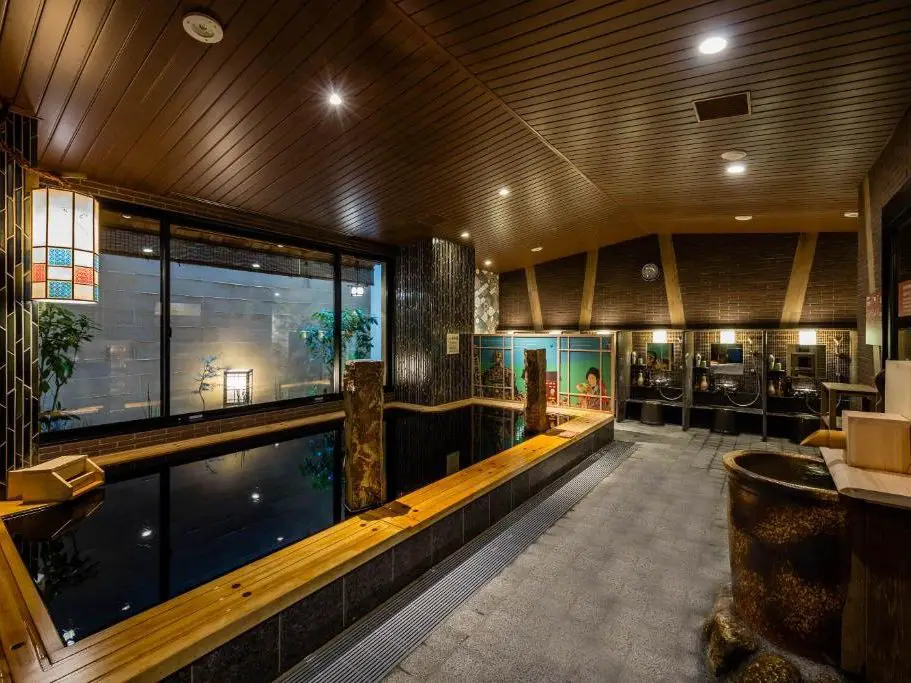
The oldest part of central Tokyo and the one that feels least like the city most visitors picture before they arrive. Senso-ji Temple, the Sumida River, narrow craft streets, and ryokan-style hotels sitting alongside budget apartments: Asakusa moves at a different pace from the west side, and that’s the point. The Toei Asakusa Line also runs through trains to both Narita and Haneda.
Pictured: Onyado Nono Asakusa in Asakusa
Ueno
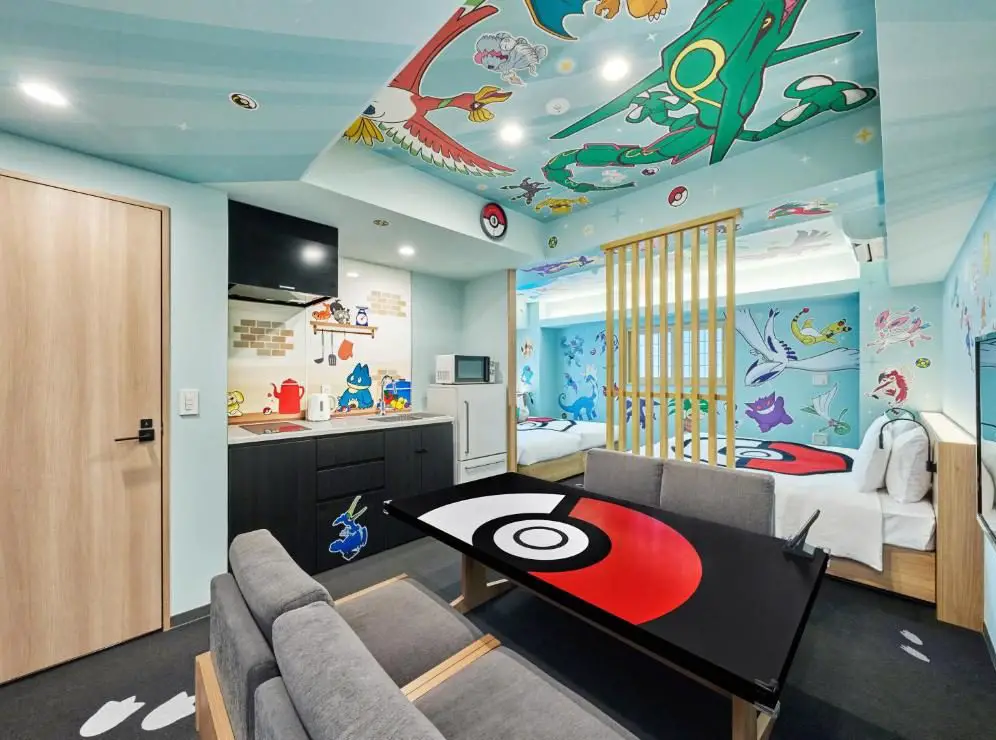
The right base if your itinerary leans toward museums, parks, and cultural Tokyo. Ueno Park alone holds a zoo, several major museums and some of the city’s best cherry blossom walks. The Keisei Skyliner to Narita leaves from Keisei-Ueno Station with no transfers, which makes Ueno the most practical first and last night base for anyone flying in and out of Narita.
Pictured: MIMARU Tokyo Ueno East in Ueno
Marunouchi and Tokyo Station
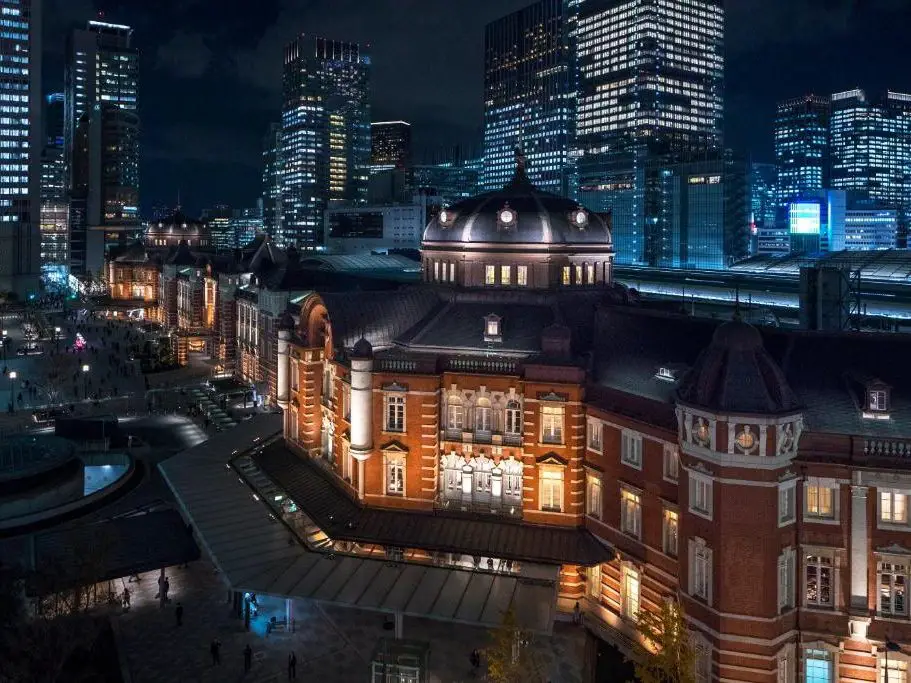
The most practical base in Tokyo if your trip involves the Shinkansen: bullet trains to Kyoto, Osaka, Sendai and Kanazawa all leave from here, and sleeping two minutes from the platforms takes the stress out of departure day. The area is polished and business-forward, quieter than Shinjuku at night, and within walking distance of Ginza and the Imperial Palace. It’s not the most atmospheric part of town, but nothing beats it on a train day.
Pictured: The Tokyo Station Hotel at Tokyo Station
Where to Stay in Tokyo by Experience
Sometimes in Tokyo the neighbourhood isn’t the point at all. They’re about what you want the room itself to deliver: a soaking tub facing the skyline, a traditional ryokan in the middle of the city, a love hotel for a first visit.
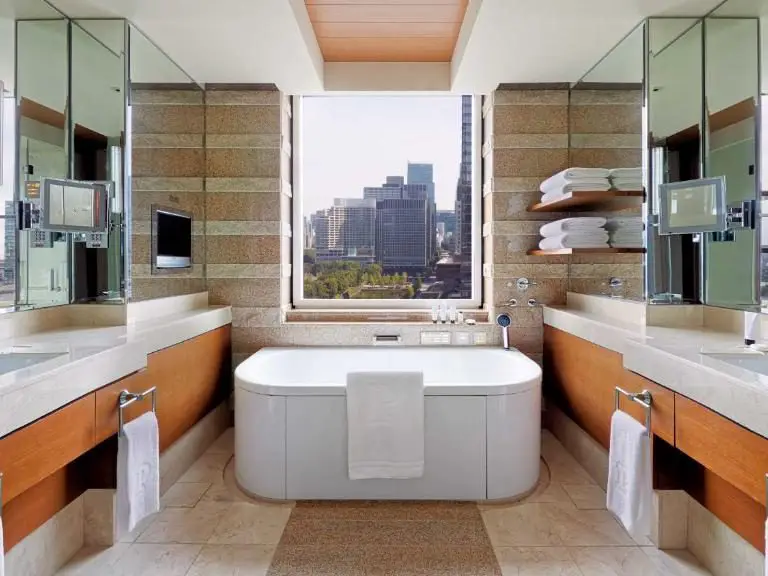
Private Soaking Tub and City View
A deep soaking tub at a floor-to-ceiling window with the Tokyo skyline in front of you is harder to find than it sounds. Plenty of Tokyo hotels have a tub and plenty have a view, but far fewer put the tub at the window rather than behind a wall from it.
Pictured: The Peninsula Tokyo
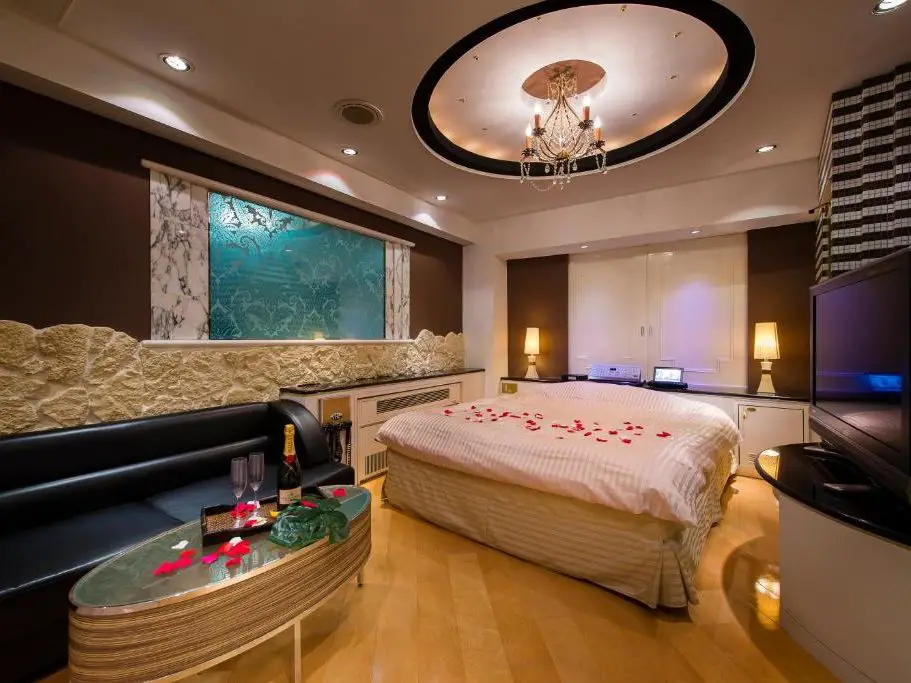
Love Hotels
Japan’s love hotels sound niche until you understand what they actually are: private, well-designed rooms bookable by the hour or the night, with a level of in-room amenity that standard hotels rarely match at the same price. For couples visiting Tokyo for the first time, they’re worth knowing about.
Pictured: Hotel Pal Otsuka
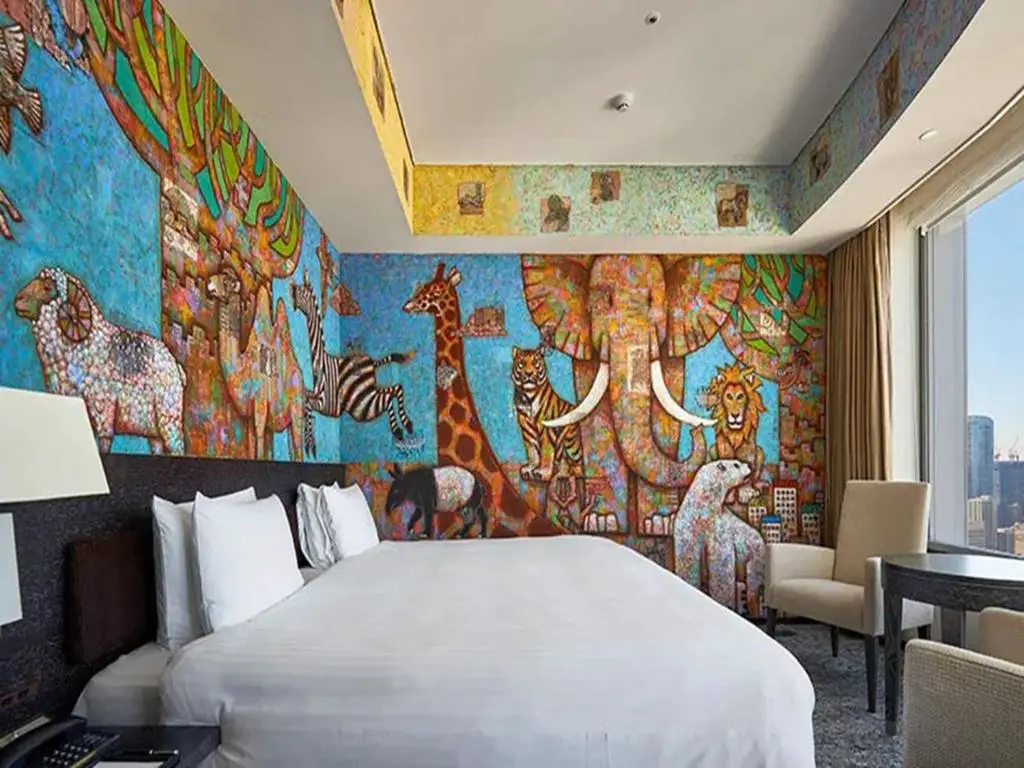
Art and Design Hotels
Tokyo has rooms hand-painted by working artists and lobbies that double as galleries, at every budget. At one end sits BnA WALL in Nihonbashi, where artists paint the rooms; at the other, Andaz Tokyo, where traditional Japanese craft runs through every surface of a five-star hotel.
Pictured: Park Hotel, Tokyo
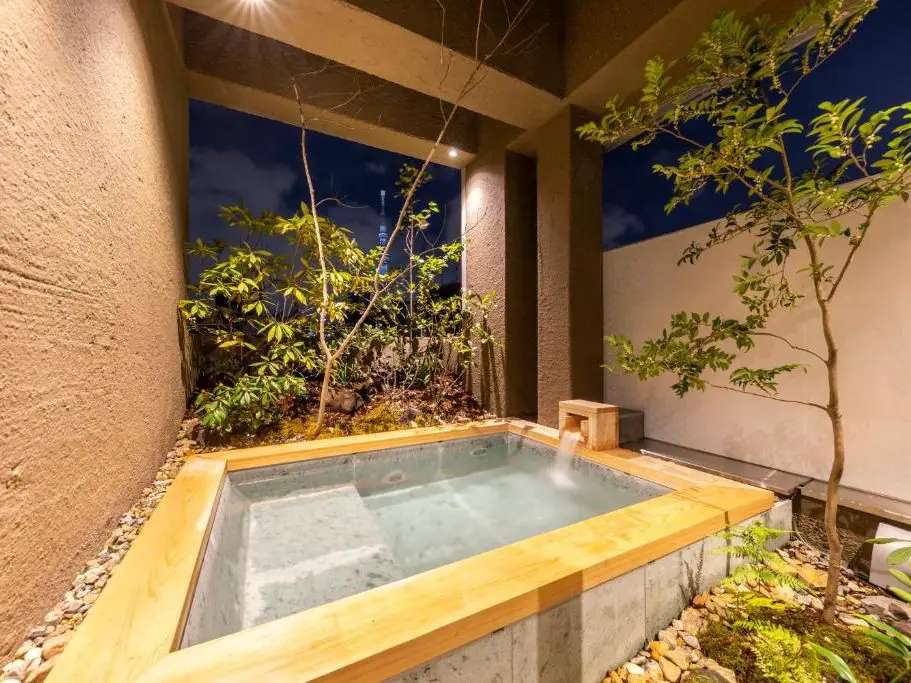
Ryokans in Tokyo
A traditional Japanese inn in the middle of one of the world’s largest cities sounds like a contradiction, but Tokyo has a handful that do it properly: tatami rooms, futon bedding, yukata robes, and the particular quiet a ryokan keeps whatever’s happening outside. You get the countryside inn without leaving the city.
Pictured: Cyashitsu Ryokan Asakusa
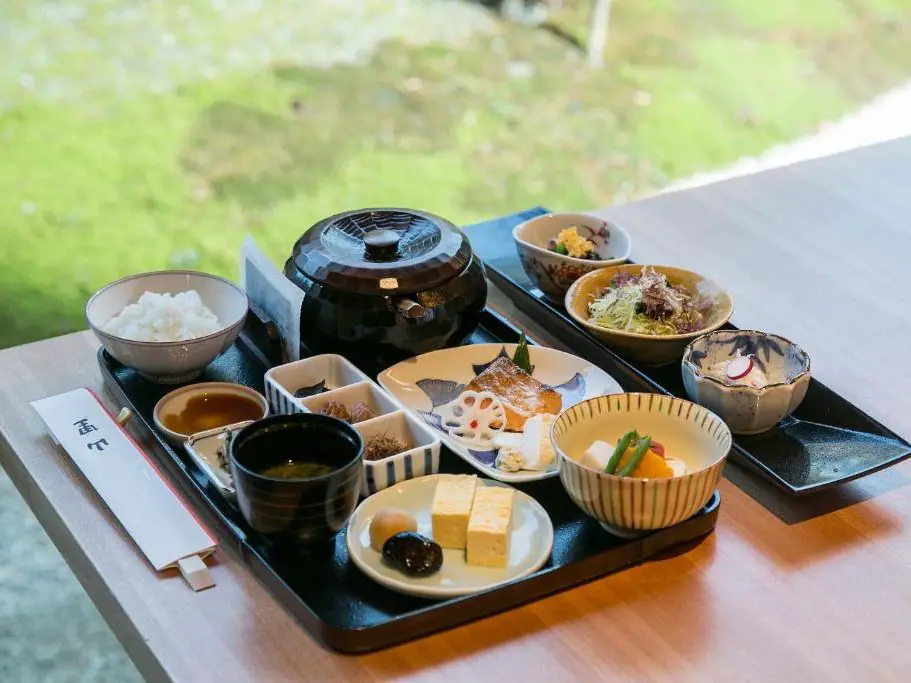
Hotels with a Japanese Breakfast
A proper Japanese breakfast (miso soup, grilled fish, pickles, rice, tamagoyaki) is one of the best meals the country offers, and the gap between a hotel that takes it seriously and one that doesn’t is huge. The best versions are worth staying in for, from a full ryokan-style spread to a kaiseki breakfast served at the table.
Pictured: The Okura Heritage Tokyo
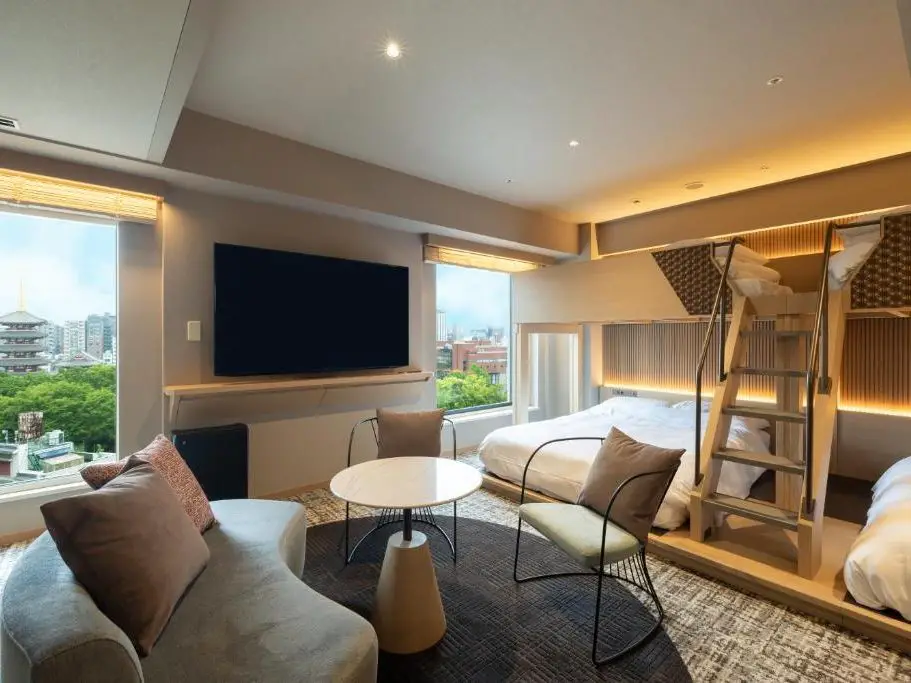
Family Hotels
Tokyo with kids works better than most people expect, but the hotel matters more here than anywhere else. Standard rooms are too small for a family of four, the wrong neighbourhood adds an hour of transit to every day, and a hotel set up for families shows it the moment you check in.
Pictured: Richmond Hotel Premier Asakusa
Hotels Near Tokyo’s Major Landmarks
Some trips are built around a specific thing: being close enough to Tokyo Tower to see it lit up from bed, or five minutes from the park gates at Tokyo Disney Resort before the crowds build.
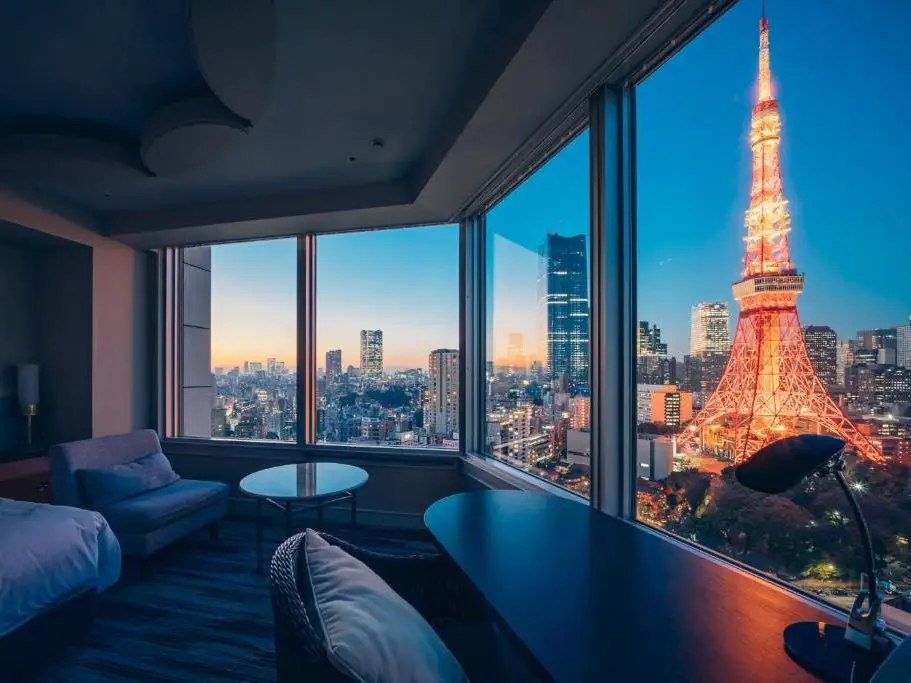
Tokyo Tower
Tokyo Tower has been the city’s most recognisable landmark since 1958, and waking up to that red-and-white spire outside your window beats seeing it on a daytime visit. A handful of hotels in Minato put you close enough to feel it, from rooms that look straight across at the tower to suites on the 50th floor where it sits mid-frame with the whole city spread out behind it.
Pictured: The Prince Park Tower Tokyo
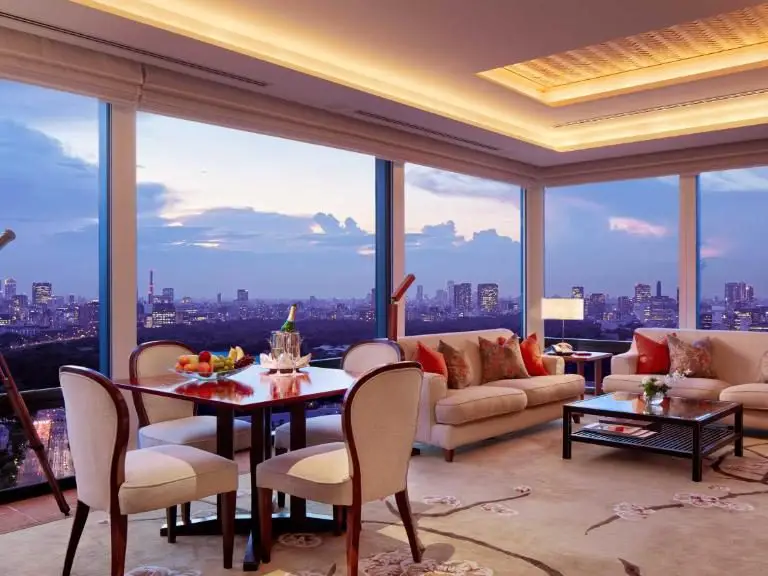
Imperial Palace
A rare pocket of green and open sky in the middle of one of the world’s densest cities: the palace moat, the pine trees, the wide path that joggers circle before the rest of Tokyo wakes up. Only a few hotels face it directly, and a moat-facing room and a high-floor view toward the palace grounds are two very different rooms, so check which one you’re booking.
Pictured: The Peninsula Tokyo
Tsukiji Market
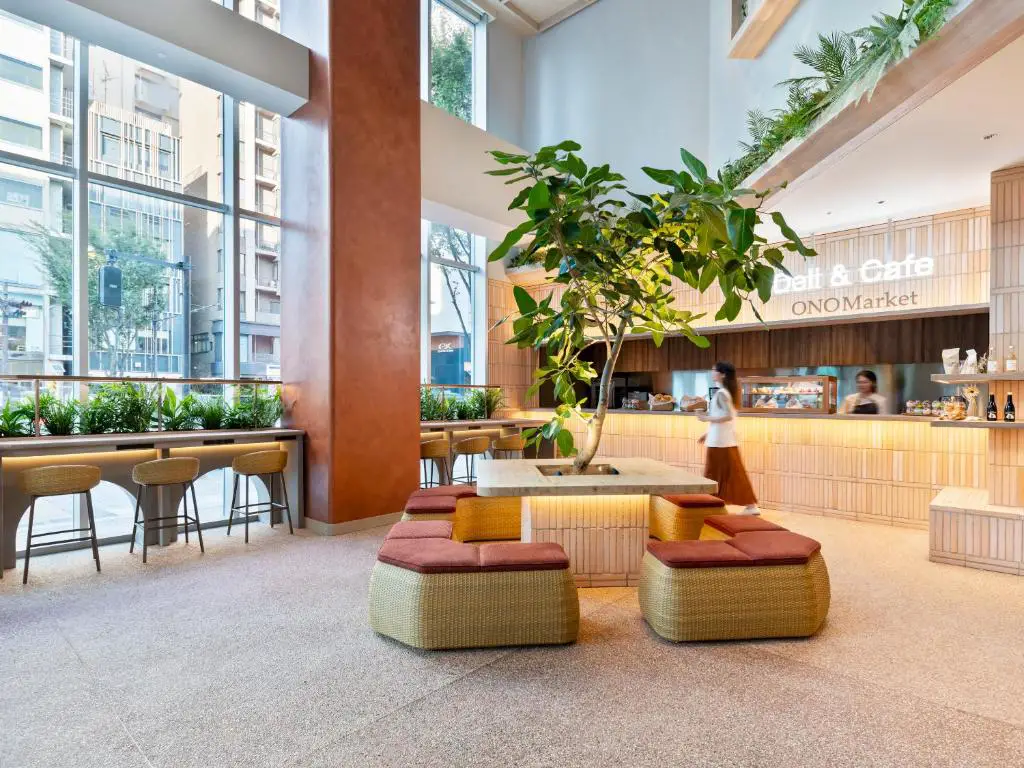
Tsukiji moves fast: the best sushi counters fill early and the popular stalls sell out before lunch. Staying within walking distance is the only way to get there ahead of the crowds without an early taxi. A hotel in the corridor between the market and Ginza puts you at a counter with a bowl of kaisendon before most of the city has had its first coffee.
Pictured: Mitsui Garden Hotel Ginza Tsukiji
Tokyo Skytree
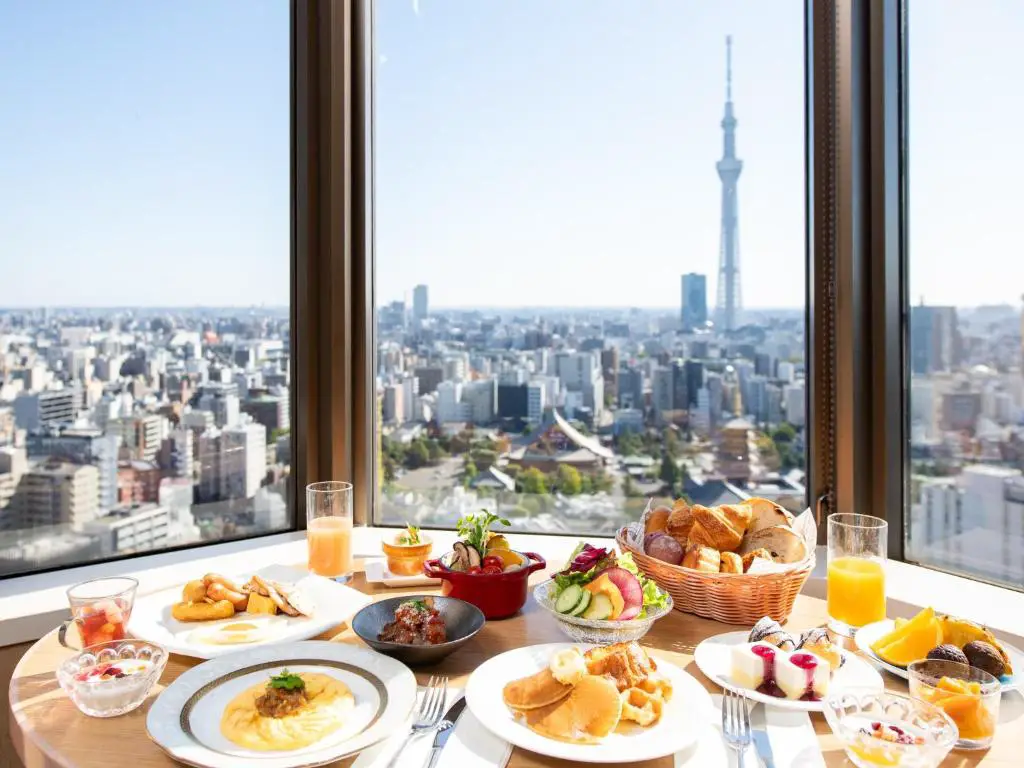
At 634 metres, the Skytree is the tallest structure in Japan, and the neighbourhood around it, Oshiage, is one of the most underrated bases in the city: east Tokyo prices, through trains to both airports, and the old shitamachi streets of Asakusa a short walk away. Stay nearby and you’ll watch the tower change colour after dark from your window.
Pictured: Asakusa View Hotel
Tokyo Disney Resort
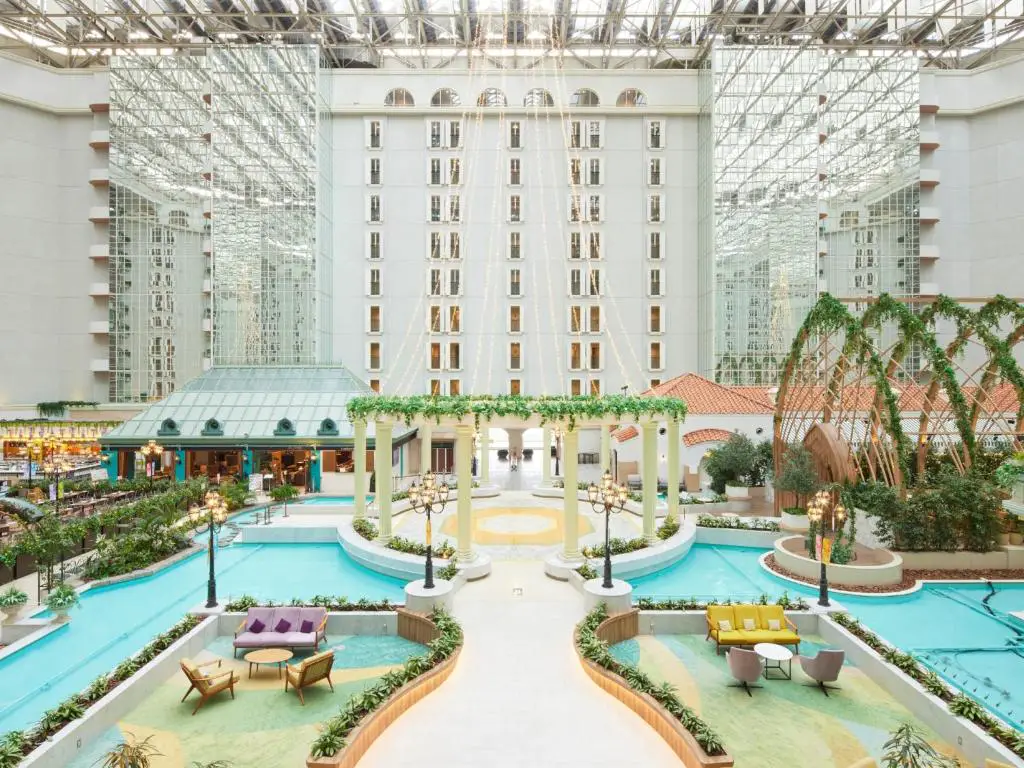
Tokyo Disneyland and DisneySea sit in Maihama, 15 minutes from Tokyo Station on the JR Keiyo Line: close enough to treat as a day trip, far enough that staying nearby changes the day entirely. An early start before the gates open, a midday break back at the hotel, back in the park for the evening parade: that rhythm only works if you’re within the monorail loop.
Pictured: Grand Nikko Tokyo Bay Maihama
Getting Around Tokyo
Tokyo’s train network is extensive enough that no central Tokyo neighbourhood leaves you stranded, but the system has a logic worth understanding before you choose where to base yourself.
- The Yamanote Line is the backbone: This loop connects Shinjuku, Shibuya, Harajuku, Ueno, Akihabara, and Tokyo Station. If your hotel sits on or just off it, you can reach any of those areas in under 30 minutes with no transfers. Shinjuku, Shibuya, Harajuku, and Ueno are all Yamanote stations.
- Roppongi and Ginza are not on the Yamanote: Both are served by subway lines that connect to the loop at transfer points. In practice this adds five to ten minutes to most journeys: manageable, but worth knowing before you book.
- Asakusa and Oshiage sit east of the loop: Asakusa is on the Tokyo Metro Ginza Line and Oshiage on the Tobu Skytree Line. West-side sightseeing takes an extra transfer, but both also sit on the Toei Asakusa Line, which runs through trains to Narita and Haneda.
- Which airport you fly into matters: Asakusa and Ueno have the easiest Narita access, with the Keisei Skyliner running from Keisei-Ueno with no transfers. For Haneda, the Keikyu Line from Shinagawa, a Yamanote stop, is the quick route. Tokyo Station has the Narita Express to Narita and a short Yamanote ride to the Haneda monorail at Hamamatsucho.
- IC cards make everything easier: A Suica or Pasmo card covers every train, subway and bus in central Tokyo. Load it at any station on arrival and tap in and out without buying individual tickets.
- Taxis fill the gaps after midnight: Both subway and JR lines stop around midnight and restart around 5am. Taxis are metered and plentiful, and they’re the standard way home late at night from any neighbourhood.
FAQs
1. Which area of Tokyo is best for first-time visitors?
Shinjuku is the most practical first base: it sits on the Yamanote Line, has the widest range of hotels at every price point, and puts you within 30 minutes of most major sightseeing areas. Shibuya works equally well for first-timers who want a slightly younger, more design-forward neighbourhood without sacrificing connectivity.
2. Is it better to stay in east or west Tokyo?
West Tokyo (Shinjuku, Shibuya, Harajuku, Roppongi) is where most first-timers end up, and the transport links and hotel range justify it. East Tokyo (Asakusa, Ueno, Oshiage) offers better value, a more traditional atmosphere, and stronger airport connections, particularly for Narita. Pick west for nightlife and shopping, east for temples, museums and Narita.
3. Which Tokyo neighbourhood has the best transport links?
Shinjuku Station is the busiest train station in the world and connects more lines than anywhere else in the city. For sheer connectivity it’s unmatched. For airport access specifically, Asakusa and Ueno edge ahead on Narita connections, while Shinagawa, a Yamanote stop, is the quick connection to Haneda.
4. How far apart are Tokyo’s main neighbourhoods?
On the Yamanote Line, Shinjuku to Shibuya takes under 10 minutes and Shibuya to Harajuku is a single stop. Shinjuku to Ueno is about 25 minutes via Ikebukuro, and the full loop takes about an hour. Central Tokyo is smaller and more connected than its scale on a map suggests.
5. Which area is best for couples?
Shibuya for energy and design hotels, Roppongi for art, international dining and big-name luxury hotels, Ginza for quiet elegance and easy access to everything. Asakusa suits couples who want a slower, more traditional stay. Love hotels are spread across several neighbourhoods if you want something different for a night or two.
6. Which area is best for families?
Ueno is the strongest family base: the park, the zoo and several museums within walking distance, plus strong transport links and hotels with more generous room sizes than the west side. Shinjuku works for families who prioritise connectivity over atmosphere. If the trip centres on Tokyo Disney Resort, staying within the monorail loop changes the day entirely.
7. Do I need to stay in different areas for different parts of my trip?
Rarely. Tokyo’s train network is fast enough that a single well-chosen base covers most itineraries without moving hotels. The exception is Tokyo Disney Resort: if the parks are a significant part of the trip, one or two nights at Maihama is worth it rather than commuting from central Tokyo every morning. Otherwise, pick the neighbourhood that suits the majority of your trip and let the trains handle the rest.
8. When is the best time to book a Tokyo hotel?
Cherry blossom season (late March to early April) and Golden Week (late April to early May) are the two hardest windows to book. Luxury hotels in Shinjuku, Ginza, and Roppongi sell out weeks in advance during these periods; budget and mid-range hotels follow quickly. Outside these windows, booking four to six weeks ahead covers most price points. Autumn foliage in November is the third peak: prices rise, but less sharply than in spring.