
Tokyo’s morning meal is one of the city’s most quietly satisfying rituals — grilled fish, dashi-rich miso soup, a bowl of rice so good it needs nothing else, tiny dishes of pickles and tamagoyaki arriving one by one until the table is full. The hotels on this list take that ritual seriously, whether it’s served on lacquerware in a tatami room overlooking a garden or laid out across a 100-dish buffet inside a registered national monument. Some serve it as part of the room rate, others as an add-on worth every yen — but all of them treat the Japanese breakfast as something worth getting out of bed early for.
Quick answer: Book The Okura Heritage Tokyo. Its Yamazato restaurant serves a full traditional Japanese breakfast, and the Heritage Wing rooms are some of the roomiest in Tokyo.
Table of Contents
Ryokan & Onsen Stays
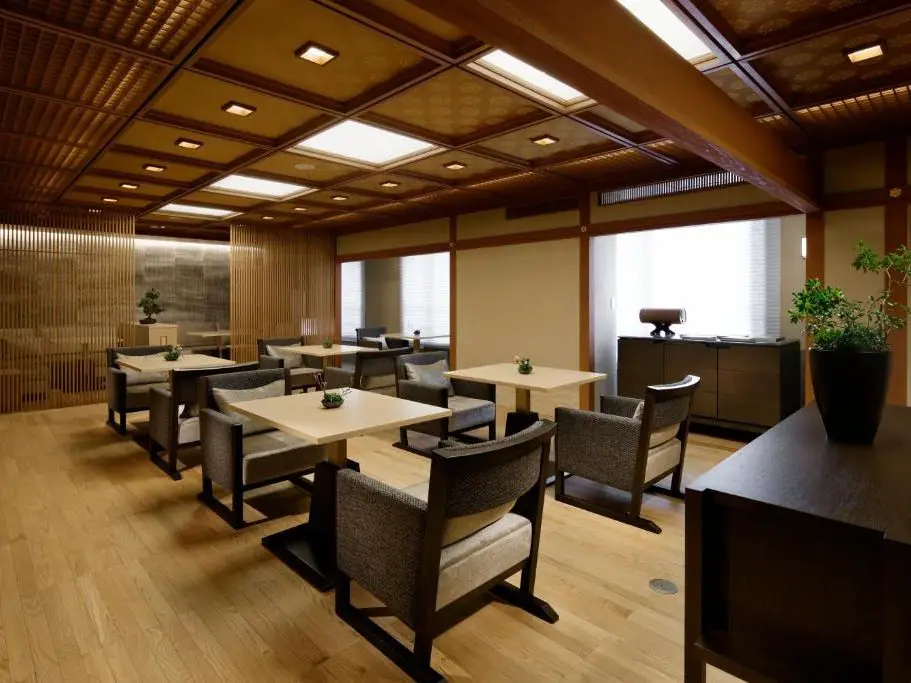
Forbes Five-Star Ryokan
1. Takanawa Hanakohro, a Member of Small Luxury Hotels of the World
Rating: ⭐⭐⭐⭐⭐
Location: 8-minute walk from Shinagawa Station
Guest Reviews: Kaiseki breakfast exceptional and seasonal, in-room presentation elegant, tatami rooms spacious and authentic, kimono-clad staff attentive throughout
Best Room: Premier Japanese Garden Suite
From USD $660 – $1,100 per night
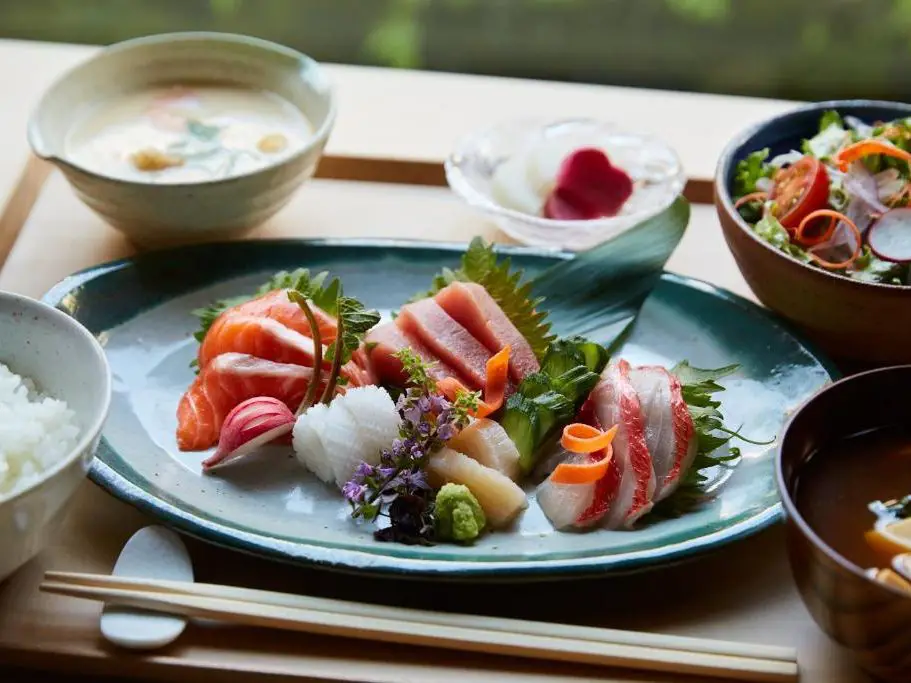
2. Onsen Ryokan Yuen Shinjuku
Rating: ⭐⭐⭐
Location: 7-minute walk from Shinjuku-Gyoemmae Station
Guest Reviews: Rooftop onsen views over Shinjuku skyline, tiered ceramic breakfast boxes distinctive, yukata and bamboo entrance atmospheric, rooms compact but well-designed
Best Room: Double Room with City View
From USD $120 – $220 per night
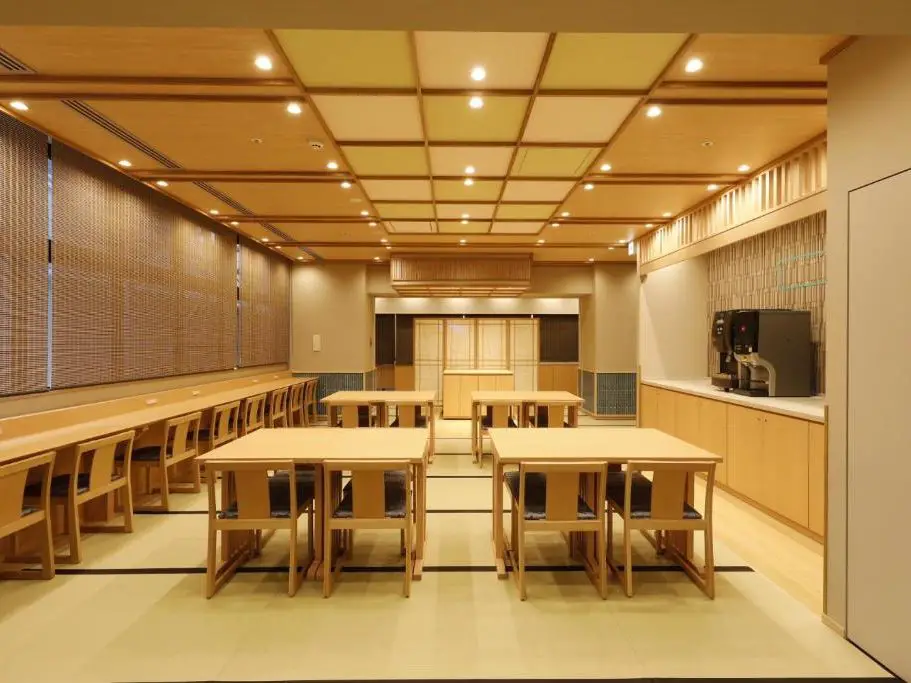
Best Location for Early Morning Temple Walks
3. Onyado Nono Asakusa Natural Hot Spring
Rating: ⭐⭐⭐⭐
Location: 8-minute walk from Asakusa Station, 3-minute walk from Senso-ji Temple
Guest Reviews: Natural hot spring bath outstanding, tatami flooring throughout hotel, grilled fish and miso soup buffet well-executed, Asakusa location ideal for early morning temple walks
Best Room: Double Room with City View
From USD $115 – $175 per night
Hotel Stays
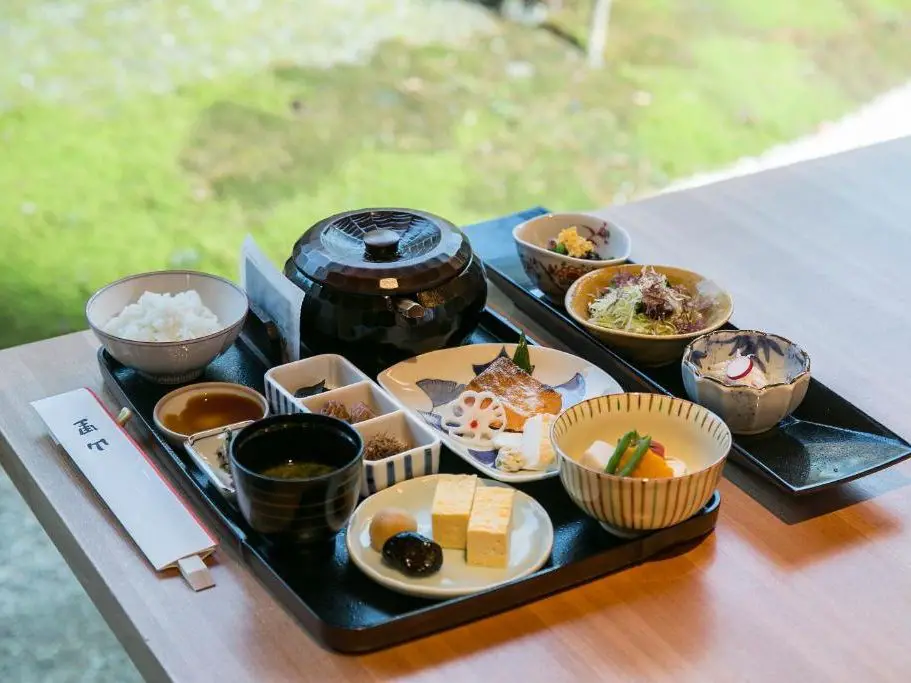
Best Japanese Breakfast in Tokyo
4. The Okura Heritage Tokyo
Rating: ⭐⭐⭐⭐⭐
Location: 5-minute walk from Toranomon Station
Guest Reviews: Yamazato breakfast praised as finest Japanese breakfast in Tokyo, Heritage Wing rooms among the most spacious in the city, steam sauna and jet bath in-room, service consistently kimono-clad and exceptional
Best Room: Heritage Room
From USD $700 – $1,200 per night
Best Garden Setting
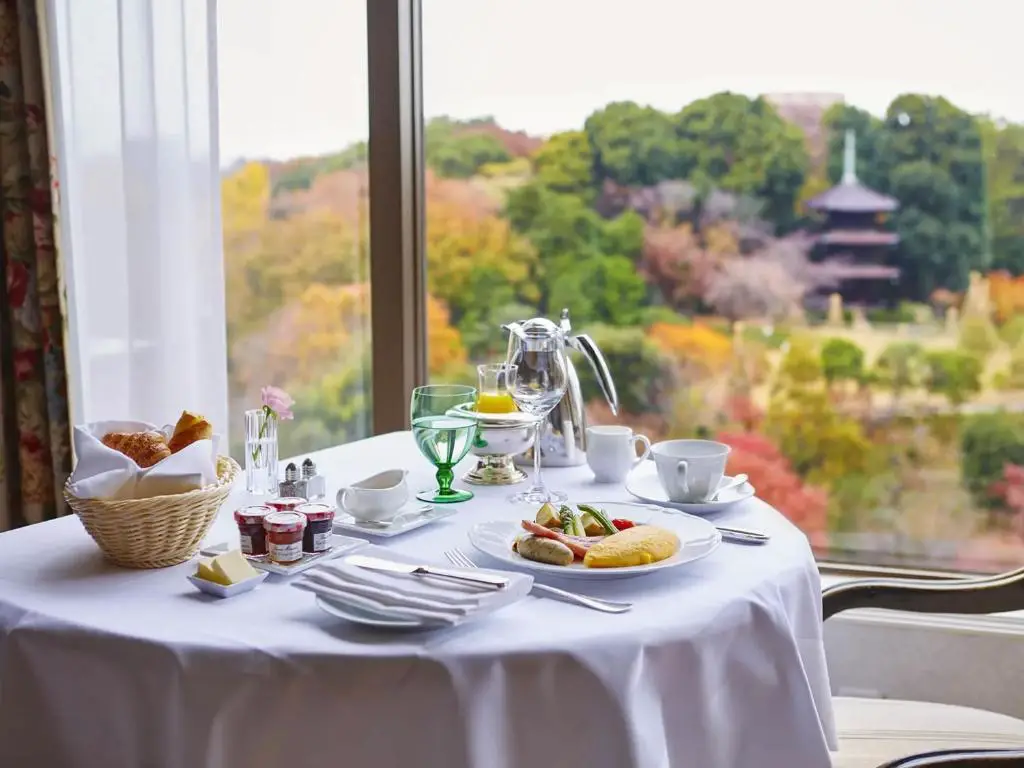
5. Hotel Chinzanso Tokyo
Rating: ⭐⭐⭐⭐⭐
Location: 10-minute walk from Edogawabashi Station
Guest Reviews: Miyuki breakfast served by kimono-clad staff on exquisite ceramics, 100,000sqm garden among the most beautiful in central Tokyo, rooms spacious and immaculately maintained, hot spring bath in the spa a genuine highlight
Best Room: Premier Garden Suite
From USD $350 – $700 per night
Best Breakfast Spread
6. The Tokyo Station Hotel
Rating: ⭐⭐⭐⭐⭐
Location: Direct access from Tokyo Station Marunouchi South Exit
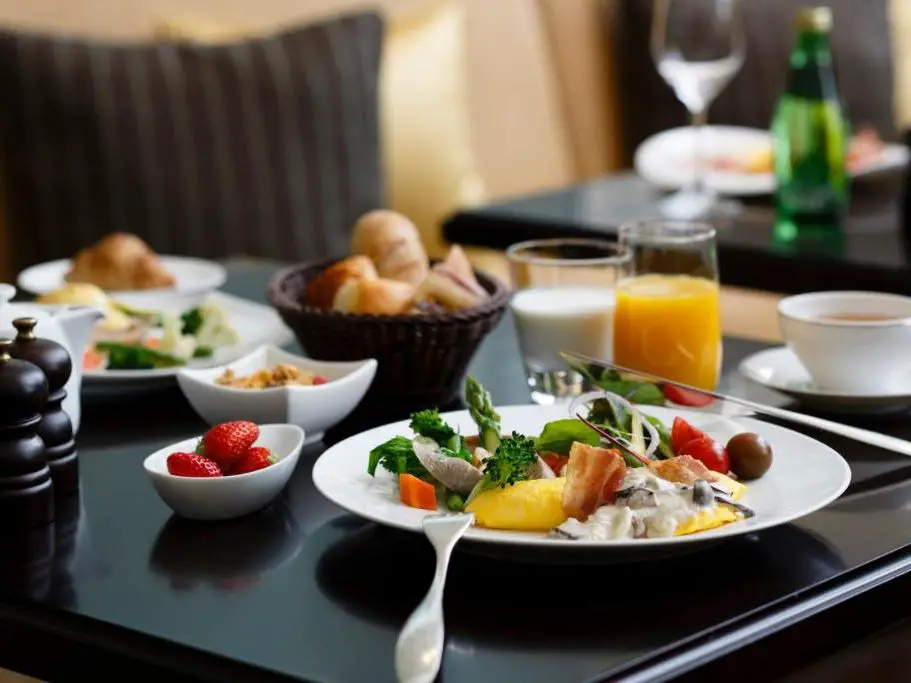
Guest Reviews: Atrium breakfast among the most praised in Tokyo, Dome Side rooms with views into the station’s historic cupola unlike anywhere else, staff attentiveness consistently exceptional, location unbeatable for Shinkansen travel
Best Room: Dome Side Superior Twin
From USD $450 – $650 per night
Rarest Breakfast Tradition
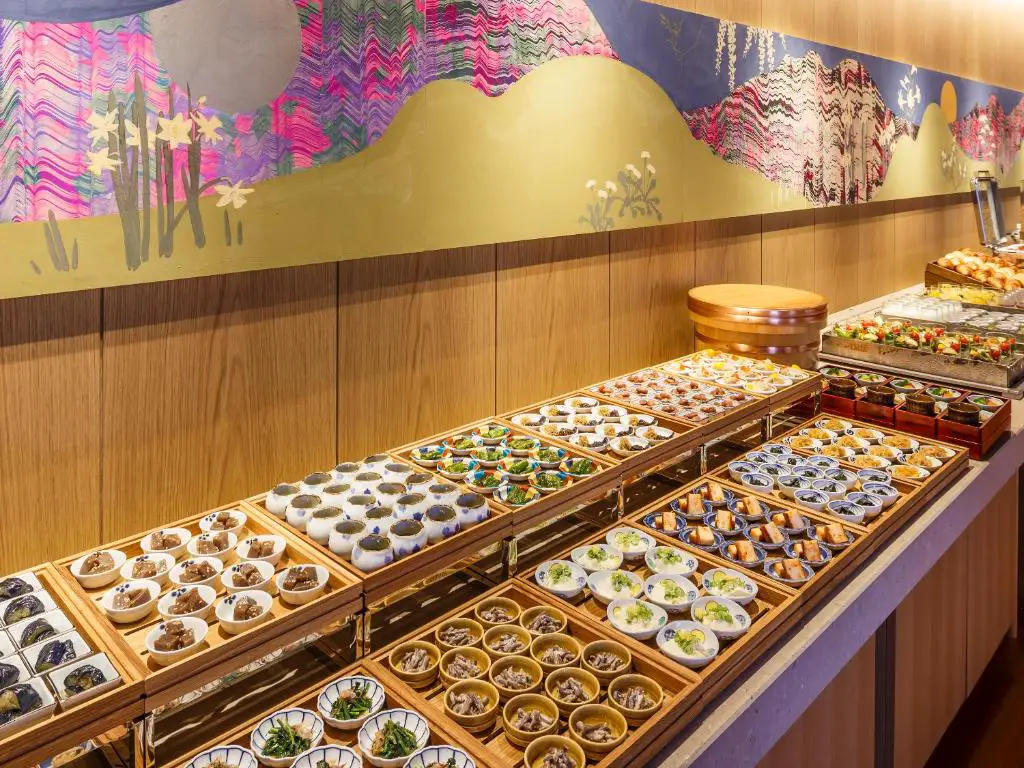
7. Mitsui Garden Hotel Nihonbashi Premier
Rating: ⭐⭐⭐⭐
Location: Direct underground connection to Mitsukoshimae Station and Shin-Nihombashi Station
Guest Reviews: Nihonbashi Asada breakfast singled out as a highlight, Kaga-style small dishes unusual and memorable, 9th-floor public bath excellent for post-sightseeing recovery, location quiet despite central access
Best Room: Superior Queen Room, Skytree View
From USD $150 – $300 per night
8. Hotel Niwa Tokyo
Rating: ⭐⭐⭐⭐
Location: 5-minute walk from Suidobashi Station, 5-minute walk from Jimbocho Station
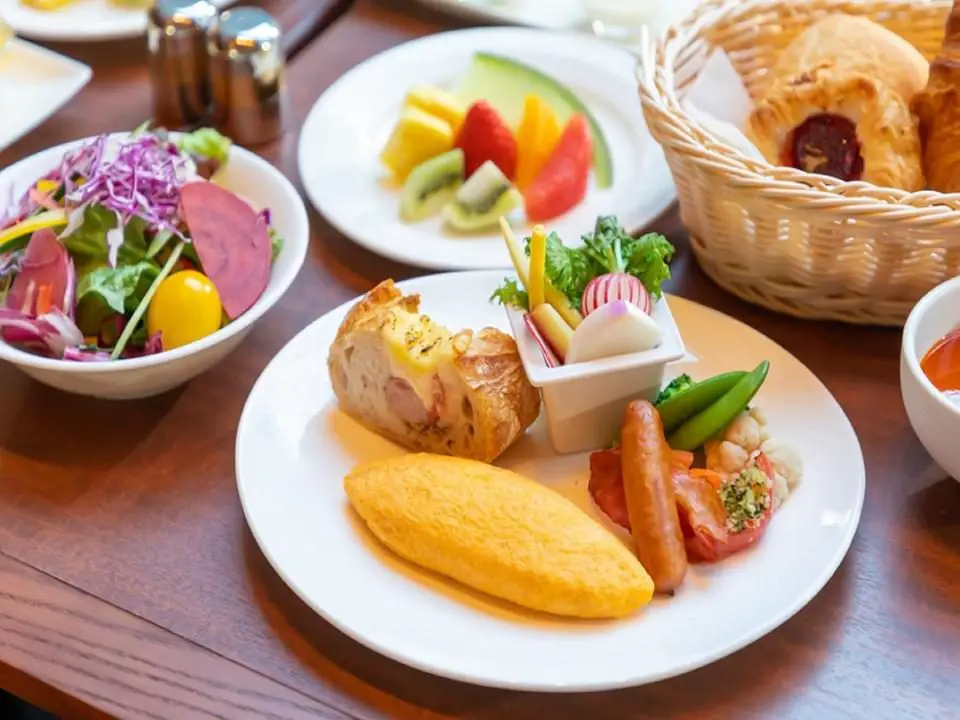
Guest Reviews: Yukuri Japanese breakfast frequently sells out by 8am, miso soup made with custom-blended miso from a specialist supplier, garden courtyard setting calm and distinctive, massage chairs in the relaxation lounge a genuine draw
Best Room: Superior Twin Room
From USD $110 – $200 per night
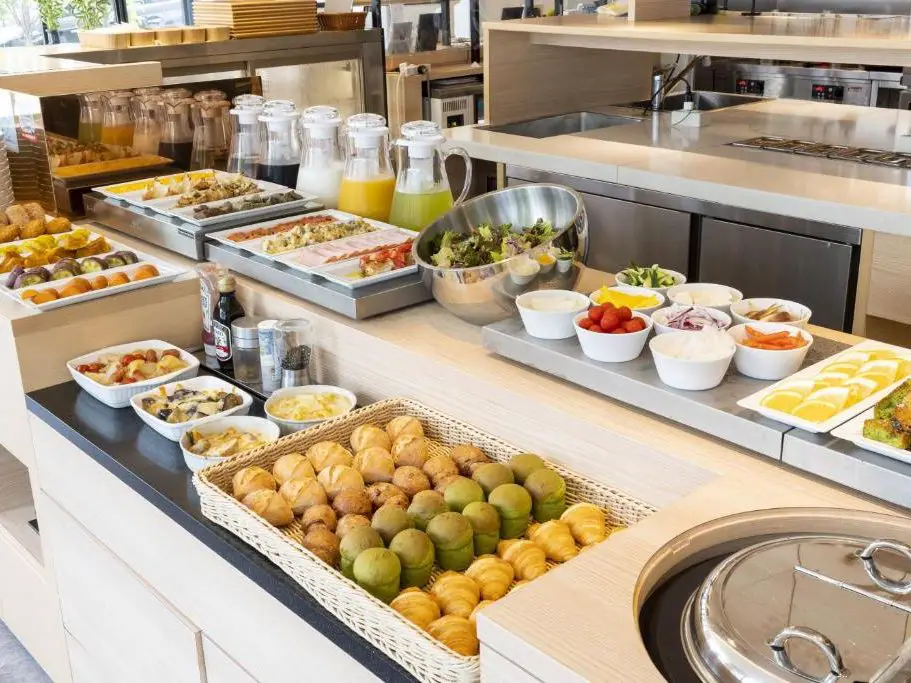
Most Unique Breakfast Concept
9. Hotel 1899 Tokyo
Rating: ⭐⭐⭐
Location: 10-minute walk from Shimbashi Station, 6-minute walk from Onarimon Station
Guest Reviews: Tea-themed breakfast genuinely distinctive, matcha bread and tea sausage stand out, free matcha and sencha from cha-baristas on the 2nd floor a daily highlight, rooms compact but thoughtfully designed around Japanese tea aesthetics
Best Room: Superior Room, 1 Queen Bed (B -Engawa-)
From USD $145 – $220 per night
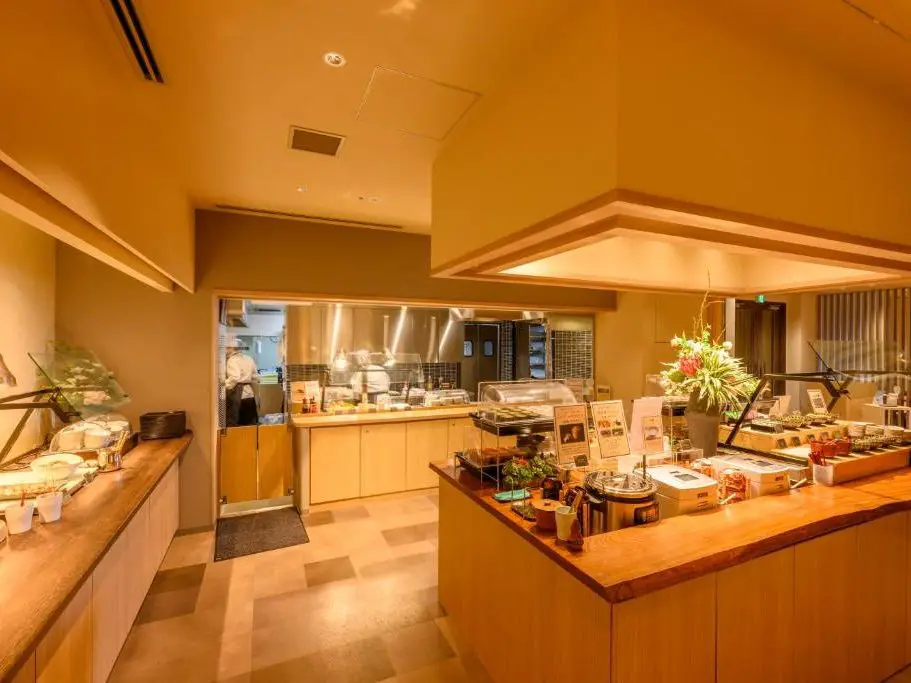
10. Dormy Inn Premium Ginza
Rating: ⭐⭐⭐
Location: 4-minute walk from Higashi-Ginza Station, 3-minute walk from Ginza Six
Guest Reviews: Buffet breakfast quality praised across multiple stays, Ginza location steps from Tsukiji Outer Market, natural hot spring and rooftop balcony strong draws, free evening ramen a consistent crowd favourite
Best Room: Japanese-style Standard Room
From USD $145 – $270 per night
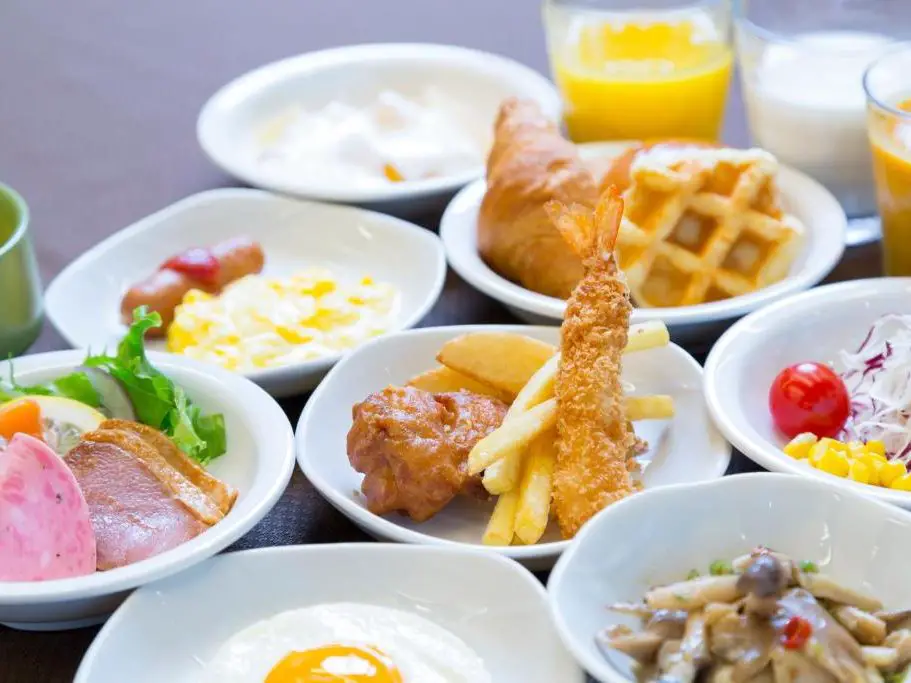
Best Value
11. Dormy Inn Premium Tokyo Kodenmacho
Rating: ⭐⭐⭐
Location: 1-minute walk from Kodemmacho Station, 20-minute walk from Akihabara
Guest Reviews: Japanese breakfast buffet among the best at this price point, rooftop open-air onsen a highlight, Japanese-style rooms spacious by Tokyo standards, free evening ramen and post-bath ice cream reliable crowd pleasers
Best Room: Japanese-Style Twin Room
From USD $100 – $200 per night
What a Japanese Hotel Breakfast Actually Includes
A Japanese hotel breakfast is built around a principle called ichiju sansai — one soup, three sides — served alongside a bowl of steamed rice. That structure has been the foundation of the Japanese morning meal for centuries, and the best hotel breakfasts in Tokyo still follow it, whether they’re serving 15 guests in a tatami room or 400 at a buffet counter.
- Gohan (steamed rice) — The centrepiece of every genuine washoku breakfast, and a reliable indicator of quality. Hotels that take their breakfast seriously source their rice carefully — Hotel Niwa Tokyo uses Niigata Prefecture rice specifically, and the difference is noticeable compared to a generic hotel blend.
- Miso shiru (miso soup) — Made fresh each morning from a dashi stock base, typically kombu and bonito. The miso blend itself varies by hotel and region — the soup at Hotel Niwa uses a custom miso from a specialist supplier, while the Kaga-style version at Mitsui Garden Hotel Nihonbashi Premier reflects a 150-year culinary tradition from Kanazawa.
- Yakizakana (grilled fish) — Usually salmon, mackerel, or sea bream, salt-grilled or marinated. This is the protein anchor of the meal and the component that separates a genuine washoku breakfast from a buffet with a token Japanese section.
- Tsukemono (pickles) — Fermented or salt-pickled vegetables served in small portions alongside rice. Hotel Niwa’s homemade nukazuke pickles are made in-house and frequently mentioned in reviews as a standout detail.
- Tamagoyaki (rolled omelette) — A lightly sweetened, layered egg dish that appears in most traditional hotel breakfasts. Distinct from a Western omelette in both technique and flavour.
- Natto (fermented soybeans) — Not served everywhere, and polarising when it is. Sticky, pungent, and genuinely acquired-taste territory for most first-time visitors. It is, however, a cornerstone of eastern Japanese breakfast culture and worth trying at least once — mixed vigorously with the provided mustard and soy sauce, then poured over hot rice.
- Nori (dried seaweed) — Served in sheets to wrap around rice, adding a saline, mineral note that cuts through the richness of the fish and egg dishes.
- Small seasonal sides — Simmered vegetables (nimono), tofu, or salad-style dishes that change with the season. This is where the best hotel breakfasts differentiate themselves — at Takanawa Hanakohro, these sides reflect the kaiseki tradition and change monthly.
What you will not find in a genuine washoku breakfast: toast, pastries, yogurt, or scrambled eggs. Those belong to the Western section of a buffet, which most hotels on this page also offer for guests who want it. The Japanese breakfast is a separate, self-contained meal with its own internal logic — not a selection from a larger spread.
The price for a hotel Japanese breakfast in Tokyo ranges from around JPY 2,500 at mid-range properties like the Dormy Inn properties and Onyado Nono Asakusa, to JPY 6,400 at The Tokyo Station Hotel’s Atrium buffet, and upwards of JPY 5,300 at Hotel Chinzanso Tokyo’s Miyuki restaurant. At ryokan properties like Takanawa Hanakohro, it is often built into the room rate rather than charged separately.
The Ryokan Breakfast vs the Hotel Buffet
These are not two versions of the same morning — they are two different experiences that happen to share a few ingredients. The distinction matters when booking because the right choice depends entirely on what kind of morning you want.
- The ryokan breakfast is a ritual — At Takanawa Hanakohro, breakfast arrives in your tatami room between 7:00 and 10:00 AM after you have arranged it the previous evening. Staff in kimono bring lacquered trays of seasonal small dishes, grilled fish, miso soup, and rice. The meal is the point. You are not eating before the day begins — you are inside the experience.
- The hotel buffet is abundance and autonomy — At The Tokyo Station Hotel’s Atrium, you choose from over 100 items across Japanese and Western sections, served inside the attic space of a building registered as an Important Cultural Property, with a 9-metre ceiling above you. The Japanese section — called ASA-GOHAN — is excellent. But you are composing your own plate, at your own pace, surrounded by other guests doing the same.
- The onsen hotel breakfast is the middle ground — At Onsen Ryokan Yuen Shinjuku and Onyado Nono Asakusa, breakfast follows a soak in the hot spring bath. The combination of onsen and morning meal is a specifically Japanese form of recuperation — the bath opens early, breakfast follows at the restaurant downstairs, and the rhythm of the morning is built into the stay in a way that neither a pure ryokan nor a pure hotel quite replicates.
- Presentation differs fundamentally — A ryokan breakfast arrives as a composed set, with each element chosen and arranged. A buffet breakfast requires you to know what you are looking for to get the most from it. First-time visitors to a Japanese breakfast buffet often load their plates with the Western section simply because it is more familiar — and miss the entire point of being there.
- Booking logistics differ too — Ryokan breakfasts typically require advance reservation and have fixed service windows. The Takanawa Hanakohro breakfast must be booked in advance, and Yamazato at The Okura Heritage Tokyo serves Japanese breakfast on Wednesdays only. Hotel buffets are walk-in within stated hours, though limited-quantity items like the Yukuri set at Hotel Niwa Tokyo sell out early.
- The cost comparison is not straightforward — A ryokan rate that includes breakfast looks expensive until you factor in that the equivalent add-on breakfast at a comparable luxury hotel costs JPY 5,000–6,400 per person. The ryokan rate is often better value when the meal is included, particularly at Takanawa Hanakohro where the kaiseki-style breakfast is a significant part of what the room rate covers.
Where in Tokyo to Stay for a Japanese Breakfast
The neighbourhood you choose shapes the morning as much as the hotel itself. In Tokyo, the 20 minutes before and after breakfast — what you can walk to, what you can see from the window, how quiet the streets are — changes the experience significantly.
- Asakusa — The strongest case for a Japanese breakfast neighbourhood in Tokyo. Onyado Nono Asakusa is a short walk from Senso-ji Temple, which is at its quietest and most atmospheric in the hour after it opens at dawn. A morning soak in the natural hot spring, breakfast at Hatago restaurant, then a walk through Nakamise-dori before the tourist crowds arrive is a genuinely distinctive Tokyo morning that no other neighbourhood replicates. Choose Asakusa if the combination of temple, onsen, and washoku breakfast matters more than central convenience.
- Ginza and Shimbashi — Dormy Inn Premium Ginza sits steps from Tsukiji Outer Market, which opens its seafood stalls and breakfast counters from early morning. Hotel 1899 Tokyo is in Shimbashi, a quiet residential pocket that feels removed from the city despite being close to multiple metro lines. Both neighbourhoods work well for breakfast-focused stays because the surrounding area at 7am is calm and local rather than tourist-facing. Choose this area if you want easy access to both a good hotel breakfast and the wider Tokyo food scene on the same morning.
- Nihonbashi and Kodenmacho — The quietest mornings on this list. Mitsui Garden Hotel Nihonbashi Premier and Dormy Inn Premium Tokyo Kodenmacho are in Tokyo’s old merchant district, away from the major tourist circuits. The streets at breakfast time are populated almost entirely by office workers and local residents. If the point of your stay is a calm, genuinely local-feeling morning — Japanese breakfast, a public bath, and no tour groups — this area delivers it at a lower price than Ginza or Asakusa.
- Chiyoda (Suidobashi and Jimbocho) — Hotel Niwa Tokyo sits in the university and bookshop district, a quiet neighbourhood that feels like a different city from Shinjuku or Shibuya. The Yukuri Japanese breakfast here is the most specifically crafted of any mid-range hotel on this page — but book it early, as it sells out. The location also puts you within easy reach of the Imperial Palace gardens for a morning walk before or after breakfast.
- Minato (Toranomon and Takanawa) — The Okura Heritage Tokyo and Takanawa Hanakohro are both in this district, which covers some of Tokyo’s most established luxury hotel territory. Toranomon is a business district with little charm at street level, but The Okura’s Japanese garden grounds give it a self-contained morning environment. Takanawa is quieter and greener, near Shinagawa Station with direct Shinkansen access — making it practical for guests arriving from or departing to other cities in Japan.
- Shinjuku — Onsen Ryokan Yuen Shinjuku is a deliberate contrast to its surroundings. The lantern-lit bamboo entrance and the rooftop onsen with skyline views over the most frenetic district in Tokyo is the appeal — the contrast between the city outside and the calm inside is the experience. Breakfast at the Natsushita Fuyukami restaurant is genuinely good, though it is a surcharge. Choose Shinjuku for transport convenience and the onsen experience — not for quiet morning streets.
When to Book and What to Budget
Tokyo hotel prices move significantly with the calendar, and the best Japanese breakfast experiences — particularly at ryokan properties — have limited room counts that fill well in advance.
- Cherry blossom season (late March to early April) — The single most expensive and most competitive booking window of the year. Hotel Chinzanso Tokyo’s 100,000 sqm garden has over 100 cherry trees and books out months in advance for late March. Takanawa Hanakohro’s 210-cherry-tree garden is similarly sought after. Prices across all 11 hotels on this page rise by 30–60% during peak bloom week. If a spring stay matters to you, begin looking six to nine months ahead — not two.
- Golden Week (late April to early May) — Japan’s largest domestic holiday period. Hotels that are quiet and mid-priced in January charge peak rates during Golden Week, and availability drops sharply. The onsen properties — Onyado Nono Asakusa, Onsen Ryokan Yuen Shinjuku, and the Dormy Inn hotels — fill particularly fast because they appeal to Japanese domestic travellers as well as international visitors.
- Autumn (October to November) — The second most popular season, driven by autumn foliage. Prices rise again but not as sharply as spring, and the weather is arguably better for long mornings. Hotel Chinzanso Tokyo’s garden is exceptional in autumn.
- Winter (January to February) — The lowest prices and the fewest crowds. The Japanese breakfast experience is arguably at its best in winter — there is something specifically right about grilled fish, miso soup, and hot rice on a cold morning. Availability is strong, prices are 20–35% lower than spring peaks, and the onsen facilities at every property on this page are in highest demand from guests for exactly the right reasons.
- Budget tiers across this page — At the mid-range end, the Dormy Inn properties and Onyado Nono Asakusa run from USD $100–$200 per night with breakfast as a separate add-on of around $17. The upper-mid tier — Hotel Niwa Tokyo, Hotel 1899 Tokyo, Mitsui Garden Hotel Nihonbashi Premier — runs from $110–$300. The luxury tier — Hotel Chinzanso Tokyo, The Tokyo Station Hotel, The Okura Heritage Tokyo — starts at $350 and rises sharply in peak season. Takanawa Hanakohro at $660–$1,100 is in a category of its own, with breakfast typically built into the rate.
- Add-on vs included — Most hotels on this page charge breakfast separately. The exceptions are Takanawa Hanakohro, where the Japanese breakfast is included in most room plans, and certain rate plans at Onsen Ryokan Yuen Shinjuku. When comparing prices across properties, add the breakfast cost to get a true like-for-like — a $150 room with a $17 breakfast is not cheaper than a $160 room with breakfast included if the quality is comparable.
Practical Tips for Your Japanese Breakfast
The questions that appear most often in travel forums about Japanese hotel breakfasts are rarely about which hotel to choose — they are about how to get the most from the experience once you are there.
- Try natto at least once — Natto is fermented soybeans with a sticky texture, a strong smell, and a flavour that most first-time visitors find alarming and many come to love. It appears at the Dormy Inn properties, Onyado Nono Asakusa, and most of the buffet hotels on this page. The correct way to eat it: mix vigorously with the small mustard and soy sauce packets provided until stringy and glossy, then pour over hot rice. Do not try it cold from the packet without mixing — that is the experience most people describe negatively.
- Vegetarians face a hidden issue — Japanese miso soup and many of the dashi-based broths used in traditional hotel breakfasts are made with fish stock. This is not always disclosed. The tofu, pickles, rice, and seaweed are safe, but the soup — the centrepiece of the meal — is not vegetarian at most of the properties on this page. Hotel 1899 Tokyo’s tea-themed breakfast is the most accommodating for guests with dietary restrictions, and Onsen Ryokan Yuen Shinjuku has received specific praise for vegan options. Contact the hotel directly before arrival if this matters to you.
- Arrive early for limited-quantity breakfasts — The Yukuri Japanese breakfast at Hotel Niwa Tokyo is first-come, first-served and sells out regularly before 8:00 AM. The Yamazato restaurant at The Okura Heritage Tokyo serves Japanese breakfast on Wednesdays only — plan your check-in dates around this if Yamazato is the reason you are booking. The Dormy Inn buffets are at their quietest before 7:30 AM and get noticeably crowded between 8:00 and 9:00 AM.
- Pre-book at ryokan properties — Breakfast at Takanawa Hanakohro requires advance reservation and cannot be added on arrival. The hotel requests that guests specify their breakfast preference when booking or on the evening before. Onsen Ryokan Yuen Shinjuku also requests advance notice for breakfast, particularly for dietary requests, which require at least three days’ notice.
- The Wednesday rule at The Okura — Yamazato serves Japanese breakfast exclusively on Wednesdays (excluding public holidays). On other mornings, Heritage Wing guests can choose the Orchid buffet or Nouvelle Epoque (Tuesdays only). If the Yamazato morning is the specific experience you are after — kimono-clad service, medicinal rice porridge, seasonal fish, miso soup — check in on a Tuesday night and have your Yamazato breakfast on Wednesday morning.
- The onsen before breakfast sequence — At Onyado Nono Asakusa and the Dormy Inn properties, the hot spring bath opens in the early morning. The sequence — onsen first, then breakfast — is the locally understood order, and the hotels are set up for it. The bath opens at 6:00 AM at most properties; breakfast service starts at 6:30 AM. An hour in the water followed by grilled fish, miso soup, and rice is one of the more complete Tokyo morning experiences available at this price point.
- Room service as a genuine option — Hotel Chinzanso Tokyo and The Okura Heritage Tokyo both offer the Japanese breakfast as in-room dining. At Chinzanso, the in-room Japanese set includes broiled seasonal fish, seasonal vegetable dish, rice, miso soup, pickles, and Japanese tea, served to 10:00 AM. If the garden view from your room is the reason you booked, eating at the window rather than in the restaurant is not a lesser option — it is a different and equally valid one.
FAQs
1. Is Japanese breakfast included in Tokyo hotel room rates?
It depends on the hotel and the rate plan. At Takanawa Hanakohro, the Japanese breakfast is included in most room plans. At the majority of other hotels on this page — including The Tokyo Station Hotel, Hotel Chinzanso Tokyo, and the Dormy Inn properties — breakfast is a separate add-on charged per person. Always check which rate plan you are booking: “room only” and “room with breakfast” are distinct options and the price difference is usually worth examining before assuming either way.
2. What does a traditional Japanese hotel breakfast consist of?
A traditional Japanese hotel breakfast follows the ichiju sansai principle — one soup, three sides — built around steamed rice. The standard components are grilled fish, miso soup, tamagoyaki (rolled omelette), tsukemono (pickles), nori, and small seasonal side dishes. Higher-end properties add nukazuke pickles made in-house, regional specialties, and premium rice sourced from specific Japanese prefectures.
3. How much does breakfast cost at Tokyo hotels?
At mid-range onsen hotels like Onyado Nono Asakusa and the Dormy Inn properties, breakfast runs around JPY 2,500 per person (approximately USD $17). Upper-mid properties like Mitsui Garden Hotel Nihonbashi Premier charge around JPY 3,850 ($25). Luxury hotel breakfasts range from JPY 5,300 at Hotel Chinzanso Tokyo’s Miyuki restaurant to JPY 6,400 at The Tokyo Station Hotel’s Atrium buffet. Takanawa Hanakohro includes breakfast in most room rates starting from around USD $660 per night.
4. What is the difference between a ryokan breakfast and a hotel breakfast in Tokyo?
A ryokan breakfast is served in or near your tatami room as a composed set meal — each dish chosen and arranged, delivered at a fixed time, with no self-selection. A hotel buffet breakfast puts the same core ingredients on a shared counter where you compose your own plate. The ryokan version is slower, more ceremonial, and tied to the overall rhythm of a traditional inn stay. The hotel buffet offers more variety and autonomy. Both can be excellent — the choice depends on what kind of morning experience you are buying.
5. Can vegetarians eat a Japanese hotel breakfast?
Partially, and with caveats. Rice, pickles, nori, tofu, and tamagoyaki are vegetarian. The miso soup at most hotels is made with fish-based dashi stock and is not vegetarian, even though it contains no visible meat. Many side dishes also use dashi as a base. Hotel 1899 Tokyo’s tea-themed breakfast and Onsen Ryokan Yuen Shinjuku have been specifically praised for vegetarian and vegan accommodation, but contact the hotel directly before arrival — dietary needs that require dashi-free preparation typically need at least three days’ advance notice.
6. What is natto and do I have to eat it?
Natto is fermented soybeans — sticky in texture, strong in smell, and an acquired taste for most non-Japanese visitors. It is served at the Dormy Inn properties and most buffet hotels on this page, always in a small separate container so it does not affect other dishes. You are never required to eat it. If you want to try it, the correct approach is to mix it vigorously with the mustard and soy sauce provided, then eat it over hot rice. Many visitors who dismiss it at first find they enjoy it by the end of a week in Japan.
7. When is the best time to book a Tokyo hotel with Japanese breakfast?
For spring travel during cherry blossom season, begin looking six to nine months in advance — the best rooms at Takanawa Hanakohro and Hotel Chinzanso Tokyo fill that early for late March. For Golden Week in late April and early May, the same lead time applies. For autumn and winter travel, two to three months ahead is generally sufficient, and prices are 20–35% lower than spring peaks. Winter is arguably the best season for a Japanese breakfast experience — the food is at its most satisfying and the onsen properties are at their most appealing.
8. Do Tokyo hotels require you to book breakfast in advance?
At ryokan properties, yes. Takanawa Hanakohro requires breakfast to be reserved in advance and cannot accommodate same-day requests. Onsen Ryokan Yuen Shinjuku requests advance notice, particularly for dietary requirements. At hotel buffet properties — The Tokyo Station Hotel, Hotel Chinzanso Tokyo, the Dormy Inn hotels — breakfast is generally walk-in during stated service hours, though limited-quantity items like the Yukuri Japanese set at Hotel Niwa Tokyo are first-come, first-served and sell out before 8:00 AM.
9. Which day should I check in to The Okura Heritage Tokyo for a Japanese breakfast?
Check in on Tuesday evening. Yamazato — The Okura’s Japanese restaurant and the most lauded Japanese breakfast in Tokyo — serves breakfast exclusively on Wednesdays, excluding public holidays. Checking in on Tuesday gives you a Wednesday morning at Yamazato without wasting nights. On other mornings, Heritage Wing guests have access to the Orchid buffet or Nouvelle Epoque (Tuesdays only), both of which are excellent — but Yamazato is the reason most guests book the Heritage Wing specifically.