
Tokyo has some of the most interesting places to sleep in the world — rooms hand-painted by local artists, buildings reimagined by award-winning architects, lobbies that double as galleries with rotating exhibitions. Whether you’re after a Michelin-listed design hotel in a converted 1920s bank or a budget stay where every wall was made by a working artist, there’s something here worth booking for the room alone. Here’s where to stay if the art matters as much as the bed.
Table of Contents
Tokyo Art Hotels
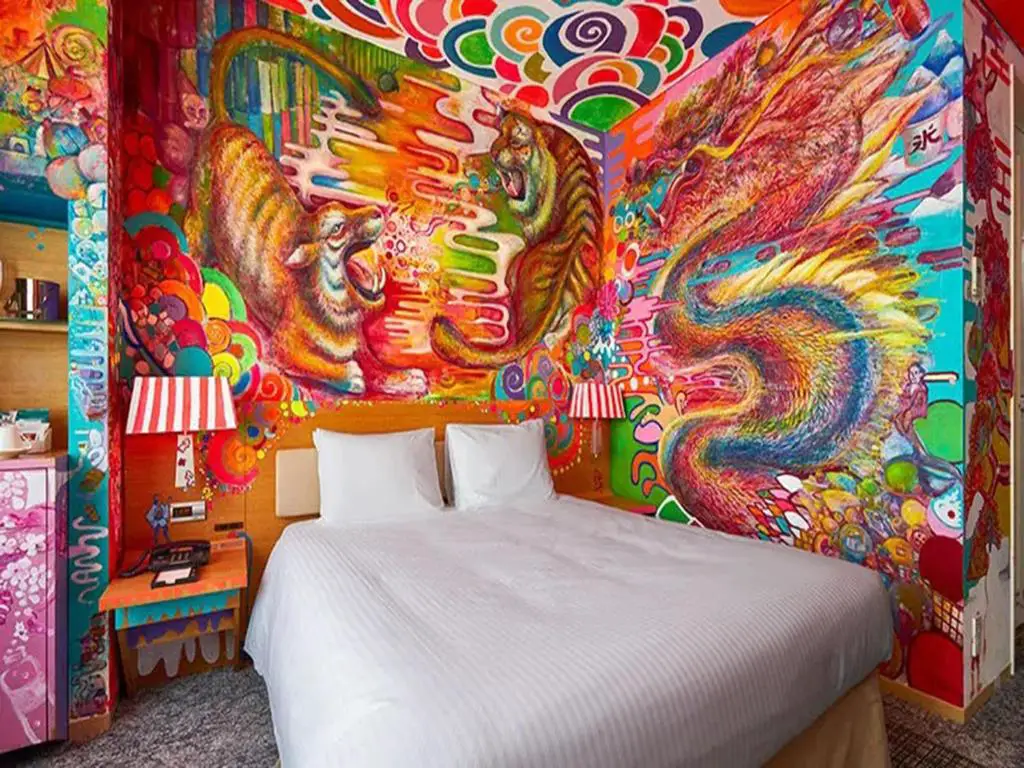
| 1. Park Hotel Tokyo Best for Art Lovers Rating: ⭐⭐⭐⭐ Location: 4-minute walk to Shiodome Station; 7-minute walk to Shimbashi Station Guest Reviews: City and Tokyo Tower views from high floors, spacious rooms by Tokyo standards, outstanding breakfast buffet, art throughout corridors and lobbies Best Room: Artist Room (34th floor, Tokyo Tower side) Price: From USD $170 – $500 per night |
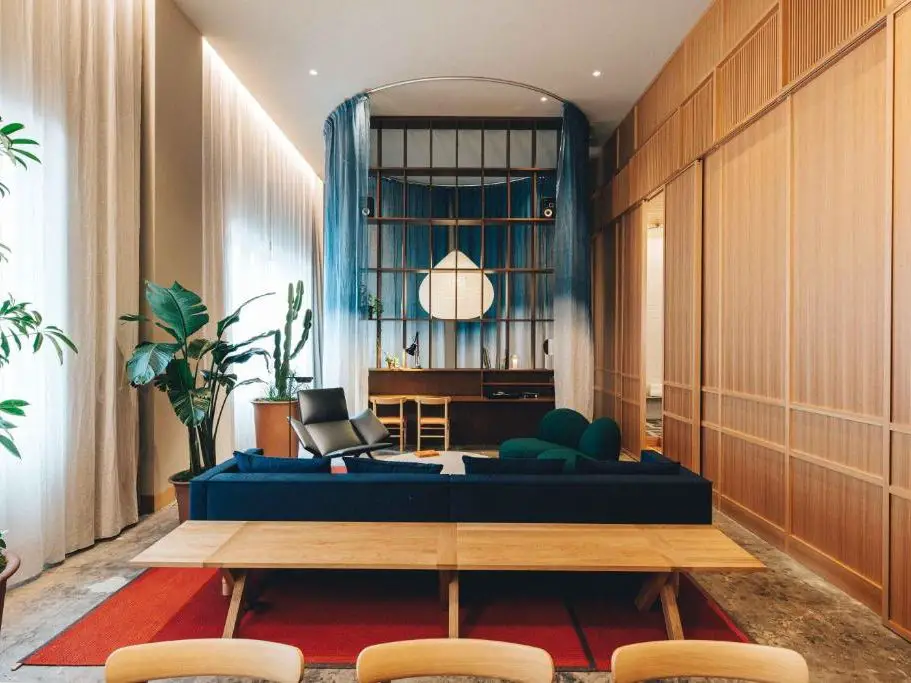
| 2. Hotel K5 Most Unique Stay Rating: ⭐⭐⭐⭐ Location: 5-minute walk to Nihonbashi Station; 7-minute walk to Kayabacho Station Guest Reviews: Spacious rooms by Tokyo standards, record player and vinyl in every room, exceptional staff, outstanding restaurant and bar complex Best Room: K5 Loft with freestanding bathtub Price: From USD $350 – $600 per night |
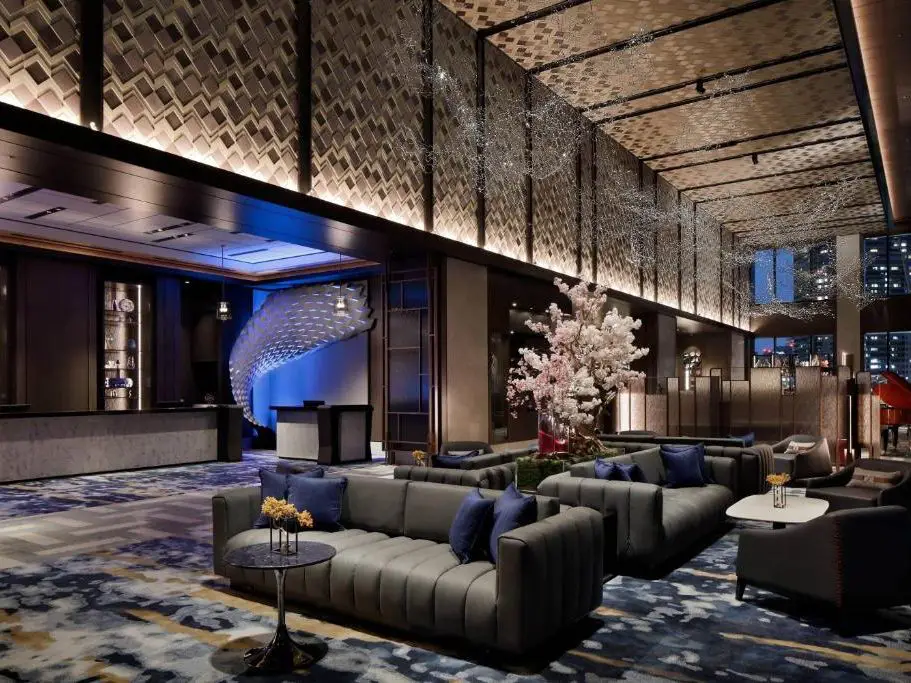
| 3. mesm Tokyo, Autograph Collection Best View Rating: ⭐⭐⭐⭐⭐ Location: 3-minute walk to Takeshiba Station; 8-minute walk to Hamamatsucho Station Guest Reviews: Spacious soundproofed rooms, Hamarikyu Gardens and bay views, Casio digital piano in every room, nightly live music in the 16th-floor lobby Best Room: Balcony room with Hamarikyu Gardens view Price: From USD $430 – $700 per night |
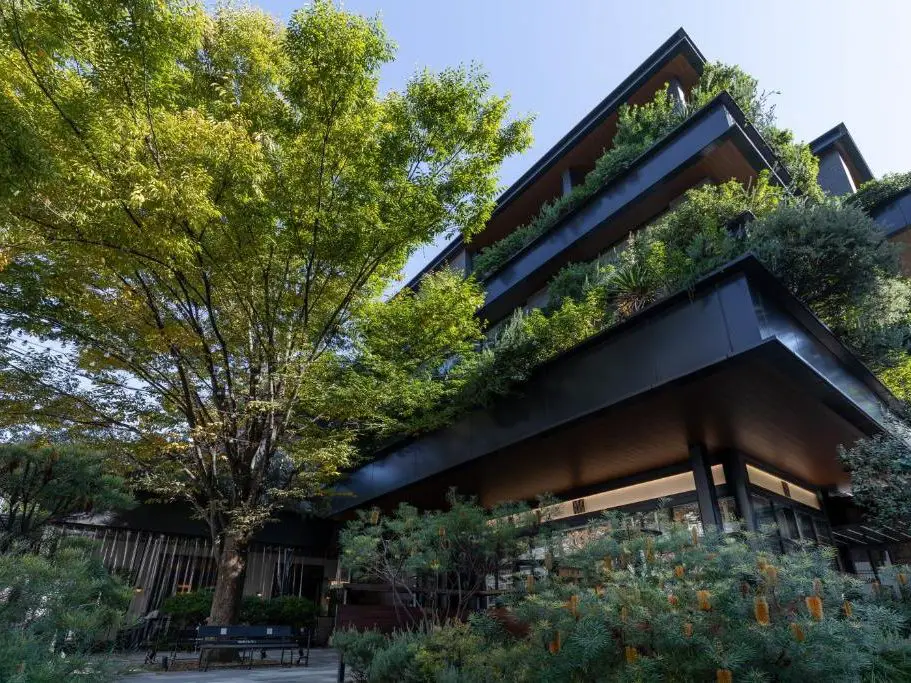
| 4. TRUNK(HOTEL) Cat Street Best for Couples Rating: ⭐⭐⭐⭐ Location: 11-minute walk to Shibuya Station; 8-minute walk to Meiji-Jingumae Station Guest Reviews: Individually designed rooms using recycled materials, exceptional and attentive staff, lively bar and restaurant, zelkova tree courtyard Best Room: Suite with terrace Price: From USD $400 – $700 per night |
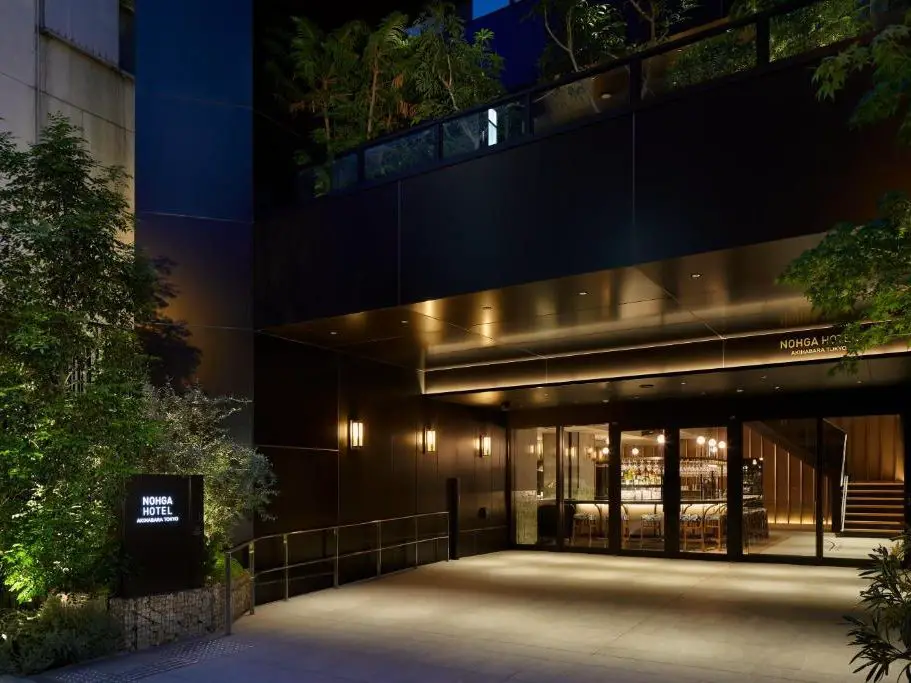
| 5. NOHGA Hotel Akihabara Tokyo Rating: ⭐⭐⭐⭐ Location: 6-minute walk to Akihabara Station; 4-minute walk to Suehirocho Station Guest Reviews: Rotating contemporary art exhibitions throughout, individually decorated rooms with premium Bluetooth speakers, wood-fired pizza restaurant, weekly DJ nights on Fridays Best Room: Deluxe Twin Room Price: From USD $150 – $250 per night |
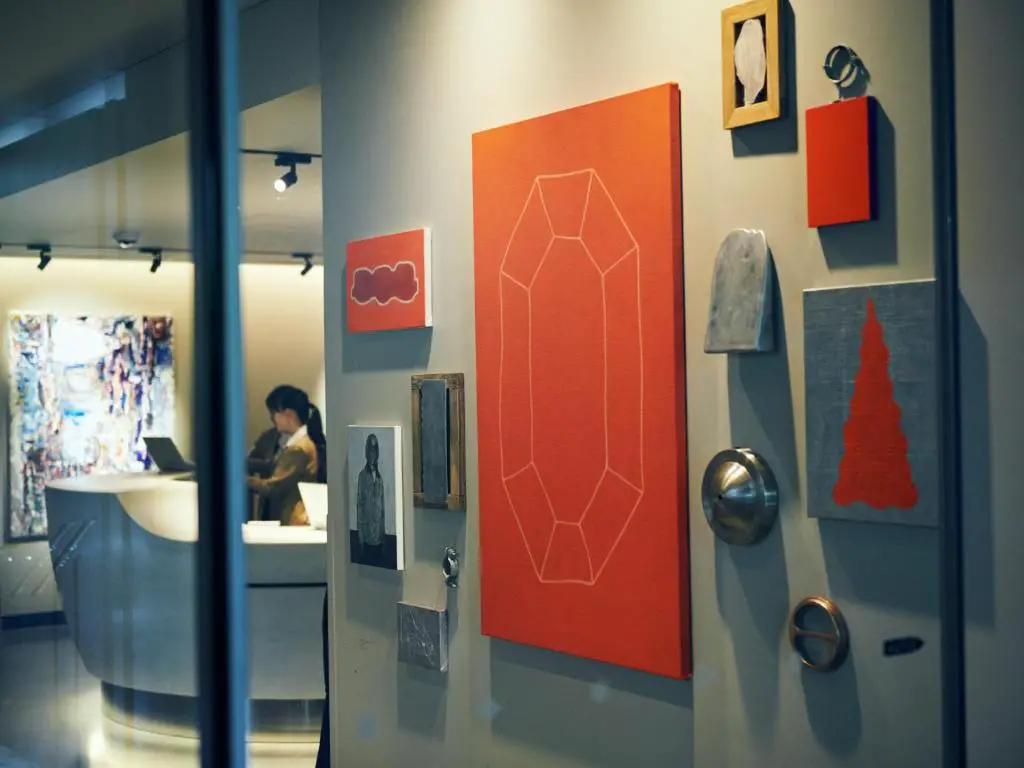
| 6. NOHGA Hotel Ueno Tokyo Rating: ⭐⭐⭐⭐ Location: 5-minute walk to Ueno Station; 7-minute walk to Ueno Park Guest Reviews: Lobby gallery with rotating art exhibitions, handcrafted room items by local Ueno artisans, excellent Bistro NOHGA breakfast, library lounge on the second floor Best Room: Deluxe Twin Room Price: From USD $135 – $250 per night |
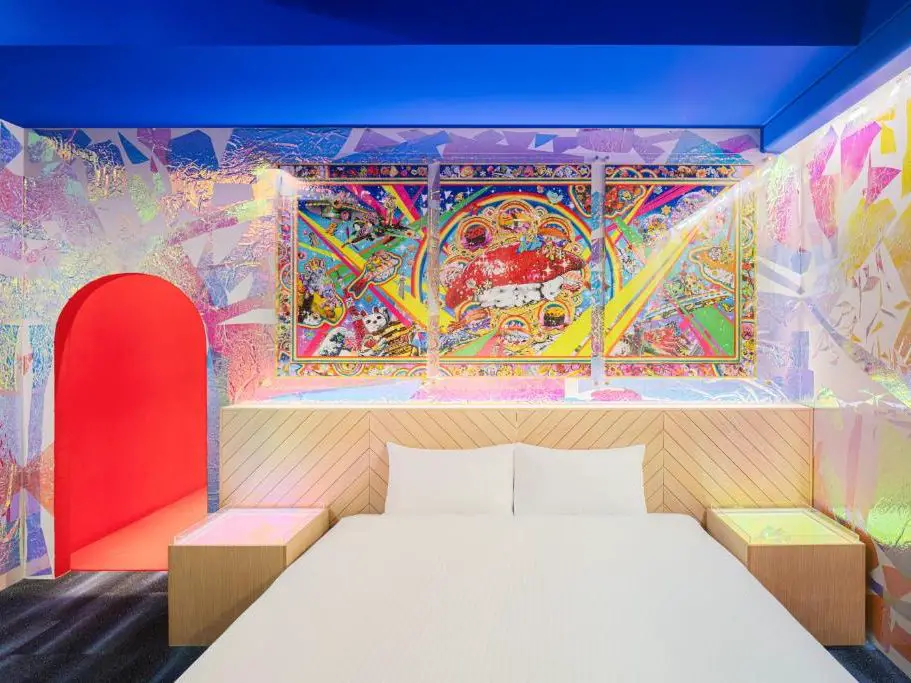
| 7. BnA WALL Best Boutique Stay Rating: ⭐⭐⭐ Location: 5-minute walk to Kodemmacho Station; 8-minute walk to Mitsukoshimae Station Guest Reviews: Every room designed by a different Tokyo artist, 5-metre lobby mural repainted every three months, a portion of each booking goes directly to the room’s artist, attentive and knowledgeable staff Best Room: Deluxe Suite King “daytime’s daydream” Price: From USD $130 – $250 per night |
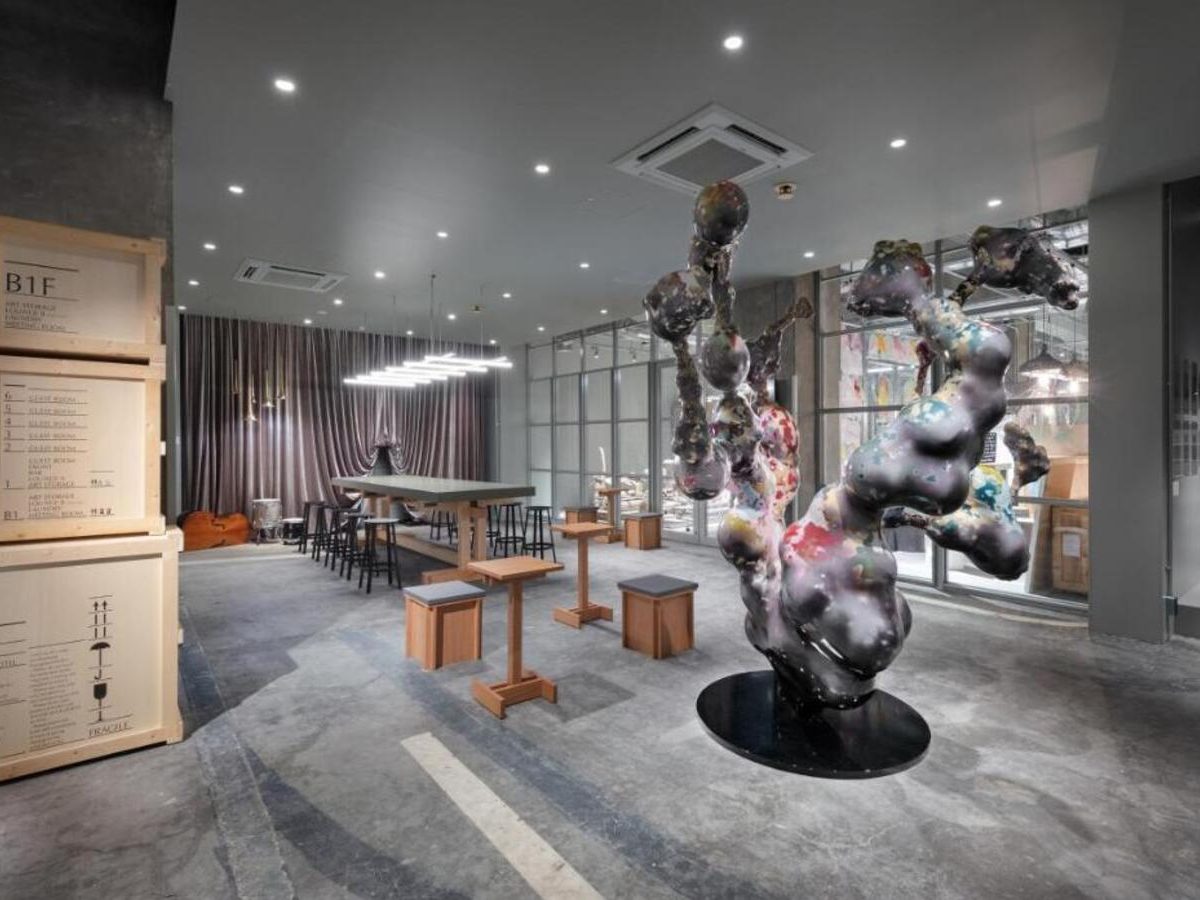
| 8. KAIKA Tokyo by The Share Hotels Best Value Rating: ⭐⭐⭐ Location: 10-minute walk to Asakusa Station; 5-minute walk to Ryogoku Station; Tokyo Skytree visible from upper floors Guest Reviews: Art storage compartments with paintings and sculptures viewable on every floor, spacious rooms by Tokyo standards, quiet residential neighbourhood, friendly staff, common kitchen in the basement Best Room: Superior Double Room Price: From USD $100 – $180 per night |
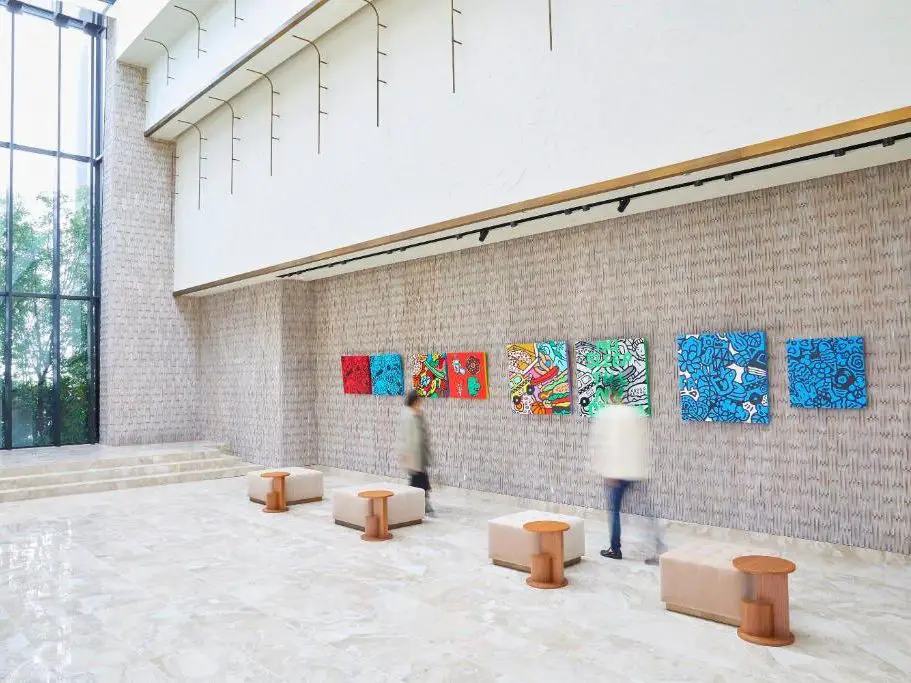
| 9. Kimpton Shinjuku Tokyo Rating: ⭐⭐⭐⭐⭐ Location: 7-minute walk to Shinjuku Station; 10-minute walk to Shinjuku Gyoen National Garden Guest Reviews: Permanent impressionism wall mural in lobby, artworks throughout rooms and communal spaces, spacious soundproofed rooms, free daily social hour with drinks, rooftop bar with city views Best Room: Premier Suite King Price: From USD $250 – $500 per night |
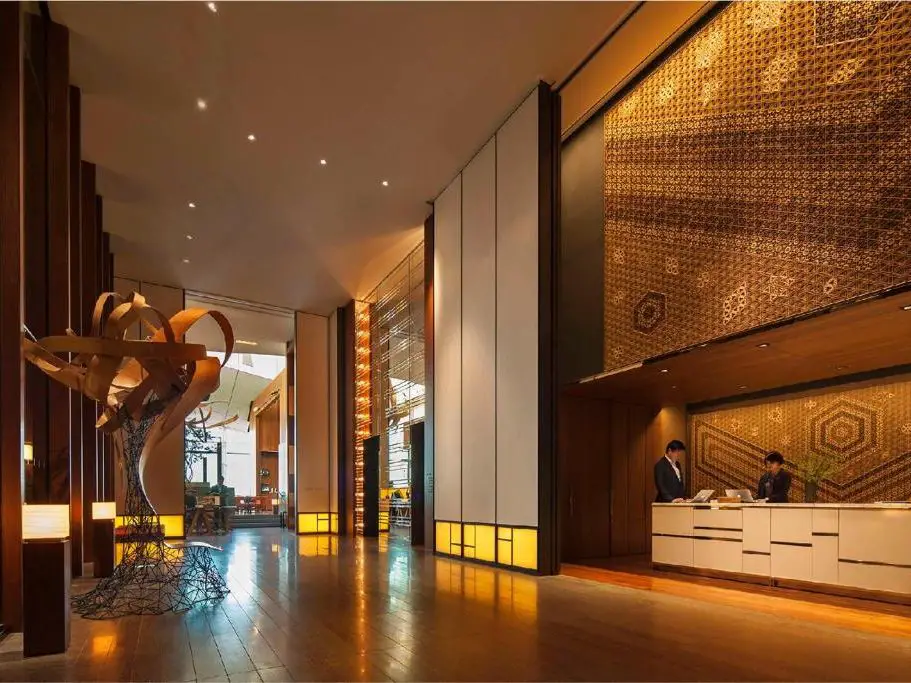
| 10. Andaz Tokyo Toranomon Hills Most Luxurious Rating: ⭐⭐⭐⭐⭐ Location: Direct underground access to Toranomon Hills Station; 15-minute walk to Tokyo Tower Guest Reviews: Kumiko wooden mural at check-in, Charlie Whinney sculptures in the lobby, washi paper artworks in every elevator, Japanese art accents throughout rooms and common spaces Best Room: Deluxe King with Tower View Price: From USD $480 – $800 per night |
Why Stay in an Art Hotel in Tokyo
Tokyo has more museums per square kilometre than almost any city on earth, and its galleries — from the Mori Art Museum in Roppongi to the Tokyo National Museum in Ueno — are world-class. But the city’s most interesting relationship with art isn’t happening in formal institutions. It’s happening in hotels.
A generation of Tokyo hoteliers has decided that the room itself should be the experience. That means murals painted directly onto walls by working artists, lobby sculptures commissioned from internationally exhibited names, and corridors that function as curated gallery walks between floors. The result is a category of accommodation that doesn’t exist anywhere else in quite the same way — places where the art isn’t decorative, it’s structural to what the hotel is.
Staying in one changes how you move through the building. You slow down in the lift because there’s something worth looking at. You walk the corridor before bed because the series of works changes floor by floor. You wake up inside a painting someone spent weeks making specifically for that room. That’s a different kind of travel, and Tokyo does it better than anywhere.
The city’s art hotel scene also spans an unusually wide price range — from BnA WALL, where ¥20,000 gets you a night inside an emerging artist’s mural, to the Andaz Tokyo and mesm Tokyo, where internationally curated collections run through every surface of a five-star property. Whatever your budget, there’s a property here that takes the art seriously.
Overview of Accommodation Options
Tokyo’s art hotels cover more ground than you might expect — in terms of both price and artistic intent.
- At the luxury end, Park Hotel Tokyo, mesm Tokyo, Andaz Tokyo Toranomon Hills, and Kimpton Shinjuku Tokyo approach art as a total design philosophy. The Park Hotel has over 400 works throughout the building and 47 rooms hand-painted by resident artists — it’s the closest thing Tokyo has to sleeping inside a museum. mesm Tokyo runs a single visual concept, Tokyo Waves, through every corridor, ceiling, and room, with a Casio digital piano and a rotating collaboration with the Tokyo National Museum. Andaz Tokyo anchors its public spaces with a landmark kumiko wooden mural and Charlie Whinney sculptures suspended from the lobby ceiling. Kimpton Shinjuku has a permanent impressionism wall mural in the lobby and artworks placed throughout all 130 rooms.
- In the boutique mid-range, Hotel K5 and TRUNK(HOTEL) Cat Street take a design-led approach rather than a curatorial one. K5 is the result of a collaboration between Japanese owners and Stockholm studio Claesson Koivisto Rune — every object in the building was either custom-designed or hand-crafted, from the kintsugi-repaired cracks in the original stonework to the indigo-dipped curtains around each bed. TRUNK takes sustainability as its aesthetic: recycled materials, upcycled staff uniforms, and rooms individually designed by local creatives with artworks throughout.
- For the most immersive art experience at a mid-range price, BnA WALL in Nihonbashi is the standout. Every one of its 26 rooms is a commission — floor-to-ceiling murals by working Tokyo artists, with a percentage of your booking fee going directly to the artist. The 5-metre lobby wall is repainted every three months by a different artist. It’s the only hotel on this list where the entire building is, in a strict sense, an ongoing artwork.
- NOHGA Hotel Akihabara and NOHGA Hotel Ueno sit at the intersection of lifestyle hotel and genuine art programme — revolving exhibitions curated with 3331 Arts Chiyoda in Akihabara, artisan-crafted room objects celebrating local craft traditions in Ueno. Both are well-priced, well-reviewed, and easy bases for exploring their respective neighbourhoods.
- At the budget end, KAIKA Tokyo by The Share Hotels is one of the most unusual concepts on this list: an art storage hotel, where works from private collections — paintings, sculptures, crafts — are displayed in glass-fronted compartments throughout the building. Guests move through an actual collection every time they take the lift.
Best Areas to Stay
- Nihonbashi and Chuo — This is Tokyo’s old financial district, now one of its most interesting neighbourhoods for design and art. Hotel K5 and BnA WALL are both here, within walking distance of each other. The area is quiet by Tokyo standards, with independent cafés, bakeries, and galleries opening up around the former banking buildings. Easy metro access means you can reach Ginza in under 10 minutes and Akihabara in 15. Best for travellers who want to be away from the tourist trail but still central.
- Shibuya and Harajuku — The most fashion-forward stretch of the city, and home to TRUNK(HOTEL) Cat Street and Kimpton Shinjuku Tokyo. Cat Street itself is lined with independent vintage stores and design shops, and Yoyogi Park is a short walk for mornings. The area has the best concentration of creative businesses in Tokyo — galleries, concept stores, studio spaces — and the energy is younger and more restless than Ginza or Shiodome. Best for travellers who want to be in the thick of Tokyo’s contemporary creative scene.
- Shiodome and Minato — A cluster of glass towers between Ginza and the bay, home to Park Hotel Tokyo and mesm Tokyo. Neither neighbourhood has much character at street level, but the trade-off is superb transport connections and proximity to Tsukiji, Ginza, and Hamarikyu Gardens. Both hotels sit high enough above the city that the location becomes the view rather than the walk. Best for first-time visitors who want to be close to the classic Tokyo sights.
- Toranomon and Azabudai — An area in transition, with new luxury developments reshaping what was a quiet business district. Andaz Tokyo Toranomon Hills sits directly above Toranomon Hills Station, and the surrounding area now includes some of Tokyo’s best new dining, retail, and the teamLab Borderless digital art experience nearby. Two stops from Ginza, a short walk to Tokyo Tower. Best for travellers who want contemporary luxury with easy access to both heritage and cutting-edge Tokyo.
- Akihabara and Ueno — Two adjacent neighbourhoods with completely different personalities, linked by a short walk through Ameyoko market. NOHGA Hotel Akihabara puts you at the centre of Tokyo’s electronics and pop culture district; NOHGA Hotel Ueno sits minutes from Ueno Park and its cluster of national museums. Both are excellent transit hubs with direct access to Narita Airport via the Keisei line. Best for travellers combining Tokyo with broader Japan travel, or those with a specific interest in either area’s cultural offering.
- Sumida and Asakusa — The most traditional part of central Tokyo, with KAIKA Tokyo in a quiet residential pocket near the Sumida River. Senso-ji Temple, Tokyo Skytree, and the craft shops of Kappabashi are all within walking distance. A slower pace than Shibuya or Shiodome, and better for it. Best for travellers who want old Tokyo within reach but appreciate coming back to somewhere calm at the end of the day.
How to Choose the Right Hotel
The art hotels on this list split broadly into two types: those where the art is the room, and those where the art surrounds the room. Which matters more to you is the most useful question to start with.
- At Park Hotel Tokyo and BnA WALL, you wake up inside the work — murals painted directly on walls, floors, and ceilings by the artist who made them. The room is the point. If that level of immersion is what you’re after, both are excellent, but they’re very different experiences: Park Hotel is polished four-star comfort with 47 distinct artist rooms to choose between; BnA WALL is rawer and more intimate, with the added dimension that your stay financially supports the artist. At BnA WALL, room quality varies considerably — some commissions are extraordinary, others more modest — so booking early to get a preferred room assignment is worth the effort.
- If you want art throughout the hotel without necessarily sleeping inside a mural, Andaz Tokyo, mesm Tokyo, Kimpton Shinjuku, and TRUNK(HOTEL) all deliver that in different registers. Andaz leans into traditional Japanese craft — kumiko woodwork, washi paper, hardwood sculpture — with extraordinary views as a bonus. mesm Tokyo is the most cohesive single-concept property, with every design decision tied to the Tokyo Waves theme; it also sits closest to Haneda Airport, which makes it a strong choice if you’re arriving late or leaving early. Kimpton Shinjuku is the most sociable of the luxury picks, with a daily happy hour, rooftop bar, and a lobby that draws both guests and locals — good if you want art and atmosphere rather than quiet contemplation.
- Budget is the other practical dividing line. KAIKA Tokyo and BnA WALL are the most affordable options with genuine art credentials, and both offer something no amount of money buys at the larger properties: the sense of a genuinely independent, community-rooted art concept rather than a corporate collection. NOHGA Hotel Akihabara and NOHGA Hotel Ueno sit in the sweet spot between art-forward and accessible — well-reviewed, well-priced, and in neighbourhoods that are interesting in their own right.
- Location should carry real weight here. The art hotels on this list are spread across six different areas of Tokyo, and the neighbourhood shapes the experience as much as the hotel. Staying at TRUNK puts you on Cat Street with Harajuku and Yoyogi Park on your doorstep; staying at Hotel K5 puts you in a quiet financial district that’s fascinating to explore but far from the main tourist circuits. If it’s your first trip to Tokyo, proximity to transit and familiar landmarks may matter more than it would on a return visit.
- One practical note: for any of the artist-room properties — Park Hotel, BnA WALL — book as far ahead as possible and contact the hotel directly about room preferences. Most will accommodate top-three choices at check-in without a guarantee, but early booking significantly improves your chances of getting the commission you want.
When to Book
- Peak season (late March to early April) is cherry blossom season and the single most competitive booking period of the year. Rates across all hotels spike, availability at smaller properties like BnA WALL and TRUNK(HOTEL) disappears weeks in advance, and Tokyo is at its busiest. Book three to four months ahead minimum for this window.
- Golden Week (late April to early May) is Japan’s biggest national holiday cluster — a full week when domestic travel peaks and Tokyo hotels fill rapidly. Avoid if flexibility matters; if you must travel then, book early and expect premium rates.
- Autumn (October to November) is the other high season, driven by autumn foliage and comfortable temperatures. Rates climb and availability tightens, though not as severely as cherry blossom season. Two to three months ahead is a sensible lead time.
- Shoulder season (May to June, September) offers the best balance of value and experience. Crowds thin, rates drop noticeably, and the city is still fully operational. June brings the rainy season — not a reason to avoid Tokyo, but worth packing for.
- Low season (July to August) is hot, humid, and less visited by international travellers. Rates at the luxury properties — Andaz Tokyo, mesm Tokyo, Kimpton Shinjuku — drop meaningfully, sometimes by 20 to 30 percent. If heat doesn’t deter you, this is the best value window of the year.
- January and February are the coldest months and the quietest for tourism. Rates are at their annual low, particularly mid-week. Some restaurants and smaller venues reduce hours, but the major hotels operate normally and the city is far easier to navigate without crowds.
- Blackout periods to flag: New Year (late December to early January) sees rates spike and many restaurants close or require reservations months in advance. Major art events — the Tokyo International Art Fair in May, Designart Tokyo in October — tighten availability for the design-forward properties on this list specifically. Worth checking the calendar before you finalise dates.
- Last-minute risk: The smaller art hotels — BnA WALL, KAIKA Tokyo, TRUNK(HOTEL) — have limited room counts. Last-minute availability is rare outside low season, and the rooms you actually want (specific artist commissions, terrace suites) go first. For the large properties like Park Hotel Tokyo and mesm Tokyo, last-minute deals occasionally appear, but don’t plan around them for peak travel.
Insider Tips for a Better Stay
- Request your artist room early at Park Hotel Tokyo. The hotel assigns rooms at check-in, but they accommodate a top-three preference list if you contact them in advance. The 34th-floor rooms are the newest commissions and the most requested — put them first. Photos of every artist room are on the hotel’s website, so you can choose based on the specific work rather than guessing.
- Walk every corridor at the art-forward hotels. At Park Hotel Tokyo, Andaz Tokyo, and mesm Tokyo, the hallways are part of the art programme — themed corridor galleries, washi paper installations, and seasonal works that most guests walk straight past. Budget ten minutes to explore the floors above and below your own.
- At BnA WALL, south-facing rooms get natural light. The hotel itself will tell you this at booking if you ask — rooms facing south (Daytime’s Daydream, Visible Ambiance, Newtopia Tokyo) benefit from direct sunlight, which transforms how the murals read. Rooms with a column (flagged on their site) feel significantly smaller. Worth a quick email before you confirm.
- Kimpton’s social hour is genuinely good. Every evening from around 5pm to 6pm, the hotel runs a complimentary drinks hour in the lobby. It’s not a token gesture — proper cocktails, wine, and snacks — and it’s a reliable way to meet other guests. Worth planning your return from sightseeing around it.
- NOHGA Akihabara’s Friday DJ nights are open to non-guests. The hotel runs a weekly DJ session that draws locals as well as hotel guests. If you’re staying nearby or just passing through Akihabara on a Friday evening, it’s one of the more relaxed ways to spend a few hours in a neighbourhood better known for electronics stores.
- Book teamLab Borderless before you arrive if staying at Andaz. The immersive digital art experience at Azabudai Hills is connected to the hotel by elevator and escalator, and tickets sell out weeks ahead. The Andaz concierge can arrange them, but availability isn’t guaranteed — sort it before departure and treat it as a fixed point in your itinerary rather than a spontaneous decision.
- TRUNK’s bikes are worth using. The hotel offers a fleet of custom bicycles made from reclaimed parts — free for guests. Yoyogi Park is 15 minutes by bike, Harajuku and Omotesando are closer. Tokyo’s cycling infrastructure has improved considerably and the Shibuya area is genuinely navigable on two wheels in the morning before the crowds build.
- KAIKA Tokyo is quieter than its Asakusa address suggests. The hotel sits in a residential pocket of Sumida rather than on the main tourist drag, which means you get Tokyo Skytree views and easy access to Senso-ji without the noise. The 10-minute walk to Asakusa Station feels longer with luggage — a taxi from the station is worth it on arrival.
Frequently Asked Questions
1. What makes a hotel an “art hotel” rather than just a hotel with some art on the walls?
A genuine art hotel integrates art into the concept of the stay itself — rooms designed by working artists, permanent collections running through corridors and lobbies, or a curatorial programme that shapes the entire guest experience. The difference is whether the art is incidental decoration or the reason the hotel exists. Properties like Park Hotel Tokyo and BnA WALL fall clearly into the second category; the art is structural to what they are.
2. Do I need to book an artist room specifically at Park Hotel Tokyo, or are the standard rooms worth staying in?
Standard rooms at Park Hotel Tokyo are comfortable four-star rooms with excellent city views, but they’re not what makes the hotel special. The artist rooms on the 31st and 34th floors — where murals are painted directly onto walls by resident Japanese artists — are the experience. Book them if you can. The price difference is modest and the upgrade from a white-walled room to sleeping inside a commissioned artwork is significant.
3. Are these hotels suitable for families with children?
Most are, with some caveats. KAIKA Tokyo, mesm Tokyo, and Andaz Tokyo have larger rooms and family-friendly policies. TRUNK(HOTEL) has only 15 rooms and a social, adult-leaning atmosphere that works less well with young children. BnA WALL is adult-only. Park Hotel Tokyo welcomes families, though the artist rooms are designed for couples and the standard rooms are more practical for groups.
4. Which hotel has the best views of Tokyo Tower?
Andaz Tokyo Toranomon Hills is the clear answer — the Tower View rooms on floors 47 to 50 frame Tokyo Tower through floor-to-ceiling windows at close range and significant height. Park Hotel Tokyo also offers Tokyo Tower views from upper floors, and mesm Tokyo has Hamarikyu Gardens and bay views that are equally compelling at night.
5. Can I visit the art hotels as a non-guest?
Some are more accessible than others. The ground-floor café and bar at BnA WALL is open to the public, as is the gallery space. mesm Tokyo‘s lobby bar on the 16th floor accepts non-guests for drinks. Park Hotel Tokyo‘s art exhibitions in the corridors are technically for guests, but the 25th-floor lobby and lounge are accessible. Andaz Tokyo and Kimpton Shinjuku both have restaurants and bars open to visitors.
6. Which of these hotels is best for a first visit to Tokyo?
Park Hotel Tokyo and mesm Tokyo make the strongest case for first-timers — both have excellent transport links, are close to major attractions, and deliver a genuinely distinctive experience without requiring deep knowledge of the city’s neighbourhoods. Andaz Tokyo is also an easy choice given its direct underground connection to Toranomon Hills Station.
7. Is there a significant price difference between weekdays and weekends at these hotels?
At the boutique properties — TRUNK(HOTEL), BnA WALL, Hotel K5 — weekend rates are typically higher, sometimes considerably so. The larger hotels like Park Hotel Tokyo and mesm Tokyo show less variation day to day but spike during peak seasons and events. Mid-week stays in shoulder or low season offer the best value across the board.
8. Which hotel would you recommend for someone who wants the most immersive art experience, regardless of budget?
Park Hotel Tokyo is the most complete answer — 400 artworks throughout, 47 hand-painted artist rooms, corridor galleries on every floor, and an ongoing artist residency programme. The price is mid-range rather than luxury, which makes it even harder to argue against. BnA WALL offers a more raw, community-rooted version of the same idea at a lower price point, with the added dimension that your stay directly funds the artist.