
Ask about the bath before you ask about the room. Many of Shirahama’s springs leave the ground far too hot to sit in, so plenty of inns cool them with plain water, and some reheat and recirculate it as well. That matters most in a room bath. Here’s where I’d book, depending on how much of the spring you want to yourself.
Quick answer: Book Hamachidorinoyu Kaisyu. Its Hamaya bungalows are the rooms closest to the sea at the inn, in single-storey and split-level layouts.
Table of Contents
Best Shirahama Onsen Hotels and Ryokans
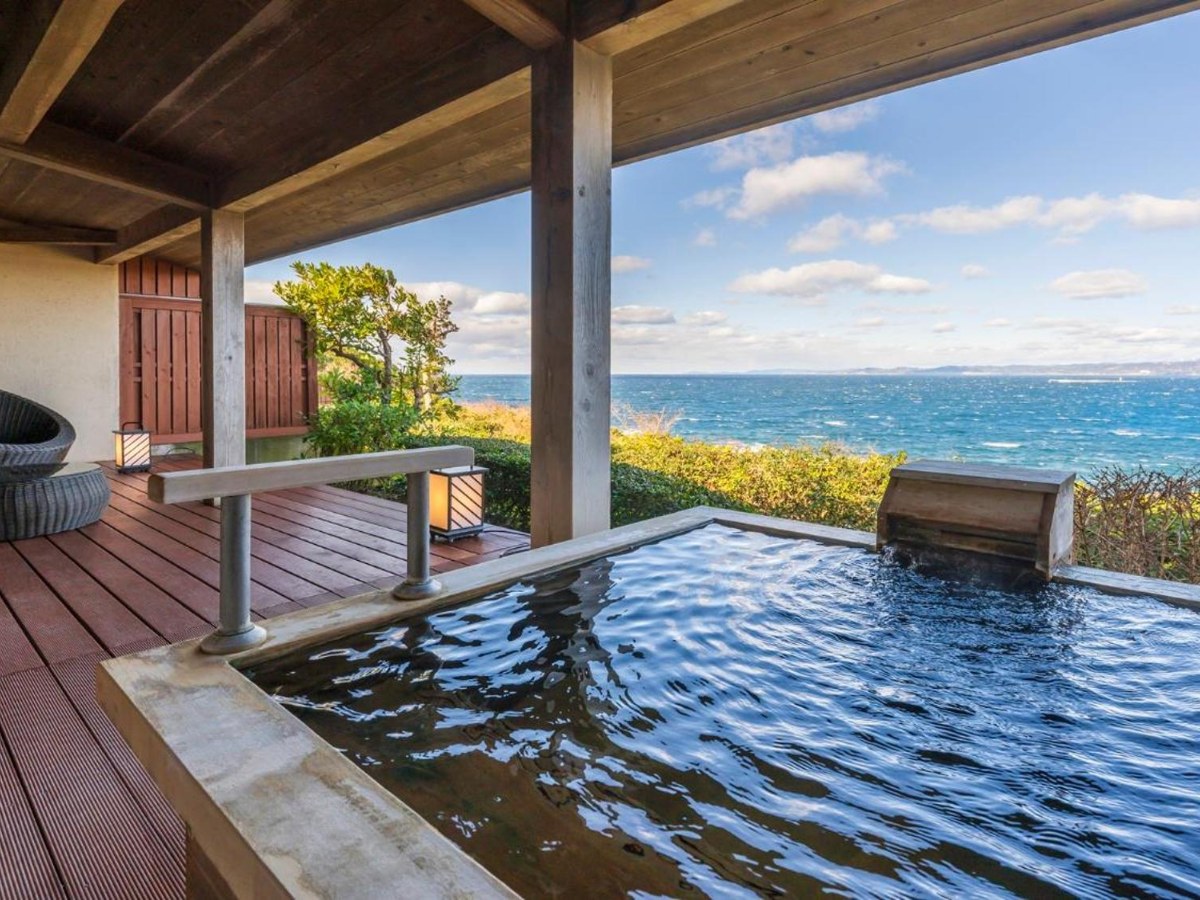
Mixed Open-Air Bath Over the Sea
1. Hamachidorinoyu Kaisyu
Rating: ⭐⭐⭐⭐⭐
Location: 14-minute drive to JR Shirahama Station
Guest Reviews: Onsen baths that felt incredible, and delicious meals.
Best Room: Deluxe Bungalow with Tatami area with Open-Air Hot Spring Bath and Ocean View
Good to Know: A cape-tip lookout on the grounds faces the sunset over the sea.
From USD $565 – $680 per night
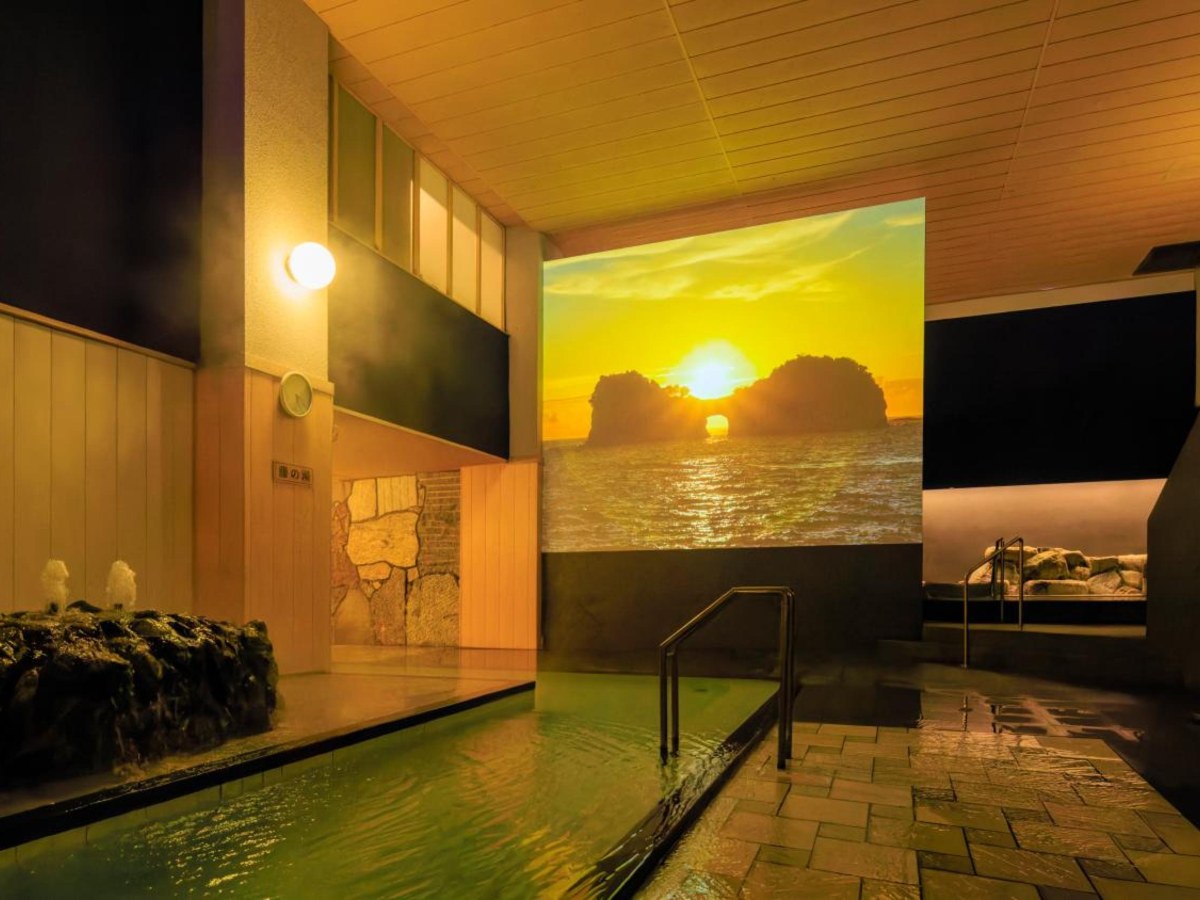
Bathhouse With Projection Mapping
2. Hotel Sanrakuso
Rating: ⭐⭐⭐⭐
Location: 10-minute drive to JR Shirahama Station
Guest Reviews: Superb sea views from the rooms, then an amazing Japanese breakfast.
Best Room: Deluxe Twin Room with Sea View
Good to Know: Both public baths offer two springs, one from the hills, one from the shore.
From USD $400 – $425 per night
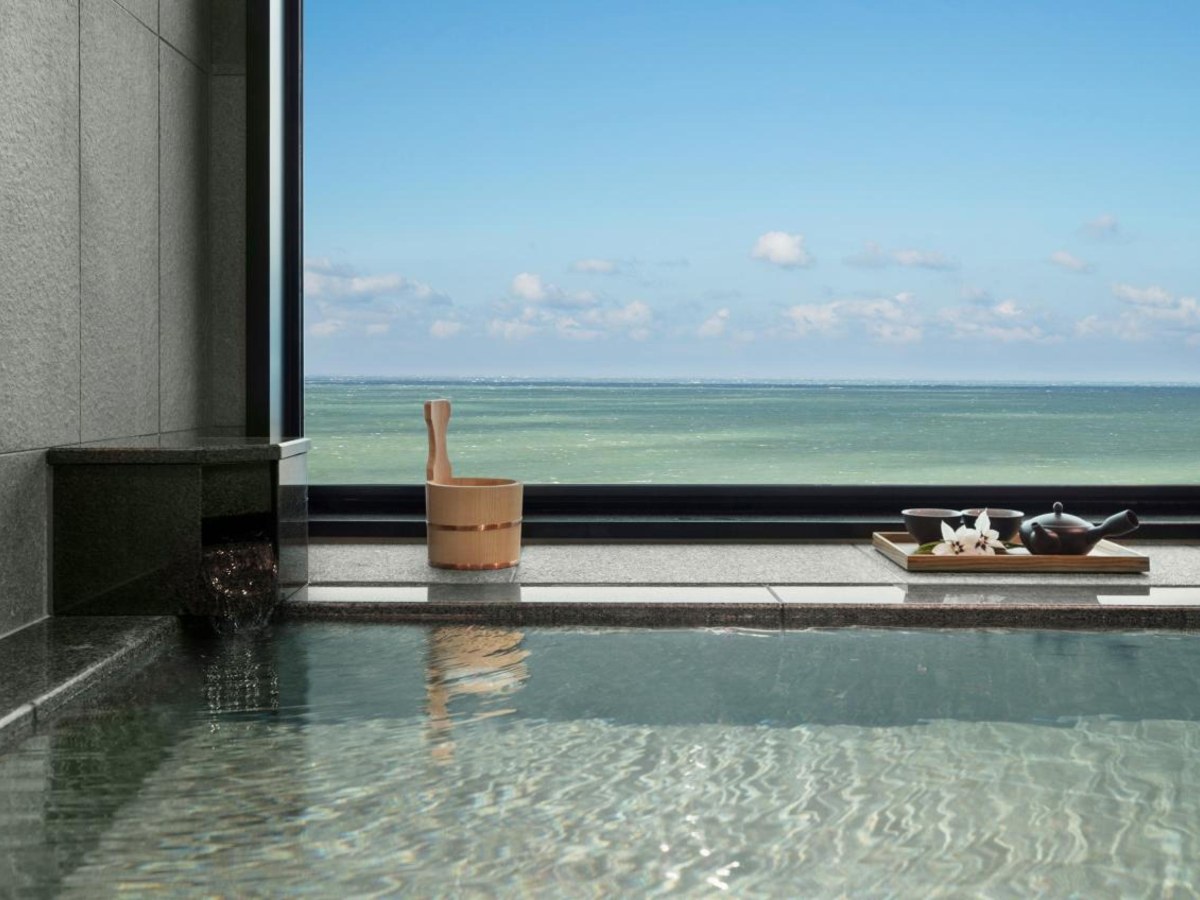
Top-Floor Pacific-View Onsen
3. Nanki-Shirahama Marriott Hotel
Rating: ⭐⭐⭐⭐⭐
Location: 11-minute drive to JR Shirahama Station
Guest Reviews: Excellent views, plus spacious rooms with comfortable beds.
Best Room: Premier Twin Room with Hot Spring Bath – Ocean View
From USD $185 – $330 per night
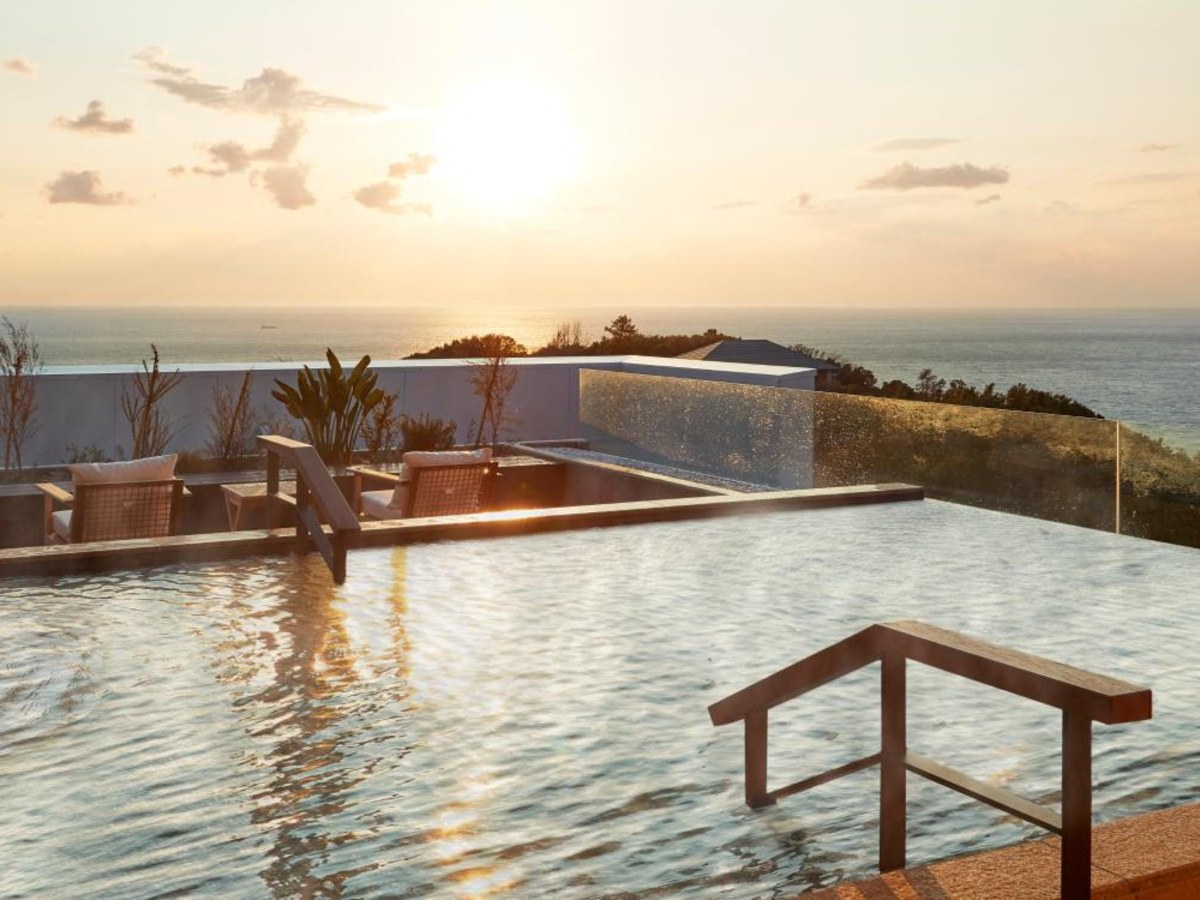
4. Infinito Hotel and Spa
Rating: ⭐⭐⭐⭐⭐
Location: 13-minute drive to JR Shirahama Station
Guest Reviews: The open-air baths were lovely, with wonderful views over the sea.
Best Room: Luxury Room with Open-Air Bath and Ocean View
From USD $715 – $790 per night
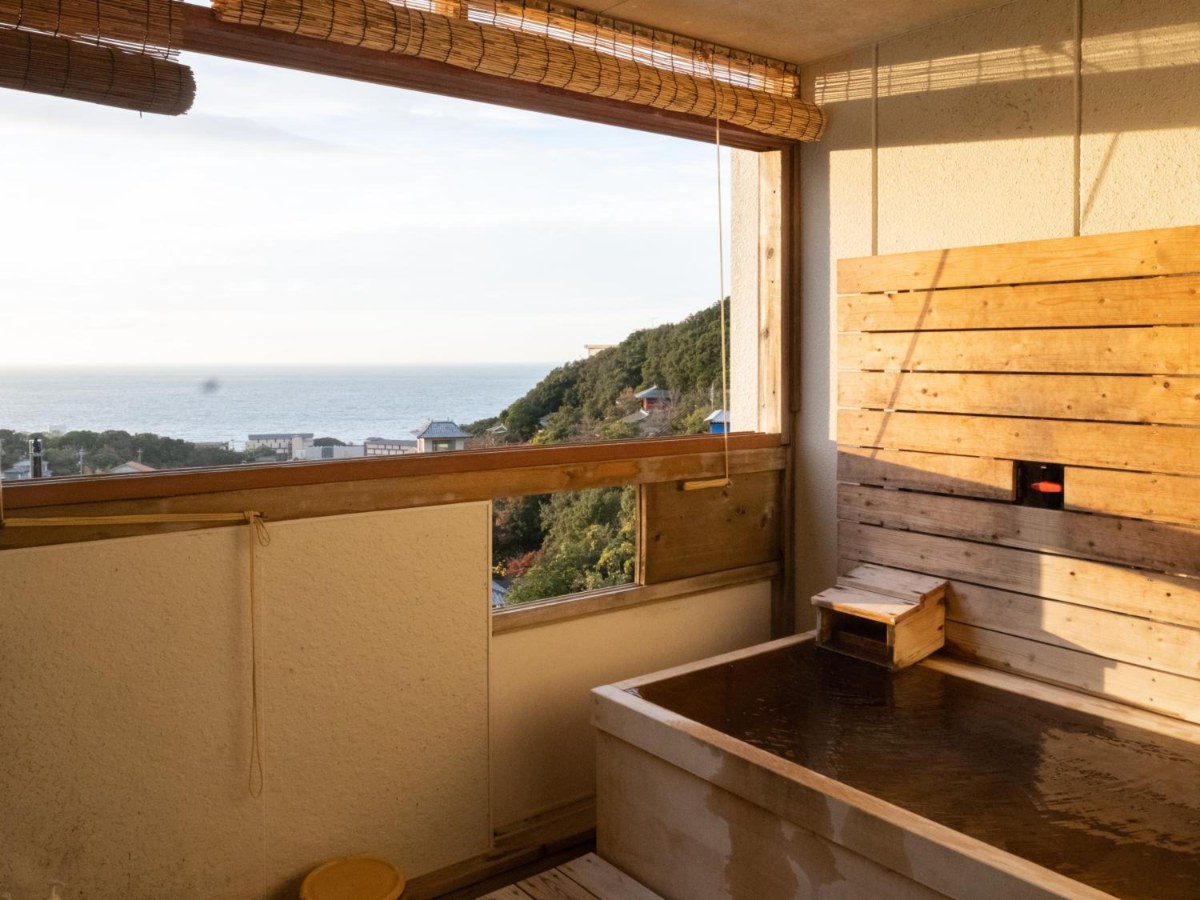
Source-Fed Open-Air Bath in Every Room
5. Hotel Tenzankaku Kaiyutei
Rating: ⭐⭐⭐
Location: 14-minute drive to JR Shirahama Station
Best Room: Japanese-Style Quadruple Room
From USD $270 – $395 per night
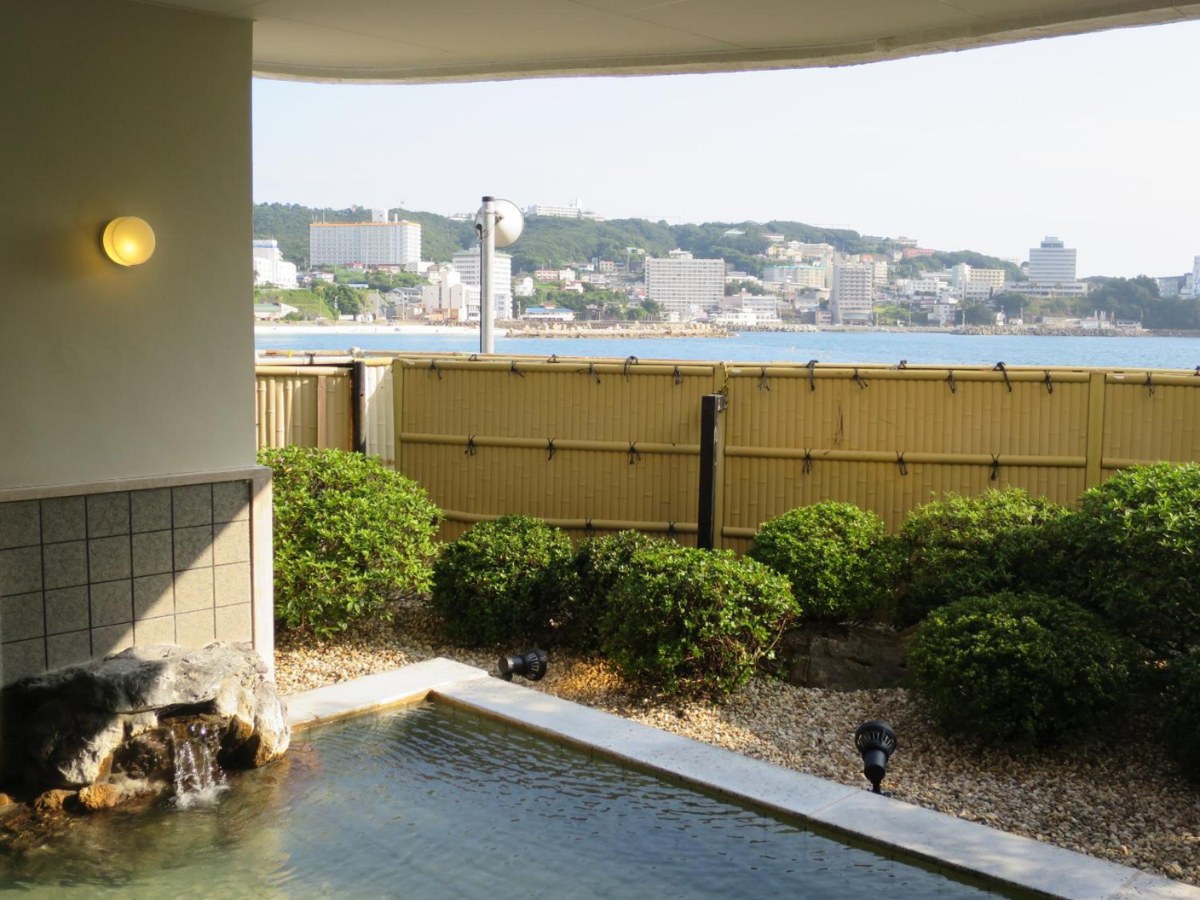
Open-Air Bath Facing Shirarahama Beach
6. Shiraraso Grand Hotel
Rating: ⭐⭐⭐⭐
Location: 12-minute drive to JR Shirahama Station
Guest Reviews: Big rooms with lovely views, and the meals were excellent.
Best Room: Royal Floor Japanese Room with Ocean View – Non-Smoking
From USD $215 – $460 per night
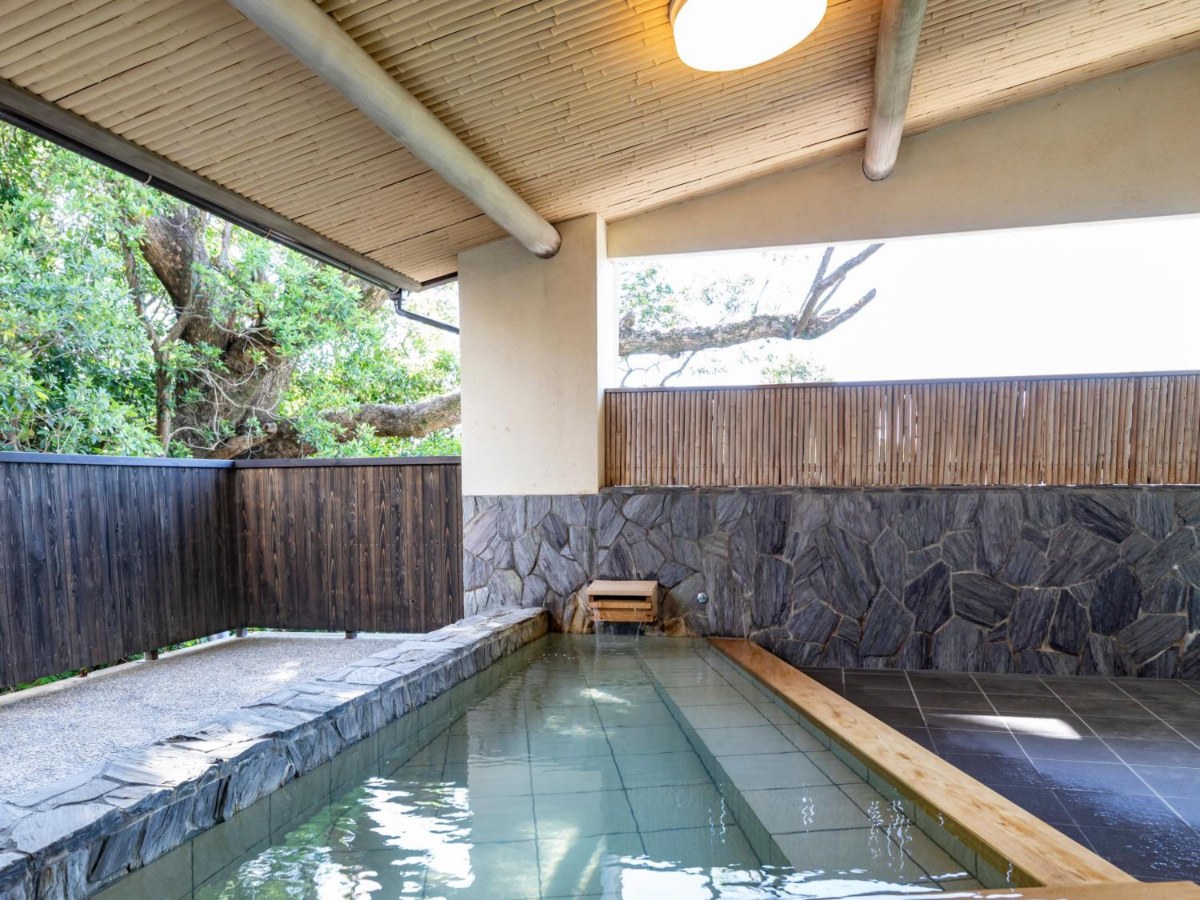
7. Tabist Nanki Shirahama Ryokan Mantei
Rating: ⭐⭐⭐⭐
Location: 10-minute drive to JR Shirahama Station
Guest Reviews: An amazing private bath in the garden, right outside the room.
Best Room: Twin Room with Terrace
From USD $225 – $275 per night
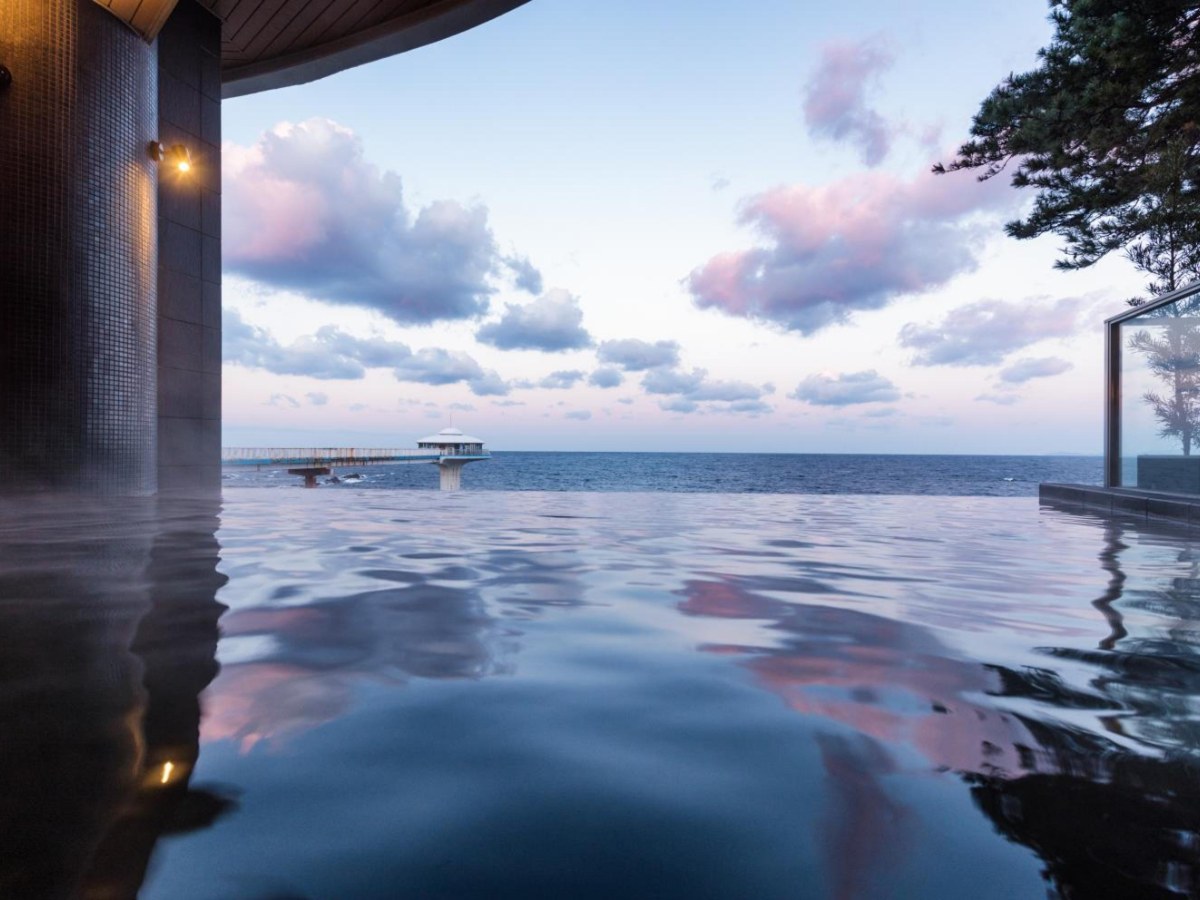
Seafront Infinity Foot Bath
8. Shirahama Key Terrace Hotel Seamore
Rating: ⭐⭐⭐⭐
Location: 12-minute drive to JR Shirahama Station
Guest Reviews: Soaking in the open-air onsen, then waking up to fantastic sea views.
Best Room: Twin Room with Tatami Area and Ocean View – Non-Smoking
From USD $245 – $415 per night
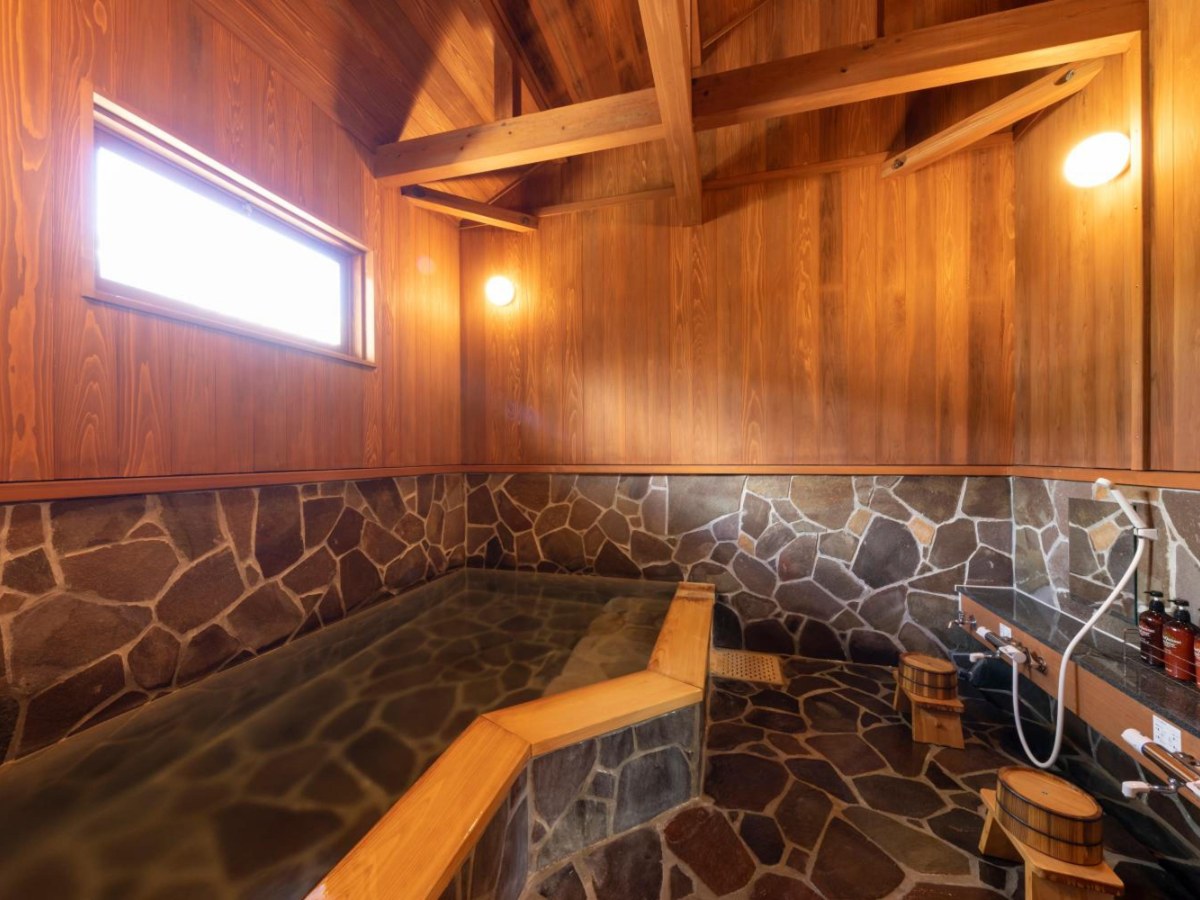
Seven-Room Hot Spring Inn
9. Natural Hot Spring Inn Choseian
Rating: Not star-rated
Location: 7-minute drive to JR Shirahama Station
Best Room: Quadruple Room with Private Bathroom
From USD $495 – $525 per night
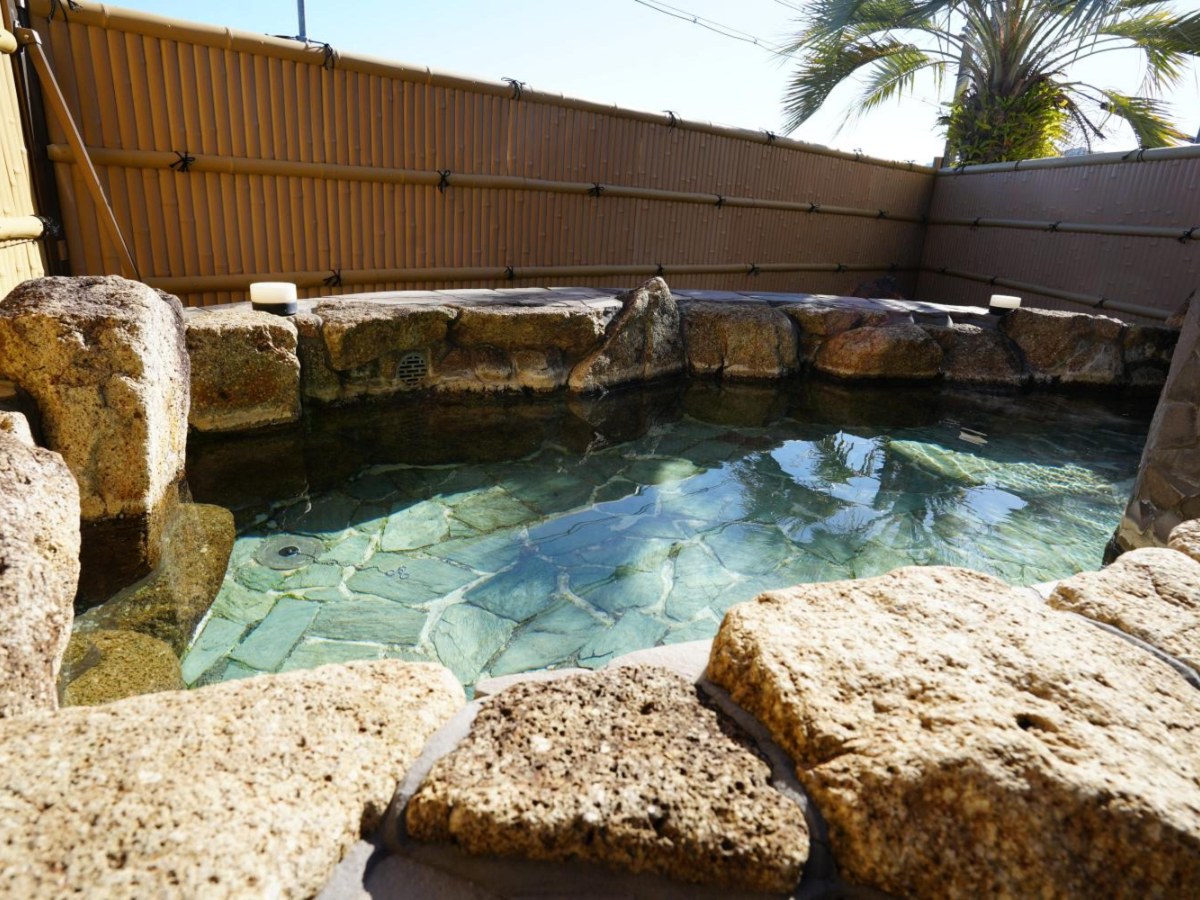
10. Kaigaku Onsen Resort Shirahama
Rating: ⭐⭐
Location: 8-minute drive to JR Shirahama Station
Guest Reviews: Breakfast was amazing, and the staff were wonderful.
Best Room: Japanese-Style Quadruple Room
From USD $205 – $240 per night
How to Read a Shirahama Bath Label
Look for the notice posted by the bath. Three terms on it tell you most of what you need.
- Source-Flowing Water (源泉かけ流し) Spring water runs into the tub and spills over the edge, and none of it is filtered and pumped back round. Shirahama Key Terrace Hotel Seamore runs its baths this way. Some inns run a single tub source-flowing and the rest on a loop, so check each one.
- Cooled With Added Water (加水) Many of Shirahama’s springs surface far hotter than anyone could sit in, so inns on them cool the water, and a sign reading 加水 means plain water went in. Hotel Sanrakuso runs its baths source-flowing and still marks them 加水.
- Heated and Recirculated (加温, 循環) A tub marked 循環 is filtered and pumped back through, and 加温 means it’s reheated. Nanki-Shirahama Marriott Hotel heats its Fujinoyu spring water and doesn’t run it source-flowing. It’s still hot spring water from one of Shirahama’s own sources.
Read the sign on the tub you’ll use most. If it says 循環, the water goes round more than once.
Room Baths and Private-Hire Baths
A room sold with an open-air bath doesn’t promise spring water in the tub.
- Spring Water by Wing Some inns pipe spring water to only part of the building, so check which wing your room is in. At Hamachidorinoyu Kaisyu, the room baths in the Nami no Sho and Akatsuki no Sho wings hold heated plain water (沸かし湯).
- Private-Hire Tubs Several inns keep private baths you lock and use in turns, handy for couples and anyone shy of the shared baths. Kaisyu has two by the sea, Iwato no Yu and Sekisho no Yu, and the Marriott keeps private-hire baths too.
- One Source-Flowing Tub Shiraraso Grand Hotel runs its private-hire bath source-flowing. Its two big baths mix recirculation with overflow and are reheated to keep them warm.
For spring water you don’t share, book a room whose description names a hot spring bath, then add a private-hire soak for the sea.
Public Baths in Town: Saki-no-Yu and Shirara-yu
Shirahama’s two best-known public baths both sit on the seafront.
- Saki-no-Yu on the Rocks Rock pools at the water’s edge in Yuzaki, fed by the Miyuki spring, the oldest source in town. It’s the only one of the old Yuzaki Seven Baths still in its original spot, and spray from the waves reaches the tubs.
- Washing Before You Go Saki-no-Yu has no washing area, and its bathwater drains straight into the sea. Wash at your inn before you go, then rinse with the pouring water by the tub.
- Shirara-yu Over the Beach A wooden two-storey bathhouse beside Shirarahama Beach, with the baths upstairs and windows looking over the sand. The water is strongly salty.
I’d go to Saki-no-Yu late in the afternoon, when the sun drops toward the Pacific in front of you.
Getting to Shirahama From Osaka and Kyoto
The Kuroshio limited express runs from Kyoto and Osaka down the coast to JR Shirahama Station.
- Train Time From Osaka Count on 2 hours 20 minutes to 2 hours 40 minutes from Osaka or Shin-Osaka, with no change. Every Kuroshio stops at both stations, so pick whichever is closer.
- Starting in Kyoto Only some Kuroshio trains begin at Kyoto. Check the departure station printed on your ticket, and if yours starts at Shin-Osaka, ride a shinkansen or JR train there and change.
- Highway Buses Buses run from Osaka to Shirahama and Adventure World, cheaper than the train and on a similar timing. Reserve a seat ahead for summer weekends.
- Station to Your Inn Local buses run from JR Shirahama Station to the Shirahama Bus Center in town in 12 to 15 minutes. With luggage, a taxi is the easier ride.
I’d take the train from Shin-Osaka and a taxi at the other end: no change on the way, and you’re in the bath before dinner.
When to Go to Shirahama Onsen
Shirahama runs on two seasons: beach in summer, baths in winter.
- July and August These are the beach’s busiest months. Book well ahead if you want a sea-view room on a summer weekend.
- Spring and Autumn March to May and September to November bring mild days without the summer crowds. They suit the cliff walks at Sandanbeki and Senjojiki.
- Winter Soaks Winter on this stretch of coast stays mild, with light to no snow, so the open-air baths are pleasant to sit in. It’s the town’s quietest season.
- Adventure World Closing Days The safari park closes on some weekdays outside holiday periods. Check its calendar before you plan a day around it.
I’d go between December and February, when the air is cool enough to make an outdoor soak feel earned.
Tattoos at Shirahama’s Baths
Each inn sets its own tattoo rule, so check the hotel’s own wording before you pack.
- Cover Stickers You Bring Hotel Sanrakuso lets guests with tattoos into its big baths only if store-bought cover stickers hide them completely. It doesn’t sell the stickers, so pack your own. For its pool, a rash guard that covers the tattoo does the job.
- Two Stickers’ Worth Shiraraso Grand Hotel turns away tattooed bathers unless two cover stickers hide the tattoo. Ask at the front desk before you head for the baths.
- Baths of Your Own A room with its own bath keeps a tattoo out of the shared water altogether, since nobody else uses that tub. Book one at any inn whose tattoo rule you can’t confirm.
If your tattoo won’t fit under two stickers, I’d book a room with its own hot spring bath and skip the question.
Ready to book? Per night from
FAQs
1. Is Shirahama Onsen worth visiting?
Yes, if you want hot springs and a beach in one trip. Shirarahama’s white sand is a 3-minute walk from the Shirahama Bus Center in town. The Sandanbeki and Senjojiki cliffs fill an afternoon a short bus ride from the centre. Pick a mountain onsen village instead if you want quiet lanes of wooden inns and no summer beach crowd.
2. Can you swim at Shirarahama Beach?
Swimming runs through the summer, with lifeguard posts and showers along the sand. The beach season opens with a ceremony in early May, which the local tourism association calls the earliest on Honshu. Plan a swim for July or August if you want lifeguards on the sand for certain. There are no beach huts, so bring water and shade or rent a parasol on the beach.
3. How do you get to Shirahama from Tokyo?
Flying is the quick way: JAL runs direct flights from Haneda to Nanki-Shirahama Airport in about 70 minutes, and it’s the only airline on the route. The airport is about 10 minutes by taxi from the main hotel area. By rail, you’d ride the shinkansen to Shin-Osaka and change to the Kuroshio limited express, a much longer day. Check JAL’s timetable before you fix your dates.
4. Why can’t you wear clothes in an onsen?
Clothes and swimsuits carry dirt and detergent into water that everyone shares, so the single-sex baths at Japanese inns ask you to soak bare. Keep the small towel on the side or on your head, never in the water. Sit at the washing taps, scrub and rinse off before you step in, and you’ve done what’s expected.
5. Which onsen in Japan is considered the best?
Japan has no official ranking, so ‘best’ depends on what you want from the water. Shirahama, Arima and Dogo are counted as the country’s three oldest hot springs, and the Nihon Shoki chronicle records emperors including Jito coming to Shirahama to bathe. Shirahama’s difference is the sea: its oldest baths sit on the rocks of the Pacific shore.
6. Is Shirahama Beach worth visiting?
Shirarahama earns an hour even if you never swim. The sand is nearly pure quartz, which is why it looks so white, and the beach curves for more than 600 metres around the bay. It’s twinned with Waikiki Beach in Hawaii and sits on Japan’s list of the hundred best swimming beaches.
7. Can you bathe in Shirahama Onsen without staying the night?
Plenty of baths take day visitors, from the seaside public baths to bathing halls such as Toretore no Yu and Chosei-no-Yu. Chosei-no-Yu runs source-flowing water through an indoor bath lined with Kishu cedar and an outdoor bath ringed by cherry and maple trees. Its building keeps the wooden frame of an old Showa-era warehouse. Toretore no Yu sits beside the Toretore fish market, so a soak pairs well with a seafood lunch.