
Booking a Beppu room with its own onsen? Read the small print on the water. Some inns sell a room bath as free-flowing spring water and still add cold water to bring it down to bathing heat, and the law makes them post that. It’s still Beppu spring water, just not straight from the source. Here’s where I’d book, from sea-view suites to the steam of Kannawa.
Quick answer: Book Sanso Kannawaen. Its room baths run on the inn’s own spring with no water added, right in Kannawa.
Table of Contents
Beppu Hotels with an Onsen in the Room
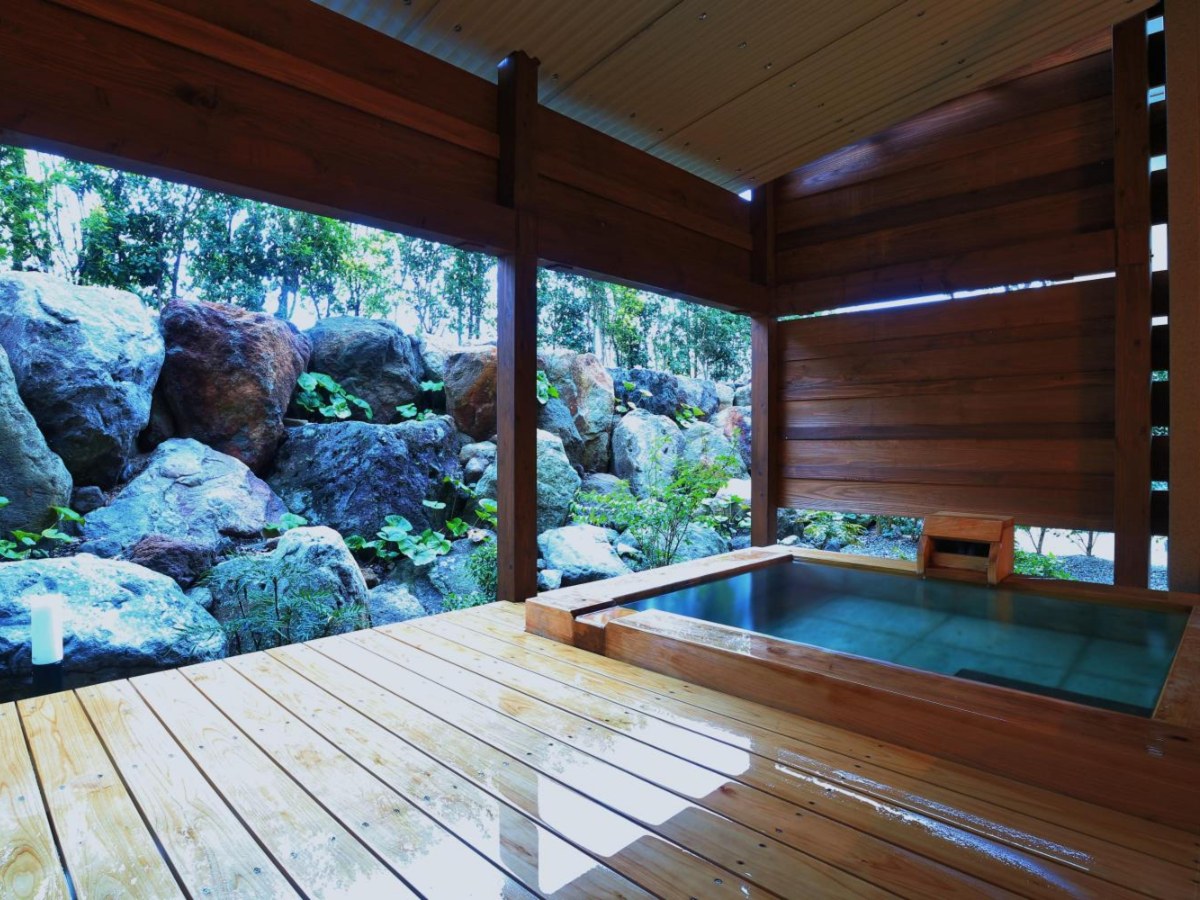
1. AMANE RESORT GAHAMA
Rating: ⭐⭐⭐⭐⭐
Location: 5-minute drive to JR Beppu Station; Shoningahama coast
Highlights: In-room hot spring baths, ocean-view tower rooms, club lounge afternoon tea and cocktail hour, kappou Japanese dinner, breakfast buffet
Best Room: Maisonette with Open-Air Bath and Sea View
Good to Know: Breakfast is at sister hotel SEIKAI, a five-minute walk or a short cart ride.
From USD $390 – $655 per night
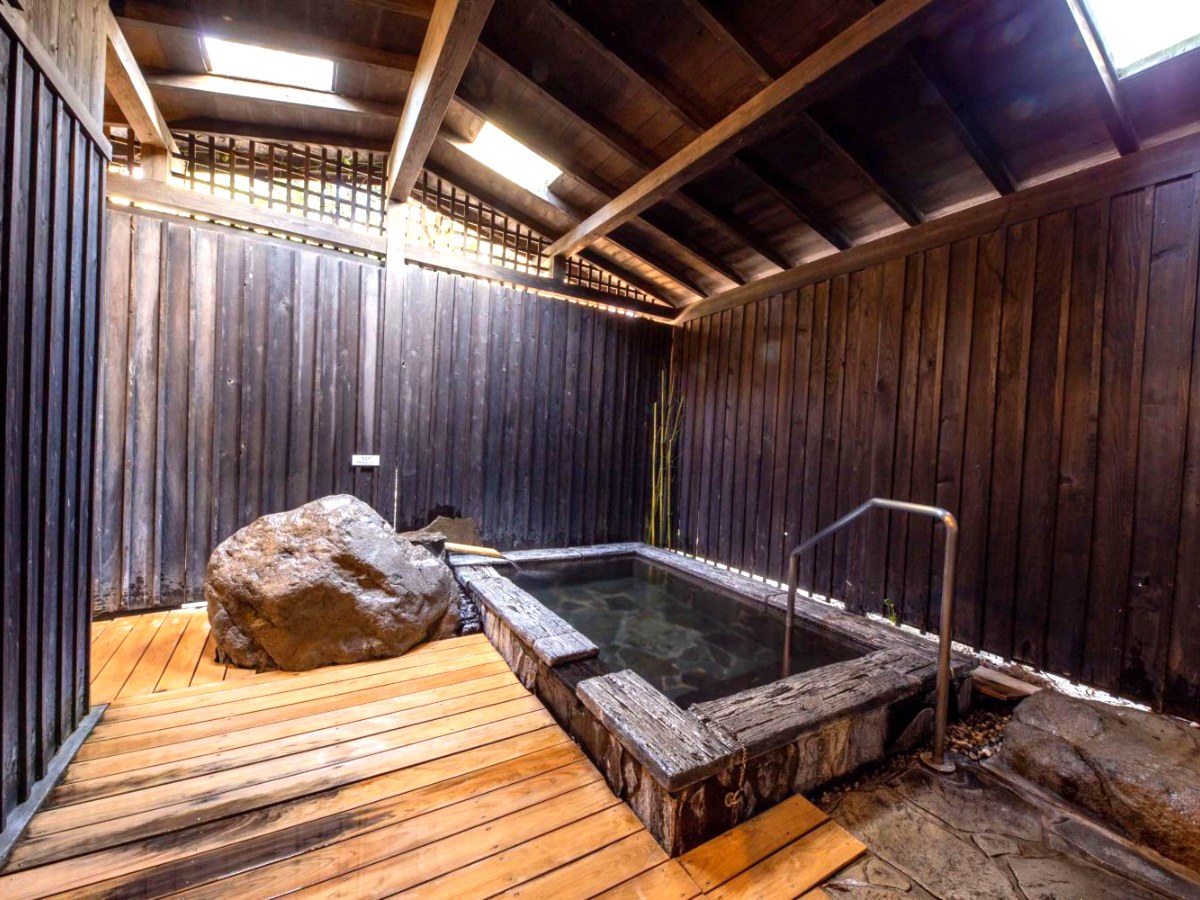
Spring Bath in All 12 Rooms
2. Beppu Nagomitsuki
Rating: ⭐⭐⭐
Location: 6-minute drive to JR Beppu Station; Shoningahama coast
Highlights: Japanese garden, Seki aji and Seki saba sashimi, Oita wagyu shabu-shabu, rock bath in the annex room
Best Room: Deluxe Twin Room with Tatami Area with Semi Open-Air Bath – Annex
Good to Know: Book the free Beppu Station shuttle by the evening before you arrive.
From USD $135 – $440 per night
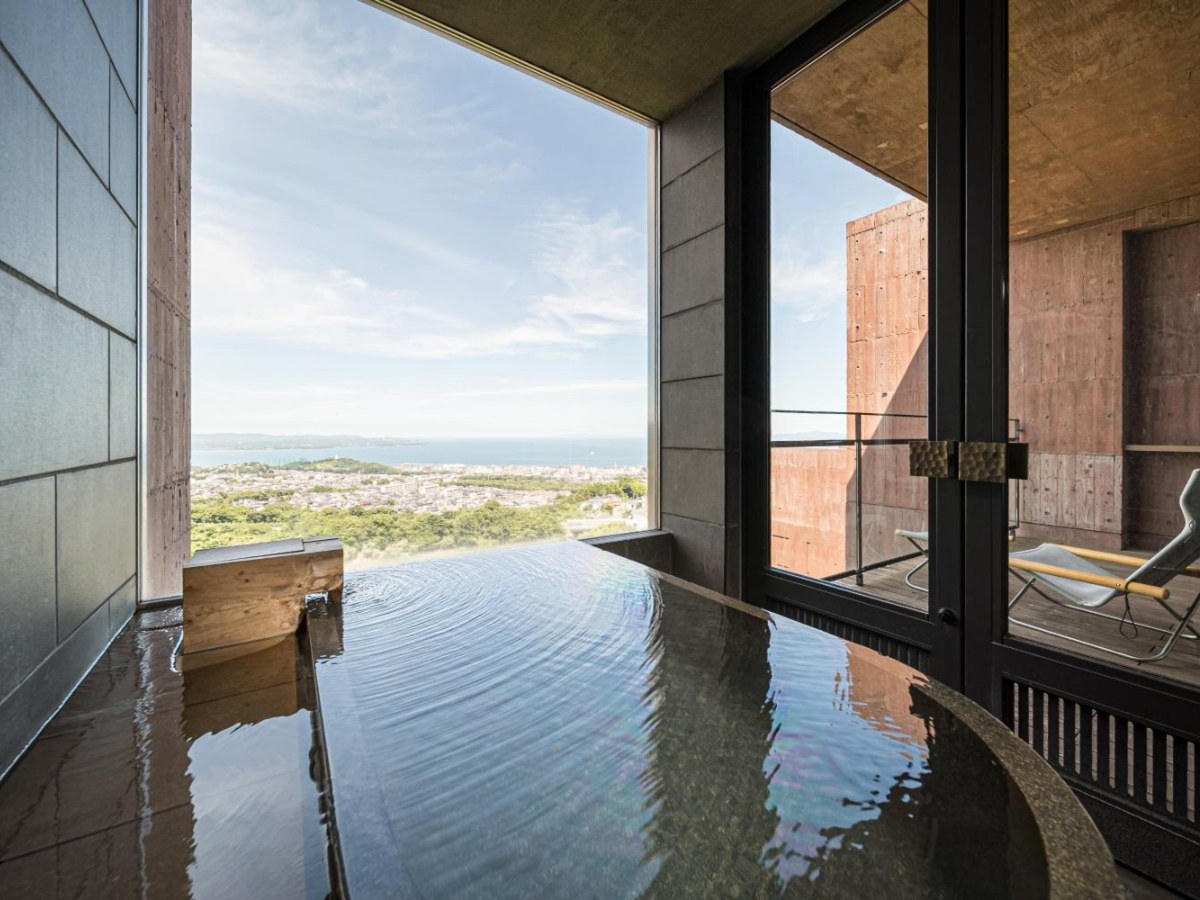
Contemporary Art Hotel
3. SEKIYA RESORT Galleria Midobaru
Rating: ⭐⭐⭐⭐
Location: 8-minute drive to JR Beppu Station; Horita hills
Highlights: Semi-open-air Horita spring baths, Beppu Bay views, wagyu steak at THE PEAK, HOTSPRING BAR
Best Room: GALLERIA King Room (5F) with Semi Open-Air Bath (47㎡) Non-Smoking
Good to Know: Kaiseki dinner is served at sister Terrace Midoubaru, a steep three-to-five-minute walk.
From USD $300 – $750 per night
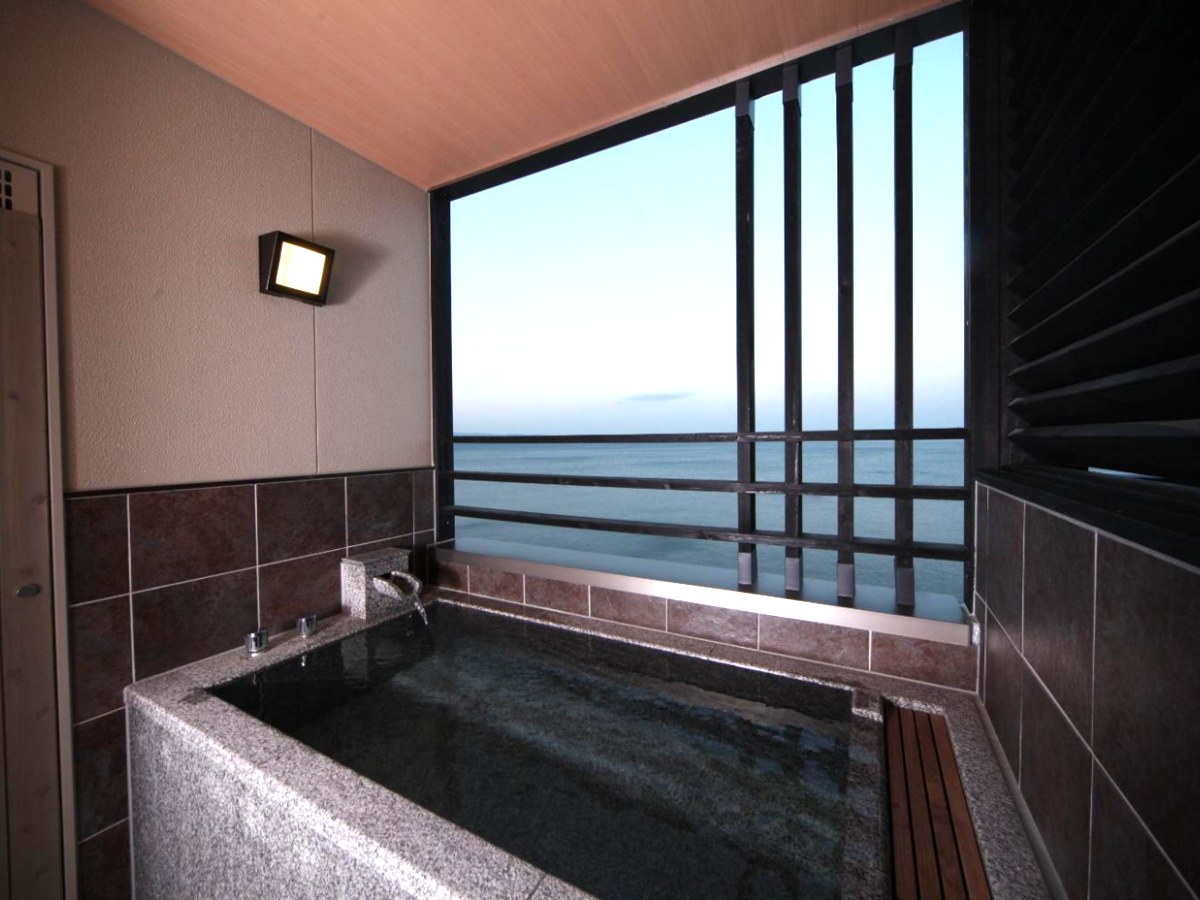
Sea-View Onsen in Every Room
4. AMANE RESORT SEIKAI
Rating: ⭐⭐⭐⭐⭐
Location: 5-minute drive to JR Beppu Station; Shoningahama coast
Highlights: Sunrise over Beppu Bay, sea-level public bath, seawater bath, sauna, rooftop bath, private-room kaiseki, Japanese-Western breakfast buffet
Best Room: Luxury Suite with Open-Air Bath
Good to Know: Ride the train to Beppudaigaku Station, not Beppu Station; it’s the one within walking distance.
From USD $340 – $575 per night
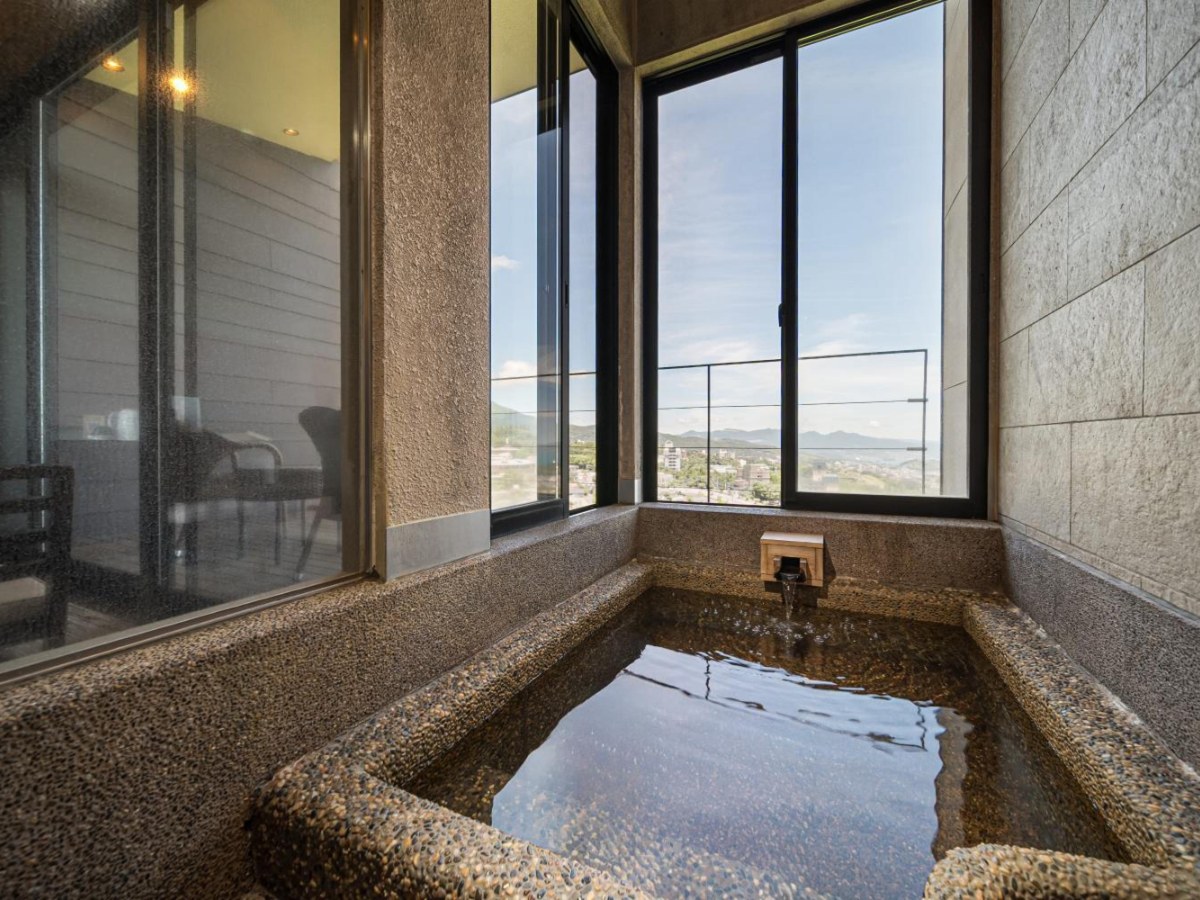
Sulfur Spring Bath in Every Room
5. SEKIYA RESORT Terrace Midoubaru
Rating: ⭐⭐⭐
Location: 8-minute drive to JR Beppu Station; Horita hills
Highlights: Beppu Bay view, private terrace, creative kaiseki dinner, Japanese breakfast, sulfur-spring public baths
Best Room: Twin Room with Tatami Area and Semi Open-Air Bath 2nd Floor
Good to Know: Driving December to February? Carry snow chains for the icy hill road.
From USD $235 – $365 per night
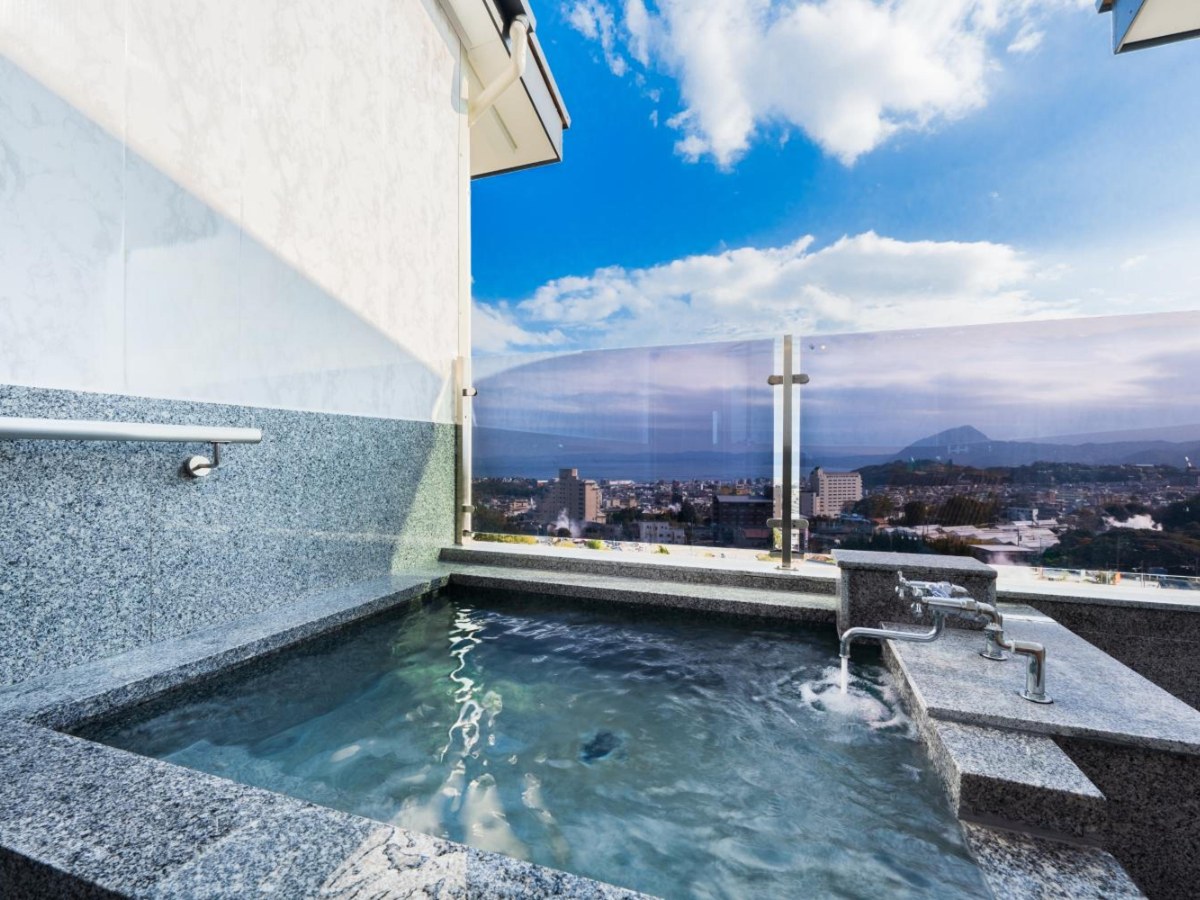
Two On-Site Hot Spring Sources
6. Sanso Kannawaen
Rating: ⭐⭐⭐⭐
Location: 8-minute drive to JR Beppu Station; Kannawa
Highlights: Noh theatre, thatched-roof tea house, blue hot spring water, Kannawa steam bath, Kuroge wagyu teppanyaki, Ise lobster kaiseki, garden ponds with waterfalls
Best Room: [Sora] Western-Style Room with Tatami Area with Indoor Bath and Open-Air Bath
Good to Know: Sora rooms serve a teppanyaki breakfast; ask two days ahead for a Japanese one.
From USD $440 – $840 per night
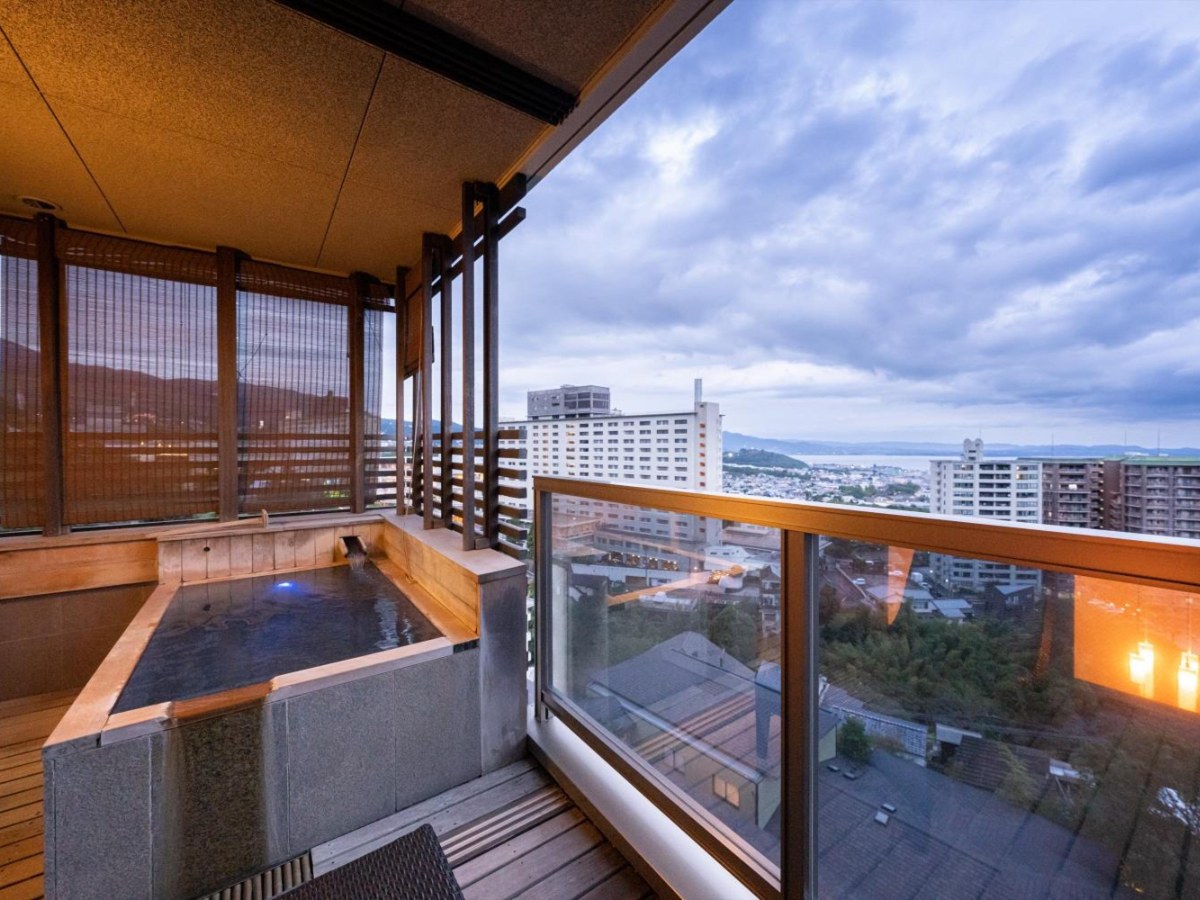
Four Private-Hire Spring Baths
7. Ryotei Matsubaya
Rating: ⭐⭐⭐⭐
Location: 6-minute drive to JR Beppu Station; Kankaiji
Highlights: Yakushi no Yu bath, Tsuki no Sou club lounge drinks, Bungo Channel seafood kaiseki, Beppu Bay views
Best Room: Room with Tatami Area and Open-Air Bath – Annex
Good to Know: Book an Annex room: that’s the Tsuki no Sou wing with the in-room spring baths.
From USD $230 – $325 per night
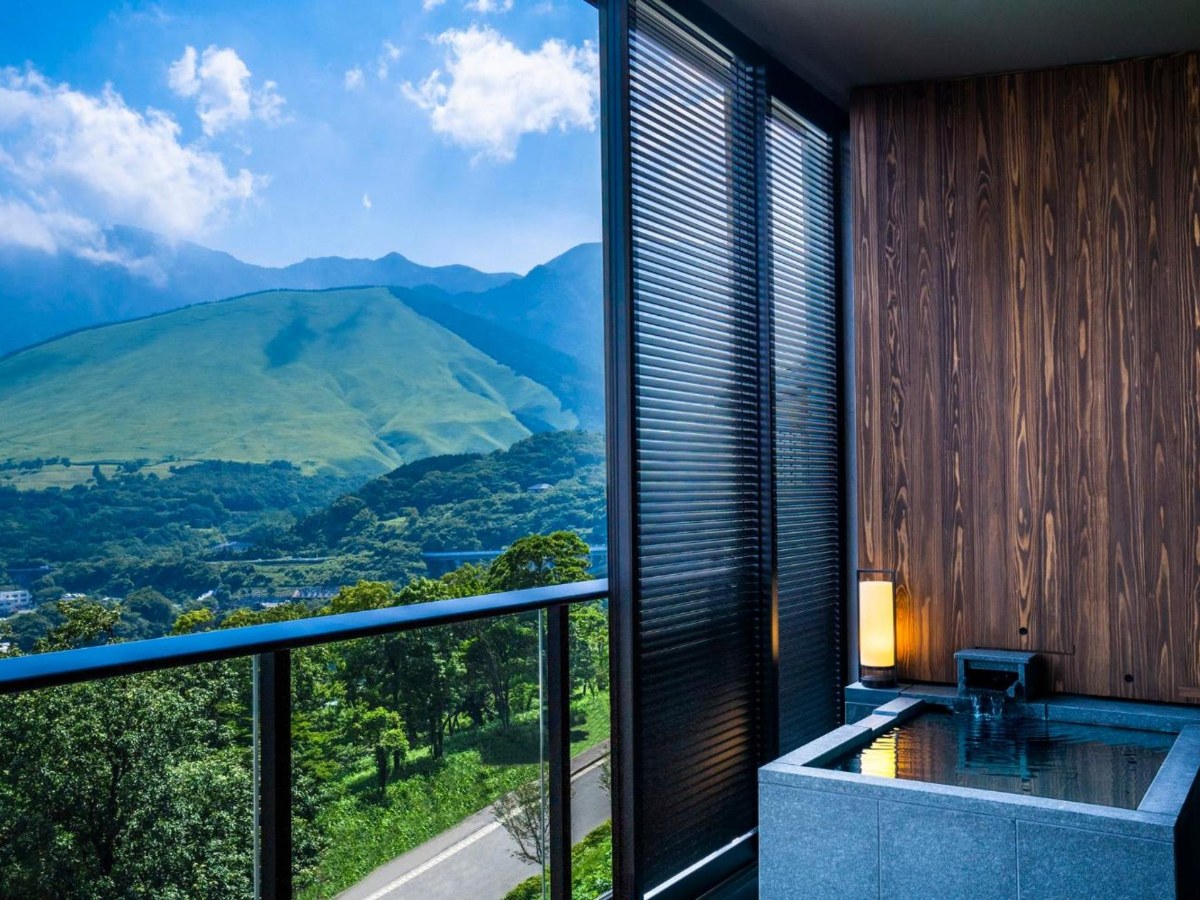
Hilltop Infinity Pool
8. ANA InterContinental Beppu Resort & Spa
Rating: ⭐⭐⭐⭐⭐
Location: 12-minute drive to JR Beppu Station; Kannawa hills
Highlights: Beppu Bay views, hot spring steam views, Beppu-stone open-air onsen, French dinners at Atelier, semi-buffet breakfast, club lounge drinks
Best Room: Club InterContinental Twin
Good to Know: Book Atelier for dinner ahead; the hilltop is a taxi ride from town.
From USD $490 – $950 per night
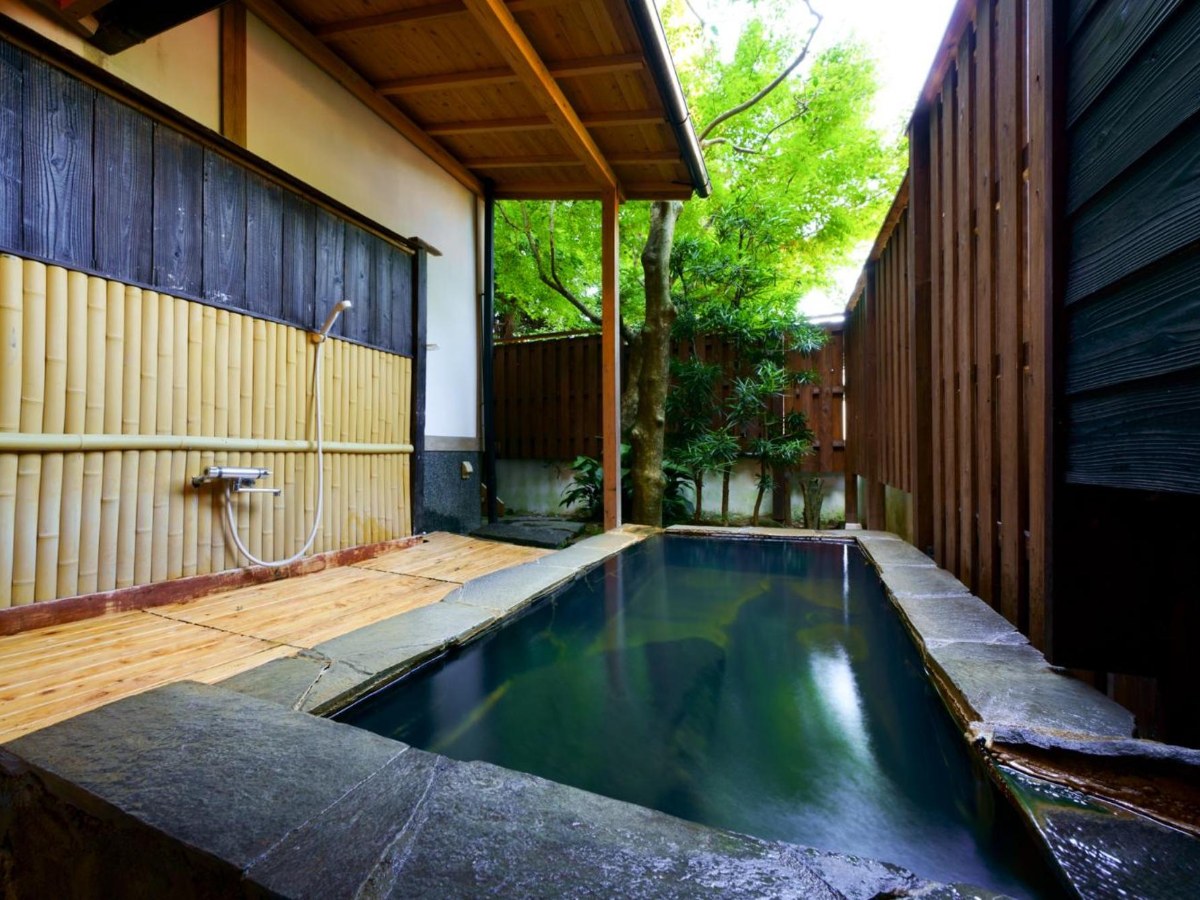
Detached Villas in Forest Grounds
9. Beppu Showaen
Rating: ⭐⭐⭐⭐⭐
Location: 6-minute drive to JR Beppu Station; Otobaru hills
Highlights: Rock open-air hot spring bath, waterfall sound from the terrace, kaiseki dinner, men’s and women’s open-air baths, Japanese garden grounds
Best Room: Superior Japanese-Style House – Annex with Open-Air Bath
Good to Know: The forest brings mosquitoes in warm months; pack repellent for the open-air bath.
From USD $295 – $505 per night
How to Tell a Real Hot Spring Bath in a Beppu Room
Here’s how to check the water before you book any Beppu room.
- Look for the Posted Notice: Japan’s Hot Spring Act makes every bath using spring water post a notice if water is added, heated, recirculated, dosed or disinfected. A notice listing none of these means untreated spring water.
- What Kakenagashi Means: Gensen kakenagashi is spring water flowing into the tub and overflowing without being recirculated. Notices go up bath by bath, so a free-flowing public bath doesn’t prove the room bath gets the same water.
- Free-Flowing, With Water Added? Both appear together. Ryotei Matsubaya lists its baths as free-flowing with water added only to cool them, and SEKIYA RESORT Galleria Midobaru lists its room baths as 100% spring water with water added.
- Room Bath or Bookable Bath: A bookable private bath is a shared bath reserved for a slot of 40 to 60 minutes. A bath in your room or on its terrace is yours at any hour, with no booking.
- Open-Air or Semi-Open-Air? Semi-open-air baths have a roof and walls but open to the view and the outside air. Open-air baths sit right outside on a terrace or in a garden.
Want the purest water? Ask for a room bath with no water added, then check the notice by the tub when you arrive.
Which Area of Beppu to Stay In for an Onsen Room
Beppu spreads from the bay up the slopes of Mt Tsurumi, and each area feels different.
- Kannawa: Kannawa holds most of Beppu’s hot spring sources, and steam rises from its streets. Five of the seven Hells are within walking distance, and buses from JR Beppu Station take 15 to 20 minutes.
- Shoningahama Coast: This stretch of the Kamegawa coast north of the centre faces Beppu Bay. Kamegawa is one of Beppu’s eight hot spring areas and is known for its sand baths.
- Kankaiji: Kankaiji sits on slopes above the Asami River, with views over the city and the bay. It has been a spa town for centuries and lies about 3.5 kilometres from JR Beppu Station.
- Horita and Myoban Hills: Horita sits about 5 kilometres up the slopes of Mt Tsurumi on the road to Yufuin, with sulfur springs. Myoban, further up, has milky sulfur water.
- Why Stay Near the Station? Beppu Station and Kitahama are the flat, walkable centre. The town’s old public bathhouses and most of its restaurants are close by.
First visit? I’d sleep in Kannawa or on the coast, and take the bus up to the hills for a day.
The Beppu Hells and Jigoku-Mushi Steam Cooking
The Hells are Beppu’s showpiece: hot springs to look at, not to bathe in.
- Seven Hells, Two Areas: The Hells run close to 100°C. Five sit in Kannawa (Umi, Oniishibozu, Shiraike, Kamado and Oniyama) and two in Shibaseki (Chinoike and Tatsumaki).
- Places of Scenic Beauty: Umi, Chinoike, Tatsumaki and Shiraike are designated National Places of Scenic Beauty. Umi is the cobalt-blue one.
- Cook Lunch in the Steam: At Jigoku Mushi Kobo Kannawa you rent a steam oven and buy sets of local vegetables, seafood or chicken. Staff tell you how long each needs, and the food picks up a slight saltiness from the steam.
Staying in Kannawa? Walk the five Hells in the morning, then steam your lunch.
How to Get to Beppu by Train, Plane and Ferry
Beppu is on Kyushu’s east coast, a short hop from Oita Airport.
- Train From Hakata: The JR limited express Sonic runs from Hakata to Beppu Station in about 2 hours to 2 hours 15 minutes. From the station, buses fan out to Kannawa and the coast.
- From Oita Airport: Airport buses take 45 minutes to an hour into Beppu. Most stop at Beppu Kitahama, near the station.
- Overnight Ferry From Osaka: Ferry Sunflower sails overnight from Osaka to Beppu. Its Kobe route lands at Oita, not Beppu, so check the port on your ticket.
Coming from Fukuoka? I’d take the Sonic and a taxi to the hotel.
Best Time to Visit Beppu for Hot Springs
Beppu is a year-round onsen town, but the season changes the steam and the crowds.
- Winter Steam: The steam rises thickest on cold mornings, when Kannawa’s vents and the hillsides show it most. Mt Tsurumi above town shows rime ice in winter.
- Busiest Months: Oita’s hotel figures put March, August and November at the top of the year. Book those months well ahead.
- Quietest Months: June is the lowest month of the year for hotel stays. Hotels have the most rooms free then.
Want the steam without the crowds? Book a weeknight in January or February.
Beppu Public Baths Worth Leaving Your Room For
A room bath is the point, but a few town baths are part of the Beppu trip.
- Takegawara Onsen: This wooden bathhouse with a curved karahafu roof is a 10-minute walk from JR Beppu Station. Its sand bath runs in the same building.
- Sand Bath on the Beach: Beppu Kaihin Sunayu at Shoningahama is the city-run beach sand bath, with indoor baths to rinse off afterwards. It sits in Shoningahama Park, facing the bay.
- Hyotan Onsen in Kannawa: Hyotan Onsen has been bathing visitors for about a century. It adds a sand bath and bookable family baths.
One town bath only? Make it Takegawara, then walk back through Kitahama.
Ready to book? Per night from
FAQs
1. How long does it take to see all seven Beppu Hells?
Plan on two to three hours. The five Kannawa Hells are about five minutes’ walk apart, so they fit easily into a morning. Chinoike and Tatsumaki sit in Shibaseki, a short bus or car ride away. Tatsumaki is a geyser that erupts every 30 to 40 minutes, so time your visit around it.
2. What is a Beppu sand bath like?
Hot and heavy, in a good way. You change into a yukata, lie down on sand warmed by spring water, and staff cover you with it up to the neck. A session runs about 15 minutes and you sweat as if in a sauna. Afterwards you rinse off in the bath next door.
3. Do you need a car to get around Beppu?
No, buses reach almost everywhere you’ll want to go. Kamenoi Bus covers most of Beppu, including Kannawa and the Hells, and the ride from Beppu Station to Kannawa takes 15 to 20 minutes. A car or taxi helps mostly for the hillside hotels in Horita. A taxi from JR Beppu Station is the easy way up with bags.
4. What is the Beppu Hatto Onsen Festival?
It’s Beppu’s own hot spring festival, held every April across the eight onsen areas. Bathhouses join in with free or discounted entry, so it’s a good week to bath-hop. The event has run more than a hundred times. Book rooms early if your dates overlap, since it falls in cherry blossom season.
5. What is the Beppu Onsendo challenge?
Onsendo is Beppu’s hot spring stamp pilgrimage across the eight onsen areas. You buy a small stamp book called the Spa Port, bathe at participating baths and stamp each one. Every eight stamps earns a rank and a coloured towel, and 88 different baths earns the title Onsen Meijin. Neighbourhood baths, ryokan and the sand baths all count.
6. What is yunohana and where is it made in Beppu?
Yunohana are mineral crystals from the hot springs, sold as bath salts. Myoban makes them in thatched huts, and the national government protects the making technique as part of Japan’s folk heritage. The huts are free to visit, and a shop beside them sells the salts. Myoban is about ten minutes uphill by bus from Kannawa.
7. What are Beppu’s eight hot spring areas?
They’re known together as Beppu Hatto: Hamawaki, Beppu, Kankaiji, Horita, Kannawa, Myoban, Shibaseki and Kamegawa. Between them they hold more than 2,000 hot spring sources. Seven of the ten spring types recognised by Japan’s government turn up in Beppu, from simple springs to sulfur and iron. Each area’s water feels different, so a second night in another area is worth it, or compare onsen hotels across Japan.