
Kyoto isn’t an onsen town, so check the water before you book. A big shared bath on a hotel’s facilities list doesn’t make it an onsen, because some are filled with heated tap water. A real one draws hot spring water, which in this city is pumped up from deep wells or trucked in from Joyo, elsewhere in Kyoto Prefecture. Most baths split men and women. Here’s where I’d book for a soak after a day of temples.
Quick answer: Book Onyado Nono Kyoto Shichijo Natural Hot Spring. Its onsen has single-person soaking tubs and a sauna on each side.
At a glance, per night from
Table of Contents
Kyoto Hotels with an Onsen
Tatami Floors Throughout
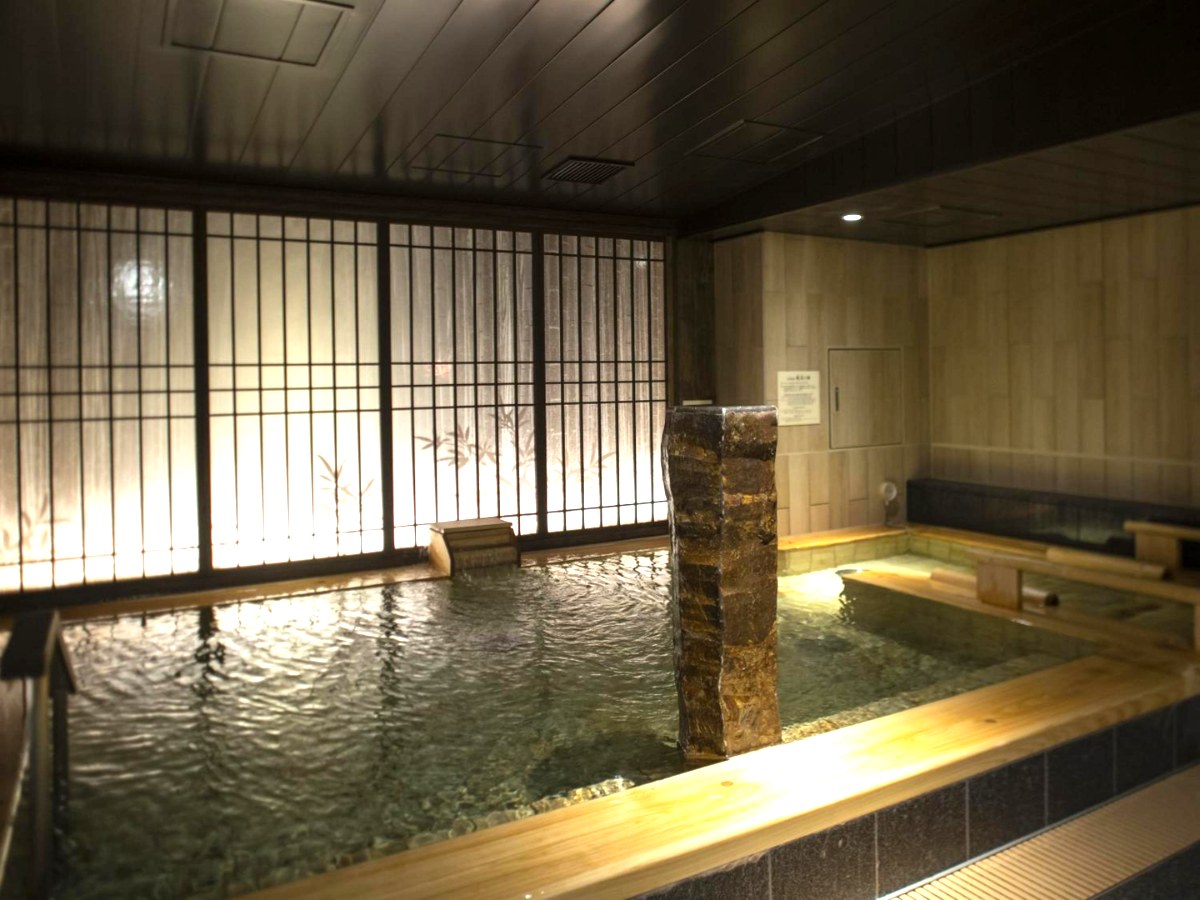
1. Onyado Nono Kyoto Shichijo Natural Hot Spring
Rating: ⭐⭐⭐⭐
Location: 5-minute walk to Kyoto Station
Guest Reviews: An amazing onsen in a well-organised hotel.
Best Room: Hollywood Twin Room with Tatami Floor
Good to Know: Hot spring water fills the indoor tubs; the semi-open-air bath is heated water.
From USD $125 – $280 per night
2. ALA Hotel Kyoto
Rating: ⭐⭐⭐⭐
Location: 4-minute walk to Kyoto Station
Guest Reviews: Rooms are spacious and very clean.
Best Room: Twin Room with View
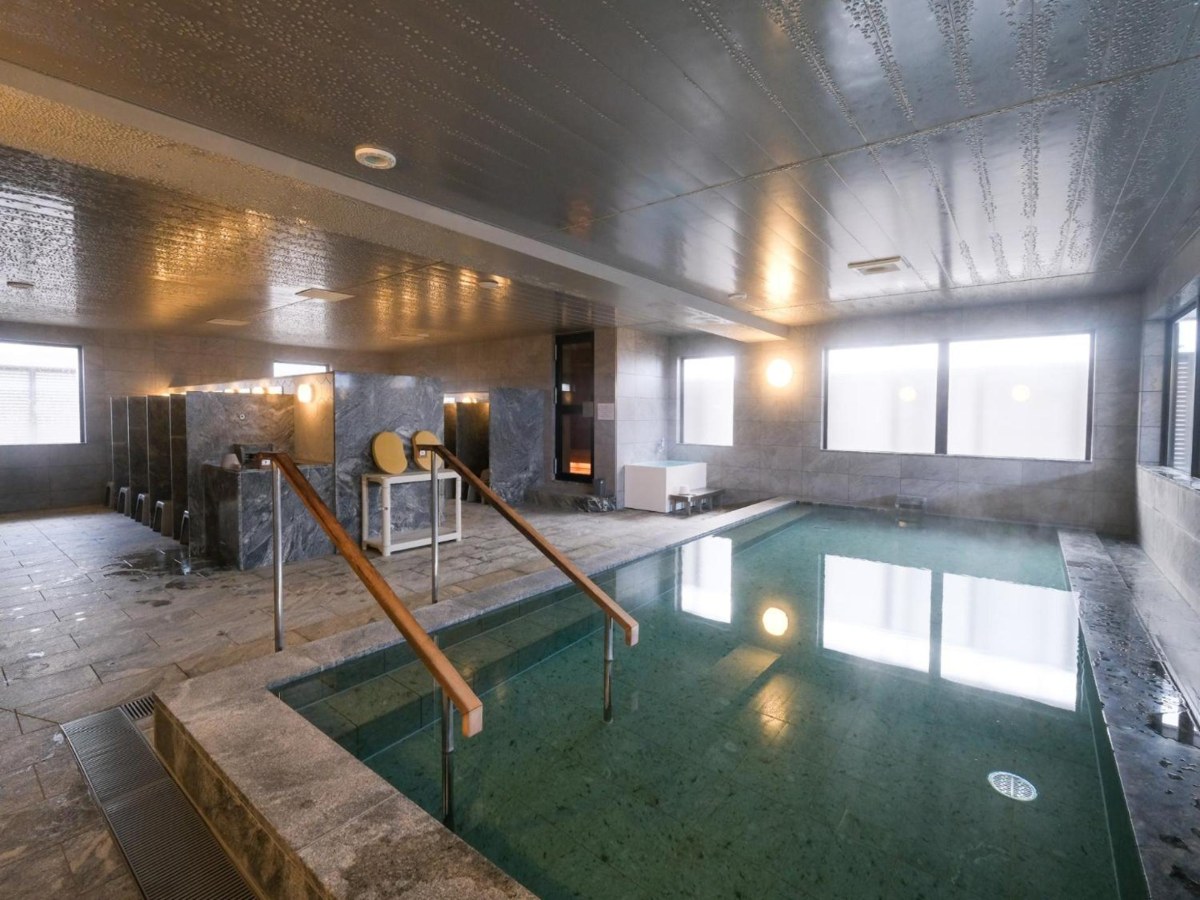
Good to Know: The hot spring water is in the open-air tub; the indoor bath is heated water.
From USD $130 – $400 per night
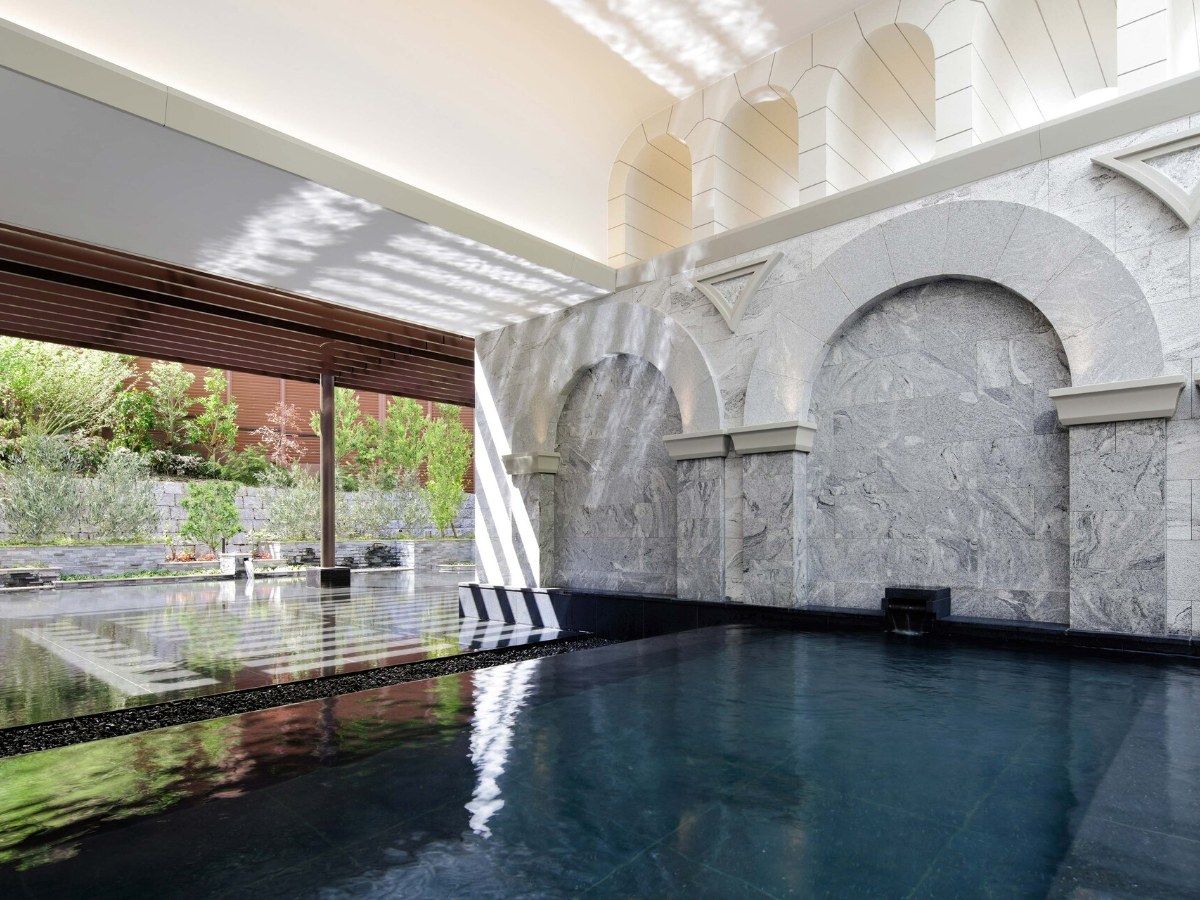
Keage Onsen Spring on the Grounds
3. The Westin Miyako Kyoto
Rating: ⭐⭐⭐⭐⭐
Location: 18-minute drive to Kyoto Station, in Higashiyama
Guest Reviews: Comfortable beds, an excellent breakfast buffet and amazing Japanese gardens.
Best Room: Junior King Suite – Club Lounge Access
Good to Know: The semi-outdoor bath looks over gardens rising to Mount Kacho.
From USD $540 – $1,675 per night
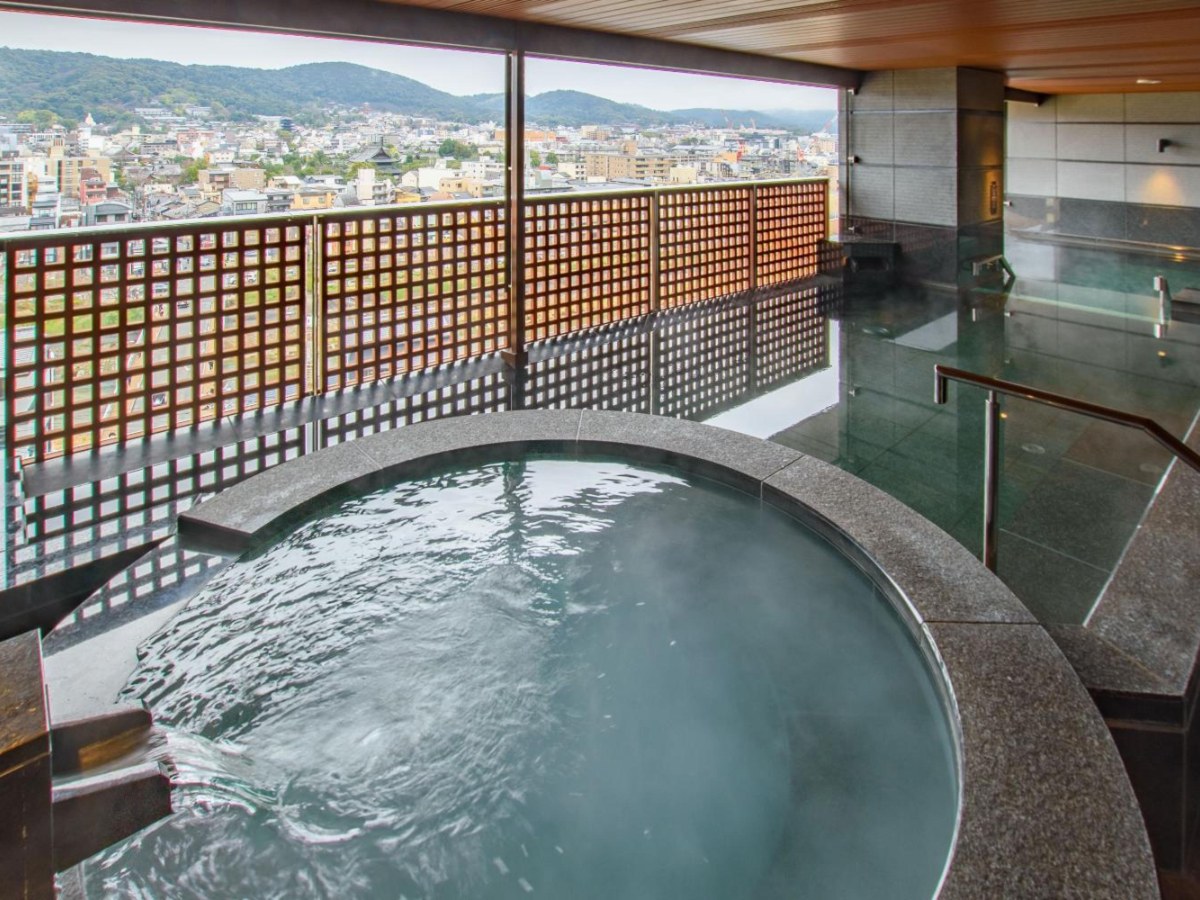
Rooftop Hot Spring Foot Bath
4. Sora Niwa Terrace Kyoto
Rating: ⭐⭐⭐⭐
Location: 11-minute drive to Kyoto Station, in downtown Kawaramachi
Guest Reviews: Excellent onsen baths, and the rooftop bar is superb.
Best Room: Superior Double Room
Good to Know: Two baths swap between men and women daily, so two nights covers both.
From USD $235 – $675 per night
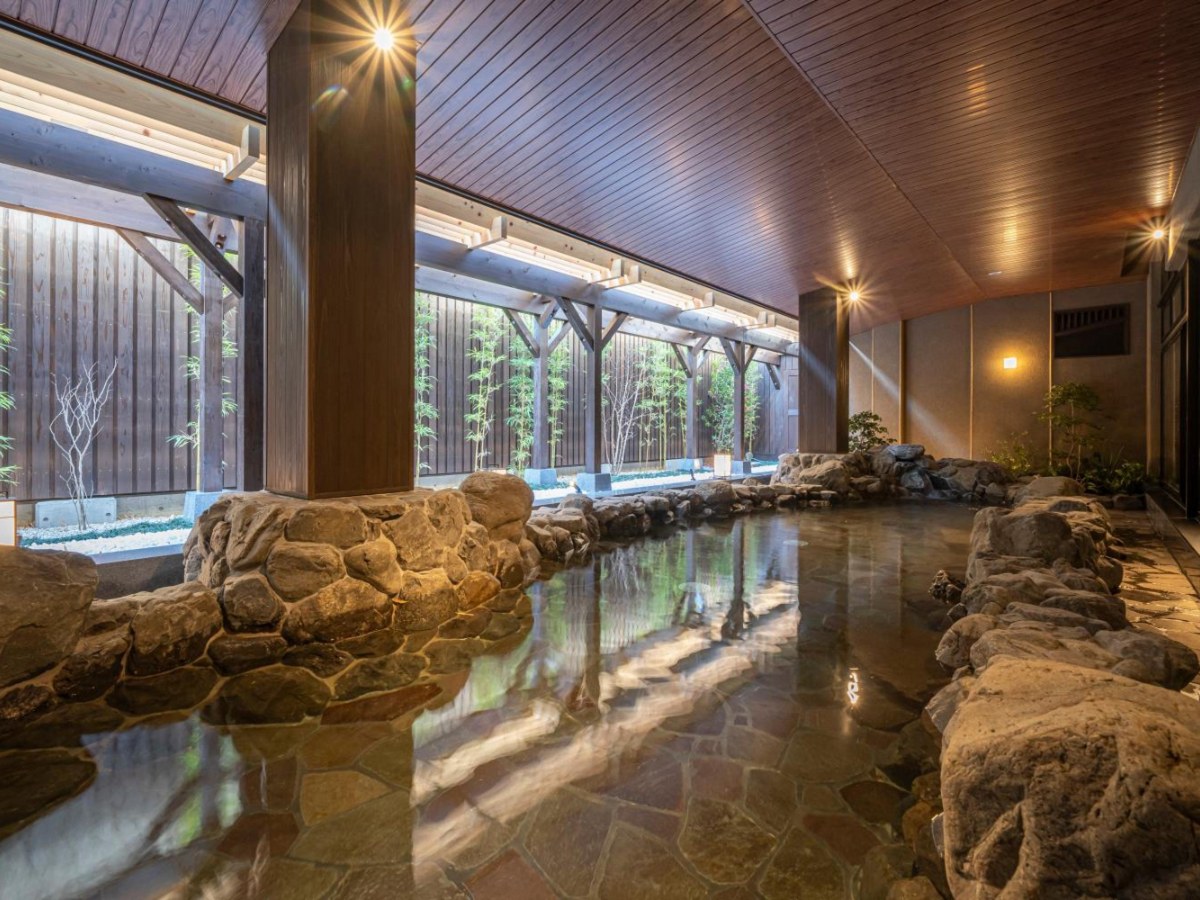
Five Private Open-Air Baths
5. Kyoto Umekoji Kadensho
Rating: ⭐⭐⭐⭐⭐
Location: 9-minute drive to Kyoto Station, in Umekoji
Guest Reviews: Lovely onsens, plus a great breakfast in the morning.
Best Room: Deluxe Twin Room
Good to Know: Two of the private baths, Tarukyo and Sekishin, carry the hot spring water.
From USD $180 – $540 per night
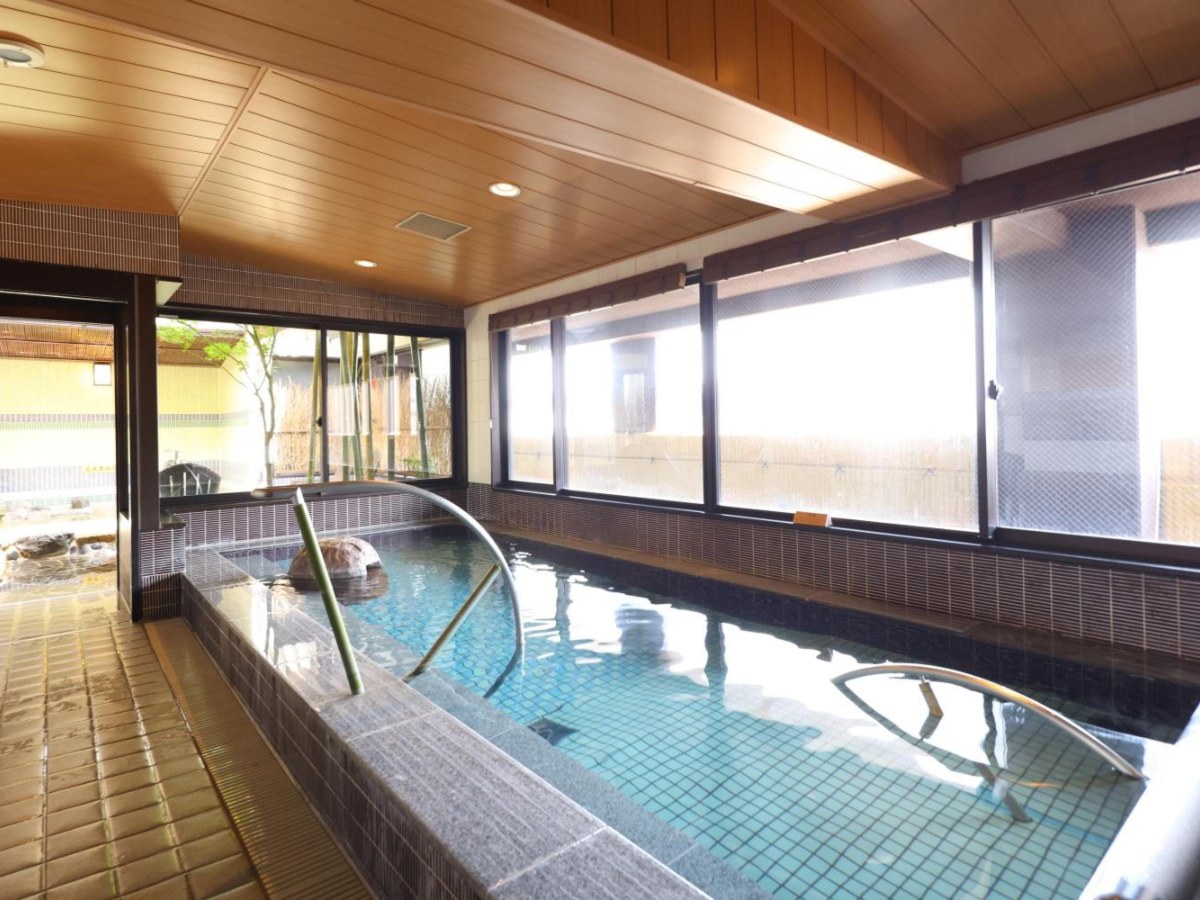
Auto-Loyly Sauna
6. Dormy Inn Premium Kyoto Ekimae Natural Hot Spring
Rating: ⭐⭐⭐⭐
Location: 2-minute walk to Kyoto Station
Guest Reviews: Breakfast was excellent, and the onsen fantastic.
Best Room: Twin Room – Non-Smoking
Good to Know: The hot spring bath is on the top floor, with a jar tub.
From USD $110 – $405 per night
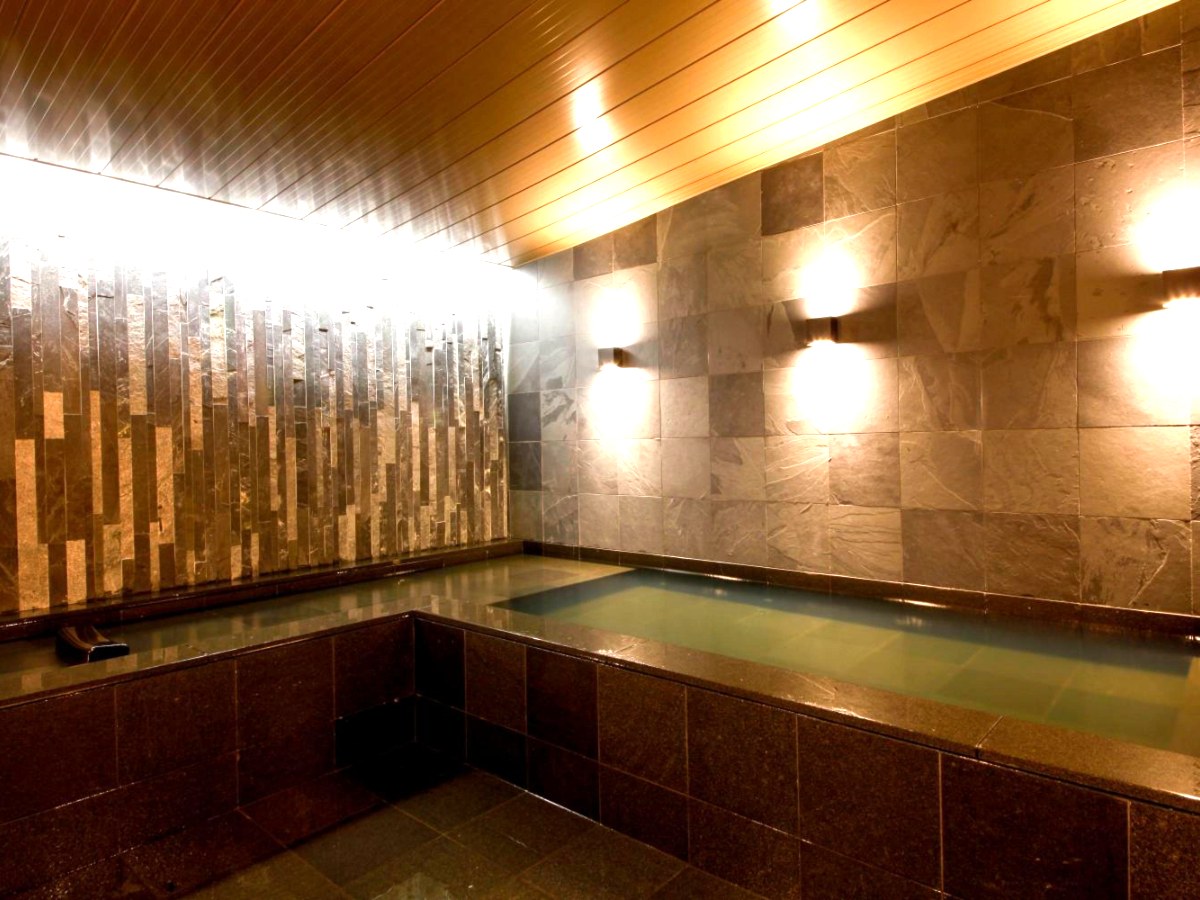
Own Spring From 910 Metres Down
7. Kyoto Hot Spring Hatoya Zuihokaku Hotel
Rating: ⭐⭐⭐⭐
Location: 6-minute walk to Kyoto Station
Guest Reviews: Lovely to have an onsen on site, with clean rooms to come back to.
Best Room: Twin Room with Tatami Area
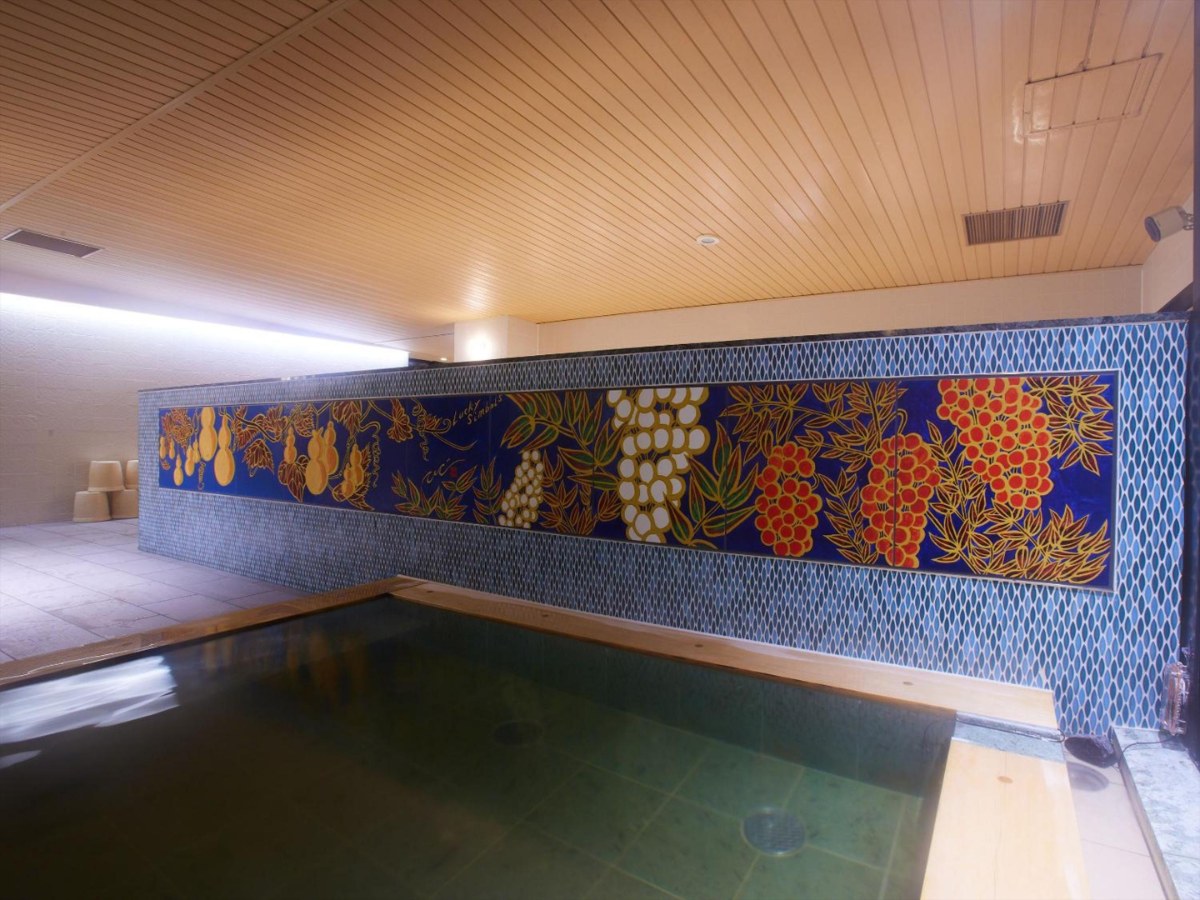
Good to Know: A Hideki Kimura mural runs along the wall of the rock bath.
From USD $225 – $340 per night
Beside Togetsukyo Bridge
8. Kyoto Arashiyama Onsen Ryokan Togetsutei
Rating: ⭐⭐⭐⭐
Location: 34-minute drive to Kyoto Station, in Arashiyama
Guest Reviews: Dinner was amazing, served by very helpful staff.
Best Room: Junior Suite
Good to Know: The shared hot spring bath is in the Shuzankaku building; Hekisenkaku guests use it too.
From USD $550 – $690 per night
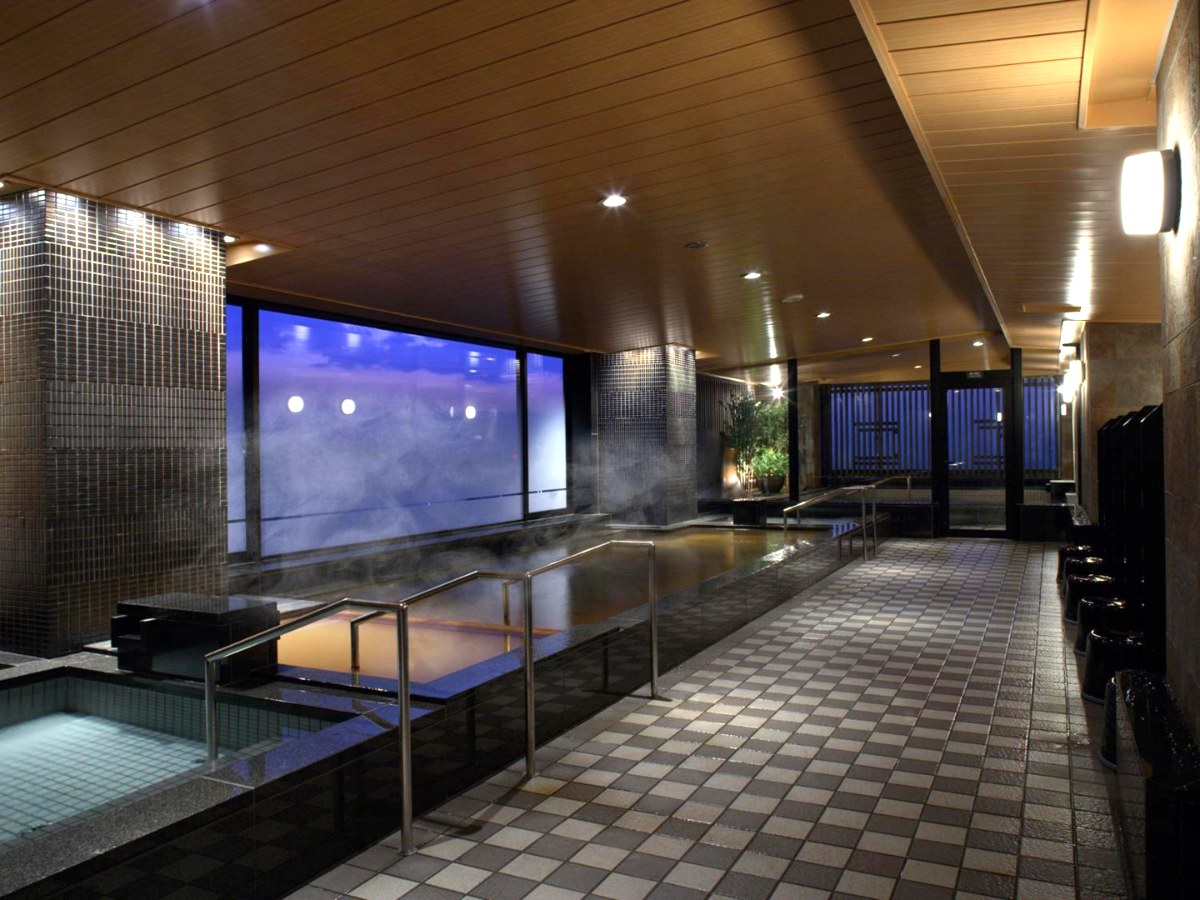
13th-Floor Open-Air Hot Spring Bath
9. Hotel Monterey Kyoto
Rating: ⭐⭐⭐⭐
Location: 15-minute drive to Kyoto Station, in downtown Karasuma
Guest Reviews: An extremely good breakfast to start the day.
Best Room: Superior Twin Room – Non-Smoking
Good to Know: Dry sauna on the men’s side, mist sauna on the women’s.
From USD $185 – $415 per night
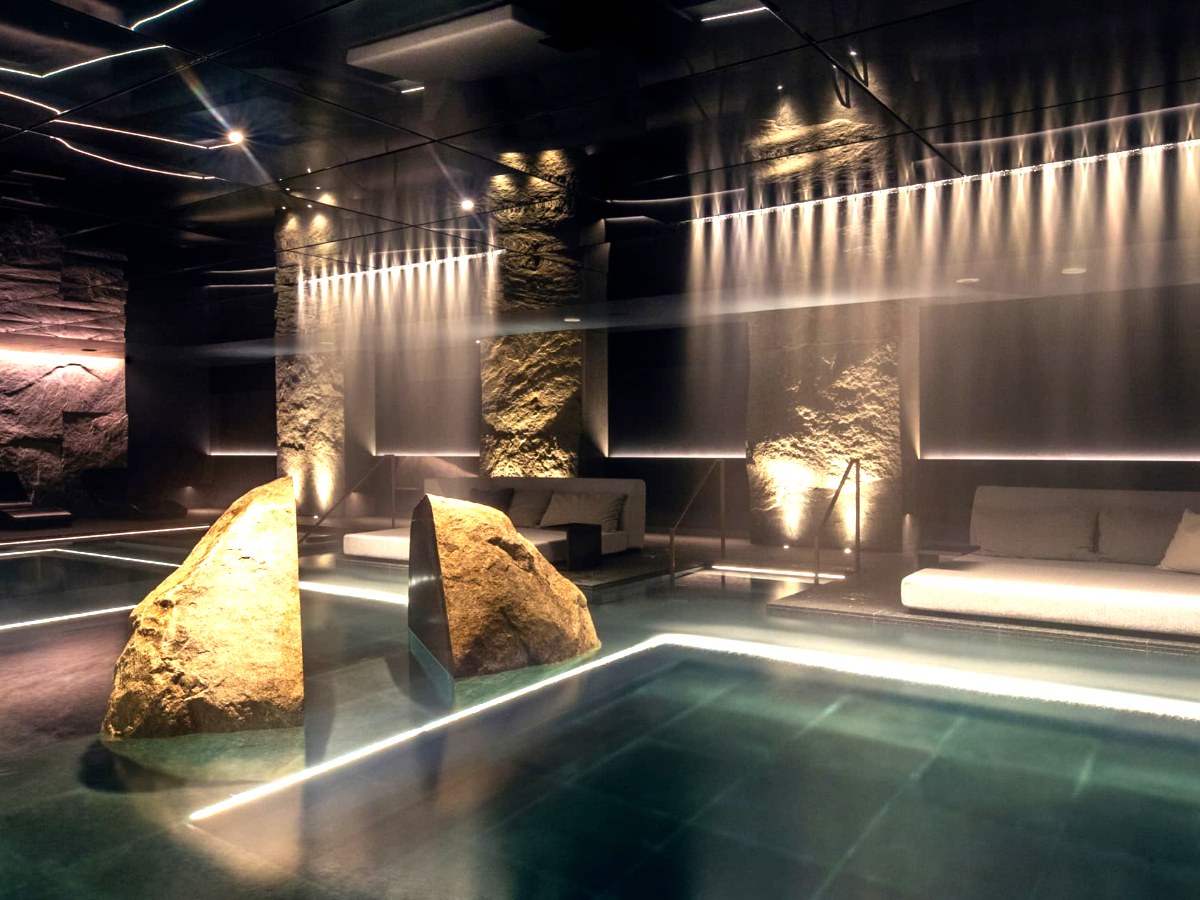
Mixed Swimwear Thermal Spring
10. Hotel The Mitsui Kyoto, a Luxury Collection Hotel & Spa
Rating: ⭐⭐⭐⭐⭐
Location: 17-minute drive to Kyoto Station, by Nijo Castle
Best Room: Deluxe Suite (King)
Good to Know: The private onsen has its own Japanese garden and a wet lounge beside the tub.
From USD $1,175 – $4,595 per night
How to Tell a Real Onsen From a Public Bath
Japan’s Onsen Law decides what counts, and a hotel’s bath either draws licensed hot spring water or it doesn’t. The words on the hotel’s bath page tell you which.
- Onsen Means Spring Water: An onsen is a bath filled with hot spring water. A sento, or plain public bath, is filled with tap water heated by a boiler, and from the changing room the two look the same. Read the bath page for the words natural hot spring before you count on it.
- Kyoto City Keeps a List: The city’s onsen tourism council lists some twenty hotels, ryokan and minshuku whose baths meet the Onsen Law. Downtown, the Kyoto Station area, Higashiyama and Arashiyama all appear on it. It isn’t complete, so the hotel’s own bath page is the second place to look.
- Names Only Go So Far: Some hotels put it in the name: Natural Hot Spring or Onsen. Large bath and public bath on their own promise nothing about the water.
- Bathing Tax on the Bill: Licensed hot spring baths in Kyoto carry a small city bathing tax per adult per night. Sento and plain public baths are exempt, so the tax line is a clue to the water.
Before you pay for an onsen hotel, I’d read its own bath page first.
Where the Hot Spring Water Comes From
Most of Kyoto’s hotel springs reach the tub one of two ways: up from a well under the building, or by road from a spring elsewhere in the prefecture.
- Wells Under the Hotel: The source at Hotel The Mitsui Kyoto, a Luxury Collection Hotel & Spa lies some 1,000 metres under the hotel. Hotel Monterey Kyoto draws from its own well of the same depth.
- Tankers From Joyo: Onyado Nono Kyoto Shichijo Natural Hot Spring and Dormy Inn Premium Kyoto Ekimae Natural Hot Spring bring natural spring water by road from Joyo, a city elsewhere in Kyoto Prefecture. Kyoto Umekoji Kadensho uses the same Joyo spring. The water is licensed hot spring water, carried in by tanker.
- Arashiyama’s Own Spring: Arashiyama Onsen is a young spring, licensed this century. Kyoto Arashiyama Onsen Ryokan Togetsutei fills its large bath with it.
- Heated and Recirculated: At Hotel Monterey Kyoto the spring water is diluted, heated and filtered in a loop, and the hotel says so on its spa page. If you want free-flowing water straight from the source, ask the hotel before you book.
For water straight from under the building, I’d pick a hotel with its own well.
Every hotel sets its own rule. These are the ones the hotels state themselves.
- Refused Outright: The Westin Miyako Kyoto and Hotel Monterey Kyoto refuse bathers with tattoos. Kyoto Hot Spring Hatoya Zuihokaku Hotel asks tattooed guests to stay out of its baths.
- Small Tattoos Under a Sticker: Onyado Nono Kyoto Shichijo Natural Hot Spring refuses tattoos too, with one way through: a cover sticker of 8 by 10 centimetres hides a small one. Dormy Inn Premium Kyoto Ekimae Natural Hot Spring allows two stickers at most.
- Judged on Size: Sora Niwa Terrace Kyoto decides by how large and how visible the tattoo is. Ask at the front desk before you undress, because the answer comes from the staff on the day.
- Private Baths Instead: Whatever the size, Kyoto Umekoji Kadensho keeps tattoos out of its large bath. Kyoto Arashiyama Onsen Ryokan Togetsutei refuses tattoos in its shared bath too, and its paid private bath is the way in. That’s the practical route at any hotel that has one.
With a large tattoo, I’d book a hotel with private baths and skip the conversation at the door.
What the Bath Costs Hotel Guests
For hotel guests the shared bath comes with the room at the hotels that state a rule. Private baths are where the extra charges sit.
- Included for Staying Guests: Hotel Monterey Kyoto says in plain words that staying guests use the bath and its lounge without charge. Kyoto Arashiyama Onsen Ryokan Togetsutei does the same for its large bath.
- Large Bath With the Room: ALA Hotel Kyoto includes its large bath in every stay. Nothing extra goes on the bill for a soak.
- Private Baths That Cost Extra: A reserved private bath is a separate charge at Kyoto Arashiyama Onsen Ryokan Togetsutei, booked by the time slot. Ask for a slot when you book the room.
Book the room for the bath, and ask for a private-bath slot when you book.
Private Baths for Couples and Families
Most shared baths split men and women, so a couple soaks apart. A few hotels have a way around that.
- Rooms With a Spring-Fed Tub: Kyoto Hot Spring Hatoya Zuihokaku Hotel sells Japanese-style rooms with their own hot spring bath. You get the water without the changing room.
- No-Booking Private Baths: Kyoto Umekoji Kadensho charges nothing and takes no bookings for its private baths, so a couple takes whichever is empty. You share a tub without paying for a bigger room.
For a couple, I’d take a hotel with private baths over a pricier room.
Children and Closing Days
The small rules differ from one bath to the next, and they’re the ones that catch people out.
- Age Limits at the Door: Children under three, and any child not yet toilet trained, stay out of the baths at Hotel Monterey Kyoto. From age seven a child bathes on the side of their own sex, a rule the hotel puts down to a local ordinance.
- Ages at the Thermal Spring: Thirteen is the age for all-day use of the thermal spring at Hotel The Mitsui Kyoto, a Luxury Collection Hotel & Spa. Children from four to twelve get a daytime window with a parent.
- Spa Inspection Days: Statutory inspections shut the spa at Hotel Monterey Kyoto once or twice a month. The hotel posts the dates on its spa page, so check them against your nights before you book.
Read the hotel’s bath page the week you book, because that’s where these rules live.
Ready to book? Per night from
FAQs
1. Does Kyoto have real natural hot springs?
Yes, by the test in Japan’s Onsen Law: water that comes out of the ground at 25 degrees Celsius or warmer, or that carries enough of a listed mineral. Kyoto’s springs pass on one count or the other, and the hotel baths that use them are licensed as onsen. What Kyoto lacks is the steam-in-the-street setting of a resort town. For that you spend a night somewhere built around its baths.
2. Are there onsen inns in the hills of Kyoto city?
A handful do, on the city’s northern edge, a long way from the station. Aman Kyoto and XIV Kyoto Yase Rikyu both appear on the city council’s onsen list. Further out in Ohara, a rural corner of the city, Seryo is a ryokan and Ohara Sanso a family-run minshuku, and both are on the same list. Book one of them for a night in the hills and keep a central hotel for the sightseeing days.
3. What kind of spring water do Kyoto hotel baths use?
Sodium chloride springs run under the city centre, and the well under Hotel Monterey Kyoto adds iron. Arashiyama’s is a weakly alkaline simple spring with very little dissolved in it, and the water from Joyo is a bicarbonate and chloride mix. Where a hotel publishes the spring type, it’s on the bath page.
4. Are there onsen towns near Kyoto?
Arima Onsen and Kinosaki Onsen, both in Hyogo, are full hot spring towns within reach of Kyoto. Kinosaki is the far one, and direct limited express trains from Kyoto Station take two hours and 20 minutes to two and a half hours. Closer in, Yunohana Onsen sits in the hills of neighbouring Kameoka. None is a walk from a Kyoto hotel, so plan a night there instead of an evening.
5. Where can you use an onsen in Kyoto without staying at a hotel?
Sagano Onsen Tenzan-no-Yu is the place for that: a large bathhouse in the west of the city with its own spring from 1,200 metres down and more than half a dozen kinds of tub, from jet baths to a reclining bath. It takes walk-in visitors and has a salt sauna as well as a regular one. Randen’s Arashiyama line stops a short walk away.
6. What is the etiquette in a Japanese hotel onsen?
Wash first. Sit at a shower station, soap and rinse your whole body, then get into the bath with nothing on. Swimwear stays in the room unless the bath is a mixed one that requires it. Tie long hair up and keep your small towel out of the water. Phones and cameras stay in the locker, and voices stay low.
7. What do you wear to the bath in a Japanese hotel?
Put on the yukata or nightwear left in your room and walk down to the bath in that. The changing room has baskets or lockers for clothes and valuables, so there’s no need to carry a bag. Ask at check-in whether to bring the towels from your room. Slippers come off at the changing-room door, before the tatami or wooden floor.