
Ubud’s eco resorts aren’t a compromise — rice paddy views, riverside spas, and bamboo architecture built to last tend to come standard. What separates the best from the greenwashed alternatives is straightforward: a working organic farm, natural pools without chemicals, construction that used what was already on the land. Options run from glamping tents with private pools to highland wellness retreats in Tegallalang, with prices to match. Pick your pace and Ubud has something for it.
Table of Contents
Ubud Resorts
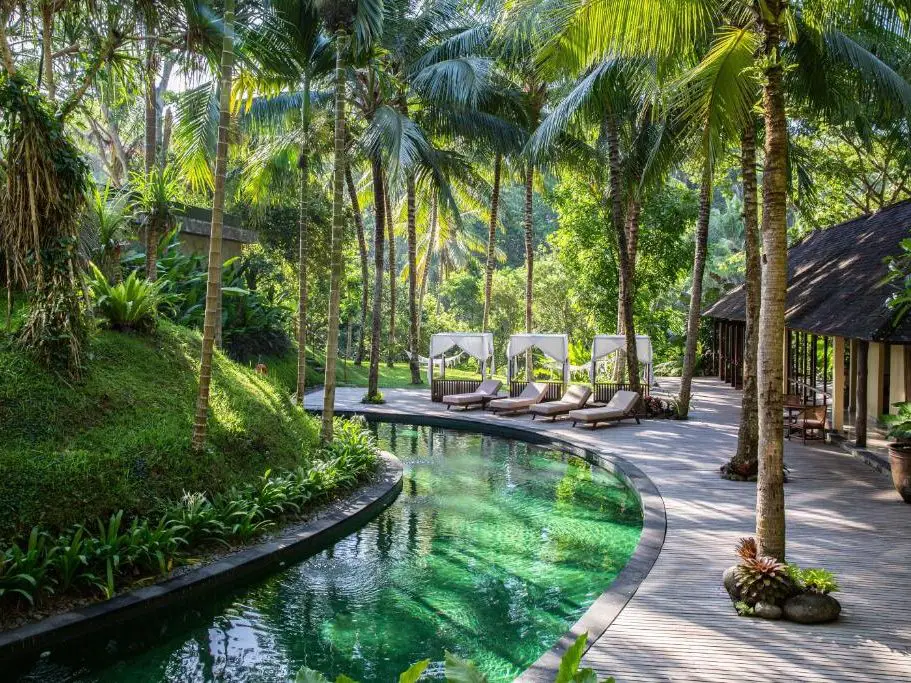
| 1. Komaneka at Bisma Best Location for Ubud Exploration Rating: ⭐⭐⭐⭐⭐ Location: 10-minute walk to Ubud Palace and Ubud Market Guest Reviews: Own rice fields visible from terraces, 33-metre lap pool, Wana Jiwa Spa on the Campuhan riverbank, à la carte breakfast on private balcony, complimentary yoga, afternoon tea, four-poster beds, jungle and valley views Best Room: Villa, 1 Bedroom, Private Pool Price: From USD $255 – $600 per night |
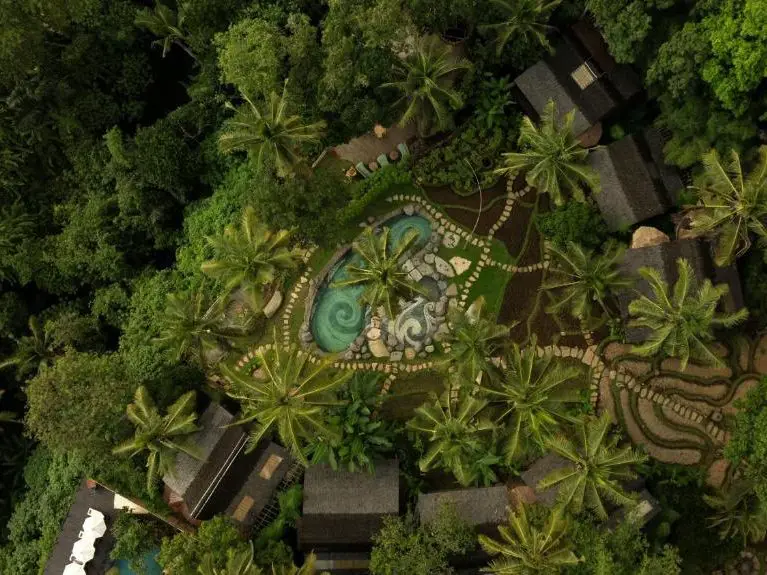
| 2. Bambu Indah Resort Rating: ⭐⭐⭐⭐ Location: 15-minute drive to Ubud centre, Sayan Ridge Guest Reviews: Lava-stone natural pools, bamboo bridges over the Ayung River, Elevator Bar at sunset, farm-to-table restaurant Dapoer, on-site rice paddies, filtered drinkable tap water, antique Javanese teak bridal houses, copper-basin bathrooms Best Room: Treehouse Price: From USD $220 – $600 per night |
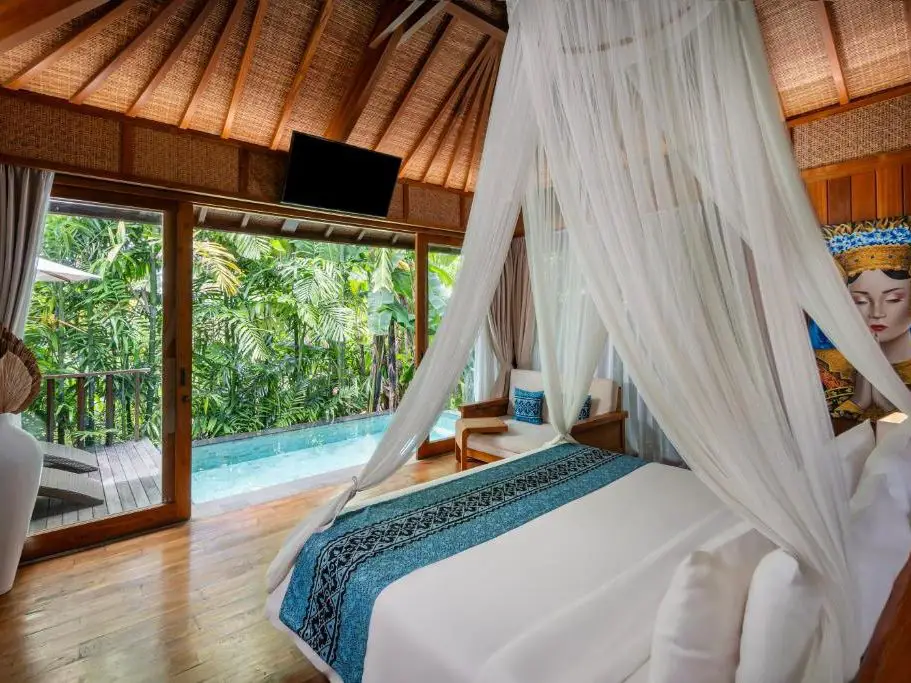
| 3. Kappa Senses Ubud Best for Wellness & Dining Rating: ⭐⭐⭐⭐⭐ Location: 10-minute drive to Ubud centre, Kedewatan ridge Guest Reviews: 2,000sqm permaculture garden, OmTara Spa by Clarins, rice field views from private pool, Kokokan speciality restaurant, daily complimentary yoga, free shuttle to Ubud centre, French bakery lounge Best Room: 1 Bedroom Pool Villa with Rice Field View and Daily Scheduled Activities Price: From USD $200 – $500 per night |
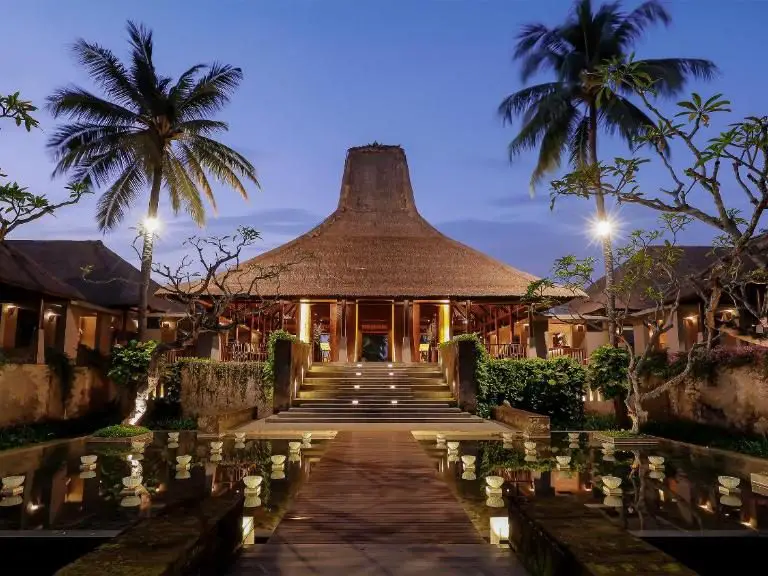
| 4. Maya Ubud Resort & Spa Best for Families Rating: ⭐⭐⭐⭐⭐ Location: 5-minute drive to Ubud centre, Petanu River valley Guest Reviews: Petanu River infinity pool, rainforest spa on river level, Growing Grounds organic kitchen garden, evening Balinese cultural performances, complimentary morning yoga, guided jungle and rice paddy treks, Tree Bar above the canopy Best Room: Heavenly Pool Villa Price: From USD $105 – $400 per night |
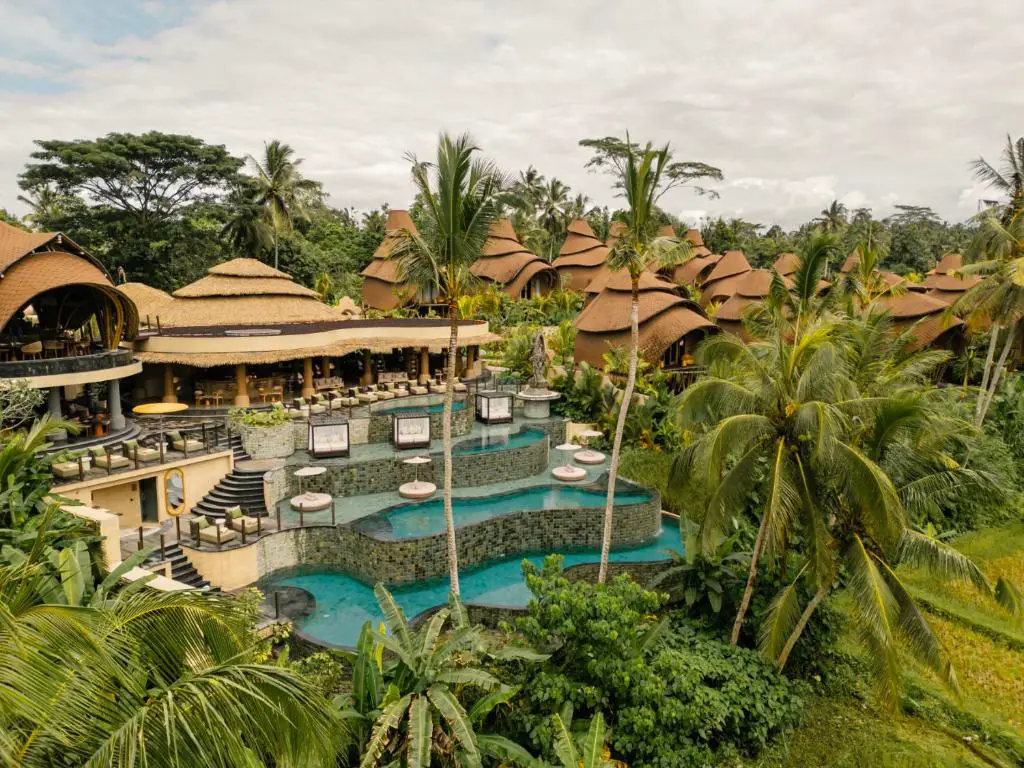
| 5. Equipoise Resort Newest Eco Resort Rating: ⭐⭐⭐⭐ Location: 15-minute drive to Ubud centre, Kenderan Village, Tegallalang Guest Reviews: Curved bamboo architecture, four-tiered infinity pool, rice terrace and valley views, Terra Verte Italian-Mediterranean restaurant, Riserva 24-seat steakhouse, Manuaba Waterfall 3-minute walk, morning yoga sessions Best Room: One Bedroom Villa Private Pool with Ricefield View – Include Prestige Experience Price: From USD $280 – $450 per night |
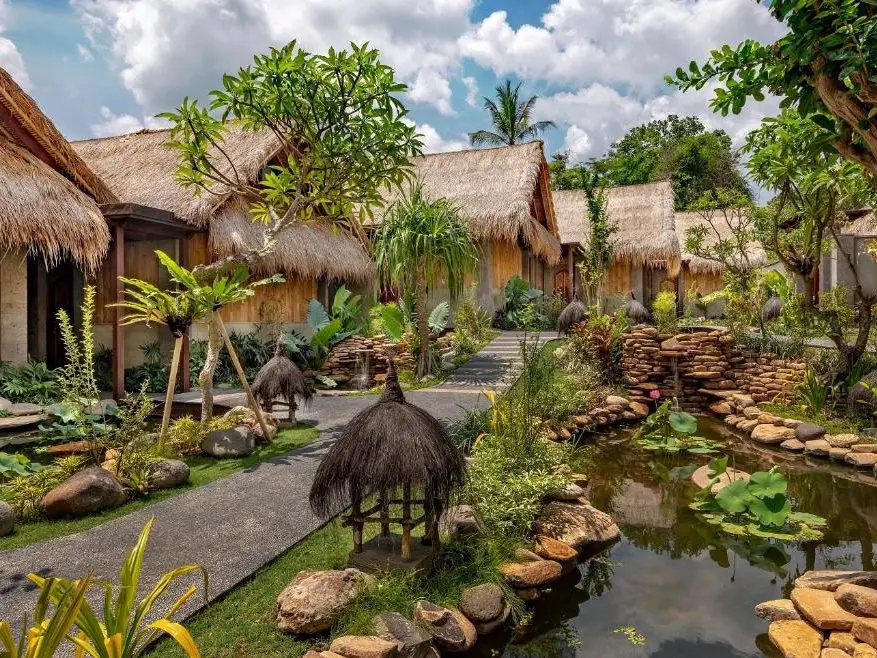
| 6. Fivelements Retreat Bali Most Committed to Plant-Based Living Rating: ⭐⭐⭐⭐ Location: 20-minute drive to Ubud centre, Ayung River valley, Abiansemal Guest Reviews: Sakti Dining Room bamboo pavilion beside Ayung River, award-winning plant-based tasting menus, Garden of Peace herb garden, morning yoga shala by the river, Balinese sacred arts healing sessions, open-air stone bathtub in suite Best Room: Bidadari Riverfront Pool Suite Price: From USD $230 – $400 per night |
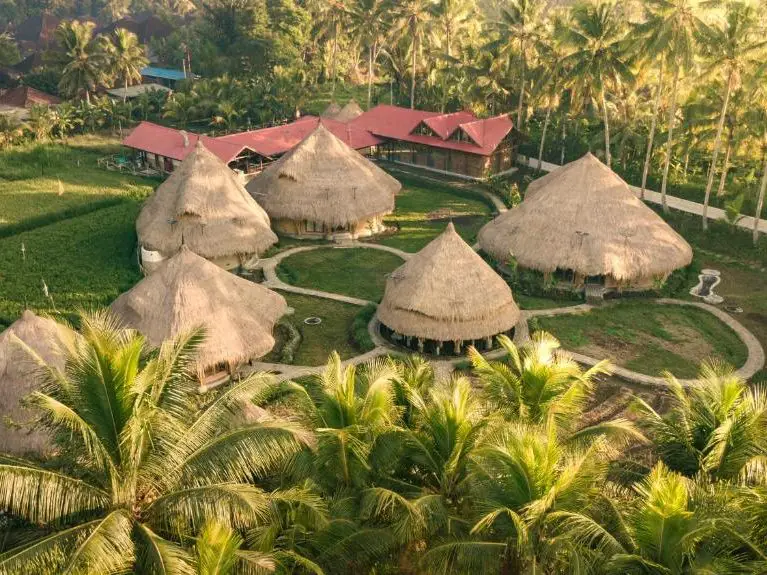
| 7. Mana Earthly Paradise Most Credibly Eco-Certified Rating: ⭐⭐ Location: 10-minute drive to Ubud centre, Sayan Guest Reviews: Earthbag villas built from soil and reclaimed wood, solar-powered lighting, rainwater harvesting, probiotic restaurant Mana Kitchen, Japanese-Indonesian fusion menu, organic food garden, zero single-use plastics Best Room: Family Villa, 2 Bedrooms Price: From USD $55 – $120 per night |
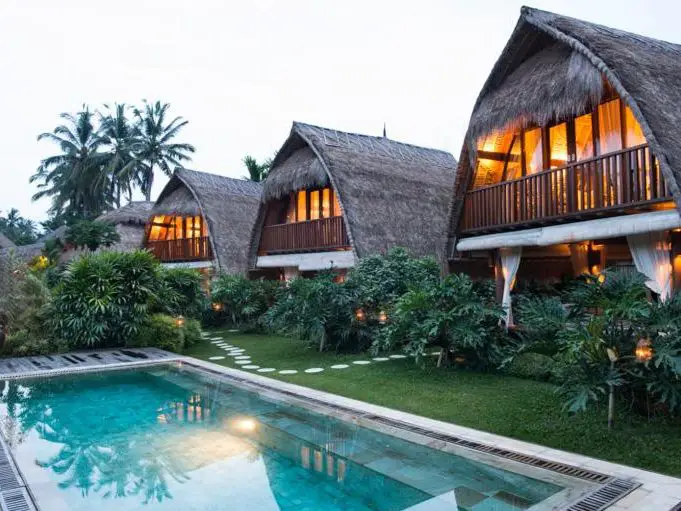
| 8. Sandat Glamping Tents Best Glamping Experience Rating: ⭐⭐⭐⭐ Location: 10-minute drive to Ubud centre, Pejeng Kawan rice fields Guest Reviews: Five safari-style tents with private plunge pools, three traditional lumbung rice barns, rice terrace views, bamboo cathedral restaurant, daily afternoon tea, complimentary shuttle to Ubud centre, morning yoga pavilion Best Room: Suite Tent Price: From USD $300 – $500 per night |
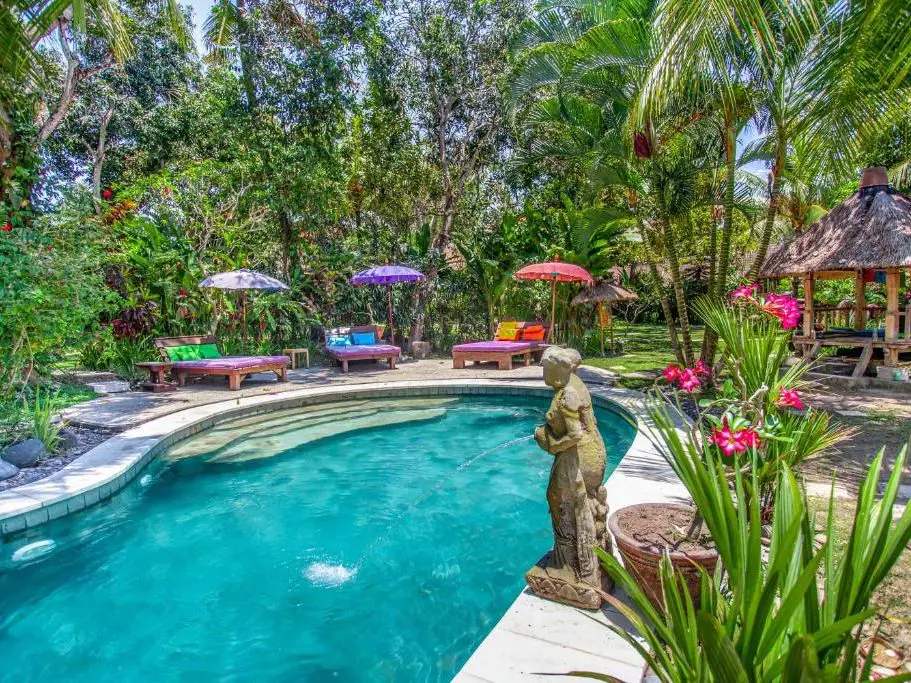
| 9. Swasti Eco Cottages Rating: ⭐⭐⭐⭐ Location: 15-minute walk to Ubud Monkey Forest, Nyuh Kuning village Guest Reviews: Saltwater pool surrounded by tropical garden, organic vegetable garden supplying restaurant, Ayurvedic eco-spa with 100% natural treatments, two yoga shalas, fresh-produce breakfast buffet, Nyuh Kuning woodcarvers village setting Best Room: Deluxe Room (With AC) Price: From USD $60 – $150 per night |
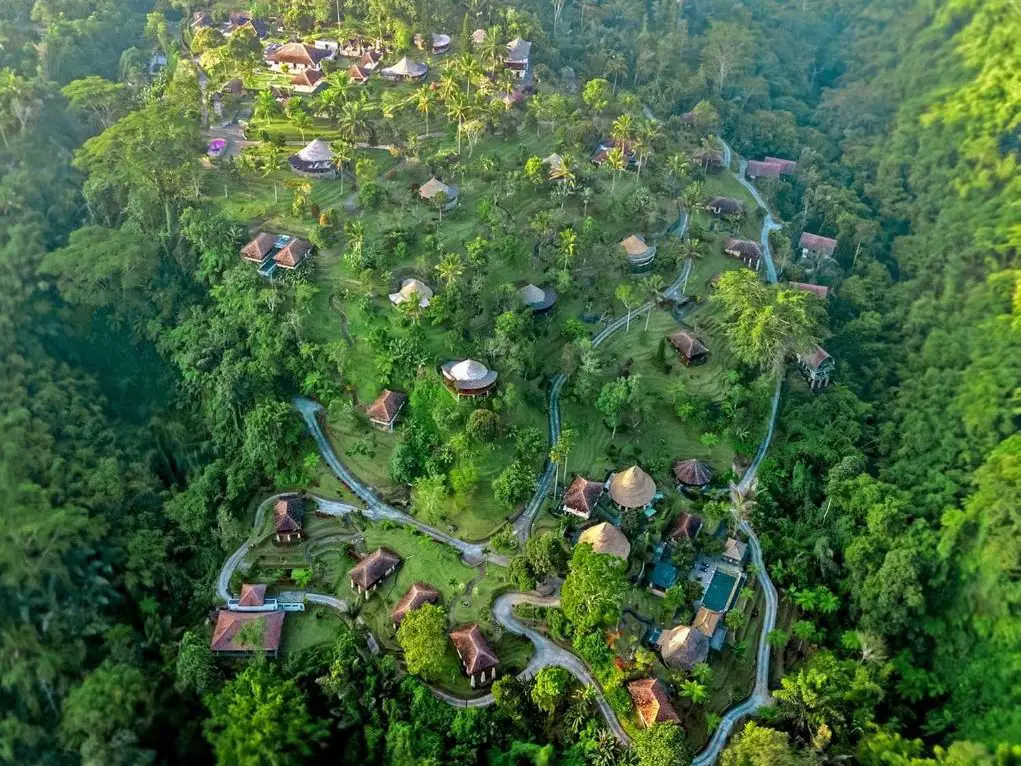
| 10. Bagus Jati Health & Wellbeing Retreat Best for a Full Wellness Retreat Rating: ⭐⭐⭐⭐ Location: 15-minute drive to Ubud centre, Tegallalang highlands, 750m above sea level Guest Reviews: Infinity pool overlooking Jati River valley, two yoga balas in tropical forest, Sejati Spa with Ayurvedic and herbal treatments, Surya Restaurant with Mount Agung views, organic garden supplying kitchen, free daily yoga, free shuttle to Ubud twice daily Best Room: Deluxe Spa Villa Price: From USD $95 – $200 per night |
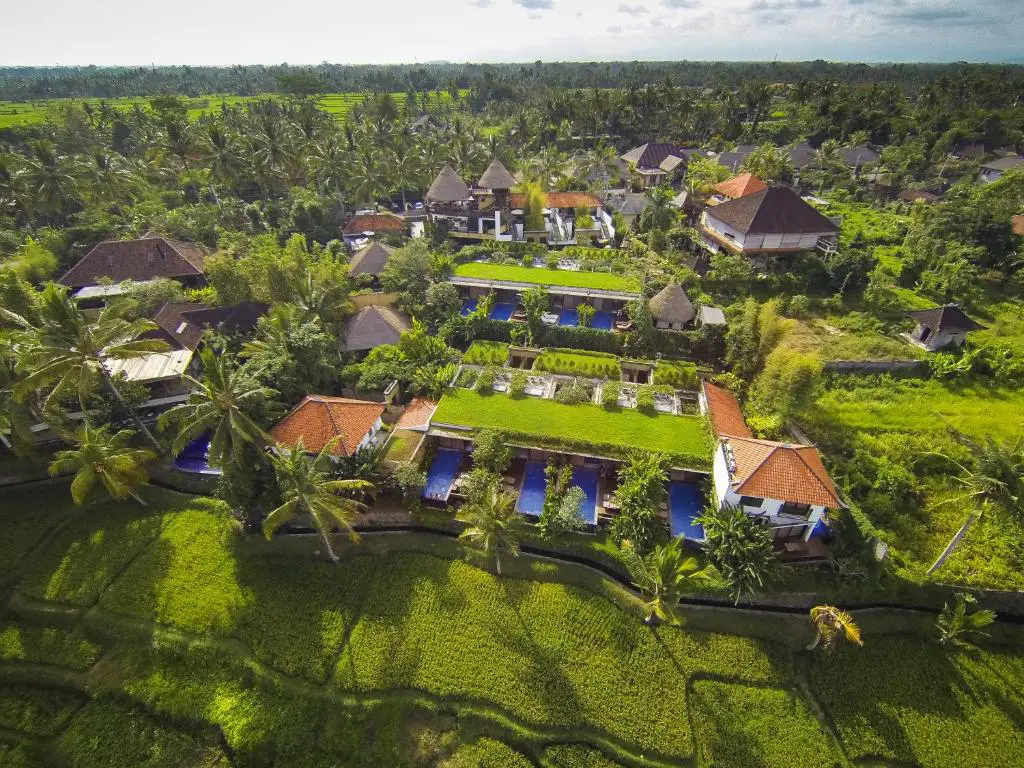
| 11. Ubud Green Resort Villas Best Value Eco Villa Rating: ⭐⭐⭐⭐ Location: 5-minute drive to Ubud Market, Jalan Sriwedari Guest Reviews: Living rooftops planted with indigenous vegetation, solar hot water system, rice field views from private pool, Firefly restaurant cone-shaped rooftop terrace, floating breakfast in private pool, Nehan Spa, 5-minute drive to Ubud Market Best Room: Villa, 2 Bedrooms, Private Pool (Premiere, Rice Field View, Type A) Price: From USD $100 – $200 per night |
Why Ubud Leads Bali on Sustainable Stays
Ubud’s eco credentials aren’t an accident of geography. Two forces have made it the most accountable place on the island to call yourself sustainable.
- The Green School effect — Founded in 2008 by John and Cynthia Hardy on the banks of the Ayung River, Green School Bali created a gravitational pull for sustainability-minded businesses across the Ubud valley. Bambu Indah, built by the same family, is the most direct expression of that philosophy, but the broader community of Green School families, alumni, and affiliated enterprises has raised the bar for what documented eco practice means locally. A property using “eco” as a marketing label faces real community scrutiny here in a way it simply does not in Seminyak or Nusa Dua.
- The Tri Hita Karana principle — Balinese Hindu culture centres on the concept of Tri Hita Karana: harmony between people, nature, and the divine. This isn’t decorative language in Ubud. It shapes how local communities relate to the land, how temples manage water, and how locally owned properties make decisions about construction and sourcing. Properties that embed this philosophy — Bagus Jati, Komaneka at Bisma, Swasti Eco Cottages — operate differently to those that borrow the aesthetic without the substance.
- Long-term resident accountability — Ubud has a large, vocal population of long-term expatriates, wellness practitioners, and environmental advocates who scrutinise sustainability claims and share findings openly. Word-of-mouth accountability here is unusually effective. Greenwashing is more costly in this community than anywhere else in Bali.
- A verified spectrum of practice — Certified B Corp operations like Mana Earthly Paradise and five-star resort groups like Kappa Senses Ubud with dedicated permaculture programmes sit at opposite ends of a credible spectrum. Both represent documented investment in sustainability rather than borrowed vocabulary.
How to Spot Greenwashing in Ubud Hotels
Not every property surrounded by rice fields earns the eco label. These are the markers that distinguish documented practice from marketing language — and the questions worth asking before booking.
- A working organic garden that actually supplies the kitchen — The easiest claim to make and the easiest to check. Ask what percentage of produce comes from the property’s own garden or a named local farm. Bambu Indah runs permaculture gardens and mushroom farms that supply Dapoer restaurant. Kappa Senses Ubud maintains a 2,000sqm permaculture garden and shares half the harvest with neighbouring communities. Mana Earthly Paradise and Bagus Jati both grow produce on-site. A vague “locally sourced” claim without specifics is a flag.
- Natural water systems over chemical pools — Chlorinated pools are the norm across Bali. Properties that have invested in alternatives are signalling something real. Bambu Indah uses lava stone filtration and a vegetation regeneration zone. Swasti Eco Cottages operates a saltwater pool. Mana Earthly Paradise uses plant-filtered natural pools. Ask what the pool filtration system uses before assuming the word “natural” in a property description means anything specific.
- Construction materials and methods — Bamboo, reclaimed teak, earthbag construction, and living rooftops all require deliberate investment. Equipoise Resort was built by Bali’s Lumbung Architect using curved bamboo inspired by the surrounding landscape. Mana Earthly Paradise built its villas from earthbags filled with soil, natural stone, and reclaimed wood. Ubud Green Resort Villas uses living rooftops planted with indigenous vegetation and a solar hot water system. Concrete villas with bamboo furniture in the lobby are not the same thing.
- Third-party certification — Certifications worth checking include Eco Tourism Bali, the Green Tourism Program, and B Corp certification for properties run by registered NGOs. Equipoise Resort holds Eco Tourism Bali certification. Mana Earthly Paradise is certified B Corp, run by Earth Company NGO. Fivelements Retreat Bali holds Green Tourism Program certification. The absence of any certification isn’t disqualifying — Bambu Indah operates at a high eco standard without formal certification — but claimed certifications should be verifiable on the issuing body’s website.
- Local hiring and community benefit — Ask where the staff are from and whether the property sources services from local village businesses. Maya Ubud Resort & Spa cites local village hiring as a documented sustainability commitment, with staff drawn significantly from neighbouring communities. Bagus Jati is built around the Tri Hita Karana philosophy with documented community ties. Properties that cannot answer this question with specifics are relying on the optics of location rather than the substance of practice.
- Questions that reveal the reality — Three questions cut through vague eco language quickly: Does the kitchen compost? What happens to plastic waste on-site? Is the drinking water filtered on-site or bottled commercially? Bambu Indah installs hospital-grade triple-filter tap water to eliminate plastic bottles entirely. Properties that offer commercially bottled water as standard while marketing themselves as eco-conscious are not yet living up to the claim.
Where to Stay in Ubud for an Eco Trip
Ubud’s eco resorts are spread across several distinct areas, each with a different relationship to the town centre. Geography matters here more than in most destinations — the same resort can feel either well-positioned or isolating depending on what you want from the trip.
- Sayan and Kedewatan — riverside luxury, transport essential — The Ayung River gorge running west of Ubud is home to the area’s most dramatic eco properties. Bambu Indah sits on the Sayan Ridge above the river. Kappa Senses Ubud occupies the Kedewatan ridge with rice paddy views and a free scheduled shuttle. Both are destination resorts — properties where the site is the point, and where hotel transport, a hired driver, or a scooter is needed to reach central Ubud’s restaurants and cultural sites. The trade-off is rewarding: river valley views, real seclusion, and the quietest version of Bali most visitors never find.
- Central Ubud and Nyuh Kuning — walkable, mid-range, accessible — Komaneka at Bisma on Jalan Bisma is within a 10-minute walk of Ubud Market and Ubud Palace — rare walkability for a resort of this quality. Swasti Eco Cottages sits in Nyuh Kuning village, a 20-minute walk to central Ubud via the Monkey Forest shortcut. Ubud Green Resort Villas is a 5-minute drive from the market. This cluster suits travellers who want eco credentials alongside evening flexibility — the ability to walk to a restaurant or a dance performance without planning a car around it.
- Tegallalang and Kenderan — highlands, full retreat mode — North of Ubud, the land rises into the Tegallalang highlands where the air cools and the distance from town becomes real. Equipoise Resort sits in Kenderan Village at 600 metres above sea level, a 15-minute drive from central Ubud. Sandat Glamping Tents sits among Pejeng Kawan rice fields, a 10-minute drive from town. Bagus Jati is 10km north — the drive takes 15–20 minutes and discourages daily town trips, which is precisely the point for a property built around sustained wellness. Free shuttle services at both Bagus Jati (twice daily) and Sandat (scheduled) bridge the gap, but these properties reward guests who treat the resort itself as the destination rather than a base.
- Abiansemal — riverside retreat, furthest from town — Fivelements Retreat Bali occupies a quiet stretch of the Ayung River about 20 minutes from central Ubud. The distance aligns with its purpose — a plant-based wellness retreat where leaving the property is incidental rather than expected. A free shuttle runs three times daily for guests who want town access. For a dedicated wellness stay of four nights or more, the distance works in its favour. For travellers who want to split time between resort and town, the Sayan or Kedewatan properties are better positioned.
What to Expect From Eco Dining in Ubud
- Plant-based and wellness-first — Fivelements Retreat Bali operates the strictest culinary philosophy of any property here. Sakti Dining Room serves only plant-based food — raw living foods, enzyme-rich preparations, and seasonal produce from the on-site Garden of Peace. No meat, no fish, no dairy. The food is exceptional by any standard, but guests who arrive without knowing this sometimes find the restriction a surprise rather than a feature. Mana Earthly Paradise takes a broader approach with its probiotic restaurant Mana Kitchen, serving Japanese-Indonesian fusion with vegan, vegetarian, and pescatarian options. No red meat, in line with its carbon reduction philosophy.
- Farm-to-table with full restaurant menus — Bambu Indah’s Dapoer restaurant draws from the property’s permaculture gardens, mushroom farm, and rice paddies, with a menu that changes based on what the land is producing. Kappa Senses Ubud runs three restaurants fed by its 2,000sqm permaculture garden — Kokokan for semi-gastronomic rice field dining, Kepuh for all-day Indonesian and international, and a French bakery lounge. Bagus Jati’s Surya Restaurant frames views of Mount Agung across the valley while serving healthy Indonesian and international dishes with produce from the retreat’s organic garden.
- Fine dining with sustainability credentials — Komaneka at Bisma’s Seneng Kitchen is named after the farming couple who tend the resort’s own rice fields — the most direct expression of farm-to-table naming on this list. The restaurant serves Indonesian-led fine dining alongside international options, with the rice field landscape as constant backdrop. Equipoise Resort’s two restaurants take contrasting approaches: Terra Verte serves Italian-Mediterranean in an open bamboo pavilion with rice field views; Riserva is a 24-seat European steakhouse open for dinner only, with locally sourced premium cuts.
- Restaurants worth visiting outside your resort — The cluster of organic cafes on Jalan Raya Sanggingan, near the end of the Campuhan Ridge Walk, is worth building a morning around. Alchemy on Jalan Penestanan Kelod is Ubud’s most established raw and vegan restaurant, worth booking for a night out from any of the Sayan or Kedewatan properties. Locavore NXT, now located about 10 minutes outside central Ubud in Lodtunduh, sources 95% of its ingredients from within Indonesia and holds the Sustainable Restaurant Award from Asia’s 50 Best. It requires planning well ahead — the tasting menu format means advance reservation is essential.
When to Book and What to Know About Bali’s Seasons
Ubud sits at around 300 metres above sea level and runs cooler and wetter than coastal Bali. The seasons behave differently here, and for eco stays specifically, timing has implications that go beyond simple weather preference.
- Dry season (May–October) — peak demand, book early — The dry season brings reliable sunshine, lower humidity, and Ubud’s highest visitor numbers. July and August are the busiest months. For small-inventory eco properties — Sandat Glamping Tents with 8 units, Bambu Indah with 23 — peak season availability closes 6–8 weeks out. The Treehouse at Bambu Indah and the Suite Tents at Sandat are consistently the first rooms to sell. Booking 8–10 weeks ahead for July and August is not excessive. Prices at most properties reach their ceiling during this window.
- Shoulder season (April–May and September–October) — best balance — These months offer drier conditions than the wet season without the full peak-season premium or crowd density. Gardens at eco properties are still lush from the preceding rains. Prices sit 15–25% below peak at most mid-range and luxury properties. April and May in particular offer good availability across all properties and represent the strongest value window for most travellers.
- Wet season (November–March) — lusher, quieter, lower rates — Ubud’s wet season brings daily rainfall, typically concentrated in afternoon downpours rather than all-day rain. For eco stays this has a specific upside: organic gardens are at their most productive, natural pools and rivers run at full flow, and the landscape reaches peak green. Bagus Jati’s highland setting means cooler temperatures and valley mist — more atmospheric in the wet season than at any other time. Rates drop significantly at several properties. The trade-off is reduced visibility for mountain views and occasionally disrupted outdoor activities.
- Nyepi — plan around it — Bali’s Day of Silence typically falls in March or April, with dates varying annually. All properties require guests to remain on-site for 24 hours. For a wellness retreat like Fivelements or Bagus Jati, Nyepi is an experience rather than an inconvenience. For guests planning daily town trips, the timing is worth checking before booking.
- Booking windows that matter — Peak season villas at Komaneka at Bisma and Kappa Senses Ubud: book 6–8 weeks ahead. The Treehouse at Bambu Indah: book 8–10 weeks ahead for peak, 4–6 weeks for shoulder. Sandat Glamping Tents (8 units total): book as early as 12 weeks ahead for July and August. Swasti Eco Cottages, Mana Earthly Paradise, and Ubud Green Resort Villas: 2–4 weeks is usually sufficient outside peak season.
Eco Activities Worth Booking Around Your Stay
Ubud’s sustainable accommodation makes more sense when paired with experiences that connect to the same values outside the resort gates.
- Green School campus tour — Green School on the Ayung River is one of the world’s most significant bamboo structures and the philosophical anchor of Ubud’s eco community. Tours run on weekday mornings and give direct insight into the regenerative design and community education principles that shaped properties like Bambu Indah. Book directly through the Green School website — tours fill quickly during peak season and are not available every day.
- Campuhan Ridge Walk — The most accessible nature walk from central Ubud runs along the ridge between the Wos and Campuhan rivers, through open grassland and coconut groves, ending near Jalan Raya Sanggingan. The walk takes 45–60 minutes one way. Go before 8am to avoid the heat and the crowds. Guests staying at Komaneka at Bisma can walk to the trailhead in 15–20 minutes. The Wana Jiwa Spa at Komaneka sits on the Campuhan riverbank at the foot of the ridge.
- Rice paddy and farming experiences — Several properties offer guided rice paddy walks connecting guests to the subak irrigation system, a UNESCO-listed Balinese agricultural tradition. Maya Ubud Resort & Spa’s Growing Grounds programme runs hands-on sessions in its sustainability garden. Kappa Senses Ubud offers village encounters in Tanggayuda with local rice farmers. For guests staying outside central Ubud, Tegallalang Rice Terrace (10 minutes north of town) is the most photogenic terraced landscape in the area — go early morning and follow the lower trail away from the entry point to find working farmland rather than tourist infrastructure.
- Tirta Empul water purification ceremony — Bali’s most significant Hindu water temple sits 12km north of central Ubud in Tampaksiring, 20 minutes from Bagus Jati and Equipoise Resort. Visitors can participate in the purification ritual in the sacred spring pools — an experience that connects directly to the water philosophy underpinning many of the eco properties here. Arrive before 9am to participate before group tours arrive. Wear a sarong, available at the gate.
- Cooking class with market sourcing — Several operators in Ubud run morning cooking classes that begin at the traditional market to source ingredients, then move to an open kitchen in rice fields or traditional compounds. Casa Luna on Jalan Bisma is the most established. The Payuk Bali classes in Penestanan are smaller and more hands-on. Guests at Fivelements or Kappa Senses can ask at check-in about in-house classes using produce from the property’s own gardens.
- Cycling the rice terraces — Several Ubud operators run guided cycling routes through the agricultural villages north and east of town, passing through traditional irrigation channels and farming communities. Routes departing from Kintamani descend through coffee and clove plantations into the valley. This is a half-day activity that pairs well with a stay at Bagus Jati or Sandat Glamping Tents, both positioned in the northern arc of the Ubud agricultural landscape.
FAQs
1. Are eco resorts in Ubud actually sustainable, or is it mostly greenwashing?
Both exist in Ubud, and the gap between them can be significant. The clearest markers of documented practice are a working organic garden that supplies the kitchen, a natural or chemical-free water system, construction using local or reclaimed materials, and local hiring. Properties with third-party certifications — Eco Tourism Bali, Green Tourism Program, or B Corp — have had their claims independently reviewed. When in doubt, ask the property directly what percentage of kitchen produce comes from on-site or named local farms.
2. Do eco resorts in Ubud have air conditioning?
Most do, though some offer it as a choice rather than a default. Swasti Eco Cottages lists Traditional Rooms without air conditioning as the more ecological option, with Deluxe Rooms air-conditioned for guests who prefer it. Bambu Indah relies primarily on natural airflow and hand-crafted mosquito netting. Higher-end properties like Komaneka at Bisma, Kappa Senses Ubud, and Equipoise Resort are fully air-conditioned. Ubud’s elevation means nights are cooler than coastal Bali, making natural ventilation comfortable for much of the year.
3. What is the best area in Ubud to stay for an eco trip?
It depends on what the trip is for. Central Ubud and Nyuh Kuning offer the best walkability — useful if you want to explore the town’s restaurants and cultural sites each evening. Sayan and Kedewatan deliver the most dramatic river valley settings and house the most serious eco-luxury properties, but require transport into town. Tegallalang and Kenderan are best for guests who want the resort to be the destination rather than a base — cooler, quieter, and more removed, with scheduled shuttles to bridge the distance.
4. When is the best time to visit eco resorts in Ubud?
April, May, September, and October offer the best balance: drier conditions, greener gardens than peak dry season, lower prices, and good availability across all property types. July and August deliver the driest weather but also the highest prices and the most competition for rooms at small-inventory properties. The wet season (November–March) suits guests who want lush surroundings, lower rates, and fewer visitors — Ubud’s gardens and natural pools are at their most productive during this period.
5. Are eco resorts in Ubud good for families?
Several are well set up for families. Maya Ubud Resort & Spa has a dedicated kids’ club, children’s pool, and family villa options. Kappa Senses Ubud welcomes children and offers a permaculture garden programme. Swasti Eco Cottages in Nyuh Kuning has a family-friendly atmosphere with easy access to the Monkey Forest. Check carefully before booking with young children: Sandat Glamping Tents and Equipoise Resort are both adults-only.
6. How far are Ubud eco resorts from the airport?
Most Ubud properties are 60–90 minutes from Ngurah Rai International Airport, depending on traffic. The drive is typically 35–40km but Bali’s road congestion — particularly around Denpasar and the bypass — adds significant time. Arriving in the afternoon during peak season can push the journey to two hours. Most properties offer airport transfers at a surcharge. Booking a private driver through a local operator is generally cheaper than the hotel rate and equally reliable.
7. Do I need to hire a car or scooter to stay at an eco resort in Ubud?
For properties in Sayan, Kedewatan, Tegallalang, or Abiansemal, personal transport or the hotel shuttle is essential. Central Ubud properties like Komaneka at Bisma, Swasti Eco Cottages, and Ubud Green Resort Villas are accessible on foot to the town’s main areas. Scooter hire costs around $5–8 USD per day and gives maximum flexibility. Grab and Gojek ride-hailing apps operate throughout the Ubud area and are reliable for shorter journeys, though surge pricing applies during peak hours.
8. What certifications should I look for when booking a sustainable hotel in Ubud?
Eco Tourism Bali is the most relevant local certification, covering environmental management, community impact, and cultural respect. The Green Tourism Program is an international standard that several Ubud properties hold, including Fivelements Retreat Bali. B Corp certification, held by Mana Earthly Paradise, is the most rigorous third-party standard on this list and covers the full business operation rather than just accommodation practices. The absence of formal certification does not always indicate weak practice — Bambu Indah operates to a high ecological standard without holding a formal certificate.
9. Are eco resorts in Ubud good value compared to regular hotels?
At the budget end, yes. Mana Earthly Paradise offers earthbag villas with organic dining from $55 USD per night and delivers more verifiable sustainability practice than most four-star hotels at three times the price. At the luxury end, properties like Komaneka at Bisma and Kappa Senses Ubud price comparably to non-eco luxury resorts in Ubud while offering permaculture dining, organic sourcing, and wellness programming as standard inclusions. The strongest value argument for eco stays is that the price often includes more — farm-to-table meals, yoga sessions, cultural activities, and shuttle services that carry an extra charge at a conventional resort.