
Bali’s rice terraces look exactly like the photographs — emerald steps carved into the hillside, catching the morning light before the heat sets in. Ubud sits right in the middle of it all, and the best hotels here don’t just put you near the fields, they frame them: infinity pools that seem to spill straight into the paddies, private balconies where breakfast arrives as the farmers start work below. These properties deliver that view in different ways and at different price points, so there’s a fit here whether you’re after a five-star villa or something more grounded.
Table of Contents
Ubud Hotels
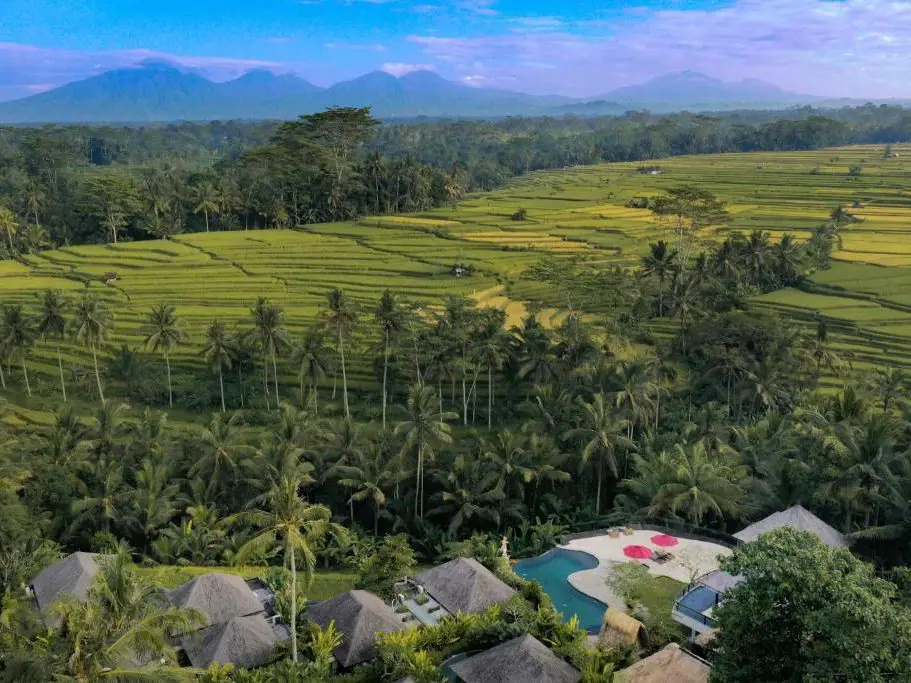
| 1. Puri Sebali Resort Best Ridge-Top Rice Terrace Panorama Rating: ⭐⭐⭐⭐ Location: 15-minute drive from Ubud centre, Sebali village, free shuttle to town Guest Reviews: Infinity pool overlooking rice terraces, outdoor bathtub facing the paddy fields, complimentary morning rice field walk, D’Ume fine-dining restaurant with terrace rice field views, Andaru Spa massages, complimentary afternoon tea, Balinese cooking class Best Room: One Bedroom Presidential Rice Terrace Pool Villa Price: From USD $100 – $220 per night |
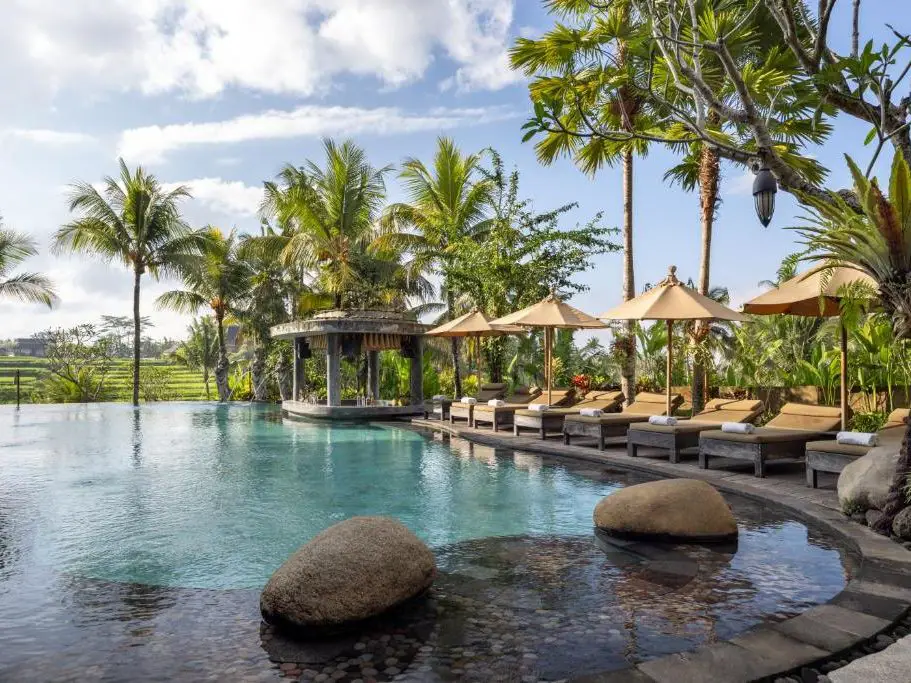
| 2. Kuwarasan A Pramana Experience Best for Staying Inside the Tegallalang Fields Rating: ⭐⭐⭐⭐ Location: 15-minute drive from Ubud centre, Tegallalang village, with free shuttle Guest Reviews: Infinity pool overlooking Tegallalang rice terraces, rooftop yoga pavilion with rice field views, morning rice field walks, Balinese cooking class with market tour, spa Balinese massage, à la carte breakfast with Balinese and international sections Best Room: Suite Paddies View Price: From USD $155 – $300 per night |
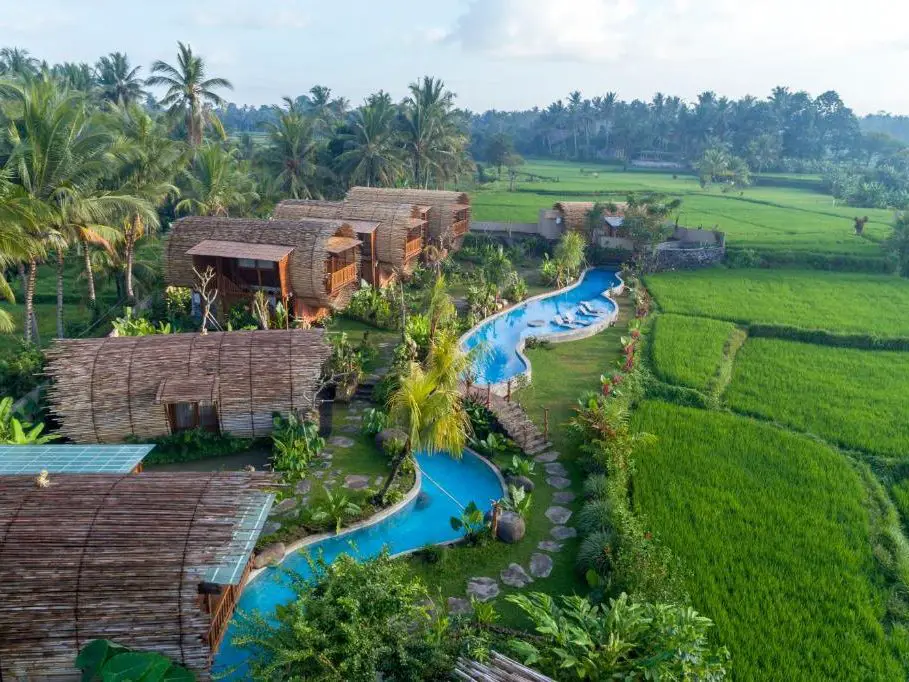
| 3. Beehouse Dijiwa Ubud Most Unique Stay Rating: ⭐⭐⭐⭐ Location: 10-minute drive from Ubud centre, Peliatan, with free shuttle running 3 times daily Guest Reviews: Rice paddy views from every room, circular beehive-style bamboo architecture, shared plunge pool overlooking the fields, floating breakfast in the pool, Bee Café open-air restaurant, Balinese massage on site, adults-only property Best Room: Villa Private Pool with Exclusive Rice Field View Price: From USD $150 – $250 per night |
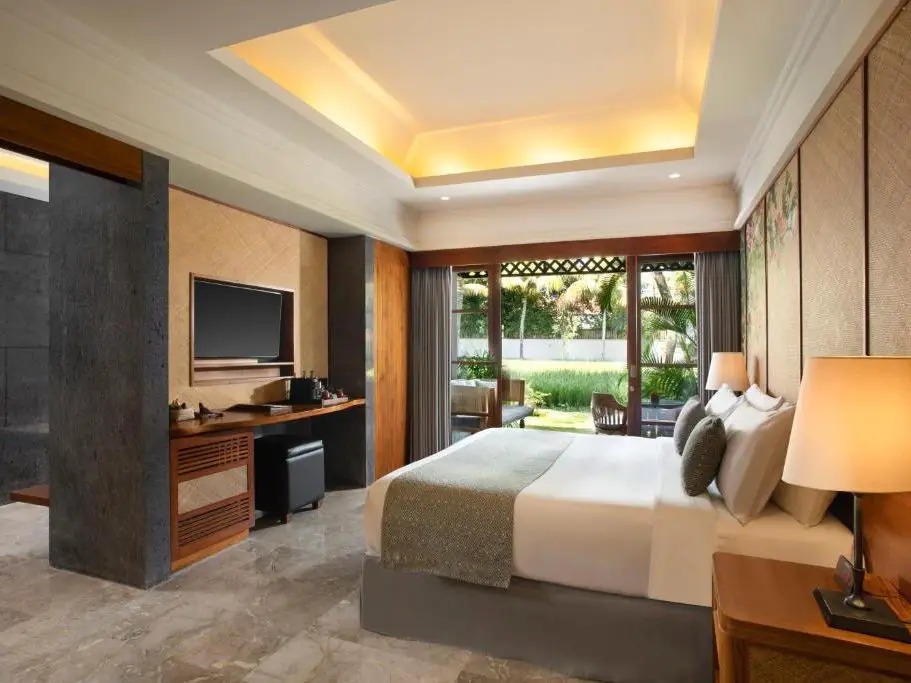
| 4. Adiwana Bisma Best for Walking to Ubud Rating: ⭐⭐⭐⭐ Location: 9-minute walk from Ubud Monkey Forest, central Ubud, on Jalan Bisma Guest Reviews: Rice field terrace balcony views, rooftop infinity pool overlooking jungle and paddies, floating breakfast in the pool, Pistachio restaurant Balinese and Western à la carte breakfast, Tejas Spa aromatherapy and reflexology treatments, free afternoon tea daily Best Room: Adiwana Ricefield View Price: From USD $125 – $200 per night |
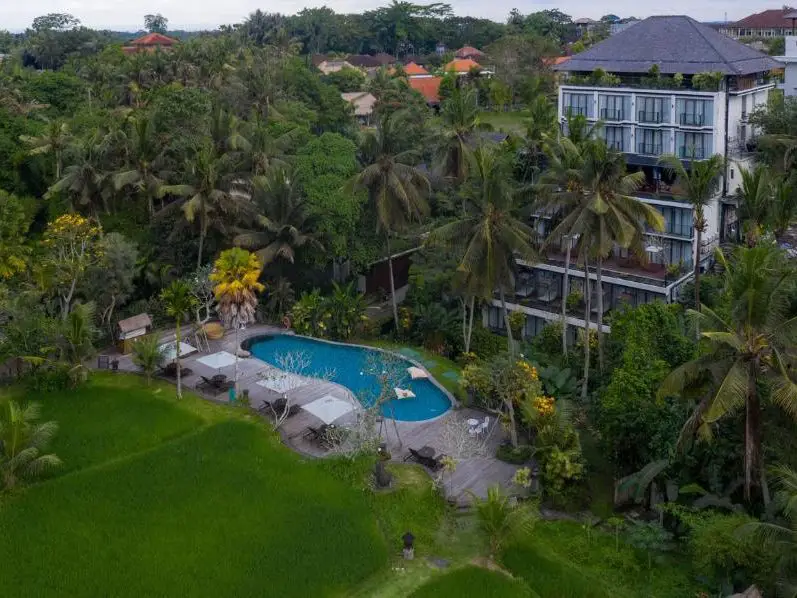
| 5. Plataran Ubud Hotel & Spa Rating: ⭐⭐⭐⭐⭐ Location: 5-minute walk from Ubud Monkey Forest, central Ubud on Jalan Hanoman Guest Reviews: Two infinity pools overlooking active working rice fields, Deluxe and Premier room balconies facing the paddies directly, daily complimentary yoga and morning rice paddy walk, Teras Restaurant with rice field views, high tea with Balinese afternoon snacks, cooking class with local market tour Best Room: Deluxe Premier Double or Twin Room Price: From USD $110 – $190 per night |
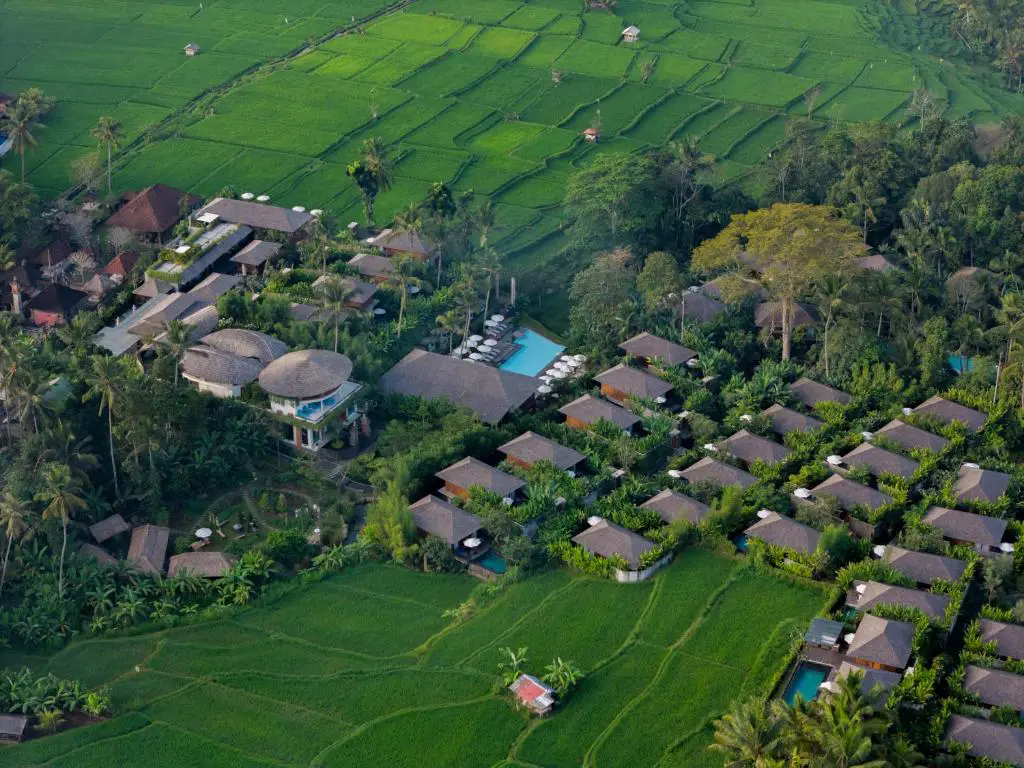
| 6. Kappa Senses Ubud Best Spa and Dining Combination Rating: ⭐⭐⭐⭐⭐ Location: 10-minute drive north of Ubud centre, Kedewatan, with free shuttle running 5 times daily Guest Reviews: Private pool villas overlooking rice fields, two pools including a jungle river pool with swim-up bar, daily buffet breakfast, permaculture farm with animals, daily complimentary activities including rice field walk and coffee tasting, Balinese cooking class Best Room: 1 Bedroom Pool Villa with Rice Field View and Daily Scheduled Activities Price: From USD $220 – $400 per night |
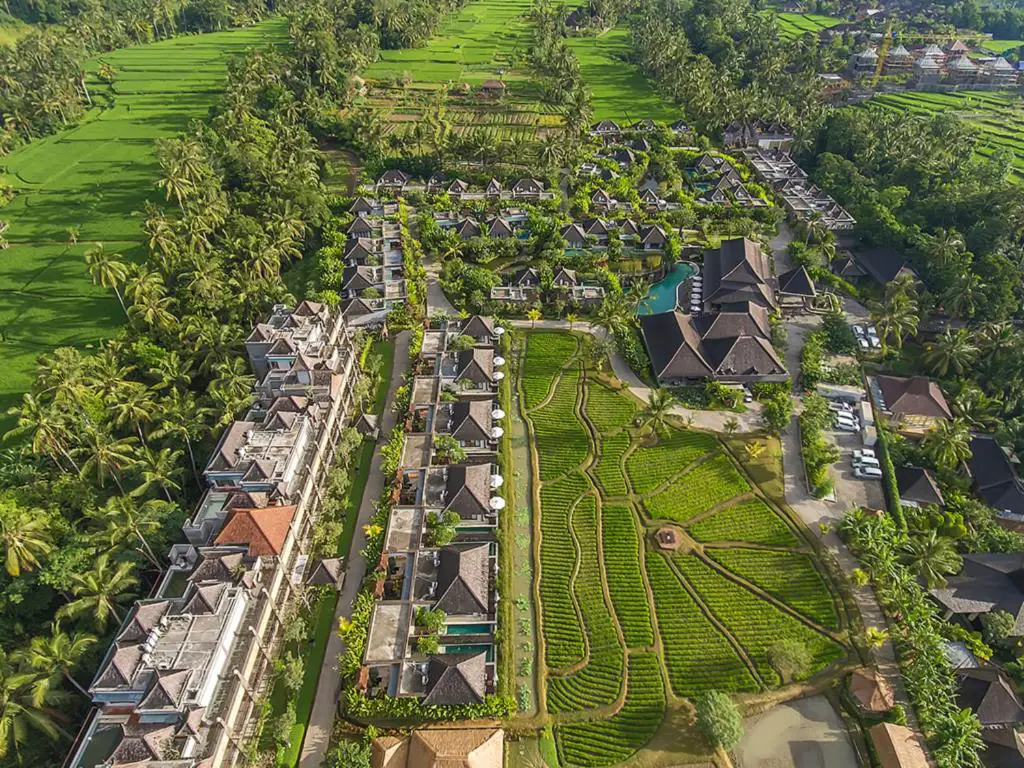
| 7. Visesa Ubud Resort Best for Families Rating: ⭐⭐⭐⭐⭐ Location: 5-minute drive from Ubud Palace, northern edge of Ubud centre, free shuttle to town Guest Reviews: Rice fields surrounding the resort, private pool villa overlooks working paddies, Lesung Restaurant rice field and pool views, daily animal parade through the fields, rice terrace trekking, cooking class with organic farm harvest Best Room: Villa, 1 Bedroom (Rice Field Pool) Price: From USD $125 – $200 per night |
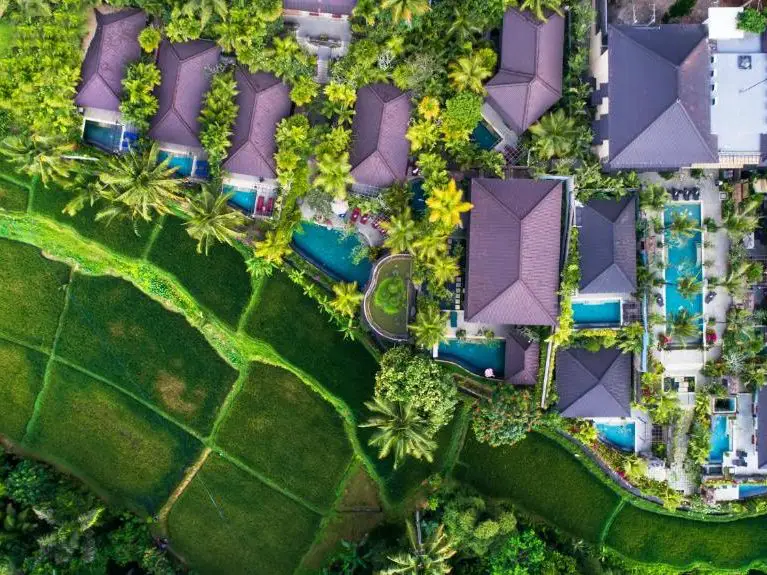
| 8. Dwaraka The Royal Villas Most Distinctive Balinese Design Rating: ⭐⭐⭐⭐ Location: 5-minute drive from Ubud Palace, central Ubud, free hourly shuttle to town Guest Reviews: Private pool villas overlooking rice paddies, infinity pool with rice field view, ornate gold-toned Balinese royal decor, Yashoda organic restaurant, complimentary afternoon tea and foot massage on arrival, free bicycle hire, yoga classes, free daily shuttle to Ubud Palace Best Room: One Bedroom Pool Villa (Rice Field View) Price: From USD $100 – $200 per night |
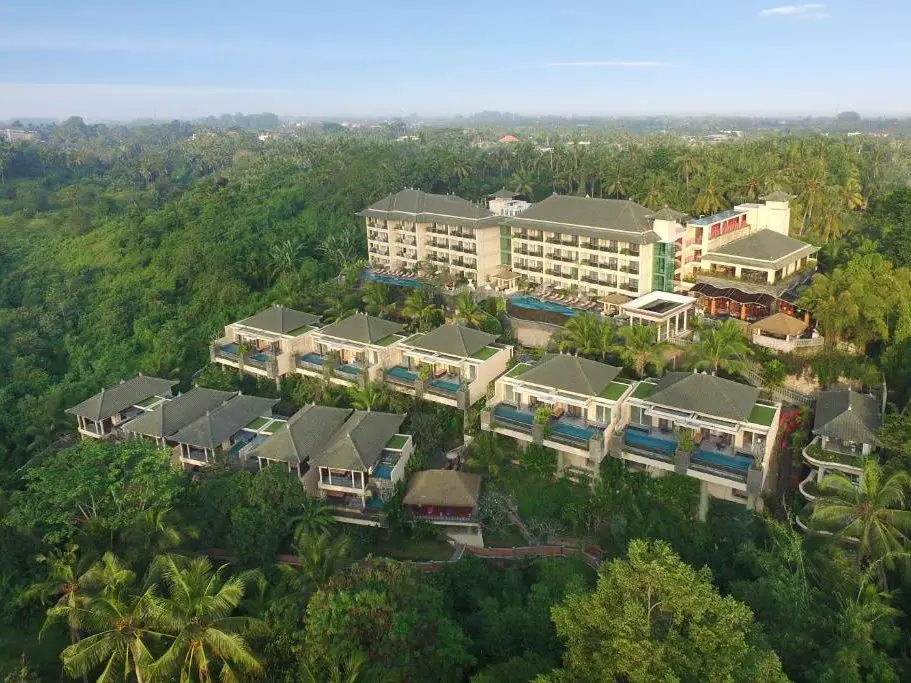
| 9. SereS Springs Resort & Spa, Singakerta Best for Couples Rating: ⭐⭐⭐⭐⭐ Location: 15-minute drive from central Ubud, Singakerta village, shuttle available Guest Reviews: Rice field views from room balconies, outdoor soaking tub overlooking the paddies, pool with rice terrace backdrop, SereS Spa Sanctuary, buffet breakfast with live cooking stations, live Rindik music and jazz during evening happy hour, natural spring soaking pool Best Room: Deluxe Premium King with Outdoor Soaking Tub and Rice Field View Price: From USD $100 – $200 per night |
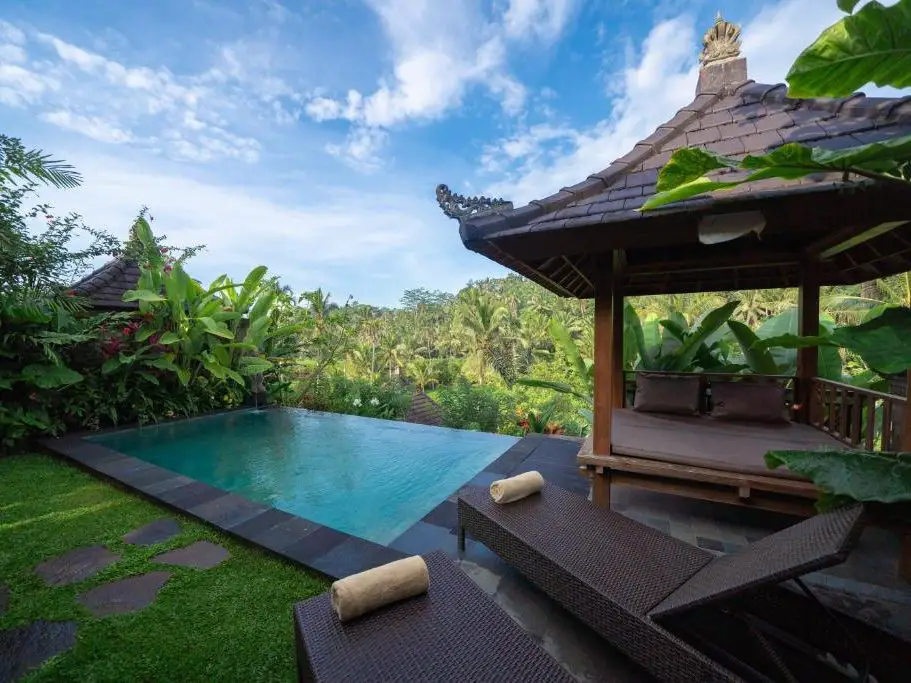
| 10. GK Bali Resort Most Immersed in the Rice Fields Rating: ⭐⭐⭐ Location: 30-minute drive north of Ubud centre, Sebatu village, Tegallalang, free shuttle to Ubud and Tegallalang Rice Terrace Guest Reviews: Rice fields surrounding the entire property, infinity pool facing the paddies, floating breakfast in the pool, free bicycles for rice field rides, cycling village tour through the terraces, spa massages, complimentary continental breakfast daily, koi pond Best Room: One-Bedroom Pool Villa Price: From USD $140 – $220 per night |
Two Rice Terrace Zones Worth Knowing Before You Book
Ubud’s rice fields split into two distinct zones, and they look and feel completely different. The zone you choose shapes the entire stay.
- Central Ubud paddies — these are working rice fields woven through the town itself, along lanes like Jalan Bisma, Jalan Suweta, and Pengosekan. The fields sit at ground level or just below, so the view from a room or pool balcony looks straight out across active paddies with farmers, ducks, and irrigation channels in plain sight. Hotels here are 5–15 minutes from Ubud’s restaurants, markets, and temples on foot or by a short ride. Adiwana Bisma and Plataran Ubud Hotel & Spa sit in this zone. The trade-off is that the fields are smaller and more fragmented than the famous terraces to the north.
- Tegallalang corridor (20–30 minutes north of Ubud centre) — this is the iconic stepped terrace landscape, where rice fields cascade in layered tiers down steep hillsides. The views are panoramic rather than intimate. Hotels here feel genuinely removed from town, with jungle sounds at night and almost no street noise. Kuwarasan A Pramana Experience and GK Bali Resort sit in this corridor. The trade-off is that every trip into Ubud requires planning — you are not walking anywhere.
- The villages in between — Sebali, Kedewatan, Singakerta, and Peliatan occupy the middle ground, 10–20 minutes from central Ubud, with ridge-top or hillside positions that look out over rice field valleys rather than sitting directly among working paddies. Puri Sebali Resort, Kappa Senses Ubud, and SereS Springs Resort sit here. These positions often deliver the widest panoramas, with terraced fields spreading across the valley below.
The central Ubud zone suits travellers who want to walk to dinner. The Tegallalang corridor suits those who want the most immersive field experience and are happy to Grab or use a hotel shuttle. The village middle ground suits those who want both a serious view and reasonable access to town.
What a Rice Terrace View Actually Looks Like
Not every hotel that advertises a rice terrace view delivers the same thing. The difference matters before booking, because the photographs on listing sites rarely show the angle honestly.
- Paddies at eye level — the room or pool sits right beside an active working field, often separated by no more than a low stone wall or a narrow path. Farmers work the field in the morning, ducks move through the rows in the afternoon, and the irrigation channels make a low continuous sound. This is the most intimate version of the view and the closest to what most people picture. Kuwarasan A Pramana Experience and Plataran Ubud Hotel & Spa deliver this.
- Terraces below the pool — the hotel sits on higher ground and the rice fields step down the hillside in front of the infinity pool, so the water appears to spill into the paddies. This is the most photogenic version of the view and the one most commonly used in hotel marketing. The terraces are clearly visible but you are looking down into them rather than across at them. Puri Sebali Resort and Visesa Ubud Resort deliver this.
- Rice field valley panorama — the hotel sits on a ridge or hillside and looks across a wide valley where rice fields form part of a broader landscape of jungle, coconut palms, and river gorges. The fields are dominant but not the only element. On clear mornings, distant peaks are visible behind the terraces. Kappa Senses Ubud and SereS Springs Resort deliver this type of view.
- Surrounded on all sides — the hotel sits within the rice fields rather than above or beside them, with paddies visible in multiple directions from different points on the property. This gives the strongest sense of immersion, particularly at dawn before other guests are moving. GK Bali Resort in Sebatu delivers this most completely.
The difference matters most if you are choosing specifically for photography, for the sound of the fields, or for the feeling of being inside the landscape rather than looking at it from a distance.
What Happens to the View When the Rice Is Harvested
The most common real concern among travellers booking hotels for the rice field views is arriving to find the fields cut, dry, and brown. It is a legitimate worry, and it deserves a direct answer.
- The rice planting cycle in Ubud — Bali’s rice fields follow roughly two to three planting cycles per year, but individual farmers in different fields operate on different schedules. This means that at any given time, fields across the Ubud area are at completely different stages simultaneously — some freshly flooded and planted, some a vivid neon green, some golden and approaching harvest, and some recently cut. A single view from a balcony may show all four stages at once across different fields.
- The greenest months — the most photogenic period is just before harvest, when the stalks are fully grown and dense with grain. At Tegallalang and central Ubud, this typically falls in March–April and September–October. These months combine the most saturated green colour with the most dramatic visual texture in the terraces.
- The harvest months to be aware of — May–June and November–December are the most common harvest periods. Freshly cut fields look flat and pale, and can remain that way for two to four weeks before replanting begins. This does not empty the entire landscape — neighbouring fields at different stages remain green — but the specific field your balcony faces may be stubble for part of your stay.
- The dry season advantage — May through October brings reliable sunshine and low humidity, which makes the views sharper and the mornings clearer even if some fields are between planting cycles. Many experienced Bali travellers consider this the better tradeoff: slightly less green, but guaranteed good weather to actually sit on the balcony.
- The Tegallalang difference — the Tegallalang terraces have become a managed tourism site as much as a working farm, and the fields are maintained with visitor experience partly in mind. There is almost always green visible somewhere in the stepped landscape, even during harvest periods, because the staggered planting across many small fields rarely results in a fully brown panorama.
- What you cannot control — individual fields directly adjacent to a specific hotel room can be harvested at any time. No hotel can guarantee the field facing your balcony will be green on arrival. If this matters to you, book during March–April or September–October and email the hotel a week before arrival to ask about the current field conditions.
When to Book: Season, Weather and the Greenest Fields
Ubud sits at 300–600 metres above sea level and stays warm year-round, but the season affects more than just the fields. It affects how much time you will actually spend on the balcony you booked for.
- Dry season: May–October — clear mornings, low humidity, reliable pool weather from midday. The light on the rice fields at sunrise is sharpest during these months, with no haze. This is peak travel season, so rates at the hotels on this list are higher and advance booking of 2–3 months is advisable for pool villas. June–August is the busiest period; May and September–October are the dry season’s sweet spots for both weather and crowd levels.
- March–April and September–October specifically — these shoulder months overlap with the greenest pre-harvest period and offer the best combination of field colour, reasonable prices, and manageable crowds. October in particular is consistently cited by long-term Ubud visitors as the single best month to visit. Rain is possible but usually brief and falls in the late afternoon.
- Rainy season: November–March — daily rainfall, typically in short heavy bursts in the afternoon or evening rather than sustained all-day rain. Mornings are often clear and beautiful, with low cloud moving through the valleys at dawn in a way that makes the rice field views genuinely dramatic. Rates drop significantly, and hotels on this list are often 20–40% cheaper. The trade-off is that planned outdoor activities can be disrupted and paths through the rice fields get muddy.
- January–February — the wettest months. Pool weather is unreliable and afternoon balcony time is limited. Suited to those whose primary goal is cultural activities, cooking classes, or spa treatments rather than spending time outdoors.
How Far Are These Hotels from Ubud Centre?
Distance is one thing; what it means in practice on an evening when you want dinner in town is another. The Grab app operates reliably in Ubud and is the most flexible way to get around after dark, but drivers in the more remote areas — particularly north of the Tegallalang junction — can be harder to find late at night. Hotel shuttles are free and convenient but run on fixed schedules that typically stop between 9 and 10pm.
- Walking distance to central Ubud (5–15 minutes on foot) — Adiwana Bisma (9-minute walk to Monkey Forest Road) and Plataran Ubud Hotel & Spa (5-minute walk to Jalan Hanoman). Both are close enough to walk to dinner, walk back after a late show at Ubud Palace, and not worry about shuttles at all. The trade-off is that you can hear some town noise at night.
- Short drive, easy Grab (10–20 minutes) — Beehouse Dijiwa Ubud, Kappa Senses Ubud, Dwaraka The Royal Villas, Visesa Ubud Resort, and SereS Springs Resort. All run free hotel shuttles with multiple daily departures. Grab drivers are available in these areas reliably through to around midnight. A one-way trip into central Ubud costs roughly IDR 30,000–50,000.
- 15 minutes, free shuttle (Sebali village area) — Puri Sebali Resort sits 15 minutes from Ubud Market and runs a free shuttle. The surrounding village roads are quiet and dark after 9pm; Grab drivers are available but can take 10–15 minutes to arrive. Worth noting: the approach road to the resort is narrow and unlit, so arriving late by scooter is not recommended for first-timers.
- 30 minutes north, Tegallalang corridor — Kuwarasan A Pramana Experience and GK Bali Resort are the furthest from central Ubud on this list. Both run free shuttles to Ubud and to Tegallalang Rice Terrace. Grab drivers in the Tegallalang area are available but less consistently late at night; if you plan to eat in central Ubud in the evening, either take the hotel shuttle or budget for a private driver for the return trip. The practical benefit is that you are also much closer to Tirta Empul temple, Gunung Kawi, and the Tegallalang terraces themselves, which cuts travel time significantly if those are on the itinerary.
FAQs
1. Do all hotels with rice terrace views in Ubud have the same kind of view?
No. Some rooms face working paddies at eye level, others look down into terraced hillsides from above, and some see rice fields as part of a wider valley panorama. The type of view varies significantly between properties and sometimes between room categories at the same hotel. Requesting a specific room orientation at check-in, or confirming with the hotel in advance, is always worth doing.
2. When are the rice fields in Ubud at their greenest?
The most vivid green occurs just before harvest, typically in March–April and September–October. During these months the rice is fully grown and dense, and the terraces carry the deepest colour. May–June and November–December are the most common harvest periods, when some fields may look dry and flat temporarily before replanting begins.
3. Is Tegallalang Rice Terrace walkable from hotels in Ubud?
Tegallalang is 12–14 kilometres north of central Ubud and is not walkable. It is a 20–30 minute drive by car or scooter. Most hotels on this list provide shuttles to Tegallalang or can arrange a driver. The two hotels closest to the terraces on this list — Kuwarasan A Pramana Experience and GK Bali Resort — are within 5 kilometres.
4. Can you get to central Ubud easily from a hotel in the rice fields?
All hotels on this list provide free shuttle services to central Ubud. Schedules typically run from around 8am to 9–10pm. The Grab app also operates reliably in the Ubud area for flexibility outside shuttle hours, though drivers in the more remote northern areas can take longer to arrive after dark.
5. Are rice field hotels in Ubud suitable for families with children?
Several on this list are well suited to families. Visesa Ubud Resort is the most family-focused, with a dedicated kids’ club, a children’s pool, a playground, and the daily animal parade through the rice fields that younger guests consistently enjoy. Plataran Ubud Hotel & Spa also welcomes families with children staying free. Hotels described as adults-only — Adiwana Bisma and Beehouse Dijiwa Ubud — do not accept guests under 12.
6. What is the best area of Ubud for rice field views?
The Tegallalang corridor north of Ubud delivers the most dramatic terraced landscape, with stepped fields descending into valleys. The central Ubud zone along Jalan Bisma and Pengosekan offers more intimate eye-level paddy views within walking distance of town. The village areas of Sebali, Kedewatan, and Singakerta sit between the two, with ridge-top panoramas that often cover the widest area of rice fields in a single view.
7. Is it worth paying more for a rice field view room at these hotels?
At properties where multiple room categories exist — such as Plataran Ubud Hotel & Spa or SereS Springs Resort — the difference between a standard room and a rice field view room is typically USD $20–50 per night. Given that the view is the primary reason to choose a hotel in this category, the upgrade is generally worth it. The rice field view rooms also tend to have balconies or outdoor soaking tubs positioned to face the fields, which standard rooms do not.
8. How much does it cost to get from Bali airport to Ubud?
The drive from Ngurah Rai International Airport to central Ubud takes 60–90 minutes depending on traffic, with Kuta, Seminyak, and the bypass road as common bottleneck points. Pre-booked private transfers cost approximately USD $25–35 for a sedan. Hotels on this list can arrange airport transfers; rates are usually stated on the hotel’s own website and range from USD $30–50 depending on the property’s location.