
Most Maldives resorts sell you the dream of the ocean, then hand you a schedule for when you’re allowed in it. At these resorts, the reef starts where your villa ends — pull on a mask, step off the deck, and you’re already in it. The difference between a good house reef and a great one isn’t just what lives there, it’s how quickly you can reach it: no boat, no booking, no waiting for a guide. Here are the resorts where the snorkeling is genuinely extraordinary and the access is as immediate as opening a door.
Table of Contents
Maldives Resorts
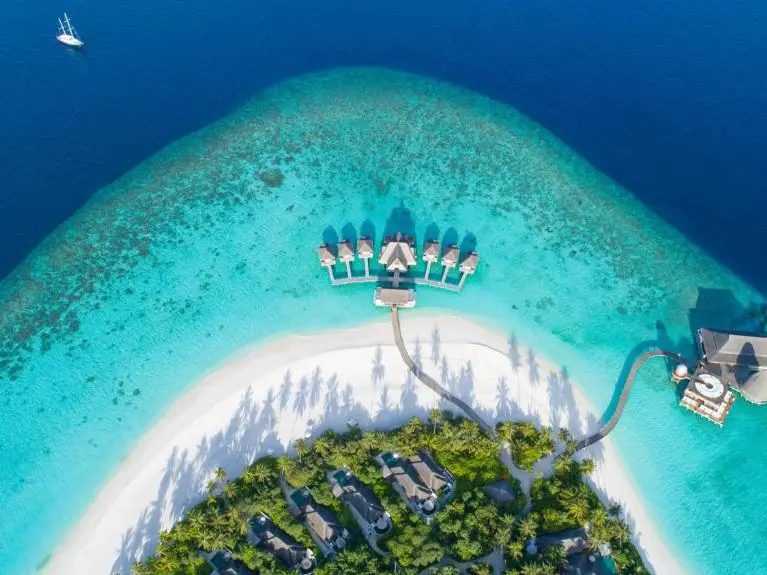
| 1. Anantara Kihavah Maldives Villas Best Known House Reef in the Maldives Rating: ⭐⭐⭐⭐⭐ Location: 35-minute seaplane from Velana International Airport, Baa Atoll Guest Reviews: Golden Wall coral wall, five turtle species on every snorkel, eagle rays and blacktip sharks from the villa steps, glass-bottom underwater restaurant Best Room: Over Water Pool Villa Price: From USD $1,300 – $4,000 per night |
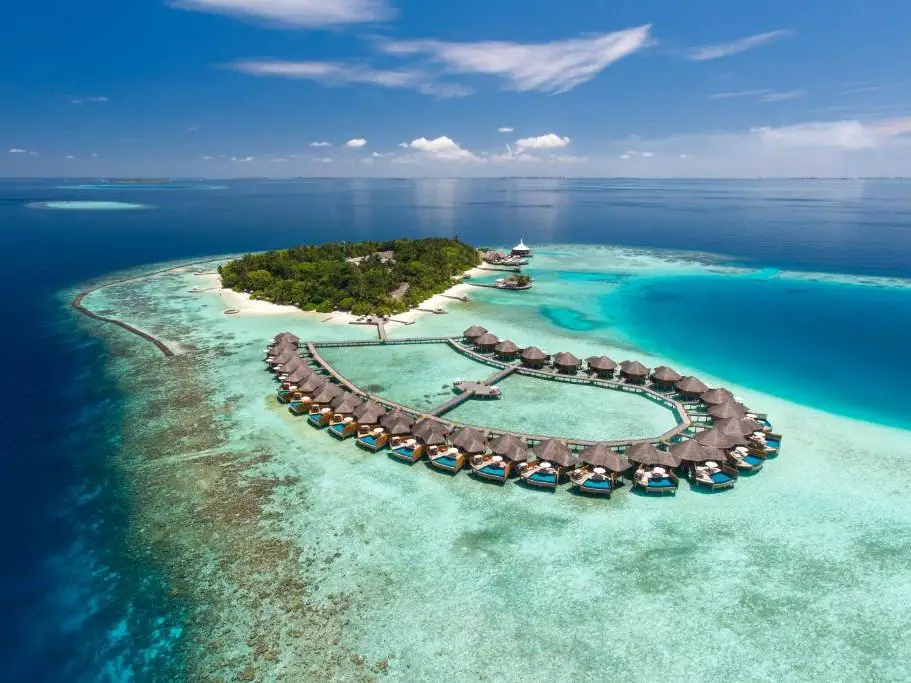
| 2. Baros Maldives Best Reef for Couples Rating: ⭐⭐⭐⭐⭐ Location: 20-minute speedboat from Velana International Airport, North Malé Atoll Guest Reviews: 20+ individually identified resident turtles, blacktip sharks visible from the shore, eagle rays on almost every snorkel, night reef fluoresces after dark Best Room: Water Villa with Private Pool Price: From USD $580 – $1,750 per night |
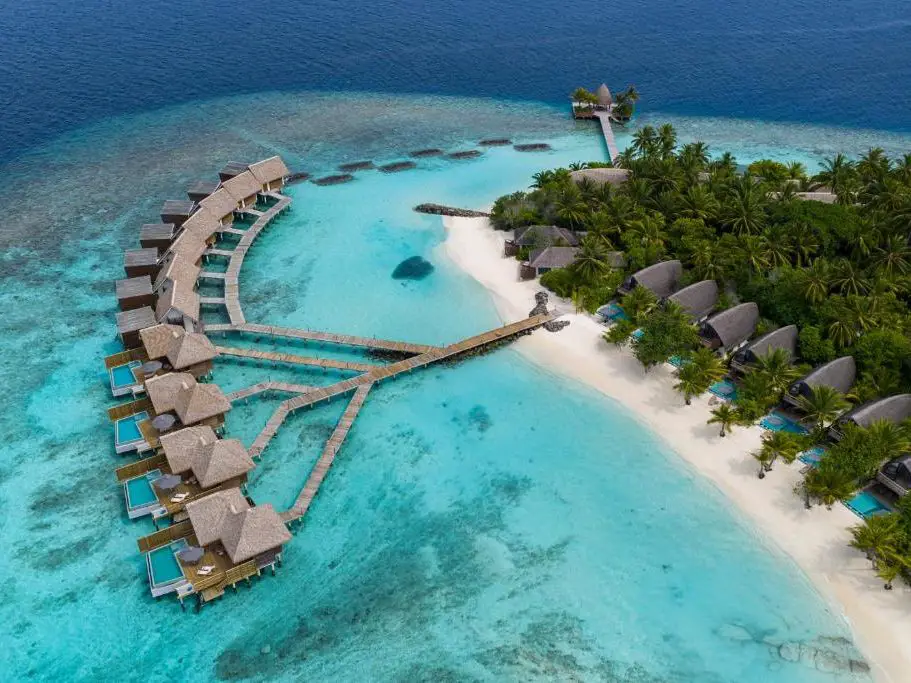
| 3. Kandolhu Maldives Rating: ⭐⭐⭐⭐⭐ Location: 20-minute seaplane then 15-minute speedboat from Velana International Airport, North Ari Atoll Guest Reviews: 360-degree reef circles the entire island, nurse sharks resting under the service jetty, hawksbill turtles on every snorkel, eagle rays cruising the channel Best Room: Deluxe Ocean Pool Villa Price: From USD $540 – $2,000 per night |
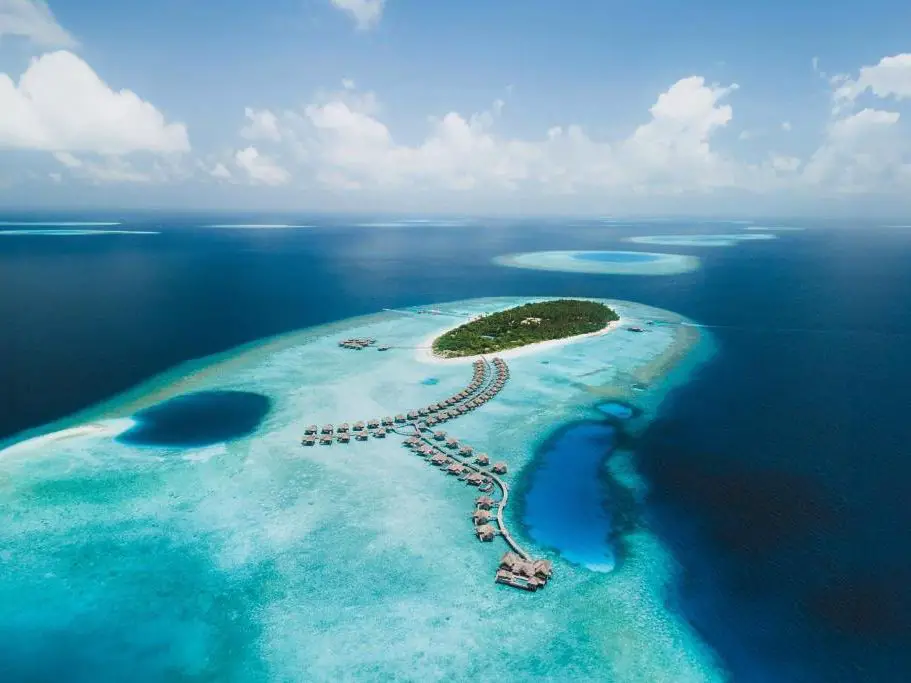
| 4. Vakkaru Maldives Most Distinctive Reef Topography Rating: ⭐⭐⭐⭐⭐ Location: 30-minute seaplane from Velana International Airport, Baa Atoll Guest Reviews: Three natural blue holes in the house reef with vertical coral shafts, baby blacktip sharks in the shallows, eagle rays at the reef drop-off, Hanifaru Bay manta gatherings a 30-minute boat ride away Best Room: Over Water Pool Villa Price: From USD $890 – $3,000 per night |
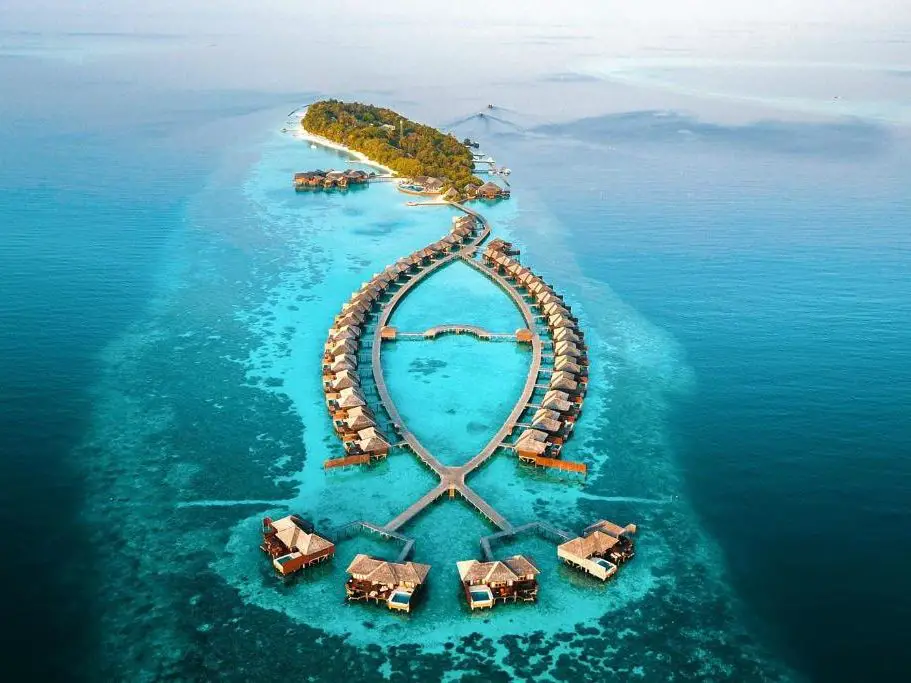
| 5. Lily Beach Resort and Spa Best All-Inclusive Reef Package Rating: ⭐⭐⭐⭐⭐ Location: 20-minute domestic flight then 35-minute speedboat from Velana International Airport, South Ari Atoll Guest Reviews: 360-degree reef with over 100 fish species, reef sharks and nurse sharks on night snorkels, eagle rays and whale shark sightings from the house reef, glass-floor villa panels reveal sea life below at all hours Best Room: Deluxe Water Villa Price: From USD $630 – $2,000 per night |
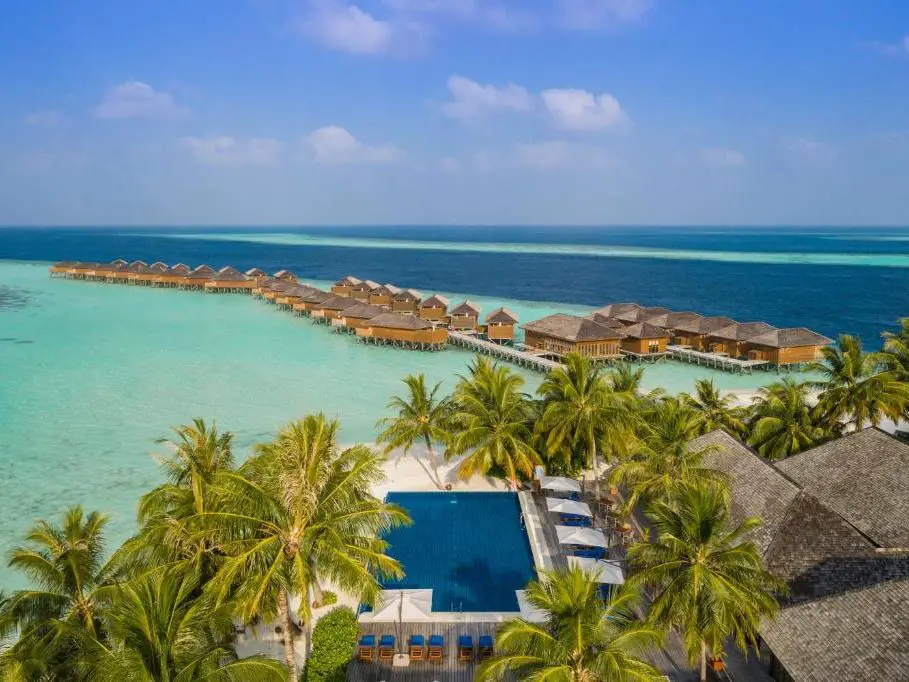
| 6. Vilamendhoo Maldives Resort Island Rating: ⭐⭐⭐⭐ Location: 25-minute seaplane from Velana International Airport, South Ari Atoll Guest Reviews: Ten marked entry points around the island, blacktip and whitetip reef sharks on every dive, four ray species in the channel, octopus and cuttlefish schools in the shallows Best Room: Jacuzzi Water Villa Price: From USD $245 – $900 per night |
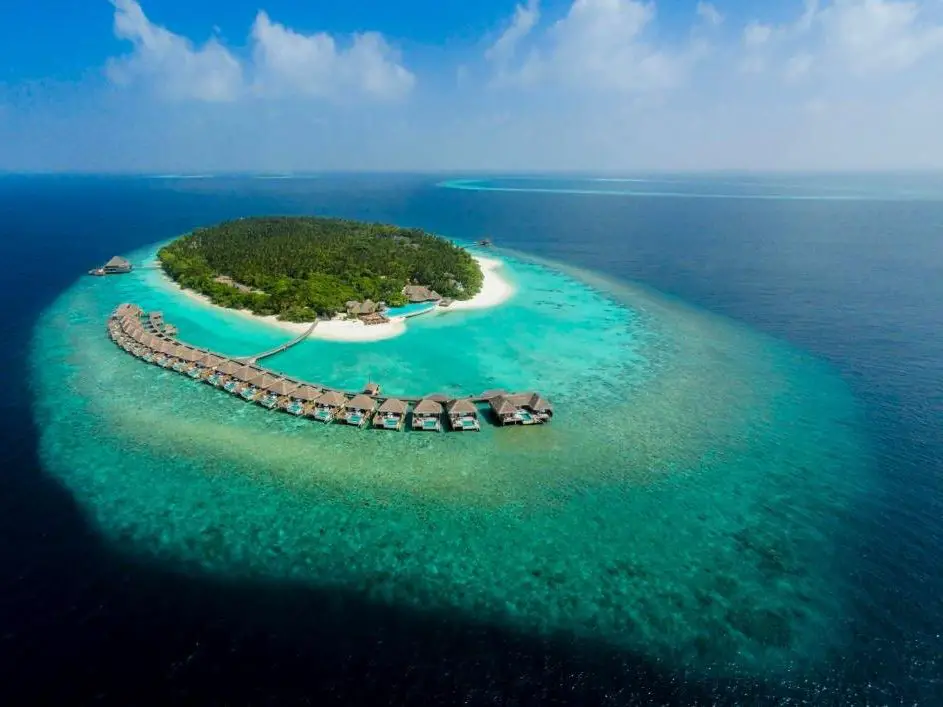
| 7. Dusit Thani Maldives Closest Resort to Hanifaru Bay Rating: ⭐⭐⭐⭐⭐ Location: 35-minute seaplane from Velana International Airport, Baa Atoll Guest Reviews: 360-degree reef wraps every villa on the island, titan triggerfish and scorpionfish indicating a predatory ecosystem, turtles and octopus visible from the villa deck, Hanifaru Bay manta gatherings accessible May to October Best Room: Overwater Pool Villa Price: From USD $430 – $1,800 per night |
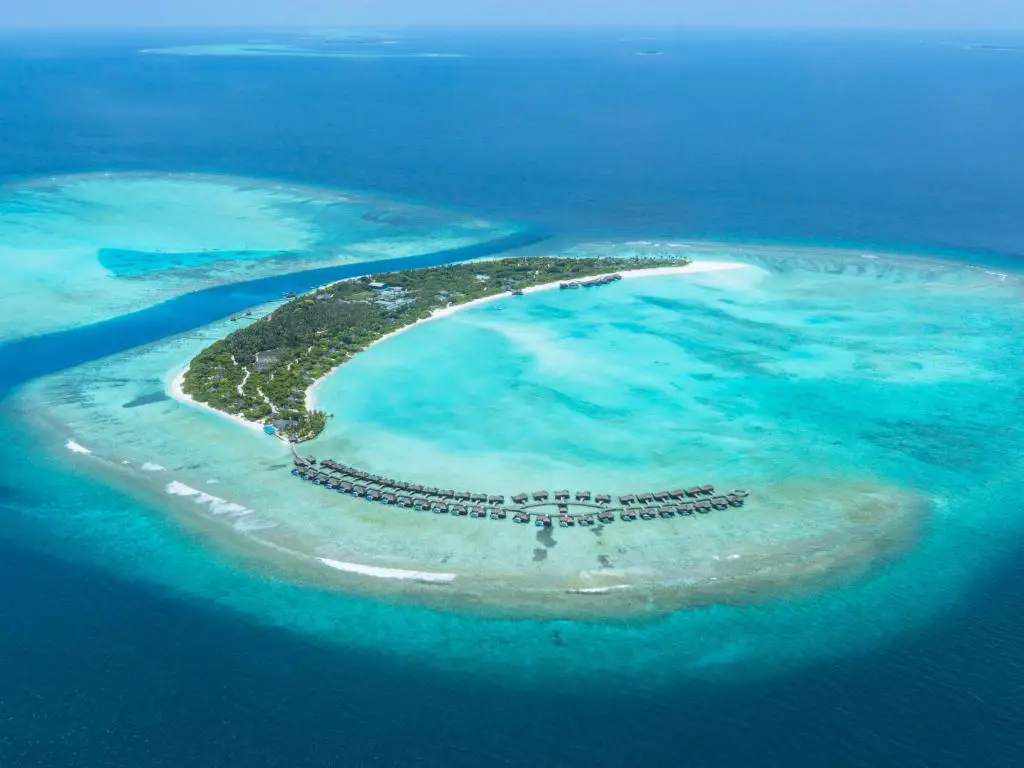
| 8. Hideaway Beach Resort & Spa Most Secluded Reef Experience Rating: ⭐⭐⭐⭐⭐ Location: 1-hour domestic flight then 30-minute speedboat from Velana International Airport, Haa Alifu Atoll Guest Reviews: Rare double channel reef structure with near-shore coral and a second deeper reef beyond, blacktip sharks and baby sharks in the shallows, eagle rays and turtles at the western drop-off, dolphins using the channel as a regular transit route Best Room: Deluxe Water Villa with Private Pool Price: From USD $390 – $1,500 per night |
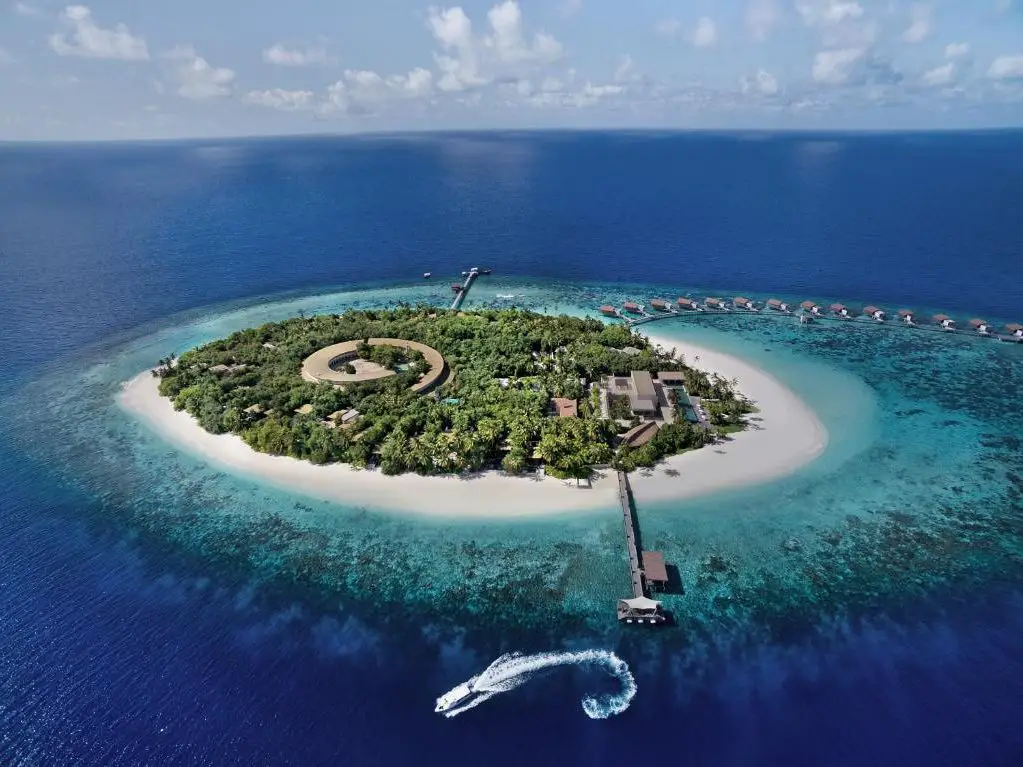
| 9. Park Hyatt Maldives Hadahaa Most Pristine Reef Ecosystem Rating: ⭐⭐⭐⭐⭐ Location: 1-hour domestic flight then 30-minute speedboat from Velana International Airport, Gaafu Alifu Atoll Guest Reviews: 2km continuous 360-degree reef wrapping the entire island, healthy coral rated,, reef sharks and turtles from every entry point, resident marine biologist leads guided night snorkels Best Room: Villa, Overwater (Sunset) Price: From USD $730 – $2,400 per night |
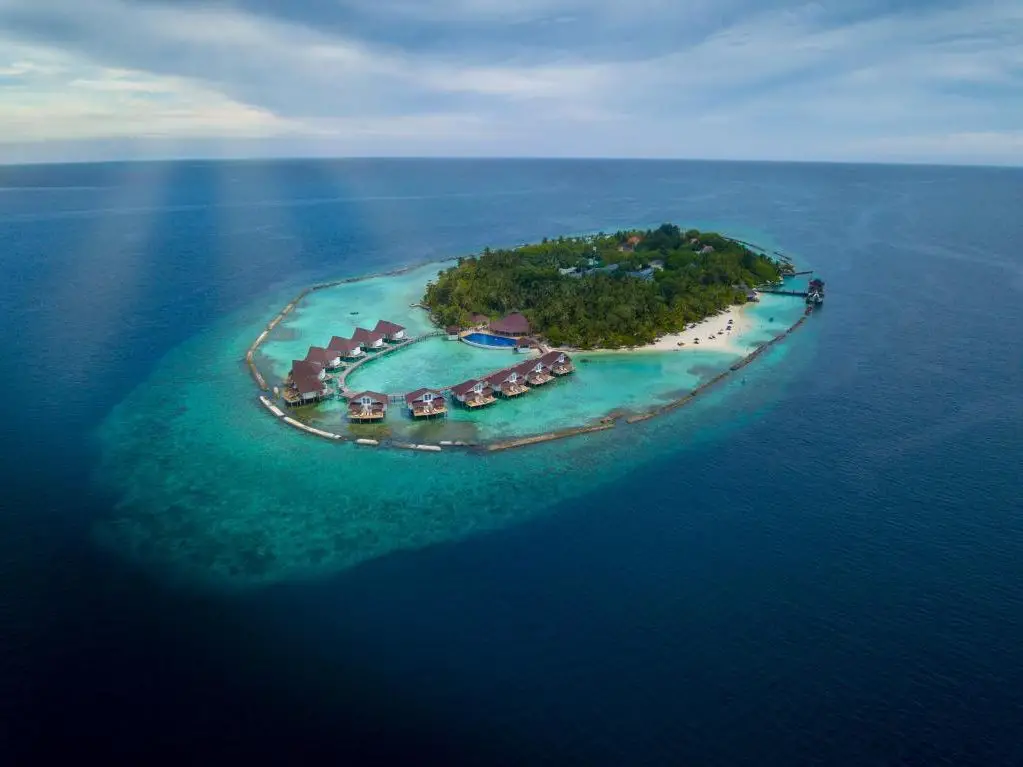
| 10. Ellaidhoo Maldives by Cinnamon Best Value Reef Snorkeling Rating: ⭐⭐⭐⭐ Location: 25-minute seaplane or 90-minute speedboat from Velana International Airport, North Ari Atoll Guest Reviews: Reef sharks visible from the walkway to water bungalows, hawksbill turtles and octopus on morning snorkels, six to eight sharks emerge in torchlight on night sessions from 6:30pm, eagle rays and manta rays in the channel Best Room: Water Bungalow Price: From USD $170 – $500 per night |
What Makes a House Reef Worth Snorkeling Every Day
The difference between a reef you visit once and one you return to three times a day comes down to three things, none of which appear in marketing photography.
- Distance to the drop-off — The drop-off is where the reef wall falls away into deep water, and it’s where the most interesting marine life concentrates. A reef where the drop-off sits 10–20 metres from shore means you’re in the action within two minutes of entering the water. A reef where the drop-off is 200 metres out, past a shallow sandy lagoon, means a long swim before anything happens. Every resort on this list has a drop-off accessible from shore without a boat; the distance varies and is worth checking before booking.
- Coral structure and health — Live hard coral supports the food chain that keeps fish, turtles and sharks on the reef. Resorts in remote atolls like Gaafu Alifu (where Park Hyatt Maldives Hadahaa sits) consistently have healthier coral than heavily visited central atolls, because cooler, deeper water and lower boat traffic reduce bleaching pressure. Baa Atoll’s UNESCO Biosphere Reserve status brings active reef management that has measurably improved coral recovery since the 2023–2024 heat stress events. When choosing between two resorts on paper, the atoll’s conservation history matters as much as the hotel’s star rating.
- Entry point quality — A great reef with a bad entry is a frustrating reef. The best house reefs have multiple clearly marked entry and exit points at different depths, so beginners can wade in from shallow sand while stronger swimmers drop straight to the wall. Resorts that have invested in proper entry infrastructure — rope guides, buoys, marked channels — make snorkeling spontaneous rather than planned. Vilamendhoo runs ten marked entry points around the island, which is why guests there tend to snorkel more frequently than at resorts with a single designated access spot.
- 360-degree vs partial reef — A reef that encircles the entire island means you can always find calm water regardless of wind direction. On a windy morning, walk to the sheltered side and enter there. Resorts with partial reefs on one face of the island lose their best snorkeling when the wind swings. Kandolhu, Dusit Thani, Park Hyatt Hadahaa, and Anantara Kihavah all have full 360-degree reefs — a practical advantage that most lists don’t call out.
Which Atoll is Right for You
The Maldives spans 900 kilometres north to south, and atoll choice determines transfer cost, marine life profile, reef health, and price level as much as any single resort decision. The five atolls represented on this list each have a distinct character.
- Baa Atoll (Anantara Kihavah, Vakkaru, Dusit Thani) — The only UNESCO Biosphere Reserve in the Maldives, Baa is the best atoll in the country for manta ray encounters. Hanifaru Bay, a shallow enclosed bay within the reserve, aggregates hundreds of mantas during full-moon feeding events from May to November — the largest gatherings of reef manta rays documented anywhere on earth. All three resorts on this list sit within 30 minutes of Hanifaru by speedboat. House reefs here benefit from the reserve’s active coral management. The trade-off is transfer cost: seaplane access from Malé adds roughly USD 400–500 per person return, which pushes the total trip cost up significantly versus speedboat-accessible atolls.
- South Ari Atoll (Lily Beach, Vilamendhoo) — The whale shark capital of the Maldives. South Ari sits within the South Ari Marine Protected Area, where whale sharks are present year-round rather than seasonally, drawn by the plankton-rich waters around Maamigili. Manta rays are also common. The house reefs here tend toward gentle slopes rather than dramatic walls, making them excellent for beginners and families. Transfer is by seaplane (25 minutes) or domestic flight plus speedboat.
- North Ari Atoll (Kandolhu, Ellaidhoo) — Home to some of the most technically diverse snorkeling in the country, with iconic dive sites like Maaya Thila and Fish Head within short boat range. House reefs here tend to be shallower and more current-affected than Baa or South Ari, which brings pelagic species closer to shore but requires more confidence in the water. Whale shark excursions run from both resorts. Transfer is by seaplane (20–25 minutes) or speedboat (45–90 minutes depending on the resort).
- North Malé Atoll (Baros) — The closest atoll to Velana International Airport, with Baros reachable in 25 minutes by speedboat. This makes it the most practical choice for short stays, split itineraries, or anyone adding a few nights to a broader trip. The house reef quality at Baros is genuinely exceptional — 20+ identified resident turtles, blacktip sharks and eagle rays — and the proximity to Malé means none of the seaplane cost. The atoll is the most heavily trafficked in the Maldives, which in places shows on reef health, but Baros’s long-standing reef management programme keeps its own reef in better shape than most.
- Remote southern atolls (Park Hyatt Hadahaa in Gaafu Alifu, Hideaway in Haa Alifu) — The most pristine reefs on this list sit in the atolls furthest from Malé. Gaafu Alifu and Haa Alifu see a fraction of the boat traffic of central atolls, and the coral health reflects it. Hadahaa’s reef has appeared in the Travel + Leisure Asia Pacific top five for house reefs in consecutive years. The cost is the transfer: domestic flight plus speedboat, adding 90 minutes to two hours and USD 300–600 per person each way. For snorkelers who are serious about reef quality and undisturbed water, the premium is worth examining carefully.
When to Go — and When Not To
Snorkeling in the Maldives is possible year-round, but the experience changes significantly by season, and one month is worth avoiding entirely.
- November to April (dry season, northeast monsoon) — The best months for visibility and calm water. Underwater visibility regularly exceeds 30 metres, seas are gentle, and currents are predictable. December through March is peak season: prices are highest, availability tightest, and resorts book out months in advance at the best properties. February and March offer the best combination of settled weather and clearest water. April is still excellent and slightly less crowded. If house reef snorkeling is the primary reason for the trip, this window delivers the most consistent daily conditions.
- May to November (wet season, southwest monsoon) — The trade-off window. Visibility drops to 10–20 metres on rougher days, and afternoon squalls are common — though most pass within an hour and mornings are often clear. The upside is significant: manta ray aggregations at Hanifaru Bay in Baa Atoll peak between June and November, with the largest gatherings during full-moon tides in August and September. Whale sharks are present year-round in South Ari but concentrated and easier to find in the wet season when plankton blooms. Rates drop 30–60% at most resorts versus peak season, and the reef feels emptier. For experienced snorkelers who are primarily after megafauna encounters, May to November — particularly June, July and September — is often the better choice.
- October — The one month to approach with caution. October is consistently the wettest month in the Maldives, with the highest rainfall totals and the lowest underwater visibility of the year. The low-season pricing is attractive, but if reef snorkeling is the point of the trip, the conditions don’t justify it. November is only a few weeks away and delivers a meaningful improvement in both weather and water clarity.
- Booking lead times — Peak season rooms at small resorts like Kandolhu (30 villas) and Baros (75 villas) disappear 6 to 12 months ahead. Wet season availability is typically manageable with 2 to 3 months’ notice. If dates are fixed and fall in December through March, book as early as possible — room category and villa position matter enormously for reef access, and the best-positioned rooms go first.
Beach Villa or Overwater Villa for House Reef Snorkeling
This is the most debated question on every Maldives forum and the one where the standard advice — “overwater for snorkeling” — is frequently wrong, or at least incomplete. The honest answer depends on the specific resort and the type of snorkeling you want.
- Overwater villa with direct deck access — At resorts where the house reef runs directly beneath the villa jetty, stepping off your deck puts you in the water above live coral within seconds. Anantara Kihavah, Vakkaru, Baros, Kandolhu, Lily Beach and Park Hyatt Hadahaa all offer this. It is the most immediate snorkeling experience available anywhere in the world: no walk, no entry point, no schedule. The limitation is that snorkeling directly under overwater villas can feel linear — you’re following the jetty rather than exploring freely. Most guests supplement jetty snorkeling with reef circuits launched from the shore. The other consideration is depth: overwater villa decks often sit above sandy lagoon floor with the reef wall a short swim away, so the action is not always directly below — check the specific villa’s position relative to the reef before booking.
- Beach villa with shore entry — At resorts with 360-degree house reefs, a beach villa gives you full island circuit access without being tied to a single jetty. On a calm morning you wade in from the beach and drift along the wall at your own pace, exiting wherever you like. Vilamendhoo‘s beach villa guests access the reef from ten different points around the island and tend to clock more time in the water per day than overwater villa guests, according to multiple guest reviews. Dusit Thani‘s beach villas open directly onto the lagoon with the reef just 20 metres out. For snorkelers who want to explore rather than observe from a fixed position, a well-positioned beach villa at a 360-degree reef resort is often the better choice — and typically costs significantly less.
- Overwater villa without direct reef access — This is the scenario that frustrates guests who book on reputation rather than specifics. At Ellaidhoo Maldives by Cinnamon, the water bungalows sit over the lagoon but direct step-in ocean access from the deck is not permitted — guests walk to designated entry points instead. The reef is excellent and close, but the experience is not the “step off the deck” fantasy. This is not a criticism of the resort, which is transparent about it and provides well-marked alternatives, but it illustrates why checking the specific entry arrangement matters before booking any overwater category. The question to ask a resort before booking: can guests enter the reef directly from overwater villa steps, or are designated entry points required?
- The practical verdict — If the reef at your chosen resort runs directly under the overwater jetty and you want maximum spontaneity, the overwater villa justifies the premium. If the resort has a full 360-degree reef with multiple shore entry points, a beach villa delivers comparable or better snorkeling access at a lower cost and with more flexibility. The villa category matters less than the reef’s position relative to both villa types at that specific resort.
How to Make the Most of a House Reef
The guests who get the most from a house reef are not necessarily the strongest swimmers. They are the ones who approach it with a little practical knowledge and go in early.
- Go before breakfast — Marine life is most active in the first two hours after sunrise. Fish feed, sharks patrol, and turtles graze before the midday heat sends them deeper. The reef also sees its fewest people at this hour. Most guests who snorkel three times a day report the pre-breakfast session as the best. An hour in the water before coffee is worth two hours in the afternoon.
- Check the tide before entering — Low tide at shallow reefs exposes coral close to the surface and makes entry and exit harder without damaging it. High tide deepens the lagoon approach and calms the water near entry points. Most resort dive centres post a daily tide chart — glance at it before you go. At resorts with current-exposed reef faces like Dusit Thani and Park Hyatt Hadahaa, the dive team’s daily briefing will also flag where the current is running and which entry points to use.
- Do at least one guided snorkel — Even experienced snorkelers benefit from a single guided session at the start of a stay. The marine biologist or guide will show you where the turtles rest, which coral head the nurse sharks favour, and how to read the reef topography. Every subsequent independent snorkel is better for it. All ten resorts on this list offer guided snorkel programmes; at most they are complimentary.
- Bring your own mask if you can — Resort-issued masks are functional but a mask that fits your face perfectly transforms the experience. Fogging, leaking, and discomfort are almost always the result of a poor seal rather than the reef being underwhelming. A fitted mask with a wide field of view, packed flat in carry-on luggage, is the single highest-return snorkeling investment available.
- Use reef-safe sunscreen only — Chemical sunscreens — those containing oxybenzone and octinoxate — are toxic to coral at very low concentrations. Several Maldives resorts have banned chemical sunscreens entirely, and all ten on this list have active reef conservation programmes. Mineral sunscreen (zinc oxide or titanium dioxide) is the alternative; a rash guard or long-sleeve swimsuit is better still. This is not a minor preference — it is the condition of being allowed on a healthy reef.
- Respect the entry and exit points — Walking across live coral to exit the water kills it. All well-managed house reefs have designated sandy channels for exit, clearly marked with buoys or ropes. Use them even when they feel inconvenient. The reefs at resorts like Park Hyatt Hadahaa and Kandolhu are in unusually good condition partly because guests over years have respected the marked areas.
- Night snorkeling is a different reef — Several resorts on this list — including Baros, Ellaidhoo and Lily Beach — run guided night snorkeling programmes typically beginning around 6:30pm. The reef after dark is genuinely different: nurse sharks and reef sharks that rest during the day become active, octopus emerge from crevices, and parrotfish sleep in mucus cocoons visible under torchlight. If the idea sounds alarming, note that the sharks are the same species present by day — the darkness simply makes them visible. A single night snorkel is one of the most consistently memorable experiences guests report from house reef resorts.
Frequently Asked Questions
1. What is a house reef in the Maldives?
A house reef is the coral reef that encircles a private resort island, accessible directly from the beach or villa without a boat trip. The quality varies enormously between resorts — from shallow sandy slopes with sparse coral to thriving walls teeming with sharks, turtles and hundreds of fish species.
2. Do I need to be a strong swimmer to snorkel a house reef?
Snorkeling a house reef requires basic swimming ability and comfort floating face-down in open water. Most house reefs have calm, shallow lagoon areas suitable for beginners, with deeper, more current-exposed sections for confident swimmers. Every resort on this list offers guided snorkel programmes where the marine team stays with the group throughout.
3. Which Maldives atoll has the best house reef snorkeling?
Baa Atoll leads for manta ray encounters and coral conservation, South Ari Atoll for year-round whale sharks, and North Malé Atoll for proximity to the airport and convenience. Remote southern atolls like Gaafu Alifu have the most pristine and undisturbed reefs. The best atoll depends on what marine life you most want to see and how far you’re willing to travel from Malé.
4. Is snorkeling better from a beach villa or overwater villa?
At resorts with a full 360-degree reef and multiple shore entry points, beach villas often deliver more flexible snorkeling access at lower cost. At resorts where the reef runs directly beneath the overwater jetty, stepping off the villa deck is the most immediate experience available. The specific reef position at each resort matters more than the villa category as a general rule.
5. What marine life can I expect to see snorkeling a Maldives house reef?
Blacktip and whitetip reef sharks, nurse sharks, hawksbill and green turtles, eagle rays, stingrays, moray eels, octopus, parrotfish, triggerfish and dense schools of reef fish are common across all ten resorts on this list. Whale sharks are encountered on excursions from South Ari and North Ari resorts; manta rays aggregate seasonally at Hanifaru Bay near Baa Atoll resorts from May to November.
6. Are reef sharks dangerous to snorkelers?
Blacktip and whitetip reef sharks are the species snorkelers most commonly encounter on Maldives house reefs. Neither poses meaningful danger to snorkelers who do not chase, corner or handle them. Both species typically retreat when approached. Nurse sharks, which rest on the sandy bottom under jetties, are docile and slow-moving. No unprovoked attack on a snorkeler has been recorded at any of the resorts covered here.
7. What is the best time of year to snorkel a Maldives house reef?
November to April offers the best visibility and calmest conditions for house reef snorkeling. February and March are peak months for water clarity. May to November brings lower prices and significantly better chances of manta ray and whale shark encounters, at the cost of some reduction in visibility. October is the one month to approach with caution — it is consistently the wettest and produces the lowest underwater visibility of the year.
8. Do Maldives resorts provide snorkeling equipment?
All ten resorts on this list provide complimentary snorkeling equipment. Mask, fins and snorkel are included in the stay at no additional charge. Bringing a personal mask that fits your face correctly is still advisable for the best experience, as resort gear is sized for general use rather than individual fit.
9. Can beginners snorkel a house reef without experience?
The shallow lagoon areas of most house reefs are suitable for complete beginners who can swim confidently. All resorts on this list run guided introductory snorkel sessions. The reef at Vilamendhoo, with its ten marked entry points at varying depths, is widely cited by guests as one of the most beginner-friendly on any Maldives resort island.
10. How does a house reef differ from a boat snorkeling excursion?
A house reef is accessible at any time without booking, cost or waiting for a group — you go when you want and stay as long as you like. Boat excursions take you to specific sites, often with more dramatic topography or seasonal megafauna, but on a fixed schedule and at additional cost. The resorts on this list were selected because their house reefs are strong enough to justify the trip on their own, without relying on excursions to deliver the experience.