
The first time you put your face in the water above a Maldives reef, even the most anxious snorkeller tends to forget they were nervous. The colours hit immediately — parrotfish, turtles, the occasional blacktip reef shark cruising past without a second glance — and the only challenge becomes remembering to breathe. These resorts were picked for exactly that first-timer experience: calm lagoons, shallow entries, reef close enough to reach without a long swim, and staff who will get you comfortable before you leave the beach.
Table of Contents
Maldives Resorts
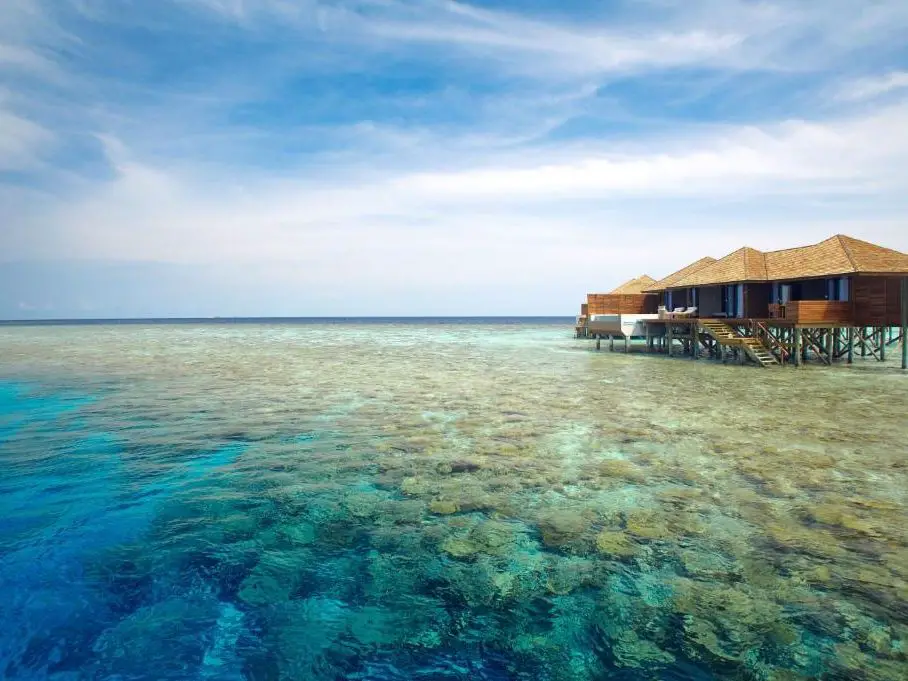
| 1. Lily Beach Resort and Spa Best All-Inclusive for First-Time Snorkellers Rating: ⭐⭐⭐⭐⭐ Location: 25-minute seaplane then 10-minute speedboat from Velana International Airport, South Ari Atoll Guest Reviews: Shallow-water introduction session with a guide before entering the reef, coral garden 3–10 metres from shore, whale shark sightings from the house reef, guided night snorkels included Best Room: Beach Villa Price: From USD $700 – $2,000 per night |
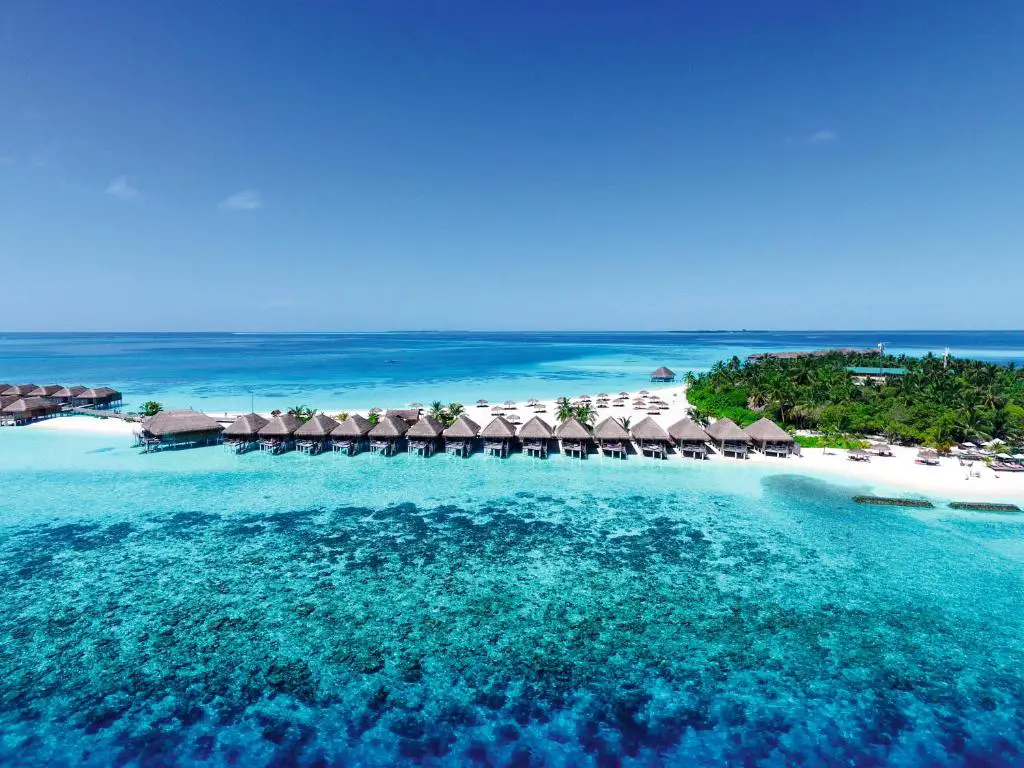
| 2. Constance Moofushi Maldives Rating: ⭐⭐⭐⭐⭐ Location: 25-minute seaplane from Velana International Airport, South Ari Atoll Guest Reviews: Three calm lagoons around the island, gradual sandy beach entries rated beginner-accessible, guided snorkel sessions included, reef sharks and turtles a short swim from shore Best Room: Beach Villa Price: From USD $600 – $1,800 per night |
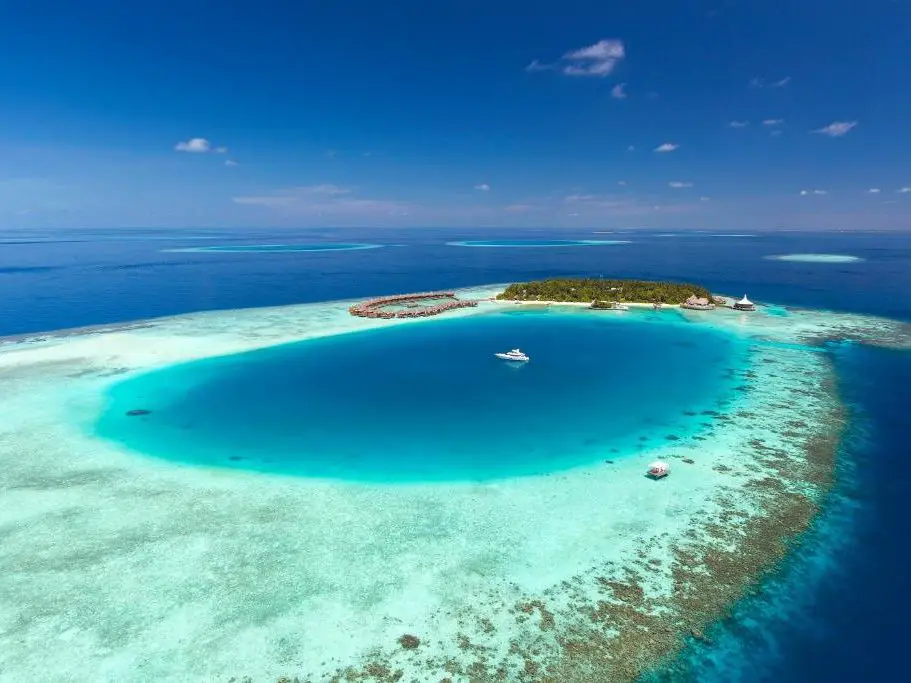
| 3. Baros Maldives Best Reef for a Short Stay Rating: ⭐⭐⭐⭐⭐ Location: 25-minute speedboat from Velana International Airport, North Malé Atoll Guest Reviews: Reef slopes gently from shore to 20 metres depth, private snorkel lessons available for first-timers, 20+ individually identified resident turtles, marine biologist leads guided reef tours Best Room: Deluxe Beach Villa Price: From USD $580 – $1,750 per night |
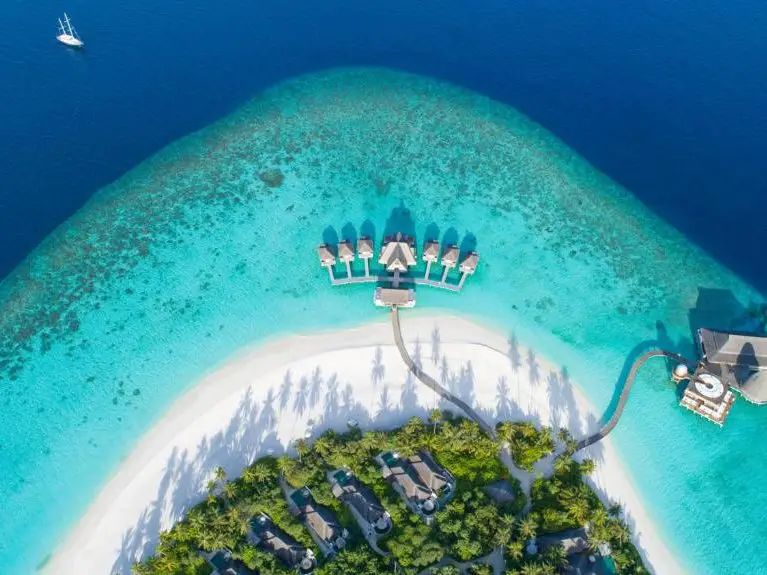
| 4. Anantara Kihavah Maldives Villas Best for Families New to Snorkelling Rating: ⭐⭐⭐⭐⭐ Location: 35-minute seaplane from Velana International Airport, Baa Atoll Guest Reviews: Calm lagoon areas safe for children and first-timers, guided private and group snorkel sessions included, five turtle species on the reef, manta ray excursions to Hanifaru Bay 15 minutes away Best Room: Beach Pool Villa Price: From USD $680 – $2,500 per night |
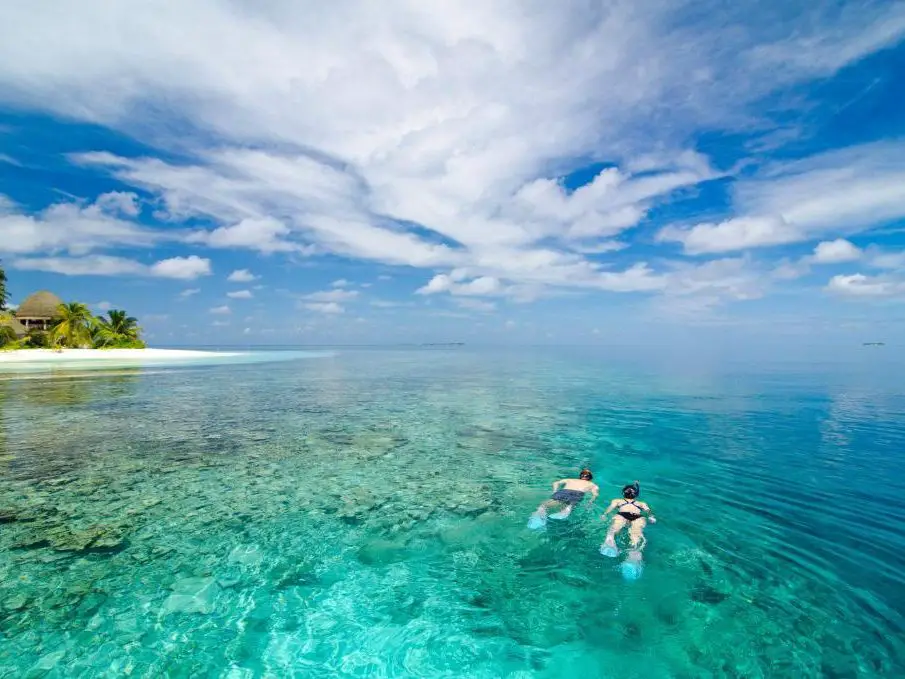
| 5. Kandolhu Maldives Most Marine Life per Square Metre Rating: ⭐⭐⭐⭐⭐ Location: 20-minute seaplane then 15-minute speedboat from Velana International Airport, North Ari Atoll Guest Reviews: 360-degree reef begins metres from the beach, three marked shore entry points, nurse sharks resting under the jetty visible without entering the water, complimentary gear and guided snorkel sessions included Best Room: Beach Villa Price: From USD $540 – $2,000 per night |
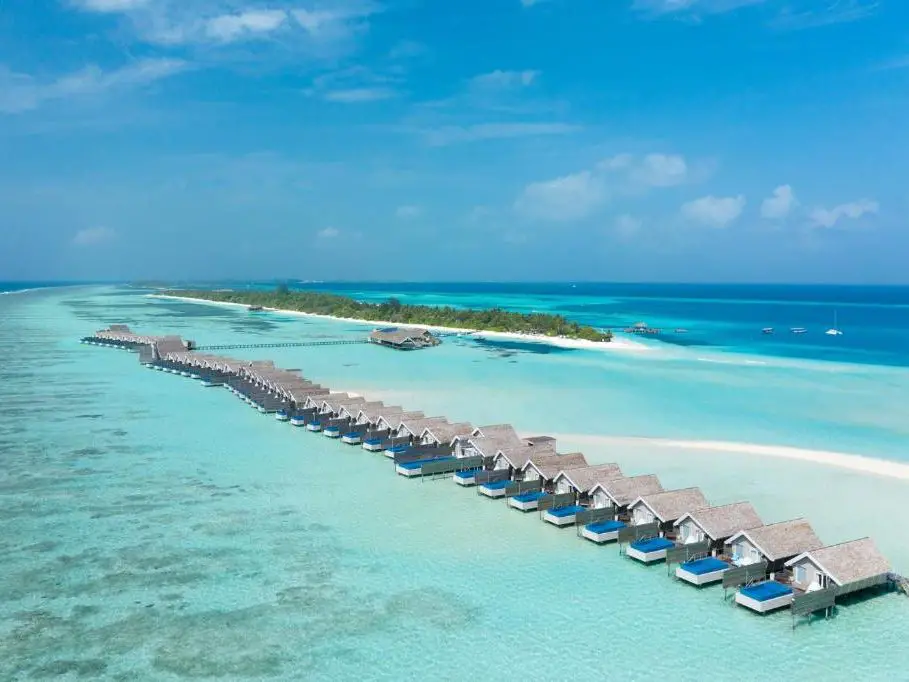
| 6. LUX* South Ari Atoll Resort & Villas Best Chance of a Whale Shark Encounter Rating: ⭐⭐⭐⭐⭐ Location: 25-minute seaplane from Velana International Airport, South Ari Atoll Guest Reviews: Twice-daily guided house reef snorkel trips included, resident marine biologist leads whale shark excursions, sheltered lagoon ideal for first-time divers and snorkellers, resident manta rays visit the jetty most evenings Best Room: Beach Villa Price: From USD $280 – $2,000 per night |
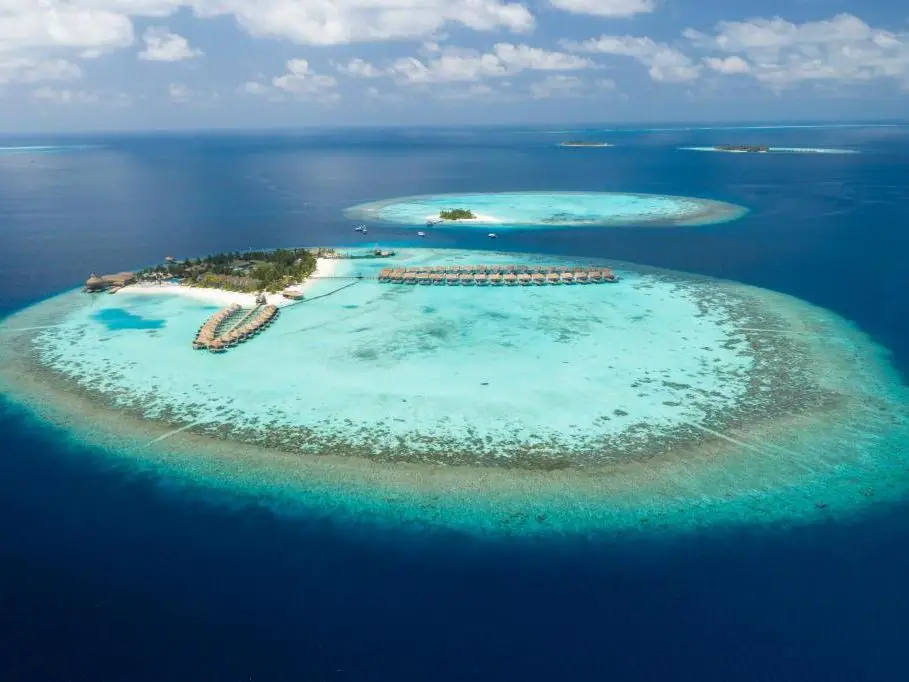
| 7. OUTRIGGER Maldives Maafushivaru Resort Rating: ⭐⭐⭐⭐⭐ Location: 25-minute seaplane from Velana International Airport, South Ari Atoll Guest Reviews: Buoy-marked reef entry points make independent snorkelling straightforward from day one, resident marine biologist leads reef talks and guided snorkel sessions, juvenile blacktip sharks visible under the sunset jetty without entering the water, whale shark excursions year-round in South Ari MPA Best Room: Beach Villa Price: From USD $420 – $1,800 per night |
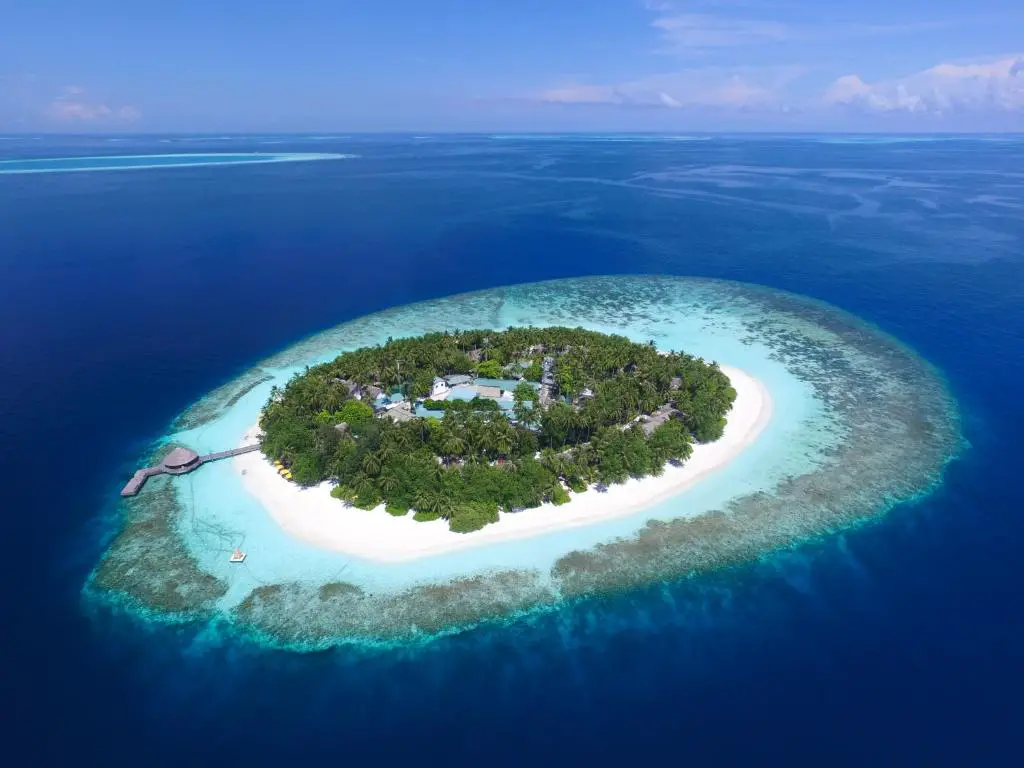
| 8. Dhawa Ihuru, part of Banyan Group Best Value Reef Access Rating: ⭐⭐⭐⭐⭐ Location: 25-minute speedboat from Velana International Airport, North Malé Atoll Guest Reviews: Shallow calm lagoon ideal for first snorkels, guided reef sessions with resident snorkel guide introduce marked entry points before independent exploration, three types of sharks and turtles regularly spotted, complimentary shuttle to sister island Banyan Tree Vabbinfaru adds a second reef without extra cost Best Room: Beachfront Villa Price: From USD $720 – $1,800 per night |
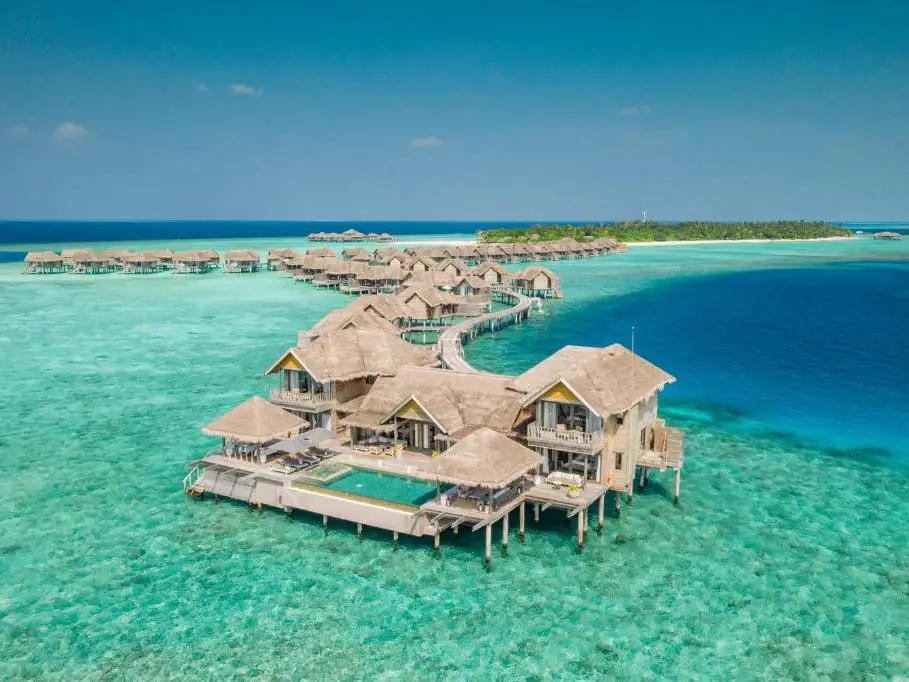
| 9. Vakkaru Maldives Most Distinctive Reef Topography Rating: ⭐⭐⭐⭐⭐ Location: 30-minute seaplane from Velana International Airport, Baa Atoll Guest Reviews: Reef accessible directly from the beach with 1,000+ fish species, three natural blue holes in the house reef attract eagle rays and reef sharks, kids club runs dedicated blue-hole snorkel sessions, Hanifaru Bay manta excursions 30 minutes away Best Room: Beach Pool Villa Price: From USD $890 – $3,000 per night |
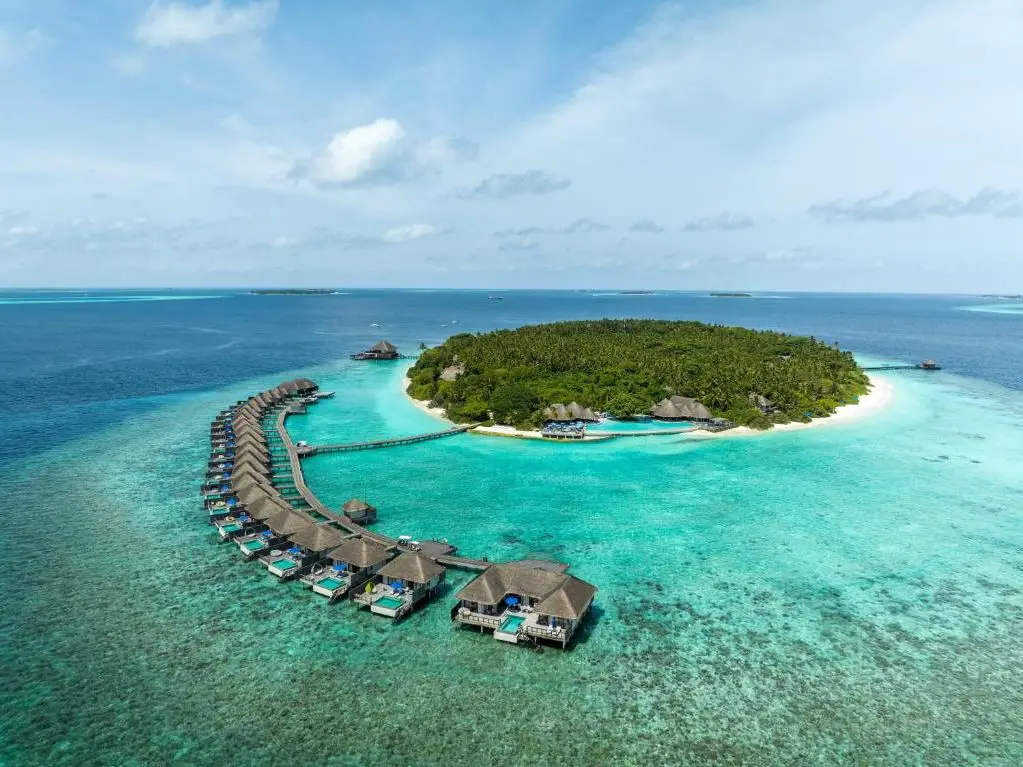
| 10. Dusit Thani Maldives Best Beginner Instruction Programme Rating: ⭐⭐⭐⭐⭐ Location: 35-minute seaplane from Velana International Airport, Baa Atoll Guest Reviews: 360-degree reef wraps every villa on the island with direct shore entry, PADI-certified guided sessions for beginners in multiple languages, resident turtles and reef sharks visible from the beach, Hanifaru Bay manta excursions five minutes away by speedboat Best Room: Villa (Beach) Price: From USD $430 – $1,800 per night |
What to Look for Before You Book
Four things separate a resort that works for first-time snorkellers from one that simply has a good reef. Most lists conflate the two.
- Distance from shore to the reef drop-off — The drop-off is the point where the lagoon floor falls away into deep water and the reef wall begins. This is where the marine life concentrates. At the best beginner resorts, this drop-off sits 10 to 30 metres from the beach, reachable in a short swim without fins. At others it sits 200 metres out, past a sandy lagoon floor with little to see on the way. Every resort on this list has a reef close enough to reach from shore without a boat; the exact distance varies and is worth checking per property before booking.
- Beach entry vs jetty entry — Shore entry from a sandy beach means you can wade in gradually, find your feet in shallow water, and move at your own pace. Jetty entry from an overwater villa means descending a ladder or steps directly into open water of unknown depth. For a first-timer, these are very different experiences. The beach villa option is consistently more beginner-appropriate, for reasons covered in the villa section below.
- Guided intro sessions — Every resort on this list offers guided snorkel programmes, but the format differs. The most beginner-friendly are those that run a short shallow-water orientation before entering the reef — fitting your mask, practising breathing, clearing water from the tube — before the guide leads you to the drop-off. Lily Beach, Baros, Dusit Thani, and Dhawa Ihuru all run structured intro sessions of this type. At others, guided sessions assume you already know how to use the equipment. If you have never snorkelled before, the intro session format is worth confirming with the resort before you arrive.
- Current exposure by villa position — Not all sides of an island are equal. Most Maldives resort islands have a sheltered lagoon side and a more current-exposed ocean side. Beginners should start on the sheltered side, which the resort’s dive centre will point out on arrival. Resorts with 360-degree reefs — Kandolhu, Dusit Thani, Anantara Kihavah, and Constance Moofushi among them — always have a calm side available regardless of wind direction, which matters more than it sounds on a day when conditions change mid-session.
Which Atoll to Choose — and Why It Matters More Than the Resort
The Maldives stretches 900 kilometres north to south across 26 atolls, and the atoll you stay in shapes the water conditions, the marine life you encounter, and the cost and time of getting there. For a beginner, these differences are more consequential than the resort’s star rating or villa design.
- South Ari Atoll (Lily Beach, Constance Moofushi, OUTRIGGER Maafushivaru) — The most beginner-friendly atoll on this list for one specific reason: the reef slopes here tend to be gentle rather than dramatic, making the transition from lagoon to reef wall less abrupt. South Ari is also the Maldives’ year-round whale shark zone, sitting within the South Ari Marine Protected Area. Whale shark excursions run from all three resorts, and the encounters are reliably calm — the animals are large but slow, and guides keep groups controlled. Transfer is by seaplane (25 minutes) or domestic flight plus speedboat, adding cost but not complexity.
- Baa Atoll (Anantara Kihavah, Vakkaru, Dusit Thani) — The only UNESCO Biosphere Reserve atoll in the Maldives, with active coral management that has measurably improved reef health since the bleaching events of 2023 and 2024. The defining experience here is Hanifaru Bay — a shallow enclosed bay where hundreds of manta rays gather during full-moon feeding events from May to November. All three resorts can reach it within 15 to 30 minutes by speedboat. For a beginner, snorkelling with mantas at Hanifaru is one of the more accessible big-animal encounters in the world: the water is shallow, the mantas move slowly, and no diving qualification is needed. Transfer from Malé is by seaplane (30 to 35 minutes), adding roughly USD 400 to 500 per person return.
- North Ari Atoll (Kandolhu) — The atoll with the most technically diverse snorkelling on the list, including iconic sites like Maaya Thila and Fish Head accessible by short boat trip. The trade-off for beginners is that North Ari house reefs tend to be more current-exposed than South Ari or Baa, and the drop-offs are more dramatic. Kandolhu‘s 360-degree reef means a calm side is always available, but guests who venture to the outer reef unguided can find conditions more demanding than expected. This is the right atoll for a confident beginner keen to progress quickly; it rewards those who take the guided intro sessions seriously before going solo.
- North Malé Atoll (Baros, Dhawa Ihuru) — The closest atoll to Velana International Airport, with Baros reachable in 25 minutes by speedboat and Dhawa Ihuru in 25 minutes. No seaplane cost, no daylight transfer restriction, no domestic flight. For anyone adding a few snorkelling nights to a broader trip, or travelling with children who may find long transfers tiring, this atoll’s proximity is a meaningful practical advantage. The house reefs at both resorts are world-class despite the airport proximity, with 20-plus identified resident turtles at Baros and three species of shark visible from Dhawa Ihuru‘s beach. The atoll sees more boat traffic than remote atolls, but neither resort’s reef shows it.
Beach Villa or Overwater Villa for Beginner Snorkellers
The standard advice — overwater villa for the snorkelling experience — is wrong for most beginners, and worth examining properly before booking.
- The case for beach villas — A beach villa puts you on sand with a gradual wading entry into the lagoon. You can stand in knee-deep water, fit your mask without treading water, practise clearing it while stationary, and move toward the reef at your own pace. If you feel uncomfortable, you turn around and walk back. This is the entry format that all the beginner guides recommend, and it is only available from a beach villa. At resorts with 360-degree reefs, every beach villa is within a short swim of the drop-off. The best villa positions for beginners at resorts on this list tend to be those facing the sheltered lagoon side — the resort dive centre will advise on this at check-in.
- The case against overwater villas for first-timers — Entering the water from an overwater villa means descending a ladder or steps directly into open water. The lagoon below may be three to five metres deep immediately below the steps, with no way to stand or pause. For a confident swimmer this is seamless; for someone still building water confidence it can be disorienting. The view of deep water below, visible through the floor panels or the ladder gap, triggers a stress response in some guests that undermines the experience before it begins. This is not a criticism of overwater villas — they are the definitive Maldives experience for most guests — but for a first-time snorkeller they introduce an unnecessary complication that a beach villa removes entirely.
- The exception — At resorts where the overwater villa jetty runs directly above a shallow section of house reef, the step-in experience is different: the water below is two to three metres deep with live coral and fish immediately visible. Kandolhu and Anantara Kihavah both have overwater villas positioned this way. At these resorts, the overwater entry is genuinely different from wading in from a beach — more immersive, more immediate — and worth the premium for a beginner who is comfortable floating in open water even if they have not snorkelled before. The question to ask the resort before booking any overwater category: how deep is the water directly beneath the villa steps, and does the reef start immediately below?
- The practical verdict — For a true first-timer, book a beach villa. The wading entry, the ability to stand if needed, and the gradual approach to deeper water are advantages that matter most on the first day. After one or two sessions with a guide, the step down to an overwater villa is a natural progression for a second stay — and at that point the experience delivers something a beach villa cannot match.
When to Go for Calm Conditions vs Big Marine Life
Snorkelling in the Maldives is possible year-round, but the experience changes significantly by month, and the best timing for a beginner is different from the best timing for someone chasing big animals.
- November to April (dry season, northeast monsoon) — The months that deliver the most consistent beginner conditions. Underwater visibility regularly reaches 25 to 30 metres, lagoon water is calm, and currents are predictable enough that guides can plan reef circuits in advance. December through March is peak season: prices are at their highest, rooms at the best properties — particularly small resorts like Kandolhu with only 30 villas — sell out six to twelve months ahead. February and March sit at the sweet spot of peak visibility and slightly lower demand than December and January. April is excellent and noticeably quieter, with prices starting to ease. For anyone snorkelling for the first time, this window removes variables and lets the reef do the work.
- May to November (wet season, southwest monsoon) — The months where conditions trade off against marine life volume. Visibility drops to 10 to 20 metres on rougher days, afternoon squalls are common, and currents on exposed reef faces can be stronger than a beginner expects. The upside is significant: manta ray aggregations at Hanifaru Bay in Baa Atoll peak between June and November, with the largest gatherings during full-moon tides in August and September. Whale sharks are present year-round in South Ari but concentrated and reliably findable in the wet season when plankton blooms draw them close. Resort prices fall 30 to 50 percent versus peak season, and the reefs see fewer people. For a beginner whose primary goal is seeing large animals rather than optimal conditions, June, July, and September are worth examining closely — the marine life encounters can be extraordinary even when the water is less clear.
- October specifically — The one month to avoid if snorkelling conditions are the point of the trip. October is consistently the wettest month in the Maldives, with the highest rainfall totals and the lowest visibility of the year. Low-season pricing is attractive but the conditions rarely justify it for a first-time snorkeller. November is only weeks away and delivers a significant improvement in both weather and water clarity.
- Booking lead times — Peak season availability at small resorts disappears fast. Kandolhu (30 villas), Baros (75 villas), and Dhawa Ihuru (45 villas) regularly fill their most-requested beach villa categories six to nine months out for December through March. Wet season availability is typically manageable with two to three months’ notice. If travel dates are fixed in peak season, confirm room category and villa position at the time of booking rather than leaving it to check-in.
Gear: What the Resorts Provide and What to Bring
All ten resorts on this list provide complimentary snorkelling equipment — mask, fins, and snorkel — included in the stay at no additional charge. The quality is functional. The fit is where the difference lies.
- The mask — Resort-issued masks are sized for average adult faces and maintained for general use. A mask that creates a proper seal against your face transforms the experience: no fogging, no leaking, no water trickling in and breaking concentration at the worst moment. The most common reason beginners report a disappointing first snorkel is a poorly fitting resort mask, not the reef. A personal mask, bought before the trip and tested at home in the bath, removes this variable entirely. Budget options start around USD 30; a good mid-range mask with a wide field of view costs USD 60 to 100 and packs flat in carry-on luggage.
- The snorkel — Resort snorkels are adequate for most purposes. If you want a dry-top snorkel — one with a valve that prevents water entering the tube when a wave washes over — this is worth buying personally, as resort gear rarely includes this feature and it reduces the most common moment of panic for beginners: a mouthful of seawater.
- Fins — Resort fins come in approximate sizes and work well enough for lagoon snorkelling. If you plan extended reef circuits, personal fins with a good fit reduce fatigue significantly. For a first-time snorkeller on a single trip, resort fins are fine.
- Flotation vest — Not included at most resorts but available to borrow or hire at the dive centre. For anyone not confident floating face-down in open water, a snorkel vest provides genuine reassurance without restricting movement. Resorts will offer one at the guided session; requesting one proactively is always accepted without comment. An inflatable travel vest packs into a small bag and is worth bringing if water confidence is genuinely uncertain.
- Reef-safe sunscreen — All ten resorts have active reef conservation programmes, and several have banned chemical sunscreens containing oxybenzone and octinoxate. A mineral sunscreen — zinc oxide or titanium dioxide — is the right choice for the reef and for extended surface time with your back fully exposed to the Maldivian sun. A rash guard or long-sleeve swimsuit is more effective still and removes the sunscreen question entirely.
- Full-face masks — These appear attractive for beginners because breathing feels more natural. Several dive safety organisations advise against them for open-water snorkelling, citing concerns about CO₂ build-up and difficulty clearing the mask in an emergency. Traditional mask and snorkel, with a little practice before entering the reef, is the safer and more widely recommended option.
Frequently Asked Questions
1. Do you need to be a strong swimmer to snorkel in the Maldives?
Basic swimming ability and comfort floating face-down in open water are enough for house reef snorkelling at the resorts on this list. All offer guided sessions where a marine guide stays with the group throughout, and flotation vests are available at every dive centre. The Maldives lagoon is warm, calm, and typically shallow near the beach — conditions that make it one of the more accessible places in the world to snorkel for the first time.
2. Can non-swimmers snorkel in the Maldives?
With a flotation vest and a guide, non-swimmers can snorkel safely in the lagoon and shallow reef areas at most resorts. The key is a gradual beach entry from shallow water rather than an overwater villa ladder. Several resorts on this list — including Lily Beach, Constance Moofushi, and Dhawa Ihuru — run structured intro sessions that begin in knee-deep water specifically for guests with limited water confidence.
3. Are reef sharks dangerous to snorkellers?
Blacktip and whitetip reef sharks — the species snorkellers encounter most often on Maldives house reefs — pose no meaningful threat to people in the water. Both species retreat when approached and neither has been associated with unprovoked attacks on snorkellers at any resort on this list. Nurse sharks, which rest on sandy lagoon floors and are often visible from the beach at Kandolhu and Baros, are equally docile. Seeing a shark on a first snorkel is more likely to be the highlight of the trip than a cause for concern.
4. Should I book a guided session before snorkelling independently?
For a first-time snorkeller, the answer is yes. A single guided session with the resort’s marine team shows you the marked entry and exit points, identifies where the current runs and how to read it, and points out the specific coral heads where turtles rest and sharks patrol. Every subsequent independent session is more productive and more confident for it. All ten resorts on this list offer guided programmes; at most, at least one session is complimentary.
5. What age can children snorkel at Maldives resorts?
There is no universal minimum age for snorkelling — it depends on the child’s swimming confidence and comfort with the equipment rather than a fixed number. Most resort guides recommend that children can join family snorkel sessions from around age five or six with a parent present and a flotation vest. Formal guided group excursions at most resorts require children to be at least eight years old. Lily Beach and Anantara Kihavah both have dedicated children’s water activity programmes that introduce snorkelling gradually from younger ages.
6. What is the difference between snorkelling the house reef and a boat excursion?
The house reef is accessible at any time without booking, scheduling, or additional cost — you go when you want and stay as long as you like. Boat excursions take you to specific sites, often with more dramatic topography or seasonal megafauna like whale sharks and manta rays, but on a fixed schedule and at additional cost unless included in an all-inclusive package. For a first-time snorkeller, the house reef is where confidence builds, and the boat excursion is the natural next step once you are comfortable in the water.
7. Is October a bad month to visit for snorkelling?
October is the wettest month in the Maldives and produces the lowest underwater visibility of the year. Conditions are generally poor for anyone whose primary reason for visiting is the reef. November is a few weeks away and delivers a significant improvement — clearer water, calmer seas, and the beginning of the dry season that runs through April. If travel dates are flexible and snorkelling is the main draw, shifting even two or three weeks later than an early October departure makes a material difference to the experience.
8. Do I need to bring my own snorkelling gear to the Maldives?
The resorts on this list all provide complimentary mask, fins, and snorkel for the duration of your stay. Bringing a personal mask that fits your face correctly is still worthwhile — it eliminates the fogging and leaking that account for most disappointing first snorkels — but it is not a requirement. A rash guard and mineral sunscreen are worth packing regardless, as back exposure during surface snorkelling is significant even on overcast days.