
The seaplane doesn’t just get you there — it’s the moment the Maldives actually begins. Twenty minutes after leaving Velana International Airport, you’re low over the Indian Ocean watching atolls materialize below you: rings of white sand encircling lagoons in every shade of blue, impossibly small, impossibly perfect. By the time the floats touch down beside your resort’s jetty, you’ve already had one of the best experiences of the trip. The resorts below are all reached this way, spread across six atolls from a 25-minute hop to a 65-minute flight south into some of the most remote water on earth.
Table of Contents
Maldives Resorts
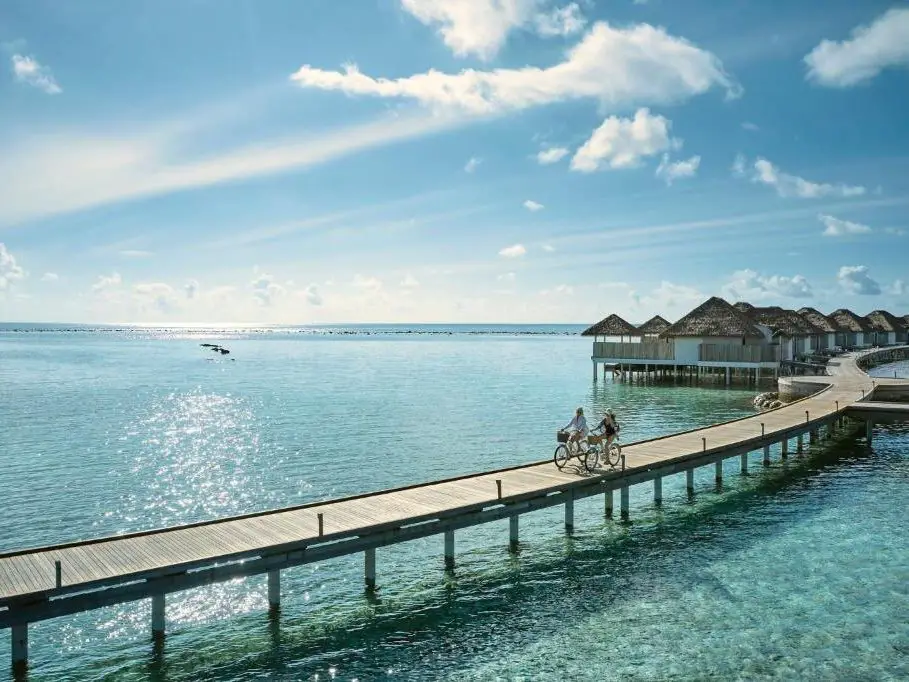
| 1. COMO Maalifushi Best for Surfers Rating: ⭐⭐⭐⭐⭐ Location: 60-minute seaplane from Velana International Airport, Thaa Atoll Guest Reviews: Exceptional COMO Shambhala Spa overwater pavilions, Tropic Surf coaching on nearby breaks, private island picnics on uninhabited Lavadhoo, immaculate villa design Best Room: Water Villa Price: From USD $1,500 – $2,100 per night |
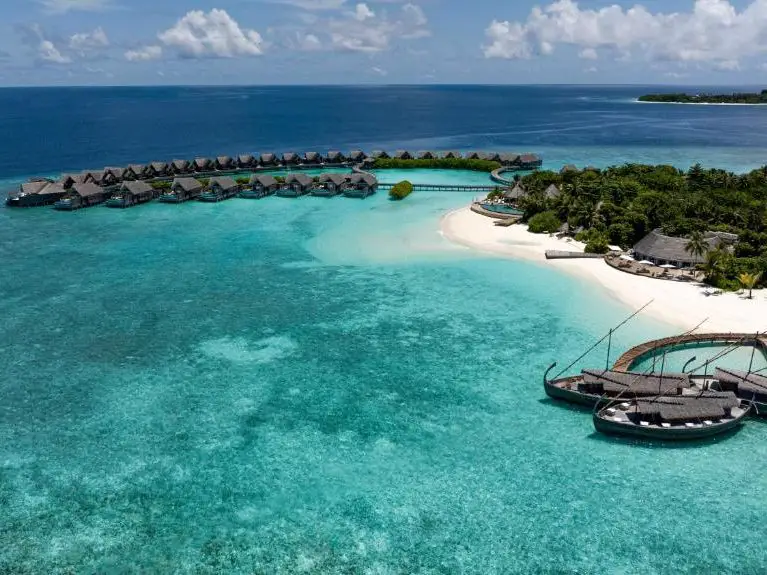
| 2. Milaidhoo Maldives Best House Reef Rating: ⭐⭐⭐⭐⭐ Location: 30-minute seaplane from Velana International Airport, Baa Atoll Guest Reviews: House reef accessible directly from villa steps, Ba’theli Maldivian communal dining with reef-caught lobster, private wine fridge stocked to personal preference, Hanifaru Bay manta excursions 15 minutes by boat Best Room: Water Villa with Private Pool Price: From USD $1,250 – $2,100 per night |
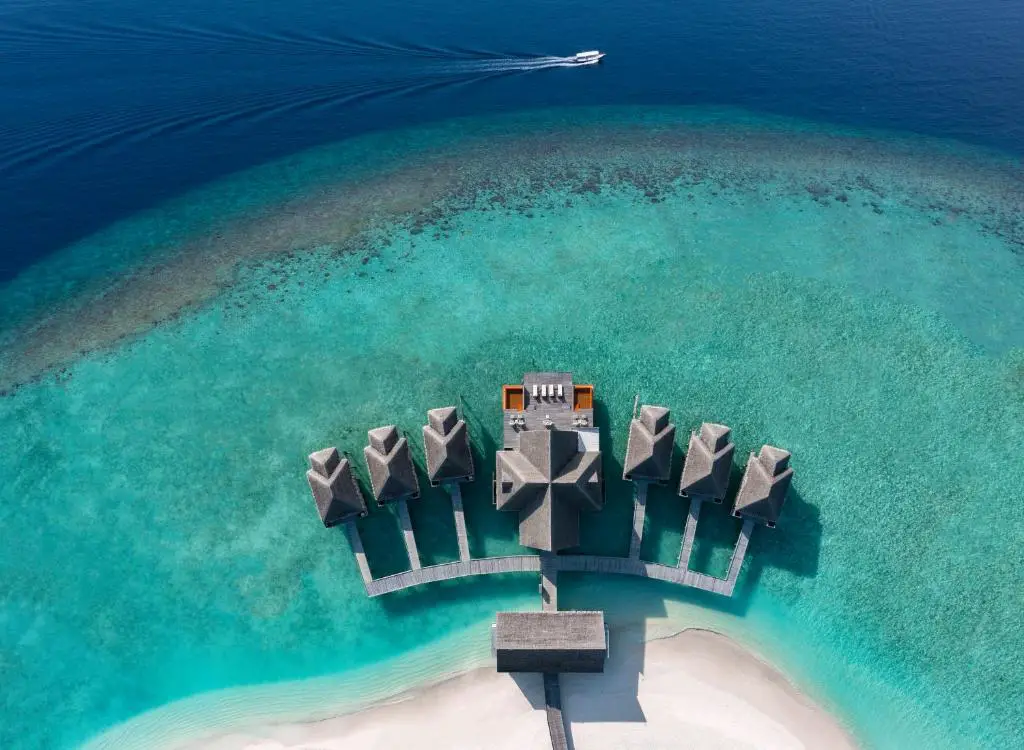
| 3. Anantara Kihavah Maldives Villas Best for Marine Life Rating: ⭐⭐⭐⭐⭐ Location: 35-minute seaplane from Velana International Airport, Baa Atoll Guest Reviews: SEA underwater restaurant, overwater SKY observatory, reef sharks from villa steps, Hanifaru Bay mantas nearby Best Room: Sunset Over Water Pool Villa Price: From USD $2,000 – $3,500 per night Prices verified August 2026 |
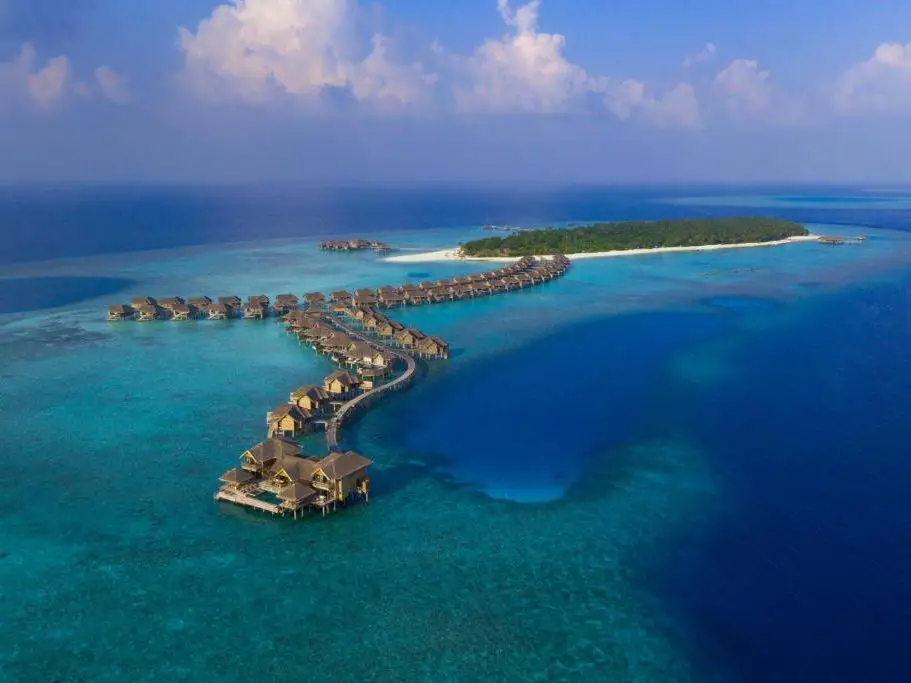
| 4. Vakkaru Maldives Best Dining Rating: ⭐⭐⭐⭐⭐ Location: 25-minute seaplane from Velana International Airport, Baa Atoll Guest Reviews: MICHELIN Key dining, three blue holes on house reef, Merana Spa glass-floor treatment rooms, 8,000-bottle wine cellar Best Room: Over Water Pool Villa Price: From USD $1,500 – $2,500 per night |
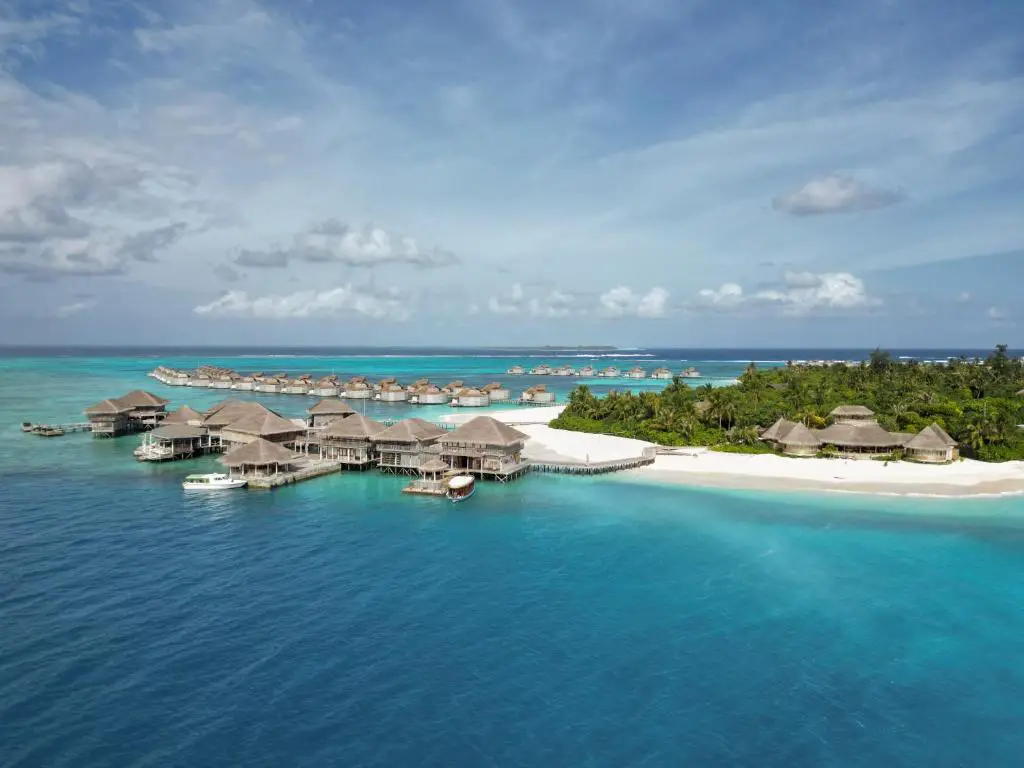
| 5. Six Senses Laamu Most Remote Escape Rating: ⭐⭐⭐⭐⭐ Location: 65-minute seaplane from Velana International Airport, Laamu Atoll Guest Reviews: LEAF restaurant set over the organic garden, resident marine biologist team, glass-bottom bathtub in every overwater villa, spinner dolphins year-round Best Room: Sunset Laamu Water Villa with Pool Price: From USD $1,200 – $2,000 per night |
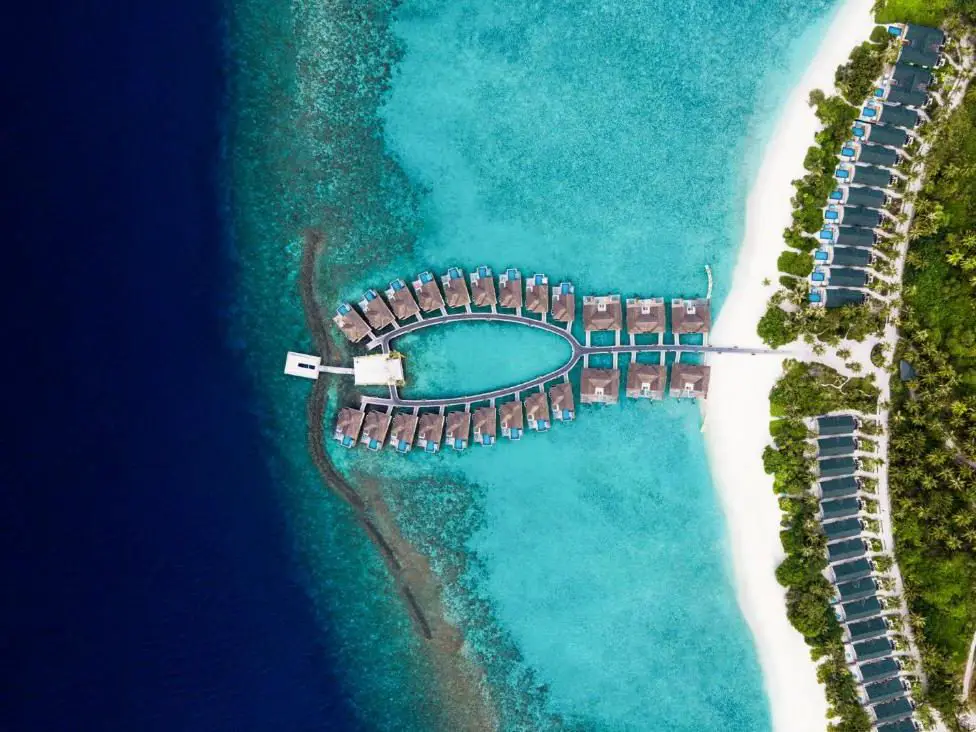
| 6. Furaveri Maldives Rating: ⭐⭐⭐⭐⭐ Location: 40-minute seaplane from Velana International Airport, Raa Atoll Guest Reviews: 23-hectare island, house reef with manta rays and sharks, Wellness Village spa, six restaurants with all-inclusive option Best Room: Sunset Ocean Pool Villa Price: From USD $600 – $1,000 per night |
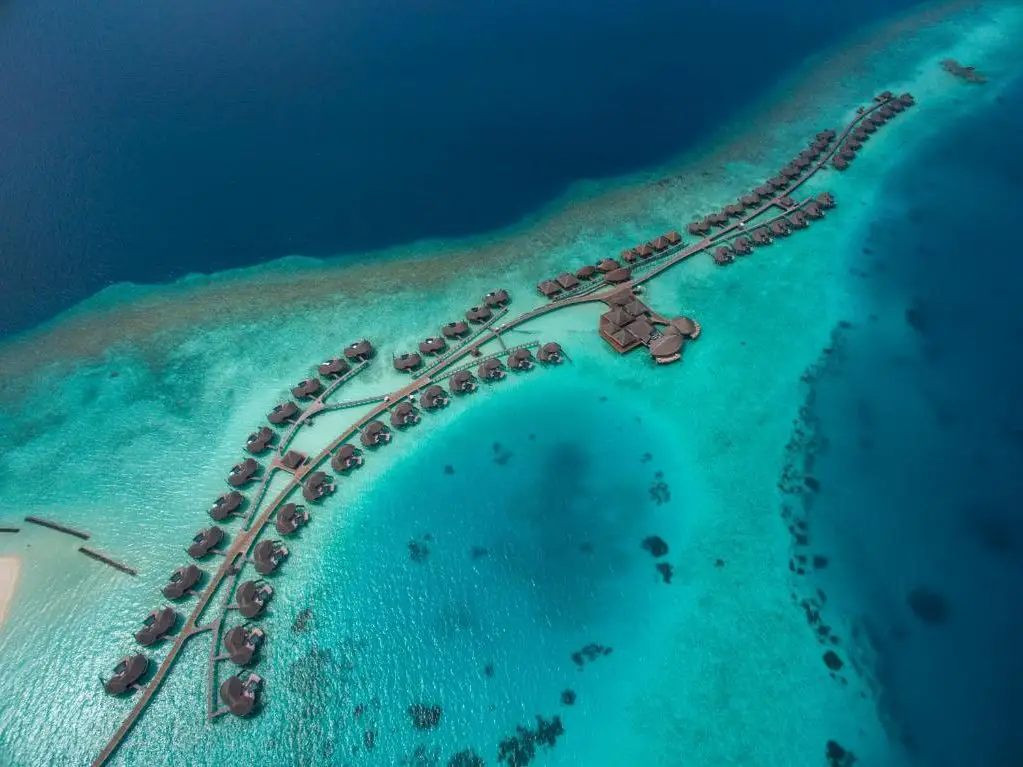
| 7. Constance Halaveli Best All-Inclusive Rating: ⭐⭐⭐⭐⭐ Location: 25-minute seaplane from Velana International Airport, North Ari Atoll Guest Reviews: 28,000-bottle wine cellar, Maaya Thila drift dive nearby, all-inclusive with excursions included, longest jetty in North Ari Best Room: Villa (Water) Price: From USD $900 – $1,500 per night |
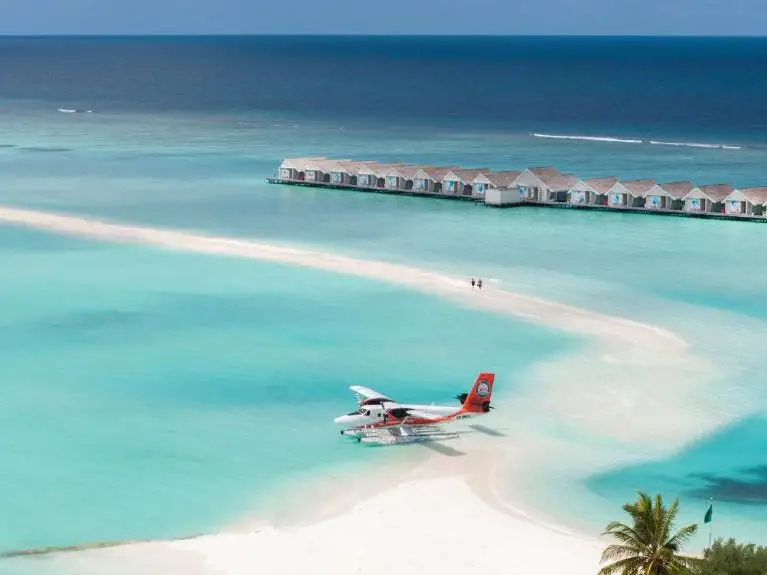
| 8. LUX South Ari Atoll Resort & Villas Best for Families Rating: ⭐⭐⭐⭐⭐ Location: 25–30-minute seaplane from Velana International Airport, South Ari Atoll Guest Reviews: Year-round whale shark encounters off the house reef, eight restaurants, drop-down projector in overwater villas, beach cinema under the stars Best Room: Romantic Pool Water Villa Price: From USD $700 – $1,200 per night |
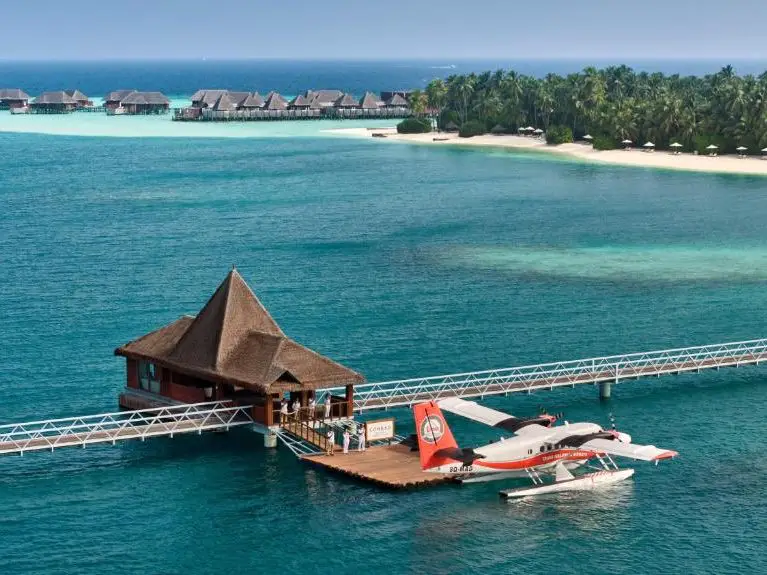
| 9. Conrad Maldives Rangali Island Most Unique Experiences Rating: ⭐⭐⭐⭐⭐ Location: 30-minute seaplane from Velana International Airport, South Ari Atoll Guest Reviews: Ithaa undersea restaurant, The Muraka underwater suite, 12 restaurants across twin islands, year-round whale sharks and mantas Best Room: Grand Water Villa with Pool Price: From USD $1,000 – $1,800 per night |
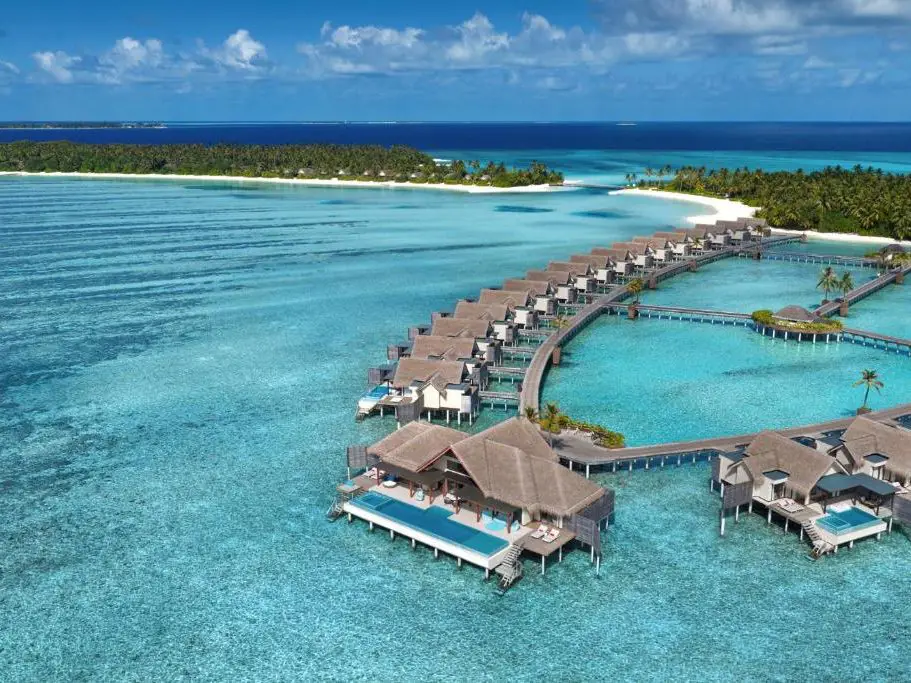
| 10. Niyama Private Islands Maldives Best Twin-Island Resort Rating: ⭐⭐⭐⭐⭐ Location: 45-minute seaplane from Velana International Airport, Dhaalu Atoll Guest Reviews: Subsix underwater nightclub six metres below lagoon, guests-only surf break at Vodi, twin-island Chill and Play, Drift Spa Best Room: Over Water Pool Villa Price: From USD $900 – $1,500 per night |
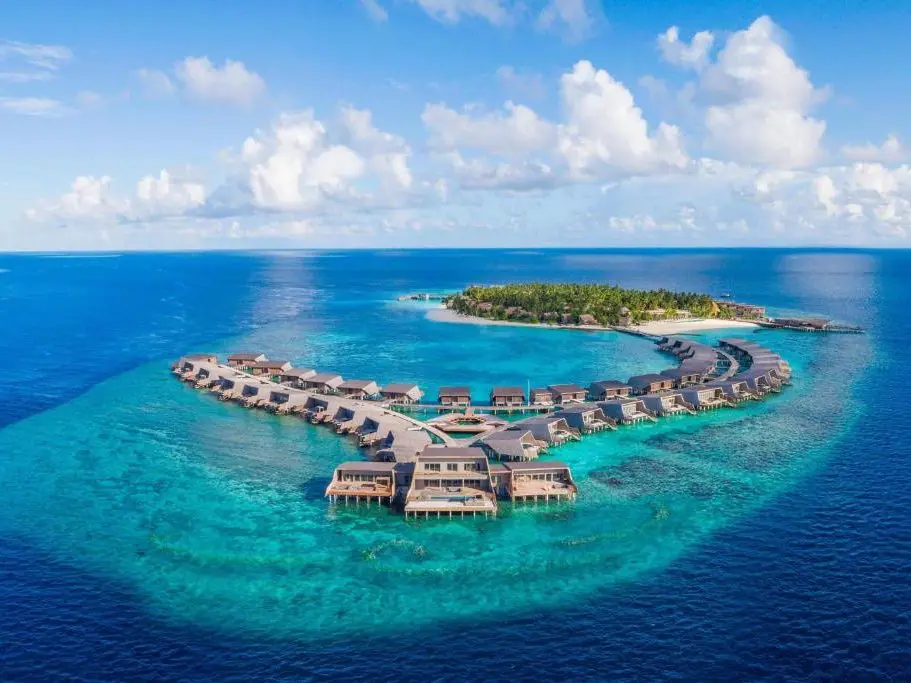
| 11. The St. Regis Maldives Vommuli Resort Most Iconic Design Rating: ⭐⭐⭐⭐⭐ Location: 45-minute seaplane from Velana International Airport, Dhaalu Atoll Guest Reviews: Manta ray-shaped overwater villas, 24-hour butler service for all guests, Iridium Spa with Blue Hole Jacuzzi, Whale Bar Best Room: Villa, 1 Bedroom, Non Smoking, Overwater Price: From USD $1,500 – $2,500 per night |
Six Atolls, One Flight: How to Choose Where to Stay
The seaplane flight is the same experience regardless of where you’re going — but what you find at the other end changes significantly depending on which atoll your resort sits in. The 11 resorts on this page span six atolls, each with a distinct character, a different transfer duration, and a different price attached to the flight.
- Baa Atoll — 30–35 minutes, UNESCO Biosphere Reserve — Three resorts here: Milaidhoo Maldives, Anantara Kihavah Maldives Villas, and Vakkaru Maldives. Baa is the strongest atoll in the Maldives for marine life concentration, home to Hanifaru Bay — the world’s largest manta ray feeding site — where aggregations of 100 or more mantas occur during full moon tides between July and November. The house reefs here are among the healthiest in the archipelago. Transfer costs run approximately $500–$700 per person return. At 30–35 minutes, Baa is the most accessible seaplane atoll on this list, which means a later-arriving international flight still has a good chance of making the same-day connection.
- Raa Atoll — 40 minutes — Furaveri Maldives sits here. Raa is a quieter, less-visited atoll than Baa, with fewer resorts and a more remote feel despite the relatively short transfer. The house reef and surrounding dive sites are the headline, and Hanifaru Bay is reachable on excursion. Transfer costs are comparable to Baa. Raa Atoll now has a domestic airport at Ifuru, which makes it one of the few seaplane atolls on this list where a domestic-flight-plus-speedboat combination is a viable alternative if your international flight arrives late.
- North Ari Atoll — 25 minutes — Constance Halaveli is here. North Ari is the shortest seaplane hop on this page — 25 minutes from Velana — which makes same-day connections almost certain for any flight arriving before 3pm. The atoll is known for Maaya Thila, one of the Maldives’ most celebrated drift dive sites, and strong whale shark and manta sightings along the western edge. Transfer costs are typically $450–$600 per person return, reflecting the shorter distance. A domestic-flight-and-speedboat alternative is also available via the nearby Maamigili airport.
- South Ari Atoll — 25–30 minutes — LUX* South Ari Atoll Resort & Villas and Conrad Maldives Rangali Island are both here. South Ari is the only atoll in the Maldives where whale shark encounters are genuinely year-round — resident populations feed in the channel along the eastern edge of the atoll regardless of season. That alone makes it a different proposition to every other atoll on this list. Transfer costs are similar to North Ari. Like North Ari, a speedboat-from-Maamigili alternative exists for late arrivals, though the journey is longer.
- Dhaalu Atoll — 45 minutes — Niyama Private Islands Maldives and The St. Regis Maldives Vommuli Resort are both here. Dhaalu is one of the least-visited atolls in the Maldives, with only a handful of resorts and strong house reefs with minimal traffic. The 45-minute flight is the midpoint of the seaplane duration spectrum — long enough to feel genuinely remote, short enough that a flight landing before 2pm can still connect. Transfer costs run approximately $600–$750 per person return. Dhaalu Airport (DDD) provides a domestic-flight alternative operated by Manta Air for guests arriving after the seaplane cutoff.
- Thaa Atoll — 60 minutes and Laamu Atoll — 65 minutes — COMO Maalifushi (Thaa) and Six Senses Laamu (Laamu) are the most remote resorts on this page. At 60–65 minutes, these are the longest seaplane transfers in the list, and that distance is part of what you’re paying for: both atolls are among the least-developed in the Maldives, with pristine reefs, near-zero boat traffic, and a level of quiet that the closer atolls can’t replicate. Transfer costs are at the upper end of the range — approximately $800–$1,100 per person return. The daylight rule (covered below) is also most restrictive here: international flights need to land before noon to guarantee a same-day seaplane connection. For Six Senses Laamu, a domestic flight to Kadhdhoo Airport followed by a speedboat offers an alternative.
A note on transfer costs: Seaplane transfers are charged by the resort and paid separately from your room rate in most cases. Prices are per person return and typically increase 4–6% year on year in line with aviation fuel. Always confirm current rates directly with the resort when booking, as promotional periods — particularly shoulder season between May and October — frequently include discounted or complimentary transfers as part of minimum-stay packages.
What Happens on the Day: From Airport to Jetty
Most guests are surprised by how smooth the seaplane process feels once they’re in it. The resort handles the coordination entirely — your job is to arrive, follow your representative, and look out of the window. Here is the journey in sequence.
- Arrival and meeting your representative — A resort representative waits for you in the arrivals hall at Velana International Airport, holding a sign with your name or the resort name. They handle everything from this point: escorting you through the terminal, arranging your luggage transfer, walking you to the seaplane check-in counter. You do not need to navigate to the terminal independently. If you can’t find your representative, go to the arrivals information desk — they will contact the resort directly.
- Check-in and baggage — At the TMA or Manta Air counter, your luggage is weighed and boarding passes issued. The standard allowance is 20kg of checked luggage plus 5kg carry-on per adult. Children under 12 typically receive a 50% weight allowance; infants travel free. Excess baggage is charged at approximately $4–$5 per kilogram and adds up quickly. Critically: there are no overhead lockers on the aircraft, and even carry-on bags often travel in the hold alongside checked luggage. Pack anything you’ll want during the flight — headphones, a camera, a light layer, water, any medications — in a small bag you can keep at your feet. Hard-shell suitcases occasionally travel on a later flight if the hold is full; soft-sided bags fit more easily and are strongly recommended.
- The lounge — A short shuttle or five-minute walk brings you to the Noovilu Seaplane Terminal, the world’s largest seaplane terminal, which houses over 40 lounges on its upper floor. Almost all the resorts on this page have a private or shared resort-branded lounge here, fitted out with hot food, cold drinks, Wi-Fi, shower facilities, and seating with views over the water where you can watch seaplanes take off and land. The lounge is where the holiday genuinely begins — the service level and quality of the space often previews the resort itself. Guests whose resorts don’t have a dedicated lounge are directed to TMA’s Coral Lounge or Infinity Lounge, both well-appointed shared spaces with complimentary food and drink. Average wait time is one to two hours, though it can run from 30 minutes to four hours depending on scheduling and how many international flights have arrived that morning. Use the time to change into lighter clothes, charge devices, and eat something — you won’t be offered a full meal on the flight.
- Boarding and the aircraft — When your flight is called, staff escort you to a smaller departure gate and then along a pontoon directly to the aircraft floating on the water. The de Havilland DHC-6 Twin Otter is the workhorse of the Maldives seaplane fleet — a twin-engine, 12–15-seat floatplane in a 1-2 seat configuration. There are no assigned seats; it’s first-come, first-served. Single seats run along the left side of the aircraft; paired seats along the right. The single seats are slightly wider and offer unobstructed window views — board promptly if you want one. The pilot sits in an open cockpit with no dividing door, which means you can watch every dial and control input during takeoff and landing. Sit in the front two rows for the closest view of the pilots; sit in the middle rows for the best downward views of islands and reefs during the flight.
- The flight — The cabin is loud — conversation is essentially impossible once airborne, and the engine hum is constant. Bring noise-cancelling headphones or at minimum foam earplugs, especially if travelling with children. There is no air conditioning, only small fans, and the cabin becomes warm quickly. Dress in a light layer you can remove. The takeoff run is the most dramatic part: the floats bounce across the surface of the lagoon, spray fans out behind the wings, and the plane lifts off at a steep angle before levelling out at 300–500 metres — the ideal altitude for seeing island and reef detail below. At this height, you can see the ocean floor through the water, watch the geometry of the atolls unfold, and spot sandbanks, coral formations and resort jetties stretching into lagoons. It is, without question, one of the most beautiful 25–65 minutes you’ll spend in any aircraft. For photography: keep your camera or phone at your feet during the bumpy water taxi, press your lens flush against the window glass to eliminate reflections, and use a wide angle rather than zoom. Both sides of the aircraft deliver good views — the left side is marginally better for catching resort islands on departure from Malé as the plane typically turns that way, but it genuinely matters less than having a window at all.
- Landing and resort arrival — The water landing is gentle — a smooth deceleration as the floats touch the surface and the plane settles into the lagoon. The aircraft then taxis directly to the resort’s jetty, where your butler or welcome team is waiting at the water’s edge. Check-out of the seaplane and into the resort happens in minutes.
The Daylight Rule: Why Your International Flight Time Matters
This is the most practically important constraint in Maldives seaplane travel and the one that most first-time visitors don’t find out about until after they’ve booked. Seaplanes land on open water and require daylight to do so safely. They operate under Visual Flight Rules only, which means all flights stop at approximately 3:30–4:00pm. There are no exceptions and no night seaplane flights.
- What this means for your booking — If your international flight lands at Velana International Airport after approximately 2:30–3:00pm, you will not reach your resort the same day. The practical rule is: allow at least 45–60 minutes after landing for immigration, baggage collection, and transfer to the seaplane terminal. A flight landing at 2:00pm is borderline. A flight landing at 3:30pm means an overnight in Malé, regardless of how close your resort is.
- Who this affects most — Guests flying from Europe on overnight departures often land mid-morning and connect easily. Guests flying from Australia, the US East Coast, or connecting through Gulf hubs on later rotations are more likely to arrive in the afternoon window. Flights from the UK via Dubai or Doha commonly land between 1:00pm and 5:00pm depending on the departure time — check your arrival time carefully before booking, not after.
- The overnight option — If your flight does arrive after the cutoff, the resort arranges an overnight stay at a hotel in Hulhumalé or near the airport — the Hulhule Island Hotel is the most commonly used option, located on the airport island itself. This is entirely normal, planned for, and handled by the resort. The cost and logistics are confirmed with your resort in advance. Most guests find the overnight adds an interesting extra night rather than feeling like a delay. Departure from Malé the following morning on the first seaplane is typically before 7:00am.
- Which resorts on this page offer an alternative transfer — For guests who consistently arrive on late flights, the domestic-flight-plus-speedboat option eliminates the daylight constraint entirely, as speedboats operate around the clock. On this page: Furaveri Maldives (domestic flight to Ifuru Airport, then speedboat); Constance Halaveli and LUX* South Ari Atoll (domestic flight to Maamigili, then speedboat); Six Senses Laamu (domestic flight to Kadhdhoo Airport, then speedboat); Niyama Private Islands and The St. Regis Maldives Vommuli Resort (Manta Air domestic flight to Dhaalu Airport, then speedboat). The domestic-flight alternative adds journey time and an additional aircraft, but it runs on a fixed schedule that isn’t weather or daylight dependent. Confirm availability and current domestic flight schedules directly with your resort.
- Arriving too early — The opposite problem is less common but worth noting. International flights that land at 5:00am–6:00am may need to wait two to three hours at the seaplane terminal before the first flights depart. The Noovilu terminal and its lounges open early, and most resort lounges are accessible from 6:00am. This wait is far more comfortable than it sounds — you’ll be in a warm, well-fed lounge watching seaplanes move across the water as the sun rises over the lagoon.
- The safest flight times — Aim for international connections that land at Velana between 9:00am and 1:00pm. This window gives you same-day seaplane access to every resort on this page, including the 65-minute Laamu transfer, with comfortable margin. It also means you arrive at your resort in time for lunch and have a full afternoon in the water before sunset.
When to Go and Which Atoll to Choose for Each Season
The Maldives has two seasons shaped by the Indian Ocean monsoon: the dry northeast monsoon from November to April, and the wet southwest monsoon from May to October. The honest answer is that the Maldives is worth visiting year-round — but which atoll you choose, and what you’ll experience when you get there, changes considerably depending on when you travel.
- November to April — dry season, best weather, peak prices — Clear skies, calm seas, underwater visibility of 25–30 metres, humidity below 75%, and 9–10 hours of sunshine daily. This is the window most people book, and the prices reflect it. Resorts across all six atolls on this page are busiest during these months. December 20 to January 5 is the most expensive window in the Maldives calendar — villa rates at top-tier seaplane resorts can run 30–50% above standard peak pricing, with compulsory gala dinner supplements on Christmas Eve and New Year’s Eve adding hundreds of dollars per person. If you want dry-season weather without peak-season pricing, late January to mid-February hits the sweet spot: the skies are as clear as December but the holiday premium has dissolved. February and March are statistically the driest months and offer the best diving visibility of the year.
- May to October — wet season, lower prices, better marine life — The southwest monsoon brings afternoon showers and occasional overcast days, but not the constant rain the name implies. Mornings are typically clear, the water stays warm, and the reefs are at their most biodiverse because higher plankton levels draw the big animals in. This is when the Maldives is genuinely at its most interesting underwater — and significantly cheaper above it. Most seaplane resorts offer their best deals during this window, frequently including discounted or complimentary transfers, free meal-plan upgrades, or substantial percentage discounts on room rates. September and October are the wettest months and see the deepest discounts — 40–50% below peak rates at many properties. May, June and November are the three most underrated months: shoulder pricing, good conditions, and far fewer guests.
- Baa Atoll: go between July and November for mantas — Milaidhoo Maldives, Anantara Kihavah Maldives Villas, and Vakkaru Maldives are all in the Baa Atoll UNESCO Biosphere Reserve, and all three are within 15 minutes by boat of Hanifaru Bay. The manta aggregations at Hanifaru peak between July and September, when hundreds of mantas gather during full moon tides to feed on plankton in the shallow bay. Outside this window, mantas are still present in Baa Atoll year-round but in smaller numbers. If Hanifaru is the primary reason you’re choosing Baa Atoll, plan your trip between July and September. The wet-season timing is a feature, not a drawback — the plankton bloom that drives the manta aggregations is caused by the southwest monsoon.
- South Ari Atoll: whale sharks year-round — LUX* South Ari Atoll and Conrad Maldives Rangali Island benefit from one of the most consistent wildlife phenomena in the Maldives: resident whale sharks in the South Ari channel, present every month of the year. Unlike Hanifaru’s seasonal mantas, the South Ari whale sharks don’t migrate. Month of travel doesn’t change encounter likelihood here — which makes South Ari the best choice for travellers who have a fixed travel window and want a guaranteed major marine life encounter regardless of season.
- Thaa and Laamu Atoll: go between April and October for surf — COMO Maalifushi in Thaa Atoll and Six Senses Laamu in Laamu Atoll both have access to quality surf breaks that fire on the southwest swell — the same monsoon that brings clouds also brings waves. COMO Maalifushi’s partnership with Tropic Surf gives access to around 20 breaks in the atoll, most productive between April and October. Six Senses Laamu sits closest to Ying Yang, a consistent left-hander in the atoll. Both resorts are quieter during surf season than in peak dry season, and significantly cheaper — making April to October the best-value window for the most remote resorts on this page. Non-surfers who visit during this period should know that morning sessions are often clear and calm before afternoon clouds build.
- Dhaalu Atoll: strong in dry season, good value in shoulder months — Niyama Private Islands and The St. Regis Maldives Vommuli Resort in Dhaalu benefit from the standard dry-season pattern: best weather November to April, best value May to October. Niyama’s surf break at Vodi also fires on the southwest swell, making it an April-to-October pick for surfers. The house reefs in Dhaalu are consistent year-round without a single dominant seasonal event to plan around — which makes Dhaalu the most flexible atoll in the list for travellers who can’t choose a specific month.
- When to book — For dry-season travel at any of the resorts on this page, book four to six months in advance. For Christmas and New Year stays, book up to a year ahead — overwater villas with pools at marquee seaplane resorts sell out by the previous spring. Shoulder-season travel (May, June, November) is more forgiving, but the best villa categories at Vakkaru, Conrad and Six Senses Laamu still close out six to eight weeks ahead of arrival during popular windows.
FAQs
1. Do I book the seaplane transfer separately or does the resort arrange it?
The resort arranges everything. You provide your international flight details — airline, flight number, arrival time — and the resort coordinates your seaplane slot with TMA or Manta Air. You pay for the transfer at check-out or in advance depending on the resort’s policy. You do not contact the seaplane operator directly.
2. What happens if my seaplane is delayed or cancelled due to weather?
Seaplanes can be delayed or grounded during storms, squalls, or periods of poor visibility, particularly during the southwest monsoon season. Your resort lounge becomes your waiting area, and the operator reschedules your flight as soon as conditions allow. Resorts handle these situations routinely and will notify you directly. Travel insurance that covers trip interruptions is worth having for this reason.
3. How far in advance do I need to share my flight details with the resort?
Most resorts ask for your flight details at least 72 hours before arrival, though sharing them at the time of booking is simpler and avoids any risk of miscommunication. The resort needs your arrival time to block a seaplane slot — the earlier you provide it, the better your chance of getting on the first available flight after you land.
4. Can I book a private seaplane rather than a shared transfer?
Yes. Private charters eliminate the wait at the terminal and depart on your schedule. Rates range from approximately $1,200 to $3,500 one-way depending on the aircraft type and atoll. For groups of six or more, the per-person premium over shared transfers can become modest. Contact the resort directly to arrange a private charter — they will organise it through their operator.
5. Is there a minimum age for seaplane transfers?
Infants can travel on seaplanes, typically free of charge as lap children. Children under 12 usually receive a 50% discount on transfer rates. Some resorts — including The St. Regis Maldives Vommuli Resort — apply minimum-age restrictions to specific villa categories (not the transfer itself), so check the resort’s family policy separately from the transfer question.
6. What is the seaplane baggage allowance and what happens to excess luggage?
The standard allowance is 20kg of checked luggage plus 5kg of carry-on per adult. Excess is charged at approximately $4–$5 per kilogram. Overweight luggage may travel on a later flight if the aircraft is at capacity — typically arriving the same day, within a few hours. Pack valuables, medications, and anything you’ll need immediately in your carry-on, not your checked bag, in case there is a delay.
7. Which side of the seaplane should I sit on?
Seating is unassigned and first-come, first-served. Both sides deliver strong views. The left side single seats are marginally better for island views as the plane typically turns left on departure from Malé. Single seats on the left are also slightly wider than the paired seats on the right. Board promptly if you have a preference — the walk from the lounge to the aircraft takes only a few minutes, but the best seats go quickly.
8. Are seaplanes safe?
The Maldives seaplane network has an exceptional safety record — no passenger fatalities have been recorded in the history of commercial seaplane operations here. The de Havilland DHC-6 Twin Otter is one of the most proven bush and floatplane aircraft in the world, with over 50 years of operational history. TMA and Manta Air both operate under Maldivian civil aviation authority oversight and adhere to international maintenance standards.