
Kruger is one of those places where the gap between a good trip and an extraordinary one comes down almost entirely to where you sleep. The park itself covers nearly two million hectares, but the private reserves on its unfenced western border — Kapama, Klaserie, Balule, Timbavati, and the Sabi Sand — offer something the public camp circuit simply cannot: off-road game drives, tiny guest-to-ranger ratios, and full Big Five traversing rights in some of the most wildlife-dense land on the continent. The lodges below sit across these private reserves and inside Kruger’s own concession areas, ranging from intimate bush camps with six suites to the most singular hotel in Africa — a train permanently parked on a bridge above the Sabie River. Here’s where to stay.
Quick answer: Book Lion Sands River Lodge. It sits in the Sabi Sand with treehouse sleepouts above the plains and open 4x4s capped at six guests.
Table of Contents
Kruger National Park Safari Lodges
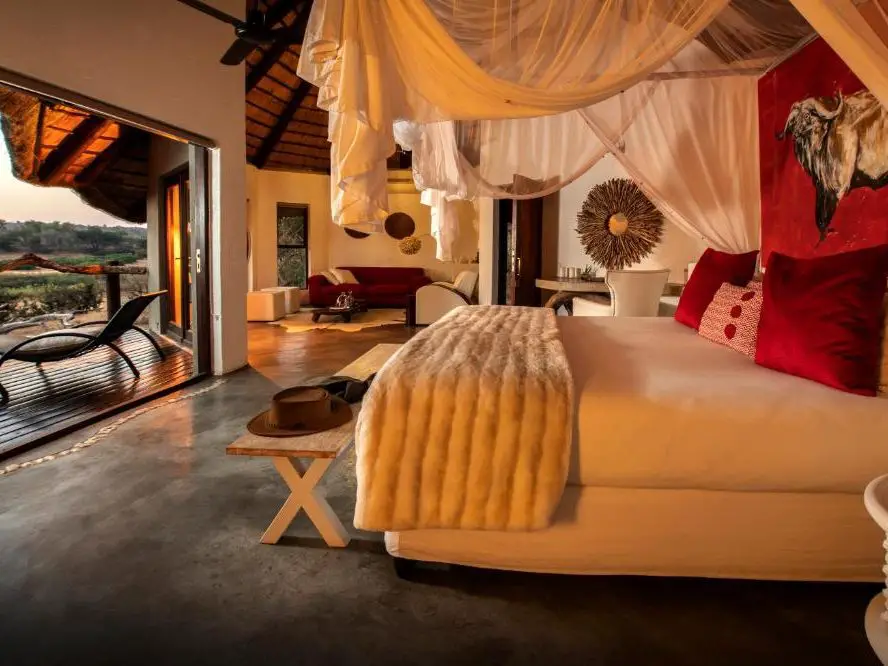
Best Treehouse Sleepout
1. Pondoro Game Lodge
Rating: ⭐⭐⭐⭐⭐
Location: 40-minute drive from Hoedspruit Eastgate Airport, Balule Private Game Reserve, Greater Kruger
Guest Reviews: Olifants River views from every deck, treehouse hide overnight experience, Diners Club platinum wine cellar, Big Five sighted on first drive
Best Room: Buffalo Suite
From USD $1,350 – $1,800 per night
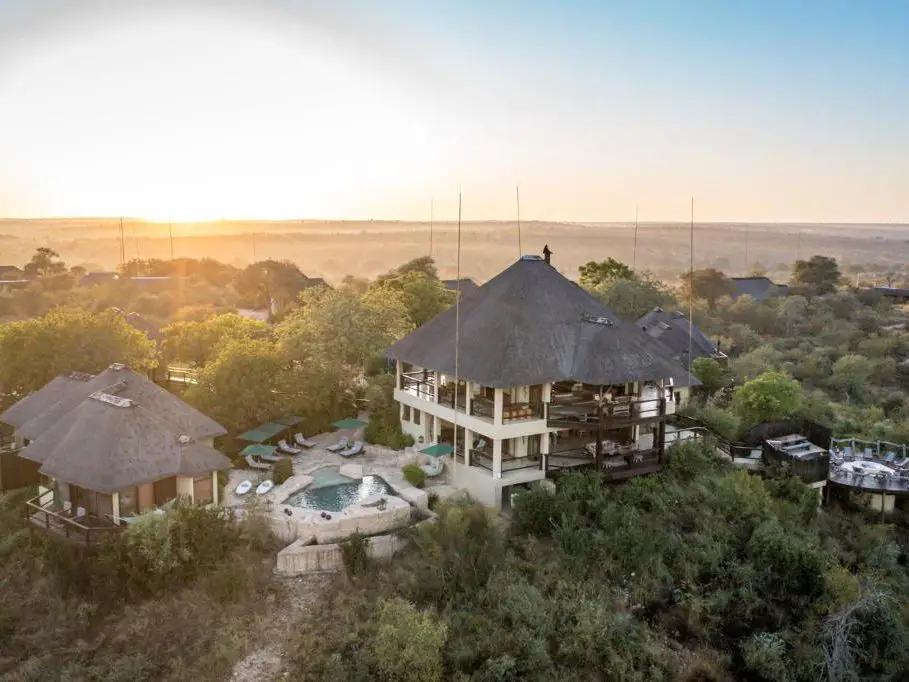
Most Secluded Bush Dinner
2. Makumu Private Game Lodge
Rating: ⭐⭐⭐⭐⭐
Location: 90-minute transfer from Hoedspruit Eastgate Airport, Klaserie Private Nature Reserve, Greater Kruger
Guest Reviews: Candlelit walkways after dark, leopard sightings on first drive, private photography bunker, bush dinner under stars with guides
Best Room: Bushman King Suite
From USD $1,200 – $1,900 per night
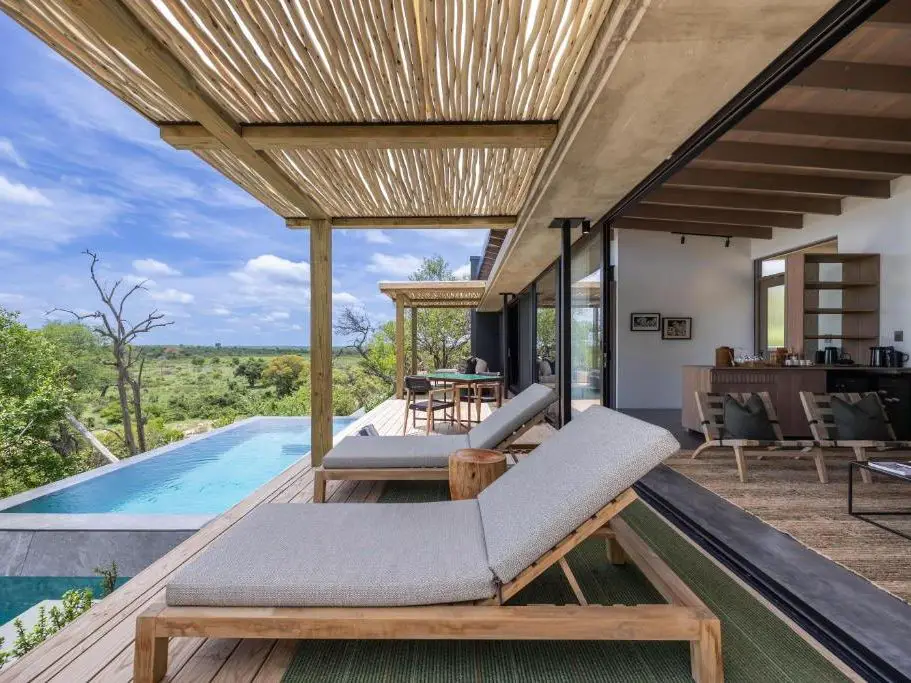
Best River Viewing Deck
3. Klaserie Drift
Rating: ⭐⭐⭐⭐⭐
Location: 75-minute drive from Hoedspruit Eastgate Airport, Klaserie Private Nature Reserve, Greater Kruger
Guest Reviews: Infinity pool overlooking the riverbed, 7-lion sighting on a single drive, private starbed on the deck, far fewer vehicles sharing traversing area than busier reserves
Best Room: River View Suite
From USD $1,500 – $2,200 per night
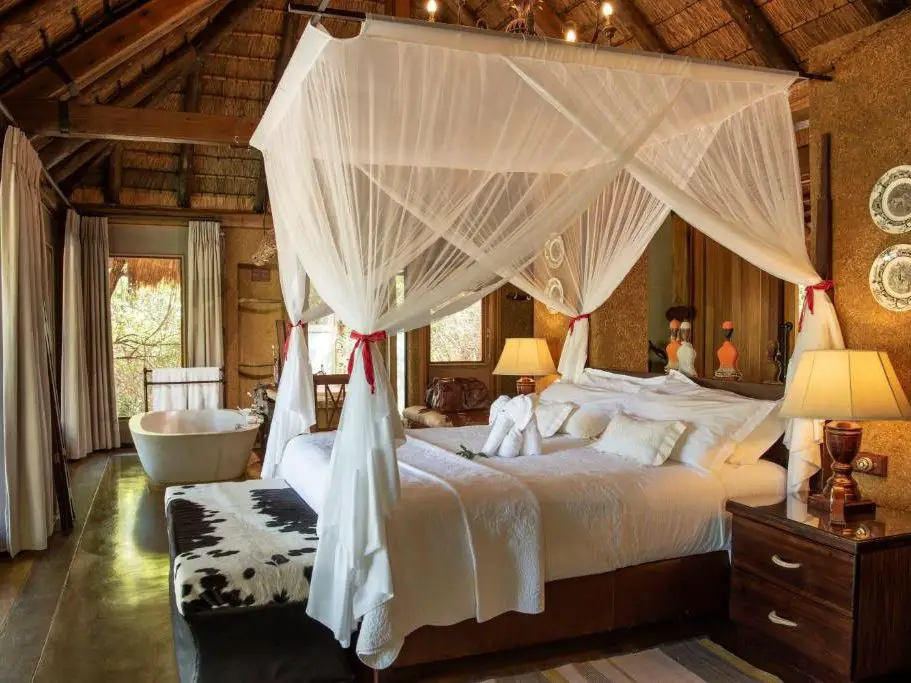
Best Elephant Encounter
4. Jabulani Safari Relais & Chateaux
Rating: ⭐⭐⭐⭐⭐
Location: 27-minute drive from Hoedspruit Eastgate Airport, Kapama Private Game Reserve, Greater Kruger
Guest Reviews: Daily encounters with rescued elephant herd, private plunge pool and fireplace in every suite, PESA Spa treatments after game drives, Two Michelin Keys awarded for accommodation
Best Room: Superior Suite
From USD $2,000 – $3,100 per night
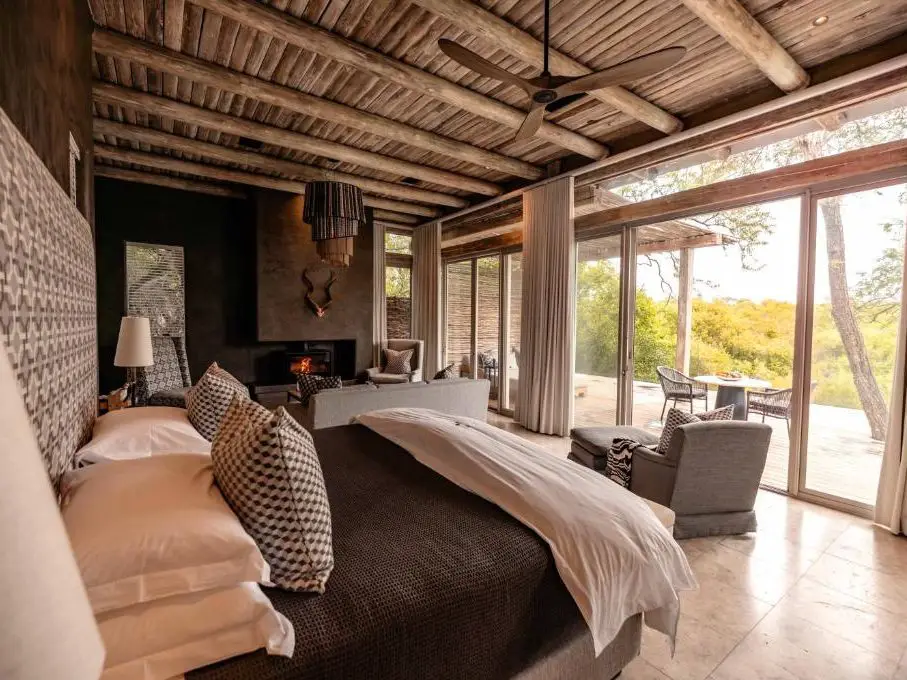
Best Heated Private Pool
5. Kapama Karula
Rating: ⭐⭐⭐⭐⭐
Location: 20-minute drive from Hoedspruit Eastgate Airport, Kapama Private Game Reserve, Greater Kruger
Guest Reviews: Floor-to-ceiling glass sliding doors onto Klaserie River, heated private pool in every villa, award-winning Karula Spa, romantic bush sleepout under stars on request
Best Room: Superior Luxury Villa
From USD $2,300 – $3,900 per night
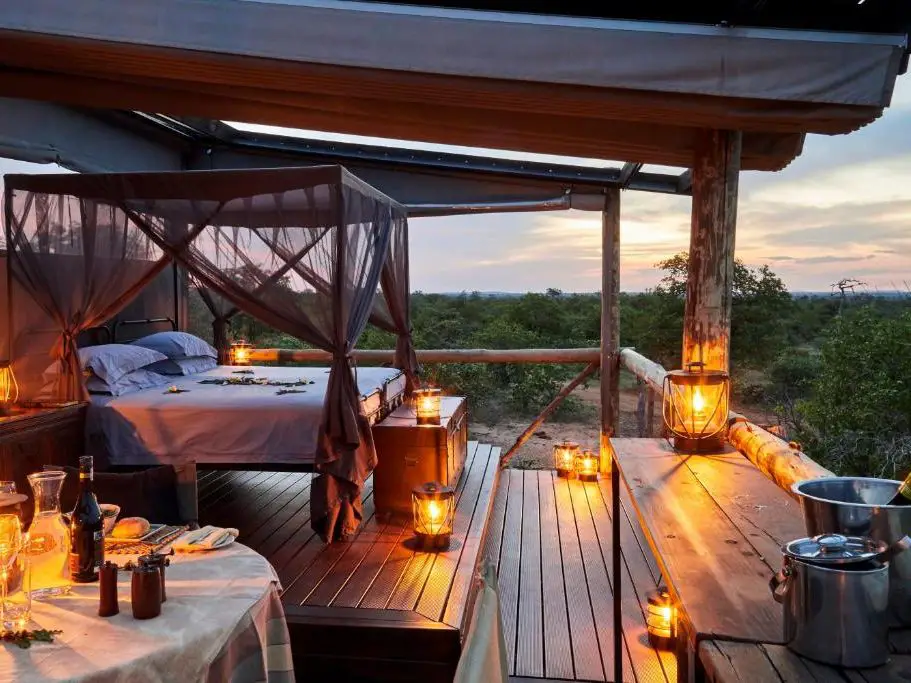
Best for White Lion Territory
6. Motswari Private Game Reserve
Rating: ⭐⭐⭐⭐⭐
Location: 60-minute drive from Hoedspruit Eastgate Airport, Timbavati Private Nature Reserve, Greater Kruger
Guest Reviews: Staff singing and dancing at mealtimes, Giraffe’s Nest overnight sleep-out above a waterhole, white lion territory traversing area, elephants visible from river-facing deck
Best Room: Luxury Room
From USD $700 – $1,100 per night
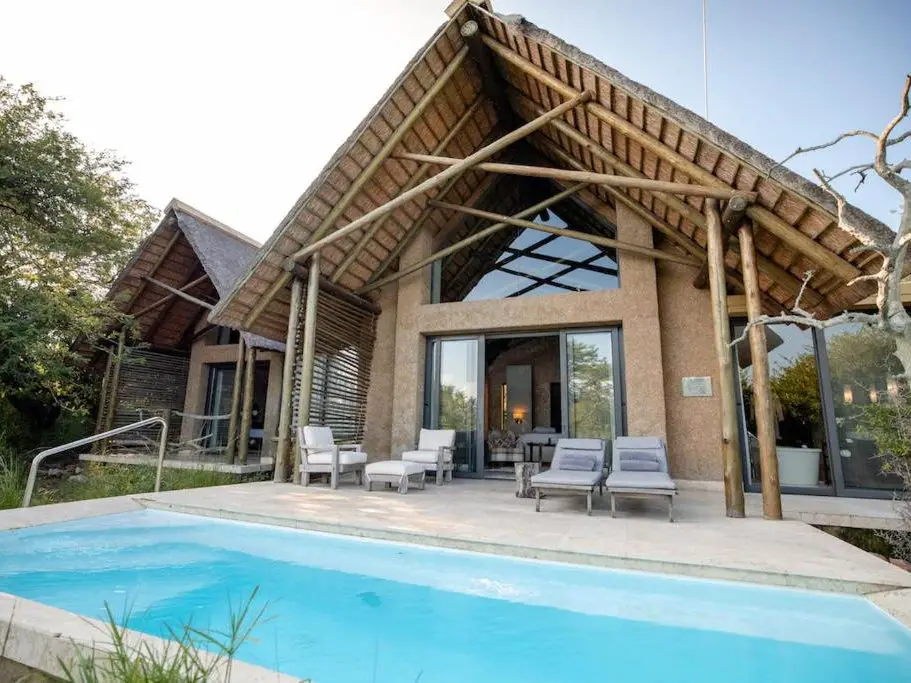
Best for Families
7. Kapama Southern Camp
Rating: ⭐⭐⭐⭐⭐
Location: 20-minute drive from Hoedspruit Eastgate Airport, Kapama Private Game Reserve, Greater Kruger
Guest Reviews: Fireplace open to both bath and bedroom in every villa, open-jeep airport transfer doubles as first game drive, Big Five within 24 hours, boma dinners under the stars
Best Room: Luxury Villa, Private Pool
From USD $1,000 – $1,650 per night
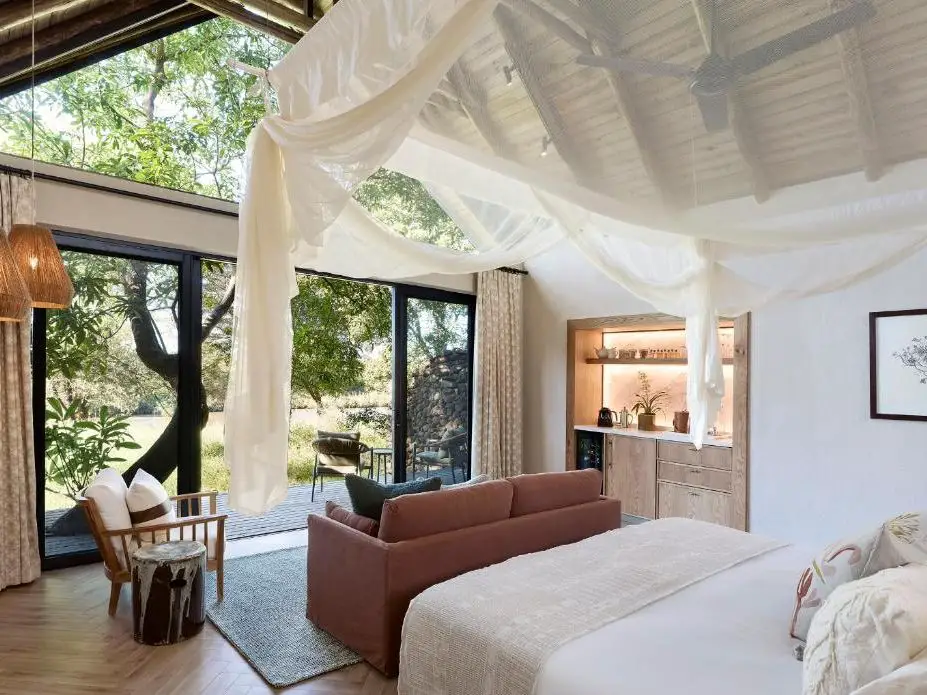
Largest Traversing Area
8. Lion Sands River Lodge
Rating: ⭐⭐⭐⭐⭐
Location: 20-minute road transfer from Skukuza Airport, Sabi Sand Game Reserve, Greater Kruger
Guest Reviews: Chalkley and Kingston Treehouse overnight sleepouts above the plains, hippos and elephants visible from private deck, Africology Wellness Spa on site, off-road driving in open 4×4 with max six guests per vehicle
Best Room: King Room
From USD $2,400 – $3,500 per night
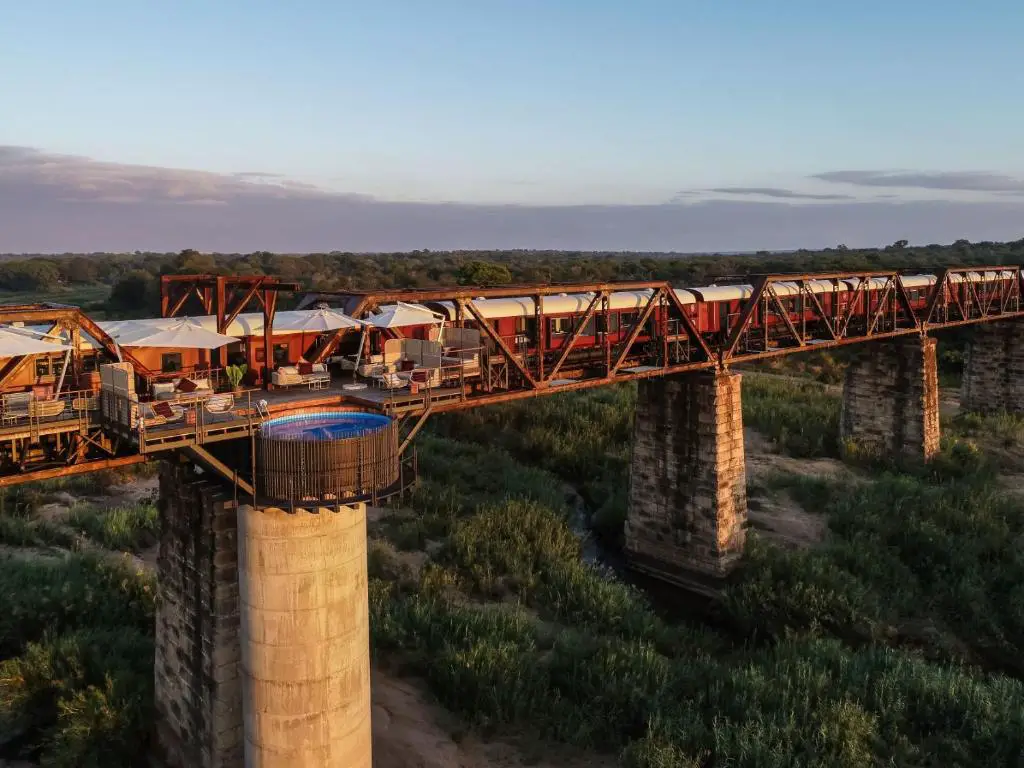
Most Unique Stay
9. Kruger Shalati – Train on the Bridge & Garden Suites
Rating: ⭐⭐⭐⭐⭐
Location: 5-minute shuttle from Skukuza Airport, permanently moored on the Selati Bridge above the Sabie River, Skukuza, Kruger National Park
Guest Reviews: Hippos, crocodiles, and elephants visible directly below the carriage window, Two Michelin Keys for accommodation, boma choir evening with traditional performances, wooden bridge walkway for wildlife watching at night
Best Room: Luxury Carriage Suite
From USD $850 – $2,000 per night
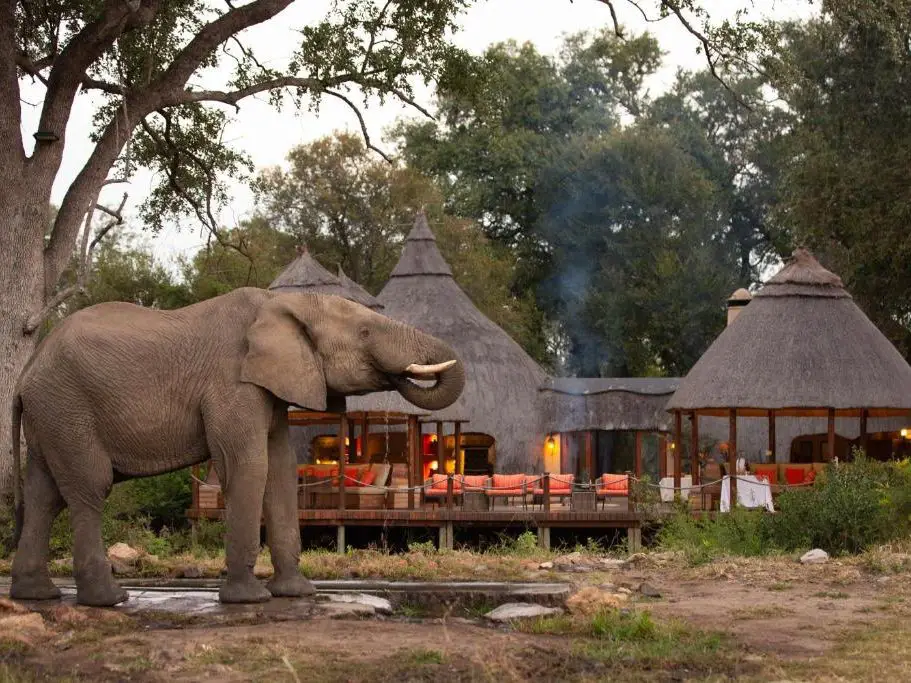
Best Cultural Design
10. Hoyo Hoyo Safari Lodge
Rating: ⭐⭐⭐⭐⭐
Location: 60-minute drive from Skukuza Airport, Mluwati Private Concession, Kruger National Park
Guest Reviews: Tsonga rondavel beehive design with stone bath and outdoor rain shower, elephants at the waterhole visible from the dining deck, three-course dinner under the stars, no mobile signal for a complete bush disconnect
Best Room: Standard Room
From USD $1,000 – $1,300 per night
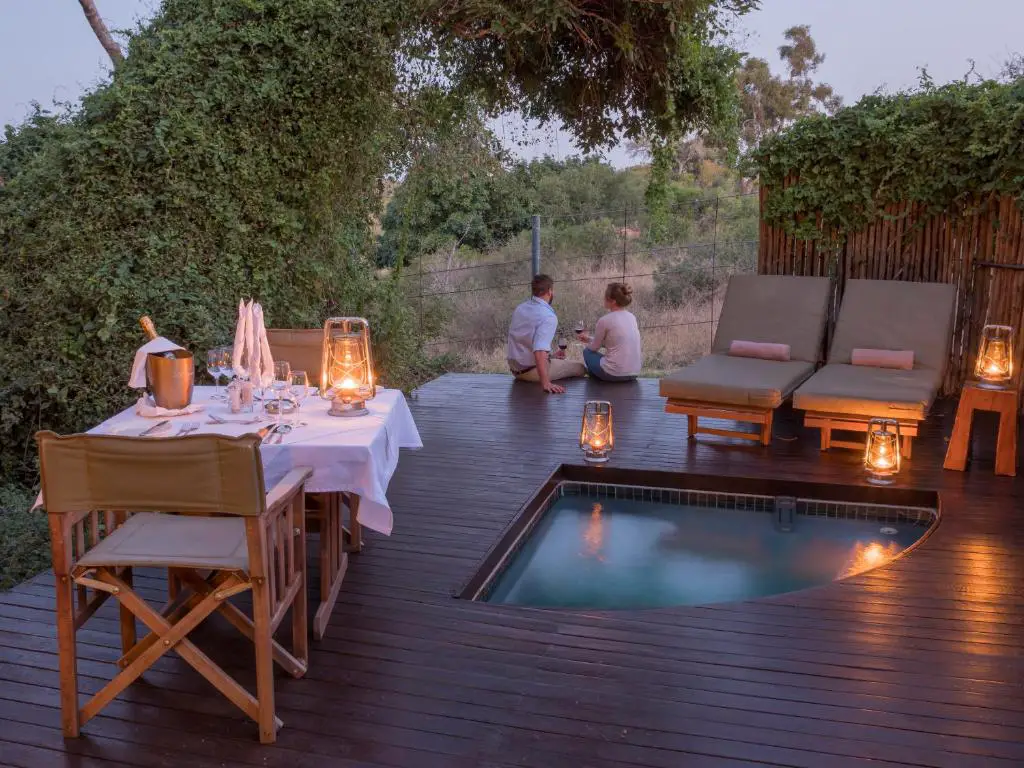
Most Historic Concession
11. Jock Safari Lodge
Rating: ⭐⭐⭐⭐⭐
Location: 45-minute drive from Skukuza Airport, Jock of the Bushveld Private Concession, southern Kruger National Park
Guest Reviews: Private sala outdoor daybed for sleeping under the stars, 3,000-year-old Bushmen rock art within walking distance, colonial antiques alongside Zulu and Shangaan artworks, first private concession ever built inside Kruger
Best Room: Double Room
From USD $1,300 – $2,000 per night
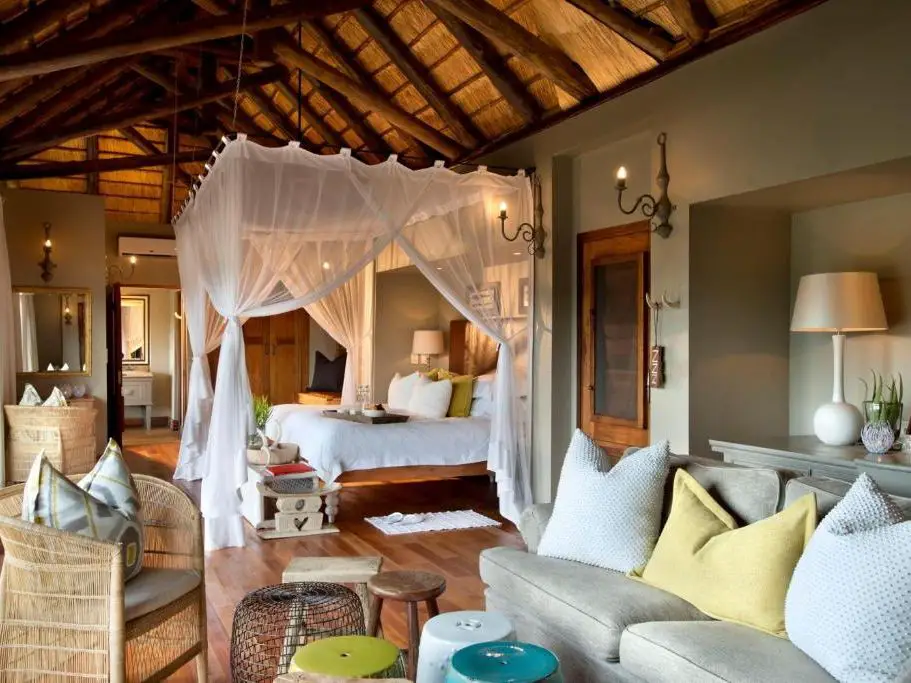
Most Intimate Setting
12. Lion Sands Narina Lodge
Rating: ⭐⭐⭐⭐⭐
Location: 5-minute drive from Skukuza Airport, Sabie River, Kruger National Park
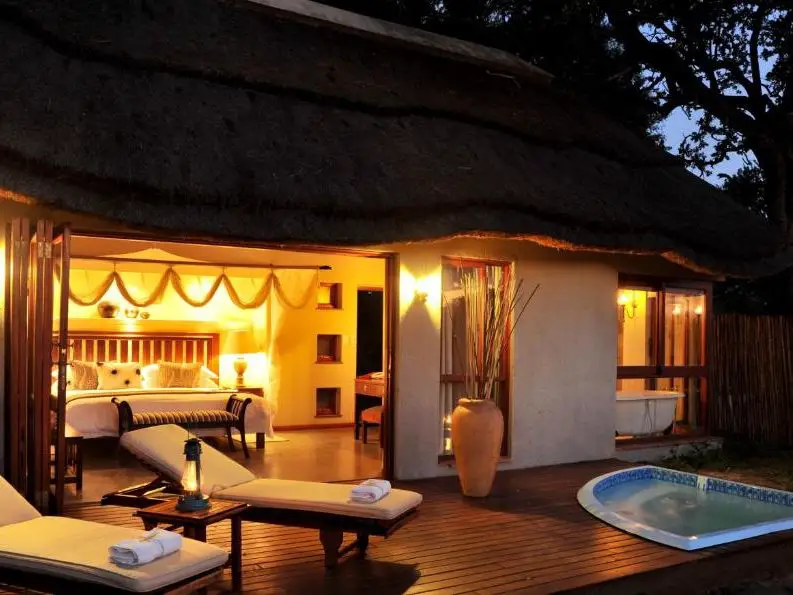
Guest Reviews: Suites on stilts above century-old fig trees, freestanding egg bath with Sabie River view, Tinyeleti Treehouse overnight sleepout bookable as an add-on, hippo experience and guided stargazing included
Best Room: Double Room
From USD $3,500 – $4,500 per night
Best Value in Kruger
13. Imbali Safari Lodge
Rating: ⭐⭐⭐⭐⭐
Location: 90-minute drive from Orpen Gate, Mluwati Private Concession, central Kruger National Park
Guest Reviews: Vintage claw-foot bathtub in every suite, nightly bush bedtime story placed on the pillow, high tea with sandwiches and cakes between game drives, lions feeding on a giraffe sighted from the open vehicle
Best Room: Suite
From USD $835 – $1,200 per night
Why Private Lodges Beat the Public Park for a Luxury Safari
Kruger National Park is one of the most visited wildlife destinations on the planet, which is precisely why the experience inside a private lodge feels so different from anything you’d encounter in the public park. In the national park, vehicles must stay on designated roads at all times. At a sighting — a leopard in a tree, say, or a lion kill — cars queue behind each other on the tar, and you watch from a fixed position until the animal moves or the next vehicle needs its turn. Private reserves and concessions share an unfenced border with Kruger, meaning the same wildlife roams freely across both, but the rules that govern how you experience it are completely different.
- Off-road driving — Safari vehicles at private lodges can leave the road entirely and follow an animal through the bush. This is what closes the gap between a sighting and an encounter. Getting within fifteen metres of a leopard with her cubs because your tracker followed the prints off-track is not an experience available anywhere in the public park.
- Vehicle limits at sightings — Most private reserves impose a cap of two or three vehicles at any sighting. At a popular road in the public park, eight or nine cars can stack up at a lion before the first one moves on. On a private reserve, the silence is part of the experience.
- Night drives — Entirely prohibited on public Kruger roads. On a private concession or reserve, the afternoon drive continues well past sunset. Leopards, civets, porcupines, aardvarks, and hyenas are almost entirely nocturnal; the wet season in particular produces sightings that simply don’t happen before dark.
- Guest-to-guide ratio — Every vehicle at a private lodge carries a maximum of six guests, plus a dedicated ranger and a tracker. The tracker reads the ground, the ranger reads the bush, and the conversation is for you. In the public park on a guided drive, you share a larger vehicle with strangers and a fixed itinerary.
- Exclusivity of access — You can’t enter a private reserve unless you’re a paying guest of a lodge within it. The traversing area is yours and the other guests of your lodge, and occasionally one or two partner properties who share rights. That’s it.
The result is a different category of experience, not a premium version of the same thing.
Private Reserve or Private Concession: Which Should You Choose?
This distinction matters more than most planning guides let on, and most of the lodges covered here fall into one category or the other.
- Private game reserves — Kapama, Klaserie, Balule, Timbavati, and Sabi Sand are all privately-owned land that has been given over to conservation. The owners operate independently of SANParks (South African National Parks) and set their own rules within conservation guidelines. Off-road driving is generally more flexible here, and lodges often share traversing rights with neighbours, meaning your ranger can call across to another vehicle and follow a sighting across reserve boundaries. Pondoro, Makumu, Klaserie Drift, Jabulani Safari, Kapama Karula, Motswari, and Kapama Southern Camp all sit in private reserves of this kind.
- Private concessions — A concession is a designated area within the national park itself, where SANParks has granted a long-term licence to a private operator. The land belongs to the state; the lodge operates on it under strict environmental rules that limit the number of guests and cap off-road driving in certain zones. What you gain in return is the sensation of being genuinely inside Kruger — the landscape is wilder, the tree density more varied, and there are no fences between you and two million hectares of protected wilderness. Jock Safari Lodge, Hoyo Hoyo Safari Lodge, Imbali Safari Lodge, and Kruger Shalati are all concession-based lodges. Lion Sands River Lodge and Lion Sands Narina Lodge sit in a unique position — on a private concession that borders both Sabi Sand and Kruger, giving vehicles access to both.
The practical difference: private reserves tend to offer more aggressive off-road tracking and longer drives extending deeper into the bush. Concessions deliver a more raw, interior-of-the-park feeling, and because SANParks enforces stricter environmental controls, the landscape around concession lodges often feels more intact and less trafficked. Neither is objectively better — the right answer depends on what you’re optimising for.
How to Choose the Right Lodge for Your Trip
Four questions separate the right lodge from the wrong one, and none of them is about star ratings.
- Budget — The 13 lodges here span a significant range. Imbali Safari Lodge and Motswari Private Game Reserve are the most accessible entry points, from around $700–$1,200 per night all-inclusive. Mid-tier properties like Hoyo Hoyo, Kapama Southern Camp, and Klaserie Drift sit between $1,000 and $1,700. At the top end, Lion Sands River Lodge, Kapama Karula, Jabulani Safari, and Lion Sands Narina Lodge run from $2,300 to $4,500 per night. All rates are fully all-inclusive — meals, game drives, and selected beverages are covered — so the per-night figure is closer to the true cost than it first appears.
- Airport and transfer time — The two airports that serve most lodges are Hoedspruit Eastgate (HDS) and Skukuza (SZK). Hoedspruit is the gateway for Kapama, Klaserie, Balule, and Timbavati lodges. Skukuza serves Lion Sands, Jock, and Kruger Shalati, and is a 20-minute drive from the Sabie River. Johannesburg’s OR Tambo is the main international hub; daily domestic flights connect it to both Hoedspruit and Skukuza in under an hour. Driving from Johannesburg takes five to six hours depending on your destination. Factor in gate closing times — Kruger gates operate on strict schedules that vary by season, and arriving after closing means sleeping outside the park.
- Children’s age policies — These vary more dramatically than almost any other factor, and lodges rarely headline the restrictions. Kapama Southern Camp welcomes children of all ages and has purpose-built family villas with connected children’s bedrooms. Jabulani Safari accepts children from six years old. Motswari doesn’t permit children under ten on standard bookings. Lion Sands Narina Lodge is adults-only at 16 and above. Hoyo Hoyo and Jock Safari Lodge accept children from 12 and six years respectively. If you’re travelling with young children, confirm the specific age policy directly with the lodge before booking — don’t rely on general family-friendly marketing.
- What kind of experience you want — A couple on honeymoon and a family of five on their first safari need fundamentally different things. Intimacy and romance point toward Pondoro (eight rooms), Makumu (six suites), or Lion Sands Narina (nine suites). Wildlife intensity and Big Five reliability point toward Sabi Sand lodges like Lion Sands River Lodge. Cultural immersion points toward Hoyo Hoyo. Something genuinely unlike anything else on earth points toward Kruger Shalati. Conservation-led travel with elephant encounters points to Jabulani Safari. Start with what you want to feel at the end of the trip, and work backward from there.
Getting There: Airports, Transfers, and Gate Times
- Hoedspruit Eastgate Airport (HDS) — The main gateway for lodges in Kapama, Klaserie, Balule, and Timbavati. Daily direct flights operate from Johannesburg OR Tambo and Cape Town, with flight times of around 55 minutes from Johannesburg. The airport is small, charming, and frequently described as one of the most welcoming bush arrivals in Africa. Transfers to lodges in the Kapama reserve take around 20 minutes; Klaserie and Motswari lodges require 60 to 90 minutes by road through the reserve.
- Skukuza Airport (SZK) — Serves the southern Kruger area, including Lion Sands, Jock, and Kruger Shalati. Daily flights from Johannesburg take around 60 minutes. The transfer from Skukuza to Lion Sands is done by open safari vehicle — effectively your first game drive. Kruger Shalati is a five-minute shuttle from the airport. Jock Safari Lodge is about 45 minutes by road through the park.
- Kruger Mpumalanga International Airport (MQP) — Located near Nelspruit/Mbombela in the south, this airport serves travellers combining Kruger with a broader Mpumalanga or Panorama Route itinerary. Transfer times to most private lodges from MQP are longer — plan on two to three hours for southern lodges, more for central or northern ones.
- Gate times — Every entrance gate into Kruger National Park and its concessions operates on seasonal opening and closing schedules. These change monthly and are non-negotiable. Missing the gate closing time means you cannot enter the park until the following morning. Your lodge will communicate arrival windows clearly, but build buffer time into any road transfer from an airport, and never assume a delayed flight gives you any flexibility on the gate. Most lodges ask guests to confirm arrival times at least 48 hours in advance precisely because of this.
When to Book and What Each Season Actually Delivers
Two distinct seasons shape everything about a Greater Kruger safari — the dry winter from May to September and the wet summer from November to April — and each delivers a genuinely different experience rather than a better or worse version of the same one. The shoulder months either side are where experienced safari travellers often find the best balance of quality and value.
- Dry season (May–September) — The peak period for game viewing. Vegetation thins dramatically, waterholes become focal points, and predators are far easier to track through open bush. Mornings and evenings on the game drive vehicle can drop to near-freezing in June and July — dress for 6°C (43°F) on an open 4×4 before sunrise, not afternoon temperatures. This is peak pricing and peak occupancy; the smaller lodges — Pondoro, Makumu, and Hoyo Hoyo — can sell out six to twelve months ahead for July and August dates.
- Wet season (November–April) — Harder work for game viewing, as animals disperse when water is plentiful and dense green bush can hide a lion within twenty metres of your vehicle. What the wet season delivers that the dry season cannot: the park turns deep green, impala and wildebeest give birth from December through January, afternoon thunderstorms produce dramatic photography, and migratory bird species arrive in numbers that make Kruger one of Africa’s premier birdwatching destinations. Lodge rates are generally 20–30% lower than peak dry-season pricing.
- September–October (shoulder) — The sweet spot that most planning guides underplay. Game concentration is still high from the long dry season, temperatures are warming but not yet oppressive, vegetation hasn’t yet thickened, and occupancy at most lodges is lower than July or August. This is also the start of birthing season for many species, meaning young animals are visible from late October onward.
- April–May (shoulder) — The tail end of the wet season. The bush is still green and lush, rainfall is tapering off, and animals start becoming easier to spot as the park transitions toward dry conditions. Crowds are thin and rates sit below peak, making this one of the most underrated windows of the year for a first visit.
Book as early as possible for dry-season dates at any lodge with fewer than twelve rooms. For shoulder and wet-season travel, three to four months’ notice is generally sufficient outside of South African school holiday periods in July and December.
Malaria, Medication, and What the Lodges Won’t Tell You
Kruger National Park is a malaria area. That sentence appears on every lodge booking confirmation in small print, and it deserves more attention than it typically gets in planning guides.
The risk is low-to-moderate by global standards, and the private lodges covered here take practical steps to reduce exposure — screened accommodation, air conditioning, mosquito coils, and property management that limits breeding sites. But it does not eliminate the risk, and the classification applies to all Greater Kruger reserves without exception. The risk is highest during the warm, wet months between October and April, when mosquito activity peaks. During the dry winter months of May to September, risk drops considerably, though it does not disappear entirely.
- Consult a travel doctor before you go — The appropriate medication depends on your health profile, any existing conditions, other medications you take, and the specific dates of your trip. A travel medicine clinic will give you current and accurate advice; a general internet search will not. Common antimalarial options include atovaquone-proguanil, doxycycline, and mefloquine, each with different starting schedules relative to your departure date.
- Start medication on schedule — Some antimalarials need to be started one to two weeks before you arrive in the malaria zone. If you’re flying into Johannesburg and then connecting to Hoedspruit or Skukuza, the malaria zone begins at your bush destination, not your point of entry into South Africa.
- Protect yourself at dusk and after dark — Malaria-carrying mosquitoes are most active between dusk and dawn. Cover exposed skin for evening game drives and boma dinners, apply repellent containing DEET, and use the mosquito nets and room screening your lodge provides.
- Families with young children — Certain antimalarials are not suitable for young children or pregnant travellers. If this applies to your group, speak to a paediatric travel doctor about dosing options, and consider whether the malaria-free reserves covered on this site’s South Africa malaria-free page might be a better fit for your specific trip.
- Symptoms after you return — If you develop fever, chills, or flu-like symptoms within a month of leaving a malaria zone, tell your doctor immediately and mention your travel history. Malaria is treatable when caught early.
What a Full Day at a Private Safari Lodge Actually Looks Like
Most guests arrive expecting the game drives and are surprised by everything else. Here’s the daily rhythm that almost every private lodge in Greater Kruger follows, with small variations between properties.
- 4:30–5:00 AM — A knock at the door or a soft radio call. Coffee, tea, and rusks (a dry South African biscuit built for cold pre-dawn mornings) are waiting at the main lodge or delivered to your room. Temperatures before sunrise in the dry season can drop sharply, so the warm drink is practical as well as pleasant.
- 5:30 AM, game drive — The morning drive is typically three hours, sometimes more. Your ranger and tracker work as a pair — the tracker reads the ground and vegetation for prints, broken branches, and territorial markings, while the ranger drives and narrates. The first hour of light produces the best photography and the most active predator behaviour. Most lodges include a mid-drive stop in the bush for coffee and a snack, which is where some of the best conversations happen.
- 8:30–9:00 AM, bush breakfast or lodge breakfast — Some lodges serve breakfast in the bush at a scenic spot on the traversing area. Others return to the main lodge for a full sit-down spread. Either way, this is the biggest meal of the morning — expect eggs, fresh fruit, cold meats, cheese, and the kind of food that makes the early start feel worth it.
- Mid-morning to 3 PM, lodge time — This is the part of the day that most planning guides skip entirely. The African midday heat between October and April can exceed 35°C (95°F), and even in the cooler dry months, the hours between 10 AM and 3 PM are when animals rest and are hardest to find. Most guests use this time for the pool, a spa treatment, reading, napping, or sitting on their private deck watching whatever passes by the waterhole or riverbank below. It’s not dead time — it’s part of the experience.
- 3:30–4:00 PM, afternoon drive — The second drive of the day begins as temperatures cool and animals start moving again. This drive extends well past sunset into full darkness, which is when night-drive sightings become possible. Lodges carry spotlights that rangers use to scan the bush for eye-shine. A good tracker on a good evening can find leopard, hyena, genet, civets, and the occasional aardvark between sunset and the return to camp.
- Sundowner stop — Somewhere between sunset and full dark, your vehicle will pull up at a scenic spot, and drinks and snacks will appear from a box under the seat. This ritual — cold beer or wine in hand, watching the sky change colour over the bush — is one of those moments that gets mentioned in every review of every lodge on this list.
- 7:30–8:00 PM, dinner — Meals alternate between the main lodge dining room, the open-air deck, and the outdoor boma — a traditional circular enclosure with a central fire. Boma dinners in particular have a warmth to them that a restaurant table doesn’t replicate. Guides and trackers often join guests after dinner, and the conversation turns to the day’s sightings, the animals’ territorial behaviour, what tomorrow morning’s drive might bring.
- Lights out — Most guests are in bed by 9:30 or 10 PM, with a 4:30 AM wake-up somewhere between four and six hours away. The darkness in an unfenced camp is complete, the silence punctuated by whatever is moving outside. At Motswari, a staff member escorts you between the main lodge and your room because the reserve is genuinely unfenced and animals move through camp after dark. At Pondoro, you might hear hippos from the riverbank. At Hoyo Hoyo, the waterhole below the dining deck sometimes has elephant at 11 PM.
FAQs
1. How many nights should I spend at a safari lodge in Kruger?
Three nights is the accepted minimum for a meaningful safari, giving you six game drives and enough time for the rhythm of the place to settle in. Four or five nights is better — the first day is often about adjusting to the schedule and the scale of the reserve, and by the third morning your ranger knows your interests and is planning drives accordingly. Longer stays at a single lodge start returning diminishing sightings variety; a combination of two lodges in different reserves over seven nights gives you the widest range of terrain, species, and experiences.
2. Is it safe to travel to Kruger and the private reserves?
The private reserves covered here host thousands of international travellers every year without serious incident. Guides and rangers are professionally trained and carry the appropriate safety equipment. The primary rules — stay in the vehicle during drives, follow your ranger’s instructions at all times, and don’t walk between lodge buildings unescorted after dark in unfenced camps — are consistently enforced. South Africa requires normal travel precautions in terms of personal security, and your lodge team will brief you on anything location-specific on arrival.
3. What does “all-inclusive” actually cover at these lodges?
Almost every lodge here operates on a full-board, activity-inclusive rate. This typically covers all meals, two game drives per day, selected local beverages (beer, house wine, soft drinks, and spirits at most properties), Wi-Fi in communal areas, and transfers to and from the nearest airport. What it almost never covers: premium imported spirits, conservation levies charged by the reserve, park entrance fees for concession lodges, laundry beyond what’s specified, spa treatments, and gratuities. These are settled directly at checkout and can add meaningfully to the final bill — ask your lodge for a full inclusions and exclusions list before arrival.
4. What is the Big Five and how likely am I to see all of them?
The Big Five — lion, leopard, elephant, rhino, and buffalo — are named for the five most dangerous animals to hunt on foot, not the five largest. Every reserve covered here holds the full Big Five. Sightings vary by season, reserve, and the skills of your guide and tracker, but most guests staying three or more nights at a well-run lodge in the Greater Kruger see all five within their stay. Leopard is typically the hardest to locate; rhino requires active searching. The private reserves of Sabi Sand, where Lion Sands operates, have a particularly strong reputation for leopard sightings because of years of habituation work by resident guides.
5. Do I need a visa to visit South Africa for a safari?
South African visa requirements depend on your nationality. Citizens of the United States, United Kingdom, European Union member states, Canada, and Australia do not need a visa for tourist stays of up to 90 days, though entry requirements can change — confirm current requirements with the South African Department of Home Affairs or your country’s foreign travel advice service before departure. A valid passport with at least 30 days of validity beyond your return date is required.
6. What should I pack for a private safari lodge stay?
Neutral, muted colours — khaki, olive, tan, and grey — work best for game drives because bright colours and white can disturb animals and make photography harder. Mornings and evenings in the dry season (May–September) can be cold enough for a fleece and a warm hat, even if afternoons reach 25°C. A lightweight rain layer works for both unexpected showers and cold early starts. Good binoculars significantly improve the game viewing experience. Most lodges provide laundry services, so you don’t need to overpack for longer stays. Leave wildlife cologne, perfume, and heavily scented products at home — scent carries further in the bush than you expect.
7. Can I self-drive within the private reserves?
No. Access to private reserves and concessions is restricted to guests of the lodges within them, and all movement within the reserve is by guided safari vehicle. Some lodges — Jock Safari Lodge is one — allow guests to self-drive on the public roads of Kruger National Park during designated hours as an additional activity, but this is separate from the lodge’s guided traversing. If self-driving is a priority, the public camps within Kruger National Park (Skukuza, Satara, Berg-en-Dal, and others) offer this, but the lodge experience and the self-drive experience are fundamentally different products serving different travel needs.
8. When should I book, and how far in advance?
For the smaller lodges on this list — Pondoro, Makumu, Hoyo Hoyo, and Lion Sands Narina — peak dry-season dates (July and August) can sell out six to twelve months ahead, particularly for the Buffalo Suite at Pondoro or the River Suite at Klaserie Drift. Mid-tier lodges like Motswari and Kapama Southern Camp have more inventory and tend to have availability with three to four months’ notice for most of the year, except school holiday periods in July and December. Shoulder season dates (April–May and September–October) are considerably easier to book at shorter notice. If your dates are flexible, this is where the best combination of availability and value sits.