
A proper safari and a few days in Cape Town aren’t mutually exclusive — the Western Cape has its own collection of game reserves, and most are within a half-day’s drive of the city. Some sit in the stark Karoo, others in the fynbos-covered foothills of the Cederberg, and a few stretch along the Garden Route with the Indian Ocean not far behind. The lodges here range from affordable overnight escapes to full-blown luxury tented camps — so whatever your budget or timeline, there’s a real option within reach.
Table of Contents
Safari Lodges
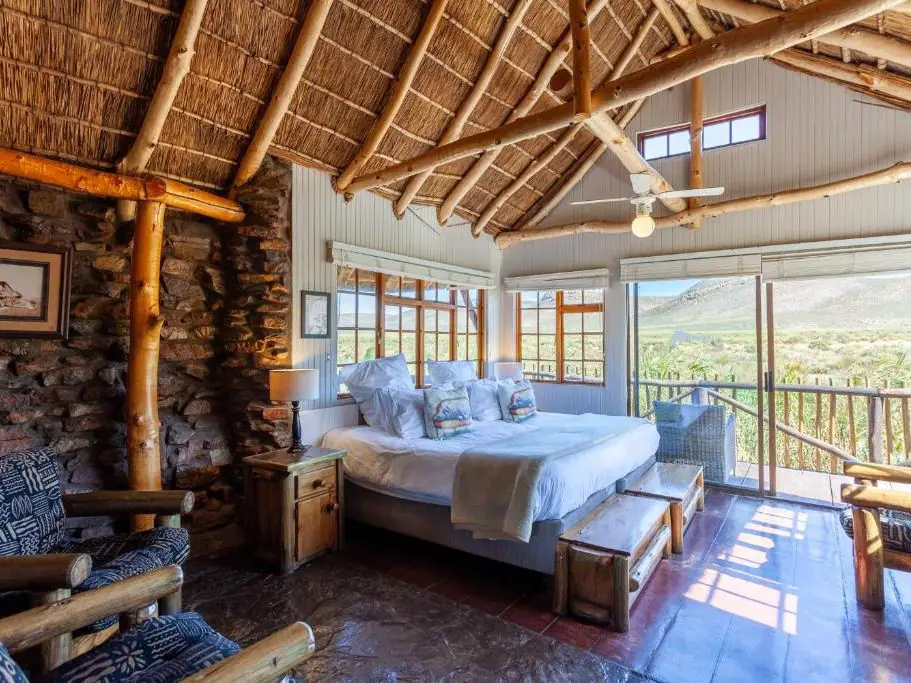
| 1. Aquila Private Game Reserve & Spa Most Accessible Big 5 Safari Rating: ⭐⭐⭐⭐ Location: 2-hour drive from Cape Town city centre, Touwsrivier, Klein Karoo Guest Reviews: Big 5 game drives praised, buffet food variety, Karoo mountain views from reserve-facing rooms, spa facilities Best Room: Premier Luxury Cottage (2 Adults) with 2 Game Drives Price: From USD $300 – $550 per night |
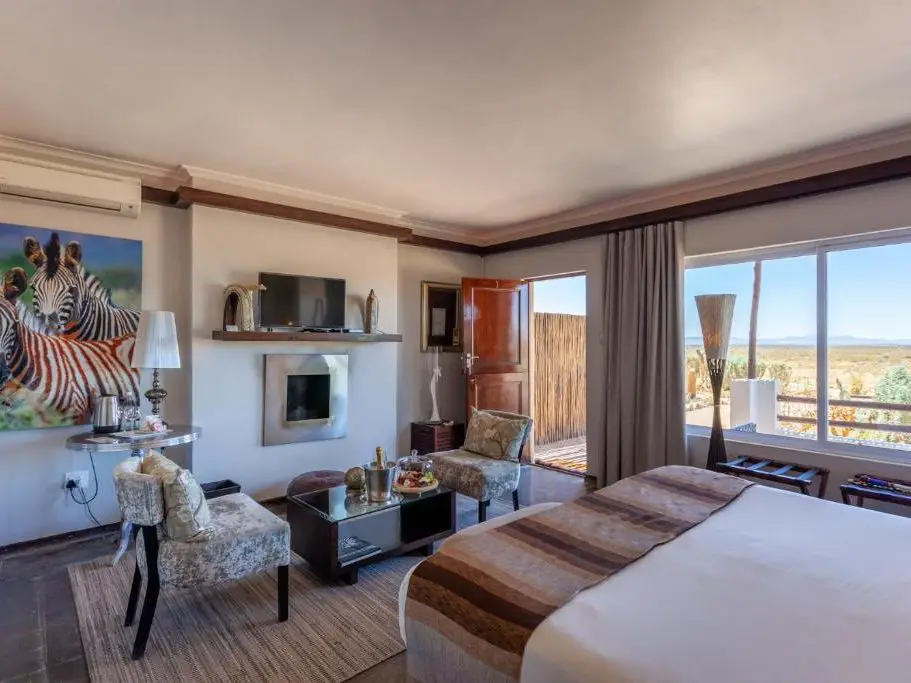
| 2. Inverdoorn Game Reserve Lodge Best Cheetah Conservation Experience Rating: ⭐⭐⭐⭐ Location: 2.5-hour drive from Cape Town, Ceres Karoo, Klein Karoo Guest Reviews: Intimate game drives, cheetah conservation encounter, knowledgeable rangers, 5-course dinner included Best Room: Ambassador Suite Price: From USD $300 – $500 per night |
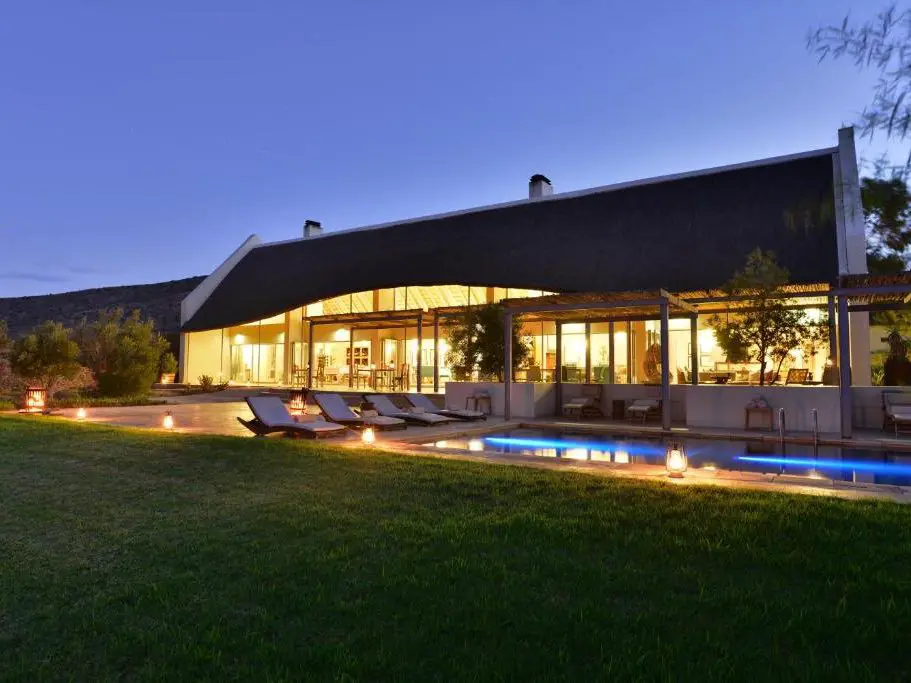
| 3. Sanbona Wildlife Reserve Best for White Lion Sightings Rating: ⭐⭐⭐⭐⭐ Location: 3.5-hour drive from Cape Town via Route 62, Little Karoo Guest Reviews: White lion sightings, guided cheetah walks, exceptional food quality, knowledgeable guides on long twice-daily drives Best Room: Dwyka Tented Lodge 1 Price: From USD $1,100 – $1,800 per night |
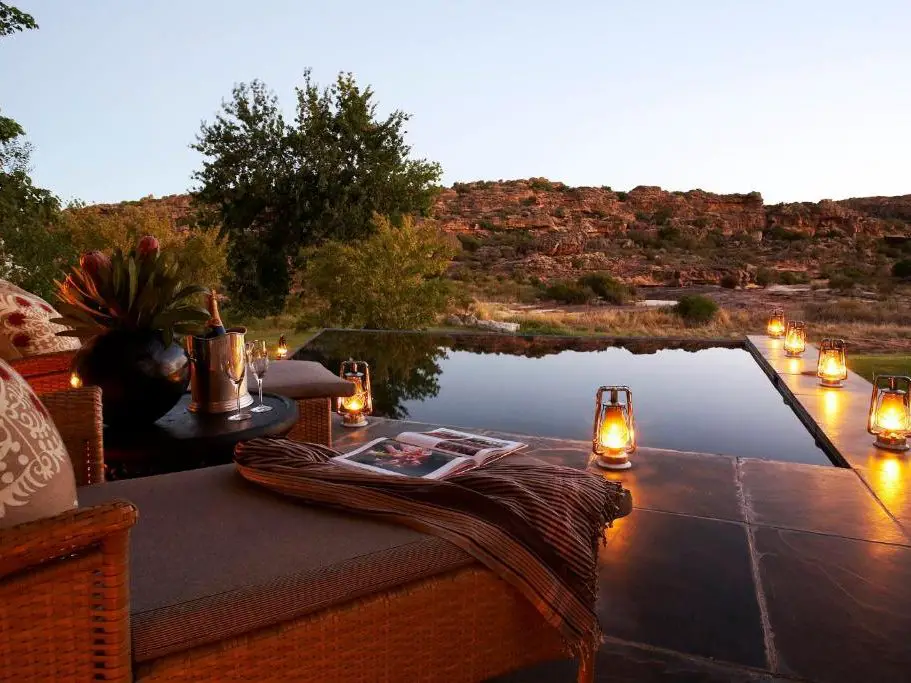
| 4. Bushmans Kloof Wilderness Reserve and Wellness Retreat Best Rock Art Safari Rating: ⭐⭐⭐⭐⭐ Location: 3-hour drive from Cape Town, Cederberg Mountains, near Clanwilliam Guest Reviews: 10,000-year-old San rock art excursions, private candlelit Kadoro dinner in the reserve, organic garden cuisine, dedicated personal guide throughout Best Room: Luxury Room Price: From USD $750 – $1,300 per night |
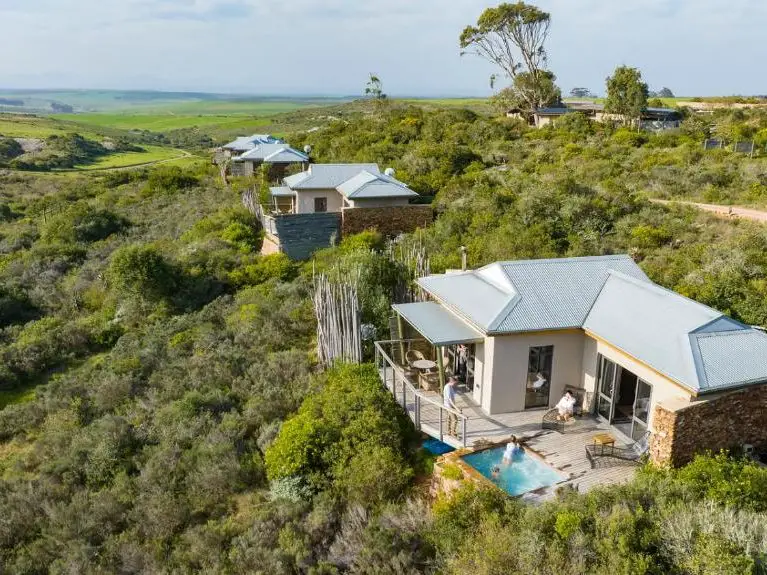
| 5. Garden Route Game Lodge Rating: ⭐⭐⭐⭐ Location: 3.5-hour drive from Cape Town, Albertinia, Langeberg Mountain Range Guest Reviews: Private golf cart transfer to Sunset Ridge units, outdoor Victorian bush bath, knowledgeable guides, boma marshmallow evenings included Best Room: Sunset Ridge Luxury Suite Price: From USD $310 – $700 per night |
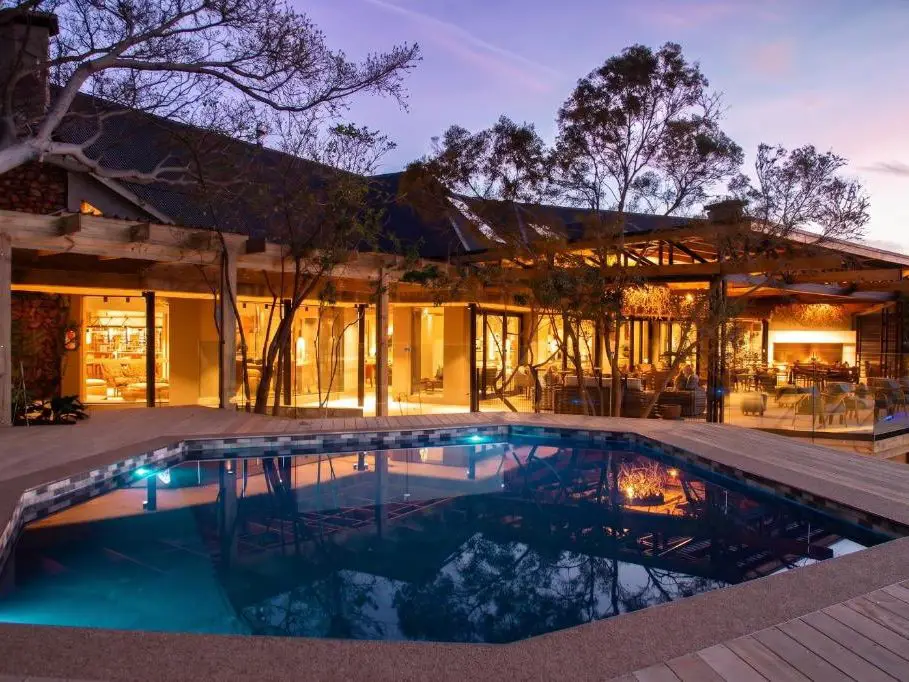
| 6. Botlierskop Tented Lodge Best Riverside Safari Tents Rating: ⭐⭐⭐⭐⭐ Location: 4-hour drive from Cape Town, Mossel Bay, Garden Route Guest Reviews: Riverbank tents with wildlife drinking below the deck, horseback safari option, sundowner drinks stop in the reserve, Fireplace Restaurant riverfront dining Best Room: Luxury room Price: From USD $365 – $900 per night |

| 7. Mont Eco Game Reserve Rating: ⭐⭐⭐⭐ Location: 3-hour drive from Cape Town, Langeberg Mountain Range, Klein Karoo Guest Reviews: Solar-powered off-grid lodge, private deck with hanging chair above seasonal riverbed, personalised ranger-led drives, birthday and anniversary celebrations arranged by staff Best Room: Luxury Studio Suite Price: From USD $850 – $1,400 per night |
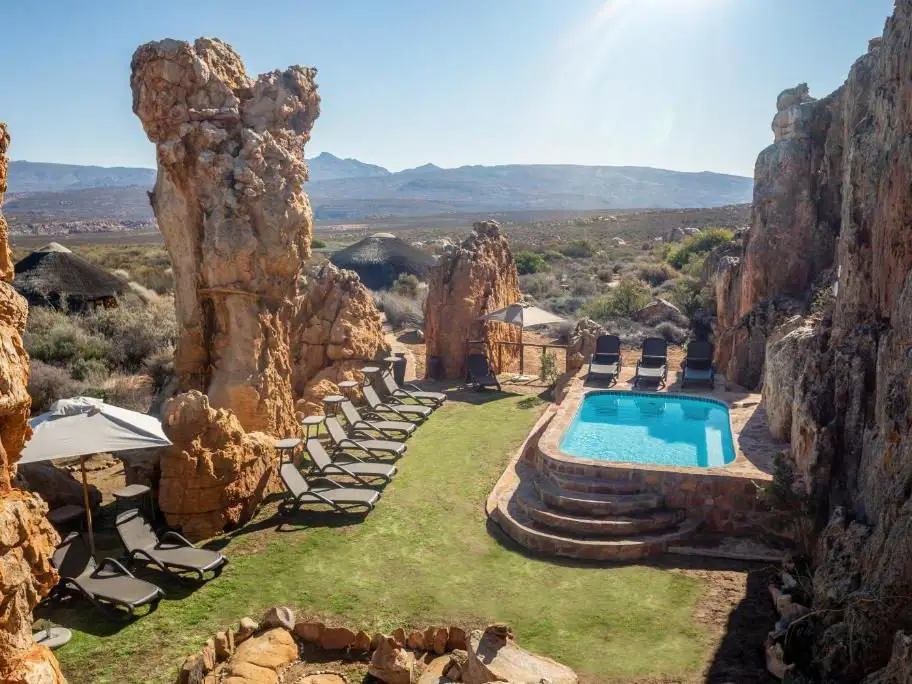
| 8. Kagga Kamma Eco Lodge & Spa Most Unique Stay Rating: ⭐⭐⭐⭐ Location: 3-hour drive from Cape Town, Cederberg Mountains, near Ceres Guest Reviews: Cave suites built into ancient sandstone formations, milky way stargazing through on-site telescope, San rock art guided tours, personal waiter assigned for entire stay Best Room: Cave Suite Price: From USD $340 – $650 per night |
How Far Is “Near Cape Town,” Really?
The phrase “near Cape Town” covers a lot of ground in practice. Reserves range from a 2-hour Karoo dash to a half-day Garden Route drive, and knowing which bracket you’re in before you book changes the whole itinerary. Here’s how the lodges on this page break down by drive time from Cape Town city centre:
- 2 hours (Klein Karoo, Ceres direction) — Aquila Private Game Reserve & Spa and Mont Eco Game Reserve sit in this bracket. These are the closest overnight Big 5 options and the only ones that work comfortably as a day trip if you leave early. Roads are good; the last stretch to Mont Eco is gravel but navigable in a standard vehicle.
- 2.5 hours (Tankwa Karoo) — Inverdoorn Game Reserve Lodge is here. The drive takes you over the Huguenot Tunnel and through the Bain’s Kloof Pass, which is scenic enough to feel like part of the experience. Note the last 20km is an unmarked gravel road.
- 3 hours (Cederberg Mountains) — Kagga Kamma Eco Lodge & Spa falls in this bracket, though the final 35km is gravel and slower going. Budget at least 3.5 hours in a standard sedan.
- 3.5 hours (Klein Karoo, Route 62) — Sanbona Wildlife Reserve and Bushmans Kloof Wilderness Reserve and Wellness Retreat are both here, in opposite directions. Sanbona follows the scenic R62 wine route through Montagu; Bushmans Kloof heads north through the Cederberg foothills. Both drives are genuinely beautiful.
- 3.5–4 hours (Garden Route) — Garden Route Game Lodge sits just off the N2 near Albertinia, making it a natural stop rather than a detour on a Garden Route road trip.
- 4 hours (Garden Route, Mossel Bay) — Botlierskop Tented Lodge is the furthest on this list. Factor this into your planning: it works best as part of a multi-day Garden Route itinerary rather than a standalone Cape Town weekend.
The practical upshot: if you have one night, stick to the 2–2.5 hour bracket. Two nights opens up the 3–3.5 hour options. Three or more nights makes the Garden Route lodges genuinely worthwhile.
Day Trip or Overnight: How to Decide
A day trip gives you one game drive, usually 2–3 hours in an open vehicle. You’ll see wildlife, tick a few animals off the list, and be back in Cape Town by evening. For travellers with limited time or tight budgets, it’s a solid option — Aquila Private Game Reserve & Spa is the only lodge on this list set up specifically for day visitors, with drives running at set times through the day.
An overnight stay changes the experience in one significant way: you get two drives — typically a late afternoon drive the day you arrive and an early morning drive the following day. Dawn is when animals are most active, when the light is best, and when the reserve feels genuinely quiet. Guests who do only the afternoon drive often wish they’d stayed. A single night gives you both.
Two nights is the sweet spot for most travellers. It adds a second morning drive, time to actually use the lodge — the pool, the spa, the boma dinner — and that slower pace that makes a safari feel like more than a box to tick. Most lodges set their packages around two nights for exactly this reason.
Three or more nights makes sense at the larger, more remote reserves where the terrain is varied enough to produce different sightings each day. Sanbona Wildlife Reserve (58,000 hectares) and Bushmans Kloof Wilderness Reserve and Wellness Retreat (7,500 hectares with activities beyond game drives) both reward longer stays. At smaller, more enclosed reserves, three nights can start to feel repetitive.
What the Wildlife Is Actually Like
The Western Cape is not the Kruger. The reserves here are smaller, the herds are managed rather than free-roaming across hundreds of kilometres, and the landscapes are Karoo scrub and fynbos rather than classic East African savannah. That’s worth knowing upfront, because the experience is genuinely different — not lesser, just different.
What you gain is proximity. Guides know where animals are, vehicles get closer, and first-time safari-goers often see more in two hours here than they would on a self-drive through Kruger. Sightings are more reliable. The trade-off is a sense of scale — you won’t watch a herd of wildebeest stretch to the horizon.
A few things to know about specific wildlife:
- Big 5 availability varies by reserve. All the lodges on this list offer access to most of the Big 5, but leopard sightings are rare at enclosed reserves and should never be expected. Sanbona Wildlife Reserve is one of the few Western Cape properties with genuinely free-roaming Big 5 across a large enough territory to make sightings feel unscripted.
- The white lions at Sanbona are real. They’re the only free-roaming, self-sustaining white lion population in the world. Sighting them on a drive is a genuine wildlife moment, not a gimmick.
- Cheetahs near Cape Town are often part of conservation programmes. Both Inverdoorn Game Reserve Lodge and Aquila Private Game Reserve & Spa run cheetah rescue and rehabilitation centres. Getting close to cheetahs here has conservation context behind it, which makes it more meaningful than it might first appear.
- Bushmans Kloof is not a Big 5 reserve. Its wildlife — bontebok, zebra, eland, over 140 bird species — roams freely across Cederberg wilderness. The draw here is the landscape and the rock art, not the predator checklist.
- Kagga Kamma’s appeal is geological as much as zoological. The rock formations and San heritage sites are the headline; wildlife is a supporting act.
Go in with the right expectations and the Western Cape safari experience holds up well. Go in expecting Kruger and you’ll be comparing apples to something much smaller.
Are These Safaris Malaria-Free?
Every lodge on this page is in a malaria-free zone. The entire Western Cape province — including the Karoo, the Cederberg, and the Garden Route — falls outside the malaria transmission belt. No prophylaxis is required, no antimalarial medication is needed, and there are no seasonal restrictions tied to malaria risk.
This matters more than it might seem. Malaria prophylaxis carries side effects that put some travellers off safari entirely — particularly families with young children, pregnant women, and people on certain medications. The Western Cape removes that concern entirely.
For context, the malaria-risk zones in South Africa are concentrated in the northeast: Kruger National Park, the Lowveld, and parts of KwaZulu-Natal. The reserves near Cape Town are far enough south and west to sit in a completely different climate zone. The Karoo’s aridity and the Western Cape’s Mediterranean weather make conditions inhospitable for the Anopheles mosquito year-round.
This is one of the strongest practical arguments for a Cape Town safari over a Kruger trip, particularly for families or travellers who are combining a game reserve with time in the city.
How to Choose the Right Lodge for Your Trip
- One night, first safari, tight budget — Aquila Private Game Reserve & Spa is the call. It’s the closest Big 5 option, it’s set up for one-night packages, meals are included, and it’s the least complicated logistically. Don’t expect five-star luxury but do expect a proper game drive experience.
- One to two nights, couples, mid-range budget — Inverdoorn Game Reserve Lodge offers a noticeably more intimate feel than Aquila, smaller guest numbers, and the Ambassador Suite’s private rooftop terrace is one of the best spots on this list for sundowners.
- Two nights, families with children — Garden Route Game Lodge is the strongest family option on this list. Children are welcome, the reserve is small enough that Big 5 sightings are reliable, and the Sunset Ridge rooms above the waterhole are genuinely special. It pairs naturally with a Garden Route road trip.
- Two to three nights, romantic splurge — Sanbona Wildlife Reserve or Bushmans Kloof Wilderness Reserve and Wellness Retreat depending on what you’re after. Sanbona is a proper wilderness luxury lodge with white lion drives and an enormous reserve. Bushmans Kloof is less about game and more about the wilderness itself — rock art, Cederberg landscapes, and exceptional food and spa.
- Two nights, something completely different — Kagga Kamma Eco Lodge & Spa for the cave suites and stargazing, or Mont Eco Game Reserve for an off-grid solar-powered lodge that only takes seven rooms and runs a genuinely personalised operation.
- Three or more nights, Garden Route itinerary — Botlierskop Tented Lodge deserves at least two nights. The riverside tented suites, horseback safaris, and riverfront dining make it one of the most complete lodge experiences on this list, and it earns the drive time.
What to Pack for a Western Cape Safari
The Western Cape safari wardrobe is simpler than many guides suggest, but a few specifics matter:
- Layers for the Karoo — temperatures can swing 20°C between midday and dawn. A morning game drive in the Klein Karoo in winter (June–August) can feel genuinely cold in an open vehicle. A fleece or warm jacket is not optional; it’s the single most useful thing you can pack.
- Neutral colours are sensible but not obligatory — unlike East African safari etiquette, there’s no hard rule against brighter colours in the Western Cape. Animals here are accustomed to vehicles. That said, neutral tones make for better wildlife photography.
- Dust, not mud — the Karoo is dry and dusty for most of the year. A lightweight scarf or buff is useful for morning drives and protects camera lenses. In summer (November–February), afternoon heat in the Karoo is intense; breathable fabrics and sunscreen matter more than insulation.
- Closed shoes for walking activities — if you’re doing a bush walk or horseback safari at Botlierskop Tented Lodge or Bushmans Kloof Wilderness Reserve and Wellness Retreat, closed shoes are essential. Sandals and flip-flops belong at the pool.
- The Cederberg adds wind — Kagga Kamma Eco Lodge & Spa and Bushmans Kloof Wilderness Reserve and Wellness Retreat are both in mountain terrain where wind is a factor. A windproof outer layer is more useful than a heavy coat.
Leave bright safari-specific clothing at home. A pair of jeans, two lightweight layers, and a warm jacket cover the majority of what you’ll need.
When to Go: Seasons, Weather and Game Viewing
The Western Cape operates on a Mediterranean climate, which means the seasonal logic runs opposite to what most people expect from a South African safari.
- May to August (winter) is actually the best time for game viewing near Cape Town. The bush is thinner in the Karoo, animals concentrate near water sources, and overcast skies produce better photographic light than harsh midday summer sun. Temperatures on morning drives are cold but manageable with layers. Lodge occupancy is lower, and some properties offer winter rates.
- September and October are excellent across the board. The Karoo begins to green up after winter rain, wildflowers appear, and temperatures are comfortable on drives. This is also the start of whale season along the Cape coast, which pairs well with a Garden Route lodge stay at Botlierskop Tented Lodge or Garden Route Game Lodge.
- November to February (summer) brings intense heat to the Karoo — midday temperatures at Aquila Private Game Reserve & Spa, Inverdoorn Game Reserve Lodge, and Sanbona Wildlife Reserve can exceed 40°C. Game drives happen at dawn and dusk specifically to avoid this. Summer is better suited to the Cederberg properties (Bushmans Kloof Wilderness Reserve and Wellness Retreat, Kagga Kamma Eco Lodge & Spa), which sit at higher altitude and run cooler.
- March and April offer a quieter, pleasant shoulder season. Temperatures are dropping, the Karoo is still green from summer rains, and lodges are less busy than the school holiday peak.
One counter-intuitive tip: if you’re combining a Cape Town visit with a safari, don’t assume the weather in the city matches the weather at the reserve. Cape Town’s summer (October–March) is warm and dry, while the Karoo has its own patterns. An overcast Cape Town day in July often means crystal-clear skies and perfect drives two hours inland.
Frequently Asked Questions
1. Do I need a visa to visit South Africa for a safari near Cape Town?
Citizens of most Western countries — including the UK, US, EU member states, and Australia — can enter South Africa visa-free for up to 90 days. Check the South African Department of Home Affairs website for your specific nationality before travelling, as exemptions and conditions can change.
2. How long should I budget for the drive from Cape Town to the nearest game reserve?
The closest Big 5 reserves are roughly 2 to 2.5 hours from Cape Town city centre in light traffic. Factor in an early departure to catch the afternoon game drive on arrival, and build in extra time if travelling in peak season when the N1 out of the city can be slow. Most lodges ask for check-in by 2–3pm to make the first drive.
3. Can I do a safari near Cape Town with a baby or toddler?
Age restrictions vary significantly by lodge. Aquila Private Game Reserve & Spa and Kagga Kamma Eco Lodge & Spa welcome children of all ages. Inverdoorn Game Reserve Lodge does not allow children under 4 on game drives. Sanbona Wildlife Reserve’s Gondwana Lodge accommodates all ages; Dwyka Tented Lodge has a minimum age of 16. Always confirm directly with the lodge before booking.
4. Is it worth going on safari near Cape Town if I’ve already been to Kruger?
The experiences are genuinely different rather than one being better than the other. If you’ve done Kruger, the smaller Western Cape reserves offer something the Kruger can’t — accessibility, malaria-free zones, extraordinary landscapes like the Cederberg and Karoo, and unique properties like Sanbona Wildlife Reserve’s white lion population and Kagga Kamma Eco Lodge & Spa’s sandstone cave suites.
5. What’s included in a typical overnight safari package near Cape Town?
Most lodges include accommodation, meals (usually full board — breakfast, lunch, and dinner), and two game drives per day in the base rate. Beverages are usually charged separately. Activities like horseback safaris, spa treatments, and stargazing tours are typically add-ons. Always read the inclusions carefully before booking, as packages vary.
6. What is the best time of year to see the most wildlife near Cape Town?
Winter months — June through August — generally produce the best game viewing conditions in the Karoo, as thinner vegetation and concentrated water sources make animals easier to spot. Early morning drives in spring (September–October) are particularly rewarding as temperatures are mild and animal activity is high.
7. Do these safari lodges near Cape Town offer self-drive options?
Self-drive game viewing is not offered at privately operated reserves on this list. All game drives are guided by rangers in lodge vehicles. This is actually an advantage for first-time safari-goers — guides know the terrain, track animal movement, and provide context that a self-drive simply cannot. If you’re after a self-drive safari format, De Hoop Nature Reserve and the West Coast National Park are the closest Cape Town options.
8. How do the safari reserves near Cape Town compare in size to Kruger National Park?
Kruger National Park covers roughly 2 million hectares. By comparison, Sanbona Wildlife Reserve spans 58,000 hectares — substantial for a private Western Cape reserve, but around 3% of Kruger’s size. Most other reserves on this list are smaller still. The practical difference is that animal sightings are more structured here, game drives cover more of the reserve in a session, and the overall experience is closer and more guided.