
South Africa’s malaria-free reserves solve a problem most safari brochures gloss over: you don’t have to choose between seeing the Big Five and skipping the anti-malarial tablets. Places like the Eastern Cape, Madikwe, the Waterberg, and Nambiti in KwaZulu-Natal were built or restored specifically as malaria-free zones, so families with young kids, pregnant travelers, or anyone who’d rather not deal with medication can still get lion, elephant, and rhino sightings without the health tradeoff. The lodges below sit in these four confirmed malaria-free regions, and each one delivers real Big Five game viewing without asking you to compromise on comfort or safety. Here’s where to stay.
Quick answer: Book Kwandwe Great Fish River Lodge. Its suites have a private plunge pool over the Great Fish River, and you can join a rhino-darting conservation safari.
Table of Contents
South Africa Safari Lodges
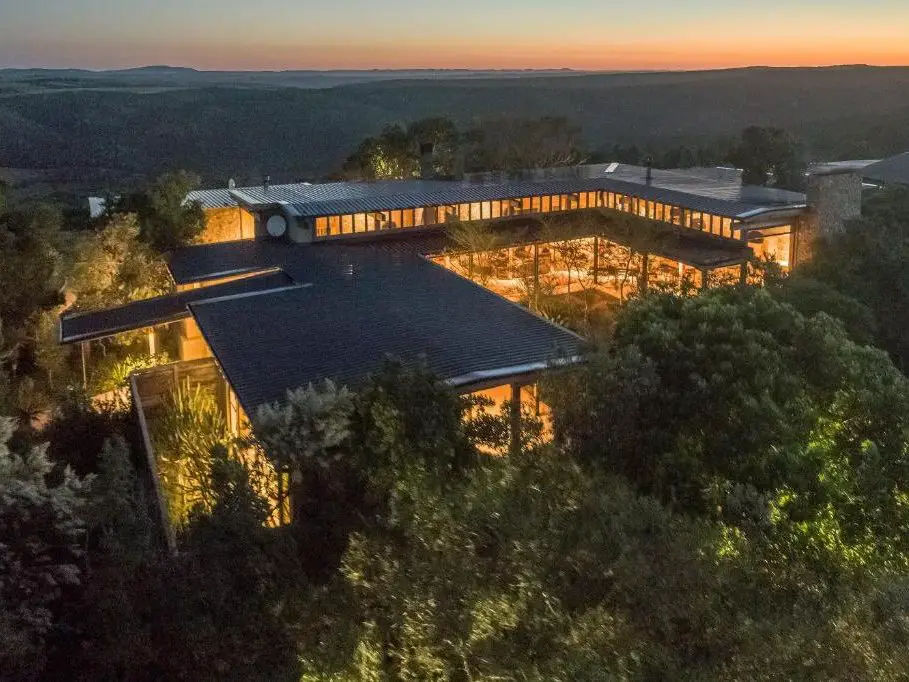
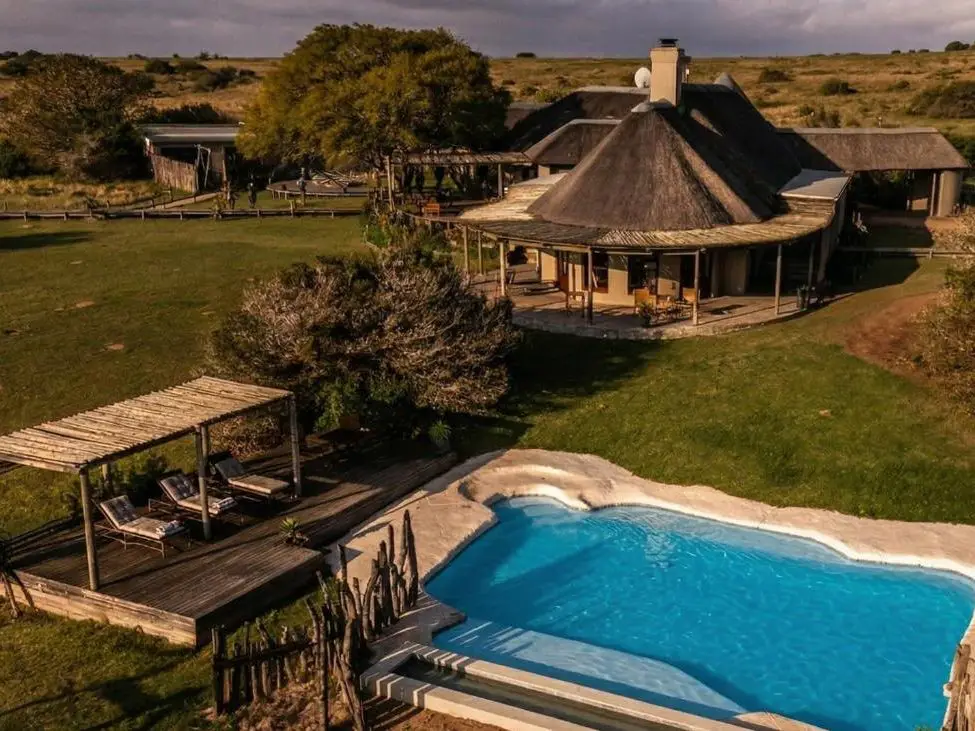
Best Rim-Flow Pool View
1. Kariega Game Reserve Ukhozi Lodge
Rating: ⭐⭐⭐⭐
Location: 90-minute drive from Gqeberha Airport, Kariega Private Game Reserve, Eastern Cape
Guest Reviews: Rim-flow pool over the valley, private plunge pool in every suite, honeymoon sparkling wine on arrival
Best Room: Luxury Suite
Price: From USD $1.1k – $1.5k per night
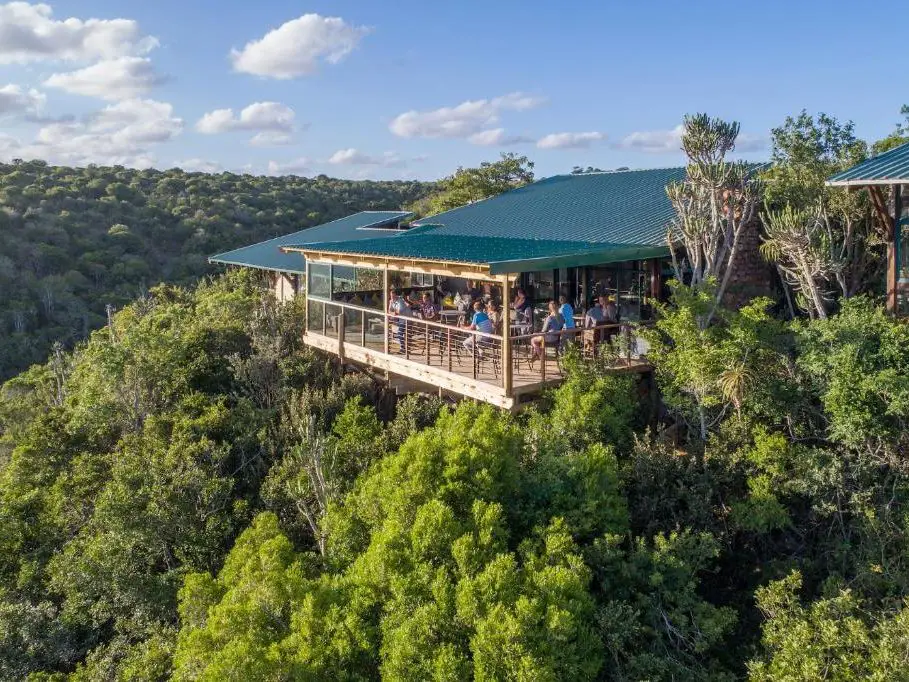
Best for Families
2. Kariega Game Reserve Main Lodge
Rating: ⭐⭐⭐⭐
Location: 90-minute drive from Gqeberha Airport, Kariega Private Game Reserve, Eastern Cape
Guest Reviews: Log chalets with private viewing decks, river cruises on African Queen boat, kids club onsite
Best Room: Three-Bedroom Chalet
From USD $850 – $1.1k per night
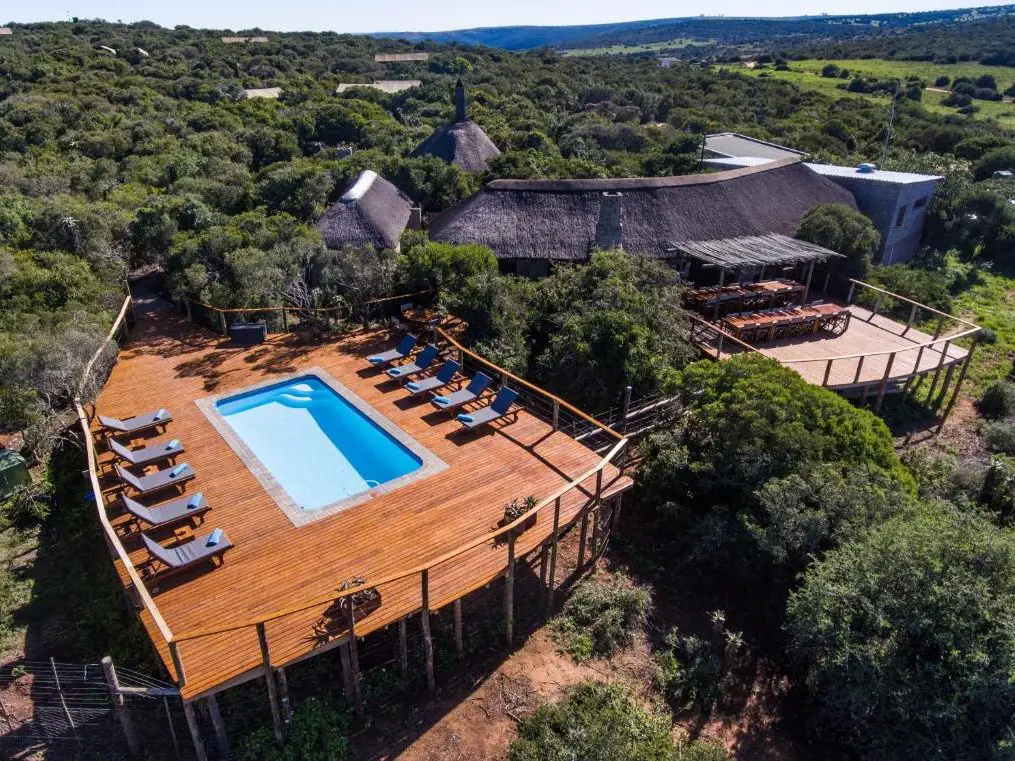
Best Value
3. Woodbury Tented Camp – Amakhala Game Reserve
Rating: ⭐⭐⭐
Location: 80-minute drive from Gqeberha Airport, Amakhala Game Reserve, Eastern Cape
Guest Reviews: Electric blankets on night drives, home-cooked bread daily, campfire boma after safari
Best Room: Safari Tent
From USD $600 – $900 per night
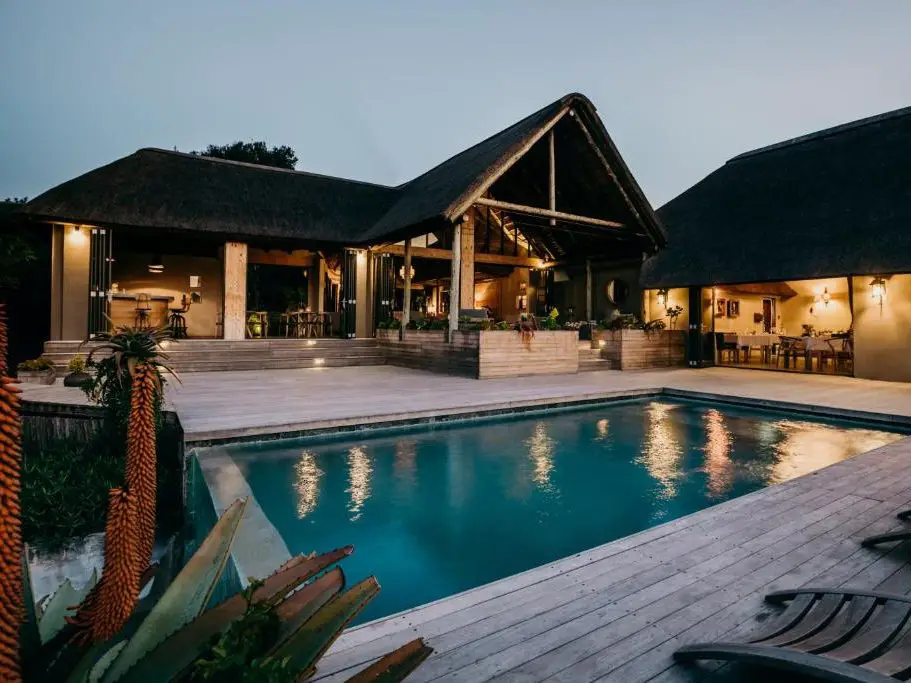
4. Bukela Game Lodge – Amakhala Game Reserve
Rating: ⭐⭐⭐⭐⭐
Location: 90-minute drive from Gqeberha Airport, Amakhala Game Reserve, Eastern Cape
Guest Reviews: Four-poster bed in luxury tent, boma dinners under stars, boat cruise on Bushman’s River
Best Room: Luxury King Suite
From USD $750 – $2.7k per night
Closest Pool to a Waterhole
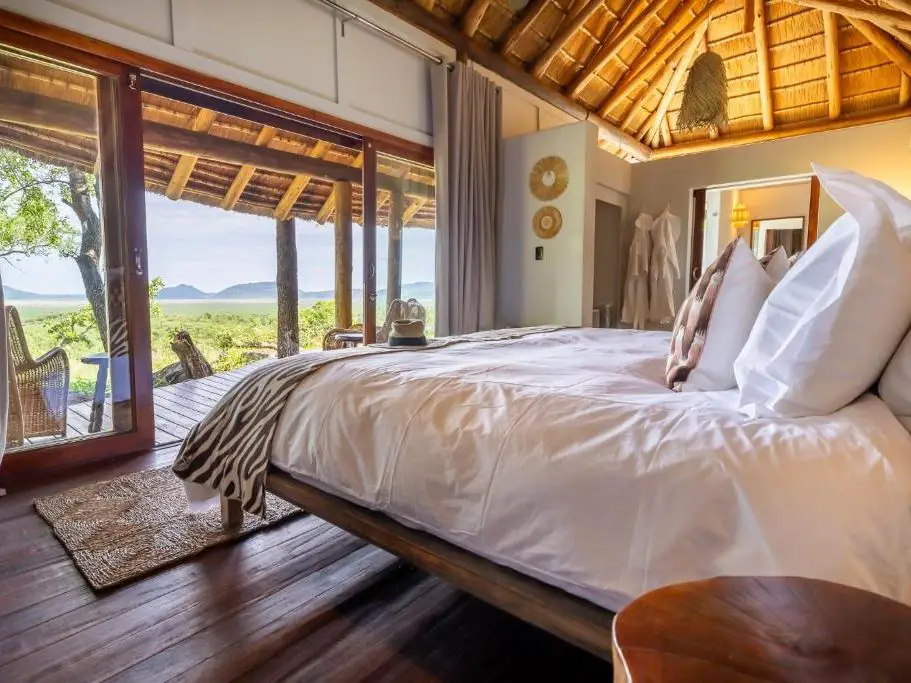
5. Hlosi Game Lodge – Amakhala Game Reserve
Rating: ⭐⭐⭐⭐
Location: 90-minute drive from Gqeberha Airport, Amakhala Game Reserve, Eastern Cape
Guest Reviews: Roll-top bath overlooking bush, 180-degree wraparound veranda, elephants drink from the pool
Best Room: Luxury King Suite
From USD $1.1k – $1.6k per night
Most Community-Owned Stay
6. Buffalo Ridge Safari Lodge
Rating: ⭐⭐⭐⭐⭐
Location: 4-hour drive from Johannesburg, Madikwe Game Reserve, North West Province
Guest Reviews: Ridge-top suites over Tweedepoort ravine, wooden bridge crossing to main lodge, community-owned since 2004
Best Room: Luxury Suite
From USD $1.1k – $1.7 per night
Best Spa
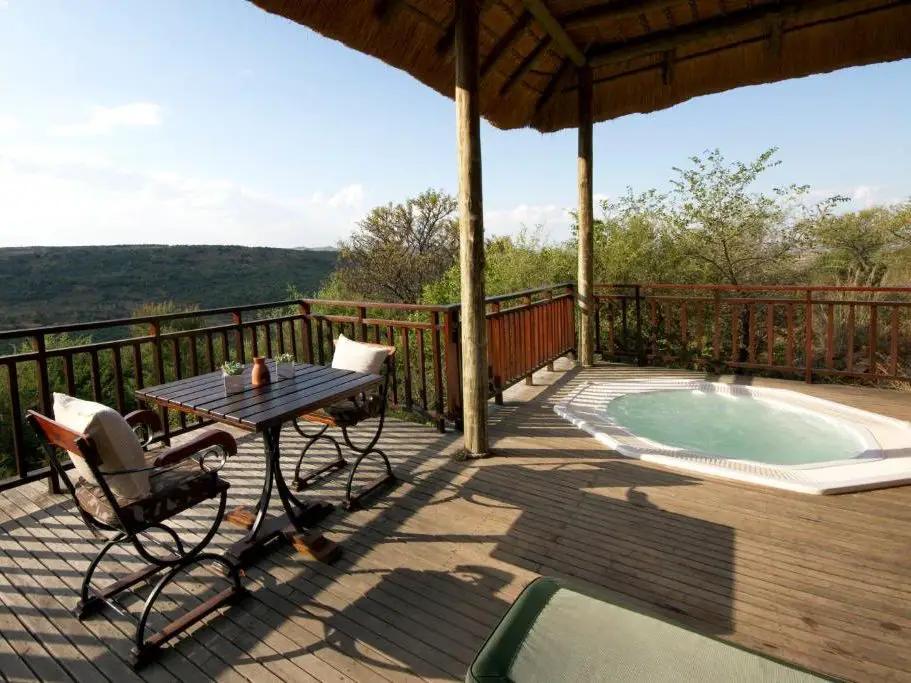
7. Umzolozolo Private Safari Lodge & Spa
Rating: ⭐⭐⭐⭐⭐
Location: 4-hour drive from Johannesburg, Nambiti Game Reserve, KwaZulu-Natal
Guest Reviews: Presidential suite jacuzzi deck, rim-flow pool over valley, outdoor shower with grazing wildlife view
Best Room: Presidential Suite
From USD $680 – $800 per night
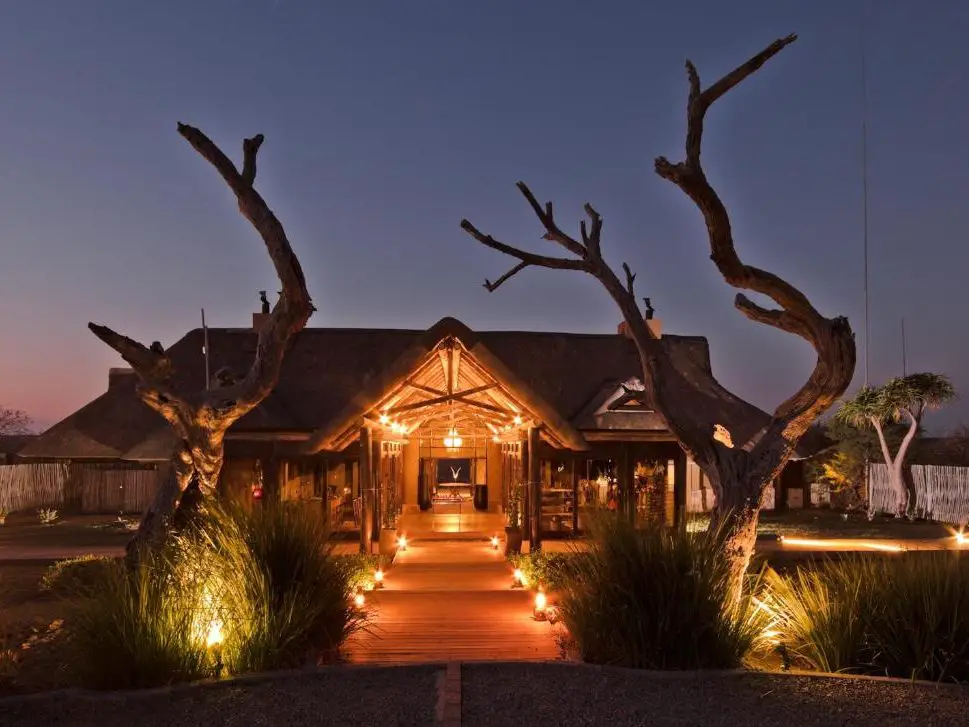
8. Nambiti Hills Private Game Lodge
Rating: ⭐⭐⭐⭐⭐
Location: 3.5-hour drive from Johannesburg, Nambiti Game Reserve, KwaZulu-Natal
Guest Reviews: Egg-shell soaking bath with valley view, ostrich steak dinner, unfenced camp with grazing wildlife
Best Room: Honeymoon Suite
From USD $500 – $800 per night
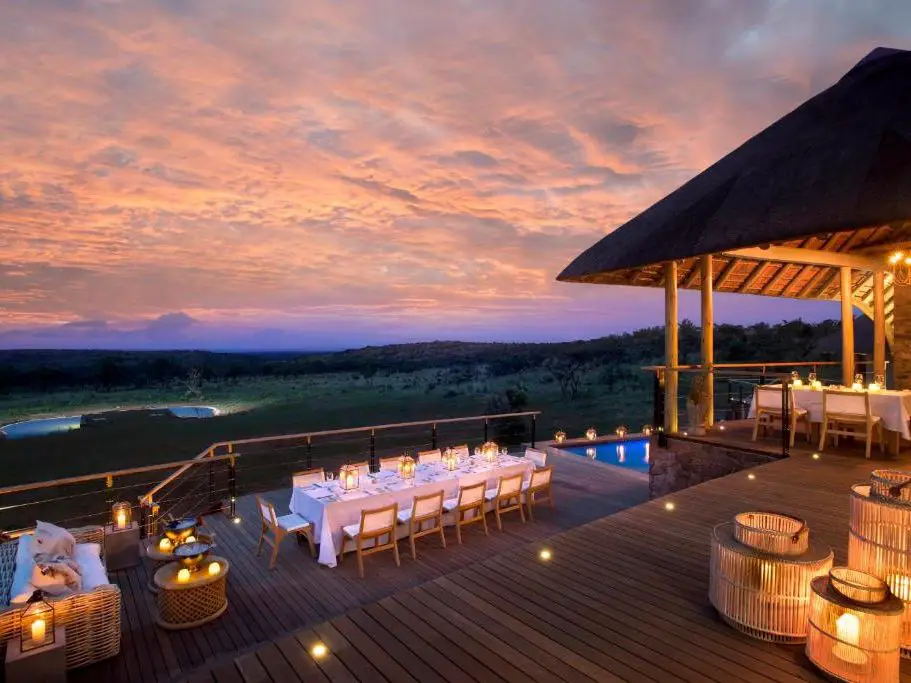
9. Mhondoro Safari Lodge & Villa
Rating: ⭐⭐⭐⭐⭐
Location: 2.5-hour drive from O.R. Tambo Airport, Welgevonden Game Reserve, Waterberg, Limpopo
Guest Reviews: Underground hide reached by 65-metre tunnel, elephants drink from saltwater pool, private stargazing deck
Best Room: Luxury Pool Suite
From USD $1,6k – $2,2k per night
Most Immersive Cultural Experience
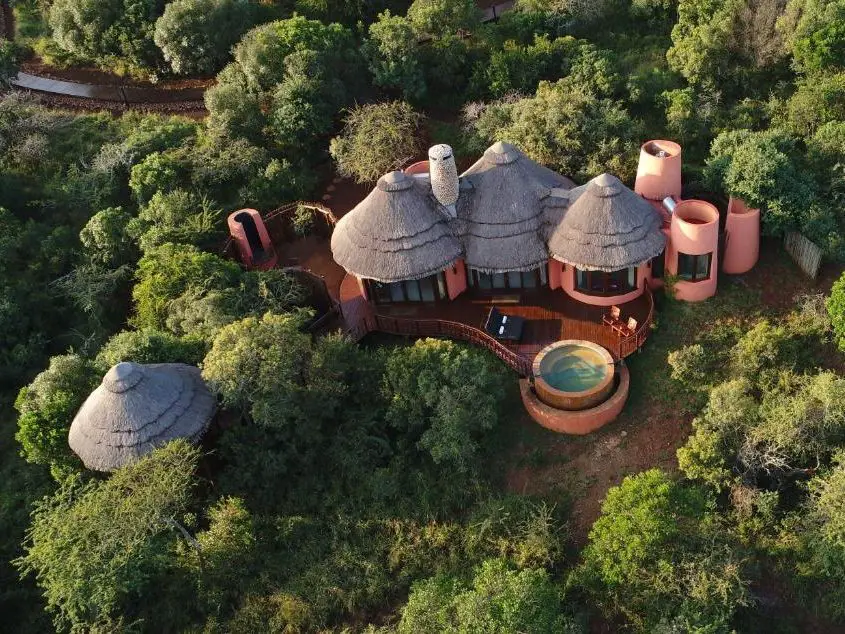
10. Thanda Safari Lodge
Rating: ⭐⭐⭐⭐⭐
Location: 3-hour drive from Durban, Thanda Private Game Reserve, KwaZulu-Natal
Guest Reviews: Zulu warrior ritual performance, heated plunge pool per suite, egg-shaped soaking bath, wine cellar and cigar bar
Best Room: Luxury Suite
From USD $740 – $2,3k per night
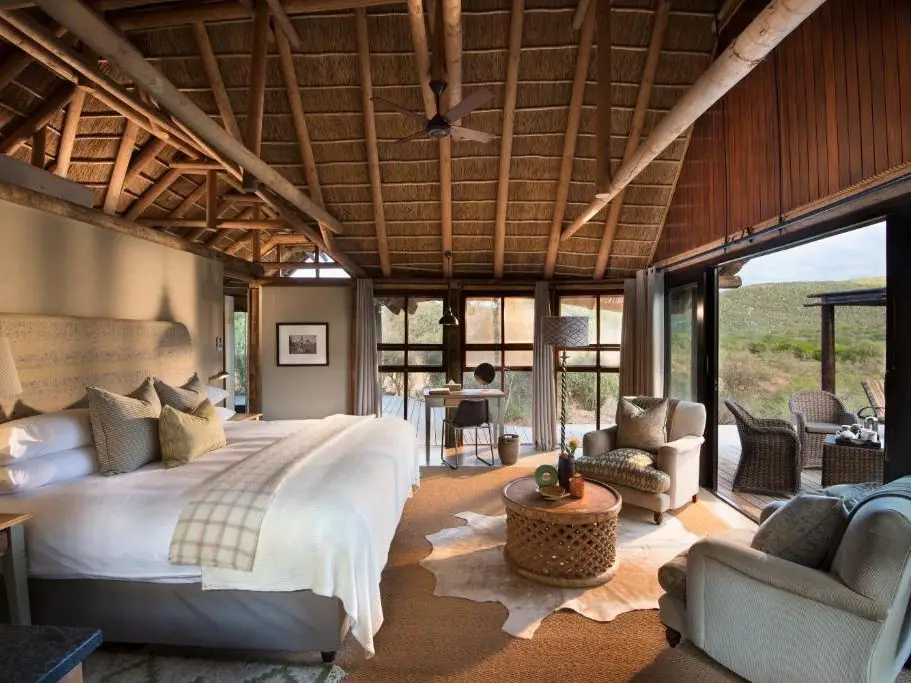
11. Kwandwe Great Fish River Lodge
Rating: ⭐⭐⭐⭐⭐
Location: 2-hour drive from Gqeberha Airport, Kwandwe Private Game Reserve, Eastern Cape
Guest Reviews: Private plunge pool overlooking Great Fish River, rhino-darting conservation safari, roll-top bath with river view
Best Room: Great Fish River Lodge Suite
From USD $1,7k – $2,4k per night
Best Wild Dog Sightings
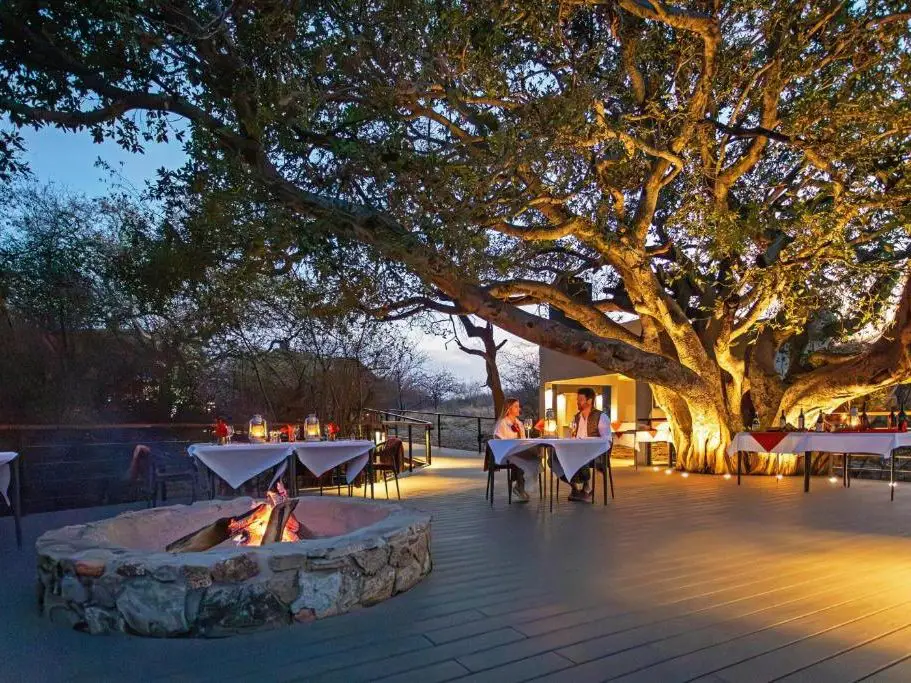
12. Tuningi Safari Lodge
Rating: ⭐⭐⭐⭐⭐
Location: 4.5-hour drive from Johannesburg, Madikwe Game Reserve, North West Province
Guest Reviews: Underground hide overlooking waterhole, ancient fig tree boma, oversized bath with bush view
Best Room: Luxury Suite
From USD $1,9k – $3,9k per night
Why South Africa Is Different From the Rest of the Continent
Most of the continent’s best safari country sits inside malaria’s range, and that includes Kruger, the name most people think of first when they picture a South African safari. The malaria-free reserves covered here sit hundreds of kilometers further south and west, in a band of the country where the mosquito that carries the parasite simply doesn’t establish itself in meaningful numbers.
Three things explain why: altitude, climate, and distance from the tropics.
- Altitude – Reserves like Welgevonden in the Waterberg sit on a mountainous escarpment well above the elevation where the malaria-carrying mosquito thrives. Higher, cooler ground breaks the transmission cycle even in reserves that share the same Big Five wildlife as lower-lying parks further north.
- Climate – The Eastern Cape and inland KwaZulu-Natal reserves like Nambiti fall in a semi-arid to temperate zone rather than the humid subtropical belt that mosquitoes need to breed year-round. Drier air and cooler winters across most of the year keep the risk close to zero without any seasonal caveat.
- Distance from the tropics – Madikwe sits near the Botswana border but far enough south and at high enough elevation that it escapes the malaria zone entirely, unlike reserves further north and east along the Mozambique and Zimbabwe borders where the disease is endemic.
This is also why South Africa gets described as the one country on the continent that can offer a fully malaria-free Big Five safari without qualification. Kenya, Tanzania, Zambia, and Botswana all have malaria risk somewhere in their safari circuits, even in reserves marketed as low-risk. South Africa’s Eastern Cape, Madikwe, Welgevonden, and Nambiti are the exception, not a seasonal loophole.
“Low Risk” Versus Genuinely Malaria-Free
These two terms get used interchangeably in safari marketing, and the difference matters more than most travelers realize. A genuinely malaria-free reserve has no established mosquito population capable of carrying the parasite, full stop, no matter the season or how recent the rain. A “low risk” reserve still carries some chance of transmission, usually tied to warmer, wetter months, and lodges in these areas will often recommend antimalarial medication anyway even while marketing themselves loosely as a safe bet for families.
Parts of KwaZulu-Natal fall into this grey zone. Reserves near Hluhluwe and the broader iMfolozi area sit close enough to the humid coastal belt that some operators recommend precautions during summer, even though they’re sometimes grouped under the same “malaria-free” banner as Eastern Cape or Madikwe properties. Nambiti, further inland and at higher elevation, doesn’t carry this caveat. Always check a lodge’s own health and safety page rather than a general regional label, since two reserves an hour apart can have genuinely different risk profiles.
For anyone traveling with young children, during pregnancy, or managing a health condition that makes antimalarial tablets risky, this distinction is the one worth getting right before booking, not after arrival.
Which Reserve Fits Your Trip
Four regions deliver a genuinely malaria-free Big Five safari, and each suits a different kind of trip.
- Eastern Cape – This is the easiest region to bolt onto a Cape Town or Garden Route itinerary, since Gqeberha airport puts most reserves within a two-hour drive. Amakhala and Kariega both sit here, making it the natural choice for anyone combining safari with a wider South Africa trip rather than flying in specifically for game viewing.
- Madikwe – Bordering Botswana in the North West province, this reserve built its reputation on African wild dog sightings alongside the Big Five, and it’s the closest malaria-free option to Johannesburg by road. Choose this region if wild dog encounters matter more to you than any other single species.
- Waterberg – Home to Welgevonden, this is the quietest and most remote of the four, with fewer lodges and a mountainous, dramatic landscape that feels different from the flatter bushveld further north. Pick this region if solitude and scenery matter as much as the wildlife itself.
- Nambiti, KwaZulu-Natal – Closest to Durban and King Shaka International, Nambiti works well for anyone building a coastal Indian Ocean leg into the same trip. It’s also more compact than Madikwe or the Eastern Cape’s larger reserves, meaning shorter game drives between sightings.
Child Age Policies Vary More Than You’d Expect
Malaria-free status solves the health question, but it doesn’t automatically mean a lodge welcomes young children on every activity. Age policies differ lodge to lodge and even activity to activity within the same property, and this catches out more families than any other planning detail on a malaria-free safari.
- Game drive minimums – Several lodges set a minimum age of five or six for scheduled game drives regardless of the lodge’s overall family-friendly marketing, meaning a toddler-aged sibling may need private arrangements or a babysitting service while older children join drives.
- Family suite structures – Some properties only accommodate children through a connected two-bedroom family suite rather than allowing extra beds in a standard room, which affects both availability and price for larger families booking last minute.
- Kids’ programs versus supervised babysitting – A structured kids’ club with rangers running educational activities is a different offering from ad hoc babysitting arranged through the front desk, and lodges rarely make this distinction obvious on their own websites.
- Under-2 exemptions – Many reserves waive charges entirely for children under two, but this age cutoff and what counts as “sharing” a room varies enough that it’s worth confirming directly with the lodge rather than assuming standard hotel logic applies.
Always confirm a lodge’s specific age policy directly before booking rather than relying on general “family-friendly” branding, since the gap between marketing and actual activity restrictions is wider here than at most standard hotels.
Best Time to Visit for Game Viewing
Dry season, roughly May through September, is when game viewing peaks across all four malaria-free regions. Thinner vegetation and animals congregating around limited water sources make sightings easier and more frequent, particularly for predators that are harder to spot when the bush is thick and green.
Shoulder months either side of this window, particularly September and October, often combine strong game viewing with fewer crowds at the more popular lodges, since most travelers cluster their visits around the coolest winter months. Summer brings lush, green scenery and newborn animals across most reserves, but taller grass and denser bush make sightings less predictable, which matters more if a short two or three night stay leaves little room for a quiet day.
What a Private Plunge Pool Suite Actually Costs Here
Most competing guides describe these reserves in terms of luxury without ever putting a number next to it, which leaves travelers guessing until they start requesting quotes. Private plunge pool suites across these malaria-free regions span a wide range depending on reserve and lodge tier.
- Entry-level private pool suites – Properties like Woodbury Tented Camp and Hlosi Game Lodge in the Eastern Cape put a private plunge pool suite within reach from around $500 to $800 per night, making this the most accessible tier for a first Big Five trip with the plunge pool feature included.
- Mid-tier private pool suites – Reserves like Nambiti and Madikwe’s family-oriented lodges typically land between $800 and $1,300 per night for a suite with a private pool, reflecting smaller guest numbers per reserve and more elaborate suite design.
- Top-tier private pool suites – Flagship properties like Kwandwe Great Fish River Lodge push past $1,700 per night, with suites linked by private wooden walkways and river views that command a genuine premium over the entry-level tier.
Knowing where a lodge sits in this range before requesting a quote saves the back-and-forth of discovering a “luxury” listing is three times the price of the one booked next to it.
Getting There: Airports and Transfers by Region
Each malaria-free region routes through a different gateway airport, and getting this wrong is the easiest way to add hours to a trip that should take one connecting flight.
- Eastern Cape – Gqeberha (Port Elizabeth) Airport serves Amakhala and Kariega, both within roughly 90 minutes by road, making this the fastest region to reach from a Cape Town or Garden Route starting point.
- Madikwe – Most lodges arrange transfers from OR Tambo in Johannesburg, a drive of four to four and a half hours, though several properties also offer a charter flight option directly into the reserve for guests short on time.
- Waterberg – Welgevonden sits roughly two and a half hours from OR Tambo by road, making it a feasible day-trip distance for anyone tacking a short safari onto a Johannesburg stopover.
- Nambiti – King Shaka International in Durban puts this reserve within a three-hour drive, the natural choice for anyone pairing safari with an Indian Ocean coastal stay.
Confirming whether a lodge includes airport transfers in its rate or charges separately is worth doing before arrival, since this varies even among lodges in the same reserve.
FAQs
1. Is South Africa really the only country in Africa with fully malaria-free safaris?
It’s the only country able to offer this without seasonal caveats across multiple Big Five reserves. Other popular destinations like Kenya, Tanzania, and Botswana carry some malaria risk somewhere in their safari circuits, even in areas marketed as low-risk.
2. Do I still need travel insurance that covers malaria if I’m staying in a malaria-free reserve?
Standard travel insurance covering medical emergencies is still worth having regardless of malaria risk, since it covers unrelated illness, injury, or evacuation. Malaria-specific cover simply becomes less relevant if the entire itinerary stays within these confirmed malaria-free zones.
3. Can I combine a malaria-free safari with Kruger National Park on the same trip?
Combining the two is common, but it means accepting antimalarial medication or precautions for the Kruger portion of the trip specifically. Many travelers do the malaria-free reserve first with young children, then add Kruger separately for older members of the group or a return trip.
4. Are Big Five sightings as reliable in malaria-free reserves as in Kruger?
Reserves like Madikwe, Kwandwe, and Welgevonden are stocked with the full Big Five and run on the same private, off-road tracking model as Kruger’s private concessions. Sighting frequency depends more on reserve size and guide quality than on malaria status itself.
5. What’s the minimum age for children on game drives in these regions?
This varies by lodge rather than by region, with many setting a minimum of five or six years old for scheduled drives regardless of overall family-friendly marketing. Always confirm directly with the specific lodge rather than assuming a blanket policy across an entire reserve.
6. Is Nambiti in KwaZulu-Natal actually malaria-free, or just low-risk?
Nambiti itself sits inland at higher elevation and is genuinely malaria-free, unlike some reserves closer to the humid coastal belt near Hluhluwe that carry seasonal low-risk caveats. Always check a lodge’s own health page rather than assuming every KwaZulu-Natal reserve carries the same status.
7. Which malaria-free region is closest to Cape Town?
The Eastern Cape is the clear choice, with Gqeberha airport around a two-hour flight from Cape Town and reserves like Amakhala and Kariega roughly 90 minutes further by road. This makes it the easiest region to fold into a Garden Route itinerary.
8. Do private plunge pool suites cost significantly more in malaria-free reserves than elsewhere in South Africa?
Pricing tracks reserve exclusivity and suite design rather than malaria status specifically. Entry-level plunge pool suites in the Eastern Cape start from around $500 a night, while flagship suites at reserves like Kwandwe can exceed $1,700 a night for the same private pool feature.