
The Eastern Cape doesn’t get the safari headlines that Kruger does, and that works in your favour. This malaria-free region runs from elephant-dense national park to vast Karoo wilderness, with Big Five reserves that feel genuinely unhurried — smaller guest numbers, open landscapes, and guides who have time to stop and explain what the dung beetle is actually doing. Whether you’re adding two nights to a Garden Route road trip or building a dedicated safari around Addo or the private reserves near Port Elizabeth, the Eastern Cape delivers the full experience without the crowds. Here are the lodges worth knowing about.
Table of Contents
Eastern Cap Safari Lodges
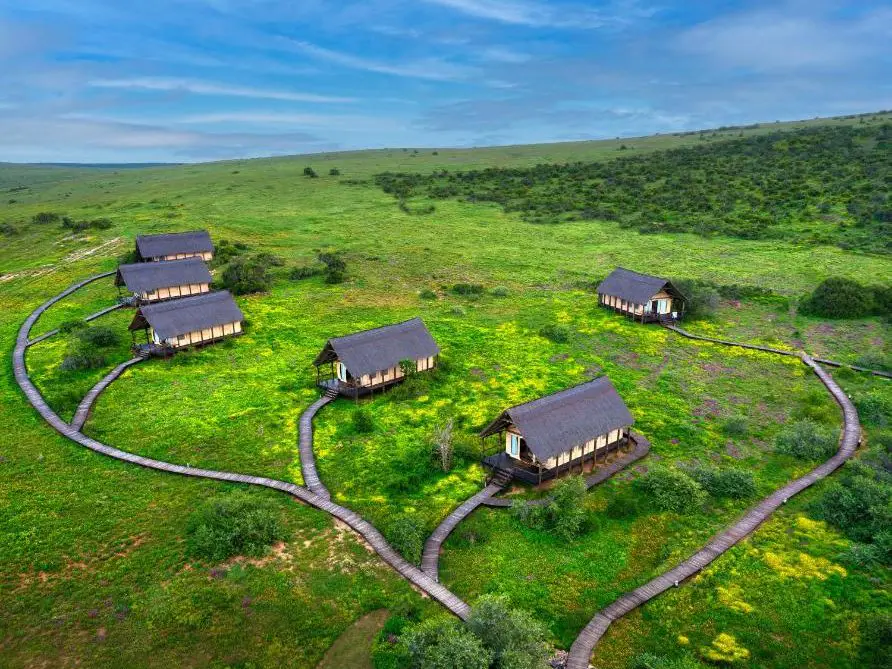
| 1. Gorah Elephant Camp Only Lodge Inside Addo Elephant National Park Rating: ⭐⭐⭐⭐⭐ Location: Inside Addo Elephant National Park, 1-hour drive from Gqeberha (Port Elizabeth) Guest Reviews: Waterhole views from the veranda, candlelit boma dinners, passionate guides, four-poster tented suites Best Room: Luxury Tent Price: From USD $1,050 – $1,600 per night |
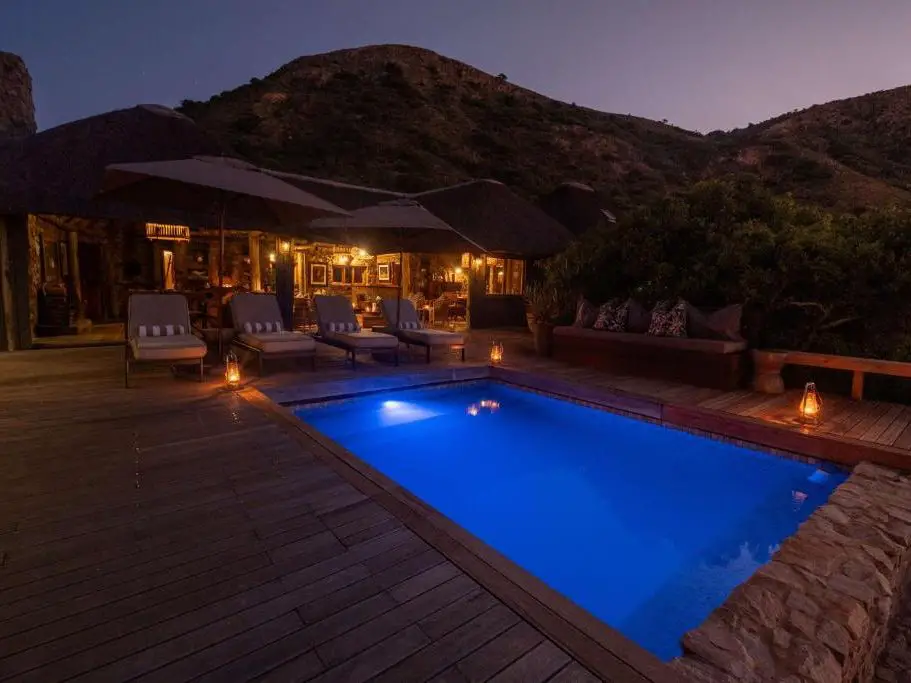
| 2. HillsNek Safari Camp – Amakhala Game Reserve Most Intimate Camp Rating: ⭐⭐⭐⭐ Location: Amakhala Game Reserve, 1-hour drive from Gqeberha (Port Elizabeth) Guest Reviews: Only four tents on the whole property, plains views from the deck, boat cruises on the Bushman’s River, all meals and drinks included Best Room: Classic Tent (Safari) Price: From USD $600 – $900 per night |
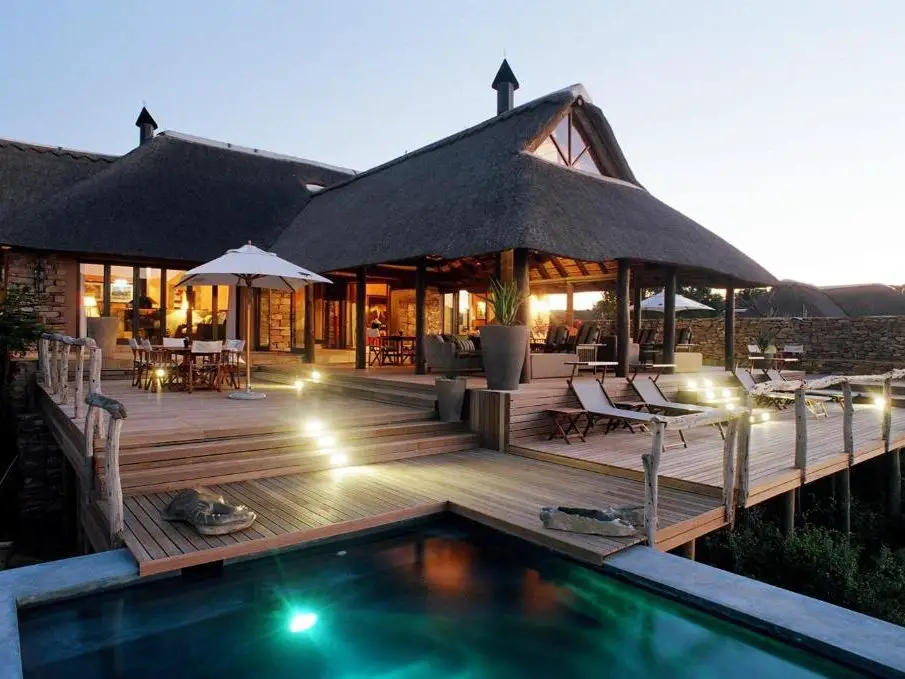
| 3. Pumba Private Game Reserve Best for White Lion Sightings Rating: ⭐⭐⭐⭐⭐ Location: 1h 15min drive from Gqeberha (Port Elizabeth), near Grahamstown Guest Reviews: White lion sightings on game drives, private plunge pool in every chalet, Soul Spa treatments, watering hole views from the deck Best Room: Gemsbok Chalet Price: From USD $750 – $1,550 per night |
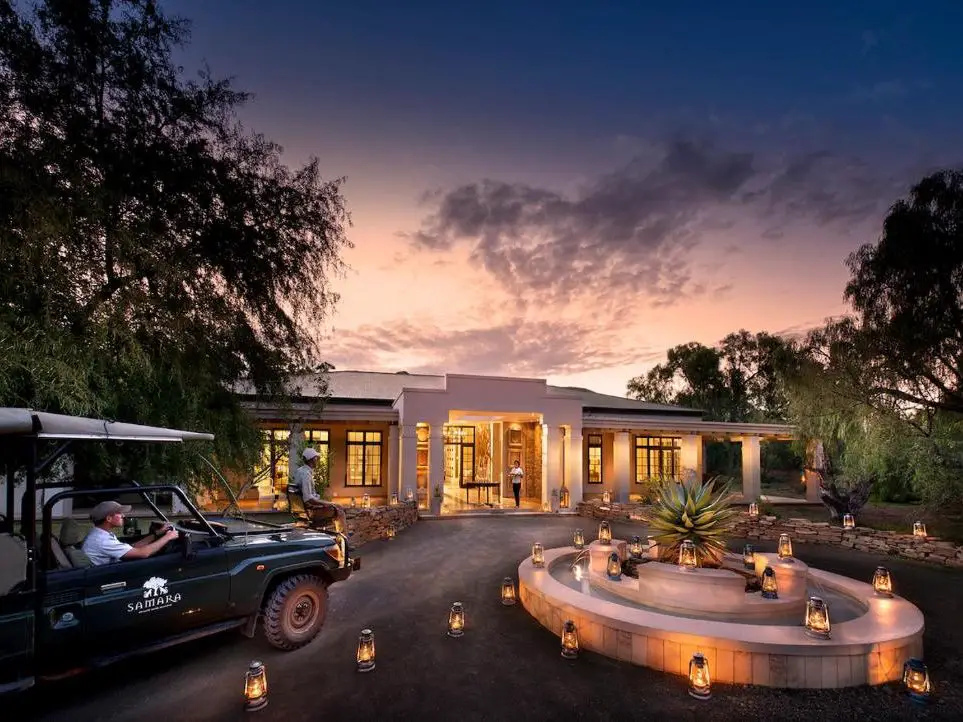
| 4. Samara Karoo Reserve Best Karoo Safari Experience Rating: ⭐⭐⭐⭐⭐ Location: Great Karoo, 2.5-hour drive from Gqeberha (Port Elizabeth); private airstrip 20 min from lodge Guest Reviews: Cheetah tracking on foot, aardvark night sightings, Karoo lamb dinners, mountain amphitheatre views from the veranda Best Room: Karoo Suite Price: From USD $1,300 – $2,000 per night |
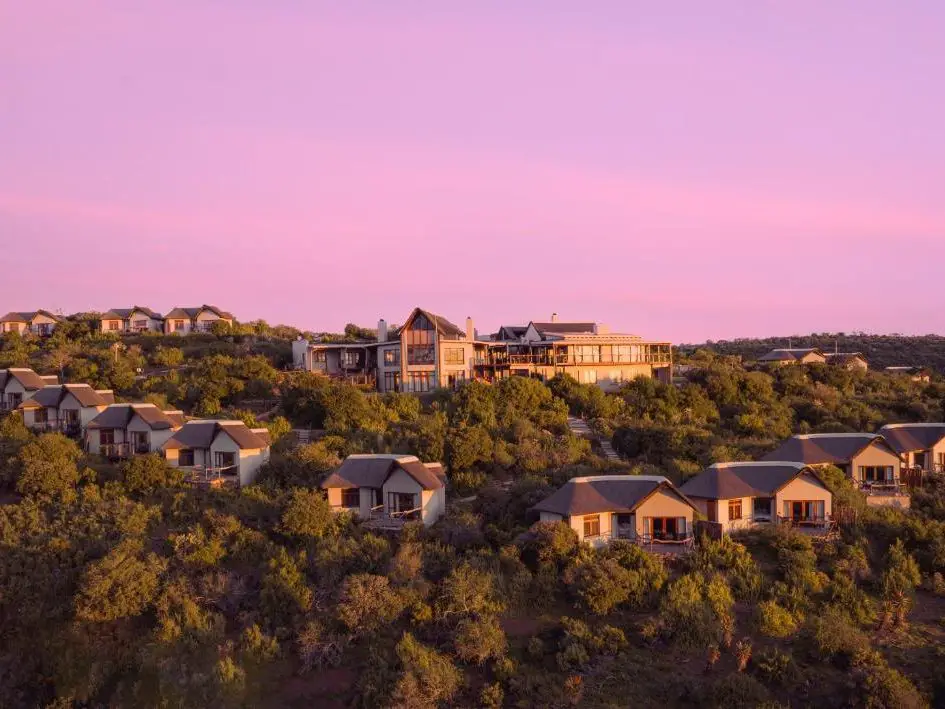
| 5. Kuzuko Lodge Best for Families Rating: ⭐⭐⭐⭐⭐ Location: Karoo Heartland, 2-hour drive from Gqeberha (Port Elizabeth), bordering Addo Elephant National Park Guest Reviews: Sweeping Karoo valley views from private decks, night sky telescope sessions, wheelchair-accessible throughout, knowledgeable assigned guides Best Room: Luxury Chalet Price: From USD $550 – $800 per night |
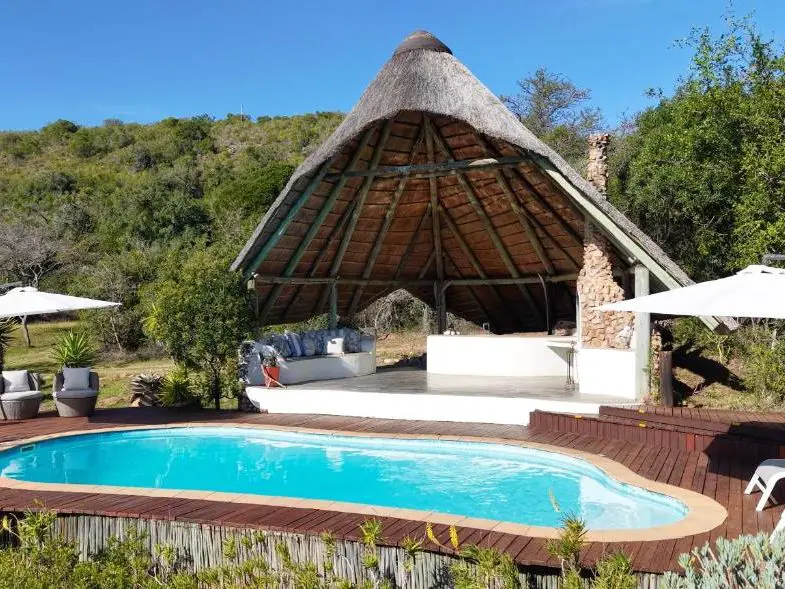
| 6. Sibuya Game Reserve and Lodge Most Unique Access Rating: ⭐⭐⭐⭐ Location: Kenton-on-Sea, 2-hour drive from Gqeberha (Port Elizabeth); accessed by a 45-minute boat ride up the Kariega Estuary Guest Reviews: Boat transfer through the estuary, solar-powered tents in riverine forest, Big Five game drives, over 400 bird species recorded on the reserve Best Room: Forest Camp Tent Price: From USD $600 – $950 per night |
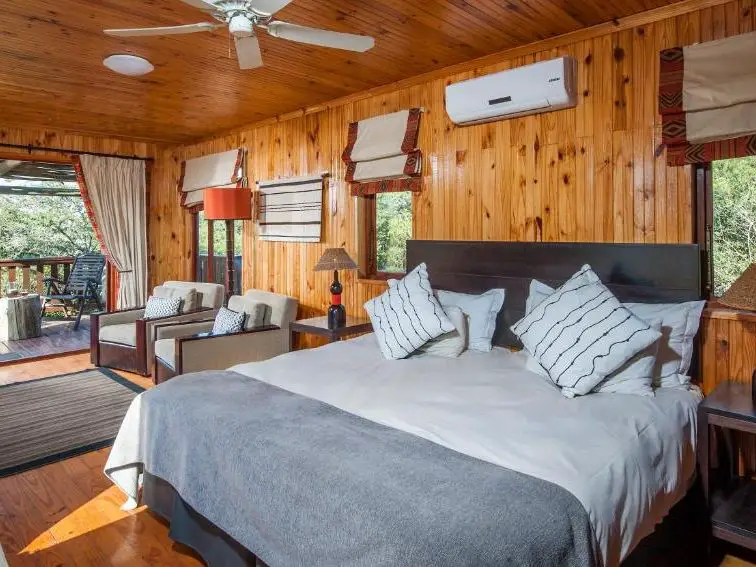
| 7. Kariega Game Reserve – Main Lodge Rating: ⭐⭐⭐⭐ Location: Kariega River Valley, 90-minute drive from Gqeberha (Port Elizabeth) Guest Reviews: 21 wooden chalets with valley and bush views, river cruises on the Bushman’s River, daily kids programme, five distinct ecosystems on one reserve Best Room: Main Lodge 1 Bedroom Chalet Price: From USD $800 – $1,100 per night |
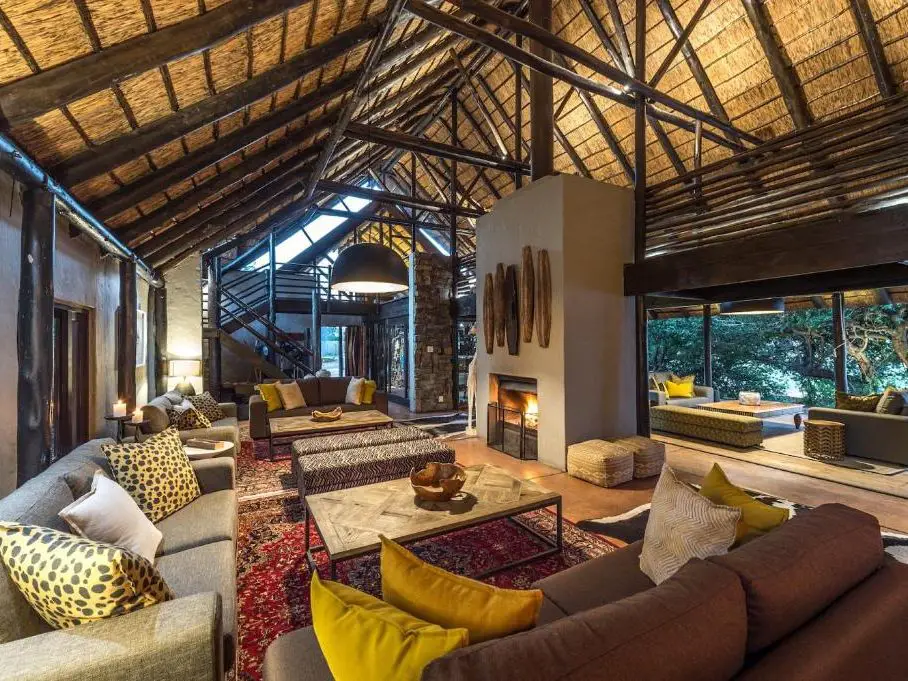
| 8. Kariega Game Reserve – River Lodge Safari Meets the Sea Rating: ⭐⭐⭐⭐ Location: Bushman’s River, Kariega Game Reserve, 90-minute drive from Gqeberha (Port Elizabeth) Guest Reviews: Overhanging deck above the river, daily boat cruise to Kenton-on-Sea beach, copper freestanding baths, Big Five game drives plus lion cubs sighted regularly Best Room: Thatched Suite Price: From USD $1,050 – $1,400 per night |
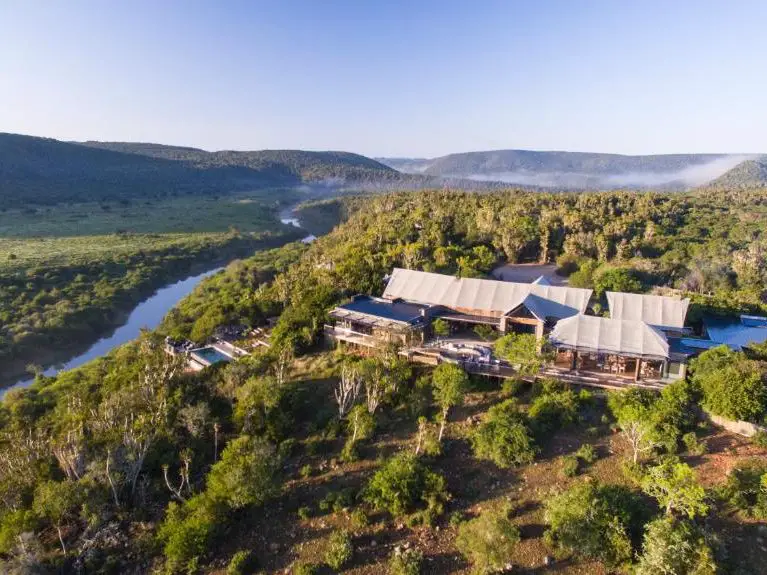
| 9. Kariega Game Reserve – Settlers Drift Best Tented Safari Lodge Rating: ⭐⭐⭐⭐⭐ Location: Remote Kariega wilderness, Bushman’s River valley, 90-minute drive from Gqeberha (Port Elizabeth); accessed by boat to the lodge jetty Guest Reviews: Panoramic river valley views from 110m² tented suites, wood-burning fireplace, gourmet bush dining in the boma, 25 game species sighted on twice-daily drives Best Room: Tented Suite Price: From USD $1,800 – $2,200 per night |
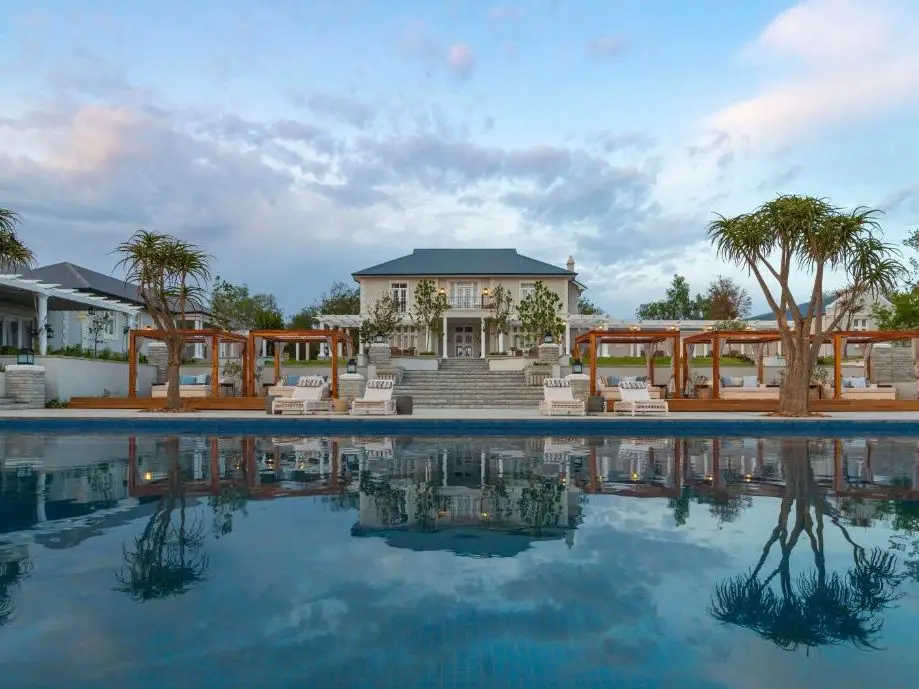
| 10. Shamwari Long Lee Manor Most Historic Manor Rating: ⭐⭐⭐⭐⭐ Location: Shamwari Private Game Reserve, 1-hour drive from Gqeberha (Port Elizabeth) Guest Reviews: Edwardian manor built in 1910, waterhole boma dinners under the stars, rim-flow infinity pool overlooking the plains, Born Free wildlife rehabilitation centre visits included Best Room: Plains Room Price: From USD $1,650 – $2,500 per night |
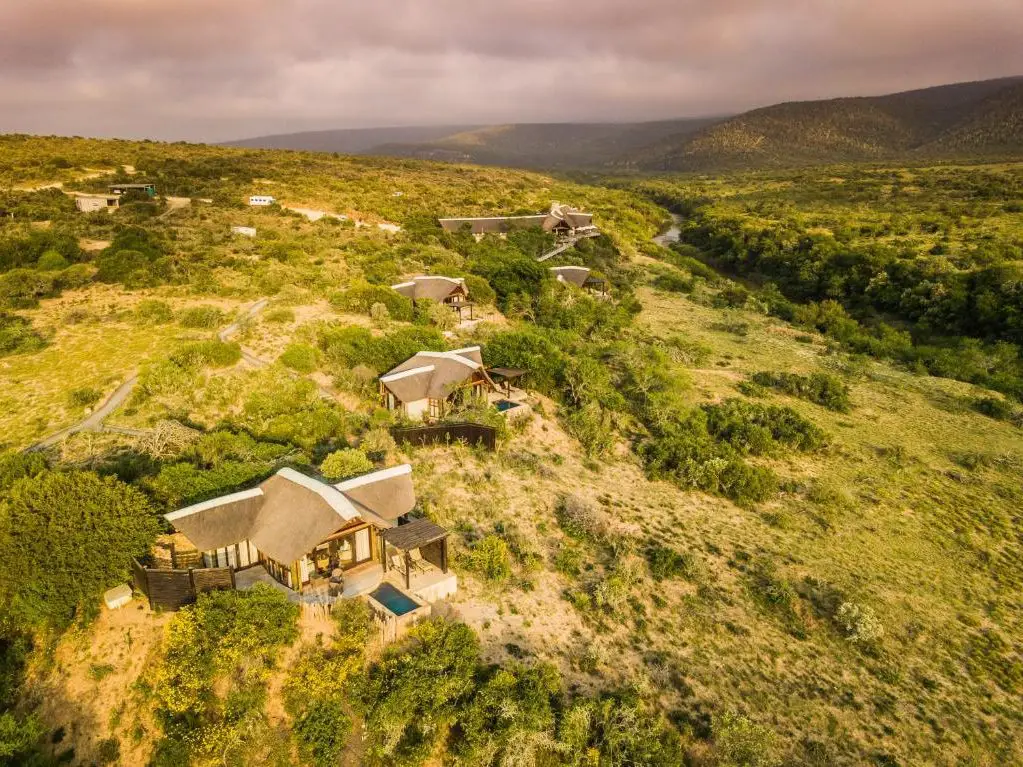
| 11. Kwandwe Great Fish River Lodge Best for Rhino Conservation Rating: ⭐⭐⭐⭐⭐ Location: Kwandwe Private Game Reserve, 2.5-hour drive from Gqeberha (Port Elizabeth); private airstrip on reserve Guest Reviews: Nine suites perched above a river gorge with private plunge pools, rhino tracking on foot, candlelit boma dining, black and white rhino both sighted regularly Best Room: Great Fish River Lodge Suite Price: From USD $1,400 – $2,100 per night |
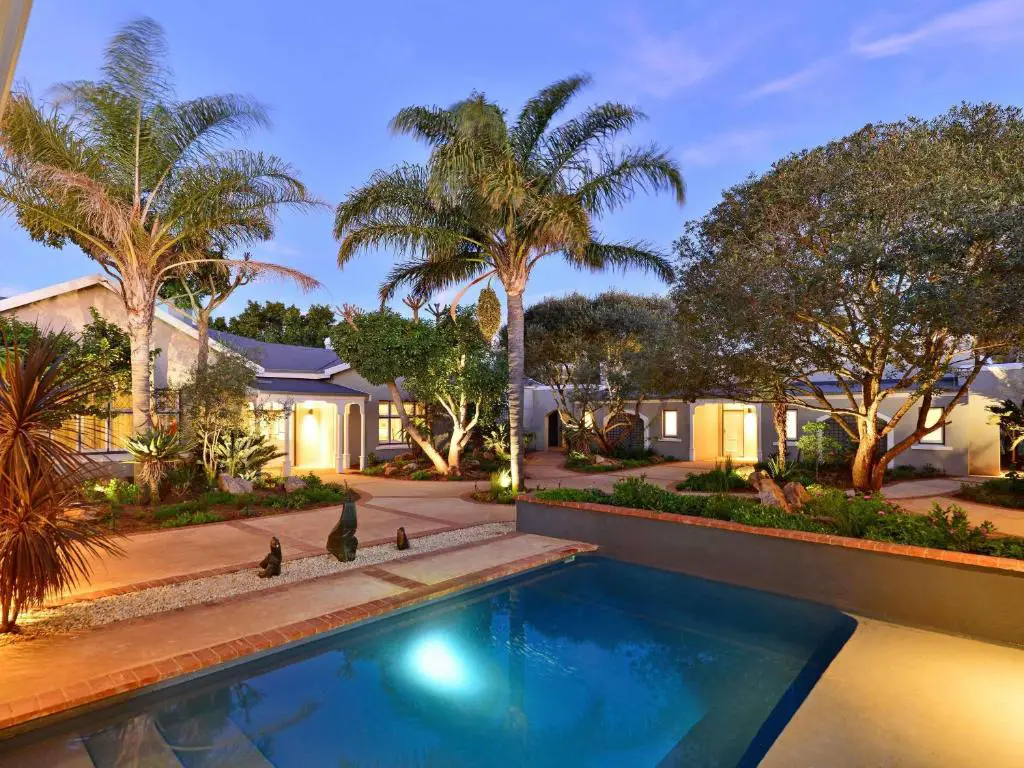
| 12. Founders Lodge by Mantis Rating: ⭐⭐⭐⭐⭐ Location: Adjacent to Shamwari Game Reserve, 1-hour drive from Gqeberha (Port Elizabeth) Guest Reviews: Daily hand-feeding of Munu the blind rhino, bush picnic dinners in a different spot each evening, seven-suite intimacy with no repeat dining settings, waterhole hide for private game watching Best Room: Suite, 1 King Bed Price: From USD $900 – $1,350 per night |
Why the Eastern Cape Delivers a Different Kind of Safari
Kruger gets the headlines, but the Eastern Cape keeps quietly producing some of the most satisfying safari experiences in South Africa. The region is malaria-free, which changes the dynamic immediately — no medication decisions, no mosquito nets, no anxious parents checking bite marks on children. The landscape itself is more varied than most people expect: coastal thicket, open grassland, riverine forest, Karoo semi-desert and mountain fynbos all sit within a few hours of each other, supporting a genuinely diverse wildlife population. The Big Five are here, alongside cheetah, hippo, giraffe, zebra and over 400 bird species in some reserves.
What the Eastern Cape doesn’t have is crowds. The reserves are private and the game drives are intimate — typically six guests maximum per vehicle, with guides who have time to stop, explain and stay with a sighting for as long as it takes. That slower, more attentive style of game viewing is what most people remember when they come back.
The Reserves: What to Know Before You Pick a Lodge
Not all Eastern Cape safari reserves are the same, and the differences matter more than most listing pages let on. Knowing which reserve a lodge sits in tells you a great deal about what your days will actually look like.
- Addo Elephant National Park — The anchor reserve of the Eastern Cape and home to the densest elephant population on earth. Gorah Elephant Camp is the only private concession inside the park, which means access to roads closed to day visitors and game drives at the waterhole that fronts the lodge. Addo also carries lion, leopard, buffalo and black rhino, making it legitimate Big Five territory.
- Amakhala Game Reserve — A community-owned reserve 70km from Port Elizabeth, covering five ecosystems and two rivers. More compact than Addo but rich in wildlife and strong for family safaris. HillsNek Safari Camp sits in a secluded corner of the reserve with views across the open plains, while boat cruises on the Bushman’s River add a different dimension to the day.
- Kariega Game Reserve — A family-owned Big Five reserve bisected by the Kariega and Bushman’s Rivers, 90 minutes from Port Elizabeth. Five lodges sit within the same 10,000-hectare reserve, ranging from the family-friendly Main Lodge to the romantic riverside River Lodge and the remote tented Settlers Drift. Kariega’s rhino conservation programme — including the globally known Thandi, a rhino that survived a poaching attack — gives the reserve a conservation story that other properties can’t match.
- Shamwari Private Game Reserve — Twenty-five thousand hectares of malaria-free wilderness, home to seven lodges including Shamwari Long Lee Manor, an Edwardian manor house built in 1910 and the reserve’s flagship property. Shamwari also operates a Born Free wildlife rehabilitation centre that guests can visit, and a wildlife education centre for younger guests.
- Kwandwe Private Game Reserve — Twenty-two thousand hectares in the Great Fish River region, with a strong reputation for guiding standards and rhino conservation. Kwandwe Great Fish River Lodge sits on a gorge above the Great Fish River with nine suites, each with a private plunge pool. The reserve is a genuine alternative to Shamwari for guests who want more seclusion and a wilder, less managed feel.
- Sibuya Game Reserve — Accessed entirely by boat up the Kariega Estuary, which means no road traffic and a genuine sense of remoteness despite being close to Kenton-on-Sea. The boat transfer is part of the experience, not an inconvenience.
- Samara Karoo Reserve — Sits apart from the coastal reserves geographically and in character. The Great Karoo landscape — red earth, mountain amphitheatres, vast open plains — is unlike anything else in the Eastern Cape. Samara is one of very few reserves in South Africa where you can track cheetah on foot, and also one of the best places in the country for aardvark sightings after dark. Note that it closes June through August.
- Pumba Private Game Reserve — Home to a free-roaming pride of white and tawny lions, which makes it genuinely unusual. Two lodges — Pumba Private Game Reserve‘s Water Lodge, overlooking Lake Kariega, and Msenge Bush Lodge, set in dense bushveld — offer different settings within the same reserve.
How to Choose the Right Lodge for Your Trip
The Eastern Cape has enough variety that a mismatched lodge choice is a real possibility. A few honest distinctions worth making before you commit.
- Size and intimacy matter more here than elsewhere. Some Eastern Cape lodges carry fewer than ten guests at any one time. HillsNek Safari Camp has four tents. Settlers Drift has nine. Founders Lodge by Mantis has seven suites. At these properties, you will eat with the same small group of guests for the duration of your stay, which is wonderful if you embrace it and awkward if you don’t.
- Tented camps versus manor houses. The Eastern Cape has both, and they feel genuinely different. Manor houses like Shamwari Long Lee Manor and Gorah Elephant Camp offer a colonial elegance — silver service, formal dining rooms, high tea in the afternoon. Tented camps like Settlers Drift and Sibuya are more atmospheric, more connected to the sounds of the bush, and more likely to leave you with a lasting sense of having actually been in the wild.
- River access changes the experience. Several Eastern Cape lodges sit on or very close to the Bushman’s or Kariega rivers, and this adds boat cruises, canoeing and fishing to the programme. Kariega River Lodge has a deck that overhangs the river directly, and daily boat trips run to the beach at Kenton-on-Sea. Sibuya is only reachable by boat.
- The Karoo is its own category. If the idea of open Karoo plains, mountain views, cheetah tracking on foot and nights dark enough to see the Milky Way clearly appeals more than dense bushveld and elephant sightings, Samara Karoo Reserve is the right choice. It is not a like-for-like swap for a coastal reserve — it is a different experience, and worth planning a dedicated trip around.
- Wheelchair accessibility is genuinely good at Kuzuko Lodge, which has three fully accessible chalets and accessible facilities throughout the lodge. Worth knowing before the question arises at check-in.
Getting There: Access, Airports and Transfer Options
The main entry point for the Eastern Cape safari region is Gqeberha (Port Elizabeth), now officially known as Chief Dawid Stuurman International Airport. Direct flights operate from Johannesburg and Cape Town year-round, with journey times of around 90 minutes. From the airport, most lodges are between one and two and a half hours by road — Addo and Amakhala at the shorter end, Kwandwe and Samara at the longer.
- Self-drive is straightforward for most Eastern Cape lodges. Roads are generally tarred to the reserve gates, with a short gravel section into the property. A standard sedan handles most routes without difficulty, though a higher-clearance vehicle is more comfortable for some approaches in wet weather.
- Private airstrips are available at Kwandwe and Samara, with charter flights operating from Gqeberha and Johannesburg. This shortens transfer time considerably for those combining the Eastern Cape with other destinations.
- The Garden Route connection is one of the most popular Eastern Cape safari itineraries — drive or fly from Cape Town, travel the Garden Route east, then add two to four nights at a Kariega or Shamwari lodge before flying home from Gqeberha. Several lodges actively position themselves as Garden Route extensions.
- From Cape Town by road, allow at least seven hours to reach the Kariega or Shamwari area, or eight to nine hours to Kwandwe. A comfortable two-day drive is more realistic, with a night in the Karoo or on the Garden Route in between.
When to Go: Seasons, Weather and Wildlife
Unlike Kruger, the Eastern Cape does not have a pronounced dry season that concentrates game around limited water sources. Vegetation stays green for much of the year, which means game is more spread out and tracking requires more skill — but also that the landscape looks spectacular year-round.
- May to September (the South African winter) brings clear skies, cool mornings and crisp evenings, and game viewing is generally excellent. Vegetation thins slightly, making animals easier to spot. This is also the most comfortable time for long game drives, with temperatures rarely climbing above the mid-twenties during the day.
- October to April is warmer and greener, with occasional afternoon thunderstorms. Newborn animals appear from October onwards, and birdlife is at its most prolific from November through January. The landscape looks lush and photogenic, but game can be harder to spot in thick cover.
- December and January are peak season at most lodges, with prices at their highest and availability tightest. Book four to six months ahead for school holiday periods.
- Samara closes June through August, so factor this in if a Karoo safari is on the list. All other lodges featured here operate year-round.
Malaria-Free and Family-Friendly: What It Actually Means
The entire Eastern Cape safari region covered here is malaria-free. This is not a marketing euphemism — the area genuinely sits outside the malaria transmission zones that affect Kruger, the Sabi Sands and most of KwaZulu-Natal. No antimalarial medication is required, and there is no need to restrict visits based on the peak transmission months of November through April.
For families with young children, this matters in practical terms beyond just avoiding tablets:
- Most Eastern Cape lodges welcome children of all ages or from age six, rather than the twelve-and-older minimum that many Kruger lodges impose.
- Kuzuko Lodge has a dedicated children’s programme and is fully wheelchair accessible throughout.
- Pumba Private Game Reserve offers a kids’ safari programme and welcomes children from age six on normal game drives.
- Kariega Main Lodge runs a daily children’s programme and welcomes families of all configurations.
- Founders Lodge by Mantis and Samara Karoo Reserve include child-specific activities — rhino feeding and cheetah tracking respectively — that give younger guests a genuinely active role rather than just watching from a vehicle.
Child policies vary by lodge and room type, so it is worth confirming specific ages and activity eligibility when booking. Some properties, including Shamwari Long Lee Manor and Sibuya‘s Forest Camp, have minimum age requirements on game drives or overnight stays.
FAQs
1. Is the Eastern Cape a good first safari destination?
It is one of the best. The malaria-free status removes the health planning that puts first-timers off other destinations, the lodges tend to be smaller and more personal than Kruger alternatives, and the Big Five are genuinely present across most of the reserves. The game driving is more exploratory than some East African destinations, which makes each sighting feel more earned.
2. How does the Eastern Cape compare to Kruger for wildlife?
Kruger has larger numbers of most species, simply because of its scale — it covers almost two million hectares. The Eastern Cape private reserves are smaller, which means wildlife is slightly less abundant but encounters tend to be more intimate and the guiding more attentive. Rhino populations are particularly strong in Kwandwe and Kariega, and both cheetah and white lion can be seen in reserves that Kruger does not offer.
3. How many nights do most people spend at an Eastern Cape lodge?
Two nights is the minimum that makes sense given travel times, but most experienced safari travellers recommend three. Four nights is ideal for covering morning and evening game drives thoroughly and not feeling rushed. Some lodges, including Samara, offer meaningful discounts for stays of four nights or more.
4. Can I combine the Eastern Cape with Cape Town or the Garden Route?
This is one of the most popular itineraries in South Africa. Cape Town to the Garden Route to an Eastern Cape safari is a well-worn route that works particularly well as a two-week trip. The drive from Plettenberg Bay to the Kariega or Shamwari area takes around three hours, making it a comfortable same-day connection.
5. Do all Eastern Cape lodges include game drives in the rate?
Most of the lodges covered here are fully inclusive, meaning accommodation, all meals, selected drinks and twice-daily game drives are included in the quoted rate. Gratuities, premium spirits, spa treatments and conservation levies are typically excluded. Conservation levies — charged per person per night — vary by reserve and are worth factoring into the total cost at properties like Kwandwe and Kariega.
6. What wildlife can I realistically expect to see?
All five of the Big Five — lion, leopard, elephant, buffalo and rhino — are present across most of the Eastern Cape reserves. Cheetah are reliably seen at Kwandwe, Shamwari and Pumba. Hippo are present along the Kariega and Bushman’s Rivers. Giraffe, zebra, wildebeest, eland and numerous antelope species are common throughout. White rhino and black rhino populations are carefully managed and sightings of both are realistic at most lodges. Pumba is the only reserve with a free-roaming white lion pride.
7. Is it worth visiting more than one reserve on the same trip?
For first-time visitors, one reserve done well is usually more satisfying than two done briefly. For repeat visitors, combining a coastal reserve like Kariega with the Karoo experience at Samara gives genuine variety — the landscapes, wildlife and atmosphere are different enough to feel like two distinct trips.
8. What should I pack for an Eastern Cape safari?
Neutral-coloured clothing is standard for game drives — khaki, olive, beige. Mornings on open vehicles can be cold even in summer, so a fleece or windproof layer is worth packing regardless of season. Dust is less of a factor than in Kruger, but a wide-brimmed hat and strong sunscreen matter from October through April. Most lodges provide ponchos and blankets on evening drives, but an extra warm layer for winter stays is never wasted.