
Osaka doesn’t do things quietly, and its ryokans are no exception — you can soak in a hinoki wood bath one minute and be elbow-deep in takoyaki on Dotonbori the next. Staying in a traditional inn here means waking up on a futon in the middle of one of Japan’s most electric food cities, with nothing but a yukata between you and the best street eating on the planet. These are the city-centre ryokans worth booking, from budget tatami rooms steps from the neon to a luxury floor in the sky that reimagines what a Japanese inn can be.
Table of Contents
Osaka Ryokans
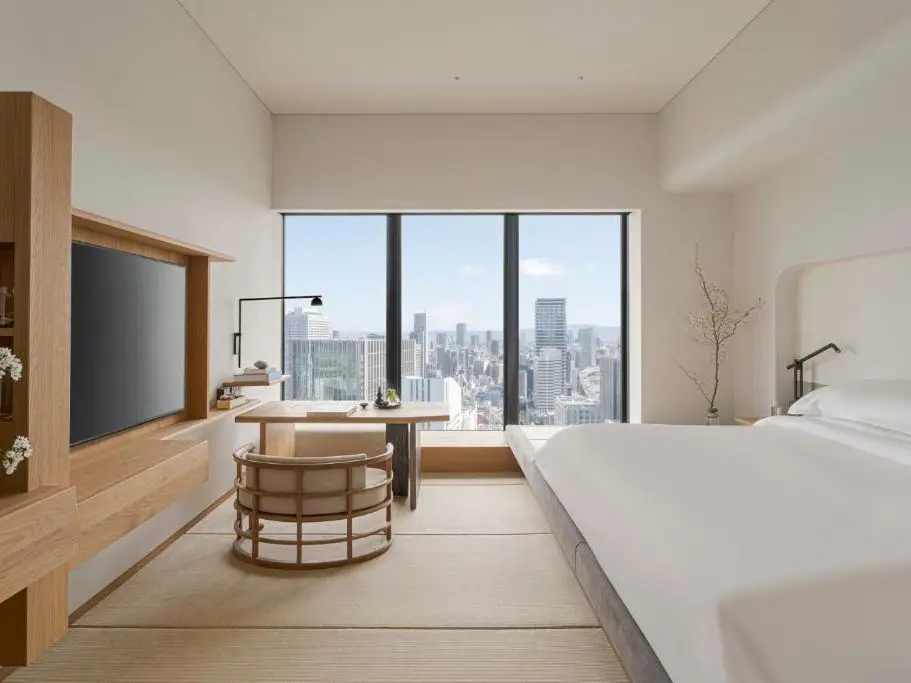
| 1. Four Seasons Hotel Osaka Most Luxurious Stay Rating: ⭐⭐⭐⭐⭐ Location: 7-minute walk to Osaka Station, Dojima, Kita Ward Guest Reviews: 360-degree Osaka skyline views, tatami futon platform beds made in Japan, SABO lounge included, private ofuro bath access Best Room: Premier Room, 1 King Bed (Tatami) Price: From USD $800 – $1,200 per night |
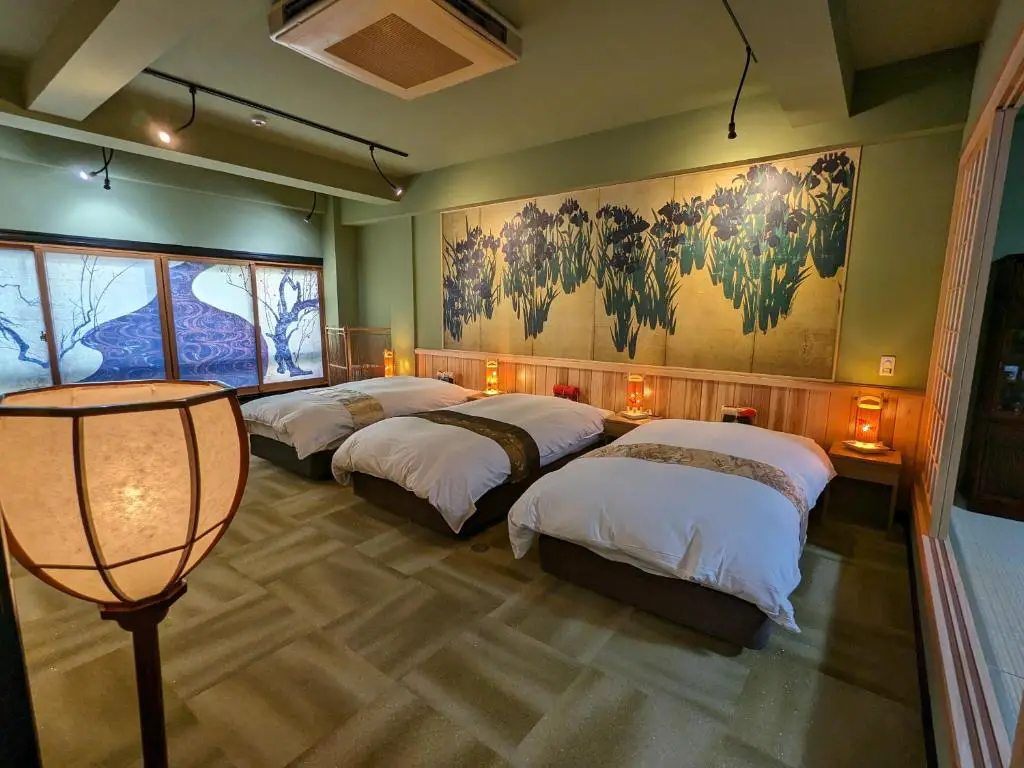
| 2. Osaka Ukiyoe Ryokan Rating: ⭐⭐⭐⭐⭐ Location: 2-minute walk to Honmachi Station, Chuo Ward Guest Reviews: Ukiyo-e prints throughout, complimentary samurai armour photoshoot, private Japanese soaking bath, in-room washer/dryer Best Room: Deluxe Apartment Price: From USD $150 – $300 per night |
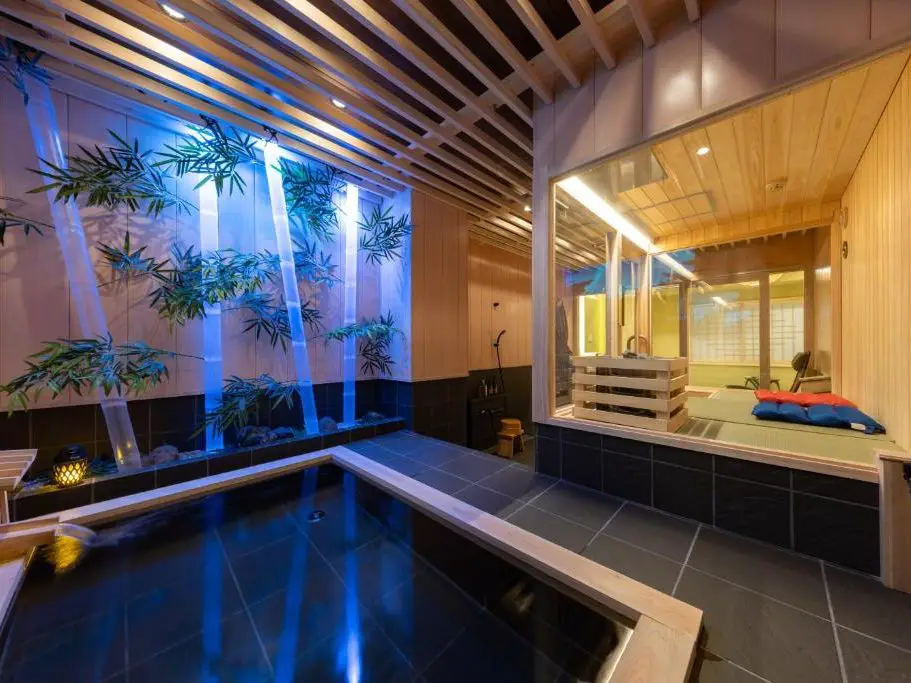
| 3. TAKENOYA Best Private Onsen Experience Rating: ⭐⭐⭐⭐⭐ Location: 5-minute walk to Dotonbori, Kozu, Chuo Ward Guest Reviews: Private hinoki wood bath per floor, 24-hour sauna access, huge tatami suites, rare kimmei bamboo views Best Room: Suite with Sauna Price: From USD $1,100 – $1,400 per night |
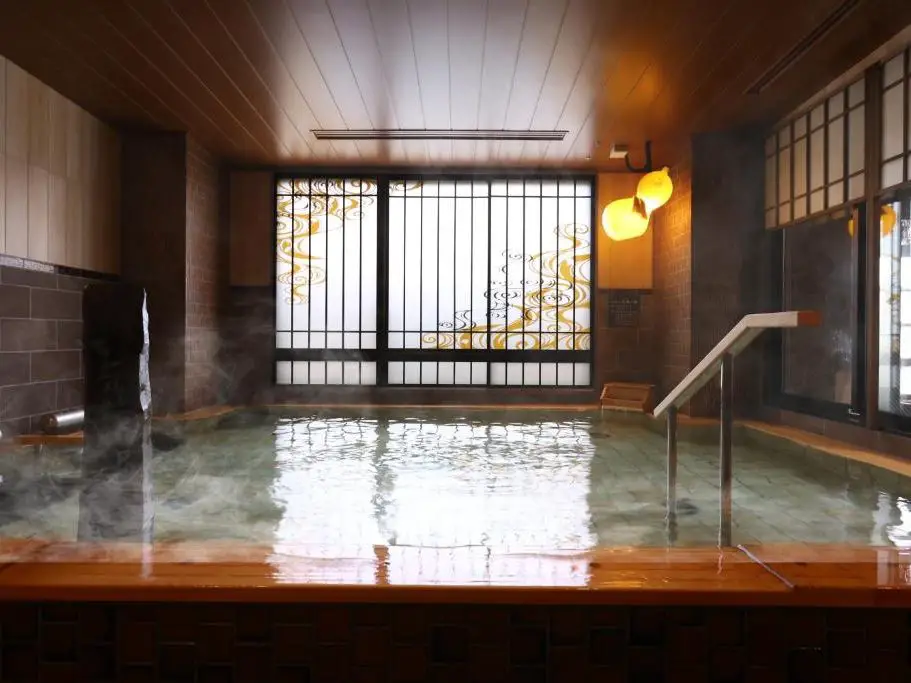
| 4. Onyado Nono Osaka Yodoyabashi Best for a Kyoto Day Trip Rating: ⭐⭐⭐⭐ Location: 1-minute walk to Kitahama Station, Chuo Ward Guest Reviews: Natural hot spring on the 13th floor, free late-night ramen and ice cream post-bath, free laundry machines, buffet breakfast praised for sashimi rice and tempura Best Room: King Room with Tatami Floor Price: From USD $120 – $185 per night |
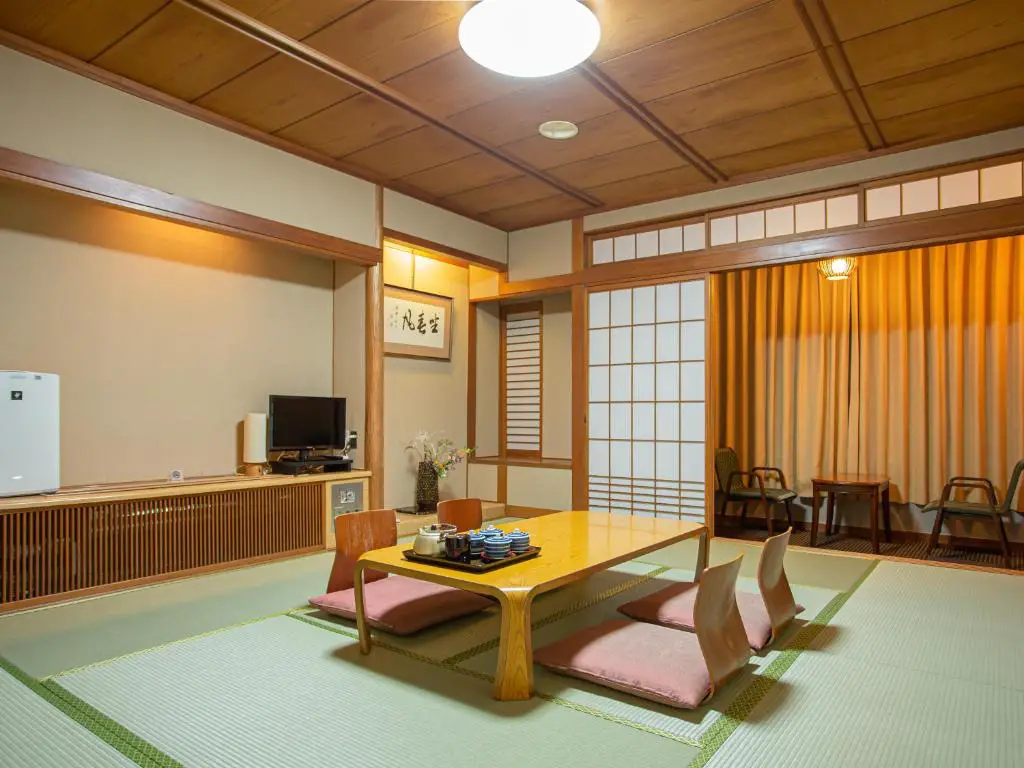
| 5. Kaneyoshi Ryokan Best Dotonbori River View Rating: ⭐⭐ Location: 3-minute walk to Nippombashi Station, on the Dotonbori River, Chuo Ward Guest Reviews: Dotonbori River views from balcony, top-floor public bath open until midnight, spacious tatami rooms, yukata provided Best Room: Japanese Room 8 Tatami River View Price: From USD $65 – $145 per night |
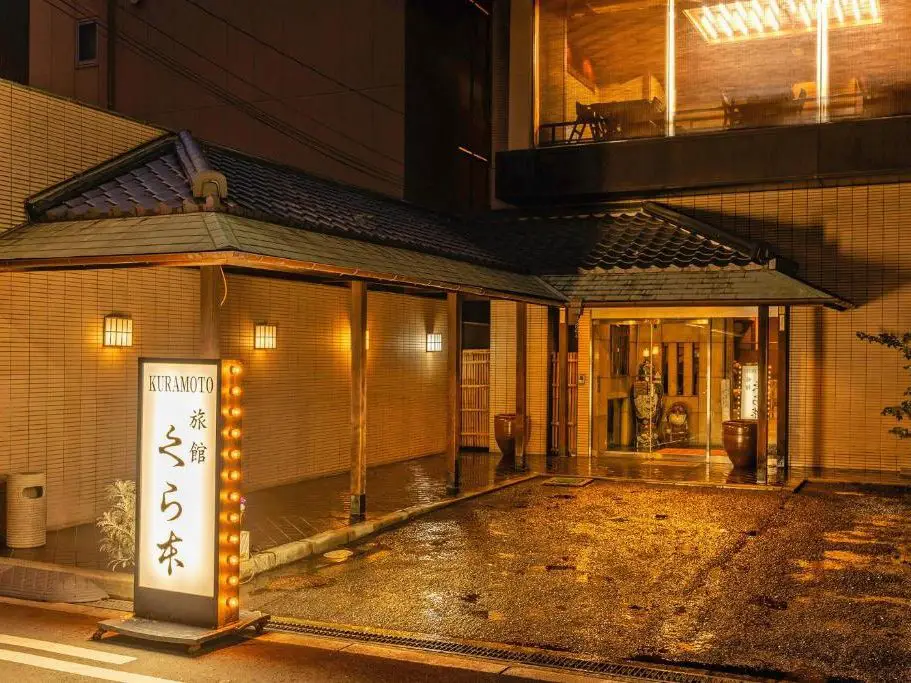
| 6. Osaka Ryokan Kuramoto Rating: ⭐⭐⭐ Location: 4-minute walk to Dotonbori, 7-minute walk to Nippombashi Station, Shimanouchi, Chuo Ward Guest Reviews: All rooms Japanese-style with private bathroom, family-run with 24-hour front desk, large public bath, futon beds praised for comfort Best Room: Traditional Room Price: From USD $80 – $165 per night |
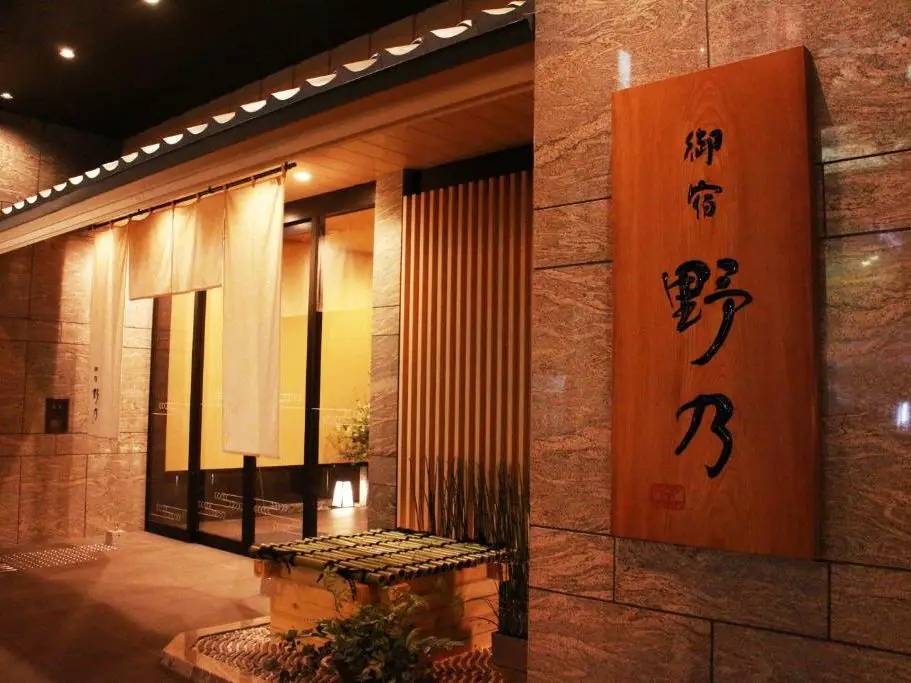
| 7. Onyado Nono Namba Natural Hot Spring Best Value Onsen Stay Rating: ⭐⭐⭐⭐ Location: 2-minute walk to Nippombashi Station, 5-minute walk to Dotonbori, Chuo Ward Guest Reviews: Outdoor rock bath and indoor natural hot spring, free late-night ramen, complimentary post-bath ice cream, tatami floors with futon option Best Room: King Room with Tatami Floor Price: From USD $120 – $185 per night |
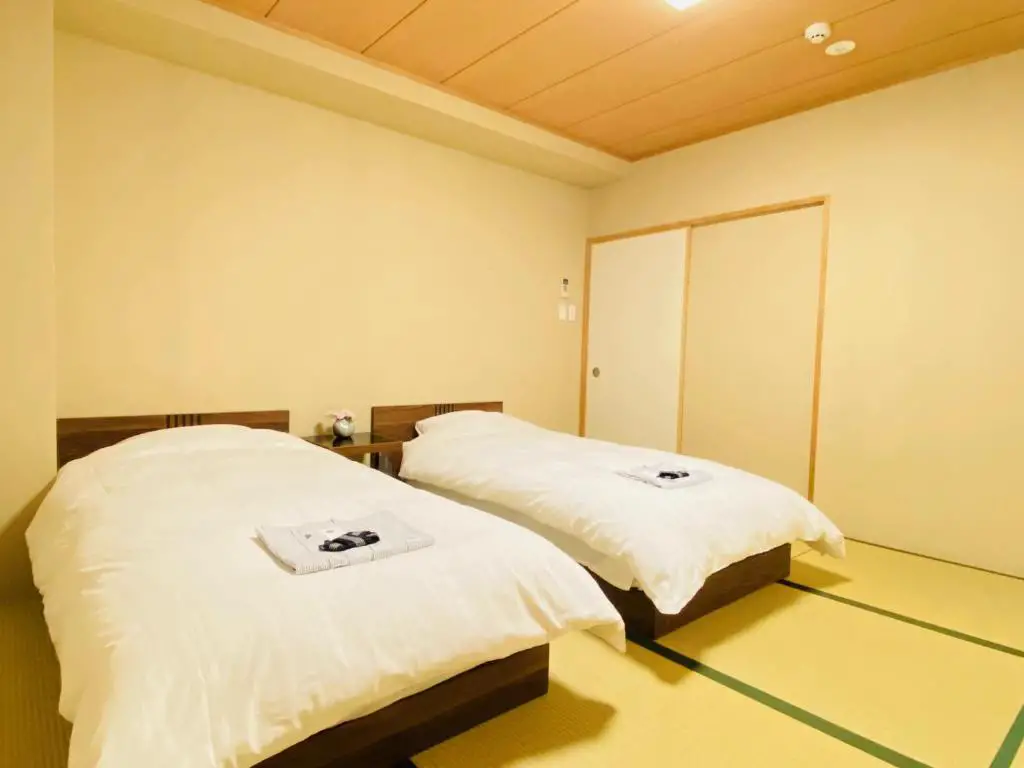
| 8. Hotel Yu-shu Rating: ⭐⭐⭐ Location: 5-minute walk to Dotonbori, 500 metres to Nippombashi Station, Shimanouchi, Chuo Ward Guest Reviews: Spacious tatami rooms with deep soaking bath, kitchenette and balcony, futon beds praised for comfort, yukata provided Best Room: Japanese-Style Room Price: From USD $125 – $200 per night |
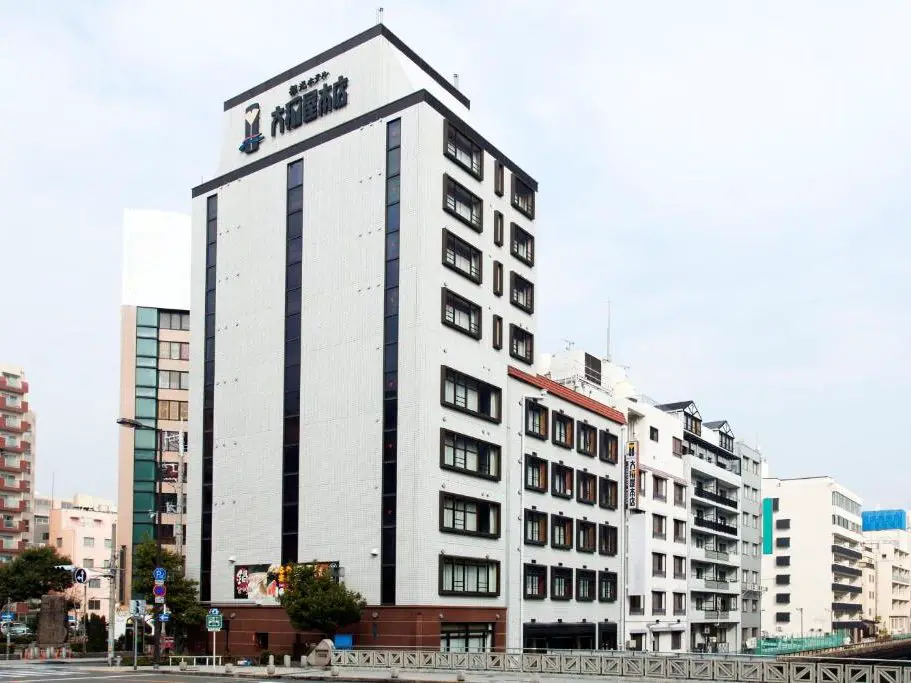
| 9. Yamatoya Honten Ryokan Osaka Best for Kaiseki Dining Rating: ⭐⭐⭐ Location: 1-minute walk to Dotonbori, 4-minute walk to Nippombashi Station, Shimanouchi, Chuo Ward Guest Reviews: Canal balcony views of Dotonbori at night, basement public bath open late, Kobe beef kaiseki dinner available, café-bar in lobby Best Room: Traditional Tatami Room with Private Bathroom, River View (High-floor) Price: From USD $50 – $125 per night |
What Makes a Central Osaka Ryokan Different
Osaka is not where you go for the classic ryokan postcard. No mountain river outside the window, no ancient wooden corridors, no yukata walk through a lantern-lit onsen town. The city was bombed heavily during World War II, which wiped out most of its historic wooden architecture, and what was rebuilt afterwards prioritised commerce over tradition. The result is a city with very few genuine ryokans left standing — and the ones that remain work differently from anything you’d find in Kyoto or the Japanese Alps.
What that actually means in practice:
- The setting is urban, not scenic. You slip off your shoes, pad across tatami mats, and pull on your yukata — then open the curtains to neon signs and canal boats. For many guests, that contrast is exactly the point. Dotonbori glowing outside a shoji screen is its own kind of spectacle.
- The public bath replaces the onsen. Most central Osaka ryokans run a communal bath rather than a natural hot-spring onsen. The soak is just as restorative; the water just isn’t mineral-rich. Natural hot spring water is rare anywhere in a city-centre setting, which makes the few Osaka properties that do pump genuine spring water a meaningful exception.
- The price-to-location trade-off is unusually good. A tatami room steps from Dotonbori costs a fraction of an equivalent experience in Kyoto, where proximity to the historic centre commands a serious premium.
- The format varies more than in dedicated ryokan towns. Central Osaka spans the full range — from a tatami floor inside a five-star skyscraper to a family-run inn on the Dotonbori canal to a private-floor luxury suite with a hinoki wood bath and 24-hour sauna. In onsen towns like Kinosaki or Arima, the format is fairly fixed. In central Osaka, the ryokan experience is something you actively choose the shape of.
- One night is the standard length of stay. In mountain ryokan, two or three nights is common — slowing down is the whole point. In central Osaka, most guests book a single night as cultural punctuation within a longer city trip. Two nights works well if you want the rhythm to fully settle, but there is no pressure to extend it.
- Noise is a real variable. Ryokans on or near the Dotonbori canal sit inside one of Japan’s liveliest entertainment districts. The canal buzz quiets down by around midnight, and double-glazed windows help considerably, but light sleepers should request a room facing away from the water. Properties a few blocks back from the canal are significantly quieter without sacrificing the location.
A central Osaka ryokan gives you the tatami floor, the futon, the yukata, and the communal bath — the full ritual — while putting Japan’s best food city right outside the door the moment you step back into your shoes.
Where Each Ryokan Sits in the City
Central Osaka splits into distinct pockets, and which one your ryokan sits in shapes the stay as much as the property itself. The ryokans here cluster across four areas, each with a different feel.
- Dotonbori canal — highest energy, best food access. The canal strip and the streets immediately around it are where Osaka’s food culture is most concentrated. Takoyaki stalls, kushikatsu counters, conveyor-belt sushi, izakayas open past midnight — all within a few minutes’ walk. The trade-off is noise until around midnight and tourist density throughout the day. Best for first-time visitors who want to be inside the action rather than commuting to it.
- Namba and Nipponbashi — one step back, still central. A short walk south and east of Dotonbori puts you in a denser residential and commercial grid with better subway access and noticeably less street noise at night. Nippombashi Station connects directly to two metro lines, making day trips to Kyoto, Nara, and Kobe straightforward. Den Den Town, Osaka’s electronics and manga district, is walkable.
- Yodoyabashi and Kitahama — quieter, better for Kyoto day trips. This is Osaka’s riverside business district, calmer than Namba and better connected to Kyoto via the Keihan Line, which runs directly from Kitahama Station. The Museum of Oriental Ceramics and Nakanoshima Park are a short walk. Dotonbori is 2.5 km south — a short subway ride, not a walk. Better suited to travellers using Osaka as a Kansai base than those focused entirely on the city’s food scene.
- Honmachi and Dojima — most central geographically, quietest at night. Sitting between Namba and Umeda, these areas have fast metro connections in every direction and very little street noise after dark. Umeda’s department stores and Osaka Station are within 10 minutes by train; Namba is the same distance in the other direction. The neighbourhood itself is business-oriented with good cafés and restaurants but no major tourist draw on the doorstep.
One practical note that affects every area: Osaka’s metro is fast, cheap, and runs until around midnight. No central ryokan location leaves you poorly connected. The differences between areas are about atmosphere and morning pace, not about access.
When to Book — and When to Avoid
Osaka has two peak windows and two genuine value windows each year. The gap between them in price and crowd level is significant enough to be worth planning around.
- Late March to early April — cherry blossom season, highest demand. Osaka Castle Park and the Kema Sakuranomiya river path are the standout spots. Full bloom typically lasts around a week and the exact timing shifts each year, so watch forecasts rather than locking plans to a fixed date. Hotels and ryokans in central Osaka sell out months in advance for this window; book at least three to four months ahead for any property near Dotonbori.
- Late April to early May — Golden Week, avoid if possible. Japan’s longest national holiday period drives the highest domestic travel volumes of the year. Ryokan prices spike, queues at every attraction extend significantly, and the streets around Dotonbori become genuinely congested. If these are your only available dates, book as early as possible and set expectations accordingly.
- Mid-October to mid-November — autumn foliage, second-best window. Maples and ginkgos turn at Osaka Castle Park and Minoh, the mountain town 30 minutes north of the city. The weather is mild and dry, crowds are smaller than in cherry blossom season, and prices — while elevated on autumn weekends — are more manageable. Midweek stays in this window offer good value.
- June — rainy season, lowest prices of the year. Steady light rain through most of the month keeps tourist numbers down and pushes accommodation prices to their annual floor. Covered arcades like Tenjimbashisuji (Japan’s longest shopping street, easily walkable from several central ryokans) and Shinsaibashi make the wet weather manageable. Worth considering if budget is a priority and outdoor sightseeing is not.
- January to mid-February — cold but cheap. Hatsumode shrine visits and plum blossoms start the year quietly. Crowds are minimal, prices are low, and the city’s food scene is as strong as ever. Pack for cold evenings; the public bath becomes a particular draw after a day of winter sightseeing.
- Mid-August — hot, humid, but festive. Summer in Osaka is genuinely punishing — daily highs above 33°C with high humidity through July and August. Obon week in mid-August is busy with domestic travel. That said, summer festivals are a draw, accommodation prices drop relative to peak seasons, and Dotonbori has a particular energy at night when the heat finally eases.
Ryokan-specific note: the best tatami rooms with river views and private baths sell out first, often weeks before standard rooms. If a specific room type matters to your stay, book well ahead of the general accommodation rush.
How to Use the Public Bath
The communal bath is central to the ryokan experience and governed by a clear set of conventions. None of them are complicated, but knowing them before you arrive removes the hesitation that can make first-timers avoid the bath entirely.
- Shower before you enter the bath. Every bathing area has individual shower stations along the wall. Use them first — wash thoroughly with soap and shampoo, then rinse completely before stepping into the communal water. The bath is for soaking, not cleaning.
- No towels in the water. Leave your bath towel in the changing room or fold it on your head. A small modesty towel is fine to carry to the bath edge, but it goes on the side, not in the water.
- Tattoo policies differ across the properties here. This is the most practically important thing to know before booking if you have visible tattoos. General position across the properties:
- TAKENOYA — private baths exclusively; no communal bath, so tattoo policy is not a consideration.
- Osaka Ukiyoe Ryokan — private in-room bath; same situation.
- Four Seasons Hotel Osaka (GENSUI floor) — private ofuro baths on the 36th floor available to GENSUI guests; no communal restriction.
- Kaneyoshi Ryokan — communal bath; confirmed tattoo-friendly per verified 2026 sources.
- Onyado Nono Namba Natural Hot Spring and Onyado Nono Osaka Yodoyabashi — small tattoos that can be covered with stickers are permitted; stickers sold on site.
- Yamatoya Honten Ryokan Osaka — communal bath; confirmed tattoo-friendly.
- Osaka Ryokan Kuramoto — communal bath; tattooed guests may not be permitted. Confirm directly before booking.
- Hotel Yu-shu — no communal bath; private bathroom only.
- Tattoo policies can change without notice. Always confirm directly with the property before arrival.
- Baths are gender-separated at communal properties. Men’s and women’s sections are clearly signed. Some properties rotate which bath each gender uses morning versus evening.
- Keep noise low. The bath is a quiet space. Conversations at low volume are fine; phone calls, loud groups, and splashing are not.
- Timing matters. Most communal baths open from mid-afternoon through to midnight or later, then reopen briefly in the morning. Check the specific opening hours at your property — the morning window is often short and closes earlier than guests expect.
- The yukata is your uniform. Wear it to and from the bath, to dinner if meals are included, and around the ryokan generally. It is not worn outside the property.
One Night or Two — What Actually Fits a Ryokan Stay
The question of how long to book comes down to what you want from the stay. A ryokan is not a base camp; it is the activity. That changes the calculation.
- One night is the standard, and it works well. A single night gives you the full experience — arriving, changing into yukata, using the bath, sleeping on a futon, and having breakfast before checkout. It slots cleanly into a longer Osaka or Japan trip without restructuring your itinerary around meal times and check-in windows.
- Two nights lets the rhythm actually land. On the first evening there is novelty and orientation. On the second you are not thinking about how the bath works or whether to request an extra futon — you are just in it. Two nights is the right call if the ryokan experience itself is a primary reason for the trip rather than a component of it.
- Three nights is rarely justified in central Osaka. Unlike a mountain onsen town where the environment itself sustains the pace, a city ryokan exists alongside everything else Osaka offers. By the third morning, most guests find the novelty has fully resolved and the stay tips from experience into routine.
- Keep the evening free. The ryokan stay loses most of its value if you arrive back at 11pm after a full day of sightseeing with no time for the bath and a 7am checkout the next morning. Build the ryokan night around the ryokan — plan a lighter afternoon, arrive at check-in time, use the bath before dinner, and keep the next morning unhurried.
- Check-out is early. Most central Osaka ryokans check out at 10am, sometimes earlier. Tatami rooms and futon bedding require more preparation time than standard hotel rooms. Factor this into the morning after, particularly if you have a train or flight to catch.
- Meals need advance planning. Not all central Osaka ryokans include dinner — several offer it as an add-on or do not offer it at all. If kaiseki dinner in your room is part of what you came for, confirm at booking rather than on arrival. Properties that do serve dinner typically require a decision by early afternoon of the day you arrive.
FAQs
Do Osaka city-centre ryokans have real onsen, or just regular public baths?
Most use heated water rather than natural hot-spring water, which is rare in any urban setting. A handful pipe in genuine natural mineral water — the Onyado Nono properties are the clearest examples in central Osaka. If the mineral content of the water specifically matters to you, check the property description carefully before booking, as “natural hot spring” and “public bath” are not interchangeable terms.
Are there ryokans you can walk to Dotonbori from?
Several central Osaka ryokans are within five to ten minutes on foot of the Dotonbori canal. The closest sit right on the waterfront itself. Being this central means convenience is unmatched, but street noise from the entertainment district runs until around midnight, so light sleepers should factor that in when choosing a room type.
What is the difference between staying at a ryokan and a hotel in Japan?
A hotel gives you a bed, a private bathroom, and independence. A ryokan gives you a tatami floor, a futon laid out by staff each evening, a yukata to wear around the property, access to a communal bath, and in some cases multi-course kaiseki meals served in your room. The service style is more involved — staff guide you through the stay rather than simply facilitating it. The trade-off is less flexibility: meal times are fixed, check-out is early, and the experience has a specific rhythm that does not suit every trip.
Can I stay at a central Osaka ryokan if I have tattoos?
It depends on the property. Some offer only private baths, which makes the question irrelevant. Others have communal baths with varying policies — some permit tattoos freely, some require small tattoos to be covered with stickers, and some maintain restrictions. Policies also change without public notice. The safest approach is to contact the property directly before booking and ask specifically about their current bathing policy for tattooed guests.
Do I need to book kaiseki dinner in advance?
If a ryokan offers dinner at all, yes. Most properties that serve in-room kaiseki require you to select and confirm a dinner plan at the time of booking, or at the latest by early afternoon on the day of your stay. Turning up and requesting dinner that evening is unlikely to be possible. Budget ryokans in central Osaka often do not include or offer dinner at all — in which case Dotonbori and the surrounding streets are within easy walking distance.
Is it too noisy to sleep near Dotonbori?
The canal area stays lively until around midnight most nights. Properties right on the waterfront are the noisiest; those a few streets back are considerably quieter. Most ryokans in this area use double-glazed windows, which reduces the sound significantly. Guests with a low noise threshold should request a room on the quieter side of the building when booking rather than relying on the windows alone.
How far in advance should I book for cherry blossom season?
Three to four months is the minimum for any reputable central property. The best tatami rooms with river views or private baths sell out considerably faster than standard rooms. Cherry blossom timing is unpredictable year to year — the exact peak shifts by up to two weeks depending on winter temperatures — so book your accommodation well before the bloom forecast is confirmed, then adjust day-trip plans as the season approaches.