
Osaka has more luxury hotels than most visitors expect, but only a handful have gone to the trouble of building a proper tatami experience into the room itself — from dedicated ryokan floors with private ofuro baths to Japanese suites with cedar walls and sliding shoji screens. Whether you want the full futon-on-tatami setup or a beautifully executed nod to traditional Japanese living, these hotels deliver it without asking you to sacrifice anything.
Table of Contents
Osaka Hotels
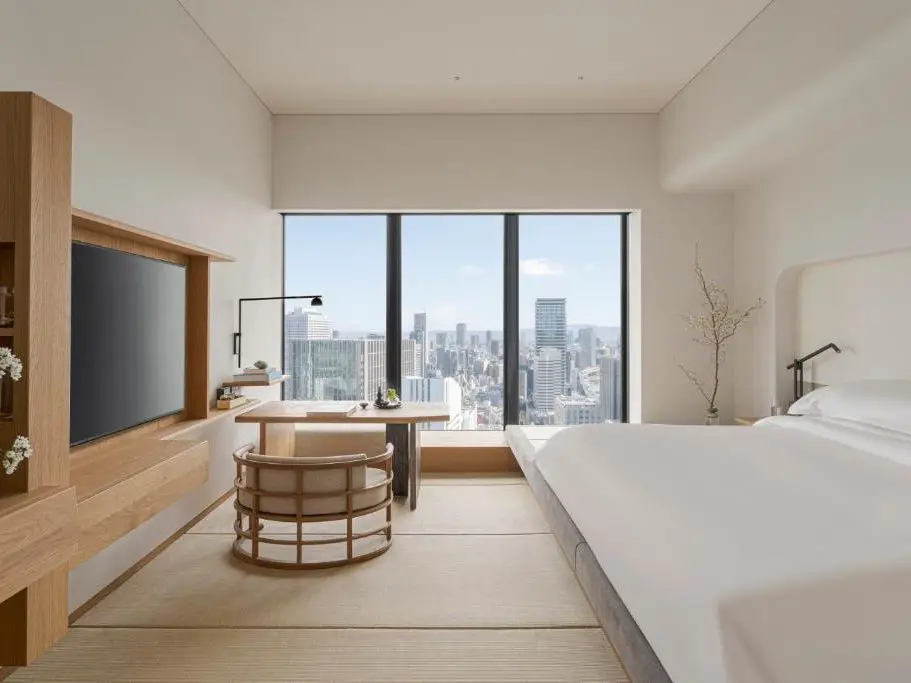
| 1. Four Seasons Hotel Osaka Most Immersive Tatami Experience Rating: ⭐⭐⭐⭐⭐ Location: 10-minute walk from Osaka Station, Dojima district Guest Reviews: Private GENSUI check-in with matcha ceremony, futon-style beds on tatami platforms, floor-to-ceiling city views, SABO Lounge sake hours Best Room: Tatami Premier Room Price: From USD $800 – $1,400 per night |
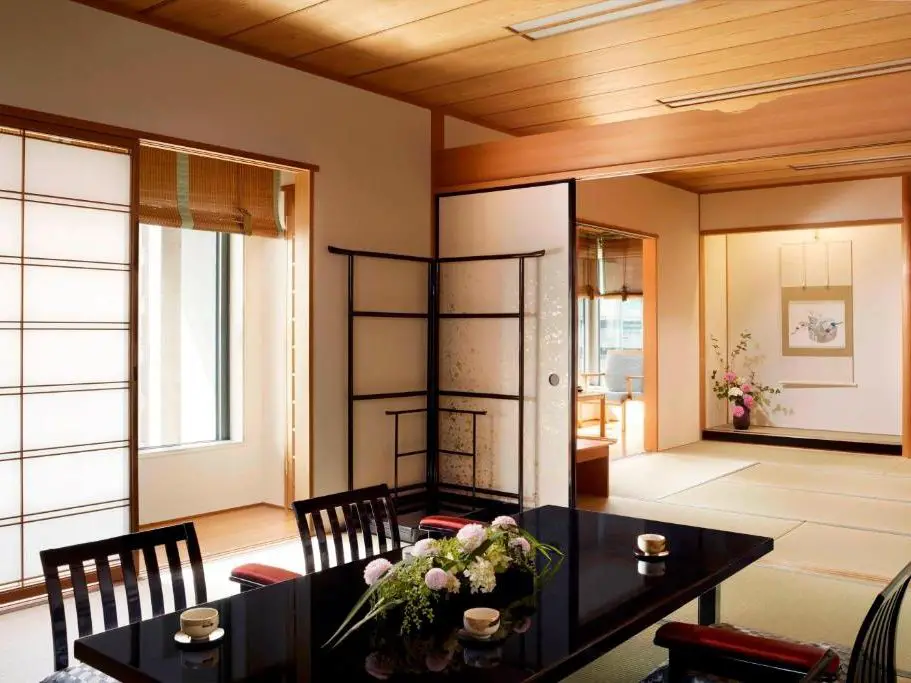
| 2. The Ritz-Carlton, Osaka Best Japanese Suite Rating: ⭐⭐⭐⭐⭐ Location: 10-minute walk from Osaka Station, Nishi-Umeda Guest Reviews: Hinoki sushi counter facing a garden, Michelin-starred French dining at La Baie, 100+ malt whiskies at The Bar, staff attentiveness on every visit Best Room: Japanese Suite Price: From USD $1,500 – $2,500 per night |
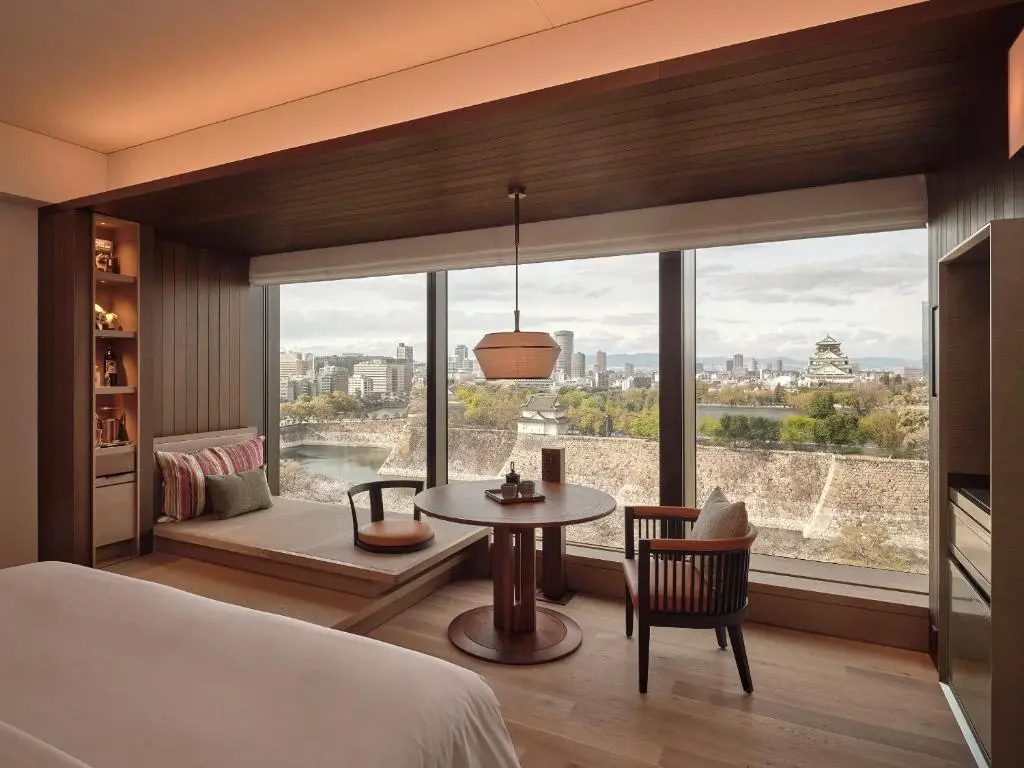
| 3. Patina Osaka Best Tatami Views Rating: ⭐⭐⭐⭐⭐ Location: 8-minute walk from Tanimachi 4-chome Station, Osaka Castle Park Guest Reviews: Tatami window nook facing Osaka Castle, 1,400sqm wellness floor, gold-leaf mural in lobby, five specialist restaurants including plant-based P72 Best Room: Deluxe Room, 1 King Bed (Osaka Castle View) Price: From USD $400 – $750 per night |
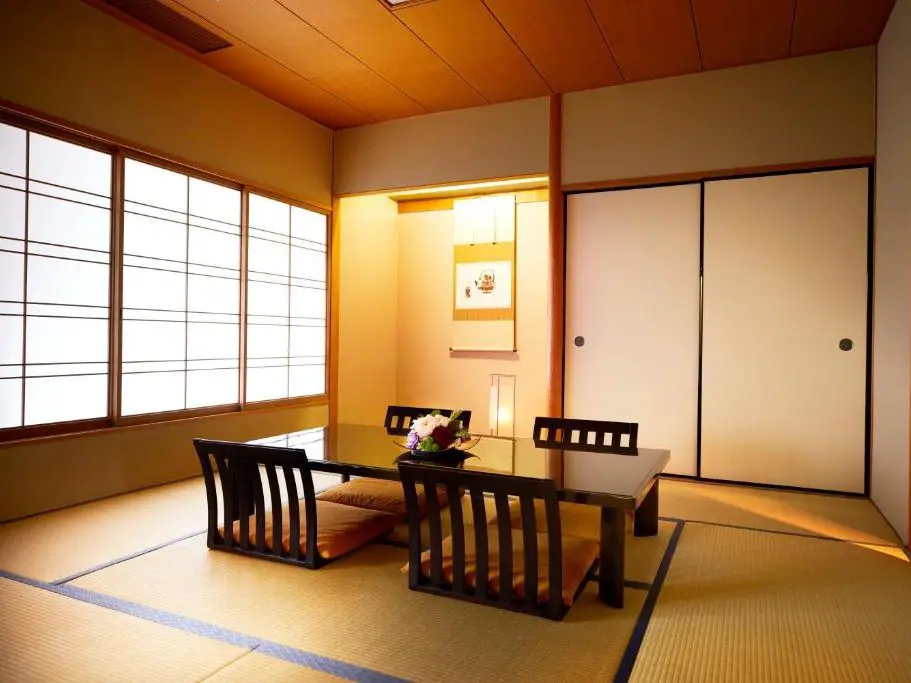
| 4. Hotel New Otani Osaka Best for Families Rating: ⭐⭐⭐⭐⭐ Location: 5-minute walk from Osaka-jo Hall, Osaka Business Park Guest Reviews: Night views of Osaka Castle from the 18th-floor Sky Lounge, 400-year-old Japanese garden on the grounds, 11 restaurants including teppanyaki at Keyaki, seasonal sweets buffet at SATSUKI Lounge Best Room: Japanese Suite Price: From USD $400 – $700 per night |
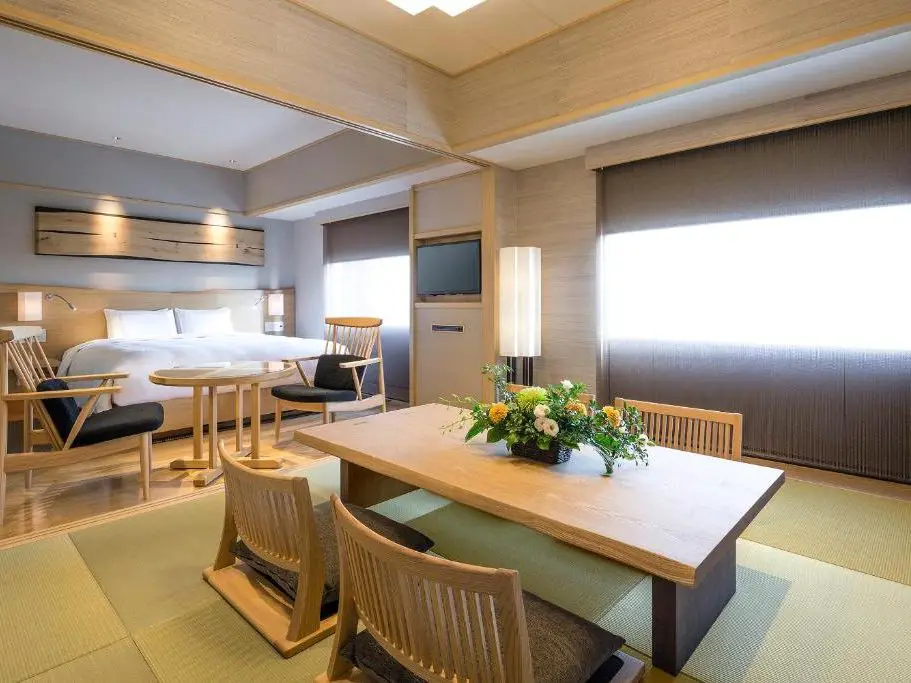
| 5. Swissotel Nankai Osaka Best Location Rating: ⭐⭐⭐⭐⭐ Location: Direct access to Nankai Namba Station, 10-minute walk to Dotonbori Guest Reviews: Direct train to Kansai Airport beneath the hotel, teppanyaki at Minami praised by regulars, Swiss Executive Lounge on Level 33 with city views, complimentary spa access with Waon Suite Best Room: Waon Suite King Price: From USD $500 – $900 per night |
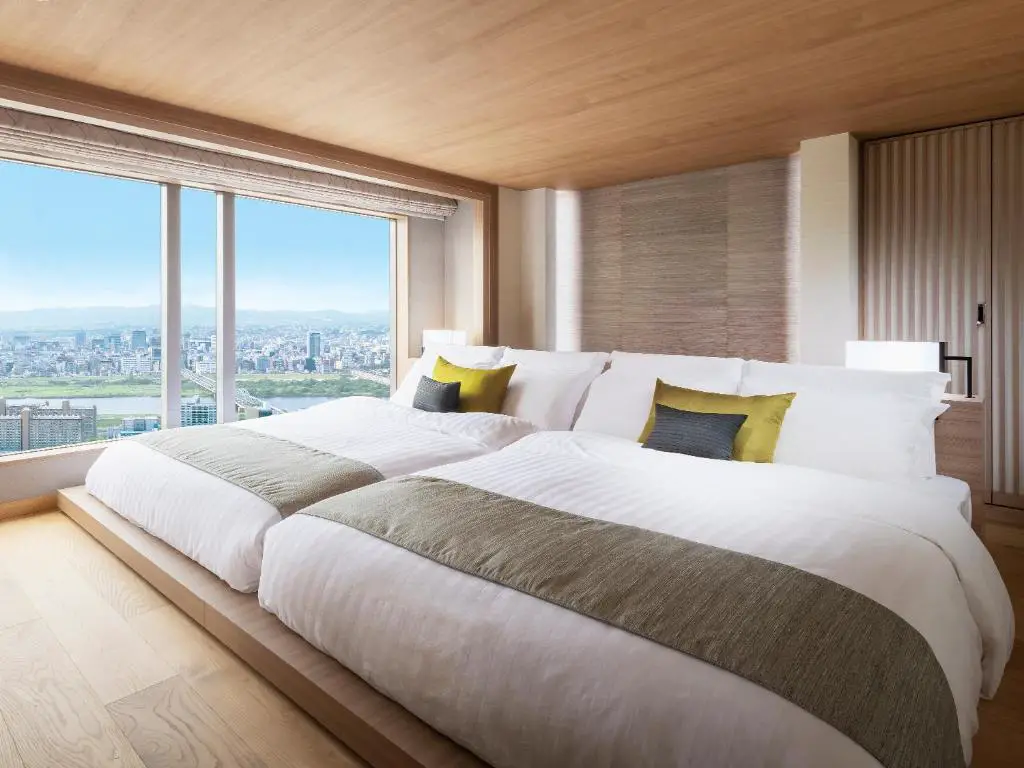
| 6. Hotel Hankyu International Rating: ⭐⭐⭐⭐⭐ Location: 7-minute walk to Grand Front Osaka Mall, Chayamachi Guest Reviews: Japanese Suite on 33rd floor with Ferris wheel views, private onsen-style deep soaking bath, futons pre-laid on tatami, seven restaurants including river-view dining at Marmezon Best Room: Club Superior Suite Price: From USD $600 – $1,000 per night |
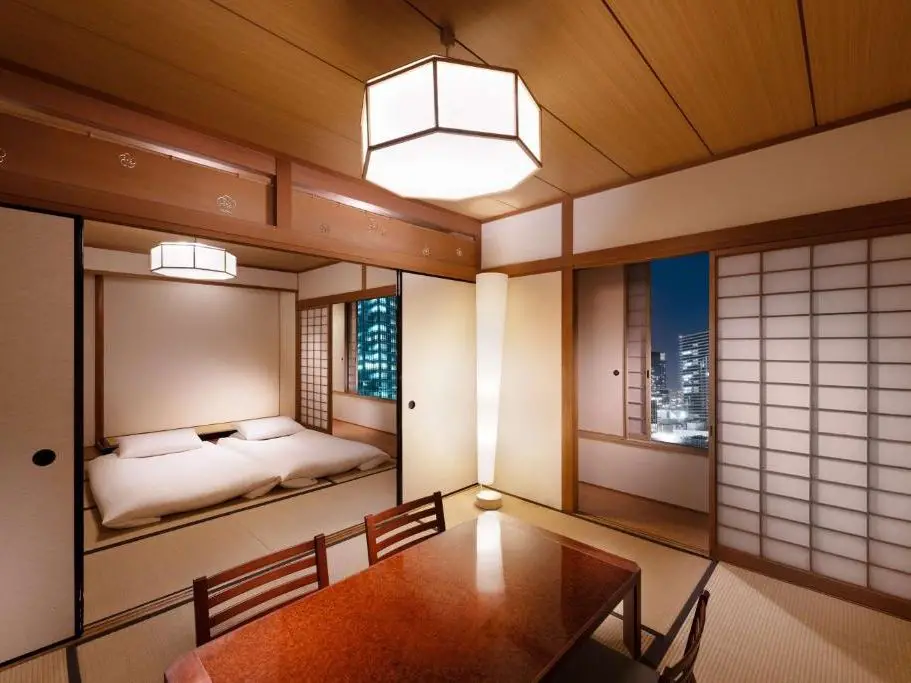
| 7. Hilton Osaka Best Value Tatami Suite Rating: ⭐⭐⭐⭐⭐ Location: 1-minute walk from Osaka Station City, Umeda, connected via underground walkway Guest Reviews: Underground passage to Osaka Station and shopping complexes, Japanese cuisine at Kawaume restaurant, traditional Japanese sauna, early check-in arranged by staff for repeat guests Best Room: Japanese Suite Price: From USD $500 – $900 per night |
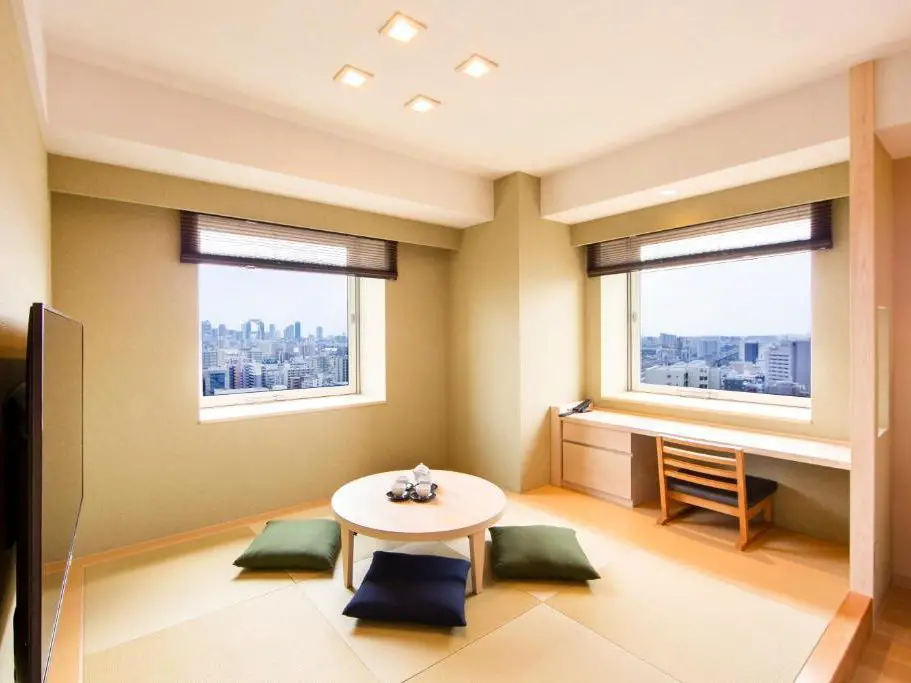
| 8. Karaksa Hotel Grande Shin-Osaka Tower Best Budget Pick Rating: ⭐⭐⭐⭐ Location: 5-minute walk from Shin-Osaka Station, Yodogawa Guest Reviews: Large communal hot baths and sauna on 4th floor, complimentary lobby drinks and snacks, spacious family-friendly rooms, staff praised for going above and beyond with lost property Best Room: High Floor Grande Room with Tatami Price: From USD $150 – $300 per night |
Hotel Tatami Room vs Staying at a Ryokan: Which Is Right for You
The choice comes down to what you actually want from a Japanese-style stay — and the two options are more different than they look from the outside.
- You want flexibility and full-service luxury — A hotel tatami room is the stronger choice. You sleep on tatami mats and futons, wear a yukata, and soak in a deep Japanese-style bath, but you also have a city-centre location, a concierge, multiple restaurants, a spa, a gym, and the option to eat Western food if the kaiseki mood doesn’t strike. The Four Seasons Hotel Osaka GENSUI floor and the Ritz-Carlton, Osaka Japanese Suite sit inside five-star hotels with Michelin-starred restaurants and 24-hour room service. None of that exists at a traditional ryokan.
- You want the full ryokan ritual — A traditional ryokan delivers something a hotel cannot: kaiseki multi-course dinner served in your room by a kimono-clad attendant, a communal onsen fed by natural hot spring water, and a property where the entire experience is built around Japanese cultural immersion from check-in to checkout. Hotel tatami rooms are, as more than one seasoned traveller has put it, “half-in, half-out” — the aesthetics are there, the lounge perks are there, but the in-room dining ritual and the sense of complete withdrawal from modern hotel life are not.
- You want both across one trip — The most practical solution is a split stay: one or two nights in a hotel tatami room for the city access, dining options, and Western amenities, then a night or two at a traditional ryokan elsewhere in the Kansai region. Four Seasons Hotel Osaka actively encourages this, noting that guests often divide a stay between the GENSUI floor and a standard room to experience both sides of the hotel.
- You have tattoos — Communal onsen and bath facilities at some hotels require tattoos to be covered or prohibit tattooed guests from the shared bath entirely. Confirm the policy directly with the property before booking. Private in-room baths at the Ritz-Carlton, Osaka Japanese Suite and the Swissotel Nankai Osaka Waon Suite have no such restriction.
A Whole Tatami Floor vs One Japanese Suite: What the Difference Actually Means
The structure of the tatami offering shapes the experience as much as the room itself. These are meaningfully different products.
- A dedicated tatami floor — Four Seasons Hotel Osaka — The GENSUI floor on the 28th floor operates as a hotel within a hotel. All 21 units are tatami. Check-in happens in the private SABO Lounge with Japanese tea and wagashi sweets. The lounge serves bento-style breakfast, afternoon tea, and evening sake and spirits. Staff on the floor dress in traditional attire. Dark-toned corridors open into bright rooms with tatami flooring, washi-clad walls, sliding doors, and city-facing floor-to-ceiling windows. This is the most immersive tatami hotel experience in Osaka and the most limited in availability, with only 18 rooms and 3 suites across the entire floor.
- A dedicated tatami room type within a mixed hotel — karaksa hotel grande Shin-Osaka Tower — The High Floor Grande Room with Tatami sits within a standard hotel but offers a genuinely spacious tatami family room with futon sleeping for up to six guests, panoramic high-floor views, and access to the hotel’s large communal hot baths. Less ceremonial than the GENSUI floor, but more accessible in price and availability.
- A single Japanese suite within a Western hotel — Ritz-Carlton, Hotel New Otani, Hilton Osaka, Hotel Hankyu International — These properties have one or two Japanese suites bookable alongside hundreds of standard Western rooms. The suites are exceptional — the Ritz-Carlton, Osaka Japanese Suite has cedar-panelled walls, a granite soaking tub, tatami mats suited to private tea ceremonies, and a tokonoma alcove — but the surrounding hotel remains European in character. The corridor outside your suite leads to guests in standard rooms. The immersion ends at the door.
- Tatami as a design element in every room — Patina Osaka — At Patina Osaka, a recessed tatami window nook is built into all room types. It faces Osaka Castle Park and is designed for reading, meditating, or sitting at floor level with the castle framed in the window. This is not a futon sleeping setup — it is a tatami seating area within a contemporary hotel room that otherwise has a Western bed. The experience is subtle and architectural rather than immersive.
- The split-stay option — At both Four Seasons Hotel Osaka and Hotel New Otani Osaka, connecting room options make it possible to book one tatami room and one standard room sharing an internal door. Useful for families with children, or for anyone who wants tatami for the cultural experience but prefers a Western bed for sleep.
The Futon Question: What to Expect on Tatami at a Luxury Hotel
Forum discussions and travel communities return to this question repeatedly. The honest answer is that luxury hotel futons are nothing like the thin cotton floor mats the word suggests to most Western travellers.
- What a luxury hotel futon actually is — At Four Seasons Hotel Osaka and Ritz-Carlton, Osaka, the futon is a thick, high-quality mattress laid on a raised tatami platform rather than directly on the floor. The Four Seasons describes theirs as a “luxuriantly soft mattress” with down duvet and pillow menu. Sleeping position is lower than a Western bed but not floor-level. Most guests who have stayed report no discomfort, and several describe better sleep than in a standard hotel bed.
- The floor-level option — At Hotel New Otani Osaka, Hotel Hankyu International, Hilton Osaka, and karaksa hotel grande Shin-Osaka Tower, futons are laid directly on the tatami mat floor in the traditional manner. This is a more authentic experience but worth considering if you have back problems, knee problems, or difficulty getting up and down from a low position. All four properties can arrange a Western bed alternative in an adjacent room on request, though that defeats the tatami purpose.
- Shoes off at the door — Every tatami room operates on the Japanese convention of removing footwear at the genkan (entryway threshold) before stepping onto the tatami. Slippers are provided for the non-tatami areas of the room. On the Four Seasons GENSUI floor, this applies to the entire corridor as well.
- The igusa scent — Fresh tatami mats have a distinctive grassy, slightly earthy smell from the igusa rush used to weave them. It is strongest in newer installations. Some guests find it immediately calming; others take a night to adjust. It is not a sign of damp or age — it is a feature of quality tatami.
- Yukata etiquette — All hotels on this list provide yukata (lightweight cotton robes) for in-room wear. At properties with communal baths, yukata are worn in corridors between room and bath. At Four Seasons Hotel Osaka and Ritz-Carlton, Osaka, yukata are provided alongside Western bathrobes; the choice is yours. Yukata are not worn outside the hotel.
Where Each Hotel Sits in Osaka — and Why It Matters
Osaka is compact by Japanese standards, but where you stay shapes what kind of trip you have. The tatami hotels here cluster in three distinct zones.
- Kita (Umeda) cluster — Four Seasons Hotel Osaka, Ritz-Carlton, Hotel Hankyu International, Hilton Osaka, karaksa hotel grande Shin-Osaka Tower — This is Osaka’s northern business and shopping district, anchored by JR Osaka Station. It suits travellers who want easy Shinkansen access to Kyoto and Nara, proximity to Umeda’s department stores and underground shopping streets, and a quieter base than Namba. Dotonbori is 15–20 minutes by subway. The Ritz-Carlton, Osaka is a 5-minute walk from Nishi-Umeda Station. Four Seasons Hotel Osaka is a 10-minute walk from JR Osaka Station. karaksa hotel grande Shin-Osaka Tower is a 5-minute walk from Shin-Osaka Station — the Shinkansen terminus — making it the most practical base for travellers arriving by bullet train or planning day trips to Kyoto and beyond.
- Namba cluster — Swissotel Nankai Osaka — Namba is the entertainment and nightlife heart of Osaka. Dotonbori, Kuromon Market, Shinsaibashi shopping, and dozens of Michelin-listed restaurants are within a 10-minute walk. Swissotel Nankai Osaka sits directly above Nankai Namba Station, which has the only direct train service to Kansai International Airport — 40 minutes door-to-door without a transfer. For travellers who want to eat and drink their way through Osaka and arrive and depart with minimum friction, this is the strongest location on the list.
- Osaka Castle cluster — Patina Osaka, Hotel New Otani Osaka — Both hotels sit adjacent to Osaka Castle Park, the most photographed landmark in the city. Patina Osaka is a 1-minute walk from the park’s north entrance; Hotel New Otani Osaka is a 5-minute walk from Osaka-jo Hall. This location suits travellers with a cultural rather than nightlife agenda — Osaka Castle, the Museum of History, and Nakanoshima’s art museums are all close. Dotonbori is a 15-minute taxi ride. The trade-off is that this area is quieter at night, with fewer late-opening restaurants in immediate walking distance.
When to Book and How Far in Advance
Tatami room availability is tighter than standard room availability at every hotel on this list, and the seasonal pressure is more pronounced than most travel planning accounts for.
- Cherry blossom season (late March to mid-April) — book 2–3 months ahead minimum — This is the single highest-demand period for all of Osaka, but tatami rooms face additional pressure because cherry blossom viewing from a tatami room overlooking Osaka Castle Park is a specific experience travellers plan around. The GENSUI floor at Four Seasons Hotel Osaka has only 21 units across all room types combined. Hotel New Otani Osaka offers a limited castle-view suite plan during cherry blossom season that releases just 5 rooms per day and sells out fast. Standard lead times collapse during this window; book as soon as the calendar opens.
- Autumn foliage (October–November) — book 6–8 weeks ahead — The second busiest period for Osaka, with slightly less international pressure than spring but strong domestic demand. Tatami suite availability at Hotel Hankyu International and the Ritz-Carlton, Osaka tends to compress significantly during this window.
- Golden Week (late April to early May) — avoid or book 3 months ahead — Domestic travel peaks sharply. Hotel prices across Osaka rise 30–50% and tatami rooms at properties like karaksa hotel grande Shin-Osaka Tower book out entirely. The two weeks either side of Golden Week offer similar weather with dramatically lower prices and availability.
- Best value window: January–February — The quietest stretch of the year for Osaka hotels. Tatami rooms at Hilton Osaka and Hotel New Otani Osaka are frequently available at close to standard room rates. The Swissotel Nankai Osaka Waon Suite drops noticeably in price. Weather is cold but clear, and the city’s food scene operates at full pace year-round.
- Second best value: June (rainy season) — International visitor numbers drop sharply in June. Tatami room prices across the list soften, availability opens up, and the city is less crowded. The rain is real but intermittent rather than constant; most days allow sightseeing.
Beyond the Room: Experiences Worth Booking Ahead
The tatami room is the starting point. Several of the best things to do at these hotels require advance reservations and fill up independently of room availability.
- Four Seasons Hotel Osaka — GENSUI cultural programme — The SABO Lounge runs a daily schedule of hands-on activities included with the room rate: matcha-making, kendama, origami, and seasonal tea ceremony experiences. Evening sake and Japanese spirits service runs from 5:30pm to 7:30pm. Book the Dojima River private boat cruise through the concierge — a journey from Nakanoshima to Osaka Castle that most hotel guests miss entirely.
- The Ritz-Carlton, Osaka — dining and The Bar — La Baie has held a Michelin star for 15 consecutive years and requires reservations well in advance, particularly for window tables. The Bar stocks over 100 malt whiskies and 110 martini types; no reservation needed but seats fill on weekend evenings. Hanagatami’s seven-metre cypress sushi counter facing the Japanese garden seats only 9 guests at the sushi bar — book that counter specifically rather than the main dining floor.
- Patina Osaka — Barin private dining room — Barin sits on the 19th floor with wide views over Osaka’s skyline. The private dining room seats 6 guests around a personal teppanyaki counter with direct sightlines to Osaka Castle. Book at least two weeks ahead; the private room fills before the main dining floor.
- Swissotel Nankai Osaka — Waon Suite ofuro and Minami Teppanyaki — The Waon Suite’s Japanese ofuro bathtub and access to the Swiss Executive Lounge on the 33rd floor are included in the room rate. Minami Teppanyaki draws strong local regulars and is worth booking on the evening of arrival.
- Hotel New Otani Osaka — Sky Lounge — The Sky Lounge on the 18th floor has a direct view of Osaka Castle at night through floor-to-ceiling windows. Entry costs only the price of a drink. Arrive before 8pm to secure a window seat. The seasonal sweets buffet at SATSUKI Lounge changes monthly and requires a reservation — the strawberry series in late winter books out within days of release.
- Hotel Hankyu International — Marmezon — The French restaurant with river views is the standout dining experience at the hotel and requires a reservation. Request a window table when booking the room.
FAQs
1. Do tatami rooms cost more than standard rooms at the same hotel?
At hotels where tatami is a dedicated room type or floor — Four Seasons Hotel Osaka, Hotel New Otani Osaka, Hilton Osaka, Hotel Hankyu International — yes, typically by 20–40% over a comparable standard room. At Patina Osaka, the tatami window nook is built into the standard room design, so there is no premium for the tatami element itself. At The Ritz-Carlton, Osaka and Swissotel Nankai Osaka, the Japanese Suite and Waon Suite are full suite categories priced accordingly.
2. Can I request a Western bed instead of a futon in a tatami room?
At most properties, the futon is integral to the room type and cannot be substituted without moving to a different room category. The GENSUI floor at Four Seasons Hotel Osaka uses a raised platform futon design that cannot be swapped for a standard bed frame. If sleeping on or near the floor is a concern, the Four Seasons Hotel Osaka and Ritz-Carlton, Osaka raised-platform futon designs are the most Western-adjacent option on this list. Ask the hotel directly at the time of booking rather than at check-in.
3. Are tatami rooms available year-round, or only seasonally?
All tatami rooms are available year-round, but availability tightens sharply during cherry blossom season (late March to mid-April), autumn foliage season (October to November), and Golden Week (late April to early May). The GENSUI floor at Four Seasons Hotel Osaka with its 21 units is the most constrained. January, February, and June offer the most consistent availability.
4. What is an ofuro bath, and which hotels have one?
An ofuro is a deep Japanese soaking tub, typically square or rectangular, designed for soaking rather than washing. Washing is done before entering the bath, not in it. The Ritz-Carlton, Osaka Japanese Suite has a granite ofuro. The Swissotel Nankai Osaka Waon Suite has a Japanese ofuro bathtub with separate hand shower and rain shower. The GENSUI rooms at Four Seasons Hotel Osaka have full-depth Japanese-style bathtubs. The Hotel Hankyu International Club Superior Suite has an onsen-style deep soaking bath on the 33rd floor.
5. Is the Four Seasons GENSUI floor worth the premium over a standard room?
The honest answer depends on what you are paying for. The GENSUI room rate runs roughly $200–$400 more per night than a standard room at the same hotel, and what’s included in that rate — tatami and futon sleeping, tea ceremony on check-in, sake and spirits in the evening, bento breakfast in the SABO Lounge, and a full cultural activity programme — makes the comparison more complex than a simple price-per-square-metre calculation. If the ryokan aesthetic is your reason for visiting Osaka, the premium is defensible. If you are primarily there for the hotel’s dining, spa, or pool, a standard room accesses all the same facilities at a lower rate.
6. Do tatami rooms need to be booked further in advance than standard rooms?
At properties where tatami is a single suite category — Ritz-Carlton, Osaka, Hilton Osaka, Hotel Hankyu International, Hotel New Otani Osaka — the Japanese suite is one of the lowest-inventory room types in the hotel and books out faster than standard rooms. For cherry blossom season, book two to three months ahead as a minimum. For other periods, six to eight weeks is generally sufficient, though the Ritz-Carlton, Osaka Japanese Suite can be scarce even in low season due to its reputation.
7. What should I pack or prepare for a tatami hotel stay?
Socks are worth bringing — tatami floors feel better with socks than bare feet for most guests, and the texture of fresh igusa grass can feel rough on sensitive skin initially. Loose comfortable clothing works better than structured outfits given the low furniture and floor-seated areas. All hotels on this list provide yukata and slippers, so there is no need to pack your own. If you have a knee or hip condition that makes getting up from floor level difficult, contact the hotel before arrival; the Four Seasons Hotel Osaka and Ritz-Carlton, Osaka raised-platform designs reduce this issue considerably.