
Osaka’s luxury spa hotels sit in a different league to most of the country. Where Kyoto leans on tradition and Tokyo on scale, Osaka has somehow pulled off both — sky-high treatment floors with ofuro baths and city views, Japanese wellness rituals delivered at five-star standard, and a handful of newer properties pushing spa services further with cryotherapy, hyperbaric oxygen, and castle-facing infinity pools. Whether you want a single afternoon of treatments or a stay built entirely around recovery, you’ll find it here.
Table of Contents
Osaka Hotels
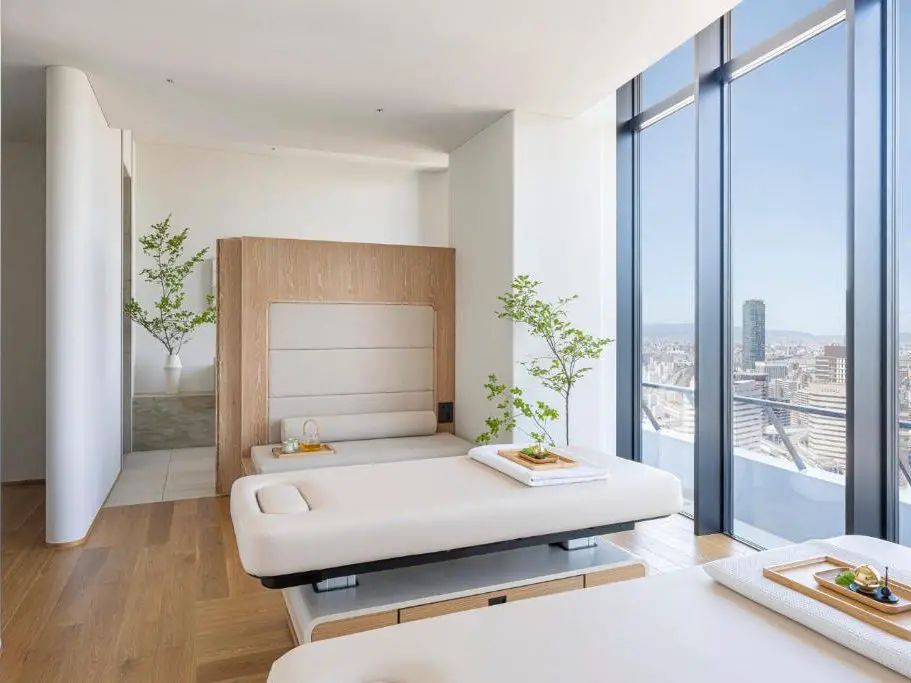
| 1. Four Seasons Hotel Osaka Best Spa Floor in Osaka Rating: ⭐⭐⭐⭐⭐ Spa: Kōmyō Radiance facial, shrine-blessed massage oils, seasonal herbal baths, couples suite with private bath, gender-separated ofuro baths, 16-metre sky pool. Location: 7-minute walk to Osaka Station Guest Reviews: 36th-floor pool with floor-to-ceiling city views, ofuro baths, GENSUI tatami rooms with private ofuro, Sabo lounge bento breakfast, lobby bakery Farine Best Room: Suite, 1 King Bed, Corner (Tatami) Price: From USD $475 – $940 per night |
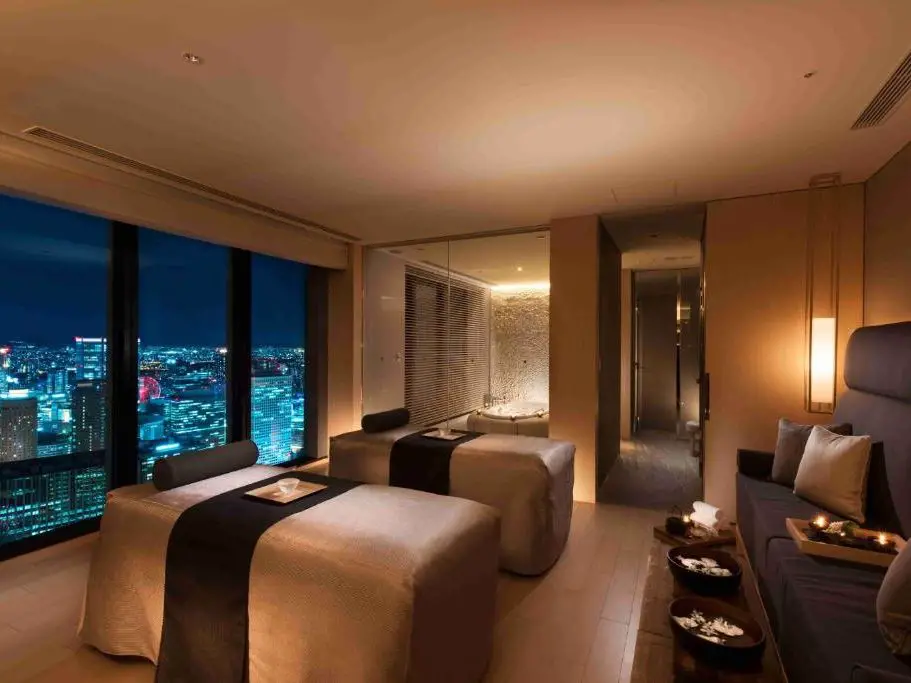
| 2. Conrad Osaka Best Spa with a View Rating: ⭐⭐⭐⭐⭐ Spa: Japan’s Best Day Spa 2024. Facials, body scrubs, body treatments, couples treatment room, 20-metre heated indoor pool, whirlpool, sauna, beauty salon, steam room. Location: 1-minute walk to Higobashi Station Guest Reviews: 38th-floor pool with river and city views, floor-to-ceiling windows in every room, circular deep-soaking tub in every room, omakase teppanyaki counter at KURA, 40th-floor arrival lobby Best Room: King Executive Corner Room Price: From USD $350 – $675 per night |
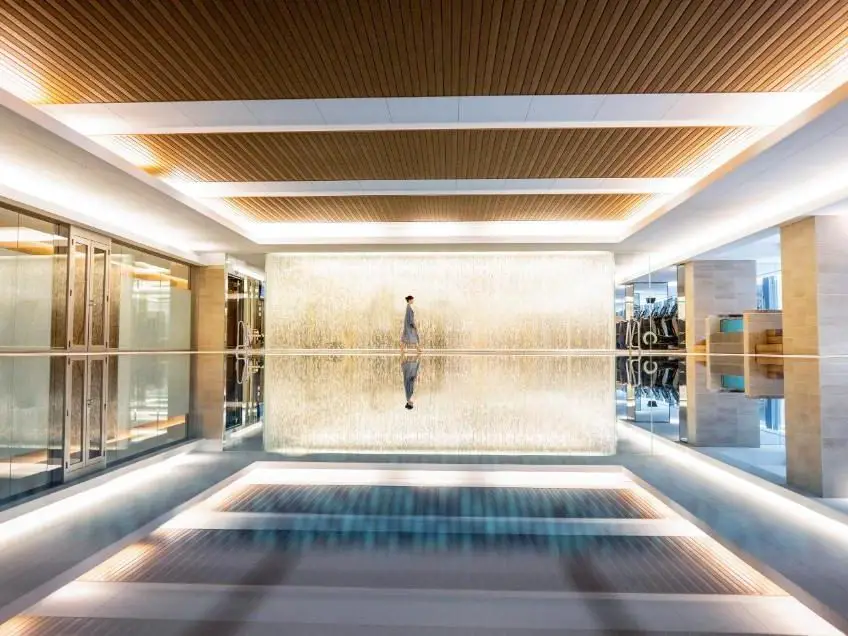
| 3. InterContinental Osaka by IHG Best Value Spa Facilities Rating: ⭐⭐⭐⭐⭐ Spa: Meguri Spa & Wellness. Deep-tissue massages, facials, body wraps, aromatherapy, 6 treatment rooms including couples suite. Japanese bathhouse, indoor pool, sauna. Pool and bathhouse complimentary for guests. Location: 5-minute walk to Osaka Station Guest Reviews: 50 sq m rooms among the largest in Osaka’s luxury tier, deep soaking baths, rainfall showerheads, Michelin-starred Pierre restaurant, Grand Front Osaka shopping connected Best Room: 1 King Premium City View Price: From USD $290 – $600 per night |
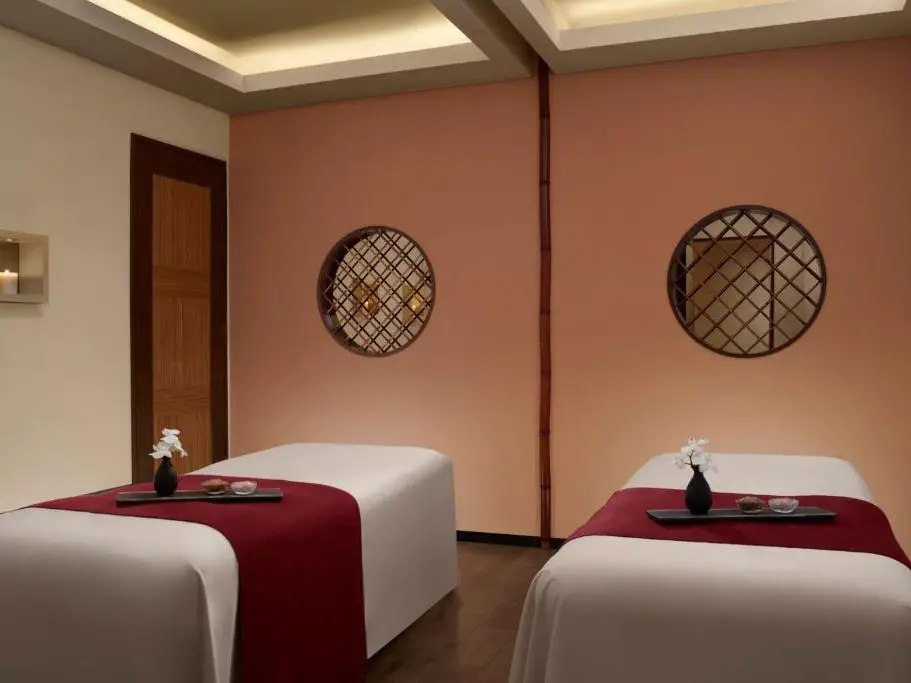
| 4. The Ritz-Carlton, Osaka Best Traditional Spa Experience Rating: ⭐⭐⭐⭐⭐ Spa: Shisui Detox Facial, Ki Purifier sake treatment, Swedish and hot stone massages, ESPA and La Prairie products, 5 treatment rooms, outdoor Jacuzzi garden, indoor pool, sauna. Location: 6-minute walk to Osaka Station Guest Reviews: Outdoor Jacuzzi garden, Frette Italian sheets, deep soaking tubs, Michelin-starred French dining, Japanese futon rooms available Best Room: Japanese Suite Price: From USD $365 – $950 per night |
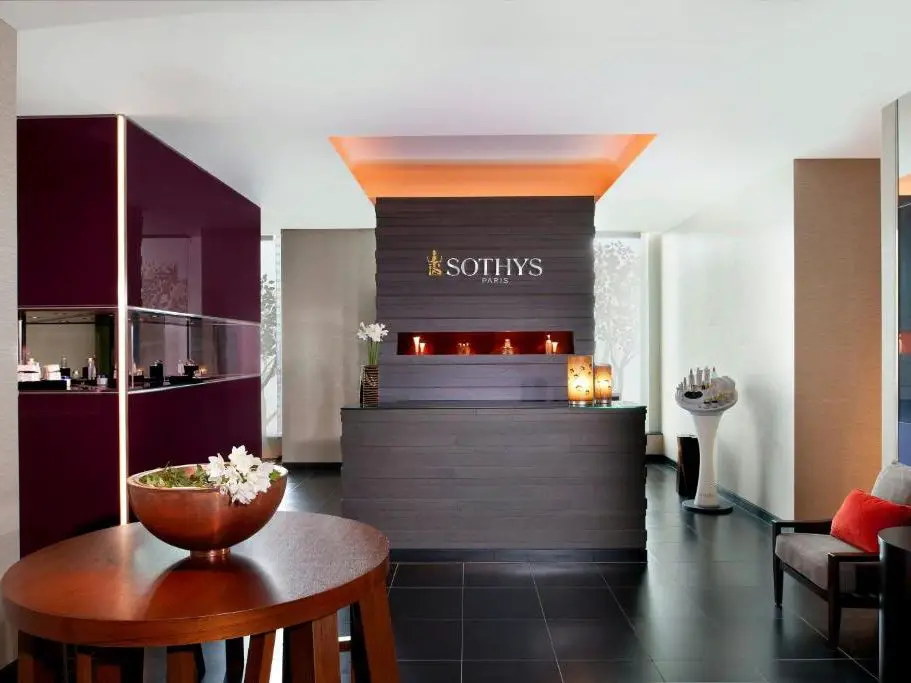
| 5. The St. Regis Osaka Best Butler Service Rating: ⭐⭐⭐⭐⭐ Spa: Iridium Spa, Sothys of Paris treatments, facials, body wraps, body scrubs, reflexology. Treatment rooms only — no pool, sauna or onsen. Location: 2-minute walk to Honmachi Station Guest Reviews: 24/7 personal butler service, deep soaking tubs, floor-to-ceiling city views, Michelin-supervised teppanyaki at WAJO, 12th-floor terrace bar Best Room: Grand Deluxe Suite Price: From USD $280 – $650 per night |
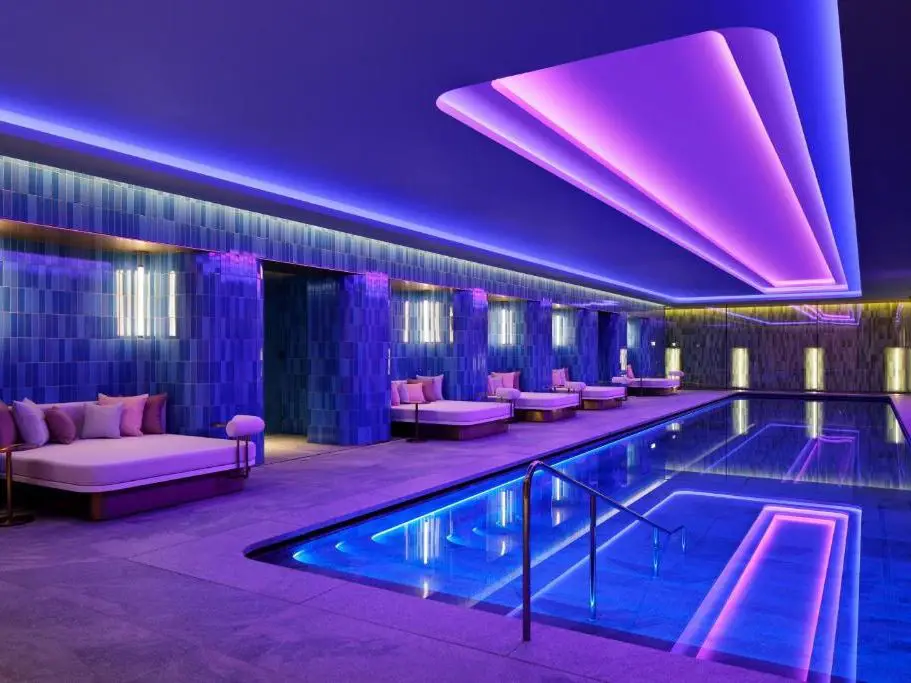
| 6. W Osaka Most Design-Led Spa Rating: ⭐⭐⭐⭐⭐ Spa: AWAY Spa. HACCI Premium Moment (120-min body and facial with collagen drink), deep-tissue massages, facials, body scrubs, sauna, steam room, Japanese onsen-style bath, 20-metre neon-lit indoor pool. Location: 4-minute walk to Shinsaibashi Station Guest Reviews: Neon-lit WET pool with poolside bar, Tadao Ando-designed exterior, floor-to-ceiling city views, French brasserie OH.LALA, DJ sets in the lobby Best Room: W King Suite Price: From USD $300 – $600 per night Pool access charged separately per person |
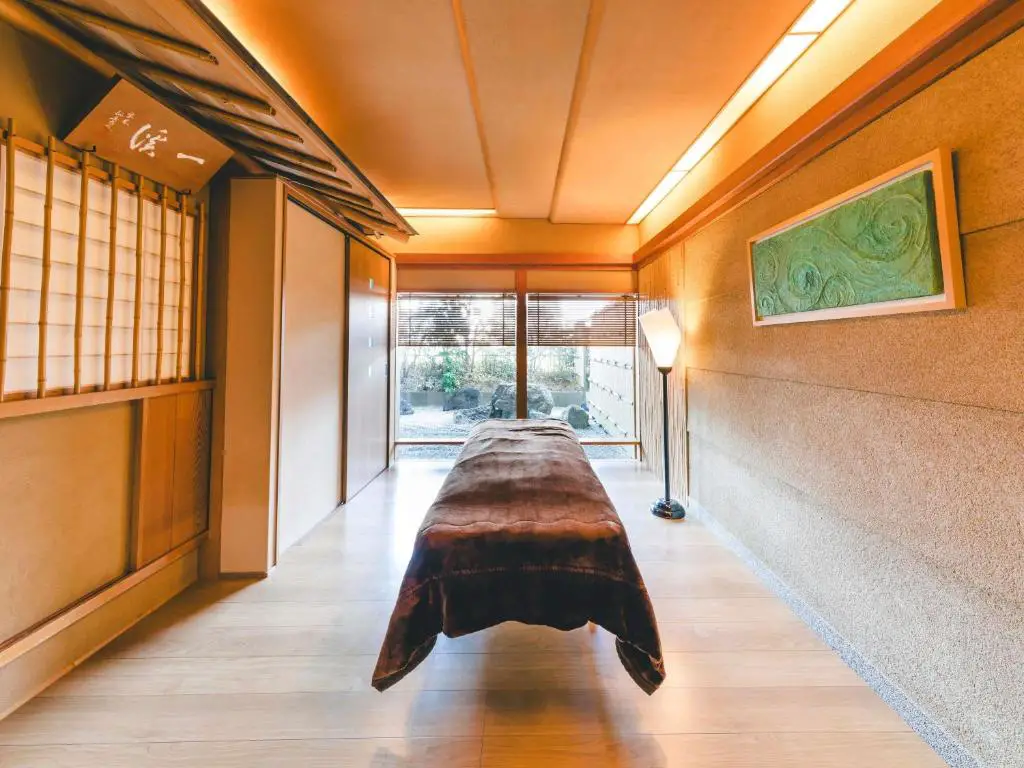
| 7. Swissotel Nankai Osaka Rating: ⭐⭐⭐⭐⭐ Spa: Pürovel Spa & Sport. Massages, facials, body treatments, Japanese sauna and bath, hot tub, indoor pool. Location: 1-minute walk to Namba Station Guest Reviews: Direct train access to Kansai International Airport, Table36 rooftop restaurant with panoramic city views, SH’UN whisky bar, retro NAMBAR10 bar with karaoke and arcade machines, pillow menus Best Room: Imperial Suite Price: From USD $190 – $430 per night |
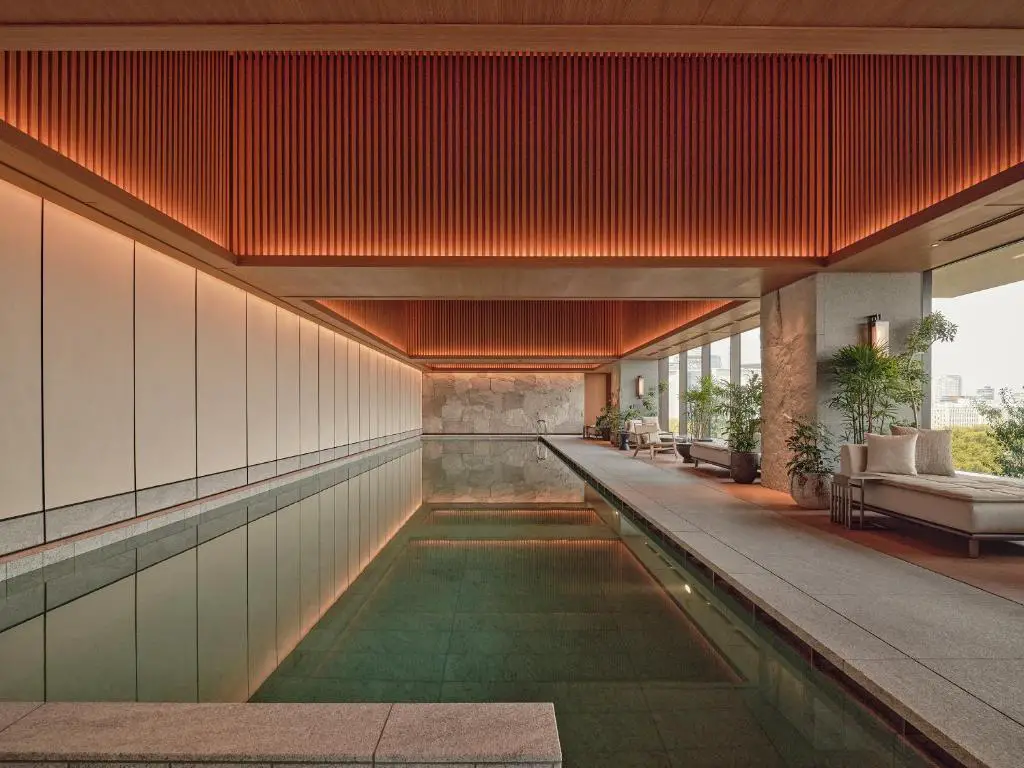
| 8. Patina Osaka Most Advanced Wellness Technology Rating: ⭐⭐⭐⭐⭐ Spa: HACCI Premium Moment, deep-tissue massages, body wraps, facials, cryotherapy, infrared saunas, hyperbaric oxygen chambers, 20-metre indoor pool, vitality pool, yoga studio. Location: 8-minute walk to Tanimachi 4-chome Station Guest Reviews: Direct Osaka Castle views from rooms and restaurant, 50 sq m rooms among the largest on this list, Frette Italian sheets, Basque restaurant Iñaki on the 19th floor, vinyl listening room by OJAS Best Room: Urban Suite, 1 King Bed (Osaka Castle View) Price: From USD $450 – $800 per night |
How These Spa Hotels Compare
Not every spa hotel in Osaka offers the same kind of wellness experience, and the differences matter when choosing where to stay.
- Japanese ritual-based spas — Four Seasons Hotel Osaka and The Ritz-Carlton, Osaka: Both anchor their treatments in Japanese wellness philosophy. The Four Seasons works with shrine-blessed oils, seasonal herbal baths, and the Kōmyō Radiance facial inspired by Empress Kōmyō, delivered from an entire 36th-floor spa with gender-separated ofuro baths and a 16-metre indoor pool. The Ritz-Carlton takes a more classic approach — matcha detox facials, sake-infused treatments, ESPA and La Prairie products — with an outdoor Jacuzzi garden that is rare in urban Osaka. Both require advance booking for treatments.
- High-tech wellness — Patina Osaka: The furthest from traditional of Osaka’s luxury spa hotels. The Wellness Sanctuary at Patina pairs conventional treatments — massages, body wraps, facials — with cryotherapy, infrared saunas, and hyperbaric oxygen chambers. If the goal is genuine physiological recovery rather than relaxation, this is the only hotel in Osaka built for it. It also has the best castle views of any hotel spa in the city.
- Sky-high classic luxury — Conrad Osaka and InterContinental Osaka by IHG: Both deliver polished full-service spas with pools and city views as the primary draw. The key difference is access: the InterContinental’s pool, Japanese bathhouse, and sauna are all complimentary for overnight guests — a meaningful differentiator at this price point. At Conrad, the pool and fitness centre are also complimentary, but the sauna and spa treatments carry a separate charge. The InterContinental also has six treatment rooms versus the Conrad’s four, and its Japanese bathhouse delivers a genuine onsen-style experience within a city luxury hotel.
- Design-led lifestyle spa — W Osaka: AWAY Spa at the W is built around atmosphere and personality as much as treatment quality. Neon lights, chrome fittings, and cheeky treatment names set it apart from every other spa hotel in Osaka. It suits guests who want wellness with energy rather than stillness. The WET pool is neon-lit and genuinely unlike anything else in the city — but access is charged separately per visit.
- Treatment-only spa — The St. Regis Osaka: The Iridium Spa uses Sothys of Paris products and delivers excellent facials and body treatments, but there is no pool, no sauna, no onsen, and no bathhouse. The hotel’s differentiator is its 24/7 butler service, not facilities breadth. Choose it if private treatments and personal service matter more than a full spa-floor experience.
- Accessible entry point — Swissotel Nankai Osaka: Pürovel Spa & Sport offers massages, facials, a Japanese sauna and bath, hot tub, and indoor pool. It is the most competitively priced of Osaka’s luxury spa hotels and sits directly above Namba Station. The spa facilities are more functional than destination, but the location and value combination is hard to beat for guests who want spa access without committing to a higher tier.
Where in Osaka to Stay
The eight hotels here span four distinct parts of the city, and location shapes the stay as much as the spa itself.
- Kita and Umeda — Four Seasons Hotel Osaka, Conrad Osaka, InterContinental Osaka by IHG, The Ritz-Carlton, Osaka: The cluster around Osaka Station gives the best transport connectivity in the city, with direct Shinkansen and airport access. Four Seasons and InterContinental sit closest to the station and are the most convenient base for day trips to Kyoto and Nara. Conrad occupies Nakanoshima — a cultural island between two rivers, noticeably quieter than the commercial stretch of Umeda. Ritz-Carlton sits at Nishi-Umeda, a short walk from Osaka Station with a calmer atmosphere than the immediate station area.
- Honmachi and Midosuji — The St. Regis Osaka: Honmachi is Osaka’s financial and high-fashion district, quieter and more composed than Namba or Umeda. The St. Regis sits directly on Midosuji boulevard — Osaka’s tree-lined main street — with direct subway access from three lines. It suits guests who want proximity to premium shopping and a more adult neighbourhood feel.
- Namba and Minami — Swissotel Nankai Osaka, W Osaka: Both sit in Osaka’s most energetic district. Swissotel is directly above Namba Station, with a direct train link to Kansai International Airport that no other hotel in this group can match. W Osaka is four minutes from Shinsaibashi Station, steps from the best shopping streets in the city and ten minutes from Dotonbori on foot. Suits guests who want to walk to everything and stay out late.
- Osaka Castle and Chuo Ward — Patina Osaka: The furthest from Osaka Station of the eight, and deliberately so. Patina faces Osaka Castle Park directly — the only hotel in this group in a genuinely green, quiet setting. The trade-off is that Dotonbori and Umeda require a metro ride. For guests whose priority is the wellness experience and the castle outlook, the location is the point.
What to Know Before You Book
- Tattoo policies vary significantly across these hotels, and the difference matters if the stay involves an onsen or public bathhouse. The InterContinental’s Japanese bathhouse explicitly restricts guests with tattoos from the public bath area. The Four Seasons’ gender-separated ofuro follows similar cultural conventions. The W Osaka’s pool and Patina’s facilities are more internationally oriented and less likely to apply traditional restrictions, but policies can change and should be confirmed directly before booking.
- Pool and spa access is not always structured the same way. At the InterContinental, the pool, bathhouse, and sauna are all complimentary for overnight guests. At Conrad, the pool and fitness centre are complimentary but the sauna and treatments are charged separately. At the W Osaka, the WET pool carries a per-person charge per visit regardless of room rate. All other hotels include pool access with the room.
- Advance booking for treatments is required at most properties and is not optional during peak season. The Four Seasons and Patina explicitly require reservations for all treatments. During cherry blossom season (late March to early April) and the autumn foliage period (November), treatment slots fill weeks in advance across all Osaka spa hotels at this tier. Book treatments when booking the room, not on arrival.
- Age restrictions apply at several properties. The W Osaka’s WET pool is strictly 16 and over. The InterContinental’s spa restricts guests under 16. None of these hotels are designed as family wellness destinations.
- The ofuro experience requires full nudity — swimsuits are not permitted in the bath area. This applies to the Four Seasons’ gender-separated ofuro and the InterContinental’s Japanese bathhouse. Guests who prefer privacy should ask about private bath options, which some properties offer at an additional charge.
When to Visit — and When to Book Treatments
- Spring (late March to early April) is peak season. Cherry blossom viewing at Osaka Castle Park and along the Okawa River drives demand from both international and domestic travellers. Every hotel in this group raises rates significantly during this window, with Four Seasons and Patina running at close to full occupancy through April. Spa treatment slots at the Four Seasons and Ritz-Carlton book out two to three weeks ahead during bloom season. Book rooms and treatments simultaneously, as early as three months in advance.
- Autumn (October to November) is the second peak, and the more underrated one. Temperatures drop to comfortable levels, maple foliage runs along Midosuji Avenue directly outside the St. Regis, and crowds are slightly thinner than spring. Prices rise sharply in November but availability remains better than April. Treatment slots still require advance planning at the top-tier properties.
- Summer (June to August) brings high humidity, which makes the indoor pool and spa floor significantly more appealing. The Conrad’s 38th-floor pool and the W Osaka’s neon-lit WET are both at their most used during summer months. Rates are moderate outside of the Obon period in mid-August, when domestic travel peaks briefly.
- Winter (December to February) is the value window. Room rates across all eight hotels drop noticeably, treatment availability is at its most open, and the Four Seasons’ sake-infused winter treatments and the Ritz-Carlton’s outdoor Jacuzzi garden come into their own in cooler temperatures. Swissotel in particular drops to its most competitive rates in January and February, making it the strongest value proposition among Osaka’s luxury spa hotels during this period.
FAQ
1. Do Osaka spa hotels allow tattoos in onsen and bathhouse facilities?
Policies differ by hotel and can change, so confirming directly before booking is always recommended. The InterContinental’s Japanese bathhouse explicitly restricts tattooed guests from the public bath area. The Four Seasons’ ofuro follows similar cultural conventions. Hotels with Western-style pool facilities — Conrad, Ritz-Carlton, W Osaka, Patina — are generally more accommodating, but this cannot be assumed. Private bath options are available at some properties for guests who want to avoid any uncertainty.
2. What is the difference between an onsen, a bathhouse, and a hotel spa in Osaka?
An onsen uses natural hot spring water, which is rare in central Osaka. A bathhouse — like the one at the InterContinental — uses heated water in a traditional communal bath format without natural spring water. A hotel spa is a Western-style treatment facility with private rooms, massages, and facials. Several hotels offer all three in different combinations. The Four Seasons has ofuro baths, a spa floor with treatment rooms, and a 16-metre pool, but not a natural hot spring.
3. Which hotel in Osaka has the best pool?
Three pools stand out for different reasons. The Four Seasons’ 16-metre pool on the 36th floor has the strongest city views of any hotel pool in Osaka. The Conrad’s 20-metre pool on the 38th floor looks out over the Nakanoshima rivers. Patina’s 20-metre pool faces Osaka Castle Park directly. All three are complimentary for guests. The W Osaka’s neon-lit WET pool is the most visually distinctive but carries a per-visit charge.
4. Is it worth booking spa treatments at a hotel, or is a public onsen better value?
They serve different purposes. Public onsen offer communal bathing experiences at a fraction of the cost — typically under JPY 3,000 per visit. Hotel spas at this tier charge significantly more for private treatment rooms, trained therapists, and signature rituals. If the goal is an authentic communal bathing experience, a public facility does it well. If the goal is a private treatment, a signature ritual, or a full wellness floor with pool access, the hotel spa is the right choice.
5. Do I need to book spa treatments in advance?
At every Osaka spa hotel at this tier, advance booking is strongly recommended. At the Four Seasons and Patina, it is explicitly required. During cherry blossom season and the November foliage period, treatments at the top properties book out two to three weeks ahead. Booking at the same time as the room is the safest approach regardless of season.
6. Can I use a hotel spa in Osaka without staying overnight?
Most hotels accept non-residential spa bookings, though availability is prioritised for guests. The Conrad, Ritz-Carlton, and InterContinental all accept day bookings for treatment rooms subject to availability. The W Osaka’s AWAY Spa also welcomes external visitors. Confirm directly with each property as policies and pricing differ from in-house guest rates.
7. What is the best area in Osaka to stay in for a spa hotel?
Kita and Umeda suits guests who want the most central base with the best transport links — Four Seasons, Conrad, InterContinental, and Ritz-Carlton are all here. Namba suits guests who want to walk to Dotonbori and step onto a direct airport train — Swissotel and W Osaka are both in this zone. Osaka Castle suits guests whose trip is built around the wellness experience itself, with a quieter neighbourhood and the best outlook of any luxury hotel in the city — that is Patina.
8. Which hotel is best for a couples spa stay?
Four Seasons and Conrad lead on couples-specific spa facilities — both have dedicated couples treatment rooms with private baths. Patina adds Osaka Castle views and the most advanced wellness menu. St. Regis is the strongest choice for couples who prioritise butler service and a quieter, more intimate atmosphere over facilities breadth.