
Montmartre has a way of making you feel like you’ve left Paris entirely, even though you’re standing in the middle of it. The 18th arrondissement climbs above the rest of the city on a limestone butte, and up here the streets narrow, the crowds thin out after dark, and the view from the top steps of Sacré-Coeur stretches all the way to the horizon. Where you sleep in Montmartre changes the experience considerably — the base of the hill is louder, flatter, and better connected, while hotels higher up trade metro convenience for cobblestones, quiet, and the kind of atmosphere that keeps people coming back. Here are the best hotels across both ends of the hill.
Table of Contents
Montmartre Hotels

| 1. Maison Souquet, Hotel & Spa Most Seductive Spa Rating: ⭐⭐⭐⭐⭐ Location: 2-minute walk to Blanche Metro; foot of Montmartre, Moulin Rouge on the same street Guest Reviews: Private butler service, Hermès toiletries, handwritten welcome note from owner, hammam pool with gold celestial ceiling Best Room: Junior Suite Price: From USD $430 – $950 per night |

| 2. Manolita Paris Best Balcony Rooftop Views Rating: ⭐⭐⭐⭐⭐ Location: 1-minute walk to Blanche Metro; Rue Lepic, base of Montmartre hill Guest Reviews: Frette Italian sheets, Japanese toilets, table-served breakfast, balcony rooftop views Best Room: Junior Suite Price: From USD $325 – $650 per night |

| 3. Terrass” Hotel Best Eiffel Tower View in Montmartre Rating: ⭐⭐⭐⭐ Location: 6-minute walk to Blanche Metro; Rue Joseph de Maistre, mid-Montmartre Guest Reviews: Rooftop bar with panoramic Paris views, Eiffel Tower visible from upper-floor rooms, NUXE spa, Nespresso in every room Best Room: Privilege Room – Eiffel View & Balcony Price: From USD $200 – $550 per night |

| 4. Mom’Art Hotel Rating: ⭐⭐⭐⭐ Location: 5-minute walk to Anvers Metro; Rue d’Orsel, lower Montmartre near the funicular Guest Reviews: Nespresso in every room, Marshall speakers, chef-cooked restaurant on heated patio, owner Brigitte known by name in reviews Best Room: Suite (L’atelier) Price: From USD $185 – $500 per night |

| 5. Hôtel des Arts Montmartre Highest Rated by Guests Rating: ⭐⭐⭐⭐ Location: 4-minute walk to Abbesses Metro; Rue Tholozé, mid-Montmartre Guest Reviews: Recently renovated rooms, hammam steam room, upper-floor Eiffel Tower side view, front desk manager José praised by name across dozens of reviews Best Room: Superior Room Price: From USD $145 – $400 per night |

| 6. Le Relais Montmartre Best Breakfast Setting Rating: ⭐⭐⭐⭐ Location: 3-minute walk to Moulin Rouge; 4-minute walk to Blanche Metro; Rue Constance, lower Montmartre Guest Reviews: Breakfast in a stone-vaulted cellar, lobby fireplace for evening drinks, individually decorated rooms with floral fabrics, quiet street despite central position Best Room: Executive Suite Price: From USD $200 – $450 per night |

| 7. Hôtel Littéraire Marcel Aymé Most Literary Stay Rating: ⭐⭐⭐⭐ Location: 3-minute walk to Abbesses Metro; Rue Tholozé, mid-Montmartre Guest Reviews: Every room named after a Marcel Aymé novel, Honesty Bar open evenings, upper-floor balconies with Eiffel Tower view, afternoon pastries left out at reception daily Best Room: Standard Apartment Price: From USD $160 – $380 per night |

| 8. Hôtel Particulier Montmartre Most Secluded Address Rating: ⭐⭐⭐⭐ Location: 8-minute walk to Sacré-Coeur; Avenue Junot, upper Montmartre Guest Reviews: Secret garden with resident chickens and rabbits, speakeasy bar open until 2am, each of five suites designed by a different visual artist, hidden entrance with no hotel signage Best Room: Deluxe Room Price: From USD $540 – $1,050 per night |
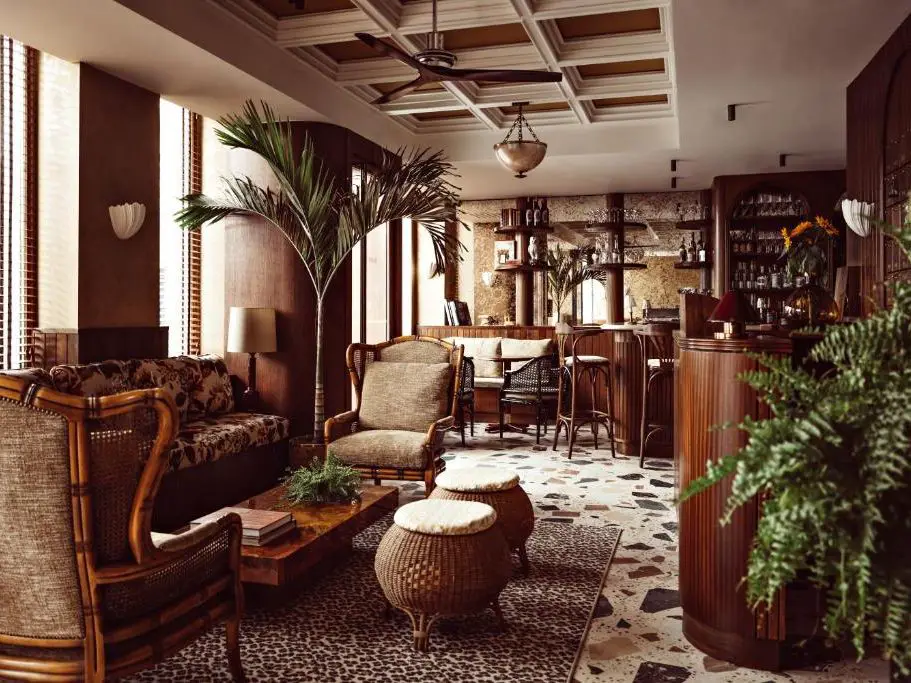
| 9. Hôtel Monsieur Aristide Best Courtyard Garden Rating: ⭐⭐⭐⭐ Location: 4-minute walk to Moulin Rouge; 2-minute walk to Abbesses Metro; Rue Aristide Bruant, lower Montmartre Guest Reviews: Flea-market furnished rooms around a secret courtyard garden, vintage Wurlitzer jukebox in the bar, live music Saturday evenings, raclette dinner on the heated winter terrace Best Room: Junior Suite Price: From USD $275 – $550 per night |

| 10. Grand Pigalle Experimental Most Design-Forward Stay Rating: ⭐⭐⭐⭐ Location: 2-minute walk to Pigalle Metro; Boulevard de Clichy, foot of Montmartre Guest Reviews: Frenchie Pigalle restaurant on-site, marble-tiled bathrooms, small private balconies on upper floors, design-led rooms with art nouveau detailing throughout Best Room: Classic Room with Balcony Price: From USD $345 – $600 per night |
Is Montmartre Actually a Good Base?
The honest answer is: it depends on what kind of trip you’re taking, and the answer is different from what most travel content suggests.
Montmartre is one of the most atmospheric places to stay in Paris. The cobblestone streets, the village pace, the views from the top of the hill, the neighbourhood restaurants that haven’t been remade for tourists — staying here feels genuinely different from staying near the Louvre or the Eiffel Tower. If the experience of Paris matters as much as the logistics of Paris, Montmartre delivers that in a way that few other neighbourhoods can.
The trade-off is real, though. Montmartre sits in the north of the city, in the 18th arrondissement, and it is not within walking distance of most of the main sights. The Louvre is about 4km away. The Musée d’Orsay is around 5km. Notre-Dame is similar. You will be using the metro every day, and the hill means that getting to and from your hotel involves climbing stairs or streets that feel steeper than they look on a map.
Who it suits well:
- Repeat visitors who have already done the circuit of major sights and want to slow down and live in a neighbourhood rather than tick boxes.
- Couples looking for an atmospheric, romantic base where the hotel experience and the surrounding streets are part of the trip.
- Longer stays of five nights or more, where the daily commute to other parts of the city is absorbed by the overall pace of the trip.
- Anyone staying in a hotel on this page — these are properties with genuine character, and the neighbourhood is part of what you’re paying for.
Who should think carefully:
- First-time visitors with five days or fewer who want to cover maximum ground. The metro is fast and reliable, but the daily overhead adds up on a short trip.
- Travellers with mobility concerns — the hill is real, and many of the streets around Sacré-Coeur involve significant stair climbing. The funicular helps, but it doesn’t solve the whole problem.
The price point is worth noting too. Montmartre hotels are generally cheaper than equivalent properties near the 1st, 6th, or 7th arrondissement — sometimes meaningfully so. For the hotels on this page, you’re paying for boutique quality, not a central postcode premium.
Top of the Hill vs. Bottom: How Where You Sleep Changes the Stay
Montmartre is not one neighbourhood in terms of feel — it’s two, stacked on top of each other, and which part you stay in shapes the experience considerably.
- Upper Montmartre — the hilltop area around Sacré-Coeur, Place du Tertre, Rue Norvins, Avenue Junot and Rue Lepic above the bend — is quieter, more residential above the tourist line, and has the strongest village feel. Streets here are cobbled and steep. The crowds around Place du Tertre and Sacré-Coeur are intense during the day but thin out considerably in the evening. Hôtel Particulier Montmartre sits in this zone, hidden behind a gate on Avenue Junot. It’s the most secluded address on this page. Hôtel Littéraire Marcel Aymé and Hôtel des Arts Montmartre are both on Rue Tholozé, a quiet mid-hill street that feels like the Montmartre of old films.
- Lower Montmartre and the Pigalle border — the streets around Boulevard de Clichy, Blanche Metro, Moulin Rouge, Rue des Abbesses and Place Pigalle — is louder, better connected, and livelier at night. The Moulin Rouge sits at the foot of the hill on Rue Lepic, and the streets immediately around it draw evening crowds. Maison Souquet, Manolita Paris, Le Relais Montmartre and Grand Pigalle Experimental are all in this zone. The metro is two minutes away, which makes getting around easy, but soundproofed rooms matter more here.
- Mid-hill — the band of streets around Place des Abbesses, Rue Constance, Rue d’Orsel and Rue Joseph de Maistre — splits the difference. Mom’Art Hotel, Terrass” Hotel and Hôtel Monsieur Aristide sit in this zone. You’re close enough to the hill to walk up to Sacré-Coeur in fifteen minutes, close enough to the base for metro access, and on streets that are active but not chaotic.
The practical difference at night is noticeable. Hotels higher on the hill and on quiet side streets are genuinely peaceful after 10pm. Hotels on or near Boulevard de Clichy and the Moulin Rouge strip have street noise until late, especially on weekends. Soundproofed windows — which most hotels here have — help significantly, but a courtyard-facing room is worth requesting wherever it’s available.
Getting Around from Montmartre
Two metro lines serve the area and between them cover most of Paris without a change.
- Line 2 runs east-west across the top of the city, stopping at Blanche (for Moulin Rouge and lower Montmartre hotels), Pigalle, and Anvers (closest to Sacré-Coeur). From Blanche, it’s a direct 10-minute ride to Charles de Gaulle-Étoile for the Arc de Triomphe and Champs-Élysées, and about 15 minutes to Nation in the opposite direction.
- Line 12 runs north-south and is the more useful line for getting into the centre. Abbesses (the deepest metro station in Paris, with a working lift) and Pigalle are both on Line 12. From Abbesses, it’s about 10 minutes to Saint-Lazare, 15 minutes to Madeleine, and 20 minutes to Montparnasse. Line 12 also connects to Opéra, useful for the Grands Magasins department stores.
- Lamarck-Caulaincourt on Line 12 is the quietest and least touristy entry point to upper Montmartre, depositing you on the north side of the hill near Hôtel Particulier Montmartre and the Musée de Montmartre. It’s the station locals use.
For navigating the hill itself, the Montmartrobus is a small dedicated bus route that loops through the neighbourhood from Rue des Martyrs near Pigalle, up through Abbesses, Rue Lepic, Place du Tertre and around to Lamarck-Caulaincourt. It runs on a normal metro ticket and is the most practical way to move around the hilltop without climbing. The funicular runs from Square Louise Michel at the base of the stairs up to Sacré-Coeur and also accepts a standard metro ticket — open daily from 6am to 12.45am.
Useful travel times from Blanche or Abbesses Metro by metro:
- Louvre: around 20 minutes (change at Opéra or Saint-Lazare)
- Musée d’Orsay: around 25 minutes (change at Saint-Lazare for Line 14 or Opéra for RER)
- Eiffel Tower area: around 30 minutes (change at Charles de Gaulle-Étoile for Line 6)
- Notre-Dame: around 25 minutes (change at Pigalle for Line 12 to Cité, or Anvers for bus)
- Gare du Nord (Eurostar): about 15 minutes on Line 12 from Abbesses via change, or 20 minutes by bus
How to Choose the Right Hotel for Your Stay
- For the most atmospheric luxury stay on the hill — Hôtel Particulier Montmartre is the only hotel on this page that genuinely feels removed from Paris. Five artist-designed suites, a secret garden, a speakeasy bar and no signage on the door. Expensive and occasionally inconsistent in service, but nothing else in Montmartre comes close for pure character.
- For five-star luxury with a spa — Maison Souquet is the choice. The celestial pool and hammam beneath a gold-leaf ceiling is private to one guest at a time, and the Belle Époque interiors are among the most theatrical in Paris. Two minutes from Blanche Metro, so the location is practical despite the price.
- For the best views on the list — Terrass” Hotel has the most accessible Eiffel Tower views in Montmartre, with a rooftop bar and restaurant open to all guests. Upper-floor rooms with balconies are bookable in advance and worth the premium.
- For a small luxury boutique without the palatial price — Manolita Paris delivers five-star touches (Frette sheets, Japanese toilets, balcony rooftop views) at a price point below Maison Souquet, in a genuinely intimate 10-room property a minute from Blanche Metro.
- For the best value on a 4-star budget — Hôtel des Arts Montmartre and Hôtel Littéraire Marcel Aymé are both on Rue Tholozé, within steps of each other, and both consistently overdeliver for their price. Hôtel des Arts has the higher score and is the better choice for couples. Hôtel Littéraire Marcel Aymé suits anyone who wants a literary, quietly eccentric stay with the option of self-catering in the studio apartments.
- For character and courtyard atmosphere — Hôtel Monsieur Aristide and its flea-market furnished rooms around a cobblestone garden is the most distinctive mid-range option. The bar and live music on weekends make the hotel itself worth spending an evening in.
- For design-forward style near excellent restaurants — Grand Pigalle Experimental is the most fashion-forward property on the list, with Frenchie Pigalle on-site and the South Pigalle dining scene directly on the doorstep.
What to Do Within Walking Distance
Montmartre rewards slow walking more than almost anywhere in Paris. The streets below the tourist line are full of bakeries, wine bars and food shops that operate for the neighbourhood rather than for visitors, and the difference between those streets and Place du Tertre is stark.
- Sacré-Coeur Basilica — Entry is free and the interior is genuinely worth visiting, though the steps and esplanade in front are where the crowds and scammers concentrate. The best time to go is early morning on a weekday, before 8.30am, when the steps are largely empty and the view across Paris is clear. The dome can be climbed separately for a fee and offers better views than the esplanade.
- Place du Tertre — The old village square, permanently occupied by portrait painters and surrounded by cafés. It is very touristy and the surrounding restaurants charge for the location rather than the food. Visit for the atmosphere and the art, buy a coffee one street back on Rue Norvins, and avoid eating on the square itself.
- Rue Lepic — The most characterful street on the hill, winding down from Place du Tertre to Moulin Rouge with a curve halfway that frames Sacré-Coeur behind you. The section between Rue des Abbesses and the curve has a small daily market with a fromagerie, a chocolatier, a fishmonger and several food producers. Café des Deux Moulins — known from the film Amélie — is on Rue Lepic at the Rue des Abbesses end.
- Musée de Montmartre — Housed in the 17th-century building where Renoir once worked, the museum traces the neighbourhood’s artistic history through paintings, photographs and archives. The Renoir Gardens behind the building overlook the Clos Montmartre vineyard below. Allow an hour to an hour and a half. Admission is around €15.
- Clos Montmartre — One of only five working vineyards within Paris, tucked between Rue des Saules and Rue Saint-Vincent. The annual harvest festival in October draws a crowd. The Au Lapin Agile cabaret, one of Paris’s oldest, sits directly opposite.
- Wall of Love (Le Mur des Je t’aime) — A large mural in Square Jehan Rictus at Place des Abbesses, with “I love you” written in over 300 languages. It’s a five-minute walk from most hotels in the lower half of the neighbourhood.
- Place Dalida — A small square at the bottom of Rue de l’Abreuvoir honouring the singer Dalida, who lived in Montmartre for 20 years. Rue de l’Abreuvoir itself is consistently cited as one of the most beautiful streets in Paris, lined with ivy-covered facades and completely free of tourist infrastructure.
When to Book and What to Expect by Season
- January and February bring the lowest prices of the year, sometimes 30-40% below peak. Sacré-Coeur and the hilltop streets are quiet. The neighbourhood restaurants and cafés are fully open and the absence of the summer crowds makes the village feel more authentic. Cold and occasionally grey, but manageable.
- March to May is the best window for a first visit. Prices are rising but haven’t peaked, the Clos Montmartre vineyard is coming into leaf, and the outdoor terraces along Rue des Abbesses fill up with locals.
- June to August is peak season. Sacré-Coeur draws enormous crowds from mid-morning, Place du Tertre becomes difficult to enjoy between 11am and 6pm, and hotel prices are at their highest. The boutique hotels on this page — several with under 25 rooms — book out weeks in advance. If you’re visiting in summer, three months’ notice is not excessive for properties like Hôtel Particulier Montmartre, Manolita Paris or Mom’Art Hotel.
- September and October is the most balanced time to visit. Prices are still near peak but the crowds thin noticeably from mid-September. The Fête des Vendanges de Montmartre — the annual grape harvest festival at Clos Montmartre — takes place in October and draws locals and visitors together in a way the neighbourhood rarely sees during summer.
- November to mid-December offers good prices, quiet streets and a different atmosphere — Christmas lights appear on Rue Lepic and Rue des Abbesses from late November, and the neighbourhood has a local rather than tourist feel that’s harder to find at other times of year.
Practical Things to Know Before You Stay
- The hill is real. Walking from Blanche Metro to Sacré-Coeur involves either climbing the 222 steps from Square Louise Michel or taking the funicular. The streets around the upper village are cobbled and steep. Most of the hotels on this page are at the base or mid-hill, which makes daily life easier, but factor in the terrain if you have mobility concerns. The Montmartrobus covers most of the hill on a standard metro ticket and saves a significant amount of leg work.
- Noise varies dramatically by street. Hotels on or near Boulevard de Clichy, Rue de Clichy and the streets around Moulin Rouge have significant foot traffic and bar noise until late, particularly on Friday and Saturday nights. Hotels on quiet side streets — Rue Constance, Rue Tholozé, Rue Aristide Bruant, Avenue Junot — are noticeably calmer. All the hotels on this page have soundproofed windows, but a courtyard-facing room is worth requesting if you’re a light sleeper.
- Petty theft is the main concern, not violent crime. The area around the Sacré-Coeur steps and Place du Tertre concentrates pickpockets, particularly in tourist season. Keep bags zipped and worn across the body in those areas. The string bracelet scam — where someone ties a bracelet around your wrist and demands payment — operates near the Sacré-Coeur esplanade. A firm “non merci” without stopping is all that’s needed.
- Eating on Place du Tertre is expensive for what it is. The cafés and restaurants on the square charge for the location. One street away on Rue Norvins, Rue des Abbesses or down Rue Lepic, the quality improves and the prices drop. Ask hotel staff for specific recommendations — all the hotels on this page are run by people who know the neighbourhood well.
- The Abbesses Metro station has a lift. At 36 metres below street level it was historically the deepest in the Paris system, and the stairs are a serious climb with luggage. The lift operates during normal metro hours. The Blanche station on Line 2 is at street level and much easier to manage with bags.
Frequently Asked Questions
1. Is Montmartre a good place to stay for a first trip to Paris?
It works well for longer first trips of seven days or more, where you have time to absorb the neighbourhood and still reach the main sights by metro. For shorter trips of three to four days where covering maximum ground matters, a more central base in the 1st, 4th or 6th arrondissement gives you more flexibility on foot. Montmartre rewards visitors who want an experience of Paris as much as a list of sights.
2. How long does it take to get from Montmartre to the Eiffel Tower?
Around 30 minutes by metro, changing at Charles de Gaulle-Étoile onto Line 6. The journey involves one change and a short walk from the station. By taxi or rideshare it’s typically 15-20 minutes outside peak traffic hours.
3. Is it safe to walk around Montmartre at night?
The hilltop village streets and the residential areas around Lamarck-Caulaincourt and Rue Lepic are calm and safe at night. The area around Moulin Rouge and Boulevard de Clichy is livelier and worth staying alert to your surroundings, but violent crime is rare. The main risk anywhere in Montmartre is petty theft in crowded tourist spots, which is a daytime rather than evening concern.
4. What is the Montmartrobus and do I need it?
It’s a small dedicated bus route that loops through the Montmartre neighbourhood, from near Pigalle up through Place des Abbesses, Rue Lepic, Place du Tertre and around to Lamarck-Caulaincourt. It runs on a standard metro ticket or Navigo pass. It’s particularly useful for getting up and down the hill without climbing, and for moving between the lower neighbourhood and the hilltop without walking the full elevation.
5. Do all Montmartre hotels have lifts?
Most do, but confirm before booking if this matters to you, particularly for older buildings. Several hotels on this page are housed in 19th-century structures where lifts were retrofitted, and some do not serve every floor. Hôtel des Arts Montmartre for example has a lift serving all floors except the sixth, which is worth knowing if you’re booking a top-floor room for the views.
6. Is Pigalle the same as Montmartre?
They overlap at the base of the hill. Pigalle is the neighbourhood immediately south of Montmartre along Boulevard de Clichy and Boulevard Marguerite de Rochechouart, historically associated with the red-light district and cabarets. That reputation has softened significantly — South Pigalle (SoPi) is now one of the most popular dining and bar areas in Paris. Several hotels on this page, including Grand Pigalle Experimental and Maison Souquet, sit technically in the 9th arrondissement but are considered part of the Montmartre hotel scene given their proximity and character.
7. When does Sacré-Coeur open, and is there a fee to enter?
The basilica itself is free to enter and open daily from 6am to 10.30pm. The dome can be climbed separately for a fee and offers panoramic views that are arguably better than from the esplanade. The crypt also requires a separate ticket. Timed entry has been introduced for the dome during peak season — check before you go. The exterior esplanade and steps are accessible at any hour.
8. Which metro line is most useful for getting into central Paris from Montmartre?
Line 12 from Abbesses or Pigalle is the most versatile for reaching central Paris — it connects to Saint-Lazare, Madeleine, Concorde and Montparnasse without a change. Line 2 from Blanche is faster for reaching the Champs-Élysées direction. For the Louvre and Marais, a change is required on either line, but the total journey is rarely more than 20-25 minutes.