
Sargassum has rewritten the rules for booking a Cancun resort. The same stretch of Mexican Caribbean coastline that buried some hotels in brown seaweed last summer left others with water so clear you could see the sand fifteen feet down — and the difference usually comes down to which direction the beach faces, not which brand name is on the sign. The resorts on this list sit on the sheltered northwest-facing coast of Playa Mujeres and Costa Mujeres, where the geography does most of the heavy lifting, plus two Hotel Zone properties that sit on Cancun’s cleanest stretch of sand. No beach on the Mexican Caribbean comes with a lifetime guarantee, but these are the ones where your chances are best.
Table of Contents
Cancun Resorts
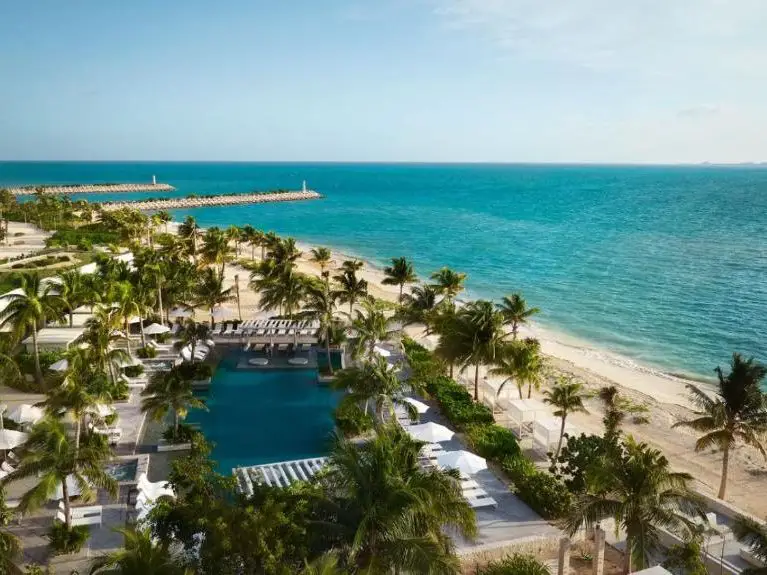
| 1. SLS Playa Mujeres Best for Nightlife & Entertainment Rating: ⭐⭐⭐⭐⭐ Location: 40-minute drive from Cancun Airport, inside the gated Playa Mujeres community Guest Reviews: Modern design, standout dining across 18 restaurants, attentive beach staff, lively adults-only pool Best Room: Captivate Swim-Out King Price: From USD $320 – $635 per night |
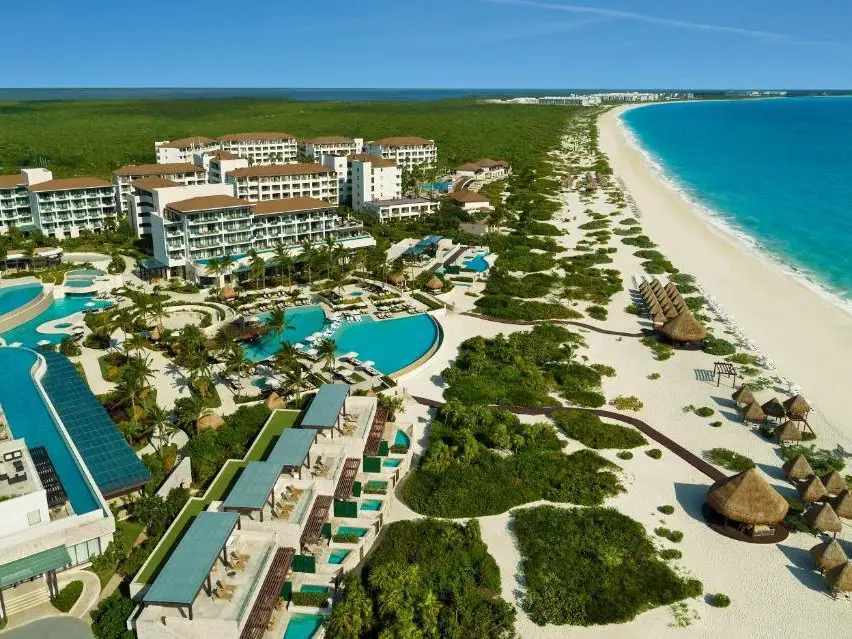
| 2. Dreams Playa Mujeres Golf & Spa Resort Best for Families Rating: ⭐⭐⭐⭐ Location: 4-minute drive to Mujeres Beach, inside the Playa Mujeres gated community, 46-minute drive from Cancun Airport Guest Reviews: Heated pools, attentive beach bar staff, water park for all ages, clean resort grounds Best Room: Preferred Club Junior Suite Ocean View – King Bed Price: From USD $410 – $630 per night |
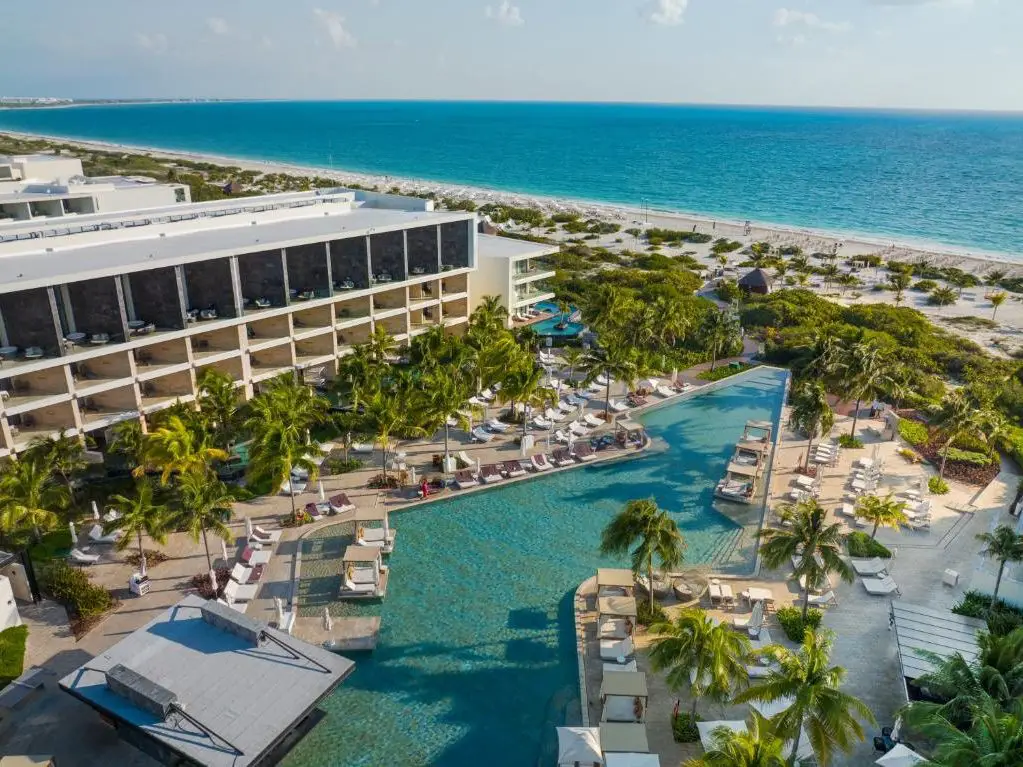
| 3. TRS Coral Hotel Best Butler Service Rating: ⭐⭐⭐⭐⭐ Location: 4-minute drive to Mujeres Beach, Costa Mujeres, 42-minute drive from Cancun Airport Guest Reviews: Pristine white sand beach, excellent à la carte dining, butler service, Rafa Nadal Tennis Center access Best Room: Loft Suite Beachside Ocean View Price: From USD $535 – $760 per night |
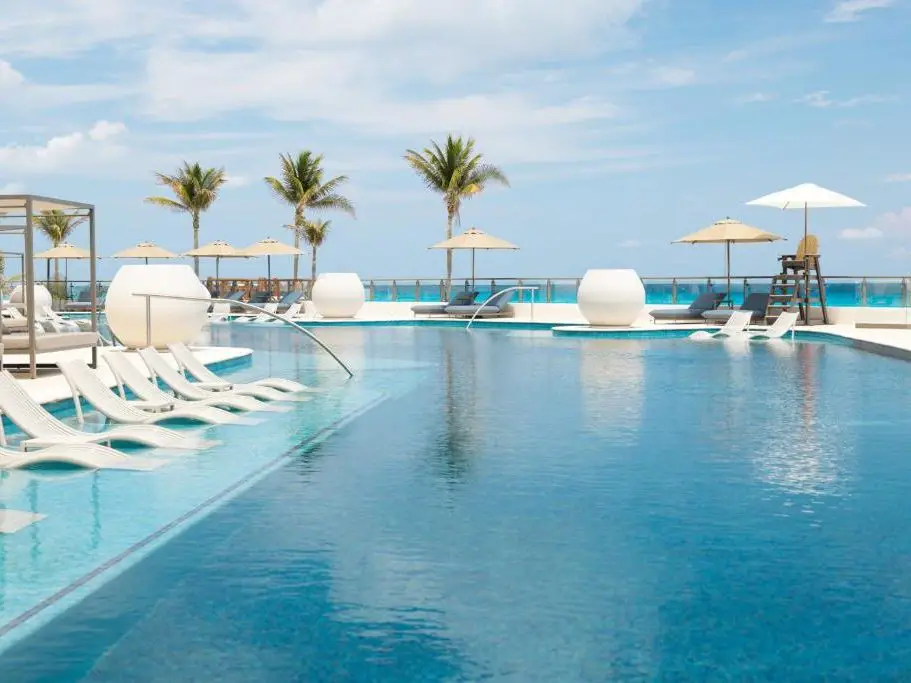
| 4. Hyatt Zilara Cancun Best Beach Renovation Rating: ⭐⭐⭐⭐⭐ Location: KM 11.5, Cancun Hotel Zone, on the widest stretch of Hotel Zone beach, 19-minute drive from Cancun Airport Guest Reviews: Fully renovated suites, widest Hotel Zone beach, consistent sargassum cleanup, private cooking sessions, twice-daily housekeeping Best Room: Ocean View Junior Suite King Price: From USD $430 – $645 per night |
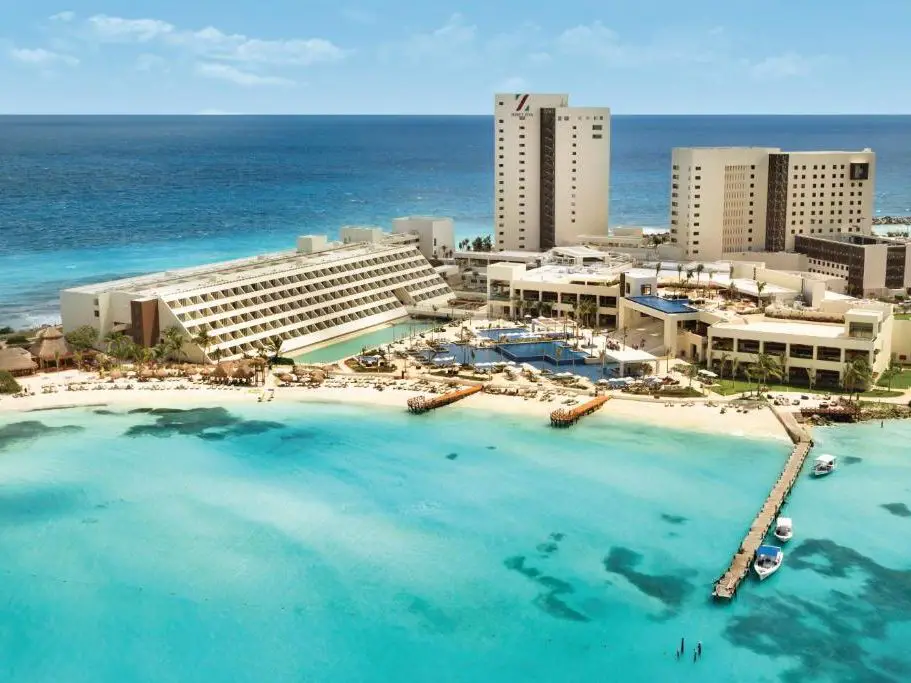
| 5. Hyatt Ziva Cancun Best for Couples and Families Rating: ⭐⭐⭐⭐⭐ Location: Punta Cancun, KM 11.5 Hotel Zone, ocean on three sides, 17-minute drive from Cancun Airport Guest Reviews: On-site microbrewery, three infinity pools, dedicated sargassum cleanup crew, nine dining venues including Lorenzon’s Italian restaurant Best Room: Turquoize Ocean Front Master King Price: From USD $385 – $635 per night |
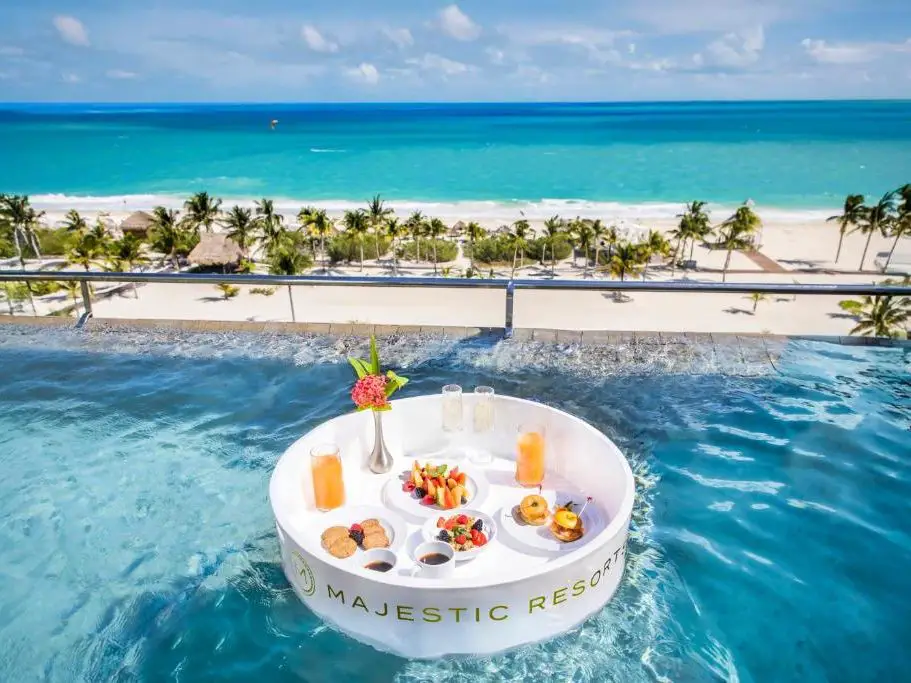
| 6. Majestic Elegance Costa Mujeres Rating: ⭐⭐⭐⭐⭐ Location: Costa Mujeres, 6-minute drive to Mujeres Beach, 44-minute drive from Cancun Airport Guest Reviews: Wide powdery beach with consistent morning cleanup, 12 pools including exclusive Elegance Club pools, strong butler service in adults-only section, well-organised restaurant reservations across 7 venues Best Room: Elegance Club Jr Suite Ocean Front Outdoor Jacuzzi Price: From USD $305 – $660 per night |
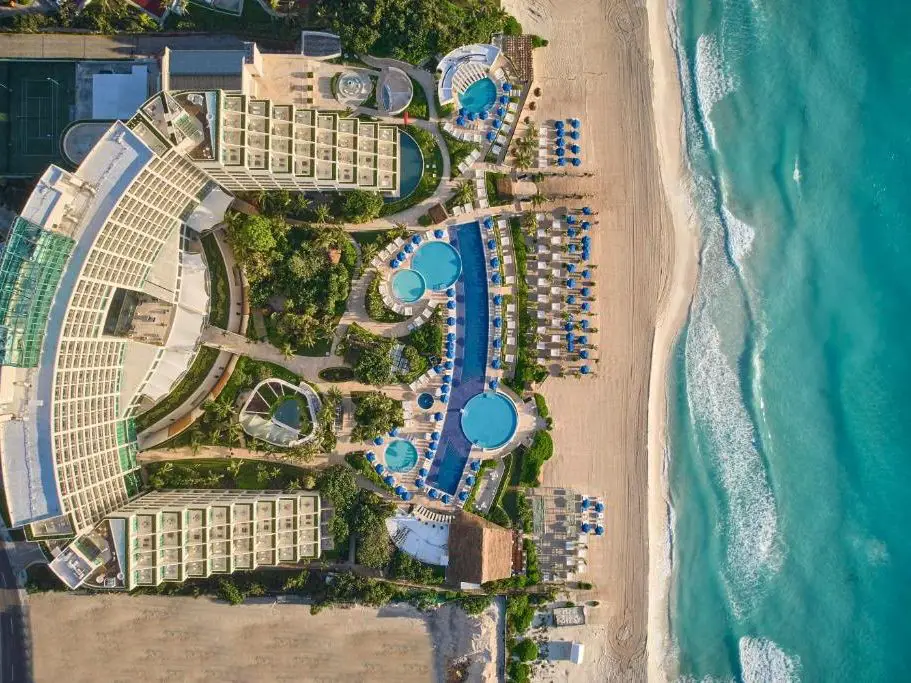
| 7. Live Aqua Cancun Best Dining Rating: ⭐⭐⭐⭐⭐ Location: KM 12.5, Cancun Hotel Zone, directly opposite La Isla Shopping Mall, 27-minute drive from Cancun Airport Guest Reviews: Best buffet in the Hotel Zone, WhatsApp butler service, weekly fire show on the beach, virtually no sargassum with daily cleanup Best Room: Suite, 1 King Bed, Jetted Tub, Oceanfront (Aqua) Price: From USD $350 – $560 per night |
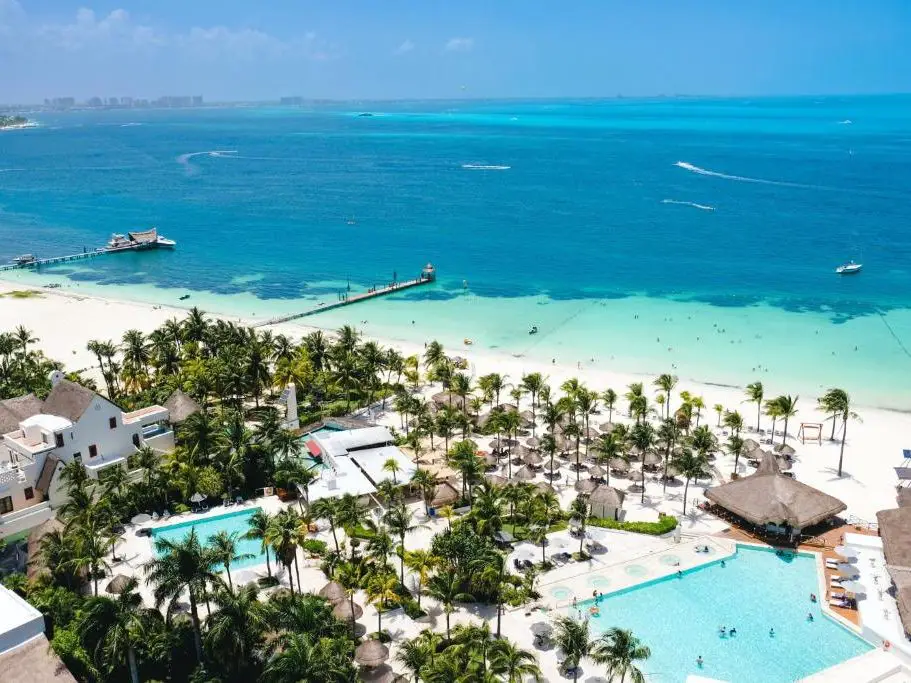
| 8. Presidente InterContinental Cancun Resort by IHG Best Value Rating: ⭐⭐⭐⭐⭐ Location: KM 7.5, Cancun Hotel Zone, Playa Gaviota Azul — the cleanest stretch of the Hotel Zone, 20-minute drive from Cancun Airport Guest Reviews: No sargassum unlike nearby hotels, immaculate beach maintained daily, five dining venues including Caribbean-view Le Cap, Ikal Spa Best Room: Club Room, 1 King Bed, Terrace, Ocean View Price: From USD $230 – $430 per night (room only, dining not included) |
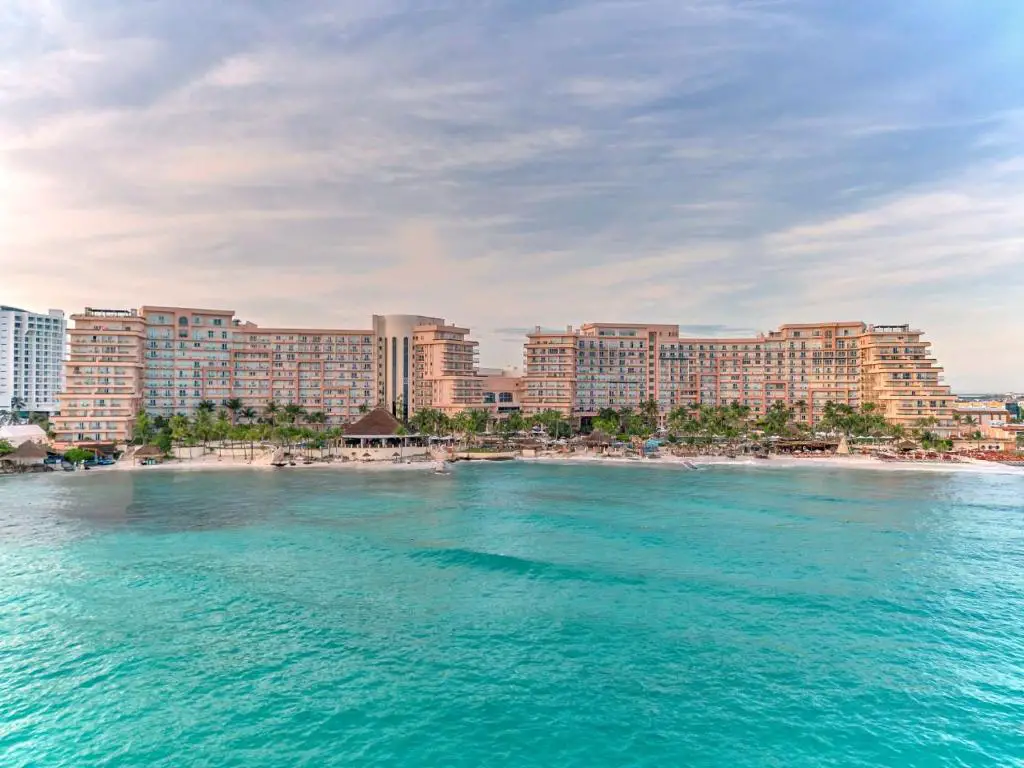
| 9. Grand Fiesta Americana Coral Beach Cancun Best Spa Rating: ⭐⭐⭐⭐⭐ Location: KM 9.5, Cancun Hotel Zone, steps from the Isla Mujeres ferry, 22-minute drive from Cancun Airport Guest Reviews: No seaweed with kids swimming freely in the ocean, 40,000 sq ft Gem Spa with 10-step hydrotherapy circuit, lagoon-style pool with three swim-up bars, fire show on the beach Best Room: Ocean Front Suite Double (2 Queen) Price: From USD $480 – $725 per night |
Why the Beach You Choose Matters More Than the Resort Brand
The most common mistake Cancún holidaymakers make is spending hours comparing resort brands, pools, and dining programmes before settling on a beach. The beach should come first, because the same week that leaves one stretch of Cancún coastline buried in brown sargassum can leave another beach five minutes away completely clear — and the difference has nothing to do with how much you paid or which chain you booked.
The explanation is geography, and it is consistent year after year.
- The Hotel Zone is shaped like the number 7. The horizontal top section of that 7 — roughly KM 1 to KM 11 — faces the Bahía de Mujeres, a sheltered bay sitting between the mainland and Isla Mujeres. Sargassum arrives from the Atlantic, pushed by currents moving from east to west and southeast to northwest. The bay-facing northern section sits largely out of that flow. The long vertical section of the 7 — KM 12 southward — faces directly into the open Caribbean and catches the full force of those currents during peak season.
- Playa Mujeres and Costa Mujeres sit even further north. About 30 minutes north of the Hotel Zone, this gated resort enclave hugs the southern tip of the Isla Blanca peninsula. Its beaches face northwest across the Bahía de Mujeres rather than directly into the Caribbean. The result is the most consistently clean water on the entire mainland coast near Cancún, even during seasons when the Hotel Zone is dealing with daily arrivals.
- Isla Mujeres acts as a physical shield. The island sits directly offshore from both Playa Mujeres and the northern Hotel Zone, intercepting a significant portion of incoming sargassum before it reaches the mainland. This is why forum regulars reliably report cleaner conditions in this zone — it is not anecdotal, it is oceanography.
- Resort cleanup operations are not equal. Even within the same beach zone, how aggressively a property deploys offshore barrier booms, how early crews hit the water, and how consistently they work through the day creates real differences between neighbouring hotels. The resorts on this list were chosen partly because their guests consistently report active, effective cleanup — not just marketing language about it.
- South-facing and east-facing beaches carry the most risk. Properties south of KM 12, particularly in the Riviera Maya from Puerto Morelos downward, face the open Atlantic coast and historically see the heaviest and most persistent sargassum accumulation. During 2026 — which broke previous records with over 105,000 metric tonnes cleared across Quintana Roo by late August — the difference between north and south has been particularly stark.
Booking north of KM 9 in the Hotel Zone, or choosing a property in Playa Mujeres or Costa Mujeres, does more to protect your beach days than any combination of five-star ratings, pool design, or all-inclusive tier. Every hotel on this list was selected on that basis first — beach zone and cleanup track record — before anything else was considered.
Playa Mujeres and Costa Mujeres: The Lowest-Risk Zone
About 13 miles north of the Hotel Zone — roughly 25 minutes by taxi — the Playa Mujeres and Costa Mujeres resort enclave occupies a gated peninsula facing northwest across the Bahía de Mujeres. This orientation is the critical detail. Sargassum travels on Atlantic currents from east to west and southeast to northwest. A northwest-facing beach sits largely out of that direct flow, and with Isla Mujeres sitting offshore as a physical intercept, the zone consistently records lighter sargassum arrivals than anywhere on the mainland coast near Cancún. Howisthesargassum.com, which pulls hourly satellite data from the University of South Florida’s Optical Oceanography Lab, confirms that all major Playa Mujeres resorts maintain dedicated cleanup crews who work each morning before guests are on the beach, and that even on heavier days the swimming areas are typically clear by 9 AM. Four of the hotels on this list are in this zone.
- SLS Playa Mujeres — The most design-forward of the four, and the only property in the zone with a private marina and an adults-only pool tier that runs separately from the family sections. The 400-metre beach sits inside the gated Playa Mujeres community and faces the bay rather than the open Caribbean. Guests consistently report clear water and describe the beach as uncrowded by Hotel Zone standards. The resort also runs the Liora kosher dining programme, the only certified kosher option in the Playa Mujeres zone.
- Dreams Playa Mujeres Golf & Spa Resort — The family-focused option on this list, with three levels of pools spanning more than 65,000 square feet, two infinity pools overlooking the bay, a water park, and a lazy river. Reviews specifically mention minimal sargassum and active daily beach cleaning. Access to the adjacent Secrets Playa Mujeres restaurants is included for Preferred Club guests, effectively doubling the dining options without leaving the zone.
- TRS Coral Hotel — Adults-only, with butler service assigned to every suite. Positioned at the northern end of Costa Mujeres, directly on a stretch of beach that multiple guests describe as pristine, with tractors clearing sargassum before breakfast each morning. Seven à la carte restaurants and a dedicated Rafa Nadal Tennis Center with eight courts set it apart from other adults-only options in the zone.
- Majestic Elegance Costa Mujeres — The largest hotel in the zone at 570 rooms, divided between a family section and an adults-only Elegance Club. The beach here is notably wide and flat — multiple reviewers describe it as the most spacious beach in the Costa Mujeres cluster. Several specifically mention that Isla Mujeres blocks incoming sargassum in this area, and one reviewer noted clear, turquoise water even while Cancún and Playa del Carmen were dealing with heavy arrivals during peak season.
One honest note for this zone: it is gated and secluded. There are no walkable restaurants, bars, or shops outside the resort grounds, and taxis to and from the Hotel Zone cost around $30–$40 USD each way. If you want to leave the resort frequently, build that cost into your budget or book a Hotel Zone property instead.
The Hotel Zone Hotels That Beat the Sargassum Odds
The Cancún Hotel Zone runs 25 kilometres and the beach conditions are not consistent from one end to the other. The northern section — roughly KM 1 through KM 11 — faces the Bahía de Mujeres and consistently records lower sargassum levels than the southern section, which faces the open Caribbean and catches the full force of Atlantic arrivals. The bend of the “7” around KM 9 to KM 12.5, where the coast transitions between bay-facing and ocean-facing, is the single most strategically positioned stretch in the entire Hotel Zone. Howisthesargassum.com specifically identifies Playa Gaviota Azul at this bend as “probably the single best stretch of the entire Hotel Zone” during 2026’s sargassum season. Five of the hotels on this list sit in this northern arc.
- Hyatt Zilara Cancun — Reopened in May 2026 after a full top-to-bottom renovation, sitting at KM 11.5 on what is widely described as the widest stretch of beach in the entire Hotel Zone. Adults-only, all-suite, all ocean-facing. Post-renovation guest reviews from June and July 2026 confirm active daily sargassum cleanup and describe the beach as well-maintained throughout. The property also added a reservation-only speakeasy bar as part of the redesign.
- Hyatt Ziva Cancun — Family-friendly companion to the Zilara, sitting on the Punta Cancun peninsula at KM 11.5 with Caribbean water on three sides. Three infinity pools, a dedicated adults-only Turquoize tower for guests who want that experience within a family resort, nine restaurants including a teppanyaki concept and a rooftop infinity pool for Turquoize guests. The microbrewery producing Mexican craft beer on-site is a specific differentiator no other Hotel Zone property can match.
- Live Aqua Cancun — Adults-only, at KM 12.5 on Playa Gaviota Azul, consistently described by guests as having the best beach in the Hotel Zone. Multiple TripAdvisor reviews specifically use the phrase “virtually no sargassum” even during peak season months. The property sits directly across from La Isla Shopping Centre, making it the most walkable hotel on this list for guests who want to leave the resort. Known for its aromatherapy-scented public spaces, complimentary daily foot massages in beachfront cabanas, and WhatsApp butler service for Aqua Club guests.
- Presidente InterContinental Cancun Resort by IHG — Positioned at KM 7.5 on Playa Gaviota Azul, one of the most frequently cited clean-water stretches in guest reviews from every year including 2026’s record season. One guest review from the resort’s own website states “no sargassum, unlike the beaches at some nearby hotels.” Howisthesargassum.com names this property as the Hotel Zone standout for sargassum avoidance. Worth noting: this is the only hotel on this list that is not all-inclusive. Meals and drinks are charged separately, making the room rate substantially lower than comparable properties — a meaningful trade-off depending on your travel style.
- Grand Fiesta Americana Coral Beach Cancun — The coral-pink landmark at KM 9.5 that has anchored the northern Hotel Zone for decades. Every one of its 602 suites faces the ocean. The 40,000-square-foot Gem Spa holds a Forbes Travel Guide four-star rating, one of only two in all of Cancún. A guest review on the resort’s own website specifically mentions “no seaweed and our kids could play in the ocean” as a highlight of the stay. The Infinite Club tier includes included access to the Gem Spa’s 10-step hydrotherapy circuit, a wave runner rental, and a four-hour babysitting session — practical perks that go beyond the usual lounge access.
When to Book: Sargassum Season and the Honest Trade-offs
No single piece of planning information matters more than when you go. Getting the zone right helps considerably, but the calendar is the foundation.
- November through March is the safest window. These are the months when sargassum levels across the entire Mexican Caribbean are at their lowest. December and January are historically the most reliable. Beaches that battle daily cleanup from June through August will typically be clear, calm, and photogenic during this window. The trade-off is straightforward: this coincides with peak tourist season, when prices are highest and resorts book up well in advance, particularly for the Christmas and New Year stretch.
- April and May are shoulder months with growing risk. April used to be considered solidly safe. In 2026, early arrivals were recorded as far back as January and March — months ahead of the historical pattern — driven by a seed population from 2025’s bloom that never fully dissipated and by Atlantic nutrient levels the University of South Florida’s Optical Oceanography Lab flagged as above the 75th percentile of the past 15 years. April and early May remain lower-risk than summer, but 2026 has made clear that even shoulder months require a live check before you arrive.
- June, July, and August are peak sargassum season. These are the months when the Atlantic bloom reaches the Mexican Caribbean at full force, and when the difference between a north-facing and south-facing beach is most dramatic. During this window, the hotels in this guide — positioned in Playa Mujeres, Costa Mujeres, and the northern Hotel Zone — offer the best available odds of a clear beach on any given morning. Howisthesargassum.com tracked July 2026 as a particularly severe month, with at least three separate offshore sargassum masses arriving in waves. Even the cleanest zones in this guide saw some accumulation in July; the difference is that morning crews cleared it before most guests were out of bed.
- September and October bring gradual improvement. Conditions on all beaches typically ease from late August through October as the Atlantic bloom begins to dissipate. By November, most Hotel Zone and Playa Mujeres beaches are back to their cleaner baseline. September and October are the cheapest months to visit Cancún — significantly lower rates, lighter crowds, and improving beach conditions make this an underrated window for cost-conscious travellers who have flexibility.
- January after New Year’s is the single best value window. Prices drop noticeably once the holiday rush ends, beaches are at their clearest, and the dry season guarantees warm, sunny weather. If your dates are flexible and you have not booked yet, this is the combination most likely to deliver the trip the photos promise.
What to Do When the Beach Has a Bad Day
Even at the best-positioned resorts on the worst days of a record sargassum year, conditions can shift overnight. Every hotel on this list has multiple pools, bars, and restaurants that operate regardless of what is happening on the sand. But if you want clear water and the resort beach is not cooperating, these are the specific alternatives that work.
- Isla Mujeres, Playa Norte — The single most reliably sargassum-clear beach within easy reach of Cancún. Playa Norte faces north and west across the Bahía de Mujeres, in the opposite direction from the Atlantic sargassum currents. Even during the worst mainland conditions in 2026, brief accumulation events cleared within hours. The public ferry from Puerto Juárez, just north of the Hotel Zone, runs every 30 minutes and costs around $10 USD round trip, with a 20-minute crossing. The beach itself is shallow, calm, and genuinely one of the most beautiful in the Caribbean. Rent a golf cart on arrival to explore the island’s colourful downtown, eat fish tacos at one of the beachfront spots, and take the evening ferry back. It is a full day that costs next to nothing.
- Cenotes — Freshwater sinkholes fed by underground aquifers with zero connection to ocean currents. Sargassum cannot reach them under any conditions, making them 100% reliable regardless of what the coast is doing. Gran Cenote and Cenote Dos Ojos near Tulum offer the best combination of accessibility, clear water, and underwater formations. Guided tours depart daily from Cancún hotels and typically include transport, a guide, snorkelling gear, and multiple cenote stops. Book ahead during peak season as capacity is limited.
- Cozumel’s west coast — The island sits 12 miles offshore and its western beaches face the mainland rather than the open Atlantic. Even during heavy sargassum seasons, Cozumel’s west side stays significantly cleaner than mainland Cancún beaches. The ferry from Playa del Carmen takes 45 minutes, or day-trip boat tours depart directly from Cancún. The reef snorkelling here — on the Mesoamerican Reef, the second-largest barrier reef system in the world — is genuinely exceptional and unaffected by sargassum.
- Chichén Itzá — If the beach is off and you have not yet visited Mexico’s most iconic archaeological site, this is the day to go. Organised tours from Cancún typically include a swimming stop at Ik Kil cenote and lunch in Valladolid. The round trip takes a full day but the cenote stop alone makes it worthwhile. Book at least a day in advance during peak season.
- Stay at the resort and use the pools — Every hotel on this list has a pool complex that does not depend on the beach. The Hyatt Zilara’s beachfront infinity pool and dedicated hot tubs, the Grand Fiesta Americana’s lagoon-style pool with three swim-up bars, Live Aqua’s temperature-varied pool circuit, TRS Coral’s canal-style pool network — on a heavy sargassum day, these are genuinely excellent alternatives rather than a consolation prize. The key is building mental flexibility into your trip before you arrive, so a bad beach morning does not feel like a ruined day.
How to Check Conditions Before and During Your Trip
Sargassum conditions can change within 24 to 48 hours. Conditions that looked heavy on Saturday can be clear on Monday after a wind shift, and vice versa. Checking the right sources at the right time — not just before you book, but during your trip — makes the difference between a day spent on a clear beach and a day spent next to a seaweed pile.
- Howisthesargassum.com live tracker — The most useful single resource available. It pulls hourly data from the University of South Florida’s Optical Oceanography Lab satellite feed — the same source used by SEMAR (Mexico’s Navy), NOAA, and academic researchers — and translates it into a beach-by-beach status (Clear, Light, Moderate, or Heavy) for ten beaches across Cancún, Playa Mujeres, Cozumel, Isla Mujeres, and the Riviera Maya. Check it the evening before a planned beach day and again the morning of. The 7-day forecast on the same site gives a directional read for trip planning, though short-range forecasts (days 1–3) are more reliable than the outer days.
- Search “[Hotel Name] sargassum [current year]” on TripAdvisor — This is the most underused and most accurate real-time check available. Guests post beach condition reports constantly, often with photos, within 24 to 48 hours of their stay. A search for your specific resort name alongside “sargassum 2026” surfaces recent first-hand accounts that no satellite can provide. Pay attention to dates — a report from three months ago is not useful during a record sargassum year.
- Your hotel’s front desk on arrival — The most direct source once you land. Any front desk team at the properties on this list can tell you what the beach looked like that morning and what the cleanup schedule is. Ask specifically whether the resort uses offshore barrier booms in addition to morning raking crews — properties that deploy both tend to maintain cleaner conditions on heavy arrival days than those relying on raking alone.
- SEMAR’s Red de Monitoreo (SIMSAR) — Mexico’s Navy runs a national monitoring network that publishes beach-by-beach sargassum status for Quintana Roo. It is in Spanish and updates less frequently than howisthesargassum.com, but it draws on on-the-ground data from local crews rather than satellite inference alone, making it a useful cross-reference for major arrival events. Search “SIMSAR sargazo Cancún” to find the current reports.
FAQs
1. Which part of Cancun has the least sargassum?
The northern Hotel Zone — roughly KM 1 through KM 11, where the coast faces the sheltered Bahía de Mujeres — consistently records lower sargassum levels than the southern Hotel Zone. Playa Mujeres and Costa Mujeres, about 25 minutes north of the Hotel Zone, are the least-affected mainland resort areas near Cancún because their northwest-facing beaches sit partly out of the main Atlantic sargassum current flow. Isla Mujeres’ Playa Norte is the most reliably clear beach in the entire region.
2. Is Playa Mujeres sargassum free?
Not guaranteed, but it is the closest thing to it on the mainland coast. The northwest-facing orientation and Isla Mujeres’ position offshore mean Playa Mujeres sees a fraction of the sargassum that affects the Hotel Zone or Riviera Maya during peak season. All major resorts in the zone run morning cleanup crews that typically clear any overnight accumulation before guests reach the beach. On rare days with unusually strong currents or wind shifts, some seaweed can still arrive — but it is shorter-lived and lighter than what open-Caribbean beaches experience.
3. What months are best for avoiding sargassum in Cancun?
November through March offers the lowest sargassum risk, with December and January historically the most reliable months. April used to be considered safe, but 2026 saw arrivals as early as January, so the shoulder months carry more uncertainty than in previous years. Peak sargassum season runs June through August, with July typically the worst month. September and October see gradual improvement and are significantly cheaper, making them worth considering for flexible travellers.
4. Do Cancun resorts actually clean up sargassum?
The larger all-inclusive resorts do, and they do it seriously. The hotels on this list deploy crews before dawn to rake the sand and, in some cases, run barrier booms offshore to intercept sargassum before it reaches the beach. The effort varies between properties — which is why recent TripAdvisor reviews for your specific hotel are the most reliable check. Public beaches are cleaned by municipal crews but with far less frequency and intensity than resort beaches, so conditions at public access points during peak season are typically much worse than at the same stretch of coast fronting a large all-inclusive.
5. Is 2026 a bad year for sargassum in Cancun?
Yes. The University of South Florida’s Optical Oceanography Lab flagged 2026 Atlantic sargassum concentrations above the 75th percentile of the past 15 years. Early arrivals were recorded in January and March — months ahead of the historical April start. Quintana Roo cleared more than 105,000 metric tonnes of sargassum by late August 2026, beating the previous year’s record. Despite this, the properties in this guide — positioned in north-facing zones with dedicated cleanup operations — maintained beach conditions substantially better than south-facing Hotel Zone and Riviera Maya properties during the same period.
6. Is it safe to swim in sargassum?
Floating sargassum in the open water is generally safe to swim through. The main risks come from two specific situations: dense patches that harbour sea lice (technically jellyfish larvae, not actual lice), which can cause an itchy skin rash called sea bather’s eruption — rinse off with fresh water immediately after swimming to reduce this risk; and decomposing sargassum piled on the beach for more than 48 hours, which releases hydrogen sulfide gas with a rotten-egg smell that can irritate the eyes, nose, and throat. People with asthma or respiratory conditions should stay away from large rotting accumulations. If you notice a strong sulphur smell, move upwind.
7. What should I do if my Cancun beach has sargassum when I arrive?
The most immediate option is your resort’s own pool complex — every hotel on this list has a pool setup that functions independently of the beach. For clear ocean water, take the ferry from Puerto Juárez to Isla Mujeres (20 minutes, around $10 USD round trip) and spend the day at Playa Norte, one of the most reliably sargassum-clear beaches in the region. A cenote day trip — entirely freshwater, zero sargassum by definition — is the other reliable alternative. Book cenote tours the evening before to guarantee a spot.
8. Is all-inclusive better than hotel-only during sargassum season?
For peak sargassum months (May through August), all-inclusive is the more practical choice. When the beach is unusable for a morning or a full day, you have already paid for multiple restaurants, pools, entertainment, and activities inside the resort — a bad beach day does not cost you anything extra. A room-only hotel in the same zone puts you on the hook for every alternative you pursue. During the low-sargassum window from November through March, hotel-only with the freedom to eat around Cancún or the Hotel Zone is a perfectly sensible option.
9. How far is Playa Mujeres from the Cancun Hotel Zone?
About 13 miles by road, which typically takes 25 to 30 minutes by taxi without traffic. Taxis from Playa Mujeres resorts to the Hotel Zone cost around $30 to $40 USD each way, and the return trip from the Hotel Zone may cost slightly more depending on negotiation. There is no direct public transport link — the R1 bus from the Hotel Zone goes as far as downtown Cancún, from where a further taxi is needed. If leaving the resort frequently matters to you, factor that cost and logistics into your hotel decision.