
Fairbanks sits directly beneath the auroral oval, which means on a clear night you don’t need to drive to the middle of nowhere just to catch the show — though getting a little distance from the city lights never hurts. These hotels range from purpose-built igloo domes and remote wilderness lodges to full-service riverside properties where the aurora might appear right outside your window.
Quick answer: Book Pike’s Waterfront Lodge. Its glass-walled Aurora Conservatory faces north across the river, and staff call your room when the lights show up overnight.
Table of Contents
Fairbanks Hotels
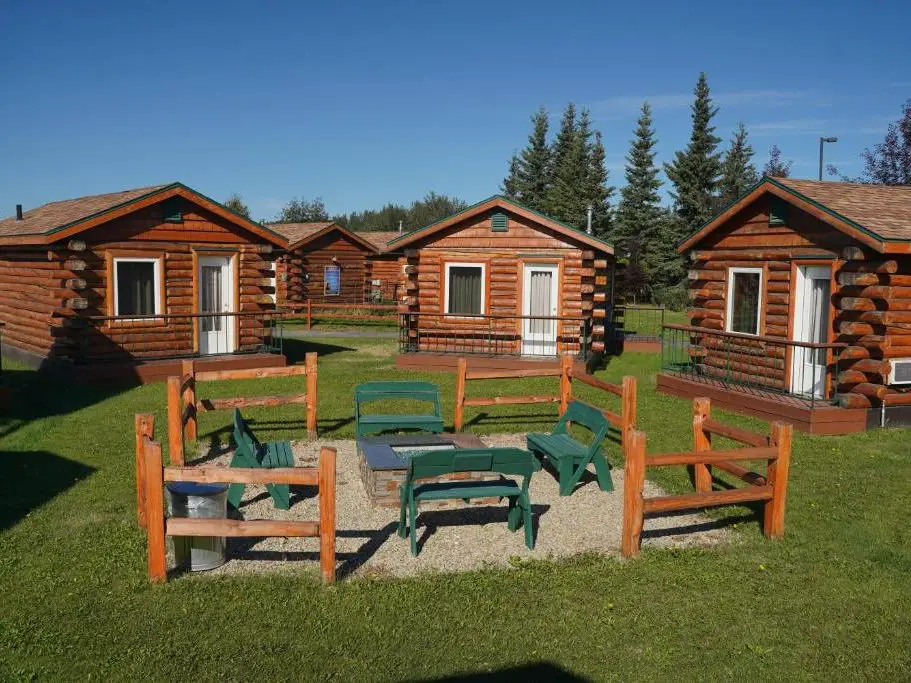
Best Aurora Conservatory
1. Pike’s Waterfront Lodge
Rating: ⭐⭐⭐
Location: 5-minute drive from Fairbanks International Airport, on the banks of the Chena River.
Guest Reviews: Aurora Conservatory called out by name, riverside fire pits praised, wake-up call system, eclectic Alaskan decor.
Best Room: Aurora Side Cabin
From USD $120 – $240 per night
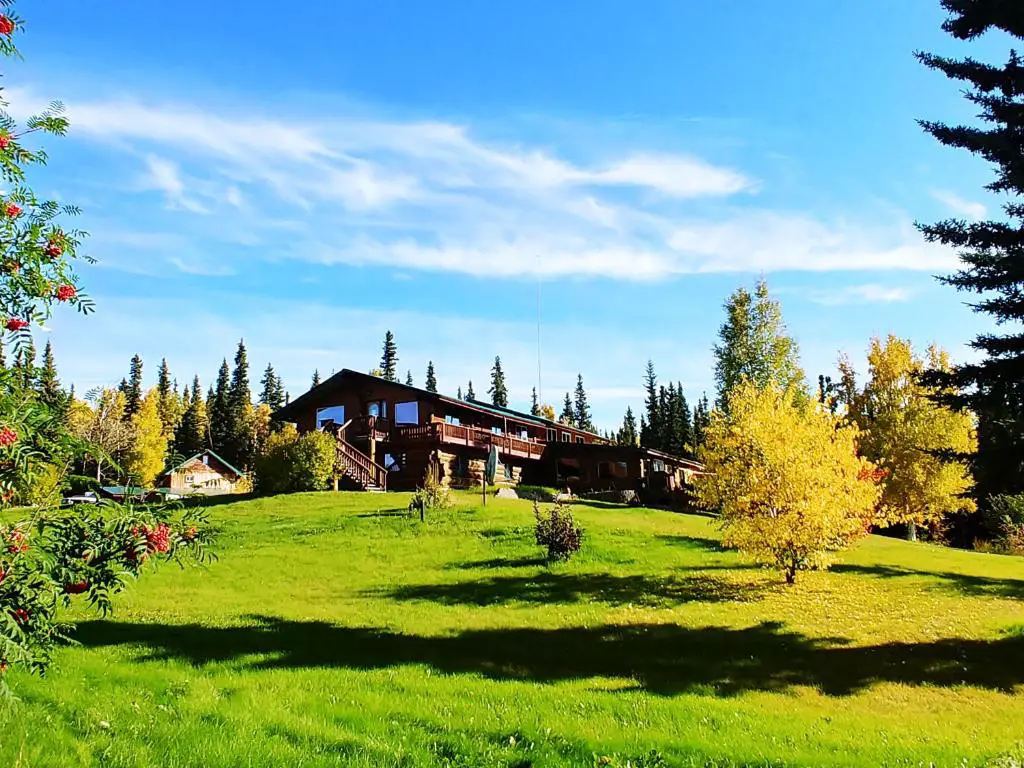
Best Remote Lodge
2. Northern Sky Lodge
Rating: ⭐⭐⭐
Location: 30-minute drive from Fairbanks International Airport, Parks Highway, boreal forest.
Guest Reviews: Peaceful forest setting, outstanding shared kitchen, warm hosts, observation deck praised for aurora.
Best Room: Moose Room (Second Floor)
From USD $179 – $215 per night
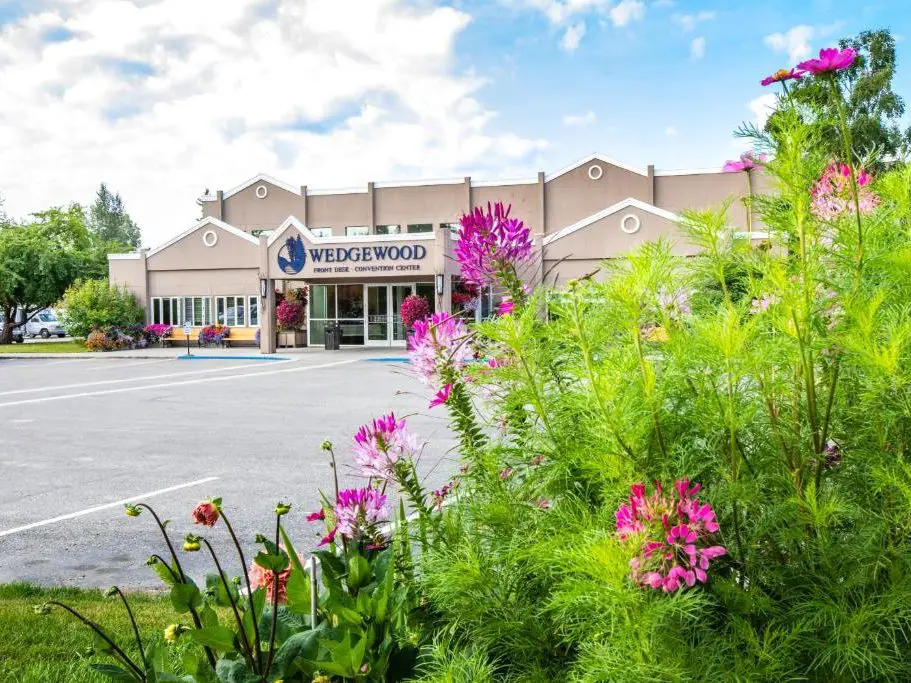
Best for Families
3. Wedgewood Resort
Rating: ⭐⭐⭐
Location: 15-minute drive from Fairbanks International Airport, bordered by a 75-acre wildlife sanctuary and Creamer’s Field migratory bird refuge.
Guest Reviews: Apartment-sized suites with full kitchen, comfortable beds, quiet grounds, trail access at night.
Best Room: Deluxe One-Bedroom Suite
From USD $185 – $345 per night
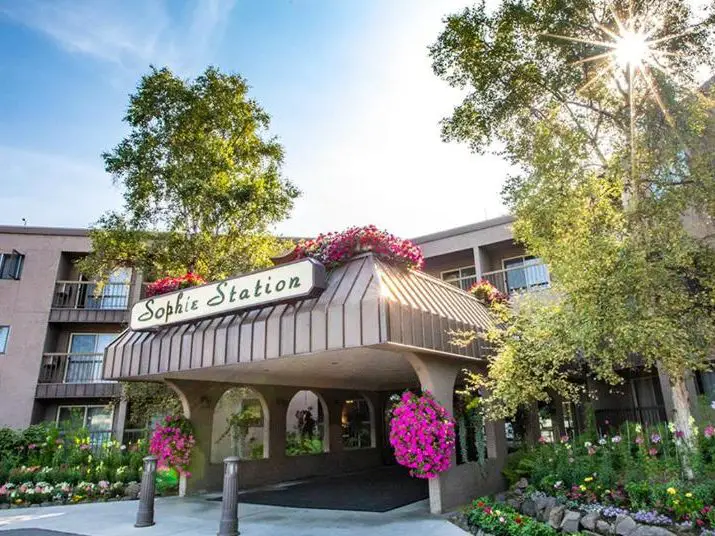
Best Airport Base
4. Sophie Station Suites
Rating: ⭐⭐⭐⭐
Location: 5-minute drive from Fairbanks International Airport, University Avenue.
Guest Reviews: Full kitchen well-stocked, spacious suites, Zach’s Restaurant praised, staff knock on doors when aurora appears.
Best Room: Deluxe One Bedroom King Suite
From USD $145 – $290 per night
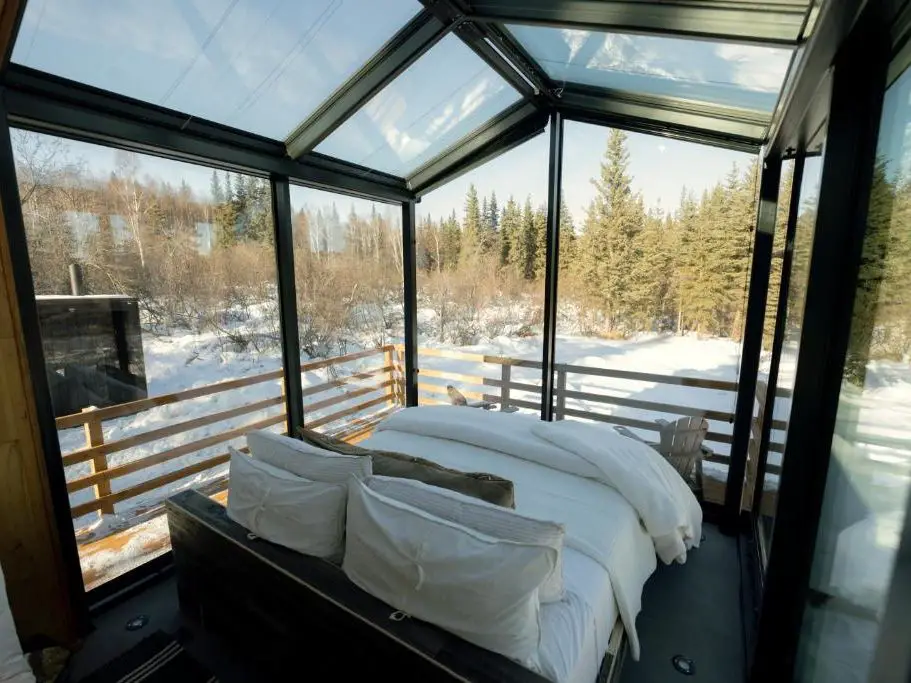
Most Luxurious
5. Wilding Hotels Fairbanks
Rating: ⭐⭐⭐⭐
Location: 20-minute drive from Fairbanks International Airport, boreal forest, 7.5 miles from Fairbanks city centre.
Guest Reviews: Floor-to-ceiling glass walls praised, aurora views from bed, private terrace, sauna, concierge service.
Best Room: Deluxe Suite
From USD $695 per night
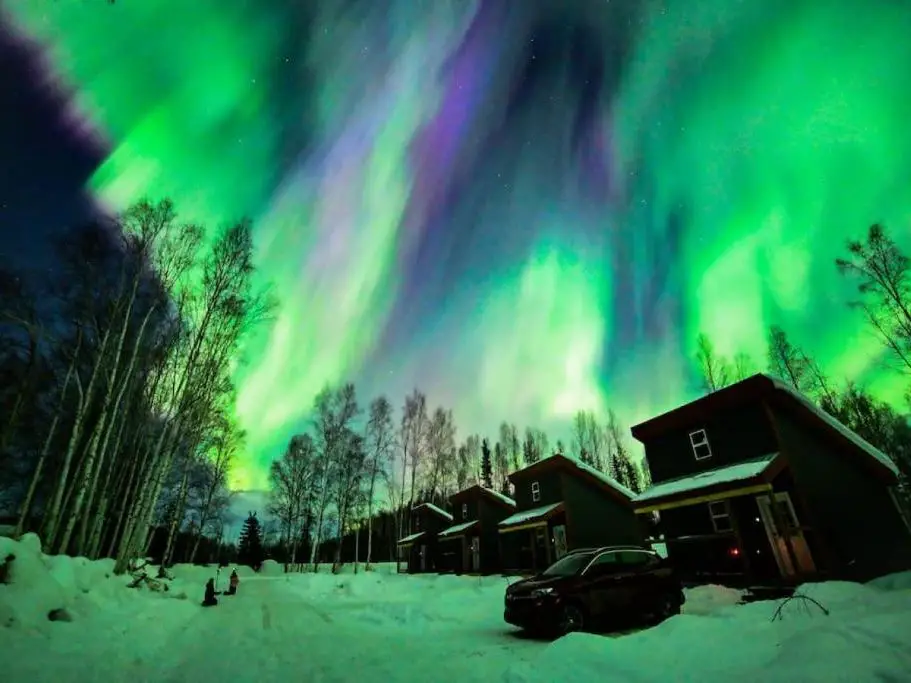
Best Value Cabin
6. The Meandering Moose – Frontier Village
Rating: ⭐⭐⭐⭐⭐
Location: 20-minute drive from Fairbanks International Airport, birch forest between Fairbanks and North Pole, outside city light pollution.
Guest Reviews: Aurora views from the cabin praised, porch seating for watching the sky, quiet rural setting, fully stocked kitchen.
Best Room: Private Cabin (entire cabin, sleeps 4)
From USD $225 per night
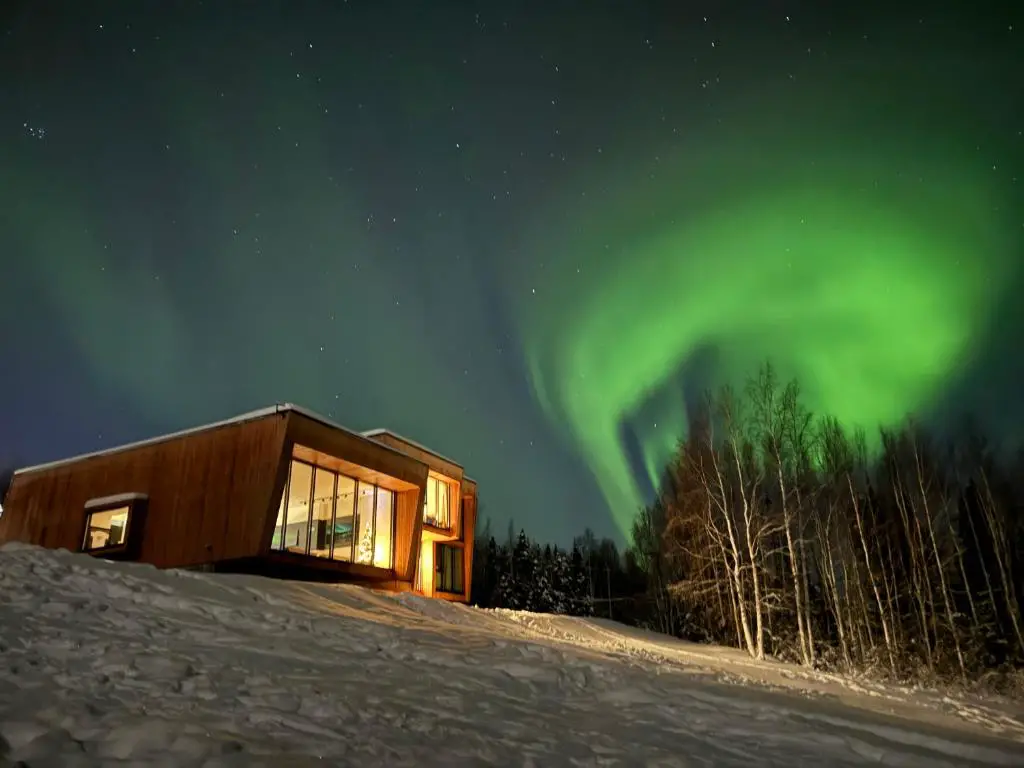
Best for Couples
7. Aurora Villa
Rating: ⭐⭐⭐⭐⭐
Location: 30-minute drive from Fairbanks International Airport, hillside setting overlooking a valley, 18 miles from Fairbanks city centre.
Guest Reviews: Floor-to-ceiling windows for aurora viewing from bed, heated floors, quiet hilltop location with minimal light pollution.
Best Room: Deluxe Single Room, 1 King Bed, Non Smoking, Mountain View
From USD $520 – $835 per night
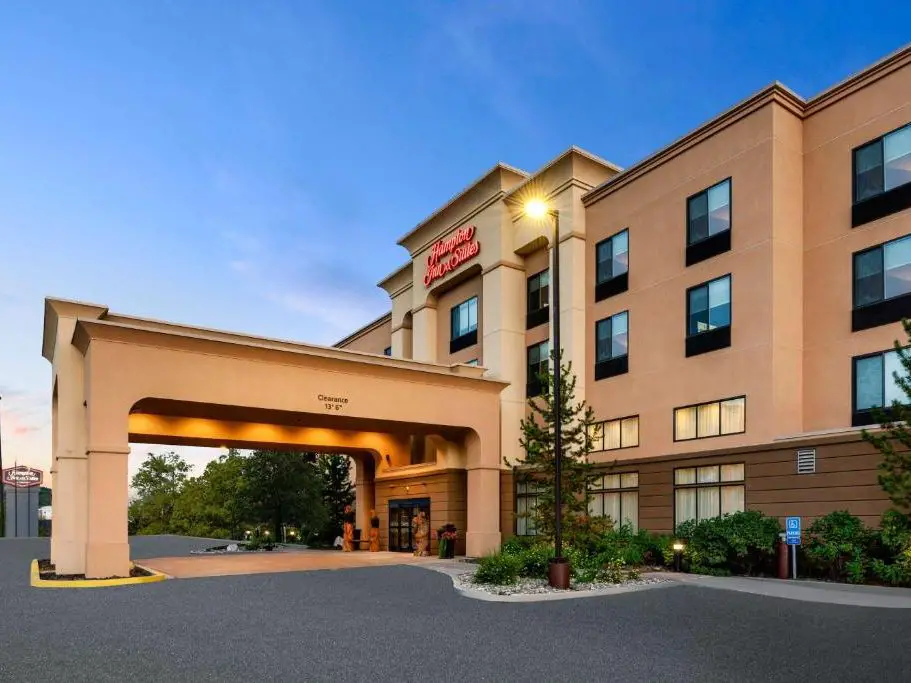
8. Hampton Inn & Suites Fairbanks
Rating: ⭐⭐⭐
Location: 2 miles from downtown Fairbanks, across from Creamer’s Field migratory bird refuge. 7 miles from Fairbanks International Airport.
Guest Reviews: North-facing rooms catch aurora from the window, wake-up call system confirmed, indoor pool and hot tub, free hot breakfast.
Best Room: King Room
From USD $160 – $200 per night
Where You Stay Changes What You See
Fairbanks is small enough that the aurora appears overhead on strong nights no matter where you’re standing — but your hotel’s position relative to the city determines whether you see a faint green smudge or curtains rippling across the entire sky. The single biggest decision isn’t price or amenities. It’s how much darkness you’re willing to trade for convenience.
- Downtown and the airport corridor — Hotels like Sophie Station Suites and Hampton Inn & Suites Fairbanks put you five minutes from the airport, close to restaurants, and on the pickup routes of every aurora tour operator in the city. The tradeoff is real: downtown Fairbanks isn’t a major metropolis, but even modest light pollution washes out anything below a strong display. If your plan involves guided tours that take you out of town each night anyway, staying downtown costs you nothing in terms of viewing odds and gains you everything in terms of logistics.
- Wildlife refuge and sanctuary edges — Wedgewood Resort sits against a 75-acre wildlife sanctuary and Creamer’s Field, a migratory bird refuge that creates a genuine dark buffer on the city’s edge. The grounds are walkable at night, and the combination of open fields and minimal surrounding development gives you a noticeably cleaner view than central Fairbanks without requiring a car or a 30-minute drive.
- Hillside and forest positions outside town — Northern Sky Lodge, Aurora Villa, Wilding Hotels Fairbanks, and The Meandering Moose — Frontier Village all sit far enough from the city to reduce light interference significantly. At these distances — 7 to 30 miles out — a Kp index of 1 or 2 is often enough for a visible display overhead rather than a glow on the horizon. The cost is dependence on a rental car or the property’s own transfer arrangements, and limited dining options after dark.
- On-property aurora infrastructure — Distance from city lights matters, but so does what the hotel gives you once the lights appear. Pike’s Waterfront Lodge has a dedicated glass-walled Aurora Conservatory facing north across the Chena River. Northern Sky Lodge has a furnished observation deck. Wilding Hotels Fairbanks and Aurora Villa are built around floor-to-ceiling glass walls so viewing happens from inside a heated room. A warm place to wait — and to retreat when temperatures drop below -20°F — changes the experience more than most visitors expect before arriving.
When to Come
Aurora season in Fairbanks runs from late August through mid-April — roughly nine months of the year. The question isn’t whether the lights are possible. It’s which window suits the kind of trip you want.
- Late August and September — Aurora season begins when nights become dark enough again after the midnight sun. Temperatures are manageable, often 30–50°F, fall colours are on the trails, and the autumn equinox typically produces a surge in geomagnetic activity. Displays in this window can be dramatic, and the milder cold makes standing outside to watch considerably more comfortable. This is the sweet spot for first-timers who want aurora odds without deep-winter conditions.
- October and November — Nights lengthen quickly and temperatures begin dropping toward 0°F and below. Aurora activity remains strong and the increasing darkness works in your favour. This is a good window for photographers who want snow on the ground and long dark hours, though the shoulder nature of the season means some tour operators and lodge facilities are not yet fully operational.
- December through February — The darkest months deliver the longest viewing windows and the most photogenic snow-covered backdrops, but temperatures regularly drop to -20°F and can reach -40°F or colder. This is not the window to underestimate the cold. With the right gear and a heated viewing space, it is extraordinary. Without either, it becomes an endurance exercise.
- March and April — The spring equinox produces another reliable surge in geomagnetic activity, and temperatures begin moderating from their February lows. March is widely considered the best overall month — strong aurora odds, slightly more bearable cold, snow still on the ground, and longer daylight hours for daytime activities between viewing nights. Solar Cycle 25 peaked in late 2024, and the 2026–2027 season remains above average for activity as the cycle winds down. Displays are still frequent; they are simply less predictable than at peak.
How Many Nights You Actually Need
The widely cited statistic — three nights gives you a 90% chance of seeing the aurora — is accurate but requires honest context. What it counts as a sighting includes faint pale arcs visible only to a camera, not the pulsating curtains most people picture when they book the trip.
- Three nights is the minimum, not the target — Three nights pushes your odds of seeing something above 80%. It does not push your odds of seeing a strong, memorable display above 50%. Cloud cover is the primary variable and is essentially impossible to predict more than a few days out. One cloudy night in three is common. Two cloudy nights in three is not unusual in autumn or early winter.
- Five nights is where the odds shift meaningfully — At five nights, experienced aurora guides put the probability of witnessing at least one strong display above 70–80%, assuming you are outside during the prime 10 PM to 2 AM window on every clear night. This is the length most serious aurora travellers who have done the research settle on.
- The moon phase matters as much as the Kp index — A full moon washes out weak and moderate displays in the same way city lights do. Check the lunar calendar for your travel dates before booking. New moon windows during aurora season are the most competitive and book fastest.
- Cloudy nights are not wasted nights — Fairbanks has enough daytime activities — Chena Hot Springs, dog mushing, ice sculpture parks, the University of Alaska Museum of the North — to fill every daylight hour of a five-night trip productively. The city is built around the assumption that visitors will spend some nights waiting.
Getting Around — Car, Cold, and Winter Roads
Most aurora-specialist hotels sit outside the city, and even in-city stays benefit enormously from the flexibility of a vehicle. Planning this before arrival saves significant stress.
- Rent a car with an engine block heater — In Fairbanks in winter, cars are plugged into electrical block heaters overnight to prevent the oil from freezing solid. Confirm your rental includes a winterised vehicle with a block heater, and never turn off the engine if you are parked far from town. Most local rental companies at Fairbanks International Airport handle this automatically, but confirming in advance avoids surprises on arrival at -30°F.
- All-wheel or four-wheel drive is not optional in winter — Roads in the Fairbanks area are maintained but can be icy, particularly on the Parks Highway toward Northern Sky Lodge and on gravel routes to more remote properties. Several rental companies place restrictions on driving certain highways in winter conditions — confirm your itinerary with the rental company before booking.
- Cold-weather gear rental is more practical than buying — Temperatures can reach -40°F and exposed skin freezes in minutes at that range. If you don’t own Arctic-rated clothing, renting locally from outfitters at the airport or in town is more practical than buying gear for a single trip. A complete kit typically runs $25–$75 for the duration of your stay. Wool and synthetic base layers only — cotton holds moisture and accelerates heat loss.
- Tour operators eliminate the car problem entirely — Every major aurora tour company in Fairbanks picks up from downtown hotels and drives guests to dark-sky viewing locations, often 30–100 miles from the city. If you stay at Sophie Station Suites or Hampton Inn & Suites Fairbanks, you can join a guided tour each night and skip the car entirely without sacrificing viewing quality.
What to Look for in an Aurora Hotel
Not every hotel that mentions the aurora in its marketing is actually set up to help you see it. A handful of specific features separate purpose-built aurora stays from properties that simply happen to be in Fairbanks.
- Wake-up call system — The most useful feature any aurora hotel can offer. Staff monitor conditions through the night and call rooms when the lights appear, so guests don’t have to sacrifice sleep sitting outside in the dark. Pike’s Waterfront Lodge, Northern Sky Lodge, Sophie Station Suites, Wedgewood Resort, and Hampton Inn & Suites Fairbanks all operate confirmed wake-up call systems. At Wilding Hotels Fairbanks and Aurora Villa, floor-to-ceiling glass walls make the system less necessary.
- Heated indoor viewing space — Standing outside at -25°F for two hours watching a static sky is the fastest way to cut your viewing session short. Properties with heated conservatories, glass-walled rooms, or enclosed observation decks allow you to warm up between bursts of activity without losing sight of the sky. Pike’s Waterfront Lodge’s Aurora Conservatory is the most purpose-built example in the city.
- North-facing orientation — Aurora activity concentrates on the northern horizon in Fairbanks. At Hampton Inn & Suites Fairbanks, requesting a north-facing room is the single most useful thing you can do at booking. At purpose-built properties like Aurora Villa and Wilding Hotels Fairbanks, the orientation is built in.
- Distance from city lights — Inside the Fairbanks city limits, a Kp index below 4 or 5 often produces a display invisible to the naked eye that a camera can still pick up. At Northern Sky Lodge, The Meandering Moose — Frontier Village, and Wilding Hotels Fairbanks, a Kp of 1 or 2 is frequently enough for visible overhead aurora. The difference between watching from a downtown car park and watching from a dark ridgeline 15 miles out is not subtle.
FAQs
1. Is Fairbanks really the best place in North America to see the northern lights?
It sits directly beneath the auroral oval — the ring-shaped zone of concentrated aurora activity — which means the lights appear overhead rather than on the distant horizon. Its dry, continental interior climate produces over 200 clear nights per year, more than most aurora destinations. No other major city in North America combines that geomagnetic position with a functioning airport, a range of hotels, and reliable guided infrastructure.
2. What time of night is the aurora most active in Fairbanks?
The prime window is typically 10 PM to 2 AM, though the most dramatic substorm activity often occurs between 2 AM and 4 AM. Hotels with wake-up call systems handle this problem for you — you don’t need to stay awake all night. Setting a location-based aurora alert app as a backup is useful regardless of where you stay.
3. Do I need a high Kp index to see the aurora in Fairbanks?
No. Because Fairbanks sits under the auroral oval, a Kp of 1 or 2 is often sufficient for a visible display directly overhead. Higher indices produce brighter, more dynamic shows with reds and purples alongside green, but they are not a prerequisite. Checking the University of Alaska Fairbanks Geophysical Institute aurora forecast is more reliable than most third-party apps for local conditions.
4. Can you see the northern lights from inside Fairbanks without leaving the city?
On strong nights, yes. On weaker nights, city light pollution reduces the experience significantly — the difference between a faint smudge and a full display. Properties at the city’s edge, like Wedgewood Resort near Creamer’s Field, offer noticeably better in-town viewing. For guaranteed dark skies, you need to be at least 10–15 miles from the city centre.
5. Do I need a rental car to see the northern lights in Fairbanks?
Not necessarily. Staying downtown and booking guided tours handles transport for you. A car becomes essential if you’re staying at a remote lodge or want the flexibility to self-drive to dark-sky spots like Cleary Summit or Murphy Dome. If you do rent a car, confirm the vehicle is winterised with an engine block heater.
6. What should I wear to watch the northern lights in Fairbanks?
Temperatures between December and February regularly reach -20°F to -40°F. The standard approach is a merino wool or synthetic thermal base layer, an insulated mid-layer, and a windproof outer shell. Cotton in any layer is a mistake — it holds moisture against the skin. Insulated waterproof boots, a balaclava, and insulated mittens rather than gloves complete the kit. Most local outfitters and some hotels rent complete Arctic gear packages, which is the practical choice for a single trip.
7. Is it worth paying more for a glass-wall or aurora-specific room?
It depends on what you value. Properties like Wilding Hotels Fairbanks and Aurora Villa let you watch the aurora from a heated room in a king-size bed — the experience is genuinely different from bundling up and standing outside. What they cannot do is guarantee the lights will appear on any given night. On a cloudy night, a $695 glass-wall suite and a $160 chain hotel room produce identical results. The architecture doesn’t change the sky. Book the experience for what it is, not as an insurance policy against weather.
8. What is ice fog and how does it affect aurora viewing?
Ice fog forms in the Fairbanks valley when temperatures drop below approximately -30°F and moisture in the air freezes into suspended ice crystals. It can completely obscure the sky over the city while the air at higher elevations remains perfectly clear. If ice fog settles in the valley, driving uphill to Cleary Summit or Murphy Dome — both accessible by paved road — typically puts you above it. This is one of the strongest practical arguments for having a rental car during a deep-winter aurora trip.