
Bangkok’s Old Town moves at a different pace to the rest of the city — narrower streets, older temples, the smell of incense and river air instead of traffic fumes and shopping mall air conditioning. Staying within walking distance of the Grand Palace and Wat Pho puts you at the centre of the Bangkok that existed long before the Skytrain, with some of the best food carts, riverside views, and temple access in the city right outside your door. The hotels here range from royal heritage villas to sharp modern boutiques, but they share one thing: a location that saves you the taxi fare and lets you beat the crowds to the gates by 8am.
Quick answer: Book Sala Arun. It’s on the quiet stretch of Maharat Road by Tha Tien pier, with Wat Arun right across the river from your room.
Table of Contents
Hotels Nearby
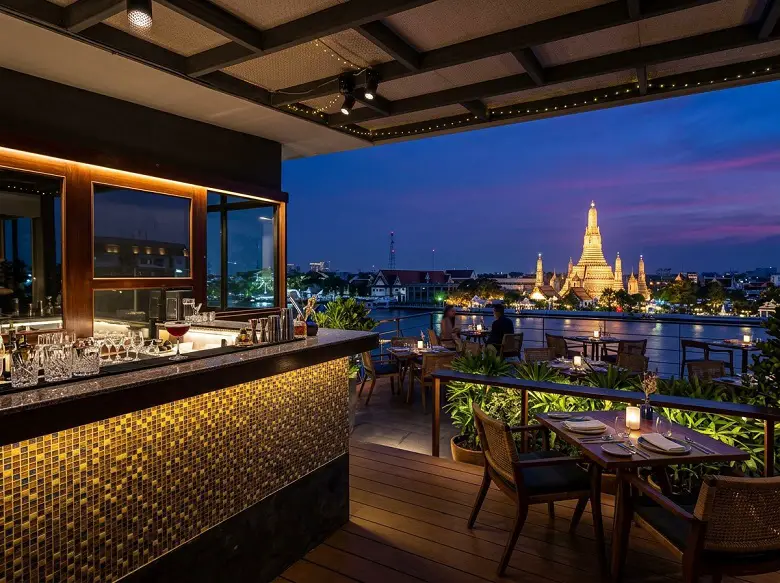
1. Sala Arun
Rating: ⭐⭐⭐⭐
Location: 3-minute walk to the Grand Palace, 2-minute walk to Wat Pho
Guest Reviews: Direct Wat Arun temple views, rooftop terrace, riverside pool, attentive staff
Best Room: Deluxe Room, 1 Double Bed, Terrace, River View
From USD $80 – $150 per night
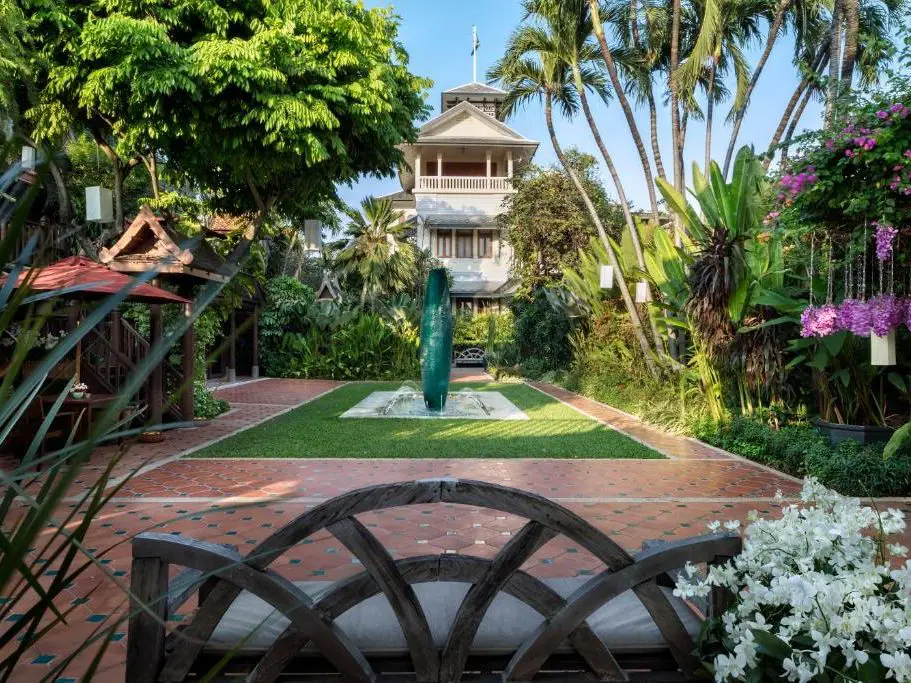
Most Historic Stay
2. Chakrabongse Villas
Rating: ⭐⭐⭐⭐⭐
Location: 6-minute walk to the Grand Palace, 5-minute walk to Wat Pho
Guest Reviews: lush riverside garden, Wat Arun views from breakfast terrace, personal staff, birds-and-birdsong quiet
Best Room: Suite With River View
From USD $160 – $600 per night
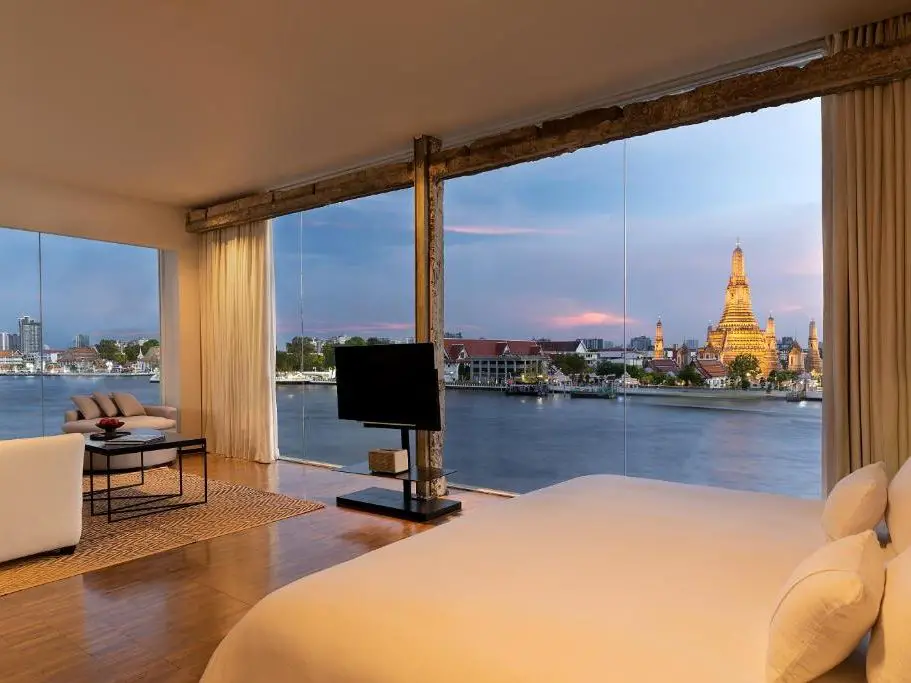
Best Rooftop Bar
3. Sala Rattanakosin Bangkok
Rating: ⭐⭐⭐⭐
Location: 3-minute walk to the Grand Palace, 2-minute walk to Wat Pho
Guest Reviews: Wat Arun views from room sofa, rooftop bar, à la carte breakfast with river outlook, porter service for stairs
Best Room: Wat Arun River View Deluxe
From USD $110 – $280 per night
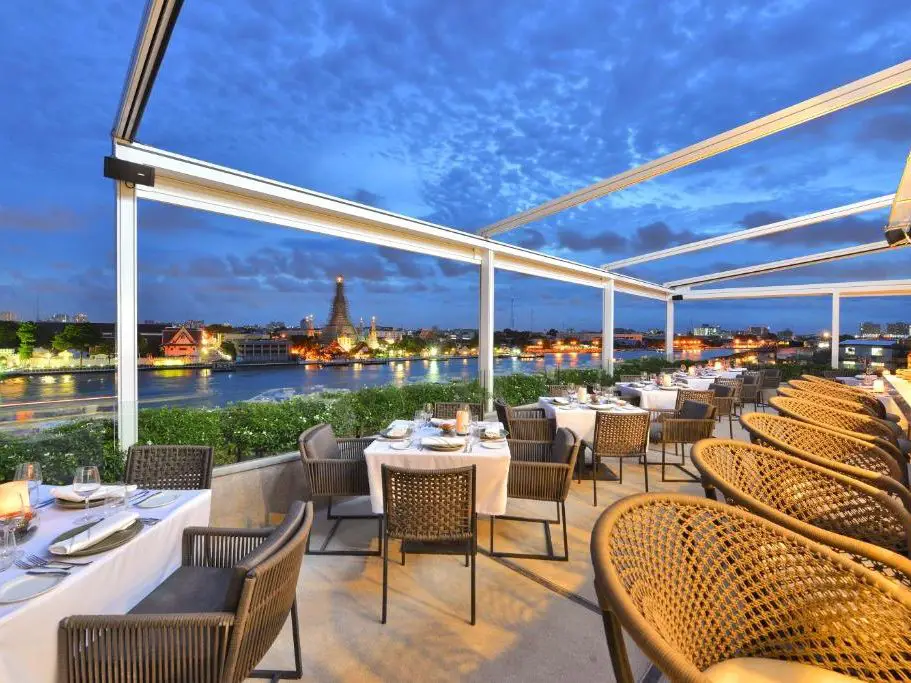
Best for Temple Views
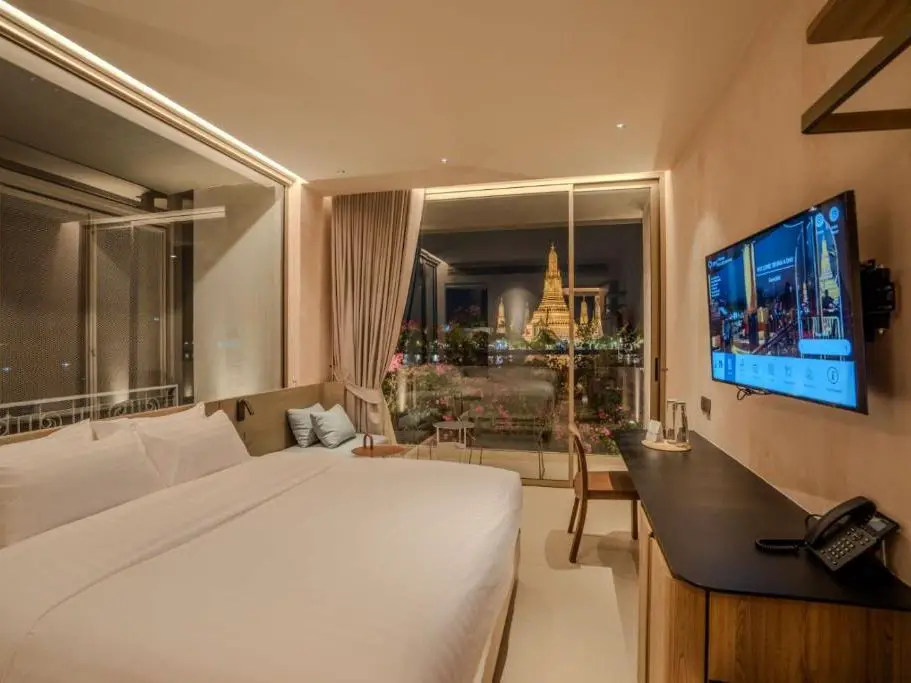
4. Riva Arun Bangkok
Rating: ⭐⭐⭐⭐
Location: 5-minute walk to the Grand Palace, 2-minute walk to Wat Pho
Guest Reviews: Wat Arun river views, Above Riva rooftop restaurant, NAD RA cocktail bar, attentive 24-hour staff
Best Room: Riva Arun Grand Deluxe Jacuzzi
From USD $145 – $250 per night
Best Boutique Stay
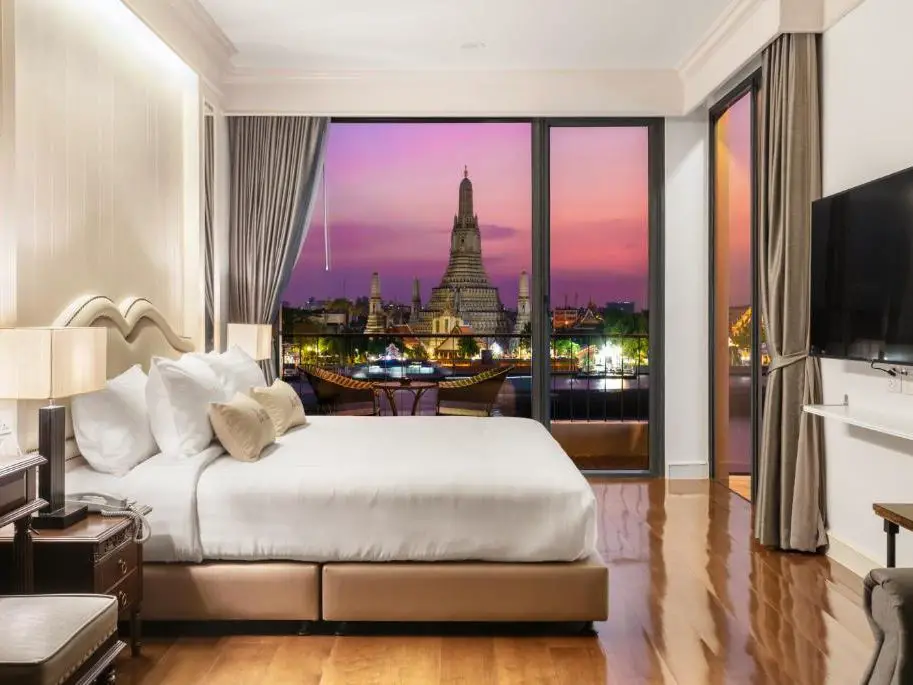
5. Inn a Day
Rating: ⭐⭐⭐
Location: 7-minute walk to the Grand Palace, 3-minute walk to Wat Pho
Guest Reviews: Wat Arun views from room balcony, free bicycle rental, riverside terrace, spotless rooms
Best Room: King Room with River View (Higher Floor)
From USD $130 – $250 per night
Best Breakfast Included
6. Arun Riverside Bangkok
Rating: ⭐⭐⭐⭐
Location: 3-minute walk to the Grand Palace, 2-minute walk to Wat Pho
Guest Reviews: river-view balcony on every room, two Thai restaurants, breakfast included, attentive multilingual staff
Best Room: Executive Studio Suite, River View
From USD $110 – $200 per night
Best Value
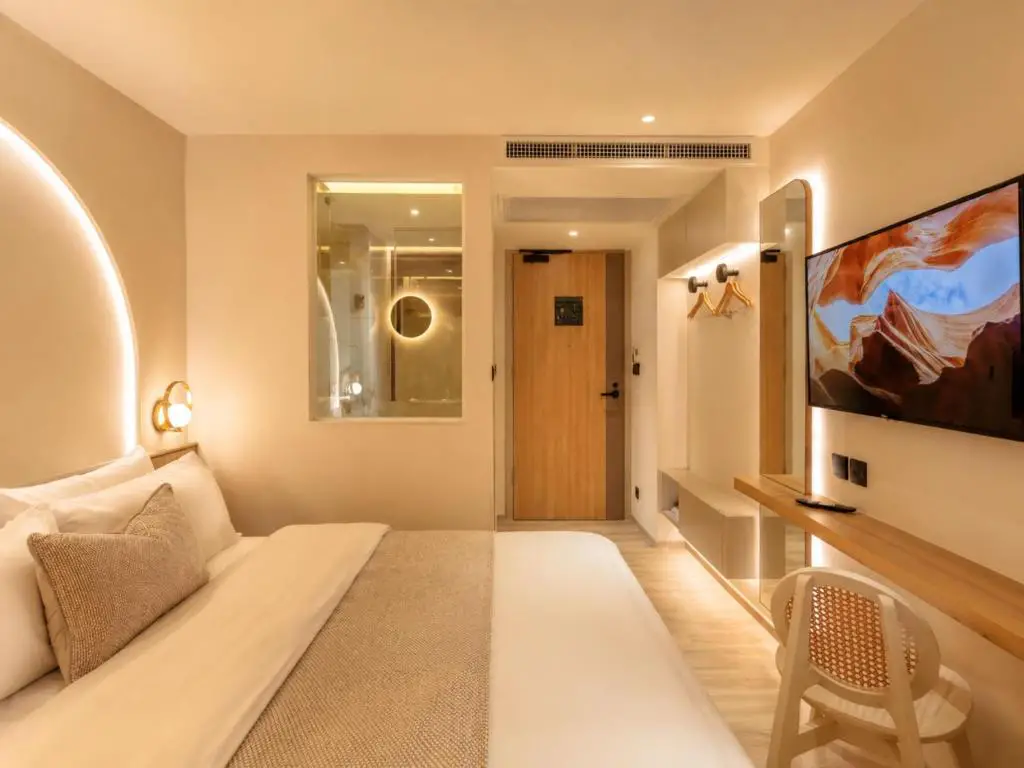
7. Corridor2407 Hotel
Rating: ⭐⭐
Location: 5-minute walk to the Grand Palace, 7-minute walk to Wat Pho
Guest Reviews: spotless rooms, lobby cafe, Sam Yot MRT 5-minute walk, friendly front desk
Best Room: Premium Room with Bath or Soaking Tub
From USD $60 – $100 per night
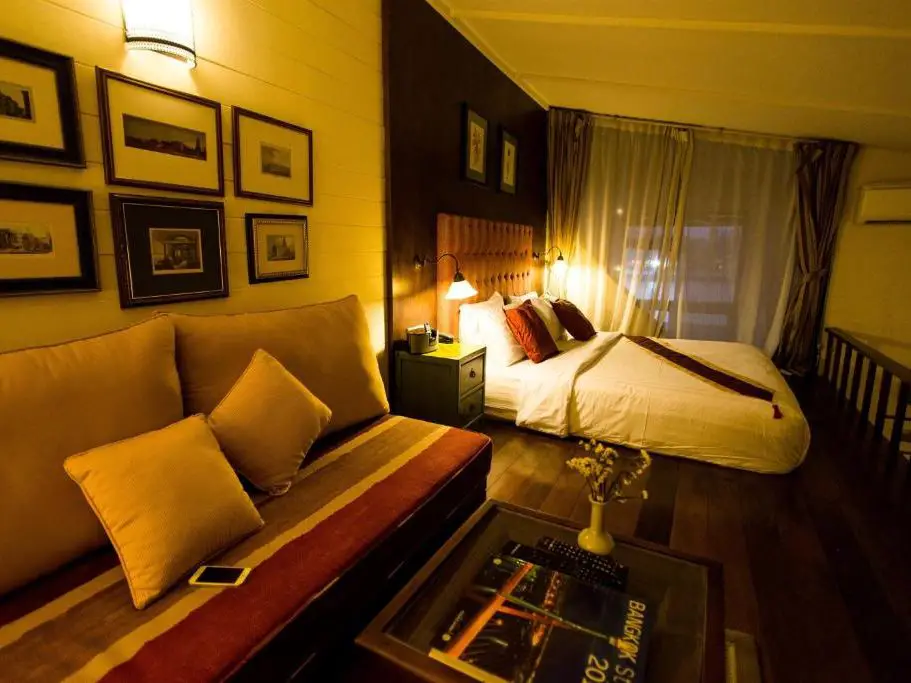
8. Arun Residence
Rating: ⭐⭐⭐⭐
Location: 7-minute walk to the Grand Palace, 5-minute walk to Wat Pho
Guest Reviews: al fresco terrace restaurant, French and Thai menu, massage services, Maharat Road location
Best Room: Suite, 1 Bedroom
From USD $105 – $230 per night
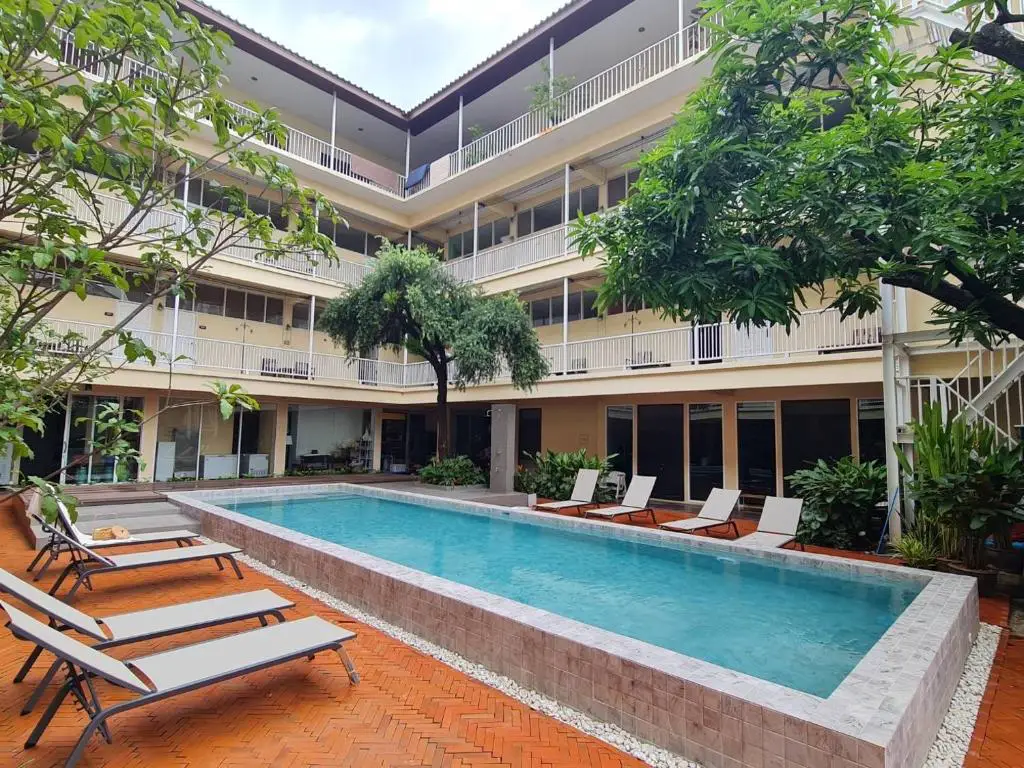
Best for Families
9. Feung Nakorn Balcony Rooms and Cafe
Rating: ⭐⭐⭐
Location: 5-minute walk to the Grand Palace, 7-minute walk to Wat Pho
Guest Reviews: koi pond courtyard garden, saltwater pool, Thai restaurant breakfast, converted schoolhouse building
Best Room: Deluxe Room
From USD $45 – $100 per night
Why Location Matters in This Part of Bangkok
Rattanakosin is the oldest part of Bangkok — a tight island of streets between the Chao Phraya River and a canal that was dug in the 18th century to protect the original royal city. The Grand Palace, Wat Pho, Wat Phra Kaew, and the National Museum are all here, within a roughly one-kilometre radius of each other. Staying inside this zone puts you at the centre of the Bangkok that existed before the Skytrain, the shopping malls, and the hotel towers of Sukhumvit. What that means in practice:
- You walk to the temples, not through traffic — The Grand Palace gates open at 8.30am. From any hotel on Maharat Road, you can be standing at the entrance in under 10 minutes, before the tour groups arrive by coach from the other side of the city. This is the single biggest practical advantage of staying here. The temples are genuinely different at 8.30am compared to 10.30am.
- The neighbourhood has almost no Skytrain or BTS access — The nearest MRT stop is Sanam Chai, around 6–8 minutes’ walk from the temple area. There is no BTS Skytrain connection anywhere close. Getting to Sukhumvit, Silom, or the airport means a taxi, a Grab ride, or a ferry — all of which work fine, but this is a genuine trade-off if you plan to spend evenings in other parts of the city. Factor in 30–45 minutes each way.
- The riverside strip is quiet by Bangkok standards — Maharat Road and the Tha Tien end of the precinct shut down early. The street food stalls and river cafés are busy from morning until early evening, then the area goes calm. If you want Bangkok’s nightlife within walking distance, this is the wrong base. If you want river air and temple bells in the morning, it is the right one.
- The Fuang Nakhon corridor is a different micro-location — Feung Nakorn Balcony Rooms and Cafe and Corridor2407 Hotel sit 5–7 minutes’ walk from the riverside cluster, on the inland side of the precinct on Fuang Nakhon and Charoenkrung Roads. The walk to the Grand Palace is a few minutes longer and is through ordinary Bangkok streets rather than along the river. The trade-off is lower prices, a pool (Feung Nakorn), and slightly easier taxi and MRT access via Sam Yot station, which is a 5-minute walk from Corridor2407.
- Evenings reward those who stay put — The tourist crowd thins sharply after 4pm when the Grand Palace closes. The Maharat Road riverside becomes one of the more atmospheric stretches in the city: longtail boats on the water, Wat Arun lit up across the river, the rooftop bars at Sala Rattanakosin Bangkok and Riva Arun Bangkok with unobstructed views. This is not a neighbourhood that needs to be abandoned in the evening — it just needs to be understood on its own terms.
The Maharat Road Riverside Strip
The cluster of hotels along Maharat Road between Tha Chang pier and Tha Tien pier is the closest thing Bangkok has to a boutique hotel district built around its most important landmarks. The strip runs for about 700 metres along the east bank of the Chao Phraya, and every hotel on it faces either the river or the back walls of the Grand Palace compound. The practical implications:
- Wat Pho is closer than most hotel lobbies suggest — From Sala Rattanakosin Bangkok, Riva Arun Bangkok, Inn a Day, and Arun Riverside Bangkok, the walk to Wat Pho’s main entrance on Chetuphon Road is 2–3 minutes. The Grand Palace gate on Na Phra Lan Road is 3–7 minutes depending on exactly where you’re starting. None of these hotels require a taxi, a tuk-tuk, or a ferry to reach either temple.
- Chakrabongse Villas and the river-view boutiques occupy the quietest stretch — The section of Maharat Road closest to Tha Tien pier, where Chakrabongse Villas, Sala Arun, and Inn a Day sit, is narrower and calmer than the upper end near Tha Chang. Street food is steps away at Tha Tien market. The cross-river ferry to Wat Arun departs from Tha Tien pier, a 3-minute walk.
- River-view rooms face Wat Arun, not the Grand Palace — A point that surprises some guests: the hotels on the east bank look west across the Chao Phraya toward the Thonburi bank, where Wat Arun stands. The Grand Palace compound is behind these hotels, not in front. River-view rooms at Riva Arun Bangkok, Inn a Day, and Sala Rattanakosin Bangkok frame Wat Arun’s porcelain spires, particularly striking when lit at night.
- The strip has almost no generic hotel infrastructure — No concierge with a fleet of overpriced excursion packages, no buffet breakfast hall, no airport shuttle queue. Most properties on this strip are 9–25 rooms. Luggage storage, tour tips, and Grab app pickups are how logistics work here. Plan accordingly and it is seamless. Expect a large hotel experience and it will disappoint.
Getting Here and Getting Around
The Rattanakosin area is not well connected to the rest of Bangkok’s transit network, and that is the piece of information most visitors wish they had before arriving. It is not a problem — it just requires knowing the options.
- From Suvarnabhumi Airport, take a metered taxi — The expressway journey takes 45–60 minutes depending on traffic, and costs roughly 300–450 THB including the expressway toll. This is the most direct option with luggage. Grab works from the airport and is generally cheaper. The Airport Rail Link terminates at Phaya Thai BTS station, which then still requires a taxi or MRT connection to reach Rattanakosin — for most travellers with bags, a direct taxi or Grab from the airport is simpler.
- From Sukhumvit or Silom, Sanam Chai MRT is the key station — The MRT Blue Line stop at Sanam Chai (BL30) is roughly 6–8 minutes’ walk from the Grand Palace entrance and is the only rapid transit connection into this neighbourhood. From Asok (Sukhumvit) to Sanam Chai takes about 25 minutes with one interchange at Sam Yot, and costs under 50 THB. Sam Yot station is also useful: it is a 5-minute walk from Corridor2407 Hotel and around 10 minutes from the Maharat Road hotels.
- The cross-river ferry to Wat Arun costs almost nothing — The orange-flag Chao Phraya Express boats stop at Tha Chang and Tha Tien piers. The dedicated cross-river ferry from Tha Tien to Wat Arun takes about 2 minutes and costs 5 THB. This is the correct and cheapest way to visit Wat Arun from any hotel on the Maharat Road strip — not a taxi, not a longtail boat tour. The ferry runs throughout the day and connects directly to the Wat Arun entrance.
- Tuk-tuks near the Grand Palace gates are almost always a scam — The area around Na Phra Lan Road and the Grand Palace entrance is one of the most scam-dense tourist zones in Southeast Asia. A well-dressed stranger who tells you the palace is closed, that there is a “special Buddhist holiday,” or that your outfit requires a visit to a specific tailor shop before entry is running a scheme that has operated in this spot for decades. The Grand Palace closes only for specific royal ceremonies, never for casual visitors mid-morning. Check the official Grand Palace website or ask your hotel before leaving if you have any doubt.
- Grab is reliable for evening trips to other neighbourhoods — Getting to Chinatown (10 min), Silom (20 min), or the riverside areas further south is straightforward by Grab. Set your pickup point at the hotel rather than flagging on Maharat Road, where narrow streets and temple traffic can make pickups complicated.
What to Wear (and What Happens If You Don’t)
The Grand Palace and Wat Pho both enforce a dress code, and the Grand Palace in particular turns people away at the gate. This is not a suggestion — it is a hard requirement that applies regardless of the weather, regardless of how many other tourists you see in shorts near the entrance, and regardless of what anyone outside tells you.
- The Grand Palace dress code: cover shoulders, knees, and ankles — Men must wear long trousers and shirts with sleeves. Shorts, tank tops, and sleeveless shirts are not permitted. Women must cover shoulders and knees — no sleeveless tops, no short skirts, no see-through fabrics. Tight leggings are technically not permitted, though enforcement varies. Sandals are allowed, but feet must not be bare — wear socks, or be prepared to put them on.
- You can borrow clothing at the gate — The Grand Palace provides sarongs and cover-ups to borrow free of charge at the main entrance on Na Phra Lan Road. If you arrive underdressed, ask at the entrance desk rather than turning back to your hotel. The same applies at Wat Pho, which has sarongs available near the main ticket desk. Staying within walking distance of both temples means you can also return to your hotel quickly if needed — a genuine advantage over staying further away.
- The “your clothes are wrong” scam is distinct from the actual dress code — Strangers positioned outside the Grand Palace gates who tell you that you are not dressed correctly, that there is a tailor nearby who can help, or that the temple has a side entrance are not temple staff. Temple staff are inside the complex. Any approach from outside the gate that involves redirecting you elsewhere is a scam. Walk to the entrance, assess the dress code yourself, and borrow clothing at the gate if needed.
- Wat Arun has a more relaxed dress code — Shoulders and knees should be covered out of respect, but enforcement at Wat Arun is less strict than at the Grand Palace. Comfortable shoes that slip on and off easily are more important at Wat Arun, as footwear must be removed before entering the main chapel.
Where to Eat Near the Temples
The Rattanakosin area has a stronger food scene than most visitors expect, ranging from market stalls that have operated in the same spot for generations to one of the most discussed fine-dining restaurants to open in Bangkok in recent years.
- Tha Tien market — The covered market directly behind Wat Pho, open from early morning, with boat noodles, grilled pork skewers, mango sticky rice, and fresh coconut. This is the most practical breakfast and lunch option for anyone staying on the Maharat Road strip — cheap, within three minutes of every hotel in the cluster, and consistently good. The canal-side section has plastic tables and river views.
- Nusara — On Maharat Road itself, steps from the hotel cluster, this Thai contemporary restaurant from Chef Thitid “Ton” Tassanakajohn — also behind Le Du — serves a daily-changing tasting menu built on family recipes and Thai heritage ingredients. The MICHELIN Guide lists it among the best places to eat near the Grand Palace. Reservations are essential and should be made well in advance.
- Jay Fai — About 15 minutes’ walk from the Maharat Road strip, on Mahachai Road, this MICHELIN-starred shophouse has served crab omelettes, drunken seafood noodles, and tom yum over charcoal fires since 1977. As of 2024-25, the restaurant operates only Wednesday to Saturday, and the proprietor has indicated she may close in the near future. Confirm current hours before making plans around it. Queuing is still required — the restaurant does not take standard bookings.
- Pak Khlong Talad flower market — About 10 minutes’ walk from the hotel cluster, Bangkok’s largest wholesale flower market runs 24 hours, peaking from midnight to dawn when consignments arrive from farms across Thailand. Visiting at any hour is free and takes no more than 20 minutes. Early morning before a temple visit is the most atmospheric time.
- The riverside café strip — The stretch of Maharat Road between Tha Chang and Tha Tien piers has a growing concentration of cafés, small restaurants, and riverside terraces. The Deck and View ARUN are both consistently recommended for Wat Arun views at sunset and are within a 2-minute walk of the Tha Tien hotel cluster. Both get busy between 4pm and 7pm — arrive early or book ahead.
When to Visit and When to Book
Bangkok’s climate divides into three periods, each with different implications for a stay in this neighbourhood. The Maharat Road hotels are small — most have between 9 and 25 rooms — which means timing affects availability as much as it affects the weather.
- November to February: the best conditions, the highest prices — Temperatures drop to a comfortable 25–30°C, humidity falls, and the sky is reliably clear. This is when the Grand Palace looks its best and when walking between temples in the morning is genuinely pleasant rather than punishing. It is also when every quality hotel in this zone fills weeks or months ahead. Chakrabongse Villas (fewer than 10 rooms), Inn a Day (11 rooms), and Sala Rattanakosin Bangkok (15 rooms) can be unavailable for peak dates even three months out. Book river-view rooms at this time of year the moment your dates are confirmed.
- March and April: hot, uncrowded, cheaper — Temperatures regularly reach 35–38°C, and the humidity climbs sharply through April. Walking between temples in the middle of the day becomes uncomfortable. The upside: hotel rates drop noticeably, availability opens up, and the temples themselves are less crowded in the mornings. Early starts (gates open at 8.30am) are essential in this period — plan to finish temple visits before midday.
- May to October: rain, value, and quieter mornings — Afternoon downpours are common, usually arriving between 2pm and 5pm and clearing within an hour or two. Mornings are typically dry and warm. Hotel rates are at their lowest, availability is easy, and the temple grounds are noticeably less crowded than in peak season. The Chao Phraya can rise significantly in October — occasional high tides bring water close to the Maharat Road promenade, though this does not typically affect hotel access.
- Songkran (mid-April) is a specific exception — The Thai new year water festival runs for several days in mid-April and transforms Bangkok’s streets. The Rattanakosin area participates actively. Rates spike sharply for these dates despite the heat, and the streets around Sanam Luang and Khaosan Road become very busy. Worth experiencing, but book early and expect a different kind of stay.
FAQs
1. What time does the Grand Palace open, and how long do you need?
The Grand Palace opens daily at 8.30am and closes at 3.30pm (last entry). Two to three hours is a realistic minimum to see the Grand Palace complex and Wat Phra Kaew (Temple of the Emerald Buddha) properly. Wat Pho is a separate site next door, open until 6.30pm, and needs another hour.
2. Can you walk from the Grand Palace to Wat Pho?
The walk between the Grand Palace’s south exit and Wat Pho’s main entrance on Chetuphon Road takes about 10 minutes. Most visitors do both temples in a single morning — Grand Palace first when it opens, then Wat Pho before midday when it becomes busier.
3. Can you visit Wat Arun from Wat Pho on foot?
Wat Arun is on the opposite bank of the Chao Phraya River. The cross-river ferry from Tha Tien pier — a 3-minute walk from Wat Pho’s rear entrance — takes about 2 minutes and costs 5 THB. Wat Arun is open daily from 8am to 6pm. The three temples — Grand Palace, Wat Pho, and Wat Arun — are comfortably done in a single day starting early.
4. How do you get from Sukhumvit to the Grand Palace?
The most straightforward route is MRT Blue Line from Asok or any Sukhumvit interchange station to Sanam Chai (BL30), then a 6–8 minute walk. The journey takes around 25–30 minutes and costs under 50 THB. Grab is a reliable alternative, taking 20–40 minutes depending on traffic and costing roughly 80–150 THB.
5. What is the entry fee for the Grand Palace?
The Grand Palace admission fee is 500 THB per person (as of 2025 — confirm current pricing before visiting). This covers entry to the Grand Palace complex and Wat Phra Kaew. Wat Pho charges a separate entry fee of 200 THB. Wat Arun charges 100 THB. There are no combined tickets. Cash and card are both accepted at the Grand Palace entrance.
6. What is the “Grand Palace is closed” scam and how do you avoid it?
Outside the Grand Palace entrance, strangers posing as guides, security officials, or helpful locals tell tourists the palace is temporarily closed for a ceremony or holiday and offer to take them elsewhere by tuk-tuk instead. The Grand Palace does not close without advance public notice. If someone outside the gate tells you it is closed, walk to the entrance and check yourself. The tuk-tuk redirect invariably ends at a gem shop, tailor, or tourist trap with commission arrangements. Staying nearby means you can also check with your hotel before leaving.
7. Is there a dress code for Wat Pho as well as the Grand Palace?
Wat Pho enforces a dress code: shoulders and knees must be covered. The requirements are slightly less strict than at the Grand Palace, and sarongs are available to borrow at the main entrance if needed. Shoes must be removed before entering the main chapel containing the Reclining Buddha.
8. Is staying near the Grand Palace worth it, or is it better to visit as a day trip?
Staying in the neighbourhood changes the experience in two specific ways: you can reach the temples at opening time before crowds arrive, and you get the area in the evening when the tourist day-trippers have left and the riverside is calm. Both of those things are only available to guests staying within walking distance. As a day trip from Sukhumvit, the temples are perfectly accessible — but the timing advantage disappears.