
Singapore has a way of making couples feel like they stumbled into someone else’s very stylish life — rooftop pools above colonial warehouses, candlelit heritage bars tucked inside Art Deco buildings, shophouse rooms where the walls have more stories than the guidebooks. The city runs small and walkable, which means a great hotel here isn’t just a place to sleep; it becomes the base for everything you do together. These boutique properties each bring something the big chains simply can’t replicate: character, intimacy, and a genuine sense of place.
Quick answer: Book The Warehouse Hotel, Singapore, a Member of Design Hotels. It sits right on the Singapore River at Robertson Quay, so a riverside walk to dinner starts at the front door.
Table of Contents
Singapore Hotels
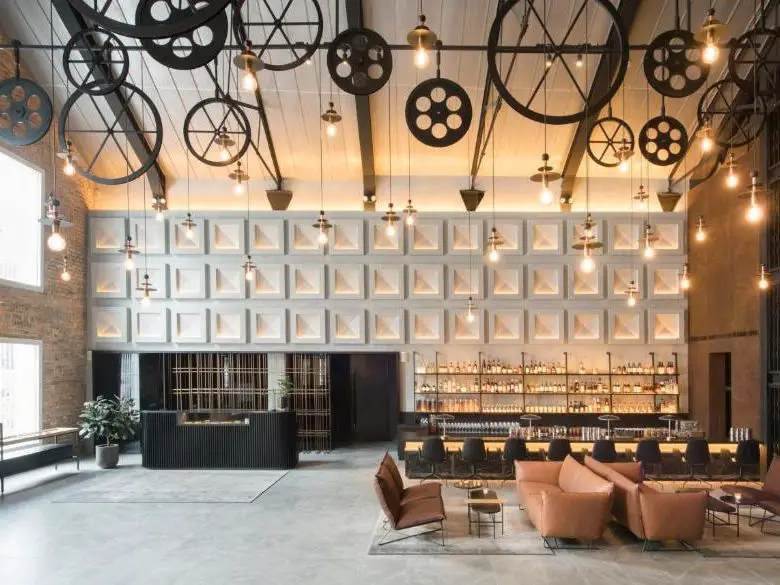
Best for a Riverside Night In
1. The Warehouse Hotel, Singapore, a Member of Design Hotels
Rating: ⭐⭐⭐⭐⭐
Location: 12-minute walk to Clarke Quay MRT. Robertson Quay, directly on the Singapore River.
Guest Reviews: Lobby bar cocktails rivals any in the city, riverside design absorbed into every detail, staff attentive without hovering, rooftop pool with river views.
Best Room: River View Suite
From USD $270 – $500 per night
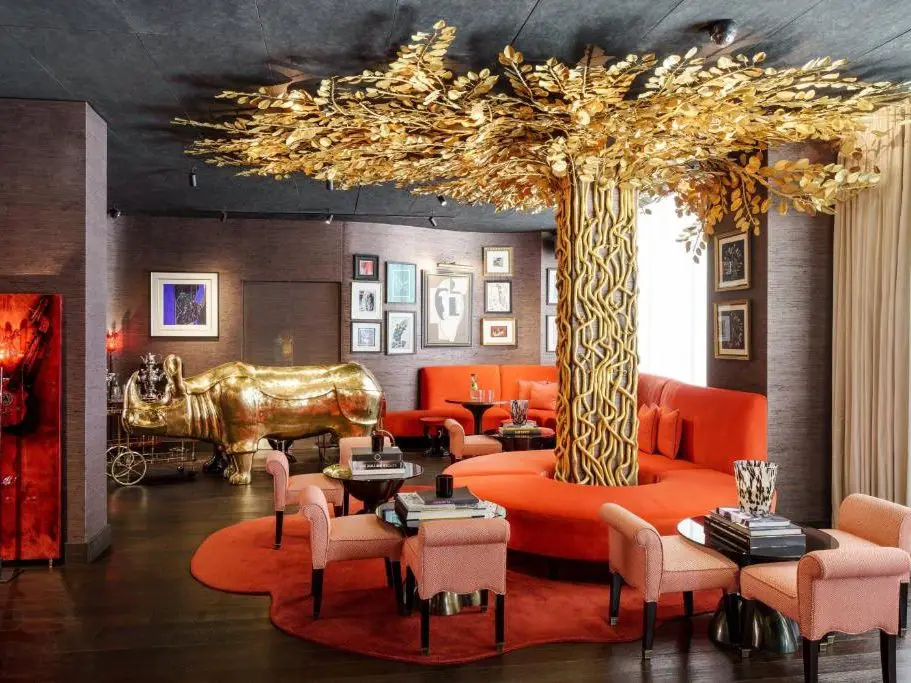
Best Whisky Bar
2. The Vagabond Club, a Tribute Portfolio Hotel Singapore
Rating: ⭐⭐⭐⭐
Location: 10-minute walk to Bugis MRT. Between Kampong Glam and Little India, Jalan Besar district.
Guest Reviews: Whiskey Library atmosphere unlike any hotel bar in the city, art and decor spark conversation all evening, staff warm and genuinely knowledgeable about the neighbourhood, jazz nights Thursday to Saturday draw a real crowd.
Best Room: Vagabond Club Suite King with Club Lounge Access
From USD $190 – $400 per night
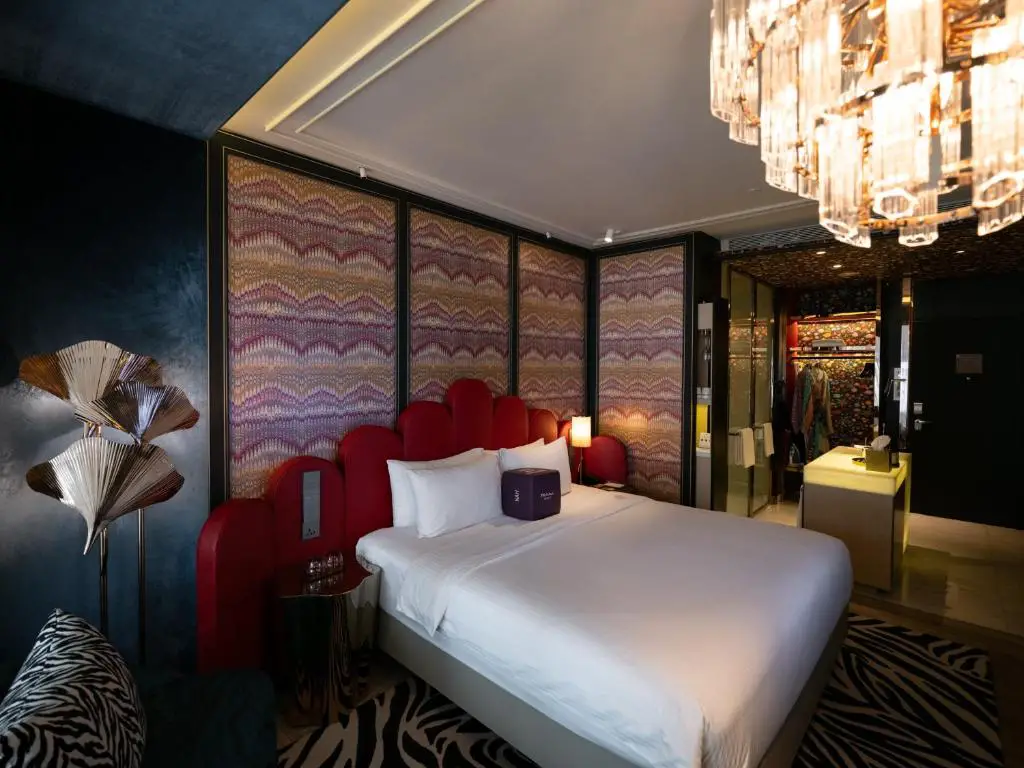
Best Rooftop Pool in the City
3. Naumi Hotel Singapore
Rating: ⭐⭐⭐⭐⭐
Location: 5-minute walk to City Hall MRT. Seah Street, between Bugis and the Civic District.
Guest Reviews: Cloud 9 rooftop pool views stop guests mid-sentence, complimentary minibar a quietly generous touch, staff proactive with anniversary and birthday surprises, Rang Mahal restaurant draws diners who aren’t even staying there.
Best Room: Patio Room
From USD $195 – $350 per night
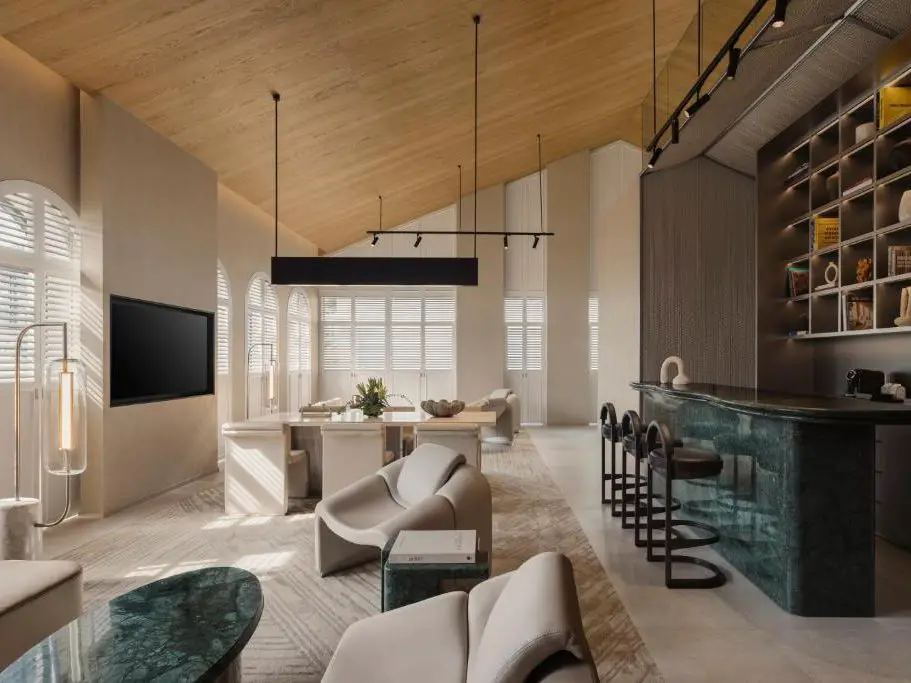
Best Nightlife on the Doorstep
4. Mondrian Singapore Duxton
Rating: ⭐⭐⭐⭐⭐
Location: 7-minute walk to Tanjong Pagar MRT. Duxton Hill, heart of Chinatown heritage district.
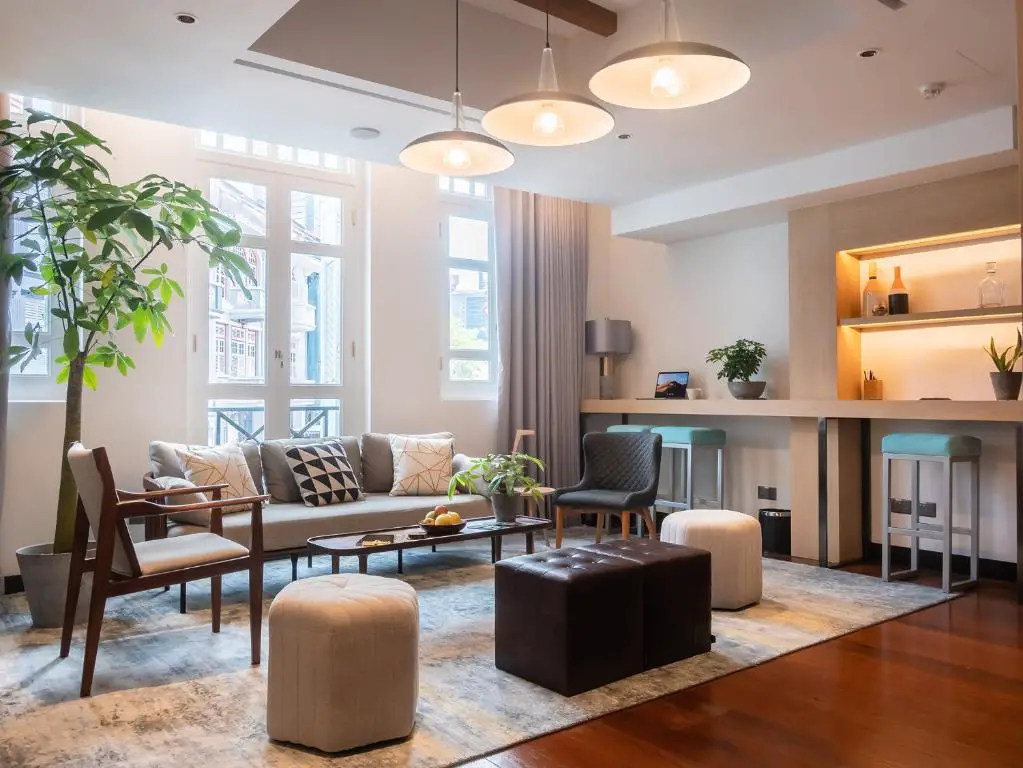
Guest Reviews: Canyon Club rooftop pool draws as many locals as guests, heritage shophouse views through floor-to-ceiling windows make even standard rooms feel considered, art collection throughout the building stops guests mid-corridor, four restaurants mean couples never leave for dinner unless they want to.
Best Room: Pinnacle Suite
From USD $220 – $400 per night
Best Value Boutique Stay
5. KēSa House, The Unlimited Collection managed by The Ascott Limited
Rating: ⭐⭐⭐⭐
Location: 5-minute walk to Chinatown MRT and Outram Park MRT. Keong Saik Road, Chinatown conservation area.
Guest Reviews: Keong Saik Road itself does most of the work, with Michelin-starred spots and craft cocktail bars steps from the front door, complimentary all-day refreshments a quietly generous touch, staff efficient and warm at all hours, shophouse character preserved in every crooked corridor and timber floor.
Best Room: Studio Premier
From USD $100 – $220 per night
Best Neighbourhood Character
6. Hotel Indigo Singapore Katong by IHG
Rating: ⭐⭐⭐⭐⭐
Location: 5-minute walk to Marine Parade MRT. East Coast Road, Katong/Joo Chiat heritage district.
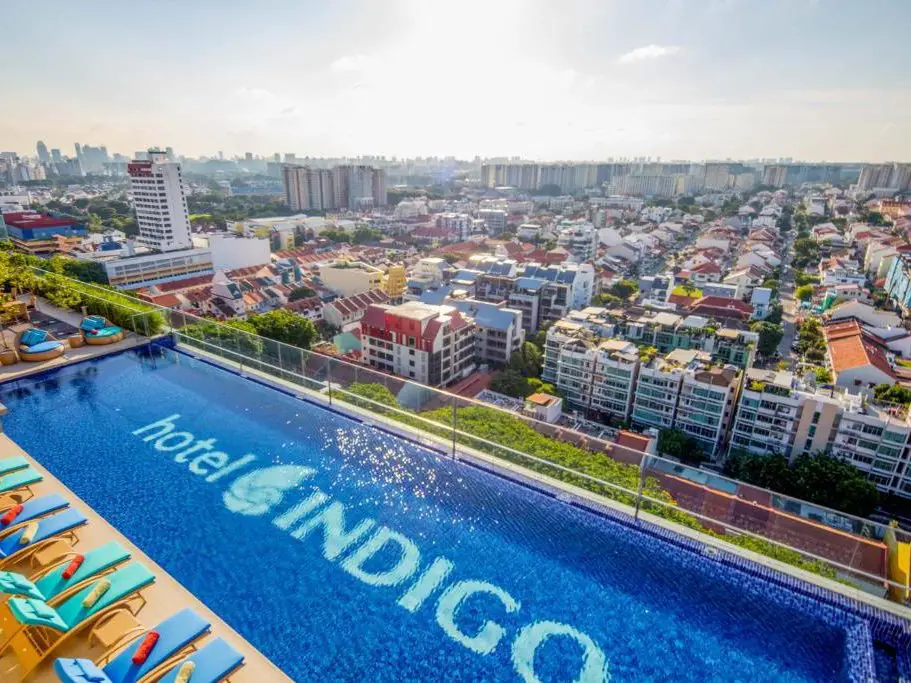
Guest Reviews: Rooftop infinity pool at sunset over the Katong shophouse skyline is the hotel’s defining moment, Peranakan tile work and enamel foot basins give every room a detail worth noticing, Baba Chews restaurant earns its own following beyond hotel guests, staff remembered occasion-specific requests without prompting.
Best Room: Deluxe King Room
From USD $170 – $320 per night
Most Intimate
7. The Barracks Hotel Sentosa by Far East Hospitality
Rating: ⭐⭐⭐⭐⭐
Location: 3-minute walk to Imbiah Station monorail, Sentosa Island. 8-minute walk to Palawan Beach.
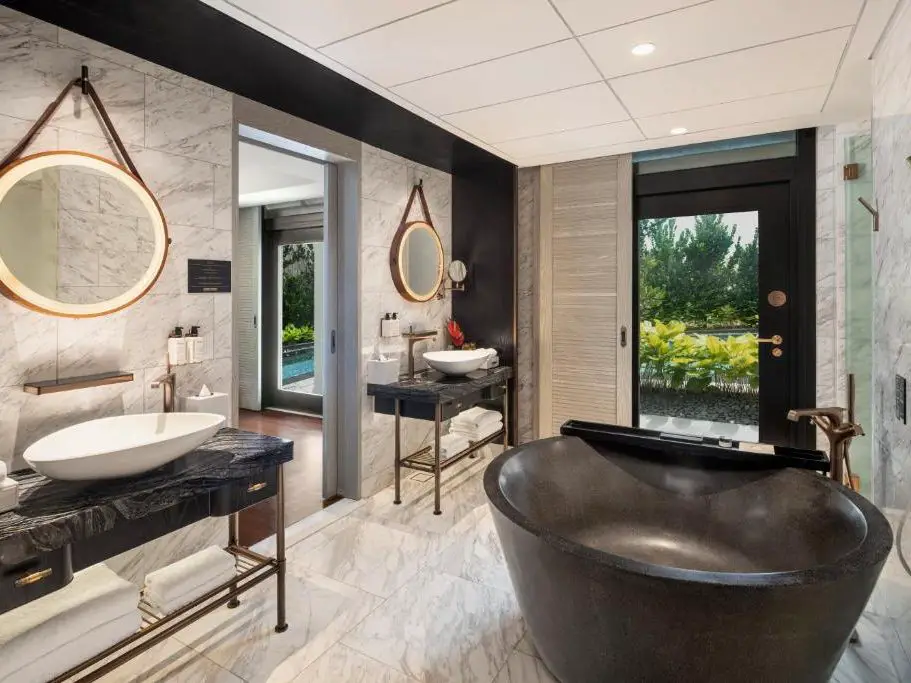
Guest Reviews: Evening canapés and tea-infused cocktails in The Living Room feel generous, pool access rooms with patio directly onto the lap pool are the hotel’s defining feature for couples, colonial architecture and 1904 heritage buildings create an atmosphere no new-build can replicate.
Best Room: Premier Room Pool Access
From USD $380 – $570 per night
Best City Views
8. Andaz Singapore, By Hyatt
Rating: ⭐⭐⭐⭐⭐
Location: Direct underground connection to Bugis MRT. 5 Fraser Street, between Kampong Glam and Bras Basah.
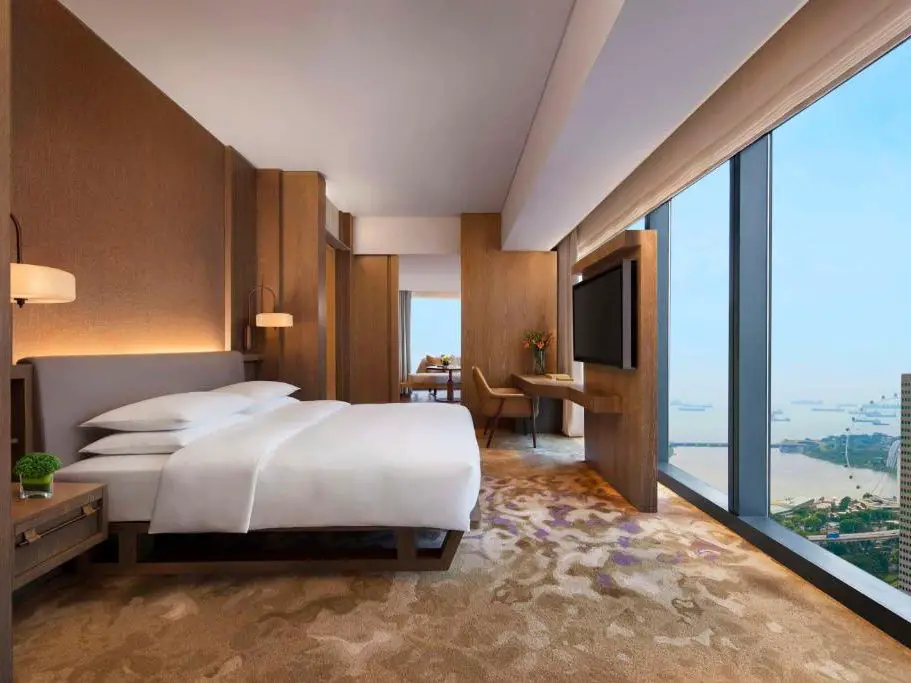
Guest Reviews: Mr Stork rooftop bar with ten teepee huts pulls couples up before dinner every night, complimentary minibar stocked with Andaz Pale Ale and TWG tea, rooftop pool on the 40th floor with Singapore skyline on three sides, floor-to-ceiling windows in every room make even standard rooms feel like a different category.
Best Room: Suite, 1 King Bed (Andaz Residence)
From USD $250 – $450 per night
Most Storied Entrance
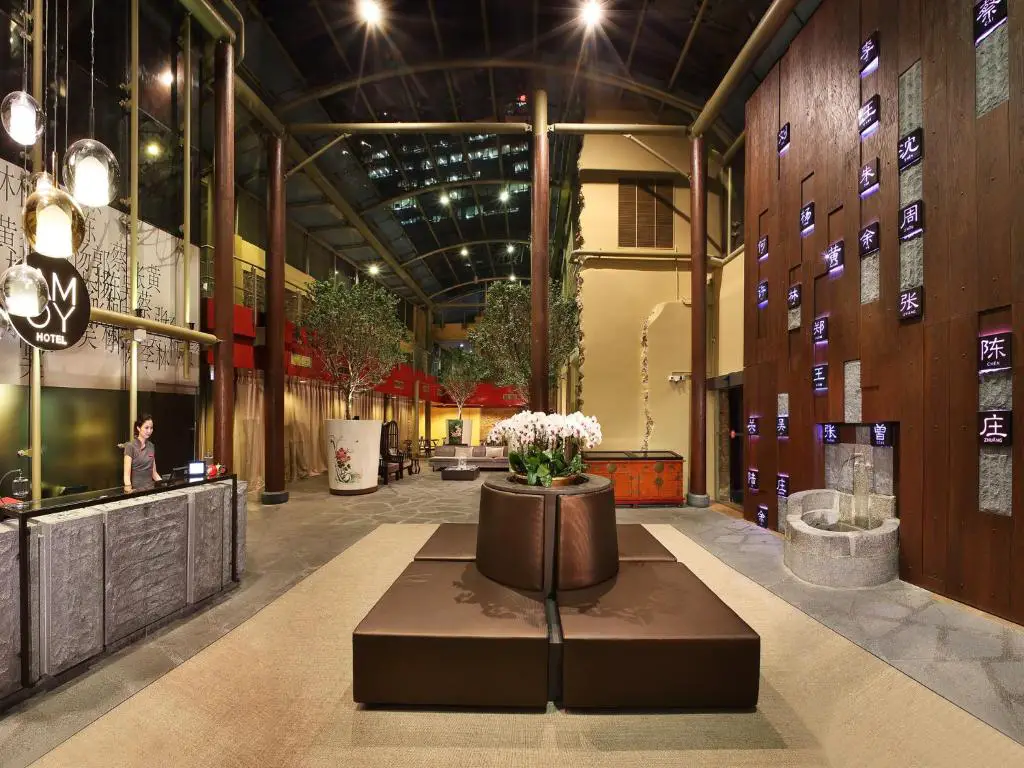
9. AMOY by Far East Hospitality
Rating: ⭐⭐⭐⭐
Location: 2-minute walk to Telok Ayer MRT. 76 Telok Ayer Street, Chinatown CBD fringe.
Guest Reviews: Walking through Fuk Tak Chi Museum to reach the front desk is the most memorable hotel entrance in Singapore, complimentary minibar stocked on arrival, breakfast at Offbeat next door is one of the better CBD morning spots, staff point guests toward Telok Ayer restaurants that most tourists miss entirely.
Best Room: Deluxe Room
From USD $150 – $280 per night
Best Architecture
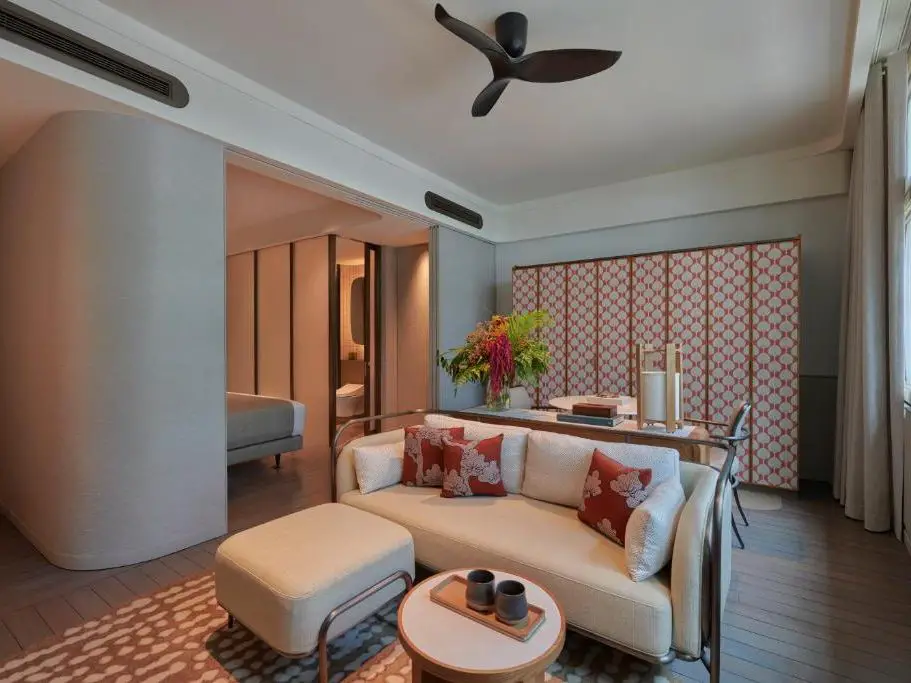
10. 21 Carpenter, Singapore, a Member of Design Hotels
Rating: ⭐⭐⭐⭐⭐
Location: 3-minute walk to Clarke Quay MRT. Carpenter Street, between Chinatown and Clarke Quay.
Guest Reviews: Kee’s restaurant pulls in diners from outside the hotel most nights, rooftop pool looks straight at Marina Bay Sands, original Chengal wood floors and ribbed glass in the heritage rooms feel nothing like a renovation, handwritten welcome note from the GM on arrival is an old-fashioned touch that lands.
Best Room: Suite, 1 King Bed, Balcony (Heritage)
From USD $300 – $500 per night
Most Luxurious
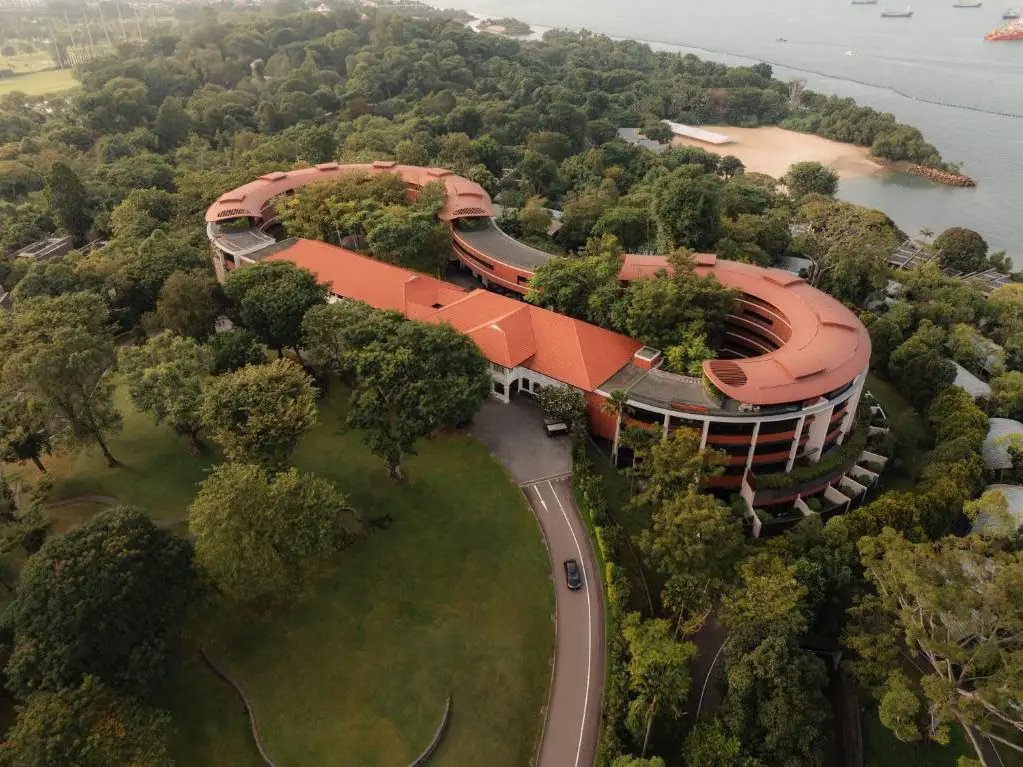
11. Capella Singapore
Rating: ⭐⭐⭐⭐⭐
Location: 3-minute walk to Imbiah Station monorail, Sentosa Island. 8-minute walk to Palawan Beach.
Guest Reviews: Auriga Spa books out weeks ahead, three pools rarely crowded, Cassia’s Michelin-starred verandah dinner, pre-arrival personal assistant.
Best Room: One Bedroom Garden Villa
From USD $985 – $1,400+ per night
Why Boutique Hotels Work Differently in Singapore
Singapore is one of the few cities where choosing a boutique hotel is genuinely a different decision from choosing a big one — not just a matter of size. The city’s conservation laws have protected entire streets of shophouses, godowns and colonial buildings that developers elsewhere would have demolished. The result is a category of hotels that couldn’t exist anywhere else: properties built inside 1890s spice warehouses, 1920s remittance houses, 1904 British artillery barracks, and former temple complexes. The character isn’t applied as a design layer — it’s structural.
For couples, this matters for a specific reason. Singapore’s best-known hotels compete on spectacle: the rooftop infinity pool above the bay, the casino floor, the 360-degree observation deck. Boutique hotels here compete on something quieter — the detail of a room that was once a place where immigrants sent letters home, or the sound of the city filtered through a hundred-year-old shophouse wall. That’s a different kind of stay, and for the right trip, a more lasting one.
- Scale works in your favour here — Singapore is small. The entire island takes around 45 minutes to cross by MRT, which means staying in a 37-room riverside warehouse doesn’t cut you off from anything. You’re never far from the city’s main draws, regardless of which neighbourhood you choose.
- Intimacy is built in — Most properties on this list have fewer than 75 rooms. Staff recognise returning guests. Breakfast feels like a restaurant, not a canteen. The bar has a character because there’s only one.
- Heritage is the differentiator, not a gimmick — Singapore’s Urban Redevelopment Authority enforces strict conservation rules. Hotels in protected buildings can’t just gut the interiors and start fresh. The original beams, floors, staircases and facades have to be retained. What you get as a guest is genuine, not reconstructed.
- The neighbourhood is part of the stay — Every boutique hotel here is in a neighbourhood with its own identity: Duxton Hill’s wine bars, Keong Saik Road’s Michelin-starred restaurants, Katong’s Peranakan shophouses, Robertson Quay’s riverside walks. The hotel doesn’t try to contain your entire trip inside its walls, and that’s the point.
City Centre or Sentosa: Where to Base Yourselves
The most common question couples ask before booking Singapore is whether to stay in the city or on Sentosa Island. The honest answer is that they offer genuinely different trips, not just different postcodes.
- Chinatown and Duxton Hill — The densest concentration of boutique hotels on the island, and the neighbourhood that rewards couples who want to eat and drink well without planning. Duxton Hill has some of the city’s best bars and restaurants within walking distance of each other. Mondrian Singapore Duxton, AMOY by Far East Hospitality, and KēSa House all sit within this corridor. The MRT puts you everywhere else in under 20 minutes. Choose this if evenings out matter as much as the hotel itself.
- Robertson Quay and Clarke Quay — The Singapore River running alongside your evening walk is one of the city’s most underrated pleasures. The Warehouse Hotel sits directly on the water at Robertson Quay. Clarke Quay is five minutes further east. The area is lively without being loud, and the river paths are good for morning runs or late-night strolls. Choose this if you want a neighbourhood that feels lived-in rather than tourist-facing.
- Bugis and Kampong Glam — The Vagabond Club and Andaz Singapore both sit at the crossroads of Little India and Kampong Glam, two of the city’s most interesting walking neighbourhoods. Arab Street, Haji Lane and the Sultan Mosque are minutes away on foot. The MRT connection at Bugis is one of the city’s best-connected stations. Choose this if you want to spend mornings exploring without needing a Grab.
- Katong and Joo Chiat — Hotel Indigo Singapore Katong is the only hotel on this list east of the CBD, in Singapore’s first designated heritage town. Katong moves at a different pace — quieter streets, independent cafes, Peranakan shophouses that haven’t been converted into anything. East Coast Park is a short walk away. It’s further from Marina Bay, but closer to Changi and the kind of Singapore that most visitors don’t reach. Choose this if you want a neighbourhood rather than a hotel district.
- Sentosa Island — The Barracks Hotel Sentosa and Capella Singapore sit on an island connected to the mainland by a five-minute monorail ride from VivoCity. Sentosa is genuinely separate from the city — quieter, greener, and structured around pools, beaches and resort-paced days. The trade-off is that getting into the city for dinner takes planning. Choose Sentosa if the hotel is the destination, not the base. If you’re splitting a longer trip, a night or two on Sentosa at the end works better than the beginning.
- Seah Street and the Civic District — Naumi Hotel Singapore sits on a quiet street behind Raffles Hotel, within walking distance of City Hall MRT, the Esplanade and the colonial heart of the city. It’s the most central location on this list. Choose this if you want the rooftop pool views without compromising on access.
The Heritage Hotels: Shophouses, Godowns and Colonial Barracks
Singapore’s most distinctive boutique hotels aren’t designed around an aesthetic — they’re built inside real buildings with real histories, and the architecture shapes what the stay feels like. Understanding the building types helps you choose the right one.
- Shophouse conversions — The classic Singapore heritage hotel format. Shophouses are narrow, multi-storey terrace buildings typically dating from the 1880s to 1950s, built with a five-foot covered walkway at street level and stacked living quarters above. Rooms are often compact by modern standards, layouts vary dramatically between floors, and no two rooms are identical. KēSa House occupies ten of them along Keong Saik Road. AMOY by Far East Hospitality is built into a row of Telok Ayer shophouses with a former temple at the entrance. 21 Carpenter combines the original 1936 shophouse with a contemporary extension designed by WOHA Architects. If you book a shophouse room expecting the proportions of a modern hotel, you’ll be disappointed. If you book one knowing what it is, you’ll find something that no new-build can replicate.
- Riverside godowns — The Warehouse Hotel was built in 1895 as three adjoining spice warehouses on the bank of the Singapore River, later repurposed as a disco before its conversion to a hotel. The original steel trusses, peaked ceilings and industrial bones were retained. Rooms are moody and dark by design — the building doesn’t get much natural light through its thick warehouse walls, which is either a feature or a drawback depending on what you want. The river views from the upper floors compensate. The lobby bar is the social heart of the property and draws as many locals as guests.
- Colonial military buildings — The Barracks Hotel Sentosa occupies two conserved colonial buildings that formed part of a British artillery outpost built in 1904. Capella Singapore encompasses a larger colonial manor complex on 30 acres, also with military origins, redesigned by Norman Foster’s firm in the contemporary wings. Both reward couples who want genuine seclusion — the grounds are large, the noise levels are low, and the architecture carries a specific weight that purpose-built resort hotels can’t fake. The Barracks has 40 rooms; Capella has 112. The Barracks feels more private. Capella has more to offer on-site, including a Michelin-starred restaurant and a Forbes Five-Star spa.
- Heritage towers and remittance houses — 21 Carpenter was the Chye Hua Seng Wee Kee remittance house, where Singapore’s earliest Chinese immigrants came to wire money home. The restored lower floors retain the original Chengal wood floors and hand-inscribed facades — Chinese poetry laser-cut into the aluminium exterior by the architects. Naumi Hotel Singapore is not a heritage conversion but sits among the colonial shophouses of Seah Street and carries a design that references the surrounding neighbourhood without reproducing it. The distinction matters: Naumi is a contemporary boutique hotel in a heritage location. 21 Carpenter is a heritage building that became a hotel.
The Design Hotels: When the Architecture Is the Point
Not every hotel on this list leads with history. Several of Singapore’s best boutique stays are built around design as the primary experience — contemporary spaces where the architecture, the art collection, or the neighbourhood aesthetic is what you’re paying for.
- Mondrian Singapore Duxton — 302 rooms inside a row of restored Duxton Hill shophouses, but the interior is anything but conservative. The ground floor arrives like a restaurant and bar district rather than a hotel lobby. The art collection includes works by KAWS. The Canyon Club rooftop pool leans into a 1970s Hollywood aesthetic that has nothing to do with the shophouse streetscape below, and the contrast is the point. Couples who want energy and visual stimulation rather than quiet heritage atmosphere will find it here.
- Andaz Singapore — Occupying the upper floors of the DUO Tower in Bugis, designed by the late André Fu, the Andaz reads as a love letter to Singapore’s multicultural identity through a contemporary lens. The rooms have floor-to-ceiling windows with city and sea views. The lobby doesn’t exist in the traditional sense — check-in happens in the restaurant space. Mr Stork on the 39th floor, with ten teepee huts and 360-degree views, is one of the few rooftop bars in the city that genuinely justifies the walk up.
- Hotel Indigo Singapore Katong — IHG’s Hotel Indigo brand mandates that each property reflects its immediate neighbourhood. The Katong property does this more convincingly than most: Peranakan tiles line the walls, enamel spittoons serve as foot basins, and the building incorporates the former Joo Chiat Police Station from 1928. The design is dense with local reference without tipping into theme park territory. The 16th-floor rooftop infinity pool looking over the low-rise Katong shophouse skyline is the kind of view that doesn’t exist anywhere else in the city.
- Naumi Hotel Singapore — The most quietly confident design hotel on this list. Every room is individually decorated, several themed around fashion designers and artists. The Cloud 9 rooftop infinity pool is private to guests, which matters in a city where rooftop pools are often semi-public. The complimentary minibar and daily happy hour are design decisions as much as hospitality ones — they shape how the hotel feels, not just what it offers.
- 21 Carpenter — WOHA’s restoration earns its place in the design section as well as the heritage one. The calligraphy-inscribed aluminium facade of the Urban Wing is the most architecturally distinctive exterior of any hotel on this list. Inside, the custom furniture references Art Deco and Asian craftsmanship without copying either. Kee’s restaurant, run by Michelin-starred chef Andrew Walsh, is the kind of on-site dining that makes leaving for dinner feel unnecessary.
What to Do Around Your Hotel
Singapore’s boutique hotels are concentrated in neighbourhoods with strong food, bar and cultural scenes. The city is walkable where it matters, and most of the best experiences here are ones you find by walking out of the front door rather than booking a tour.
- Around The Warehouse Hotel and Robertson Quay — The riverside stretch between Robertson Quay and Clarke Quay is one of Singapore’s best evening walks. Bar Cicheti and Burnt Ends are within a ten-minute walk. Fort Canning Park is directly behind the hotel — the hill has good views at dusk and the Battlebox museum below it is worth an hour. Clarke Quay’s nightlife is close enough to use, far enough away to sleep through.
- Around Mondrian Singapore Duxton and the Duxton Hill corridor — Duxton Hill Road itself is lined with wine bars, cocktail bars and restaurants concentrated enough to spend an entire evening without doubling back. Potato Head Singapore is a ten-minute walk toward the waterfront. Tanjong Pagar Plaza’s hawker stalls open early and do some of the city’s best char kway teow. Maxwell Food Centre is a short Grab away and worth it for breakfast.
- Around The Vagabond Club and Kampong Glam — Haji Lane is a ten-minute walk and at its best on weekend afternoons when the shopfronts open onto the street. The Sultan Mosque and the Malay Heritage Centre are worth an unhurried hour each. Arab Street’s textile and carpet shops are the most interesting shopping in the city for couples who aren’t looking for a mall. Atlas bar at the Parkview Square building is a fifteen-minute walk and one of Singapore’s most extraordinary interiors — worth going for a drink even if the prices sting.
- Around AMOY by Far East Hospitality and Telok Ayer — The Telok Ayer strip from the MRT exit toward Boat Quay is one of the city’s most concentrated restaurant rows, busy at lunch with CBD workers and quieter at dinner. Thian Hock Keng Temple is two minutes from the front door and often overlooked by visitors staying in Chinatown. Lau Pa Sat hawker centre is a ten-minute walk and opens its satay stalls at night along Boon Tat Street — genuinely one of the better after-dinner experiences in Singapore.
- Around Hotel Indigo Singapore Katong — Katong rewards slow exploration. The Peranakan shophouses along Koon Seng Road are some of the most photographed facades in Singapore. East Coast Park is a ten-minute walk to the beach path, good for cycling or an early morning run before the heat sets in. The Katong food trail — laksa, kueh pie tee, ondeh-ondeh — is best done without a plan: pick a side street and follow what looks busy.
- Around The Barracks Hotel Sentosa and Capella Singapore — Palawan Beach is an eight-minute walk from both hotels and is Sentosa’s quietest stretch of sand. The Imbiah Lookout area has trails through secondary rainforest that most visitors skip entirely. Sentosa’s cable car connects to Mount Faber on the mainland, which has its own set of restaurants and a good view back over the island. For a Michelin-starred dinner without leaving Sentosa, Capella’s Cassia remains the most refined option on the island.
When to Visit and How Long to Stay
Singapore sits just north of the equator, which means it’s warm year-round and the question isn’t really whether it will rain — it’s how often and how hard.
- February to early April — Generally the most settled weather, with lower humidity and fewer heavy downpours than the rest of the year. It’s also the most expensive period, driven by Chinese New Year (January or February depending on the lunar calendar) and Valentine’s Day demand. Boutique hotels with small room counts book out weeks ahead. If you’re visiting during this window, book at least two to three months in advance.
- May to July — The inter-monsoon period, warm and occasionally stormy but generally manageable. Hotel rates drop from their February peak and the city is slightly less crowded. This is a good window for couples who want good weather without the highest prices.
- July to October — Drier than the monsoon months, with a steady pace of visitors. The Formula 1 race typically falls in September and creates a concentrated surge in hotel prices and availability pressure across the whole city for approximately two weeks. Check the race calendar before booking — if it falls during your visit, book earlier and expect rates to climb across all neighbourhoods.
- November to January — The Northeast Monsoon brings heavier, more sustained rain, particularly in November and December. Days are typically wet in the afternoon. That said, rain in Singapore is usually intense and brief rather than all-day, and December brings the city’s most festive atmosphere. Christmas and New Year drive another pricing spike. January settles down quickly after the first week.
- How many nights — Three to four nights covers Singapore comfortably for most couples: two days for the main draws and one or two for slower exploration of the neighbourhood around your hotel. Five nights allows time for a day on Sentosa, a half-day in Katong, and an evening in Kampong Glam without feeling rushed. If you’re combining Singapore with other destinations, three nights with a well-chosen hotel gives you enough to feel the city rather than just pass through it.
Practical Notes for Couples Booking a Boutique Hotel in Singapore
A few things that forum threads and booking pages consistently leave out, but matter when you’re actually planning the trip.
- Shophouse room sizes are real — The most common disappointment in reviews of Singapore’s heritage hotels is room size. Shophouses were built narrow. A standard room in a shophouse conversion is typically between 16 and 30 square metres — smaller than the equivalent room in a modern hotel at the same price point. If you need space, book a premier or studio room and check the square footage explicitly. Hotels like KēSa House and AMOY are honest about this in their room descriptions; the upgrade to a studio or premier room is worth it for most couples.
- The MRT is your best tool — Singapore’s MRT is clean, air-conditioned, reliable and covers virtually every hotel neighbourhood on this list. A single journey costs under SGD $2. Grab is useful for late nights when trains stop or for Sentosa trips with luggage, but for daytime movement the MRT is faster and more pleasant than road traffic. Get an EZ-Link card on arrival at Changi.
- Sentosa logistics — The Sentosa Express monorail from VivoCity runs until midnight. Guests arriving by car or taxi at The Barracks Hotel and Capella enter through the Sentosa gateway — present your hotel booking confirmation and the entry levy is waived for up to four guests. Budget around 30 to 40 minutes from Changi Airport by taxi, and 20 to 25 minutes from the CBD.
- Advance booking windows — Singapore boutique hotels with fewer than 50 rooms — The Warehouse Hotel, The Barracks Hotel, AMOY — sell out during peak periods with very little warning. Chinese New Year, Valentine’s Day, the F1 race window and school holiday periods in June and December are the crunch points. For these periods, book two to three months ahead. Outside peak periods, four to six weeks is generally sufficient.
- Anniversary and occasion packages — Most boutique hotels on this list offer specific packages for honeymoons, anniversaries and birthdays, usually including room decoration, a cake or champagne, and occasionally late checkout. These are rarely advertised prominently and often need to be requested directly at the time of booking rather than added afterwards. Capella Singapore and The Barracks Hotel handle these requests most consistently, based on guest reviews; mention the occasion in your booking notes regardless of which hotel you choose.
- Noise in shophouse hotels — Converted shophouses sit on active streets, and older buildings don’t have the sound insulation of modern construction. KēSa House reviewers specifically flag street noise as something to plan for. Requesting a higher-floor room or a courtyard-facing room usually helps. The Vagabond Club, sitting between Kampong Glam and Jalan Besar, is quiet by the standards of the neighbourhood but not silent.
FAQs
1. What is the best area to stay in Singapore for couples?
Chinatown and Duxton Hill offer the densest concentration of good restaurants and bars within walking distance of boutique hotels, making them the most practical base for couples who want evenings out. Robertson Quay suits those who prefer a riverside neighbourhood with a slightly slower pace. Sentosa is worth considering for a full resort experience, but works better as a deliberate choice than a default — it’s genuinely separate from the city.
2. How many nights do you need in Singapore as a couple?
Three to four nights covers the city well and leaves room for one slower day. Five nights gives you time to explore a second neighbourhood properly — Katong, Kampong Glam, or a day on Sentosa — without feeling rushed. If Singapore is a stopover on a longer trip, two nights in a well-chosen boutique hotel still gives you more of the city than a transit hotel would.
3. Is Singapore a good destination for a honeymoon?
Singapore works well as a honeymoon destination for couples who want a combination of urban energy, excellent food, and genuinely luxurious hotels in a safe, compact city. It suits a honeymoon better when paired with another destination — Bali, the Maldives, or Langkawi — rather than as a standalone two-week trip, simply because the city covers its highlights in three to five days. As a five-night honeymoon base with good hotel choice, it’s hard to fault.
4. What is the best time of year to visit Singapore?
February to early April has the most settled weather, but also the highest hotel prices. May to July offers a good balance of reasonable conditions and lower rates. November and December bring heavier monsoon rain but also the city’s most festive atmosphere. Singapore is genuinely a year-round destination — the variation is in price and rainfall intensity rather than temperature, which stays around 28 to 32 degrees Celsius throughout the year.
5. Are boutique hotel rooms in Singapore small?
In shophouse-based hotels, yes — often. The buildings were not designed as hotels, and conservation rules mean the internal structure can’t be dramatically altered. Standard rooms in shophouse conversions typically run between 16 and 30 square metres. Design-led boutique hotels in purpose-built or tower buildings — Andaz Singapore, Mondrian Singapore Duxton, Naumi Hotel Singapore — have significantly larger rooms. Checking the square footage before booking is worth doing, particularly for longer stays.
6. Is Sentosa worth staying on for couples, or is it too far from the city?
Sentosa is 10 to 15 minutes from the CBD by monorail or taxi, which is closer than it feels on a map. The question is really about what kind of trip you want. The Barracks Hotel and Capella Singapore are resort-paced stays — pool, spa, beach walks, Michelin-starred dinners on-site. If you want to spend mornings in hawker centres and afternoons in museums, Sentosa adds unnecessary travel time. If the hotel is the destination, it makes complete sense.
7. Do Singapore boutique hotels offer anniversary or special occasion packages?
Most do, though they’re not always listed publicly. The most reliable approach is to note the occasion in your booking and contact the hotel directly before arrival. Properties like Capella Singapore, The Barracks Hotel and Naumi Hotel Singapore have consistent records of handling these requests well based on guest reviews. Smaller properties like AMOY and 21 Carpenter also accommodate requests but may have less standardised packages.
8. What is the difference between staying in Chinatown and staying on Sentosa?
Chinatown gives you a city-centre base with immediate access to restaurants, bars, temples and the MRT network. Sentosa gives you a resort island with beaches, pools and quieter surroundings, connected to the mainland by a short monorail or taxi ride. The hotels are different in character too: Chinatown boutique hotels are almost entirely heritage conversions in narrow shophouses. Sentosa’s top boutique options — The Barracks Hotel and Capella — are spread across large grounds with outdoor pools, gardens and spa facilities that the city hotels don’t have space for.
9. How far in advance should you book a boutique hotel in Singapore?
For small-inventory properties — anything under 50 rooms — two to three months ahead during peak periods (Chinese New Year, Valentine’s Day, the F1 race window, June and December school holidays). Outside peak periods, four to six weeks is generally enough. Capella Singapore garden villas and The Barracks Hotel pool-access rooms are the hardest to secure at short notice and are worth prioritising early if they’re on your list.