
A private bath in your hotel room changes the rhythm of a Busan trip completely. After a day on the beach at Haeundae or an evening eating your way through Jagalchi Market, coming back to your own deep soak, on your own schedule, with no shared spa floor to navigate, is a very different experience from a standard shower. Busan does this well, from five-star marble bathrooms overlooking the sea to cedar-scented hinoki tubs in boutique hotels near the station. The hotels below cover the full range.
Table of Contents
Busan Hotels
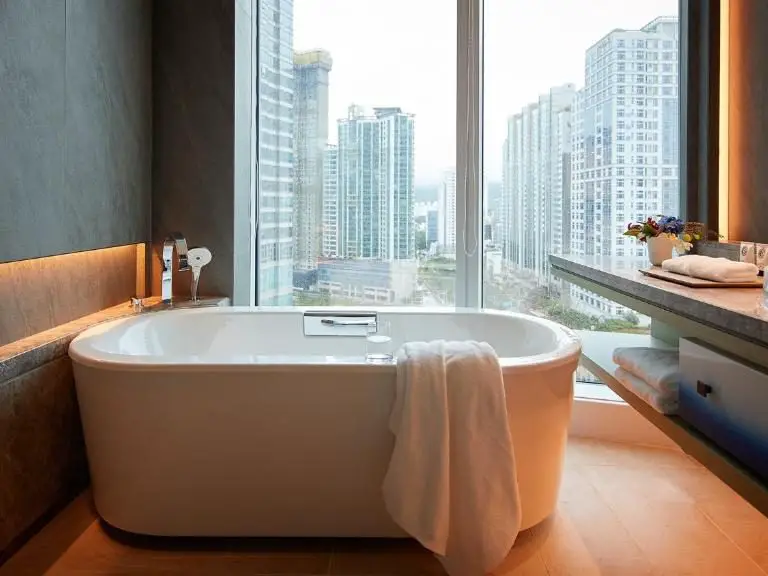
| 1. Signiel Busan Best View Rating: ⭐⭐⭐⭐⭐ Location: 10-min walk to Haeundae Beach; Mipo station 5 min on foot Guest Reviews: Oversized bathtubs with Diptyque amenities, panoramic sea views, infinity pool, attentive service Best Room: Premier Ocean View King Price: From USD $165 – $540 per night |
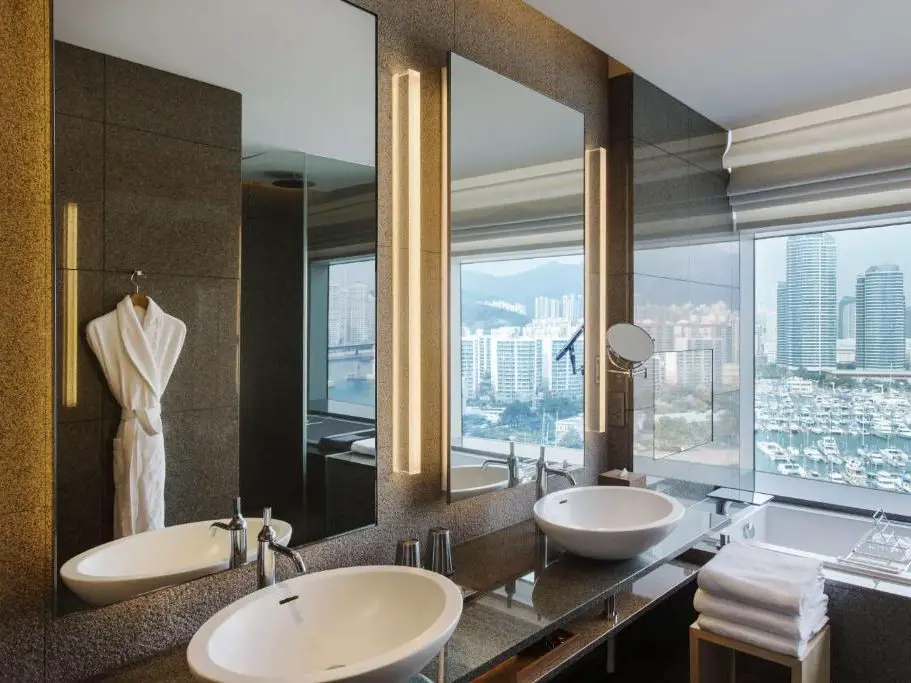
| 2. Park Hyatt Busan Most Luxurious Hotel Rating: ⭐⭐⭐⭐⭐ Location: 5-min walk to Haeundae Beach; Marine City, overlooking Suyeongman Yacht Marina Guest Reviews: Floor-to-ceiling marina views, granite bathrooms with Le Labo toiletries, indoor pool, exceptional service Best Room: Marina Ocean Corner Suite Price: From USD $200 – $400 per night |

| 3. Ananti at Busan Cove Rating: ⭐⭐⭐⭐⭐ Location: 10-min walk to Haedong Yonggungsa Temple; Gijang coastal area, 30 min from central Busan Guest Reviews: Soaking tubs and balconies in all rooms, peaceful coastal setting, spa and pool complex, excellent breakfast Best Room: Cabin X Ocean Suite Price: From USD $130 – $250 per night |
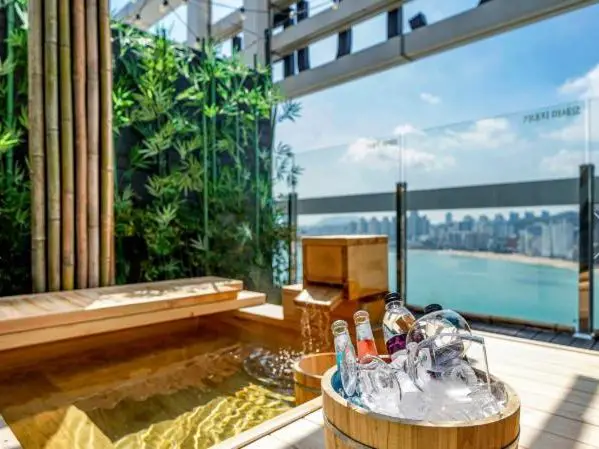
| 4. Gwanganli The Club Hotel Most Unique Stay Rating: ⭐⭐⭐⭐ Location: 3-min walk to Gwangalli Beach; Geumryeonsan subway station 10 min on foot Guest Reviews: Private terrace wood bath with Gwangan Bridge views, Saturday drone show from your balcony, exceptionally attentive owners, spacious rooms with kitchenette Best Room: Double Room with Terrace Spa Bath and Sea View Price: From USD $170 – $300 per night |
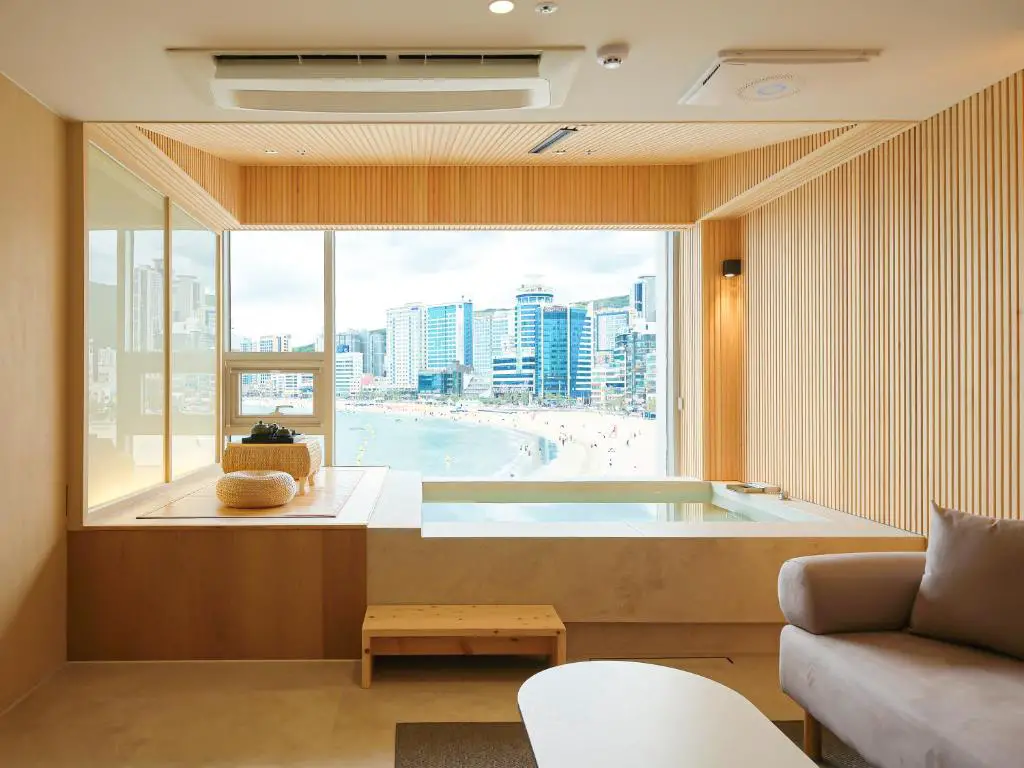
| 5. B’AMU Hotel & Spa Most Romantic Rating: ⭐⭐⭐ Location: Steps from Gwangalli Beach; Geumryeonsan subway station 10 min on foot Guest Reviews: Sea-facing spa bath in every room, Gwangan Bridge night views, free breakfast, Dyson hair tools on loan, attentive staff Best Room: Premium Ocean King Price: From USD $105 – $200 per night |
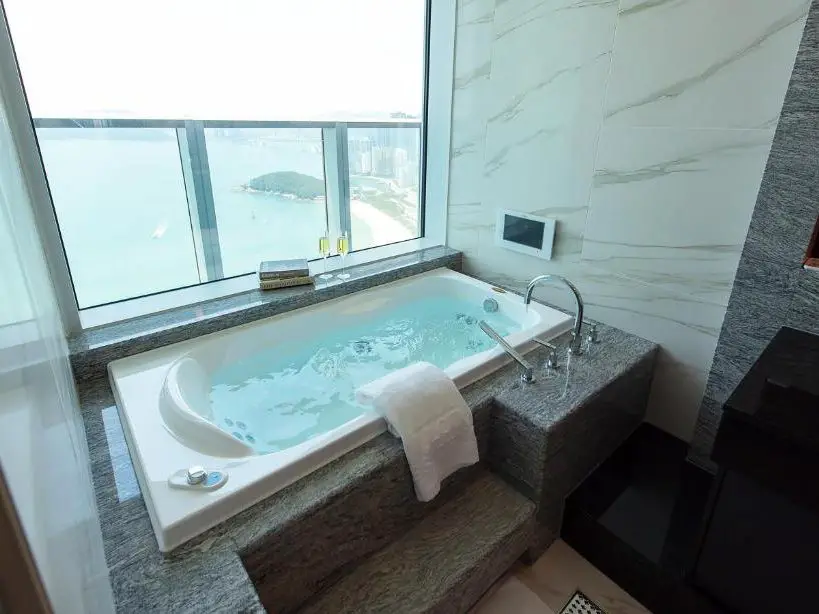
| 6. Grand Lct Residence Rating: ⭐⭐⭐⭐ Location: 9-min walk to Haeundae Beach; Jungdong subway station 5 min on foot Guest Reviews: Floor-to-ceiling ocean views from upper floors, spa tub in every room, fully equipped kitchen, clean and spacious apartments, convenient supermarket in building Best Room: Presidential Suite with Sea View Price: From USD $230 – $660 per night |

| 7. Busan H-AVENUE Hotel Seomyeon Station Best Value Rating: ⭐⭐⭐ Location: 8-min walk to Seomyeon Station; Lotte Department Store 1-min drive, Seomyeon food streets on the doorstep Guest Reviews: Spacious rooms, clean and modern, friendly English-speaking staff, great transport links, excellent value Best Room: Presidential Studio Suite with Hot Tub Price: From USD $55 – $130 per night |

| 8. Hotel Foret The Spa Rating: ⭐⭐⭐ Location: 5-min walk to Choryang subway station; 15-min walk to Busan Station Guest Reviews: Hinoki cedar bath fills the room with natural wood fragrance, spacious rooms, Vietnamese rice noodle breakfast, friendly staff, great value Best Room: Deluxe Hinoki Bath Double Price: From USD $40 – $100 per night |

| 9. UH Continental CenterPoint Best Location Rating: ⭐⭐⭐⭐ Location: 2-min walk to Haeundae Beach; Jungdong subway station 10 min on foot Guest Reviews: In-room jacuzzi in all 54 rooms, warm wood-tone interiors, complimentary evening whiskey lounge, Korean breakfast, multilingual staff Best Room: Deluxe Spa Room with Ocean View Price: From USD $90 – $240 per night |
Why Stay in Busan with an In-Room Spa Bath
Busan is not a city where you’re likely to spend much time in your hotel room — and that’s exactly why the bath matters. Days here fill up fast: the fish market at Jagalchi, the climb up to Gamcheon, a long afternoon on Haeundae or Gwangalli, dinner at a raw fish restaurant that runs until midnight. By the time you get back, a shared spa floor with a queue and a closing time is the last thing you want. A private bath in your room changes the rhythm entirely. You soak when you feel like it, for as long as you want, with no towel hooks claimed by strangers.
The other reason is Busan itself. This is a city with a genuine hot spring tradition — the Dongnae area has been drawing visitors to its thermal baths for centuries, and the culture of the long, restorative soak is woven into how locals think about rest. Staying somewhere with a proper in-room bath taps into that, even if your tub is filled with tap water rather than mineral springs.
Location matters too. Busan’s two main coastal strips — Haeundae and Gwangalli — are far enough apart that where you base yourself shapes the whole trip. Haeundae is broader, busier, backed by a cluster of skyscrapers and good transport links. Gwangalli is smaller, more local in feel, with the bridge as a constant backdrop and a livelier bar scene along the strip. A handful of the hotels below sit closer to Busan Station, which suits anyone arriving by KTX from Seoul and wanting easy access to Nampo, Jagalchi and the older parts of the city. Each area has a different character — and the hotels we’ve highlighted cover all three.
Overview of Accommodation Options
The hotels here span a wide range, from full five-star beachfront towers to small boutique properties where the bath is genuinely the main event.
- At the top end, Signiel Busan and Park Hyatt Busan are the standout luxury options — both on the Haeundae side, both with serious credentials. Signiel is the taller, flashier choice with Diptyque toiletries and panoramic sea views from every room. Park Hyatt leans into the marina setting with Le Labo amenities and a quieter, more understated kind of luxury. If you want a five-star experience without the Haeundae crowds, Ananti at Busan Cove sits on its own stretch of coast near Gijang — adults-only, pool villas with spa baths, and a resort atmosphere that feels genuinely removed from the city.
- In the mid-range, UH Continental CenterPoint is the newest property on the list and one of the better-value Haeundae options — renovated from the ground up with in-room jacuzzis, warm wood interiors and a whiskey lounge that guests consistently mention. Grand Lct Residence sits in the LCT Tower near Haeundae and delivers something different: apartment-style space, full kitchen, and spa tubs at altitudes that most hotels can’t match. B’AMU Hotel & Spa is the Gwangalli equivalent — a small, well-run boutique with sea-facing spa baths in every room, steps from the beach.
- Gwanganli The Club Hotel is in a category of its own. Four rooms, a private terrace wood bath with Gwangan Bridge views, and the kind of attentiveness that only a property this size can deliver. It books out quickly and for good reason.
- At the more affordable end, Busan H-AVENUE Hotel Seomyeon Station is the city-centre pick for couples who want a hot tub suite without the beachfront price tag, and Hotel Foret The Spa near Busan Station offers something genuinely rare — a hinoki cedar bath in every room, with the fragrance of the wood filling the room as it steams.
Best Areas to Stay
- Haeundae is the most popular base and for good reason. The beach is wide and well-maintained, the restaurant and bar scene is strong, and transport links are good — Haeundae subway station puts the rest of the city within easy reach. It suits couples who want a proper beach holiday alongside the spa bath experience, and the concentration of high-end hotels here is higher than anywhere else in Busan. The trade-off is crowds, particularly in summer, when the beach itself gets extremely busy.
- Gwangalli has a different energy. The beach is smaller and the surrounding streets feel more lived-in, with a mix of local seafood restaurants, independent cafes and a lively bar strip that runs along the waterfront. The Gwangan Bridge is the visual centrepiece — it’s lit up at night and visible from most of the hotels on this stretch. It suits couples who want to be closer to local Busan life and less in the tourist bubble. The Saturday evening drone show above the bridge is worth planning around.
- Gijang Coast is for couples who want to properly switch off. Ananti at Busan Cove is the only hotel on this list in this area, and the whole point is the distance from central Busan — coastal walks, an adults-only atmosphere, and a pace that’s hard to find in Haeundae. You’ll need a car or taxi to get around, and most of Busan’s main sights are 30 minutes away.
- Seomyeon is Busan’s commercial centre — subway lines, department stores, food streets and nightlife all within walking distance. There’s no beach, but it’s the best base for couples who want to use the city as a playground rather than anchor themselves to one stretch of coast. Busan H-AVENUE Hotel Seomyeon Station is the pick here for a hot tub suite at a price that leaves plenty of budget for eating and drinking well.
- Busan Station area suits couples arriving by KTX from Seoul who want to keep things simple. The old port neighbourhoods of Nampo and Choryang are walkable, Jagalchi Fish Market is close, and Hotel Foret The Spa offers an unusually good bath experience at a price point that’s hard to beat anywhere in the city.
How to Choose the Right Hotel
The bath experience itself is the starting point. Some hotels here have a spa bath in every room — you book any room and you get it. Others have it only in specific room types, and if you book the wrong one you’ll have a standard shower. Gwanganli The Club Hotel, B’AMU Hotel & Spa, Hotel Foret The Spa and UH Continental CenterPoint all have in-room baths across every room. At Busan H-AVENUE Hotel Seomyeon Station, you need to specifically select the Presidential Suite or the Double Room with Hot Tub. At Ananti at Busan Cove, the pool villa and suite categories are the ones to book if the spa bath is the priority. Always check the specific room type before confirming — OTA filter pages don’t always make this obvious.
Location is the second decision, and it depends on how you want to structure the trip. Couples who want to spend real time on the beach should stay in Haeundae or Gwangalli. Couples who are using Busan as a base for eating, exploring and day-tripping are often better off in Seomyeon or near Busan Station, where getting around is easier and prices are lower. The Gijang coast suits couples who genuinely want to do very little — beautiful surroundings, no real urban energy, and a long drive to anything beyond the hotel itself.
Price range on this list runs from around $40 a night at the budget end to over $500 at peak season for the top suites at Signiel Busan. The sweet spot for a genuinely good in-room bath experience without overspending sits roughly between $100 and $250 – which covers B’AMU, UH Continental CenterPoint, Ananti at Busan Cove and the lower room tiers at Park Hyatt Busan. Above that, you’re paying for the broader luxury experience, not just the bath.
One practical point worth knowing: Busan hotels fill fast during peak summer weekends, the Busan International Film Festival in October, and any long Korean holiday weekend. The smaller properties – Gwanganli The Club Hotel with four rooms, B’AMU with twenty – can be fully booked weeks in advance during those periods. If either of those is the target, booking early is not optional.
When to Book
- Peak season runs from late June through August. Haeundae and Gwangalli beaches draw enormous crowds during this window, and hotel prices across the board rise significantly. Expect premium rates at beachfront properties, and availability at smaller hotels like Gwanganli The Club Hotel and B’AMU Hotel & Spa can dry up weeks in advance. Book as early as possible if you’re set on either of these.
- Shoulder season — April to early June and September to October — is the best time to visit for most couples. The weather is warm enough for the beach, crowds are manageable, and prices drop noticeably from the summer peak. Cherry blossom season in late March and early April brings a spike in domestic tourism, so rates around that window can creep back up.
- October brings the Busan International Film Festival (BIFF), which runs for around ten days and pulls in large numbers of visitors. Hotels in the Haeundae area in particular see strong demand during this period. If your dates overlap with BIFF, book well ahead and treat it as peak season pricing.
- Korean public holidays — particularly Chuseok and Seollal — create blackout-level demand. Exact dates shift each year depending on the lunar calendar, but these holiday periods see Koreans travelling domestically in very high numbers. Prices spike and availability collapses fast. Check the dates before booking and treat them as peak season regardless of which month they fall in.
- Winter (November through February) is the low season and delivers the best prices, especially at the higher-end properties. The beaches are quiet and the city is still fully operational — Jagalchi Market, the cultural sites, the restaurants and the nightlife all continue as normal. The bath becomes more appealing, not less, when it’s cold outside.
- For last-minute bookings, the beachfront hotels are the riskiest bet in summer. Properties further from the water — Busan H-AVENUE Hotel Seomyeon Station and Hotel Foret The Spa — tend to hold availability longer and are safer options if you’re planning late.
Insider Tips for a Better Stay
- Book the bath room type explicitly. On OTA platforms, the filter for “hot tub” or “spa bath” sometimes surfaces the hotel without specifying which room category qualifies. Go directly to the room type listing and confirm the bath is included before paying. At hotels like Busan H-AVENUE Hotel Seomyeon Station, booking the wrong room type means a standard shower and no recourse at check-in.
- Upper floors make a significant difference at B’AMU Hotel & Spa and Grand Lct Residence. At B’AMU, lower floors sit closer to street level and the bath loses its privacy. At Grand LCT, the difference between the 40th floor and the 90th floor is dramatic — request as high as possible when you book and follow up directly with the hotel.
- Arriving by KTX from Seoul makes Hotel Foret The Spa and Busan H-AVENUE Hotel Seomyeon Station the most practical first-night options. Both are reachable from Busan Station or Seomyeon without navigating the city with luggage. Haeundae is a solid 30-40 minutes from Busan Station by subway — manageable, but not ideal after a long journey.
- The Saturday drone show at Gwangalli runs from spring through autumn and is genuinely worth planning around. From Gwanganli The Club Hotel and B’AMU Hotel & Spa, you can watch it from your room or terrace without fighting for a spot on the beach. Check the official Busan tourism calendar for exact dates before booking your weekend.
- Ananti at Busan Cove requires a car or taxi for almost everything beyond the hotel itself. The on-site restaurants are good, but dining variety and access to Busan’s main sights both require driving. If you’re not renting a car, budget for taxis and factor in the 30-minute journey to central Busan when planning day trips.
- Kakao T is the standard ride-hailing app in Busan and works reliably across all the areas covered here. Download it before you arrive and set up payment in advance — street hailing works in most areas but Kakao T is faster, especially late at night around Haeundae and Seomyeon.
- Gwangalli’s food street runs parallel to the beach and is easy to miss if you’re walking along the waterfront. The best seafood restaurants — raw fish, steamed crab, grilled eel — are one block inland, not on the main strip facing the water. Ask your hotel staff for a specific recommendation rather than picking by signage.
FAQs
1. Do all the hotels on this list have spa baths in every room?
Several do — including Signiel Busan, Park Hyatt Busan, Gwanganli The Club Hotel, B’AMU Hotel & Spa, Hotel Foret The Spa and UH Continental CenterPoint. At Ananti at Busan Cove and Busan H-AVENUE Hotel Seomyeon Station, the spa bath is only in select room types, so you need to book the right category specifically.
2. Which area is better for couples — Haeundae or Gwangalli?
Both work well but suit different styles. Haeundae is bigger, better connected by subway, and has more high-end hotel options. Gwangalli is more intimate, with a stronger local food and bar scene and the bridge as a constant backdrop. If nightlife and atmosphere matter, Gwangalli edges it. If beach space and convenience are the priority, Haeundae is the easier choice.
3. Is Ananti at Busan Cove worth the distance from central Busan?
For couples who want a genuine resort escape, yes. The coastal setting near Gijang is quieter than anything in central Busan, the property is adults-only, and the pool villas are among the best in the city. The trade-off is that you’re 30 minutes from Busan’s main sights and dependent on taxis or a rental car to get around.
4. When is the cheapest time to book these hotels?
Winter — November through February — delivers the lowest rates across the board, particularly at the luxury end. Shoulder season in April to early June and September to October offers a good balance between price and weather. Avoid Korean public holidays and the Busan International Film Festival in October if budget is a priority.
5. Can I find a good in-room spa bath in Busan without paying five-star prices?
Several strong options sit well below the five-star price point. Hotel Foret The Spa starts from around $40 per night and has a hinoki cedar bath in every room. B’AMU Hotel & Spa starts from around $105 and offers a sea-facing spa bath with Gwangalli Beach views. Busan H-AVENUE Hotel Seomyeon Station has a hot tub suite from around $55 per night.
6. How far in advance should I book for a summer trip?
For peak summer weekends in July and August, book at least six to eight weeks ahead for the beachfront properties. Small hotels like Gwanganli The Club Hotel — which has only four rooms — can fill up months in advance for popular weekends. The city-centre options near Seomyeon and Busan Station hold availability longer and are safer for later bookings.
7. Is Busan easy to get around between the different hotel areas?
The subway connects Seomyeon, Haeundae and Busan Station reasonably well, though journey times between the coastal areas are longer than they look on a map — allow 35 to 45 minutes between Haeundae and Nampo by subway. Gwangalli is not directly on the main subway line and is easier to reach by Kakao T. Gijang, where Ananti at Busan Cove is located, is not practical without a car or taxi.
8. Are these hotels suitable for a honeymoon stay?
Several are well set up for it. Signiel Busan and Park Hyatt Busan both have the service level and room quality to support a honeymoon stay without any additional arrangement. Gwanganli The Club Hotel and Ananti at Busan Cove both have an intimacy that works particularly well for honeymoons — the former because of its tiny scale and personalised attention, the latter because of its adults-only resort setting. Mention the occasion when booking and most properties will add a small welcome gesture.
9. Do any of these hotels have a shared spa or jjimjilbang on-site?
Ananti at Busan Cove has an extensive spa complex beyond the in-room facilities. Park Hyatt Busan has a spa with treatment rooms. B’AMU Hotel & Spa has a sauna on-site. For a full jjimjilbang experience, Spa Land at Shinsegae Centum City is the most popular option in Busan and is a short taxi ride from the Haeundae hotels.